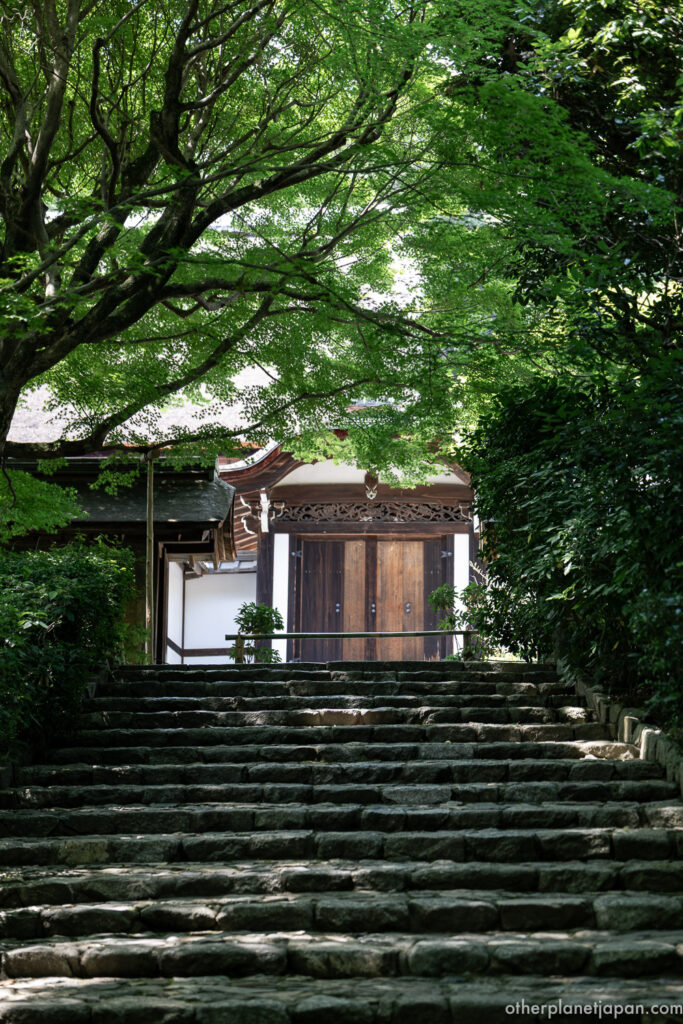
I wasn’t trying to eavesdrop. The guide’s voice simply carried.
“Queen Elizabeth once praised the rock garden at Ryoanji,” he was telling a cluster of students. “Before that, nobody paid this temple any attention. Then, overnight, it was famous.”
I could believe the first part. A queen falling for this garden makes perfect sense. But “nobody paid it any attention”? That was harder to swallow. When I looked closer, the guide wore a name tag, and on it was the name of a taxi company. These days it’s not unusual to see a cab driver shepherding a handful of school-trip students through Kyoto’s temples.
Years ago I watched a documentary about a New York cab driver who gave tours of his city. He talked about its history, its culture, its street life as if he’d witnessed all of it firsthand, entertaining and utterly sure of himself. The program ended with a gentle warning: take the driver’s stories with a grain of salt.
I never expected to be handed that same grain of salt here, at Ryoanji.
“So why did a queen come to a temple no one cared about?” None of the students asked. I didn’t either.
Walking In: The Approach to Ryoanji
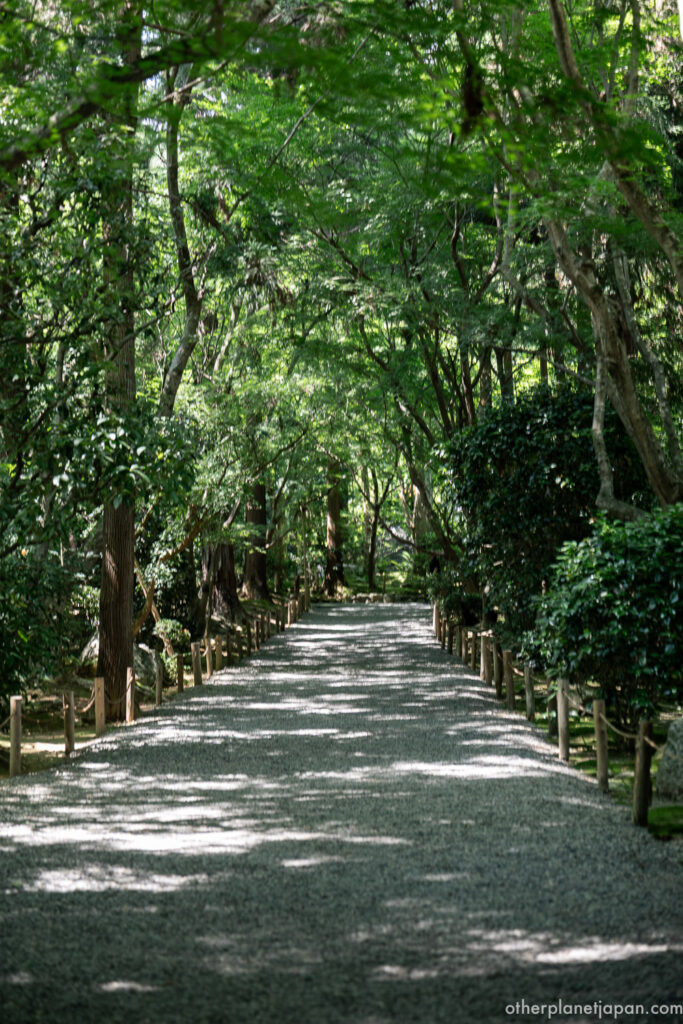
The temperature drops the moment you step inside.
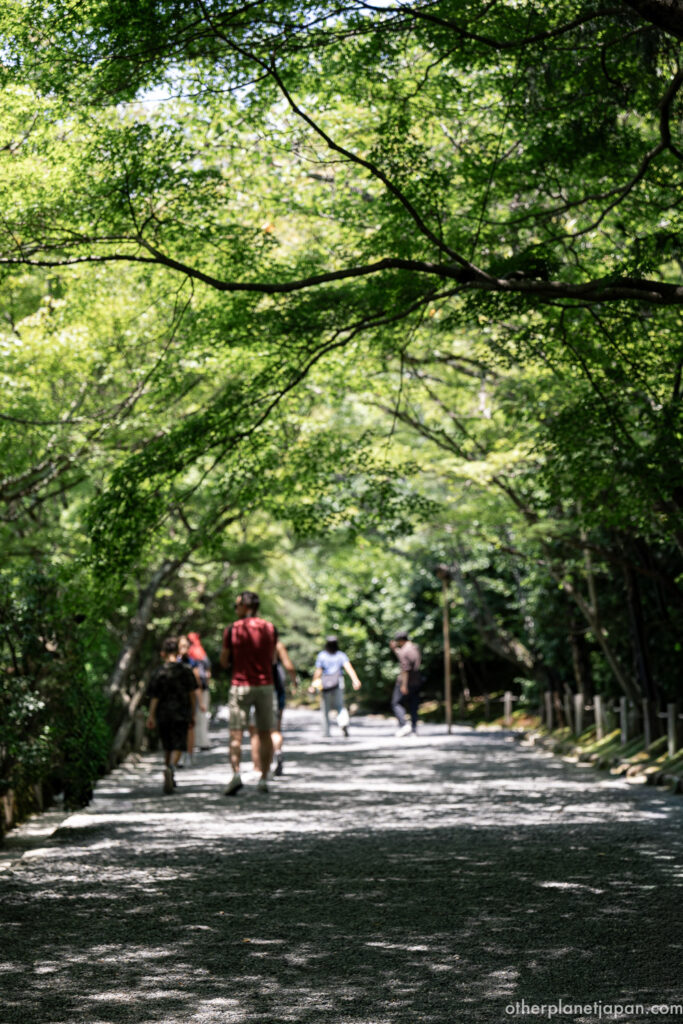
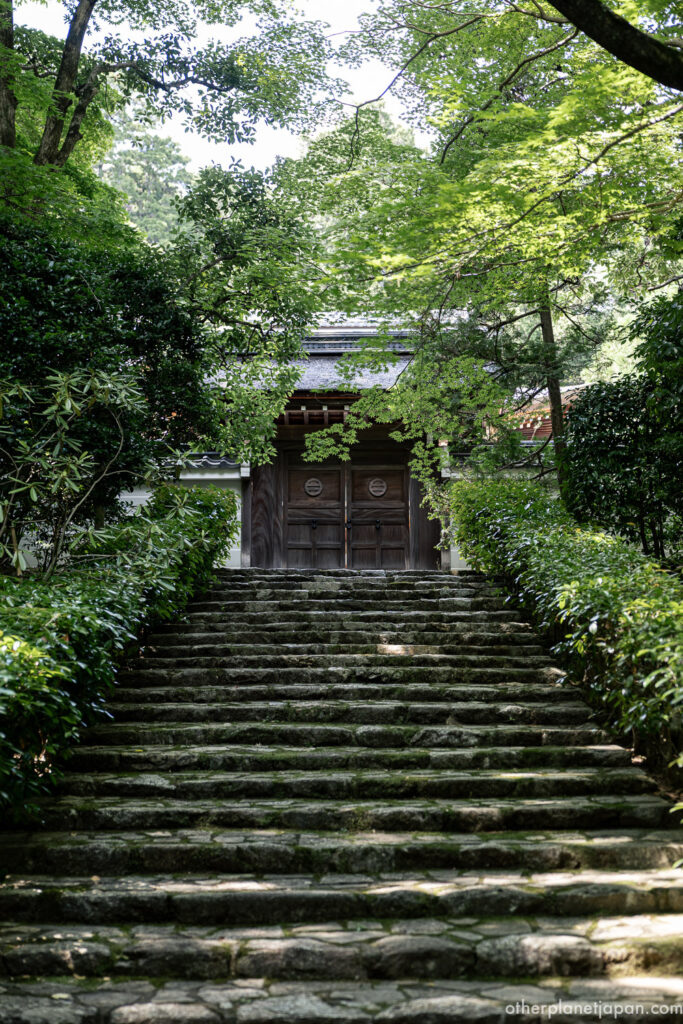
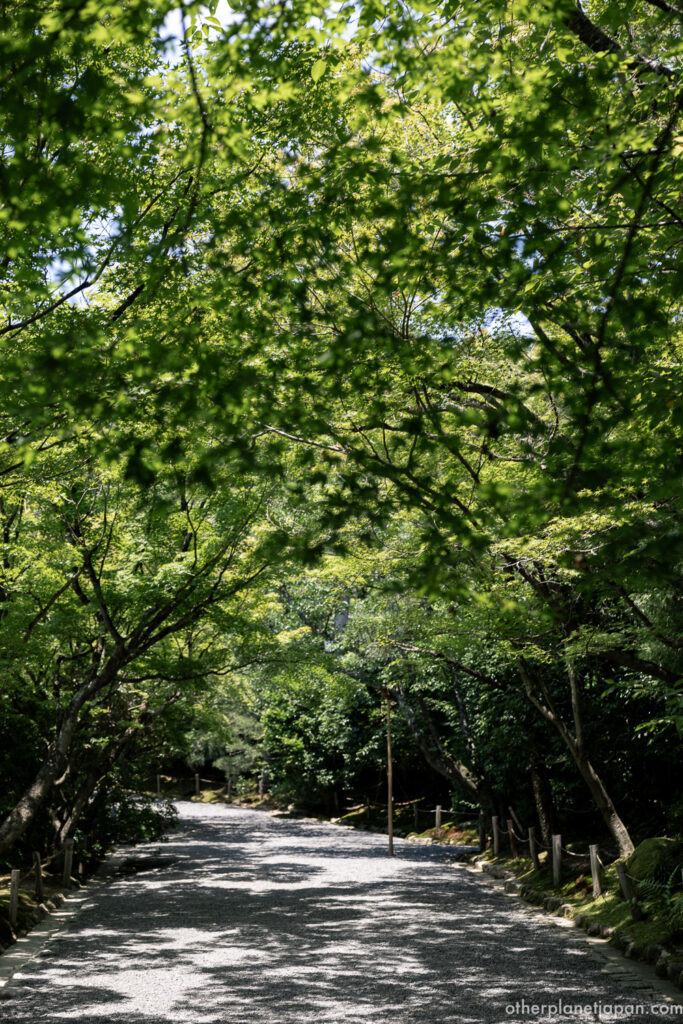
It felt like five degrees cooler under the trees, maybe more. The approach to the main hall runs long and unhurried, dappled with komorebi — the Japanese word for sunlight scattered through leaves. For a while the only sound is gravel underfoot. It’s a strange thing to say about a place known for a garden of raked sand, but the walk in may be the part I love most. Come in summer and this shaded corridor is your reward before the heat of the garden; come in November, and the same maples overhead turn the whole path to fire.
The Miniature Garden You Can Touch
Before you reach the famous garden, pause at the small one outside.
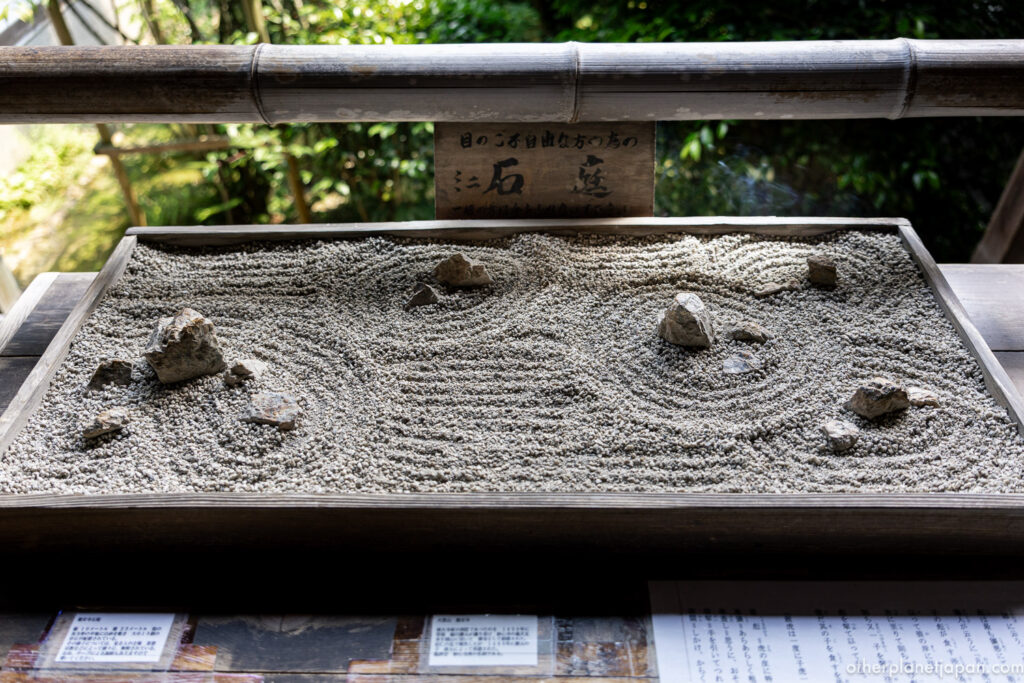
Near the entrance to the hall sits a miniature replica of the rock garden, built for visitors who cannot see. Run your fingers over it and you take in the whole layout at once — every stone, every raked line, held in the palm of your hand.
And here is the small irony of Ryoanji. The garden’s famous puzzle — that you can never see all fifteen stones at once — only holds true from a certain height, seated on the veranda. Walk the miniature with your fingertips first, then go sit where you can’t. Touch the whole thing, then lose it. Almost no foreign visitor stops here, and almost every one of them should.
The Ryoanji Rock Garden
Sit down on the edge of the veranda and the garden is dazzling.
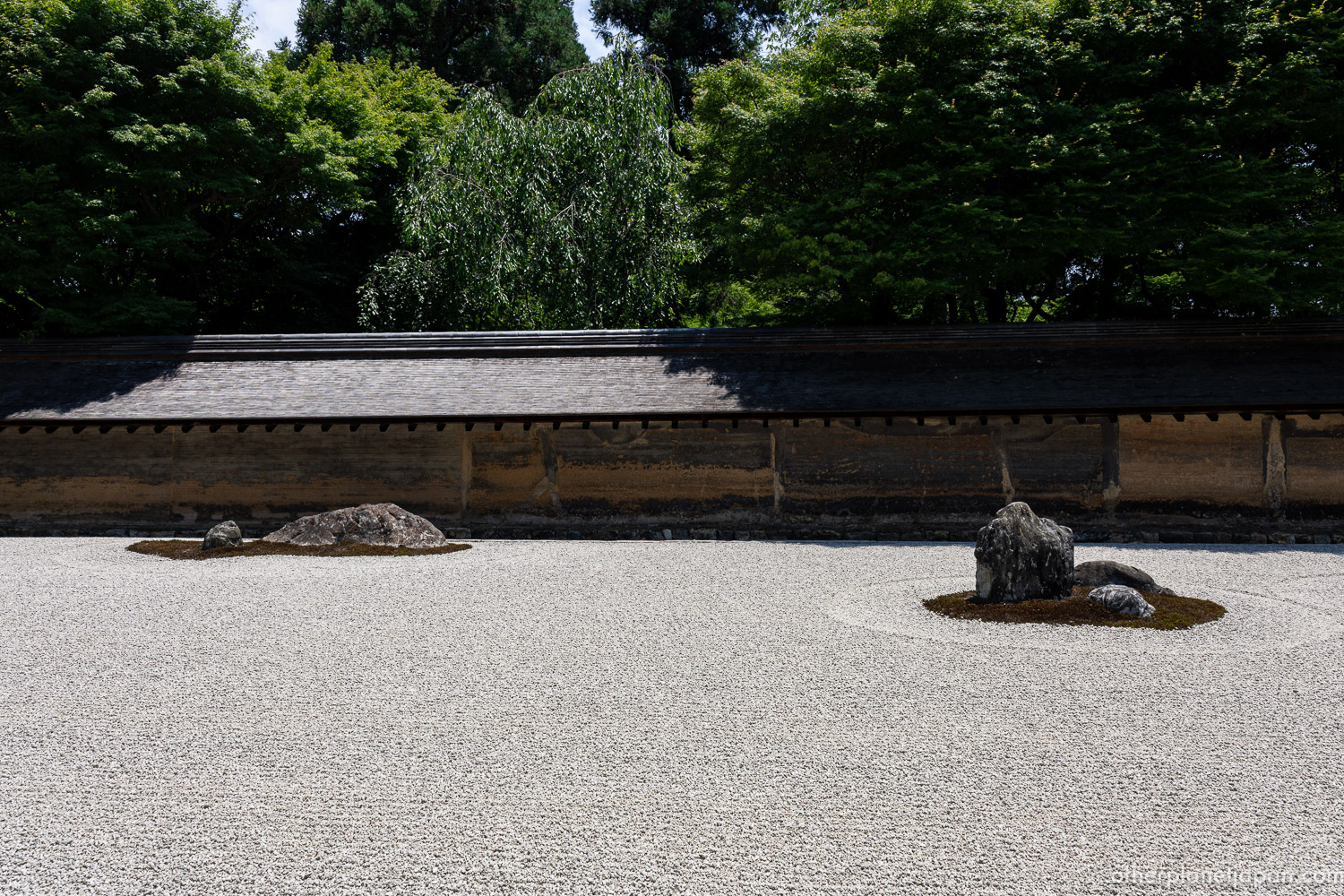
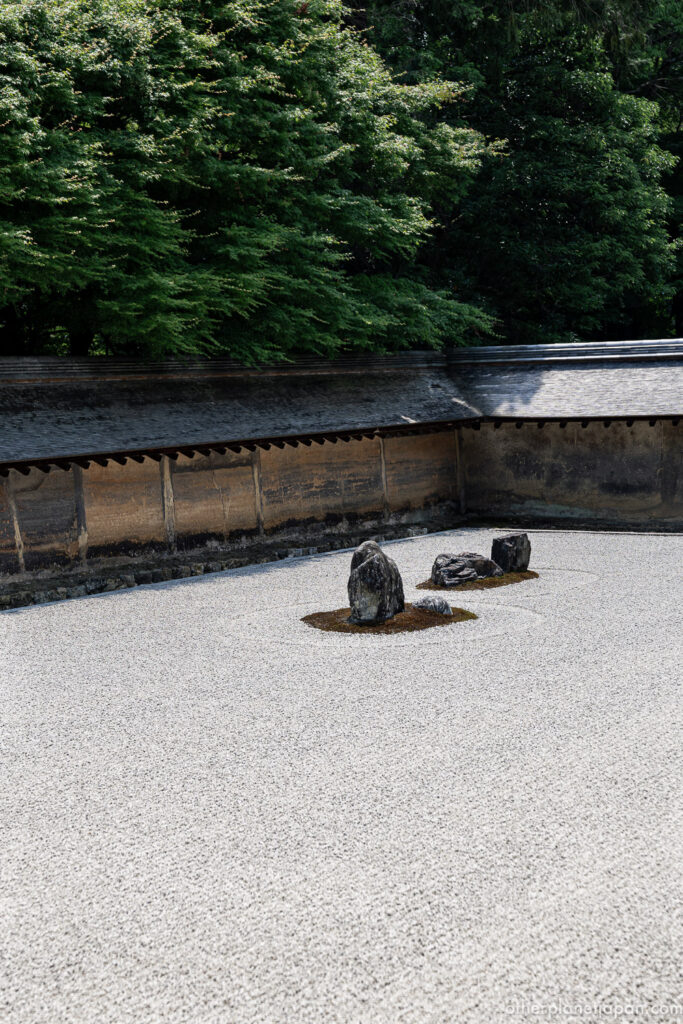
The gravel throws the sunlight straight back at you. The heat rises off the raked sand in waves. Fifteen stones sit in five groups on a bed of white gravel, and from no single spot along the veranda can you take in all fifteen at once. Whether that was intentional or accidental, no one can say for certain.
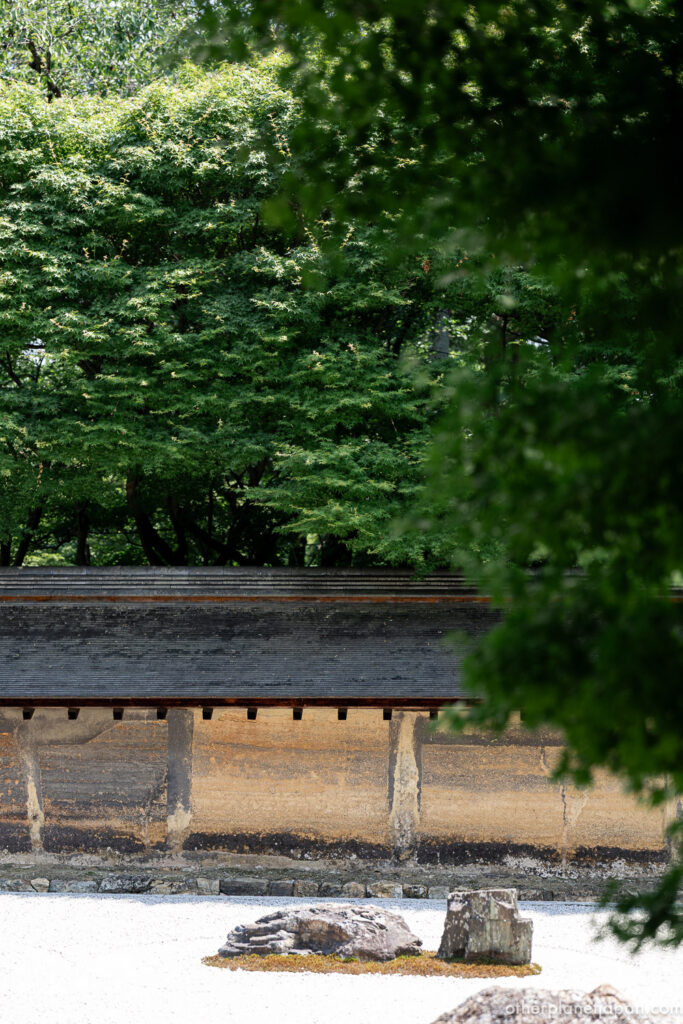
Behind the stones runs the aburadobei, an earthen wall built with clay boiled in rapeseed oil. Over the centuries the oil has seeped back out, and the wall now carries its own slow watercolor of stains and shifting browns — an accident of time that frames the garden as well as any wall could. Who designed the garden, and when, is still argued over. Some credit the tea master and artist Soami; others point to the names of two gardeners carved into the back of one stone. The temple itself makes no promises.
It was a Saturday, and the veranda was crowded with students and travelers. And yet, for a few short moments, the crowd fell quiet. A soft wind moved through, and I felt a freshness I couldn’t remember feeling before. It didn’t last. Bright and hot, still and cool — I sat there a while, unable to decide which was the real garden, which is probably the point.
The Dragon in Ink
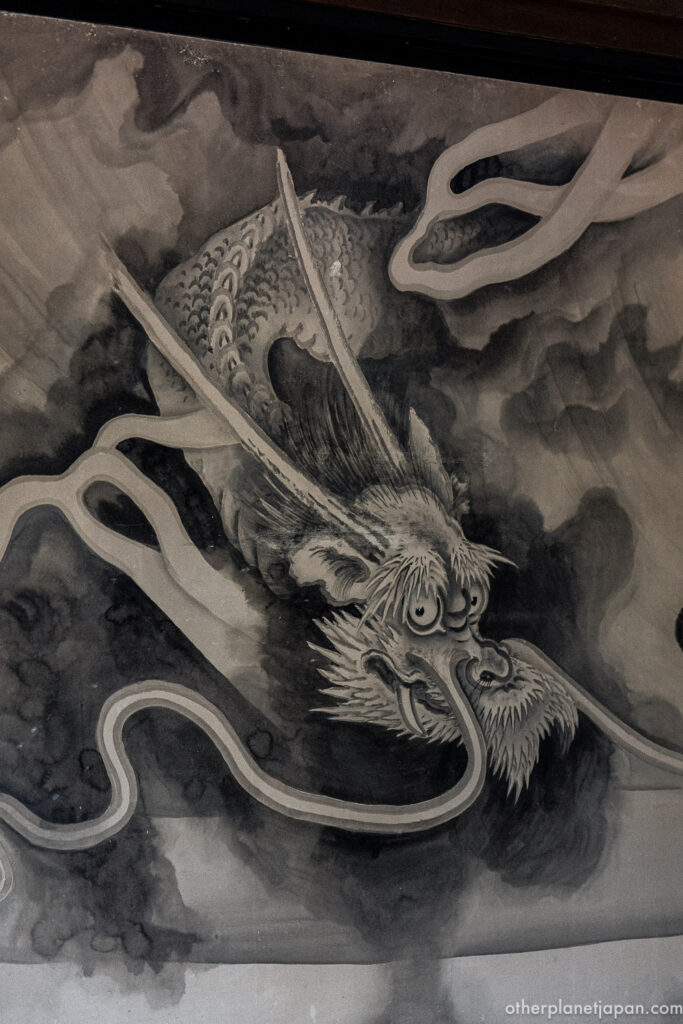
The temple’s name itself contains the dragon — Ryo-an, borrowed from a Chinese Zen monastery called Ryoanzan Tosotsuji, where a revered master once taught. The ink dragon on the ceiling overhead has been here, in one form or another, since long before anyone started counting stones.
The Tsukubai Almost Everyone Walks Past
Behind the hall, on the north side, almost no one stops.
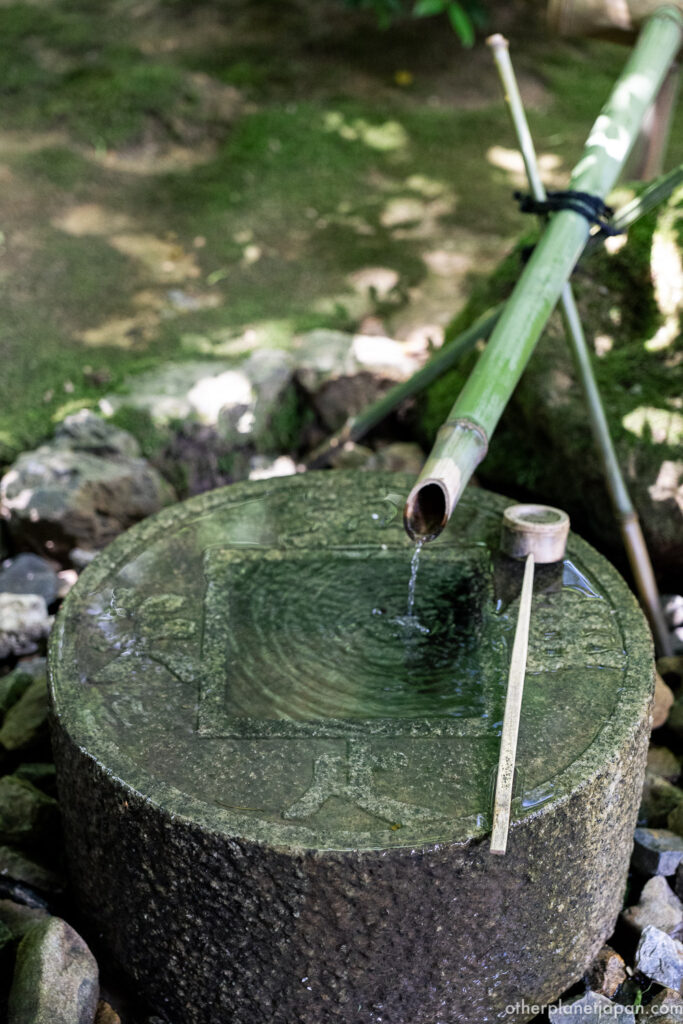
There sits a tsukubai — a low stone water basin. Its center is cut as a square, the hole that holds the water, and four characters are arranged around it so that each one borrows that square as part of itself. Read together they say ware tada taru wo shiru: “I learn only to be content.” Someone turned Chinese characters into a visual puzzle centuries before any TV quiz show made a sport of it, and did it with a lightness that still makes me smile.
What you see on the public route is a faithful copy. The original sits before Zorokuan, a teahouse normally closed to the public. Still, the copy is worth the few steps off the main path — which is more than most visitors give it.
Kyoyochi Pond and Its Hidden Shrine
Most people rush past the pond on their way to the stones. Don’t.
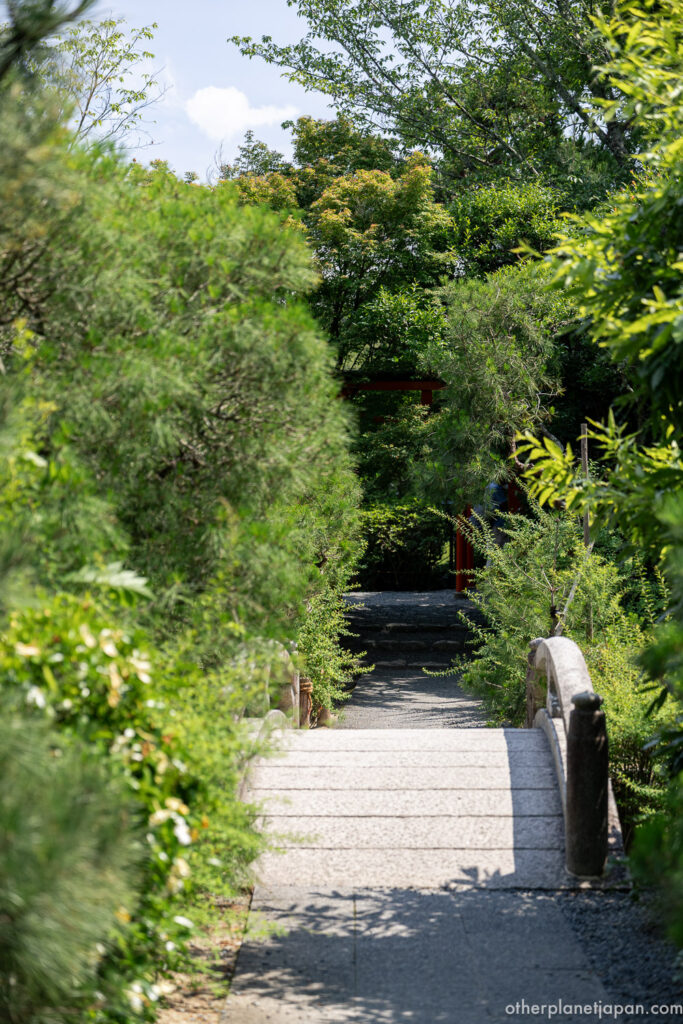
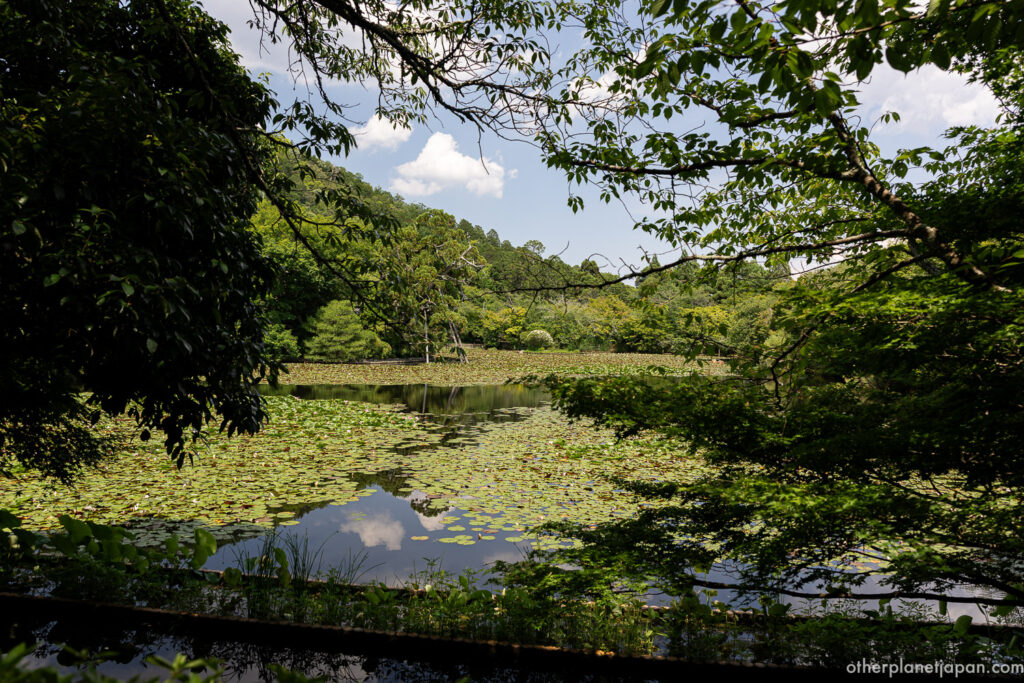
Kyoyochi Pond spreads across roughly 2,500 tsubo — a little over 8,000 square meters — and holds a small shrine on an island near its center, reached by a low stone bridge. Plenty of visitors miss it entirely, which is exactly why I’d stop here on the way in, before the garden pulls all your attention forward.
One practical note from experience: the path along the pond as you arrive is beautiful but hemmed in by trees, with few clear gaps to shoot through. Save your photos for the walk back, when the water opens up and the branches stop getting in the way. In July the lotus comes into bloom, and the pond becomes a reason to visit in its own right.
Leaving: By the Water
Walk out of the garden hall and the path loops you back around Kyoyochi Pond.
A Western man, traveling alone I think, asked me to take his photo with the pond behind him. I wanted to catch both his smile and that glassy water carpeted with lily pads, but I couldn’t manage it. I don’t think I got the water right at all. I offered to try again. He waved me off, took his phone back with a grin, and walked on perfectly happy with the imperfect shot.
I’d just spent an hour reading a wall that says “I learn only to be content.” He didn’t need the wall.
Before you leave the grounds, though, there’s one more quiet thing worth doing — this time with a bowl in front of you.
Seigen-in: Yudofu Beneath the Trees
You can eat lunch without ever leaving the temple grounds.
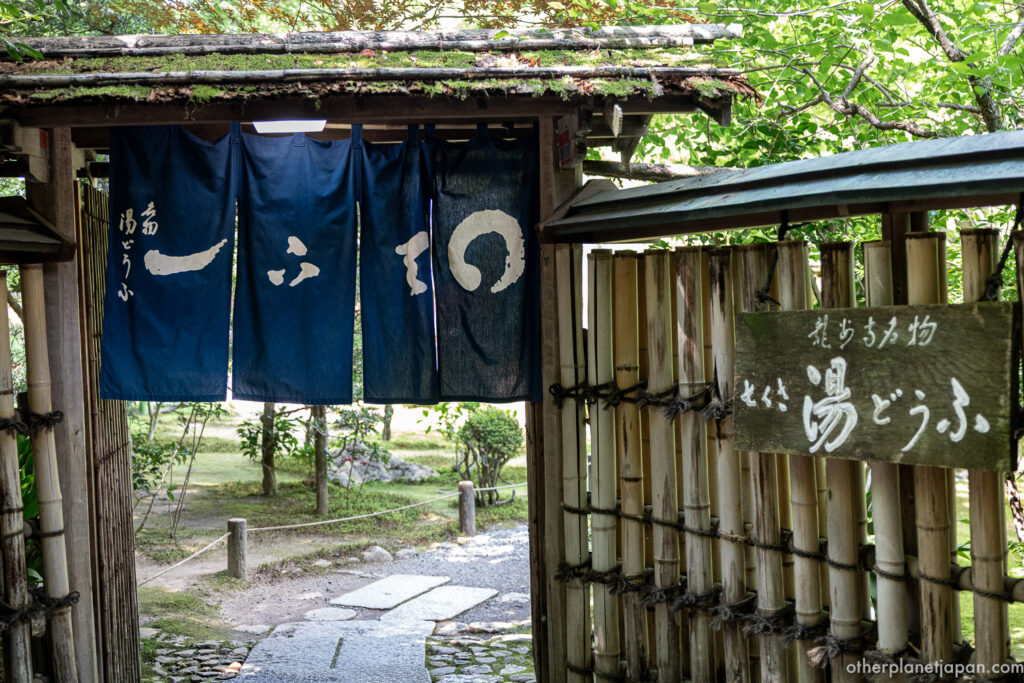
Seigen-in, inside the precinct, serves yudofu — tofu simmered at your table — looking out over a green garden. The house dish is nanakusa yudofu, a seven-herb version with vegetables, its house-made sauce and condiments quietly doing the work. You sit on tatami, and time slows down.
Yudofu is inseparable from Kyoto’s Zen temples. It comes out of shojin ryori, the meatless, fishless cooking of the monasteries, where flavor is drawn patiently out of tofu, yuba, and whatever the season offers. Nothing about it shouts. After an hour in front of a garden built by taking things away, a bowl made on the same principle lands exactly right.
Seigen-in — Prices
| Dish | Price |
|---|---|
| Shojin ryori with nanakusa yudofu | ¥4,000 |
| Nanakusa yudofu | ¥2,000 |
| Rice | ¥300 |
Closed: Wednesdays and Thursdays
The Kinukake-no-Michi: Three Temples in a Day
Ryoanji sits along a road worth knowing.
The Kinukake-no-Michi runs about 2.5 kilometers, linking three of Kyoto’s UNESCO World Heritage temples: Kinkakuji, Ryoanji, and Ninnaji. The name — loosely, “the silk-draping road” — comes from a legend in which Emperor Uda, wanting to see snow on a summer day, had white silk draped over Mt. Kinugasa in its place. Walk all three in a single day and, slowly, you start to see what Kyoto chose to keep.
From Kinkakuji it’s about an 18-minute walk. For the full story of the Golden Pavilion, see my guide to the Golden Pavilion at Kinkakuji.
Goshuin
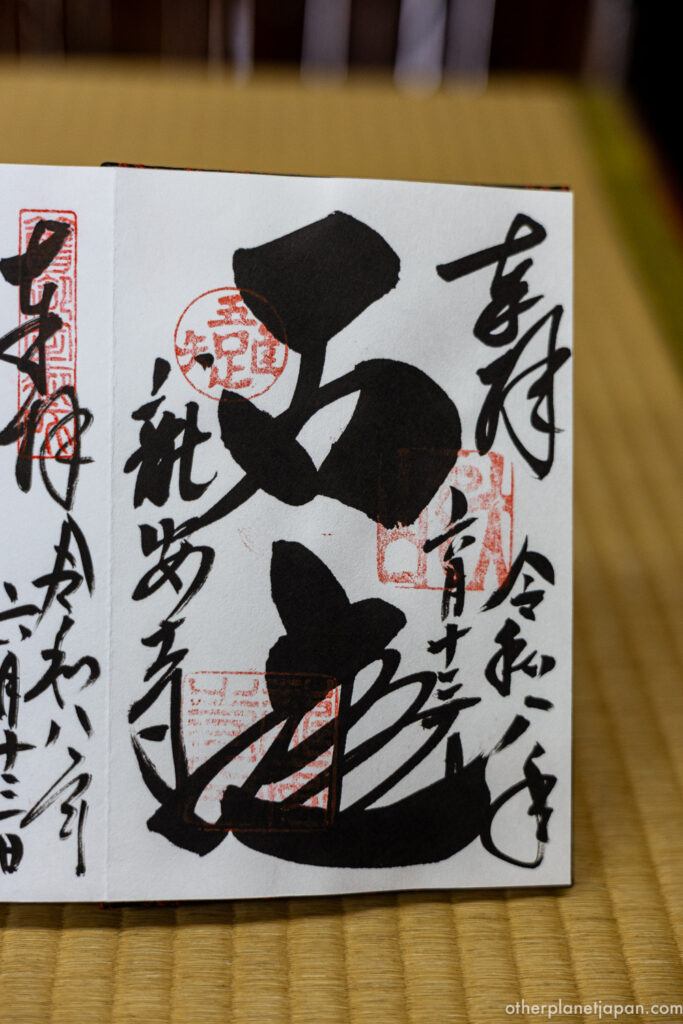
Ryoanji offers a goshuin, a hand-brushed temple seal.
Most temple seals I’ve collected are written in a fine, delicate hand. Here the brush turns bold: the two characters for sekitei — “rock garden” — come down thick and confident across the page. It costs ¥300 and is brushed straight into your book. You hand the book over, wander the grounds, and collect it on your way out. Close to closing time, they may give you a pre-written slip instead.
Practical Information for Visiting Ryoanji
Getting there
- Keifuku Electric Railway (Randen): 8-minute walk from Ryoanji Station
- City Bus Route 59 / JR Bus Takao-Keihoku Line: 1-minute walk from the Ryoanji-mae stop
From Kyoto Station, the bus is by far the easier option — City Bus Route 59 runs directly to the Ryoanji-mae stop. You could take a taxi and, if you’re lucky, get a driver with stories like the one I met at the start of this piece. What you can count on is the 59.
For official hours and updates, see the Ryoanji Temple official website.
Hours
- 8:00–17:00 (year-round)
- December–February: opens 8:30, closes 16:30
Open: Daily, year-round
Admission
- Adults: ¥600
- High school students: ¥500
- Elementary and junior high students: ¥300
How long to plan: At least 40 minutes for the garden, pond, and grounds. Add an hour to ninety minutes if you’re stopping for tofu at Seigen-in.