The smell of tatami. Cicadas. An electric fan turning its head from side to side.
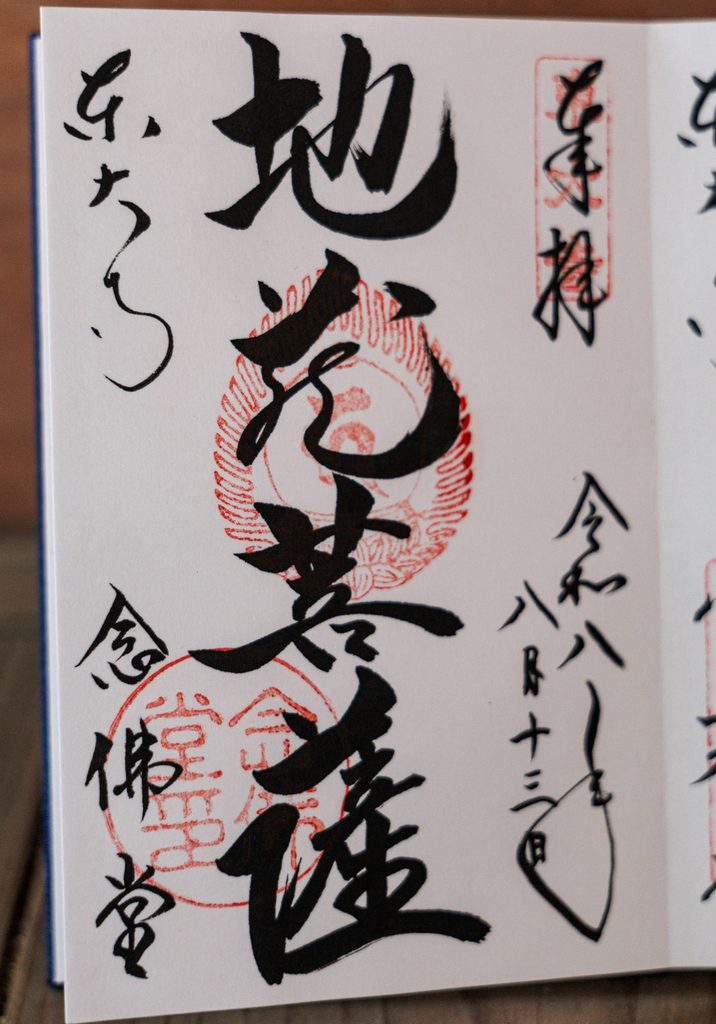
With my eyes closed, this was a Japanese summer and nothing more. With them open, a Jizo Bosatsu sat in front of me, and there was no one else in the hall. Just the two of us.
The deer, regrettably, were silent.
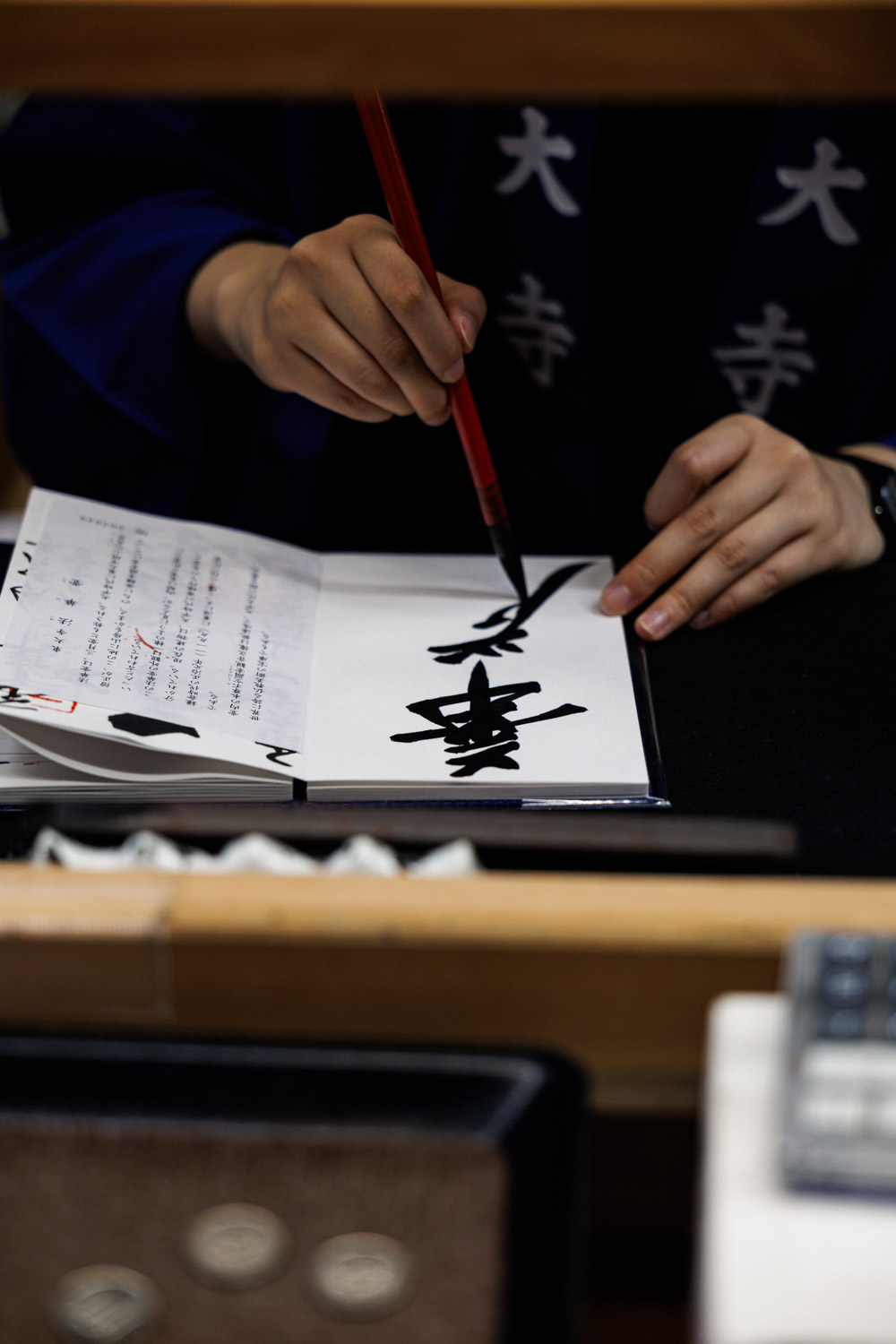
This was Nenbutsudo, a small hall at Todaiji in Nara, and I was in it because I had asked for Todaiji goshuin at the office next door. Five of them. A goshuin is usually called a temple stamp in English, which undersells it, and I will come back to that. The front doors were shut, but there was a way in from the side, and I took it while the calligrapher worked.
Five may have been too many. I have come to believe the quiet setup carried a message: sit there, be still, and wait until I am done.
How long has this Jizo been sitting here? How many people has he listened to? Would he listen to me?
I have never been kept waiting so well.
What a Goshuin Actually Is
Shu-in means red seal.
It is written into your own book, by hand, as proof that you came and paid your respects. And it began as a receipt. Pilgrims copied out a sutra, offered it at a temple or a shrine, and were handed a note confirming the deposit.
A sutra at a shrine sounds odd until you remember that gods and buddhas were not filed separately then. Taira no Kiyomori, who effectively ran the country in the twelfth century, commissioned a set of decorated sutras for Itsukushima Shrine on the understanding that the deity there was Kannon in another form. That set survives as the Heike Nokyo.
Over the centuries the sutra fell away and the receipt stayed. Then the railways arrived, temple circuits became a holiday, and guidebooks appeared to serve them. The word goshuin itself does not turn up in print until around 1935. The practice is old. The name is not.
I Was Sure Todaiji Goshuin Were Complicated
They are not. I need to say that first.
But for years I believed they were, because that is what the Japanese internet told me. Search in Japanese and the old pages are still there. Fifteen kinds of goshuin at thirteen locations. Plan your order or it will take all day. Seven or eight kilometers of walking, so wear sneakers. If the priest is out, you get nothing. Ring the intercom.
Some goshuin, the pages said, are available for one day a year. Not one season. One day.
There used to be a desk directly under the great bell, where a staff member sat and wrote. The photo is still online. Anyone who rang that bell during office hours was doing the calligrapher’s hearing no favors.
I read all of this and braced myself.
Then I checked the temple’s own website. Todaiji publishes an English page listing every hall that issues goshuin, with a downloadable map of the recommended route. The complicated part was me.
Thirteen are available today, counting the one at the shrine on the grounds. Two more, both at Shigatsudo, are suspended while the hall is under repair. That is the whole inventory, and the old count of fifteen is what it will be again when the scaffolding comes down.
Still, the official page leaves a few things out. It does not say which halls make you pay admission before anyone will write in your book, which one is a Shinto shrine rather than a Buddhist hall, or how long the whole circuit actually takes in August.
Choose by Letter
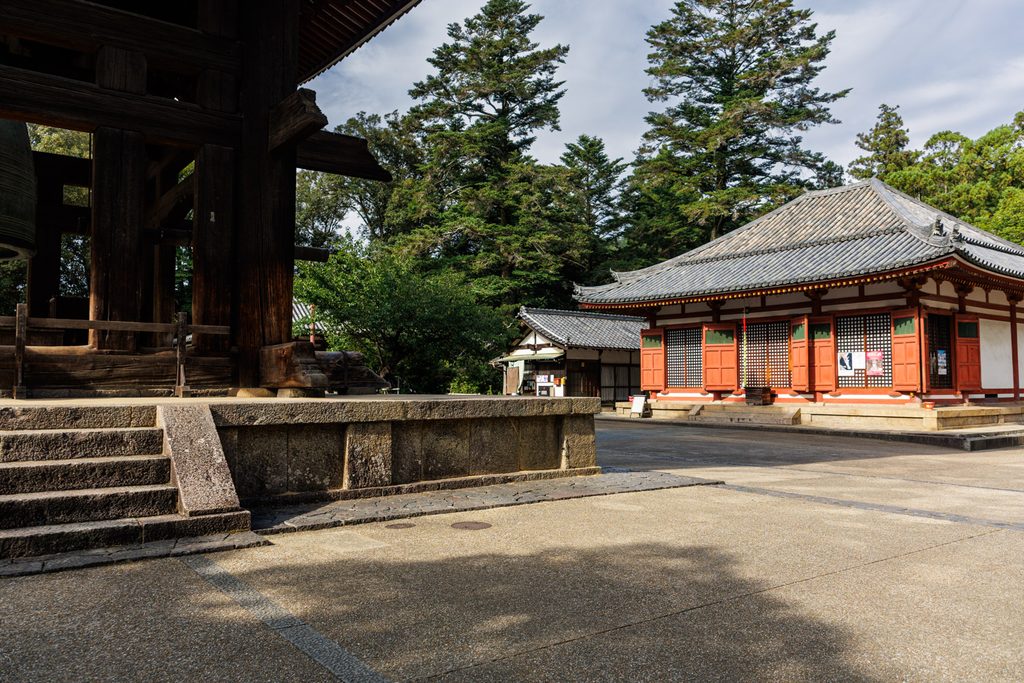
Start at the bell.
East of the Great Buddha Hall, on a rise, stands the bell tower, and three small halls huddle around it: Nenbutsudo, Gyokido, and Shunjodo. None of the three issues goshuin at its own door. Instead, a modest temple office beside them handles all three.
At the window, samples of each goshuin are laid out, and each has a letter of the alphabet next to it. You point to the letter. That is the whole system.
I chose five. Aizen Myoo, Amida Nyorai, and Chogen Shonin all belong to Shunjodo, which is dedicated to Chogen, the monk who rebuilt the Great Buddha Hall after it burned in the twelfth century. Gyoki Bosatsu is Gyokido’s, for the monk who raised the funds to build it in the first place. Jizo Bosatsu is Nenbutsudo’s. Three halls, one window, and that is why the letters exist. It took me a while to work that out.
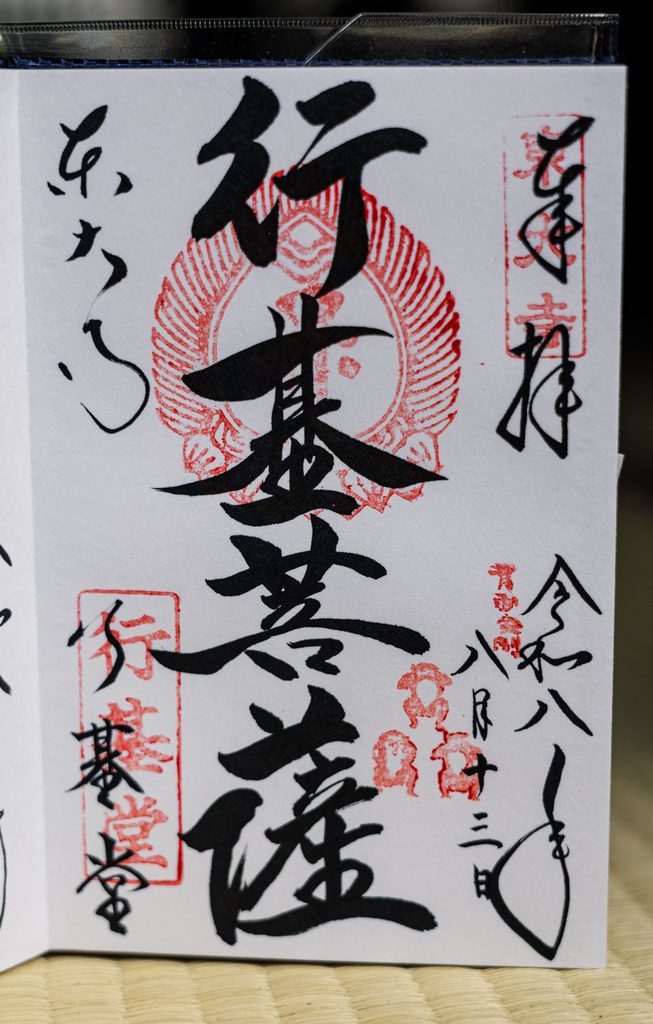
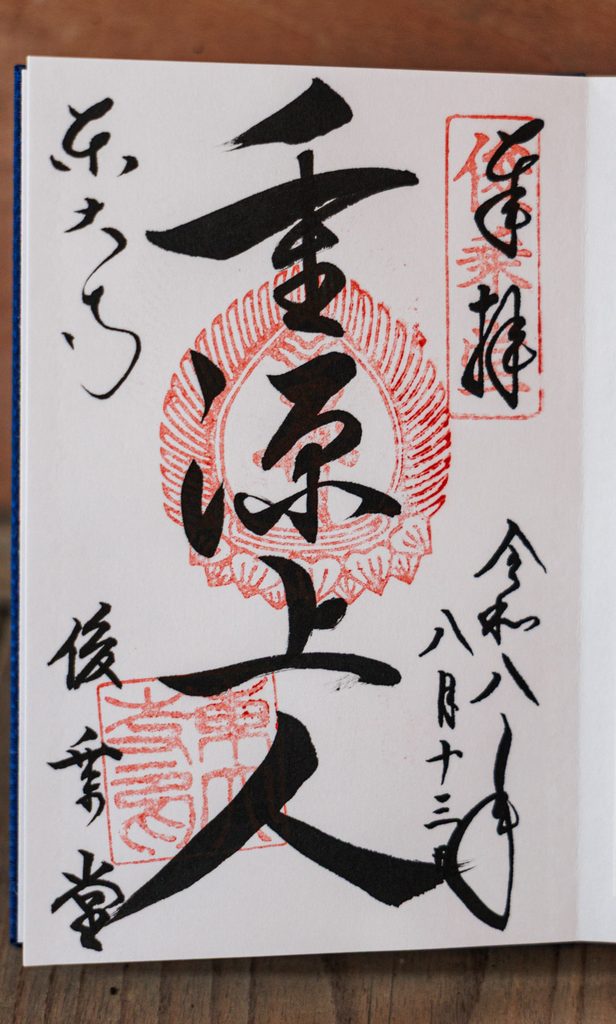
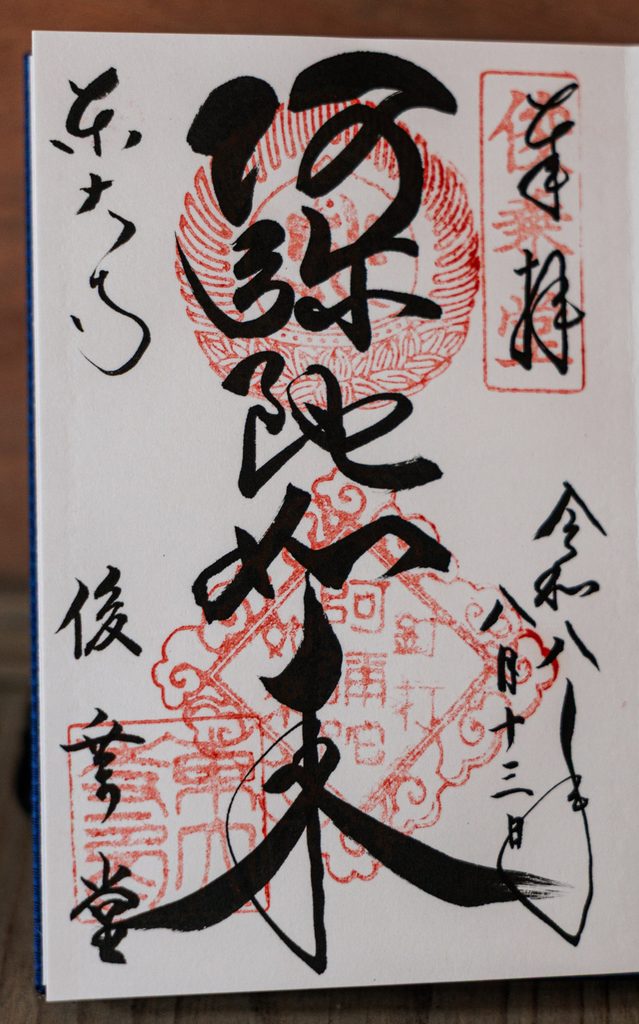
Each goshuin is ¥300. Five came to ¥1,500. Cash only, here and everywhere else at Todaiji.
The time it took to write five was the time I spent with the Jizo.
A Museum of Buddhas
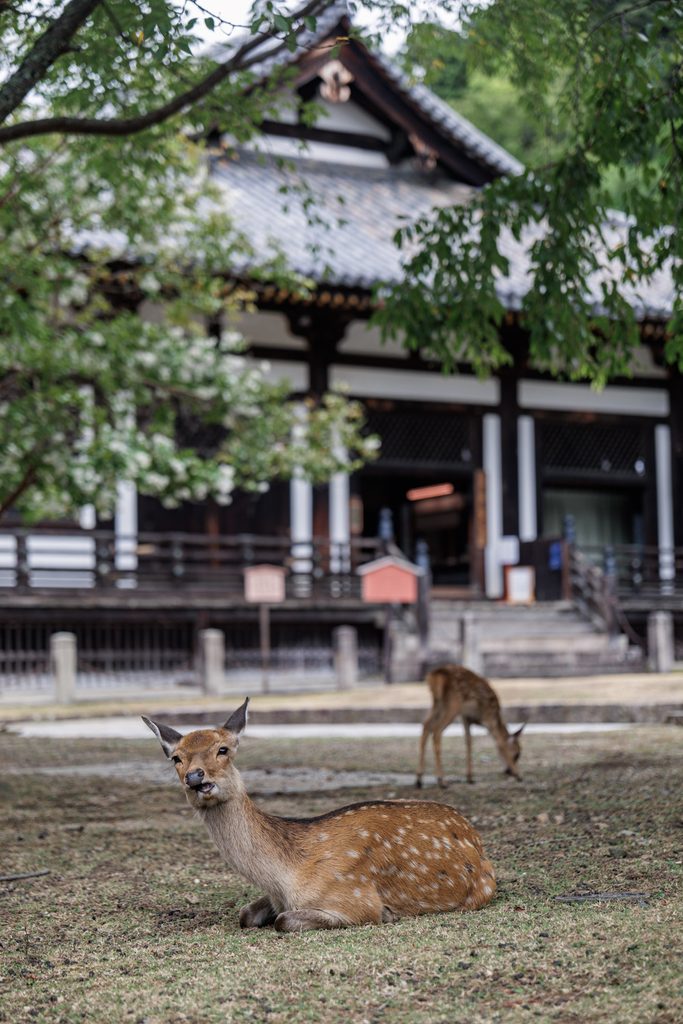
Climb east from the bell and you reach Hokkedo.
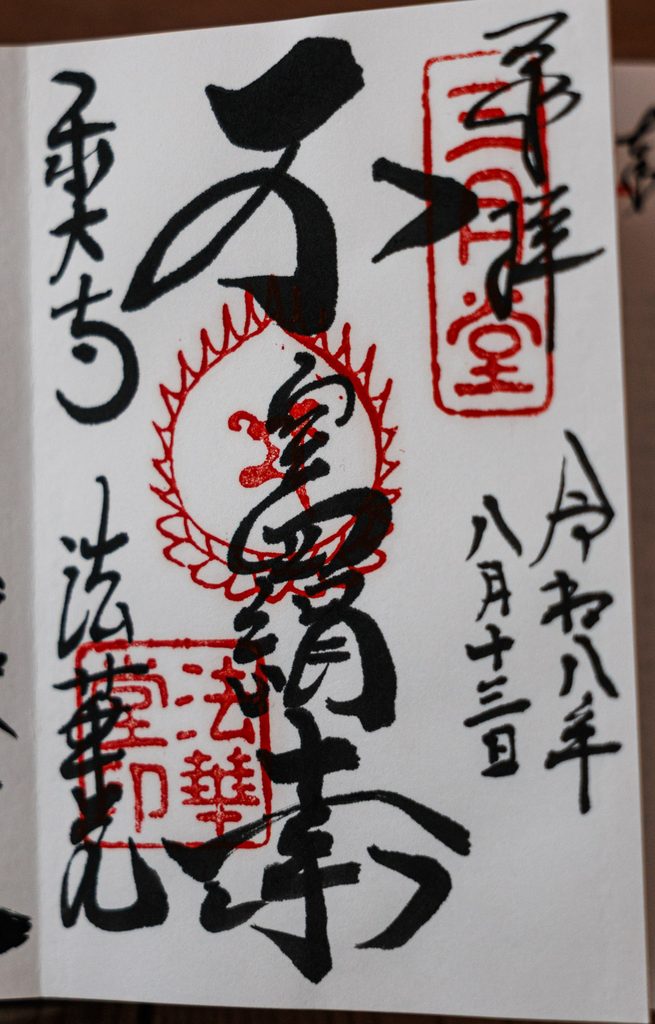
Most people know it as Sangatsudo, the Third Month Hall. Inside, it is less a hall than a museum: a crowd of statues standing together in the dim, several of them from the Nara period. Admission is ¥800. For a moment I thought that was steep for what was in there, and then I remembered how old it all was and felt embarrassed.
The goshuin here reads Fuku Kensaku Kannon, the hall’s principal image, and costs ¥300 on top of admission. You cannot skip the hall and get the stamp. The desk is inside.
Nigatsudo Has Two Goshuin. They Are “the Same”
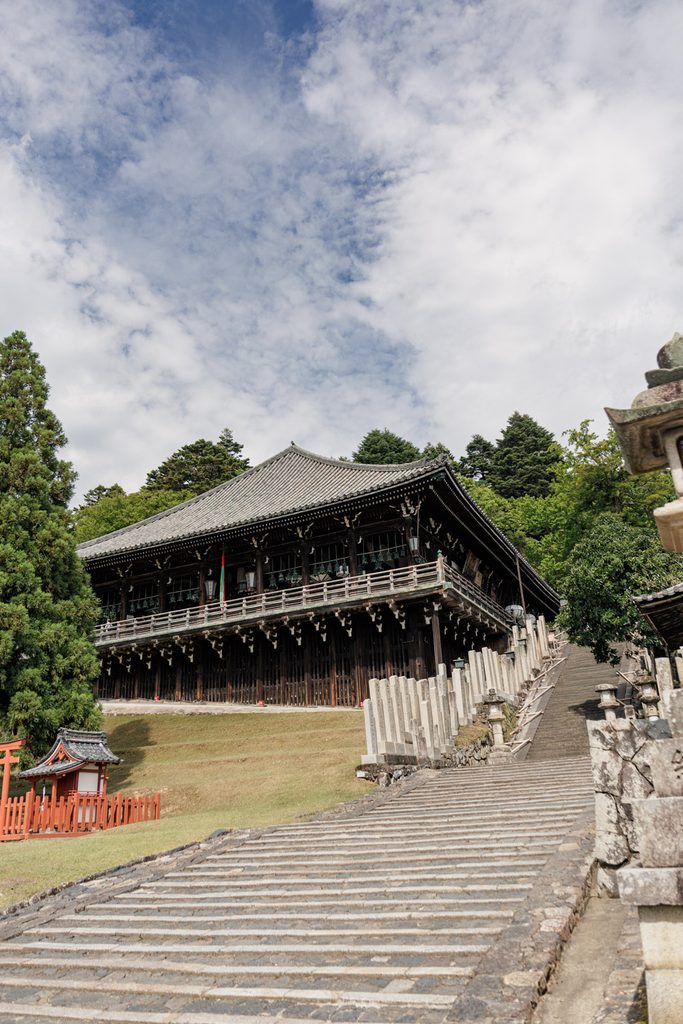
Nigatsudo needs no introduction.
It sits next to Hokkedo, pushed out over the slope on wooden stilts, and every March it hosts the Shuni-e, the fire and water rite that Japanese people simply call Omizutori. You climb stone steps to reach it, which in August takes longer than the distance suggests. There is no admission.
Nigatsudo issues two goshuin. One reads Namu Kan, an invocation to Kannon. The other carries a waka poem.
I asked the woman at the desk what the difference was. “The price is the same, and the goshuin is the same,” she said. Tell a collector two things are the same and you have sold two. I asked for both.
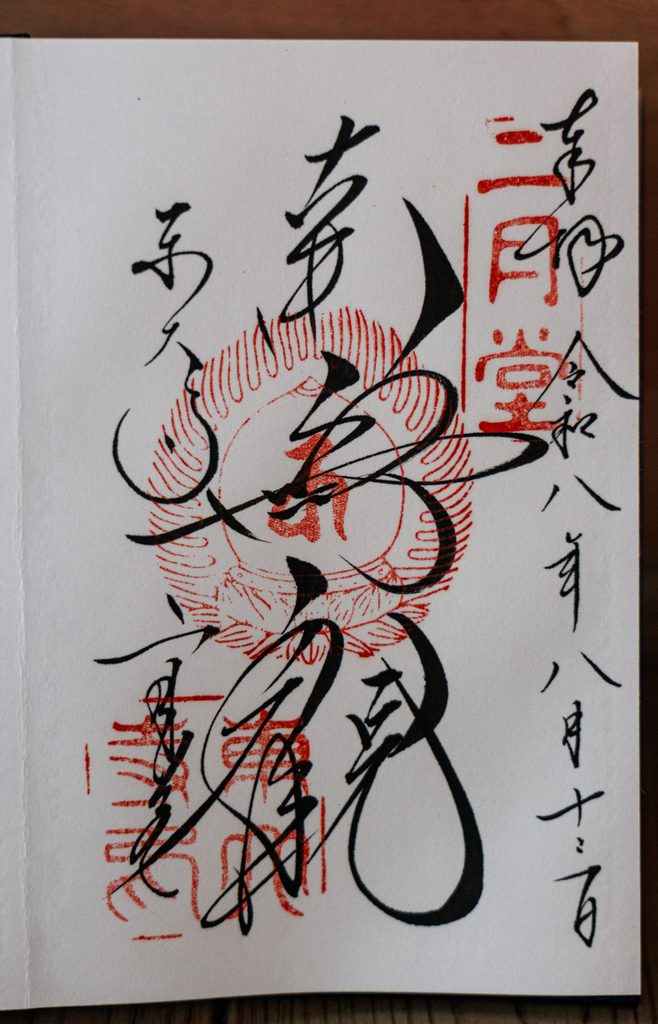
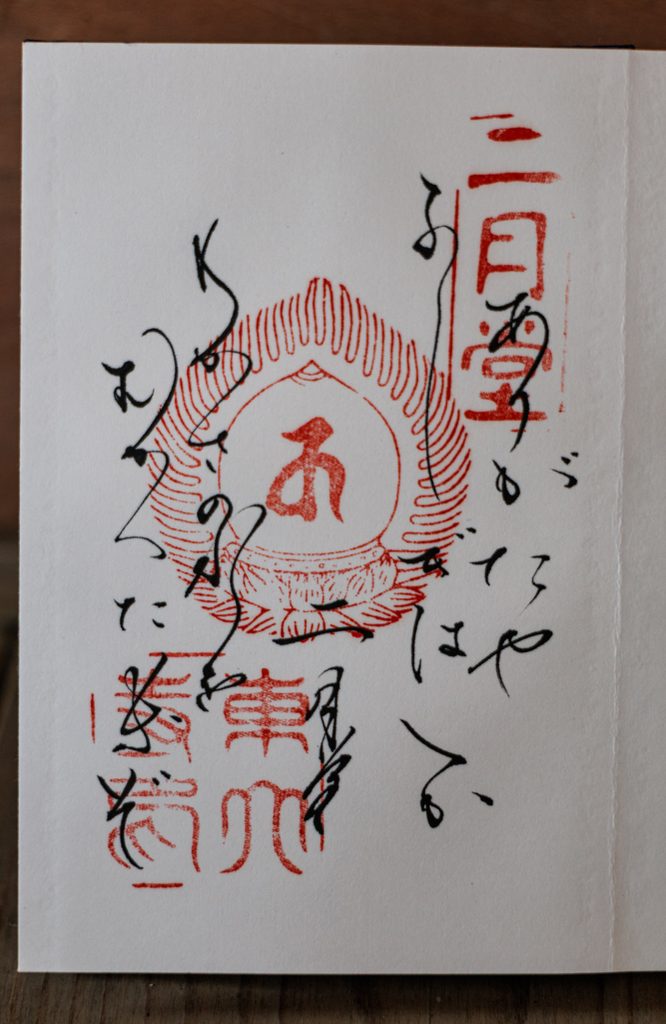
The poem, roughly, says this:
How blessed. Is it not a wonder? Nigatsudo welcomes the water of Wakasa.
Wakasa is on the Japan Sea coast, in what is now Fukui Prefecture, and every March its water is welcomed here. How that works is a longer story, and I told it in my Omizutori article. What matters at this desk is that the poem is the hall, in five lines, for ¥300.
The Stamp That Took Her Whole Weight
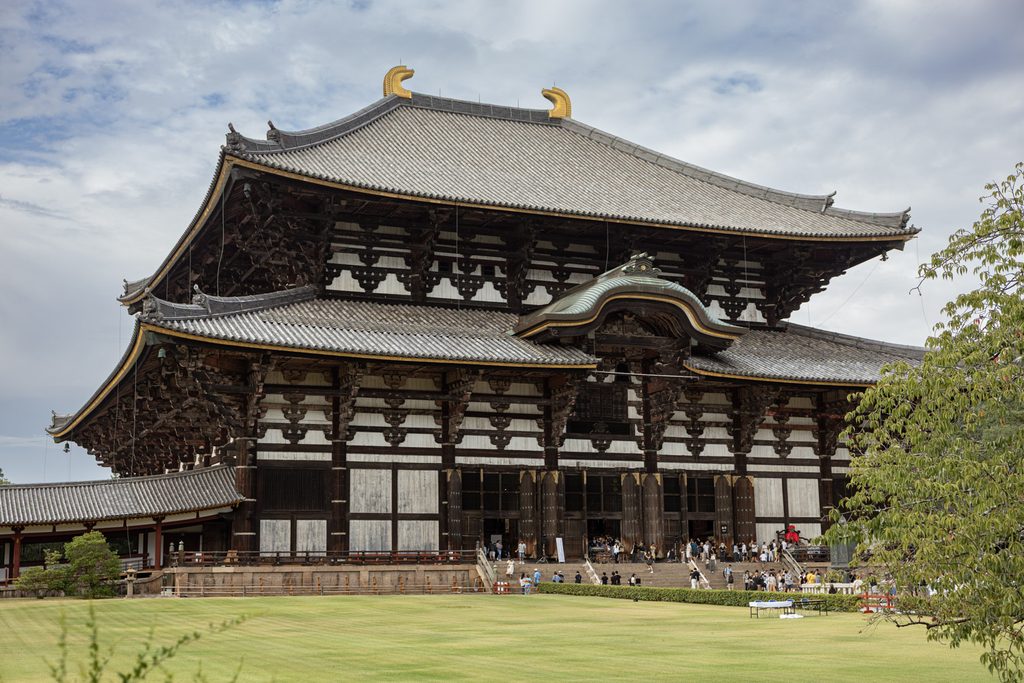
The Great Buddha Hall issues its goshuin near the exit.
Admission is ¥800, and as at Hokkedo, the desk is inside, so there is no getting the stamp without seeing the Buddha. Which is the right order of things.
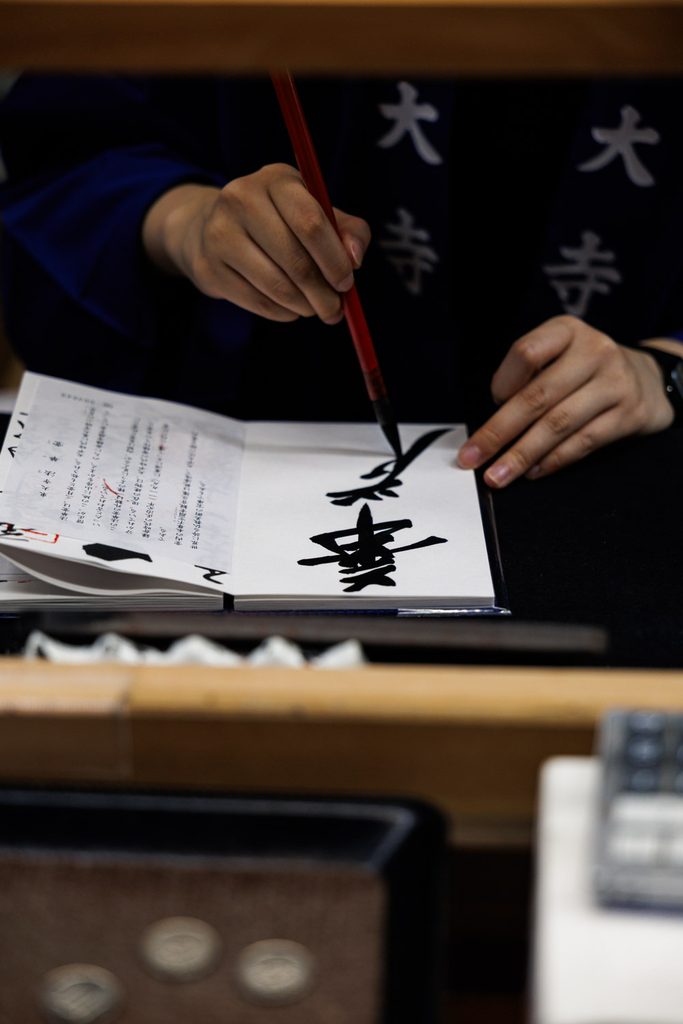
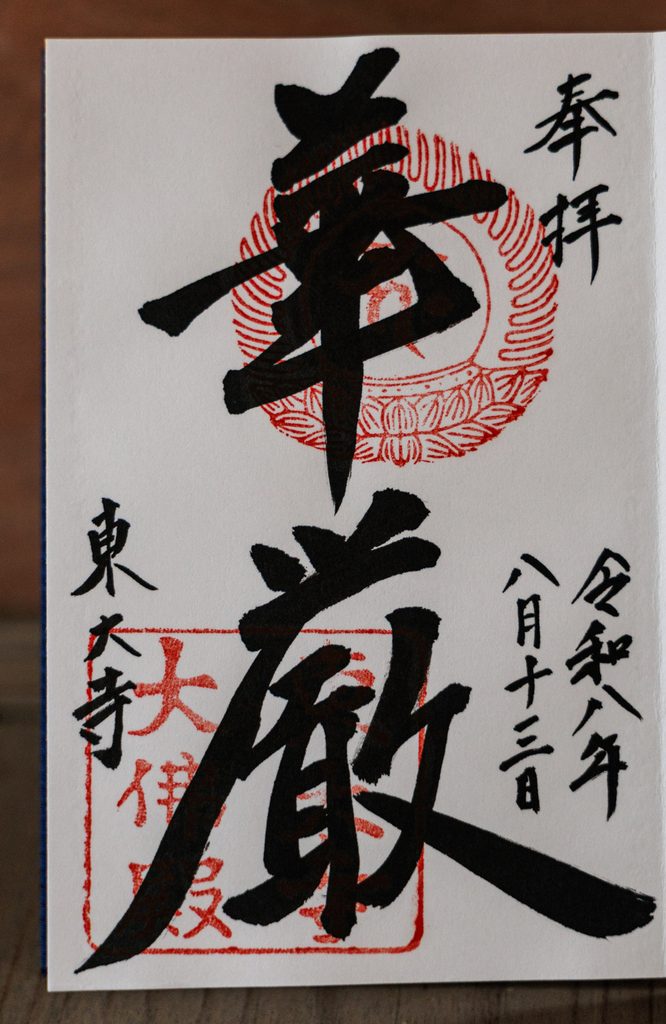
A woman wrote mine. Brush, ink, the two characters for Kegon, the school of Buddhism Todaiji belongs to. The name means flower ornament, and it works on two levels: to build up merit through practice until it comes to something, and to adorn a buddha with flowers. Then the seal. She leaned into it with what looked like her entire body, as if the stamp would not count unless it hurt a little.
That weight is in the page.
Tamukeyama Hachimangu Is a Shrine, Not a Temple
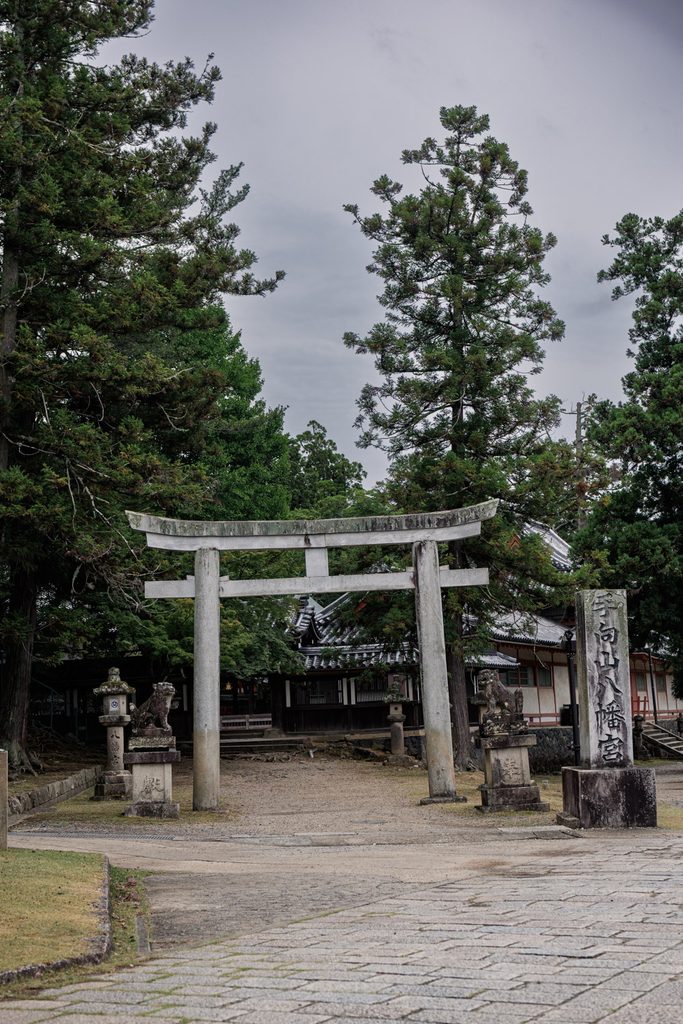
I came back on a second day, and started with the torii.
Look straight out from the front of Hokkedo and you see it, in stone. That is Tamukeyama Hachimangu. It stands inside the Todaiji grounds and has guarded the temple for well over a thousand years, but it is a Shinto shrine, not a Buddhist hall. If you keep separate goshuincho for temples and shrines, this is where you switch books.
The shrine does not appear on Todaiji’s goshuin list. Of course it does not. It is a different religion.
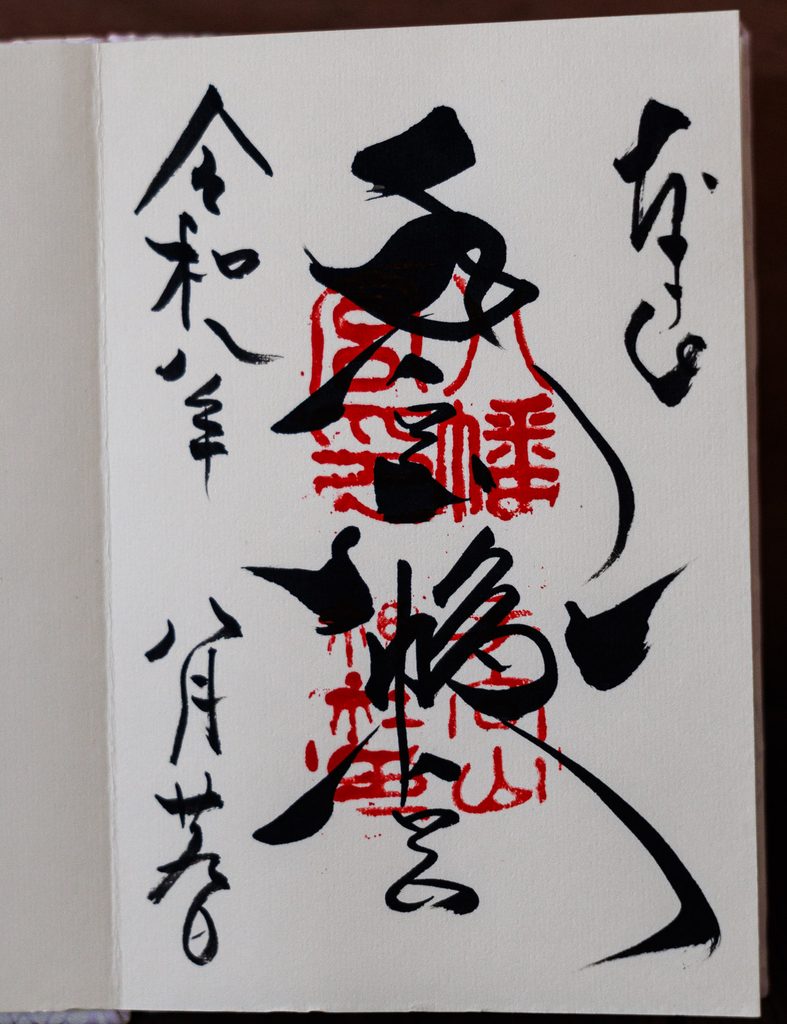
I wrote about the shrine itself, and its vending machine, in my Tamukeyama Hachimangu article.
The Hall I Almost Walked Past
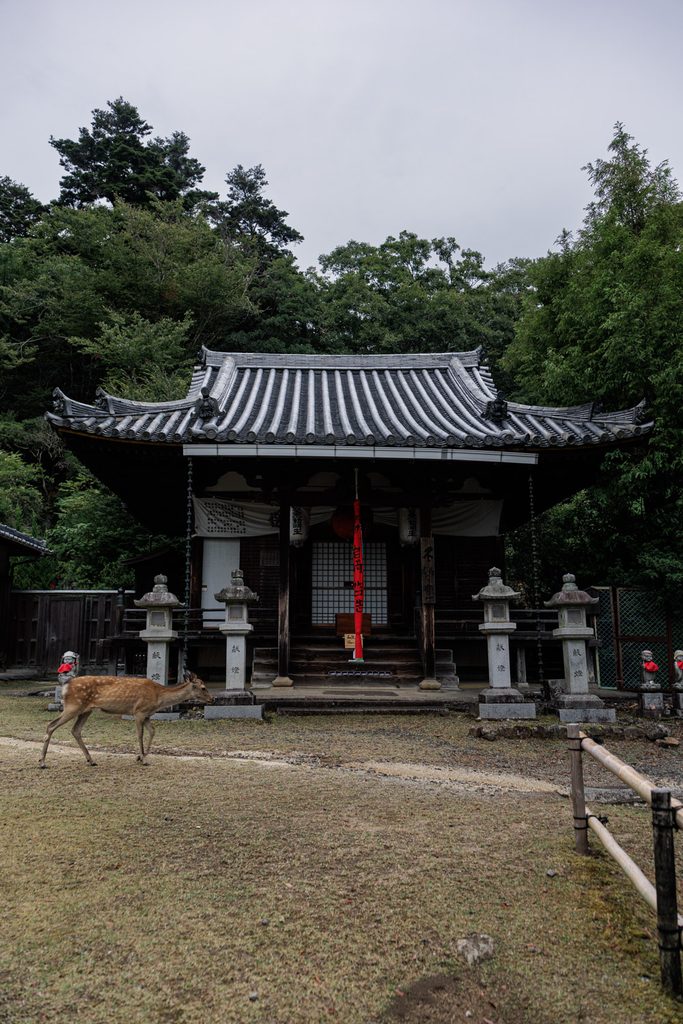
Between Hokkedo and the stone torii, a lane runs uphill. At the top is Fudodo.
When I found it, I doubted myself. It was smaller than I had pictured, a single hall with a red banner at the door, and I stood there wondering whether I had walked up the wrong lane. A deer walked past while I was deciding.
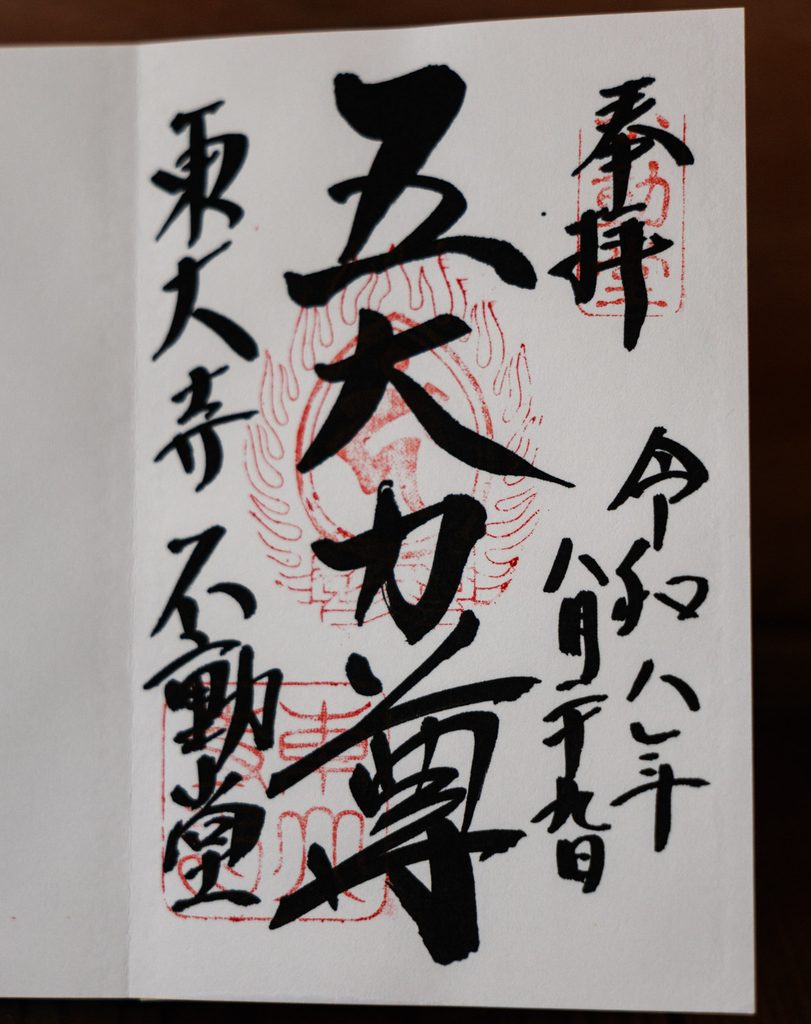
I had the right place. Fire rituals are held here three times a month. The goshuin reads Godairikison, the Five Great Powerful Ones, a set of wrathful figures whose job is to protect the nation, which is a large assignment for a hall this size. No admission, ¥300 for the stamp.
The Woman Who Let the Bug Go
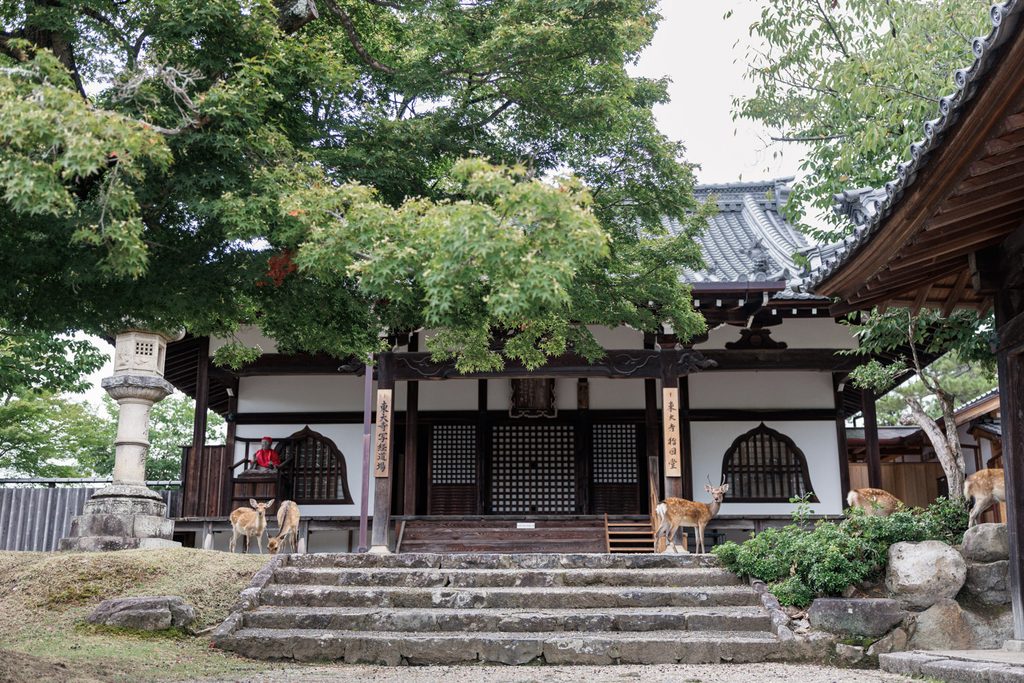
West of the Great Buddha Hall is Sashizudo.
The deer got there first. There were a dozen of them on the lawn and the steps when I arrived, standing in whatever shade the maple could spare, and I could not tell whether they had come for the shade or for the crackers I was not carrying. It was the middle of an August afternoon and I had stopped being able to tell the difference between the two motives, in them or in myself. Inside the hall it was cool. That is not a metaphor. It was simply cool, and I stayed longer than I needed to.
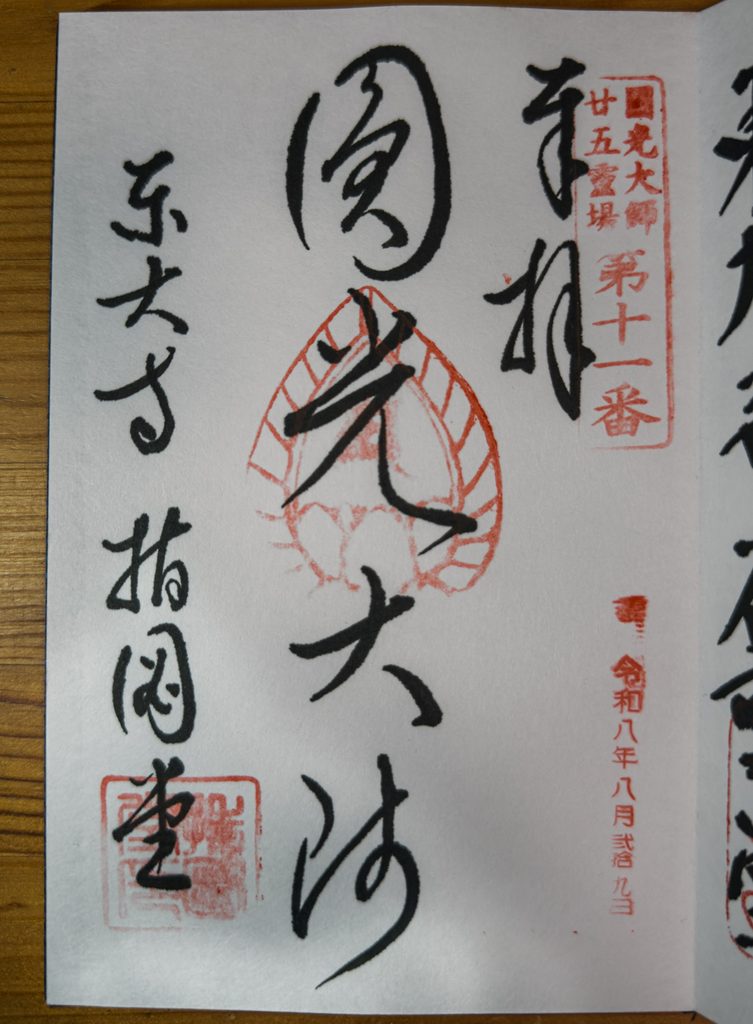
Sashizudo belongs to the Jodo, or Pure Land, school, and its goshuin reads Enko Daishi, the posthumous title of Honen, the school’s founder. A temple that belongs to one school housing a hall that belongs to another is not a contradiction here. It is just Nara being old.
The woman at the desk carried herself beautifully, and she was in no hurry to end the conversation.
While she was talking, an insect flew in between us. She caught it and carried it outside. Killing anything is forbidden here, she said.
I thought of Bhutan.
Foreigners in Bhutan travel with a guide, and I spent ten days with mine. At dinner one night a bug landed on the table, and as my hand went up he stopped me. Do not kill it, he said. It might be an ancestor, reborn. He was wearing the gho, the national dress, and he meant every word.
Later, in a T-shirt and sweatpants, he was a different person, so I asked him. When you are alone, do you kill them?
“I kill them.”
Joke or confession, we never found out. The three of us laughed until it did not matter.
In Nara, once the center of Japanese Buddhism, no one has changed into sweatpants yet.
Kaidando: Four Kings and a Numbered Ticket
Farther west is Kaidando.
This is where monks were once ordained, on a raised platform that made the ceremony official in the eyes of the state. Its treasures are the Four Heavenly Kings, who scowl from the corners of that platform and have been scowling at candidates for a very long time. Admission is ¥800, the goshuin ¥300, and again you must go in.
This was the only desk that handed me a numbered ticket and asked me to wait. Everywhere else I stood at the window and watched.
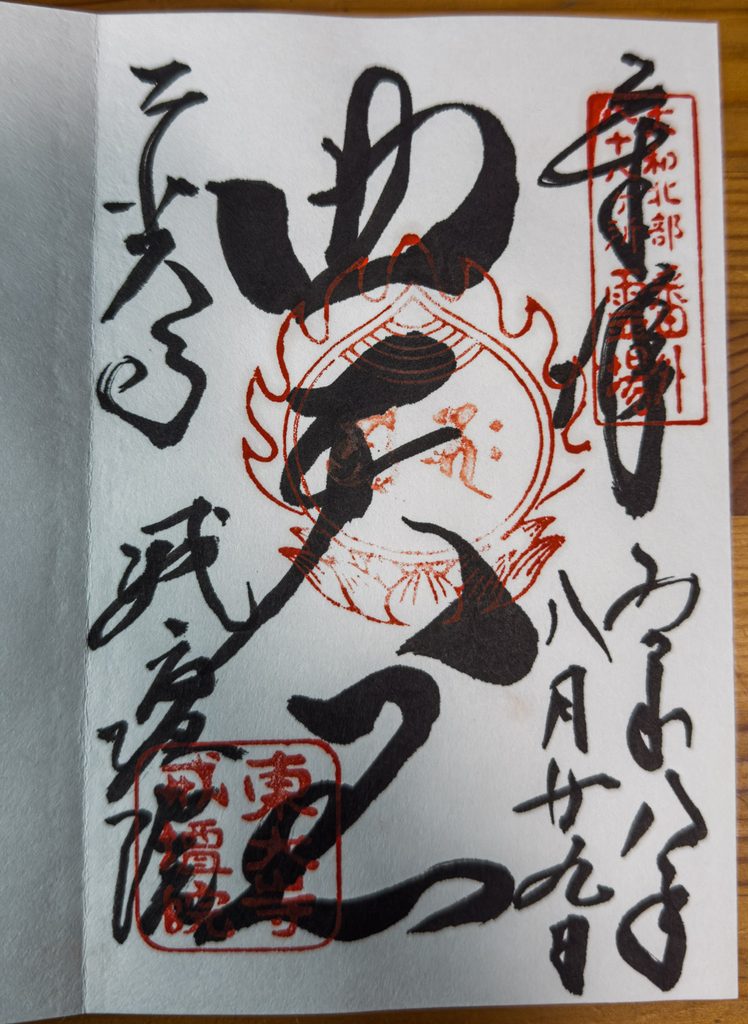
The Hall That Is Closed
One hall was missing.
Shigatsudo, the Fourth Month Hall, was under repair when I visited, and its two goshuin, Fugen Bosatsu and the Eleven-Headed Kannon, were not being issued. They are still on the official list. When they return, I do not know.
The mystery location from the old blog posts, the one with the intercom, no longer issues goshuin at all.
Thirteen goshuin, two days. The official site was never complicated. I was.
Todaiji Goshuin: Every Hall, Fee, and Hour
I wrote all of this down at the time, because I could not find it in English anywhere. Here it is in one place, so that you can spend your day looking at the halls instead of looking for them.
Every goshuin is ¥300, and the hours below are the goshuin reception hours published by Todaiji.
| Hall | Goshuin | Admission | Goshuin hours | Notes |
|---|---|---|---|---|
| Great Buddha Hall (Daibutsuden) | Kegon | ¥800 | Apr–Oct 7:30–17:30 / Nov–Mar 8:00–17:00 | Desk near the exit. Admission required. |
| Hokkedo (Sangatsudo) | Fuku Kensaku Kannon | ¥800 | 8:30–16:00 | Admission required. Shukongojin goshuin on December 16 only. |
| Kaidando (Kaidan-in) | Shitenno | ¥800 | 8:30–16:00 | Admission required. Numbered ticket when busy. |
| Nigatsudo | Namu Kan / waka poem | Free | Apr–Oct 7:30–17:30 / Nov–Mar 8:00–17:00 | Two designs, same price, ¥300 each. Also issued after the torches during Omizutori. |
| Fudodo | Godairikison | Free | 8:30–16:00 | Up the lane between Hokkedo and the torii. |
| Nenbutsudo | Jizo Bosatsu | Free | 8:30–16:00 | Issued at the office beside the bell tower. |
| Gyokido | Gyoki Bosatsu | Free | 8:30–16:00 | Same office. |
| Shunjodo | Chogen Shonin / Amida Nyorai / Aizen Myoo | Free | 8:30–16:00 | Same office. Choose by letter. |
| Sashizudo | Enko Daishi | Free | 8:30–16:00 (hall open to 16:30) | Jodo school hall. |
| Shigatsudo | Fugen Bosatsu / Eleven-Headed Kannon | – | – | Suspended during repairs at the time of my visit. |
| Tamukeyama Hachimangu | Hachimangu | Free | Shrine office from 9:00 | A Shinto shrine. Not on Todaiji’s list. |
Cash only, at every desk. Bring coins.
All thirteen goshuin come to ¥3,900. Add ¥2,400 in admission for the Great Buddha Hall, Hokkedo, and Kaidando, and the full set costs ¥6,300.
Kaidan-in’s Senjudo issued two goshuin, Senju Kannon and Ganjin Wajo, during a special opening. That opening has ended, and so have the goshuin. If you see them mentioned elsewhere, that is why.
The Route I Took
Everything fits in one day. I split it in two because it was August.
Plan on three to four hours if you do it in one go. That is not because the walking is long. It is because a goshuin is something you receive after you have been inside, and the halls are the reason you came.
Day one: the office by the bell tower, for the five goshuin of Nenbutsudo, Gyokido, and Shunjodo. Then Hokkedo, then up the steps to Nigatsudo, then down to the Great Buddha Hall.
Day two: Tamukeyama Hachimangu first, since it is a shrine and you may want a separate book for it. Then the lane up to Fudodo, then west to Sashizudo and Kaidando.
Todaiji’s own route map follows the same east-to-west logic. In July and August, do the outdoor stretch between Hokkedo and Fudodo before ten in the morning.
How to Receive a Goshuin at Todaiji
Pray first, then go to the desk.
A goshuin is a record that you came and paid your respects. It is not a stamp rally, and the people writing them know the difference.
Open your goshuincho to a blank page and hand it over. At most Todaiji desks you wait right there and it is done in a few minutes. Kaidando was the only place that gave me a numbered ticket.
If you do not have a goshuincho, every goshuin desk at Todaiji sells them. The standard books in yellow, green, or pink cost ¥2,000 for the large size and ¥1,500 for the small. Two designer editions, a purple one by the artist Tomoe Shinohara and a camellia design, are ¥2,500.
Getting There
Todaiji is about a twenty-minute walk from Kintetsu Nara Station and thirty-five from JR Nara Station, or a short bus ride to the Todaiji Daibutsuden stop. The bell tower and the office with the five goshuin are up the slope east of the Great Buddha Hall, past the giant red torii.
For the temple as a whole, including what to see beyond the goshuin desks, start with my Todaiji guide.