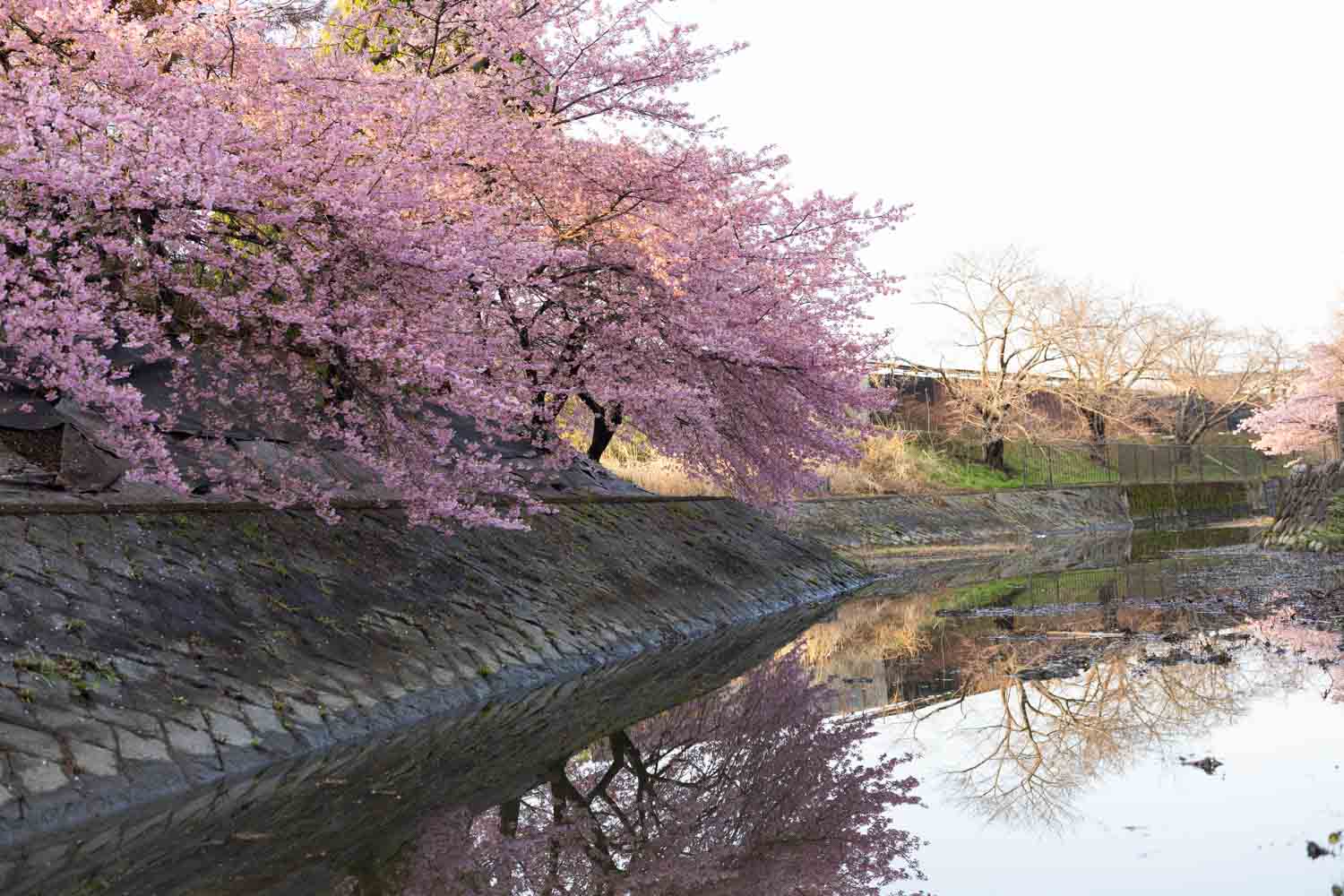
The 6:03 to Yodo Station
I knew I couldn’t afford to wait.
On the way back from Fushimi Inari, an unusual announcement came over the Keihan line. Not the standard recorded voice — a conductor, in that particular singsong cadence that Japan’s train staff seem to develop independently of one another, was saying something. I caught three words: Yodo Suiro. Kawazu-zakura. Peak bloom. That was enough. Weeks before Kyoto’s somei-yoshino would even think about opening, the early cherry blossoms were already at their best.
I wanted to get off at the next station and sprint to the opposite platform. I didn’t, for several reasons. Kawazu-zakura stays in bloom longer than somei-yoshino. It wasn’t first thing in the morning. And above all, I had to get to work.
Resenting your salaried job isn’t limited to the hours you spend at your desk. Cherry blossom season makes it worse.
The next morning I took the first train, arriving at Yodo Station at 6:03. It’s the earliest you can get here from Osaka, and on most days the only people getting off at this hour are heading for the racetrack on the other side of the station — Kyoto Racecourse, home to some of the most storied races in Japanese horse racing.
But there were passengers with large bags. A few of them. This was exactly what I meant by not being able to wait. They might reach Yodo Suiro before me and take the best spots.
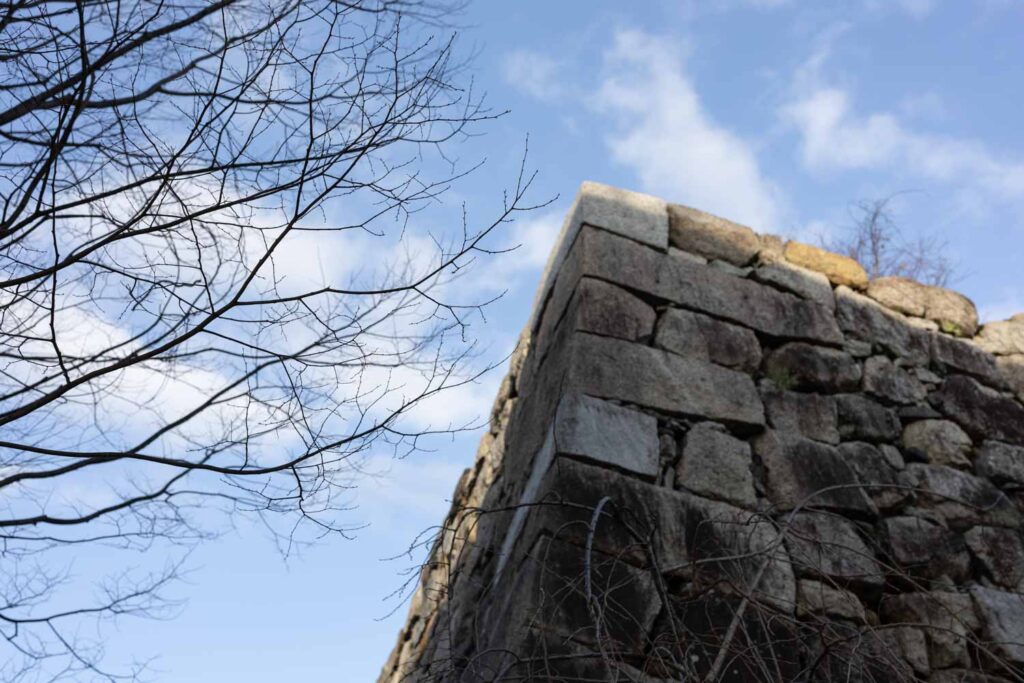
I walked fast, past the old stone walls of Yodo Castle, and arrived at the waterway to find a dozen people already set up with tripods, waiting for the moment of sunrise. Beside them, several motorcycles. It clicked. The first train is not the fastest way to get here.
Walking the Waterway: Kyoto’s Early Cherry Blossoms at Yodo Suiro
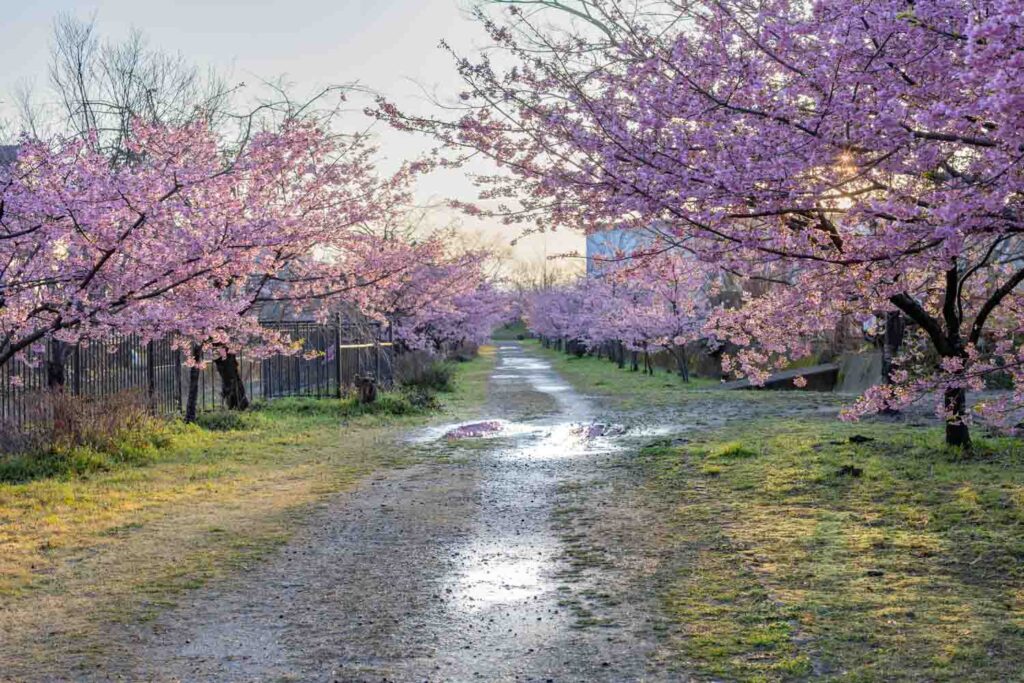
There was nothing to do but walk.
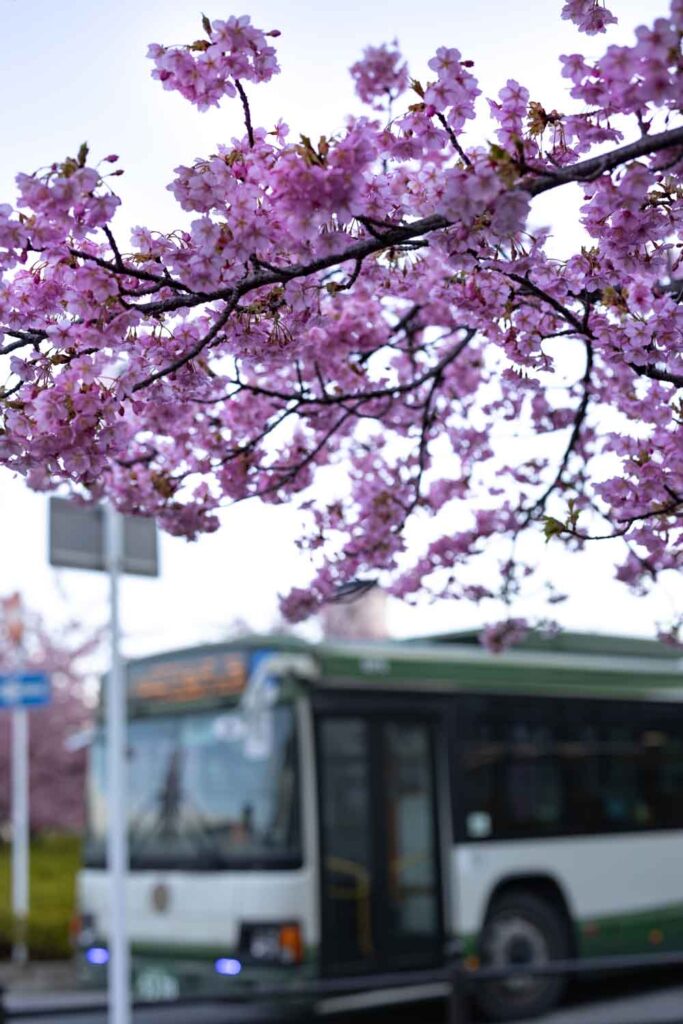
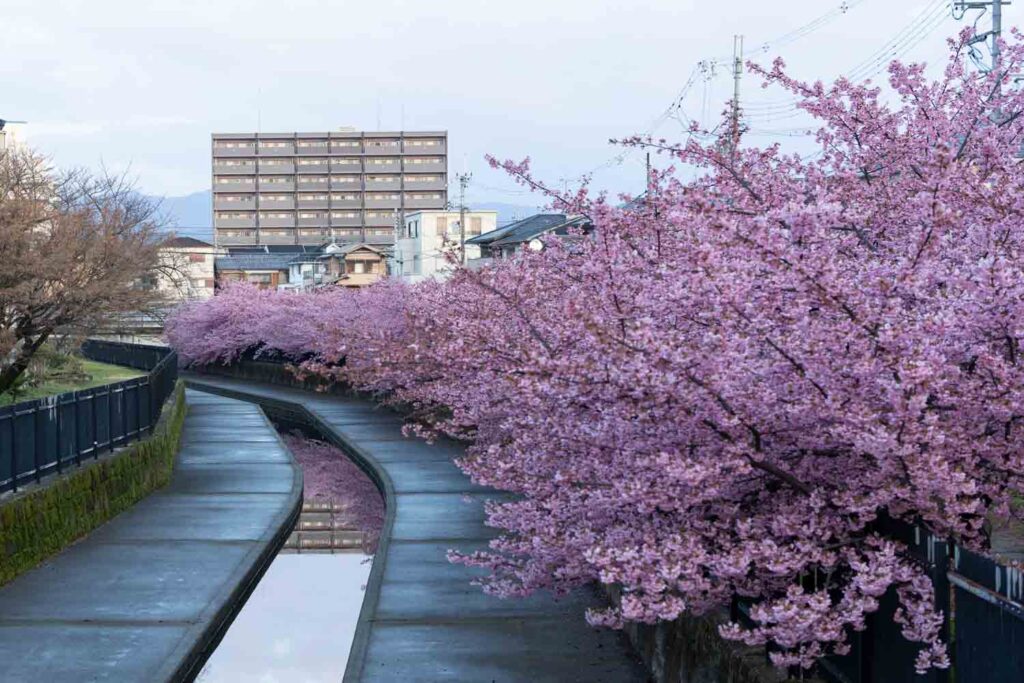
Yodo Suiro is not a grand place. A narrow waterway, about 1.2 kilometers long, with kawazu-zakura lining both banks. Where somei-yoshino opens all at once and falls within days, kawazu-zakura blooms gradually and holds for two to three weeks. The color is deeper too — a vivid, unambiguous pink.
I walked from one end to the other. In places the branches hang so low you have to duck. I ducked more than necessary. Better not to damage them.
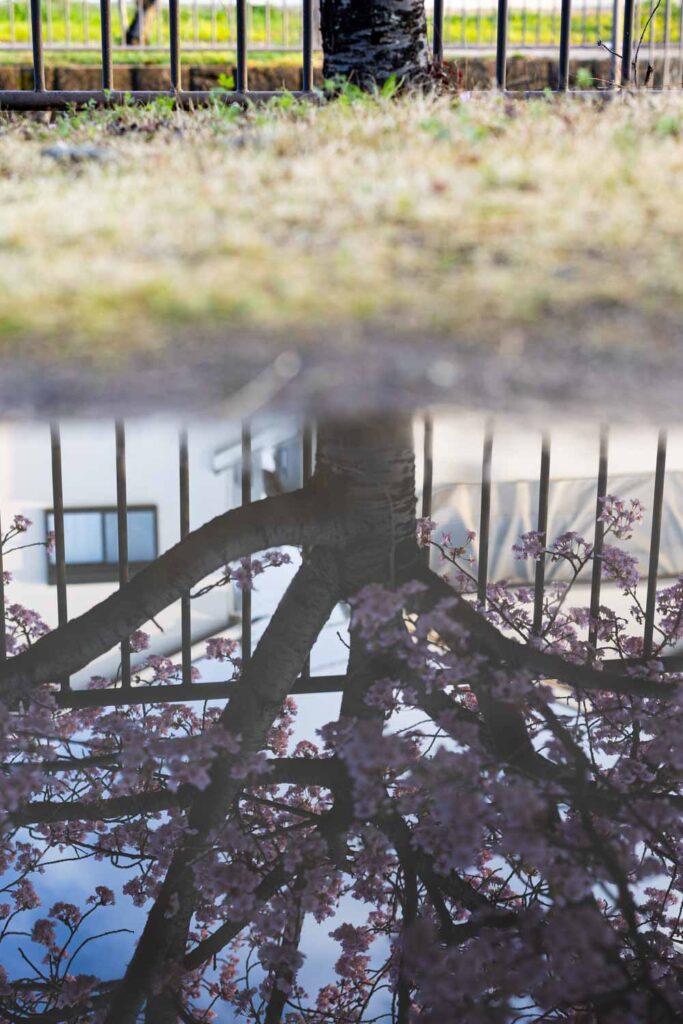
Between the mature trees, young saplings had been planted along the path. The next generation — still thin and uncertain, waiting for their turn.
The morning after rain, the usual chorus of mejiro was missing. Those small birds that normally work the cherry branches without pause — not one appeared that day.
I reached the far end and turned back.
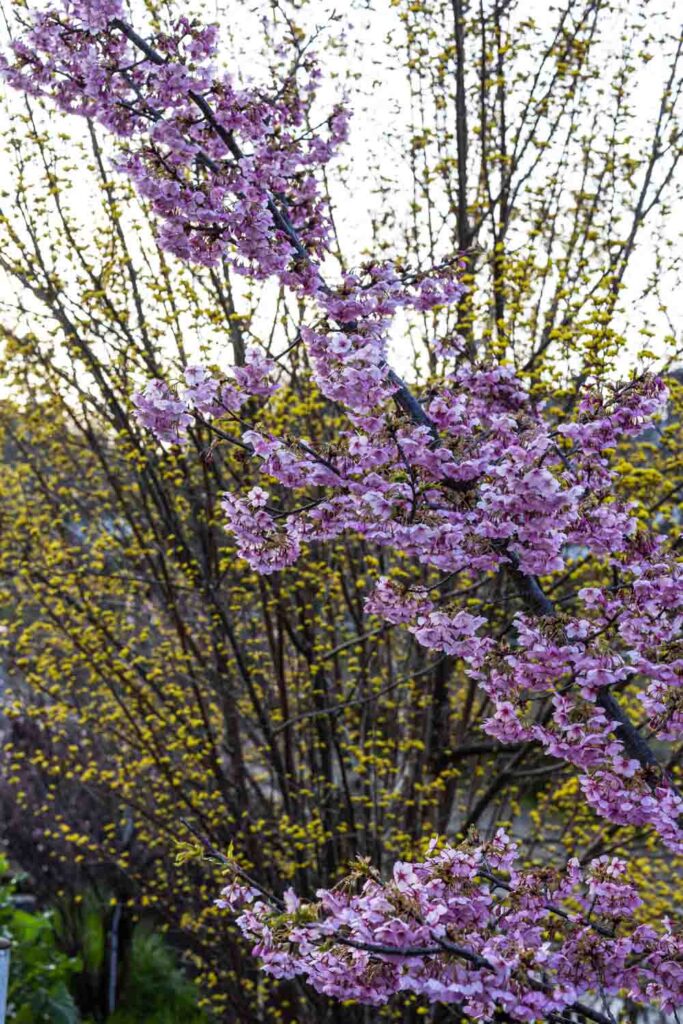
Everyone Brings Something to the Blossoms
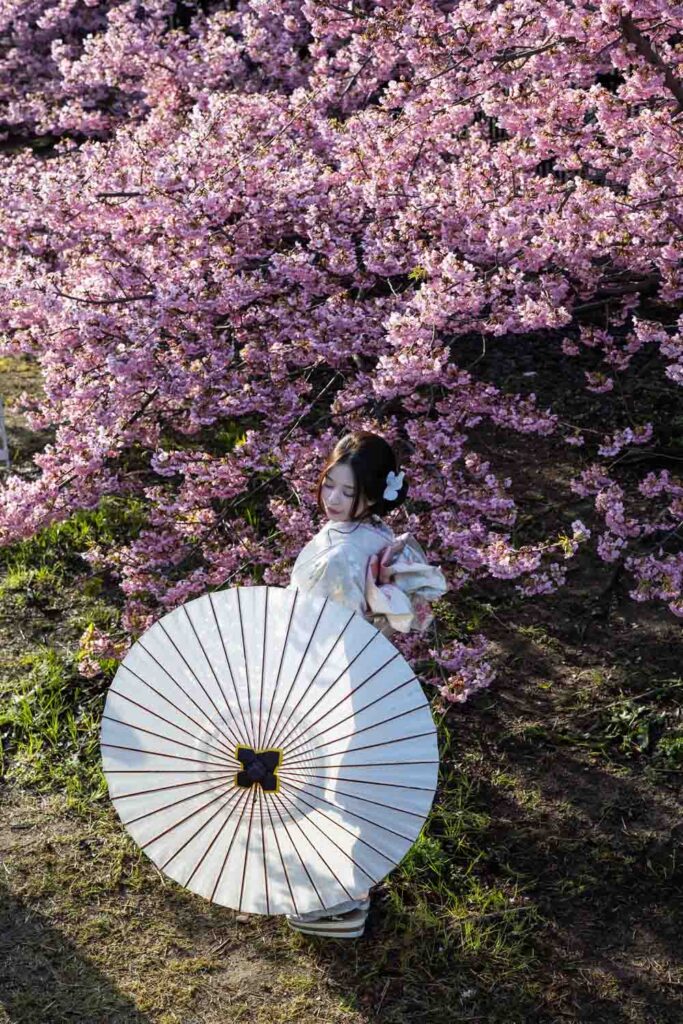
By the time I was heading back, the sun had lifted just enough to take the edge off the cold, and the crowd had grown.
Children in new clothes, clearly bought for an upcoming elementary school entrance ceremony. An amateur photographer with a model who was, against all probability, more polished than the camera operator. A couple — one behind the lens, one in a rented kimono. A dog in an outfit it had not chosen.
The narrow path along the water, with nothing like the capacity of the racecourse across the road, was filling up. The feeling was less hanami, more photo shoot.
If you’re looking for uncrowded cherry blossoms in Kyoto, Yodo Suiro can offer that — but only at dawn, and ideally on a weekday. By mid-morning, that window is gone.
For the Japanese, cherry blossoms are not scenery. They are the backdrop to life’s transitions — entrance ceremonies, new jobs, new relationships. The people here are not looking at the flowers. They are placing themselves inside a moment.
The Bridge, the Train, the Five-Second Window
There is a bridge where you can photograph the Keihan train with cherry blossoms in the same frame. By this hour it was crowded with photographers — one of the most sought-after spots along the waterway.
The math is simple. From inside the train, you have about one second to see the blossoms through the window. From the bridge, you have about five seconds to photograph the train passing through them. Everyone is working with the same constraints. The photographers on the bridge had simply chosen the better side of the equation.
A Young Festival
The Yodo Kawazu-zakura Festival — held annually while the blossoms are at their peak — is young by Kyoto standards. It began in 2004.
The waterway itself was redeveloped in the 1990s. Before that, the canal had fallen into disuse. Someone planted kawazu-zakura along the banks. Someone else noticed. A festival followed.
There are no food stalls here. No lanterns, no amplified music. The festival is the blossoms, and that is enough.
Getting There and Practical Tips
Access
Take the Keihan Main Line to Yodo Station. From Osaka (Yodoyabashi Station), the journey takes approximately 30 minutes. From Kyoto (Demachiyanagi Station), approximately 20 minutes. Exit the station and follow signs toward Yodo Suiro — the waterway is a short walk from the station.
When to go
Kawazu-zakura typically blooms in late February to mid-March, earlier than somei-yoshino by several weeks. The exact timing shifts each year. Check the Yodo Kawazu-zakura Festival official schedule or local sakura forecast sites before visiting.
Go early
The 6:03 from Osaka is the first train of the day. Arriving at sunrise gives you the waterway nearly to yourself. By 9 or 10 AM on weekends, the path is crowded. Dress warmly. The wind along the water is cold before sunrise.
Photography
The bridge near the Keihan crossing is the spot for train-and-blossom shots. Tripod users arrive before dawn to claim position. Search “淀水路” (Yodo Suiro) on Google Maps to see the full layout.
Restrooms
Available along the waterway.
Food and drink
No stalls. Bring your own.
Beating the crowds
The first train is not the first arrival. Weekday early mornings are genuinely quiet. On weekends, the crowds build quickly.
Combining with other spots
Jonangu Shrine is nearby and known for its weeping plum blossoms (shidareme). The plum and kawazu-zakura seasons sometimes overlap, though plum typically peaks a little earlier.