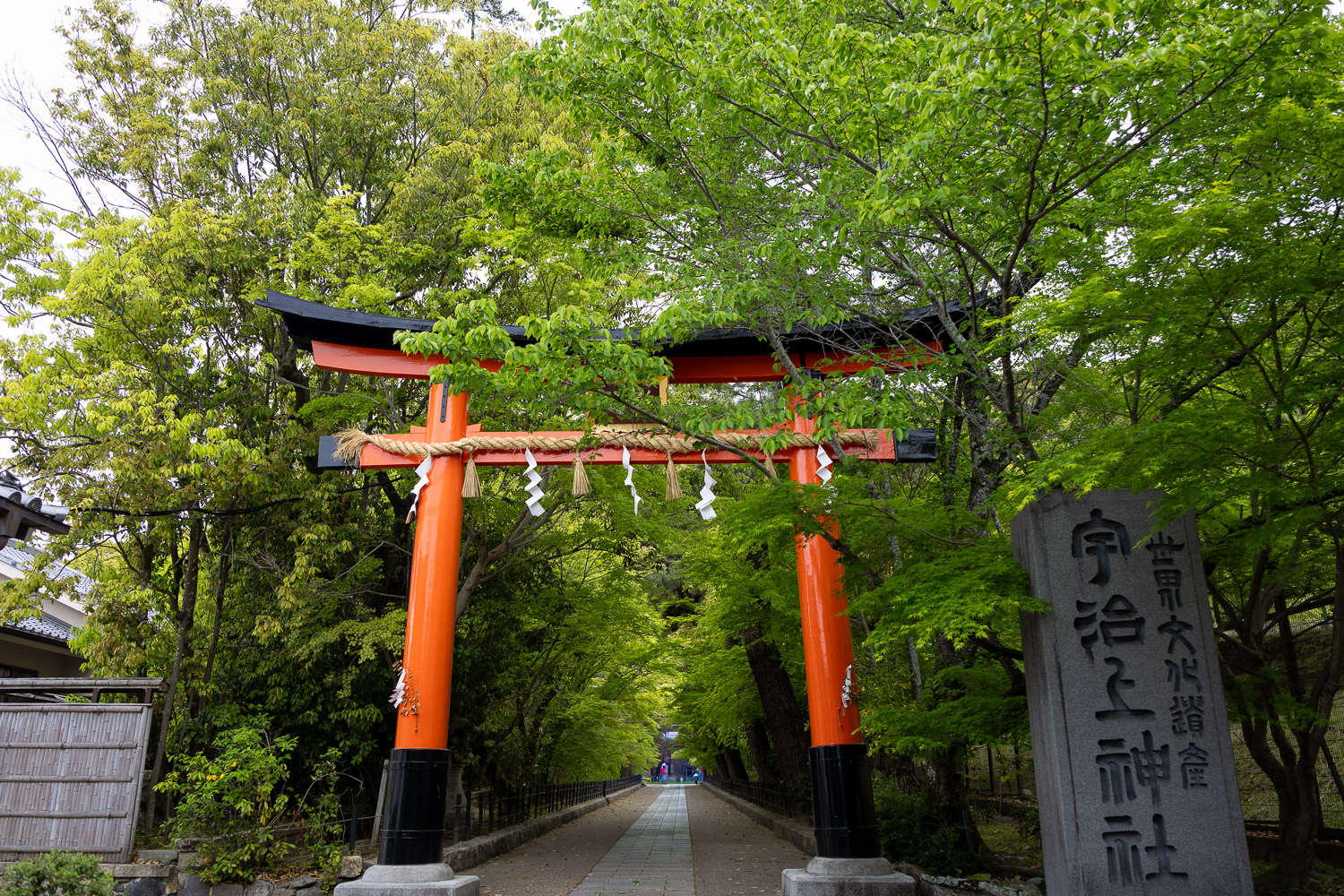
Tucked into the wooded hillside on the east bank of the Uji River, Ujigami Shrine doesn’t announce itself. There is no crowd, no souvenir stall, no line. Just a vermilion torii, a gravel path, and the feeling that time has quietly stopped somewhere around the Heian period.
This is Japan’s oldest surviving Shinto shrine — a UNESCO World Heritage Site that most visitors to Uji walk straight past on their way to Byodoin Temple. That, honestly, is your gain.
What Is Ujigami Shrine?
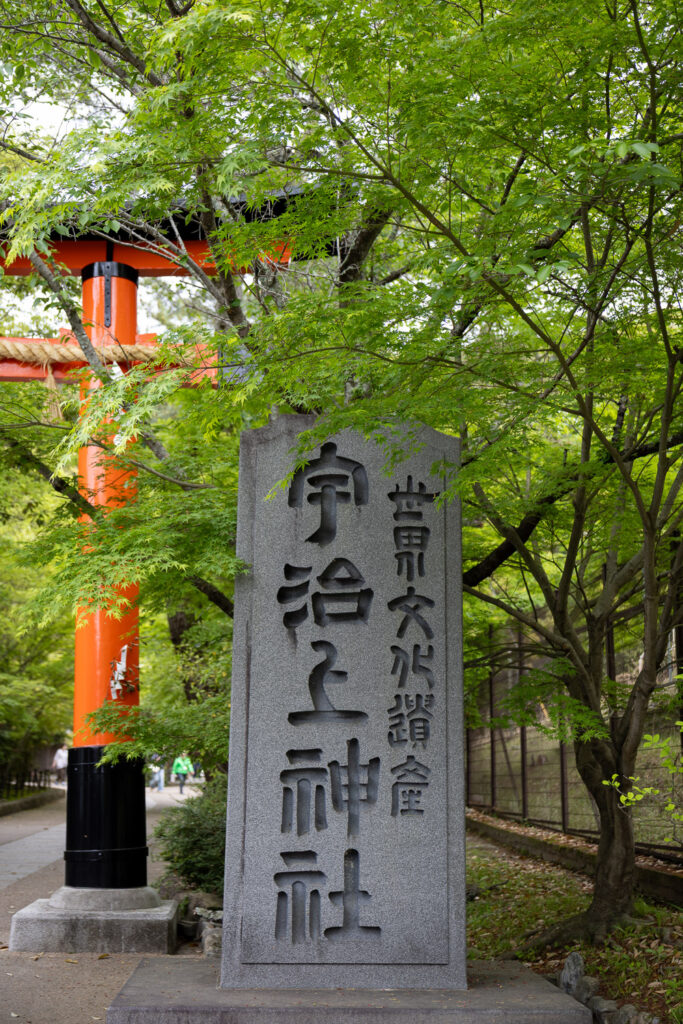
Ujigami Shrine (宇治上神社) is listed among the UNESCO World Heritage Sites of Ancient Kyoto. Its main hall (honden) dates to the late Heian period — late 10th to early 11th century — making it the oldest existing shrine structure in Japan. The worship hall (haiden) dates to the Kamakura period.
Unlike the grand temple complexes of central Kyoto, Ujigami feels almost domestic in scale. It was built to enshrine Prince Uji no Wakiiratsuko, along with Emperors Ojin and Nintoku — figures closely tied to the history of Uji itself.
Ujigami Shrine sits directly across the Uji River from Uji Shrine (宇治神社). The two shrines were historically treated as a single place of worship, and visiting both on the same day remains the natural way to experience this corner of Uji.
The Sacred Rock: Where the Gods Dwell
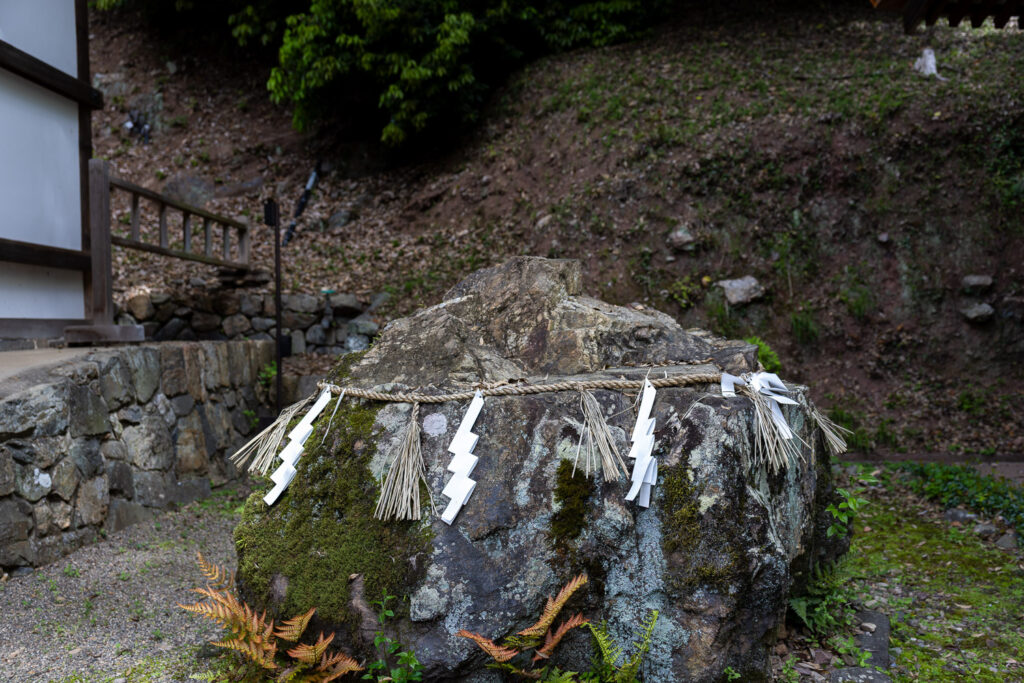
On the shrine grounds, a large moss-covered rock sits encircled by a thick rope of twisted straw — a shimenawa (しめ縄). The white zigzag paper strips hanging from it are called shide. Together, they mark the rock as a yorishiro: a vessel through which divine presence enters the physical world.
In Shinto belief, gods do not require buildings. They require invitation. This rock has been receiving that invitation for over a thousand years.
It is easy to walk past without noticing. Don’t.
Kirihatasuii: The Last of Uji’s Seven Sacred Springs
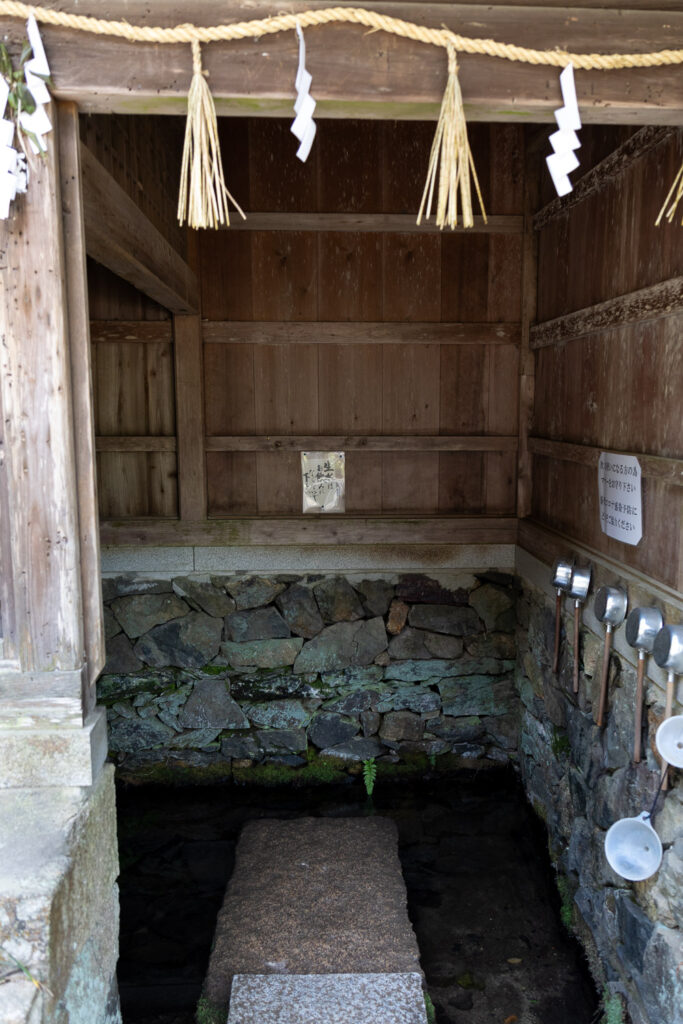
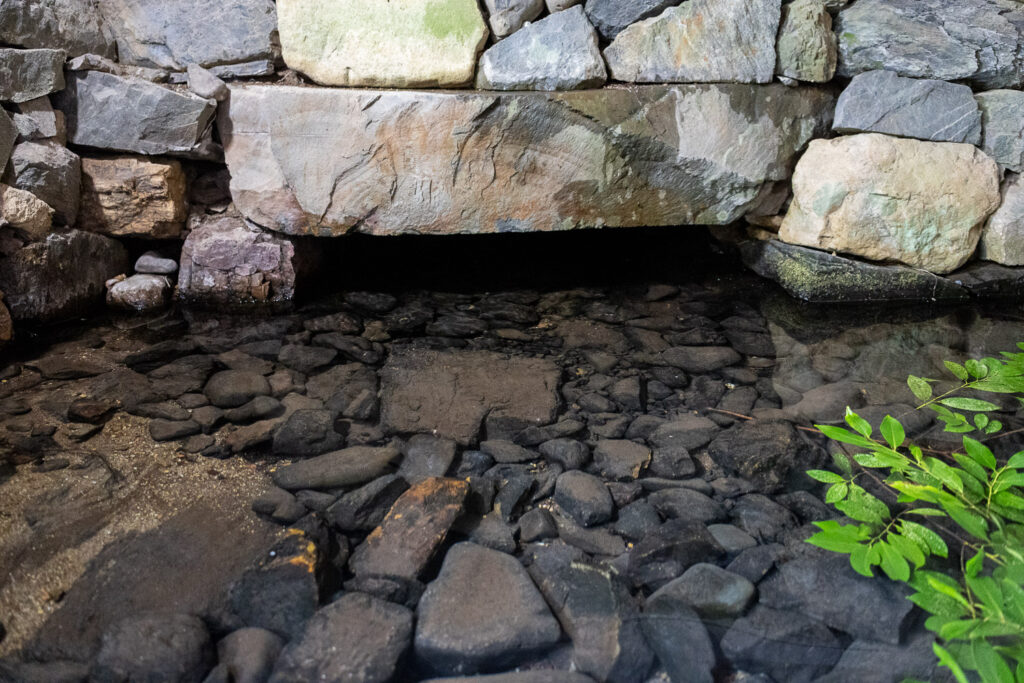
One of Ujigami Shrine’s most distinctive features is Kirihatasuii (桐原水), a natural spring enclosed within a small wooden pavilion on the shrine grounds. It is one of the Seven Sacred Springs of Uji (宇治七名水) — and the only one that still flows today.
The others were lost over centuries of development. This one survived, tended quietly within the shrine precincts. Visitors are welcome to draw the water using the ladles provided. The water is cold, clear, and carries a quiet sense of ceremony.
The Fox Guardian
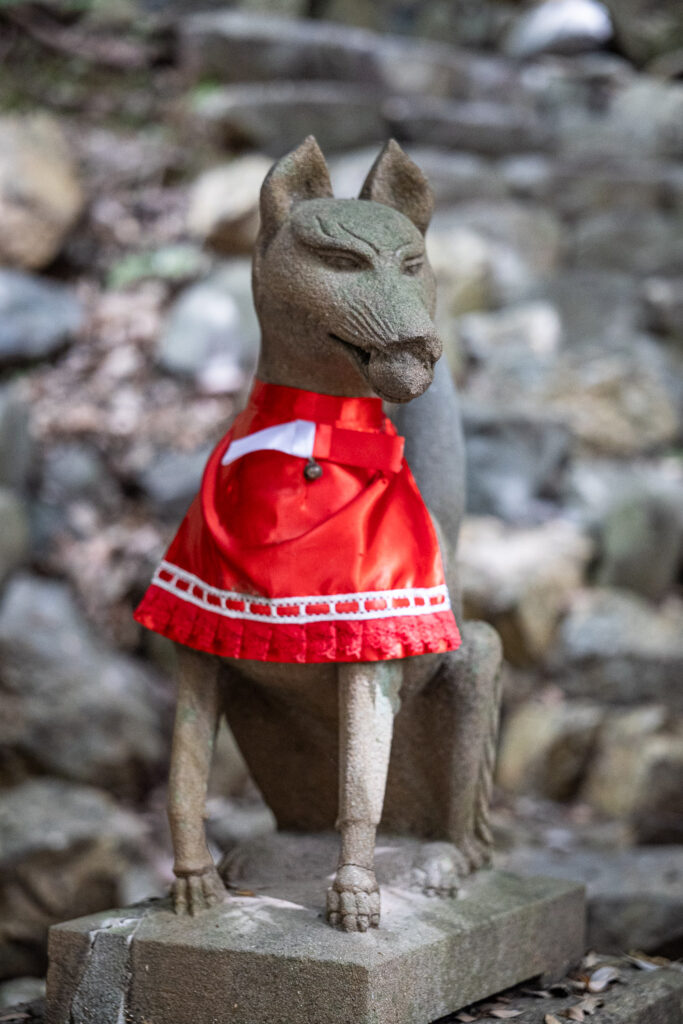
Near the main hall, a stone fox statue stands guard in a red cloth bib. In Shinto, foxes (kitsune) serve as messengers of Inari, the deity of rice, fertility, and worldly success. The red bib is an offering placed by worshippers — a small act of devotion repeated countless times over countless years.
The expression on its face is not quite welcoming, and not quite threatening. Make of that what you will.
The Waka Poetry Goshuin
Ujigami Shrine offers one of the most distinctive goshuin (御朱印) in the Uji area. Three of the most celebrated waka poems ever written about Uji are enshrined here in ink — each stamp dated by hand, priced at ¥800.
Kisen Hoshi (喜撰法師), one of the Six Poetry Immortals, wrote of a life of quiet withdrawal on these very hills:
“My hut lies southeast of the capital — and so I live. The world calls this place Uji: a place of sorrow, people say.”
Fujiwara no Sadayori (藤原定頼) captured the Uji River at dawn:
“In the first pale light of morning, the Uji River reveals, piece by piece, the rows of fish traps standing in the shallows.”
Shokushi Naishinnō (式子内親王) gave voice to the legendary Hashihime — the guardian spirit of Uji Bridge — waiting alone through the night:
“Spreading a thin mat, one sleeve for a pillow — is she waiting for me still, the princess of Uji Bridge?”
These poems are not decoration. They are the reason Uji has been considered a place of poetic longing for over a thousand years. Receiving this goshuin is, in a quiet way, receiving that entire history in your hands.
Spring at Ujigami: Azaleas in Bloom
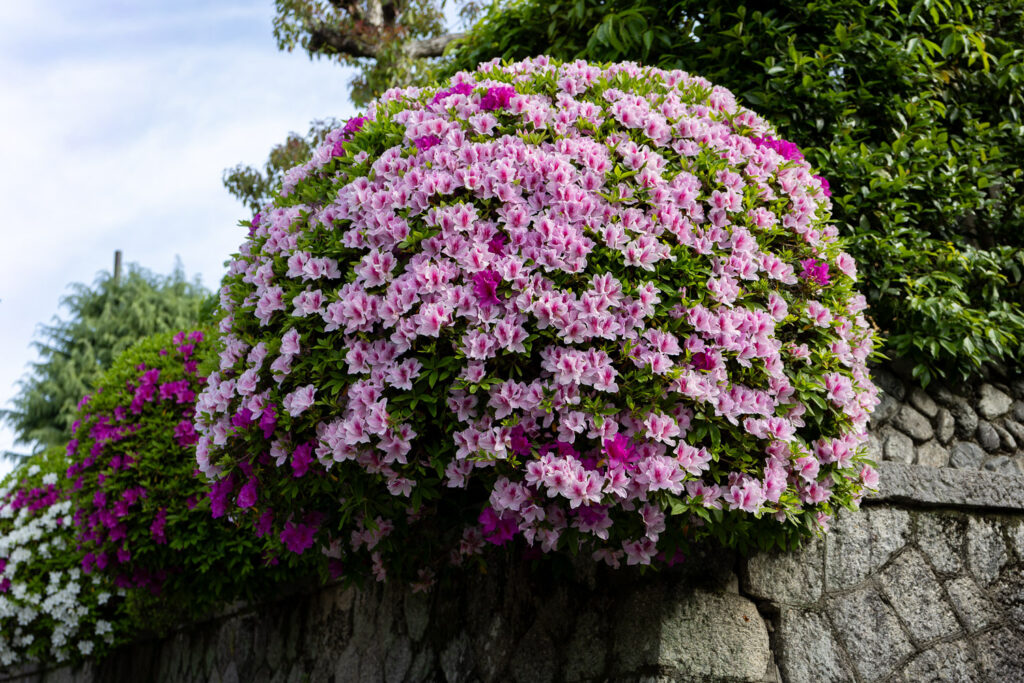
Late April into early May brings azaleas (tsutsuji) into bloom along Sawararabi-no-michi — the ancient path that leads to Ujigami Shrine. Most visitors arrive a month earlier for cherry blossoms and never see this quieter, more personal kind of beauty.Late April into early May brings azaleas (tsutsuji) into bloom throughout Uji. The stone walls surrounding the shrine grounds become draped in pink and purple — a quiet seasonal spectacle that most visitors miss entirely, arriving a month earlier for cherry blossoms.
If you visit in azalea season, allow time to walk the riverside path between Ujigami Shrine and the Uji Bridge.
Getting There — and Where to Go Next
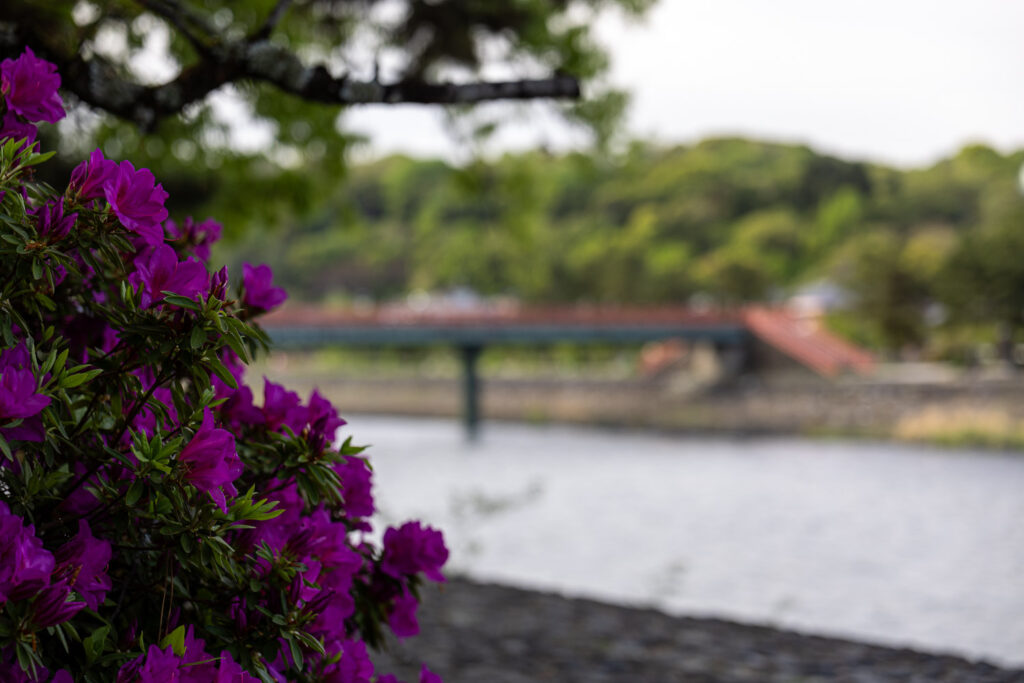
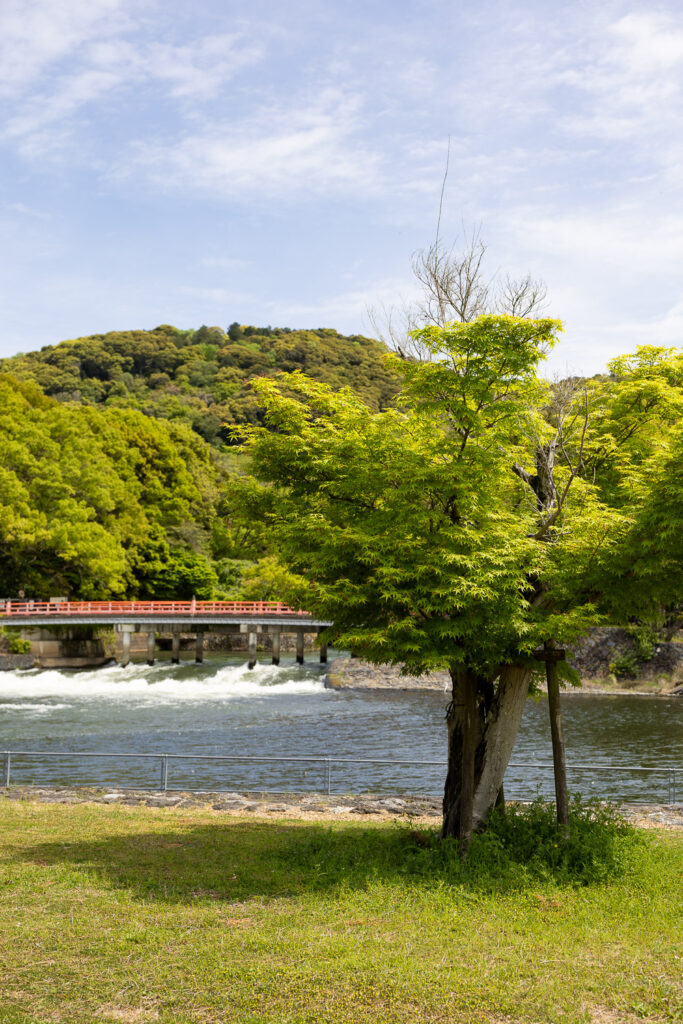
Ujigami Shrine sits on the east bank of the Uji River, reached via the Asagiri Bridge. Cross back over the bridge and you are a five-minute walk from Byodoin Temple — one of Japan’s most iconic structures and the image on the 10-yen coin.
The two sites make a natural pair. Allow time for Ujigami Shrine, then cross the river for Byodoin.
👉 Byodoin Temple — 8 min walk from here
Visitor Information
| Address | 59 Ujiyamada, Uji, Kyoto 611-0021 |
| Admission | Free |
| Nearest station | Uji Station (Keihan Uji Line) — 10 min walk |
| Goshuin | Waka poetry stamp ¥800 (date written by hand) |