From the bus window on the way back, I spotted four young white men walking along the road.
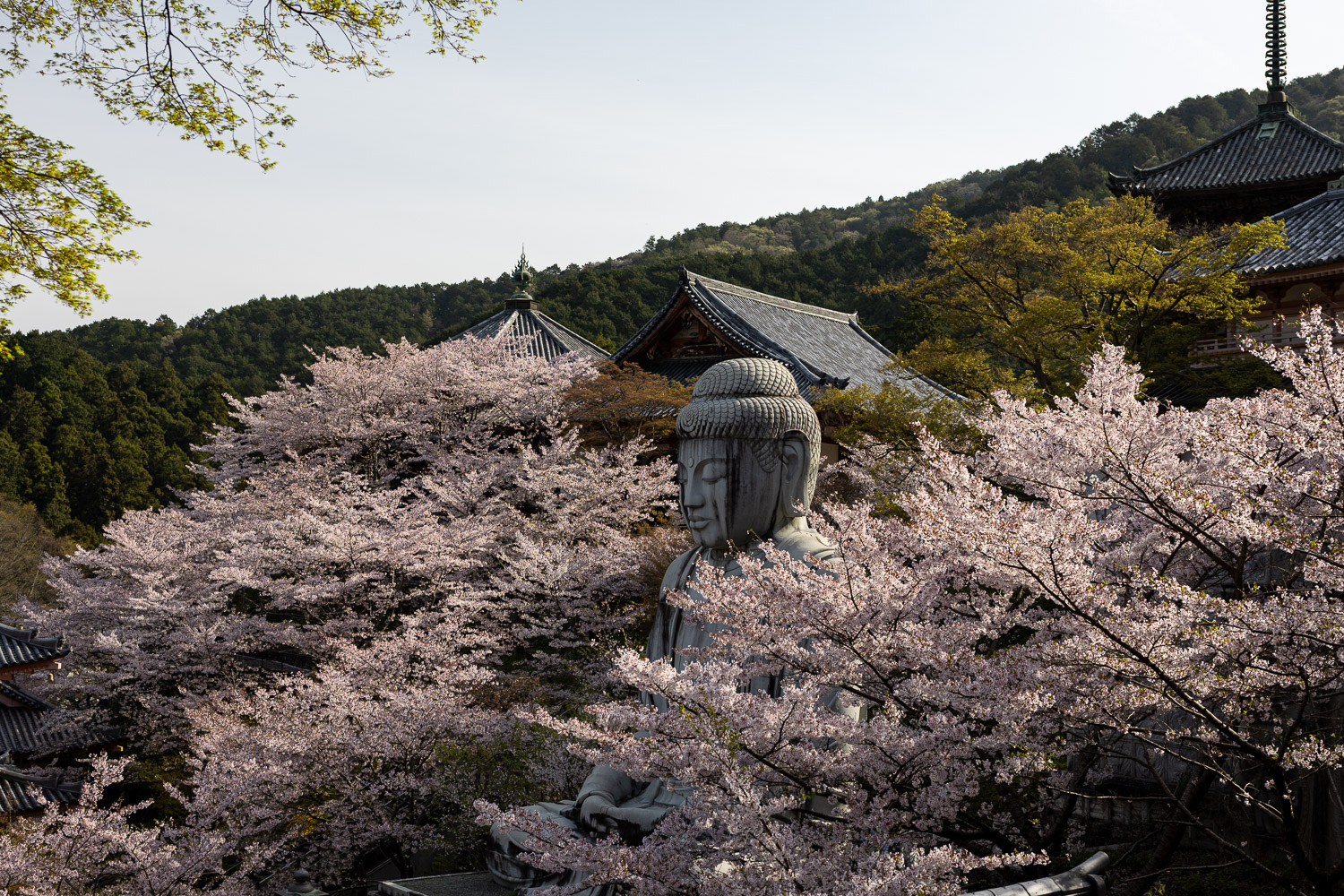
There is only one place at the end of this road: Tsubosaka-dera. I had just come from that mountain myself, so I could picture their next few hours with some precision. Forty more minutes on foot. Then the gates. Then the Buddha standing among the cherry blossoms, waiting at the top.
I was in no position to worry about them. I had been up there myself, just minutes before.
Getting to a Temple at 300 Meters
I arrived on April 6th, 2026 — a Monday, and too hot for early April. The sun was already strong at eight in the morning.
I had taken the bus from Kashihara-jingu-mae Station to Tsubosakaderaguchi bus stop, then walked the remaining thirty minutes to the temple. At the foot of the approach, a small group of volunteers stood near a bridge, pointing visitors in the right direction. About thirty more minutes, one of them said.
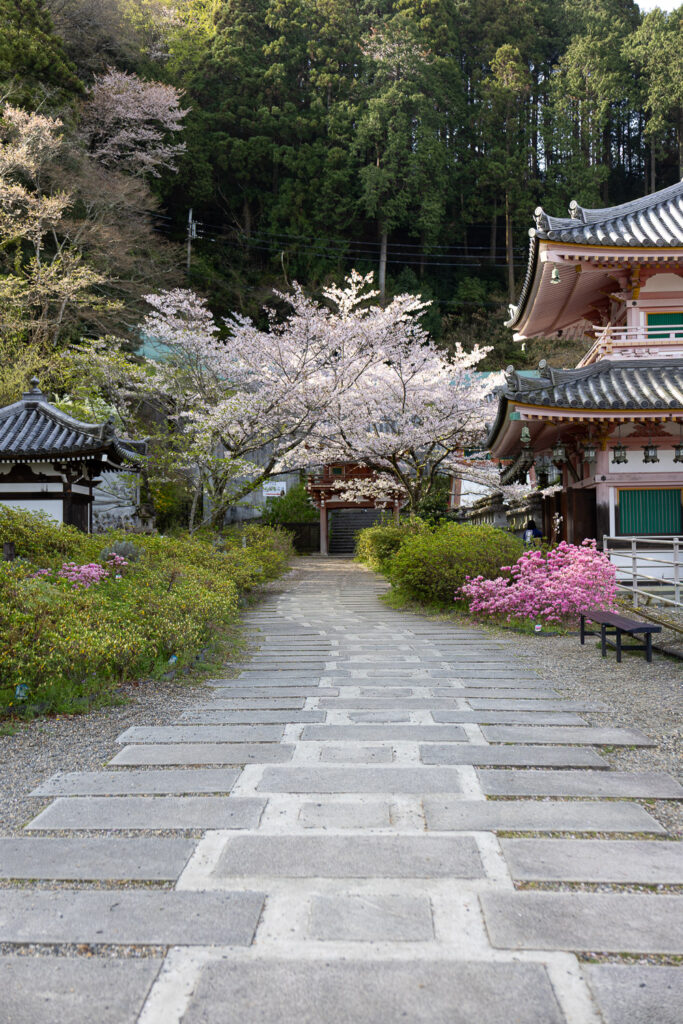
The wind came in short gusts, lifting fallen cherry petals into the light. I switched to video mode and the wind stopped. I switched back to stills and the wind picked up again, scattering blossoms across the path. This happened several times. Cherry blossoms have never once cooperated with a camera schedule.
Cherry blossoms have never once cooperated with a camera schedule.
A Crystal Jar and a Vision on the Mountain
Tsubosaka-dera was founded in 703 AD.
According to temple legend, a monk named Benki of Gangoji was practicing ascetic training on this mountain when he placed his crystal jar in a waterfall hollow and saw the Kannon Bodhisattva appear within it. The temple takes its name from that vision — tsubo meaning jar, saka meaning hillside.
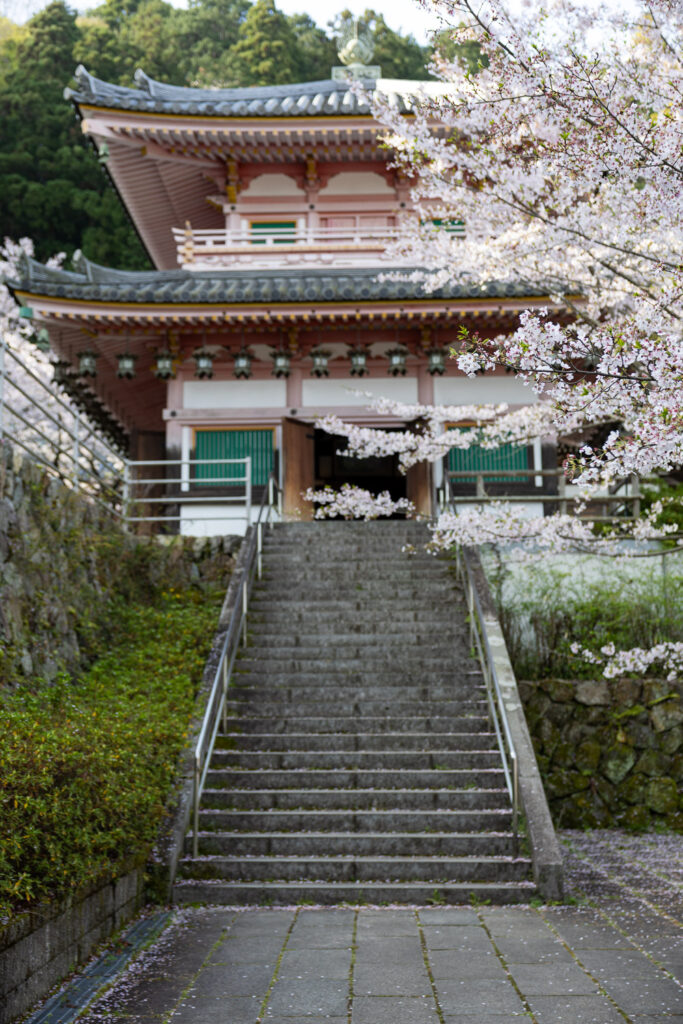
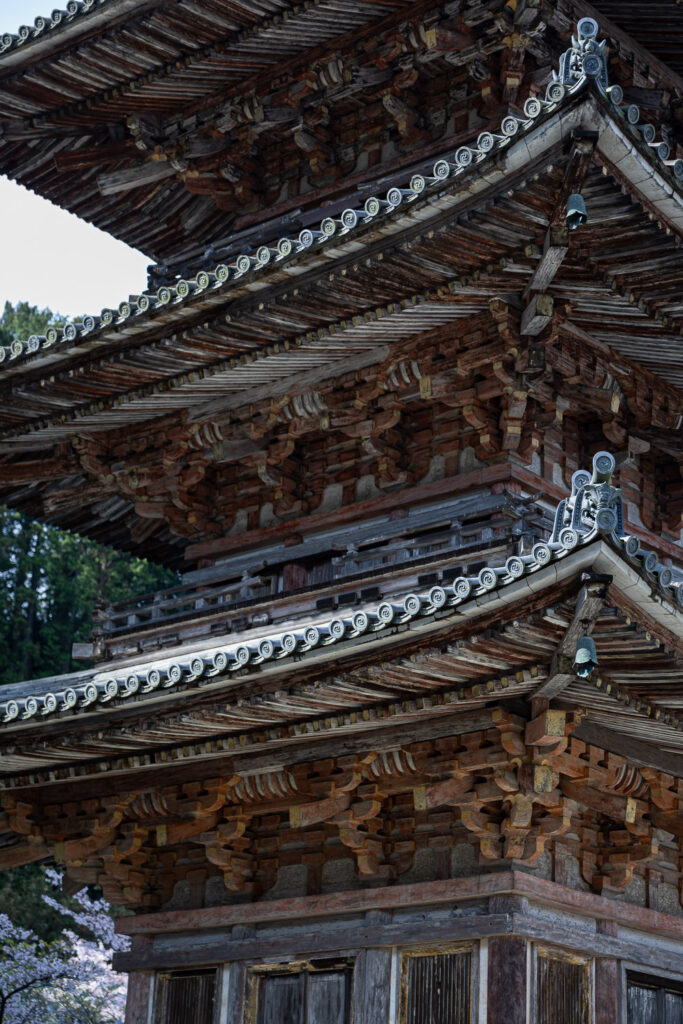
The temple was largely destroyed by fire over the centuries. Most of what stands today dates from the late Edo period. Two structures survive from the Muromachi era. The octagonal endo hall — a form rarely seen in Japan — stands in the inner compound, its eight sides catching the morning light.
The Story of Osato and Sawaichi
There is a story associated with this temple that most visitors from outside Japan will not know.
Tsubosaka Reigenki — “The Miraculous Tale of Tsubosaka” — is a joruri puppet play from the Edo period that is still performed today. It tells the story of Sawaichi, a blind man, and his devoted wife, Osato. Each night, Osato slipped quietly from their bed and walked to Tsubosaka-dera to pray for her husband’s sight. When Sawaichi discovered what she had been doing — three years of silent nightly prayers — he was overwhelmed by guilt. Not wanting to be a burden, he threw himself from the cliff at the temple’s edge. Osato, in grief, followed him. The Kannon of Tsubosaka-dera intervened, restoring both their lives — and Sawaichi’s sight.
It is a story about what a person will do for someone they love in the dark, when no one is watching.
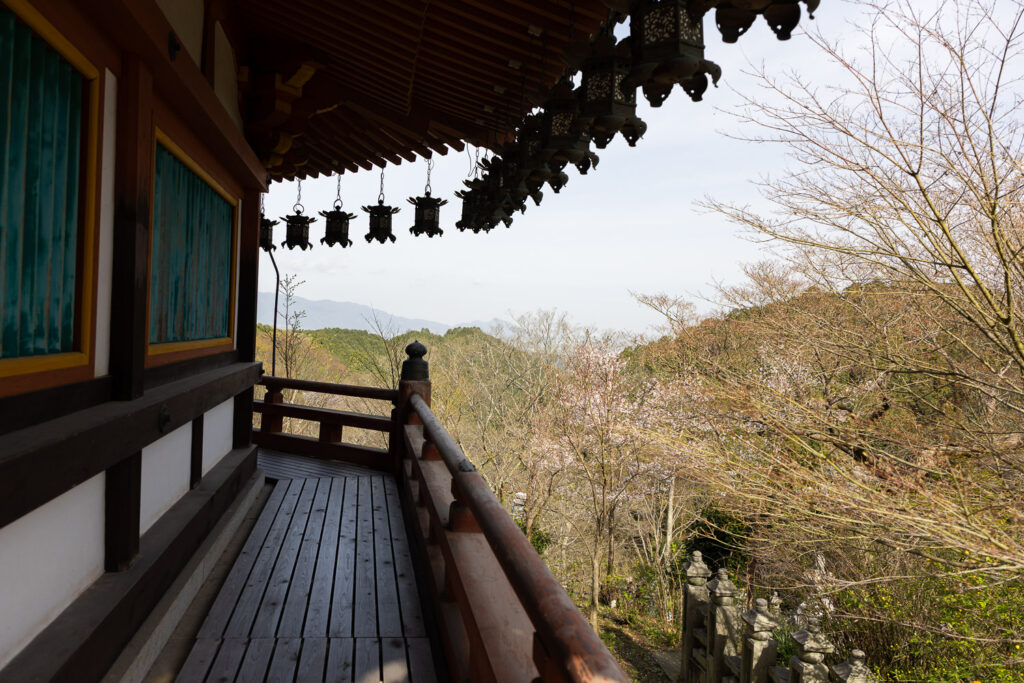
The temple has been associated with the healing of eye diseases for over a thousand years. Just inside the main gate, on the left, stands a care facility for elderly blind people — the first institution of its kind in Japan, established by the temple. This is not a temple that tells the story of compassion and then stops. It has been practicing it, without interruption, since long before the play was written.
The Statues That Came from India
In the 1960s, the head priest of Tsubosaka-dera traveled to India. He encountered patients suffering from leprosy — many of them blind — and felt that as a Buddhist, he could not simply observe. The temple began supporting relief projects in India. That exchange has continued for more than sixty years.
The gratitude arrived in stone.
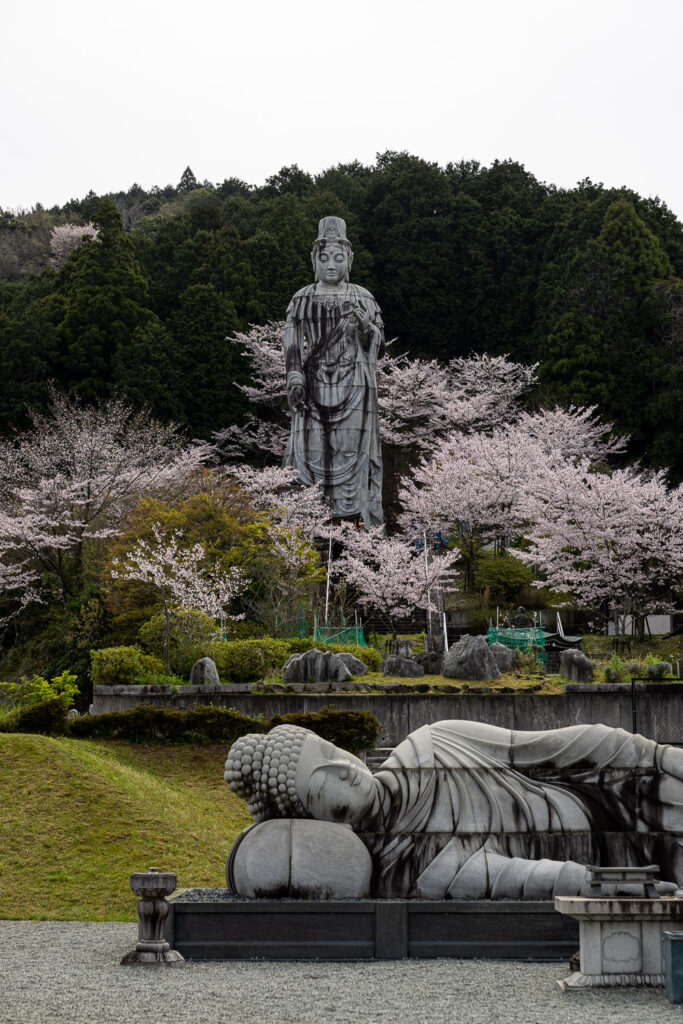
The Great Kannon Stone Statue — twenty meters tall — was carved in India, divided into sixty-six sections, shipped to Japan, and assembled on the mountainside. It was installed in 1981. The reclining Buddha — eight meters long, a form rarely seen in Japan — lies nearby, also a gift from India. At the center of the grounds stands the Great Shakyamuni, more than ten meters tall.
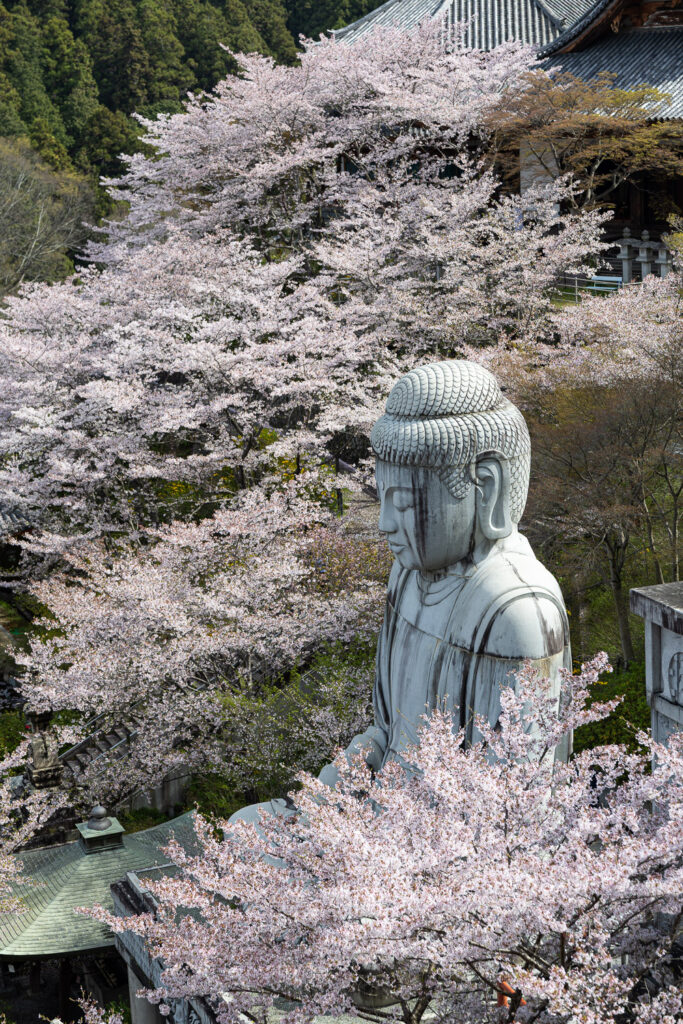
These are not decorations. They are the physical record of a relationship between a mountain temple in Nara and a country on the other side of the world, built on the belief that sight — and the loss of it — belongs to no single culture.
The temple also plants fragrant flowers throughout the grounds, so that visitors who cannot see can still know where they are.
The Photo That Made It Famous
Tsubosaka-dera has appeared on social media with increasing frequency in recent years, almost always for the same reason: a photograph of the Great Shakyamuni surrounded by cherry blossoms.
That photograph is taken from a designated spot within the grounds — a temporary platform fitted with a sign: six people maximum, two minutes per person. A security guard manages the line. The guard told me that the previous day — a Sunday — visitors had sprinted through the gate at opening time, and the queue had stretched outside the temple walls.
On Monday at 8:20 AM, it was quiet. By nine, the numbers were building. By ten, it was crowded enough that the guard’s calm morning was clearly over.
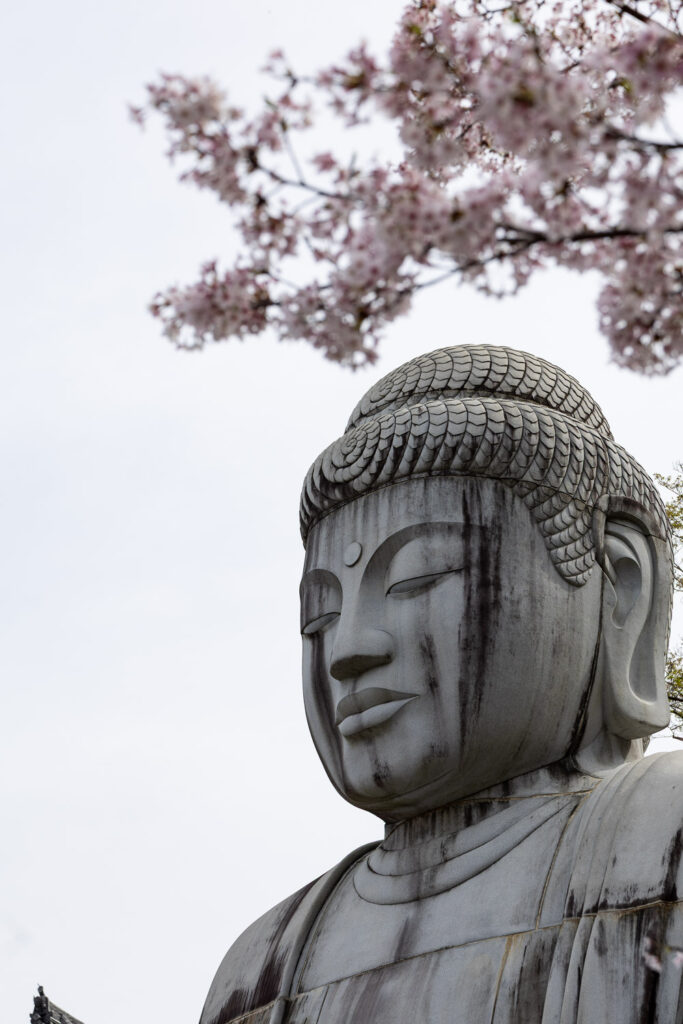
I felt a little sorry for him.
[IMAGE: great-buddha-side-profile-cherry-blossoms-tsubosaka-dera.jpg / Alt: Side profile of the Great Buddha rising above cherry blossom trees at Tsubosaka-dera, Nara]
More Than One Season
Tsubosaka-dera is one of the rare temples in Japan that permits photography throughout the grounds.
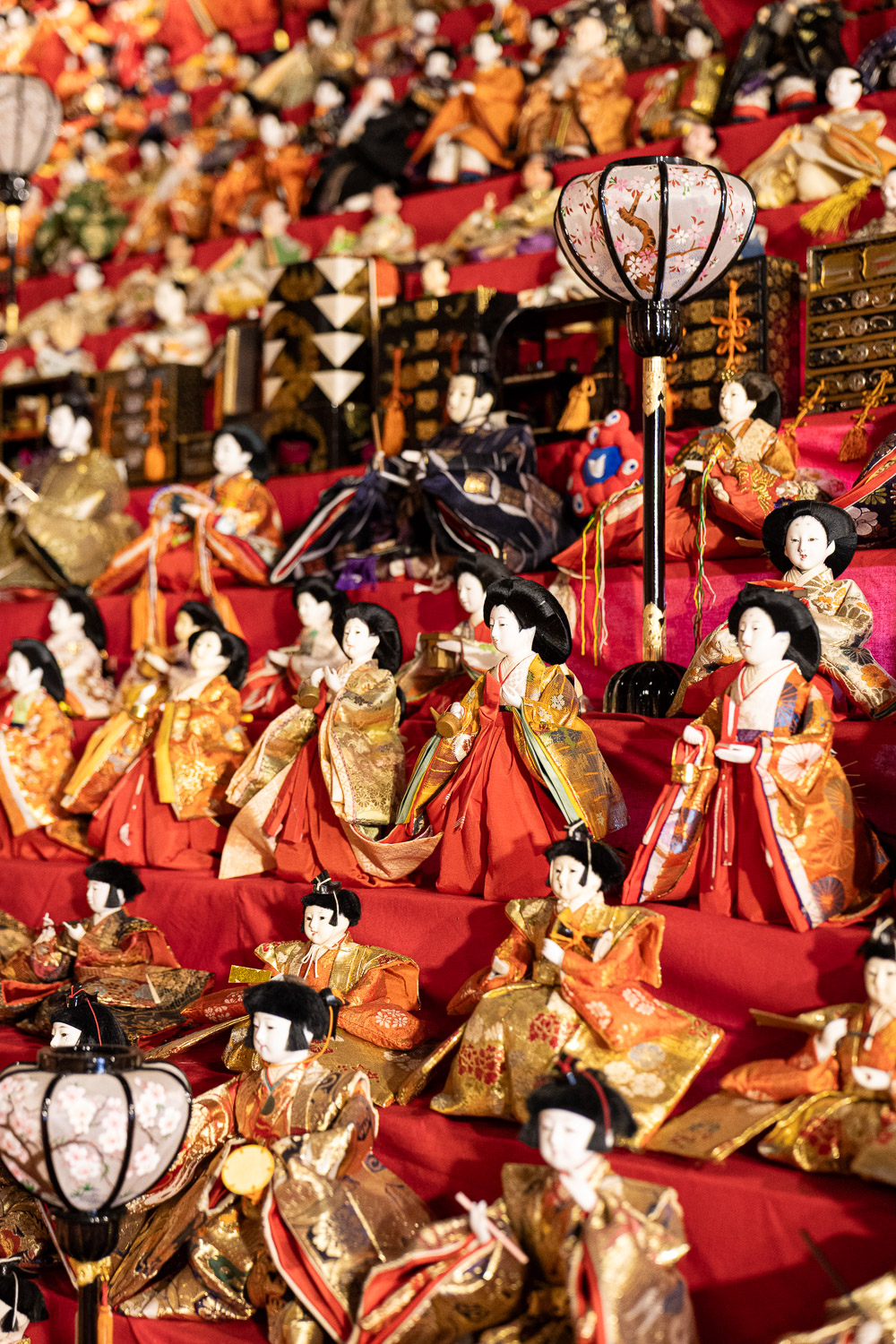
This particular week, the octagonal hall and the lecture hall held a display of hina dolls — hundreds of them, arranged in tiered formations that filled both spaces. It was an unexpected encounter in a temple already full of unexpected things.
The reclining Buddha and the Great Kannon are not, technically, famous. They do not appear in most guidebooks. But standing before either of them, you understand immediately that fame is a poor measure of presence.
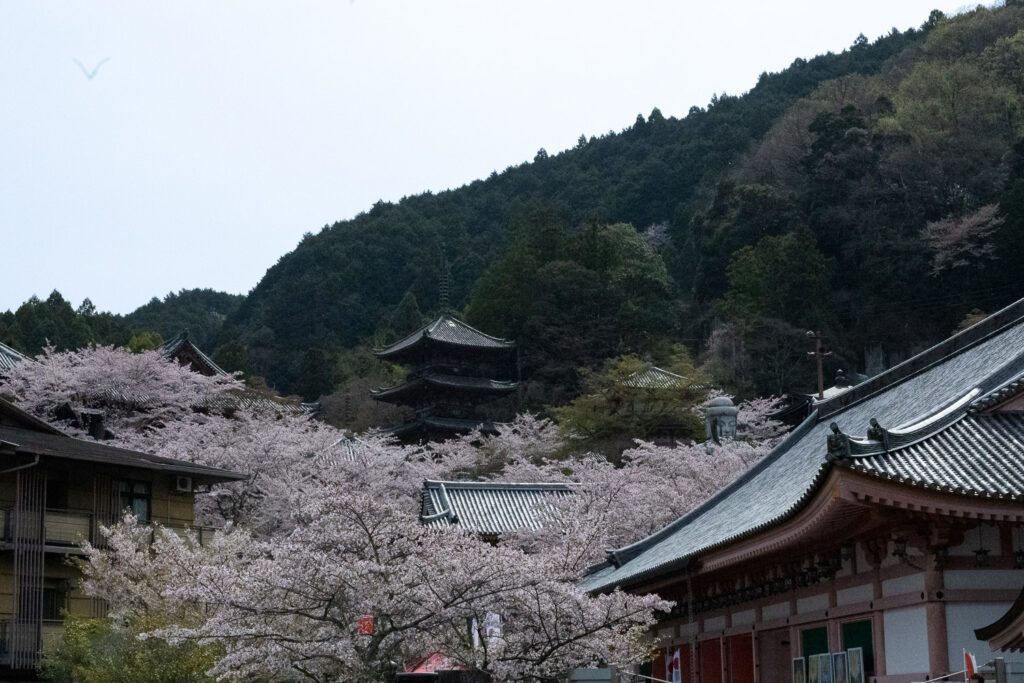
When the cherry blossoms end, the yamabuki — yellow kerria — takes over. June brings hydrangeas. Autumn brings foliage that, even in April, you could already see preparing itself in the fresh green of the new leaves.
I met a French woman in the temple grounds. She lived in Japan and was traveling to follow the cherry blossoms. We had first crossed paths at the bus stop in front of Kashihara-jingu-mae Station that morning. She was looking for cherry blossom spots without crowds — a reasonable ambition, though not one I was well-placed to help with. I don’t know Nara’s hidden places well enough. She was heading to Matabei-zakura after this. I was heading to Ishibutai Kofun.
Nara is that kind of place. Strangers on the same bus, scattering in different directions toward things that have been waiting for centuries.
Getting There and Practical Information
Access
By taxi
The most convenient option is to take a taxi from the east exit of Kintetsu Kashihara-jingu-mae Station. The fare is approximately ¥3,500 and the journey takes around 20 minutes, though both vary depending on the taxi company and traffic conditions. Taxis are available at the designated stand outside the east exit.
Kintetsu Asuka Station is slightly closer — approximately ¥2,500 and 15 minutes — but taxis are not always waiting there and a long wait is possible. Note that Kintetsu Tsubosakayama Station does not have taxis standing by.
By bus
Bus access requires some attention, as weekday and weekend routes differ.
On weekdays, the Route 20 bus from Tsubosakayama Station to Tsubosakadera-mae has been discontinued. From Kintetsu Kashihara-jingu-mae Station, exit from the east exit and take the Route 51 or 52 bus bound for Shimokawaguchi Station. Ride approximately 13 minutes and get off at Tsubosakaderaguchi bus stop, then walk 30 minutes to the temple. Buses run approximately once per hour. Alternatively, from Kintetsu Tsubosakayama Station, cross at the traffic light, turn right, and walk to the Tsubosakayama Station bus stop along the national highway. Take the Route 51 or 52 bus bound for Shimokawaguchi Station, ride approximately 4 minutes, and get off at Tsubosakaderaguchi bus stop, then walk 30 minutes.
For the return journey on weekdays, take the Route 51 or 52 bus from Tsubosakaderaguchi bus stop, bound for Yamato-Yagi Station.
On weekends and public holidays, from Kintetsu Tsubosakayama Station, take the Route 20 bus bound for Tsubosakadera-mae and get off at the final stop, directly in front of the temple.