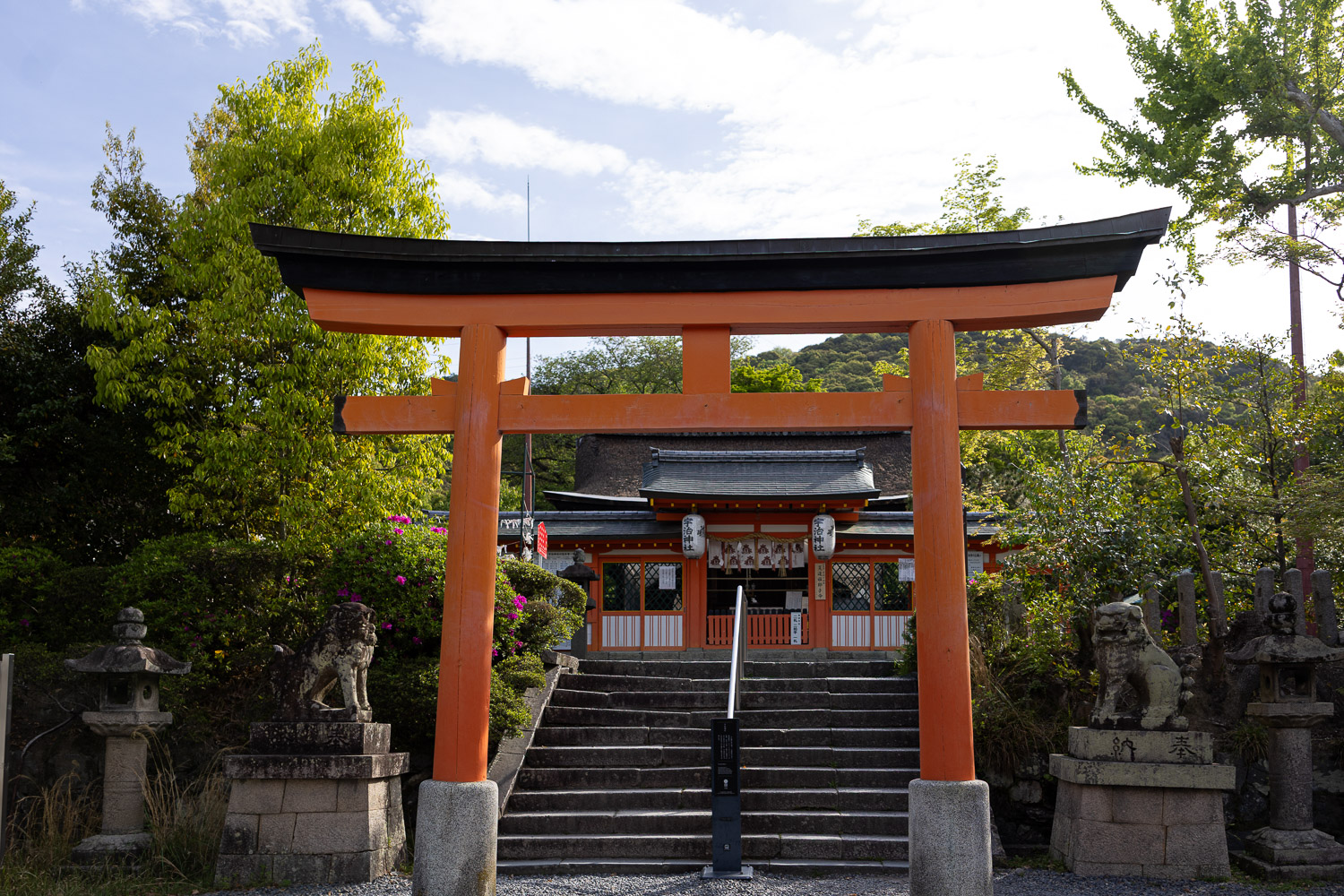
Uji Shrine: The Rabbit Shrine Hidden Behind Byodoin
A quiet shrine where a rabbit once led a prince home — and still guides visitors today.
Before you cross the bridge to Byodoin, stop. Look to your right.
Through the maple leaves and the red torii gate half-hidden in the trees, there’s a shrine that most visitors walk right past. That’s exactly the point.
Uji Shrine — Uji Jinja — doesn’t announce itself. It sits on the east bank of the Uji River, tucked into the hillside, content to let Byodoin take the crowds. But those who find it often say it’s the part of Uji they remember most.
I know I did.
Why a Shrine Full of Rabbits?
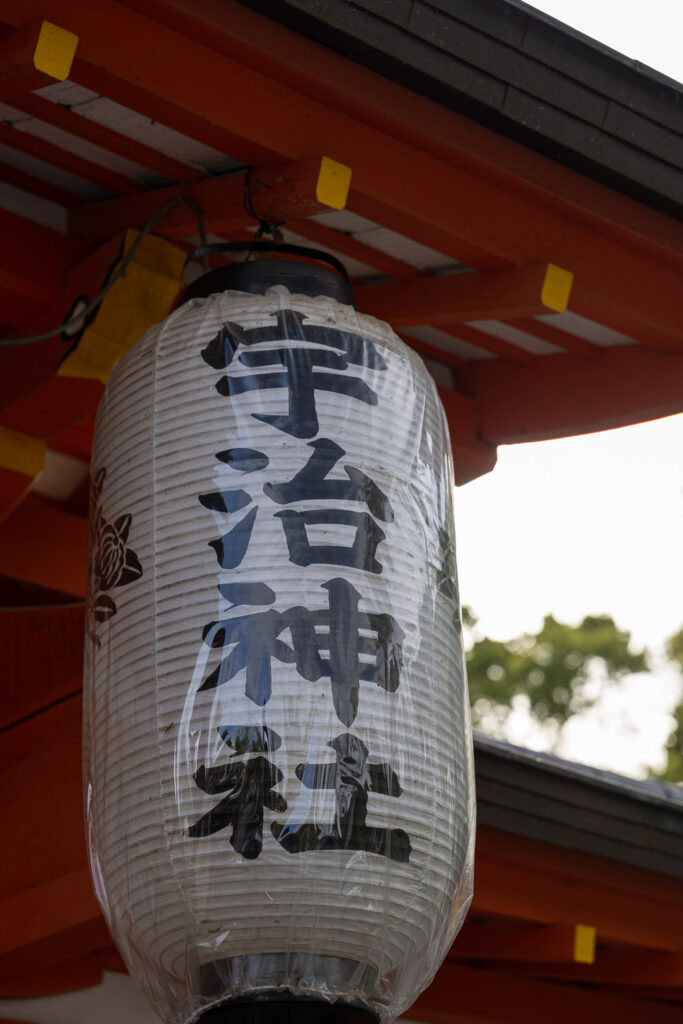
The lantern swinging above the entrance says it plainly: Uji Jinja. But the rabbits require some explanation.
The story begins with a prince named Ujinowakiiratsuko — a son of Emperor Ojin, born in the 4th century. He had been designated crown prince by his father, but he believed in a Chinese Confucian principle: the eldest son should inherit the throne, not the youngest. So when his father died, he refused the position and ceded it to his older brother, who would become Emperor Nintoku.
The standoff lasted three years. Neither brother would accept the throne while the other still lived.
Ujinowakiiratsuko resolved the impasse the only way he saw fit: he took his own life at his palace in this place called Michi no Kuni — “the land of the path.”
Emperor Nintoku, grief-stricken, enshrined his younger brother’s spirit here, and this act of mourning became the founding of Uji Shrine.
But why rabbits? That story comes from earlier in Ujinowakiiratsuko’s life. On his way from the Kawachi region to Uji, he became lost. A single rabbit appeared and guided him — looking back again and again until the prince reached safety. From that moment, the rabbit became the divine messenger of this shrine, known as the mikaeri usagi — the “looking-back rabbit.”
The name of the place itself carries this history. The ancient writing for Uji was Michi — “rabbit’s road” — read as uji. The city’s very name is a 1,700-year-old tribute to a rabbit who once turned around to check if a lost prince was still following.
What You’ll Find Inside
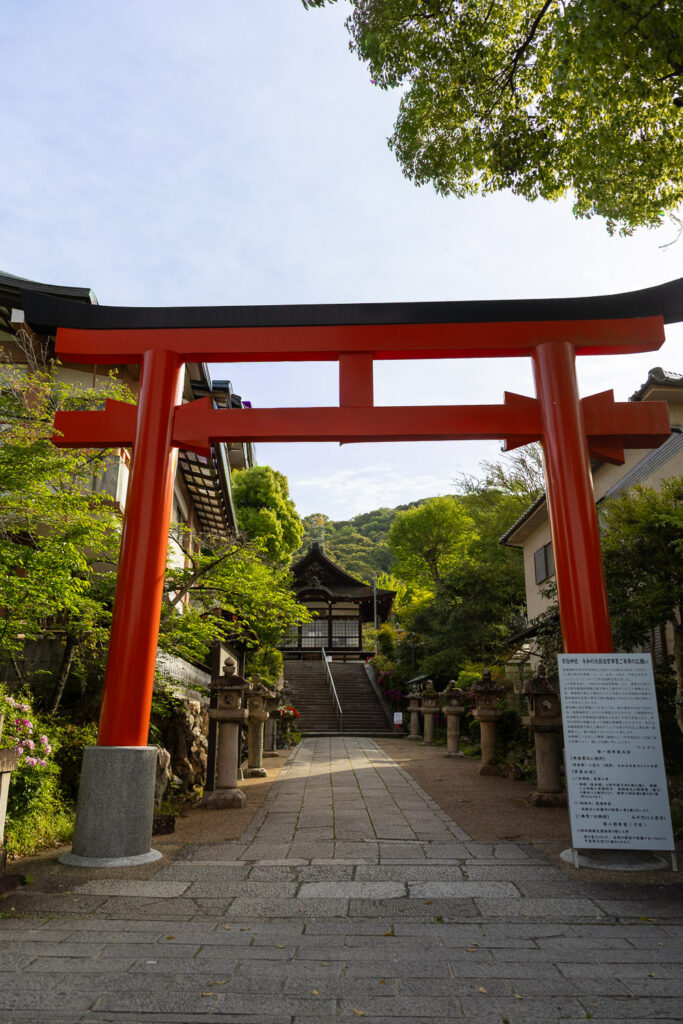
The entrance is unassuming. A vermilion torii, a set of worn stone steps, two komainu guardian dogs that have been standing here long enough to forget what century it is. The approach feels personal — nothing grand, nothing overwhelming. Just the quiet sense that you’ve stepped somewhere old.
The main hall dates to the early Kamakura period and is designated an Important Cultural Property by the Japanese government. It’s one of those buildings that looks exactly as old as it is —檜皮葺 (cypress-bark roof), deep eaves, the particular gravity of wood that has survived seven centuries of weather.
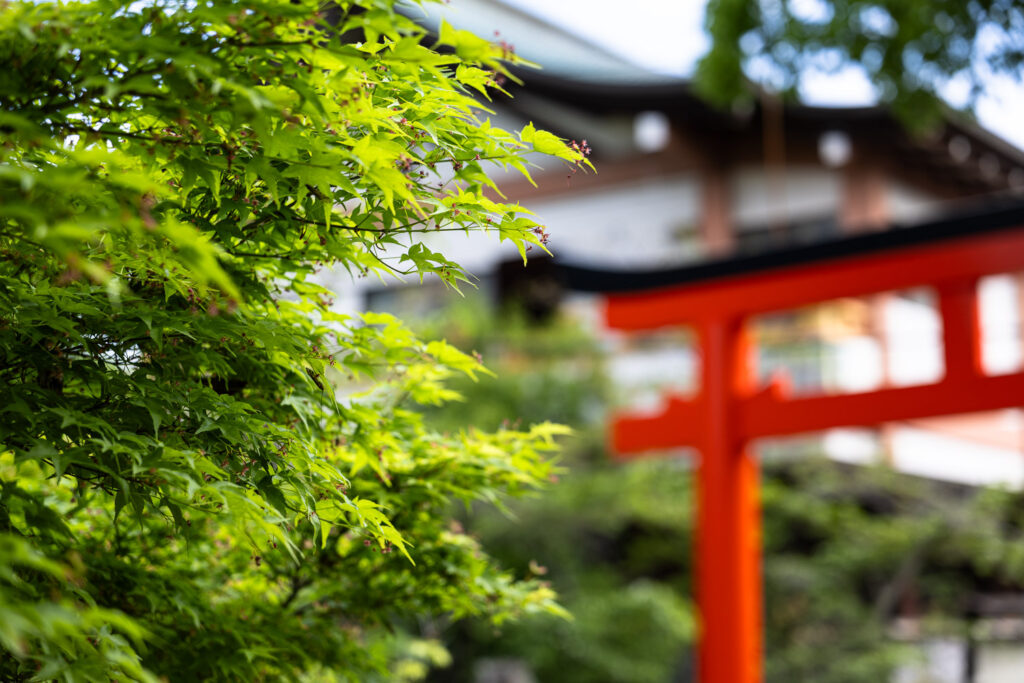
In spring, the maples around the torii turn almost fluorescent — that particular shade of new-growth green that makes everything look lit from within. The contrast with the vermilion is almost too good to be true.
It is, in fact, true.
The Rabbit Hunt: Usagi-san Meguri
Here’s where the visit gets genuinely fun.
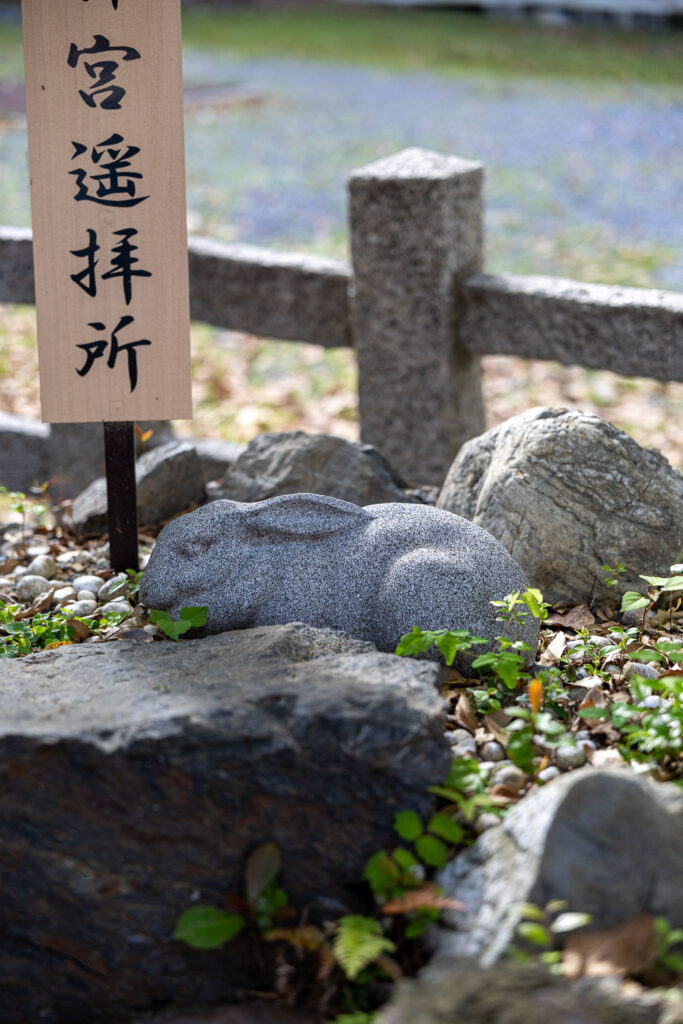
The “Usagi-san Meguri” begins with writing your wish on a rabbit ema (wooden votive plaque), then circling the main hall clockwise three times. While you walk, you’re looking for three rabbit figures hidden around the grounds. If you find all three, your wish is granted — or so the tradition holds.
According to the shrine staff, only about half of visitors manage to find all three rabbits on their own. You’re welcome to ask for hints — the priests are used to it.
I’ll say this: the stone rabbit is easy. The others require genuine attention.
On the first of each month, a bronze mikaeri usagi figure is placed in the grounds — an extra rabbit that appears only on that day. If you plan to visit on a first, clear your morning.
The Ema and the Lanterns
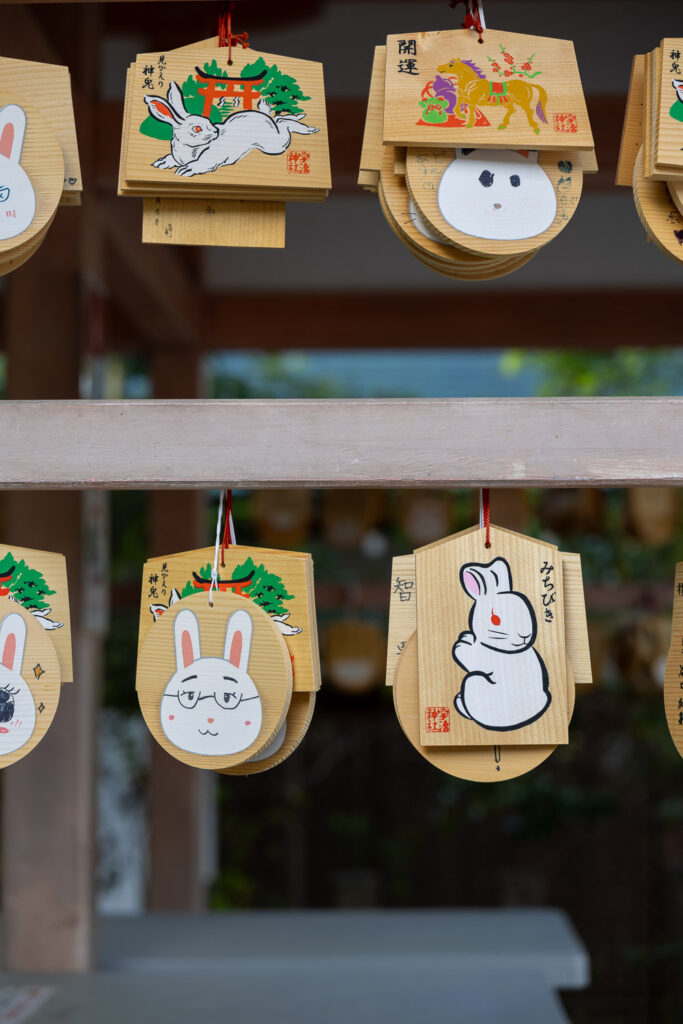
The ema at Uji Shrine are some of the most charming in Kansai. White rabbits racing past red torii. A rabbit wearing glasses. The michibiki usagi — the guiding rabbit — with its red eye and alert ears.
Each one was drawn by someone who made a wish and left it here to dry in the air.
There’s something quietly moving about rows of wooden plaques covered in rabbit drawings, each representing something a person wanted badly enough to carve into wood and hang in the open. Exam results. A pregnancy. A direction in life. The same wishes humans have always brought to shrines, now decorated with long-eared messengers.
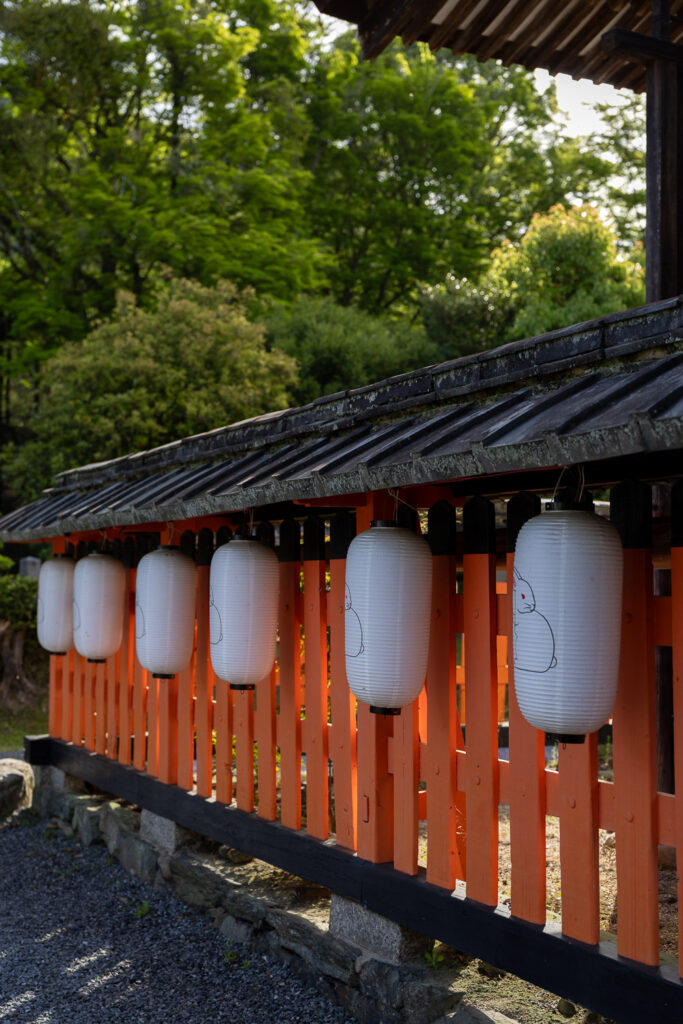
The lanterns lining the covered corridor each carry a faint rabbit outline — barely there until you’re close enough to see it. Seven or eight of them in a row, swaying slightly, the forest behind them. It’s one of those details that makes a photograph look like it was composed by someone with very particular taste.
It was composed by no one. It’s just how the shrine is.
The Stone Monument
[IMAGE: uji-shrine-historical-stone-monument-kyoto.jpg | Alt: Large dark stone monument with carved Japanese text standing among trees in Uji Shrine grounds, vermilion shrine structures visible behind]
Near the approach to Uji Kami Shrine — which shares the same grounds and was once the same institution — stands a large dark stone carved with text in running script. The stone itself is beautiful: deep green-black, veined with pale minerals, the kind of rock that looks like a river cross-section.
The text is difficult to read without help, but the presence of it matters. It marks a place where people have been writing things down for over a thousand years.
The adjacent Uji Kami Shrine was separated from Uji Shrine during the Meiji period, though originally the two were a single sacred complex. They’re still connected by this pathway, and a stone marker carved with “Uji Jinja” stands partway along it — a remnant of the time when this was all one place.
Getting Here: Through Uji Park
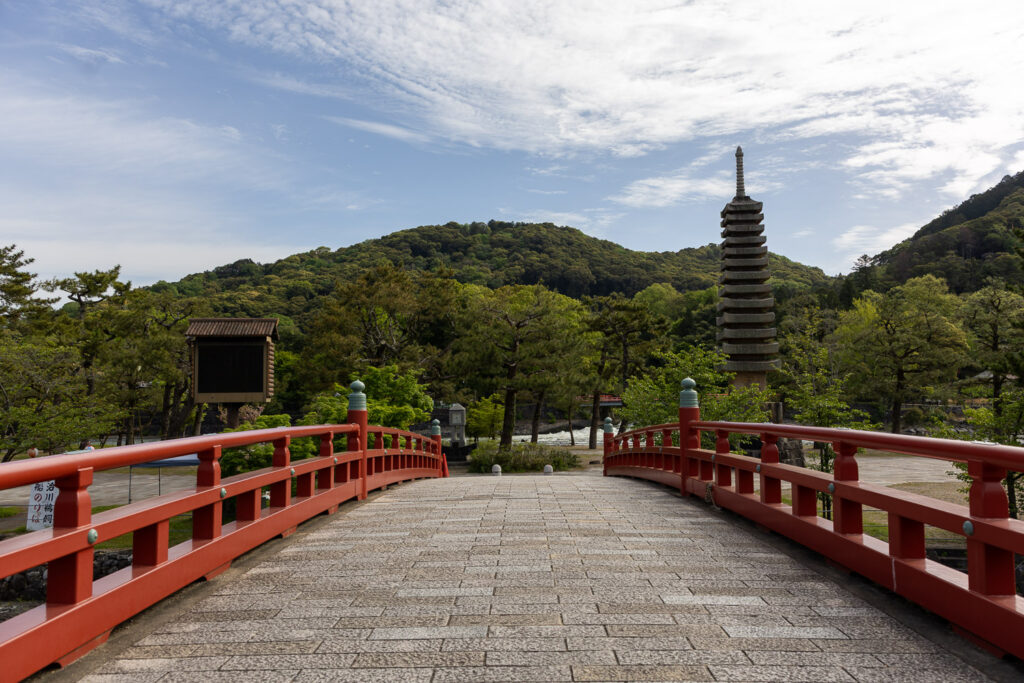
Most visitors come to Uji for Byodoin, the Phoenix Hall temple that appears on the ten-yen coin. The walk from either train station takes you through Uji Park, over the red Asagiri Bridge, with that many-tiered stone pagoda standing on the island in the river.
That’s the moment. The mountain beyond, the white clouds, the red railing, the pagoda. Stop there for a minute before continuing.
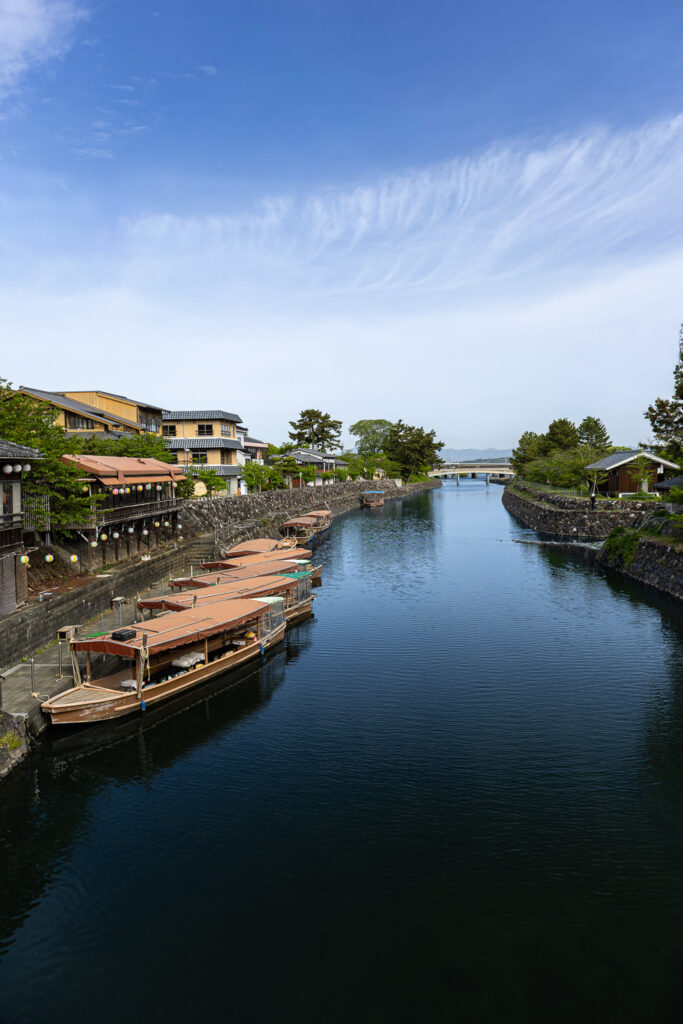
Looking the other direction from the bridge, you’ll see flat-bottomed wooden boats moored along the canal. These are cormorant fishing boats — ukai — and the fishermen use them on summer evenings in a tradition that has continued in Uji since at least the 8th century. In the morning, when the boats are still and the water is dark, they look like something out of a woodblock print.
Cross the bridge and turn right instead of left toward Byodoin. Walk another two minutes along the river path. The torii will appear through the trees on your right.
The White Ceramic Rabbit
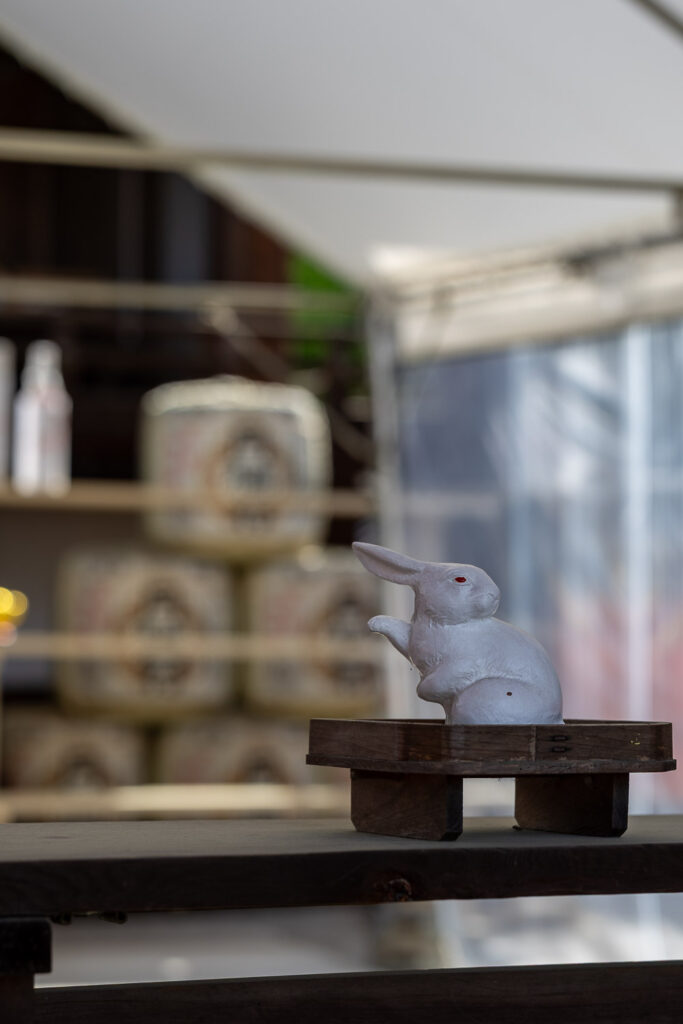
In the shrine office, if you look carefully, you’ll find a small white ceramic rabbit with a single red eye, sitting on a wooden tray. This is the mikaeri usagi in its original form — the looking-back rabbit, mid-turn, pausing to check if you’re still following.
It’s not dramatic. It’s the size of a fist.
But there’s something about the red eye and the listening ears that sticks with you. A rabbit who looked back once, 1,700 years ago, and changed the name of a city.
Spring at Uji Shrine
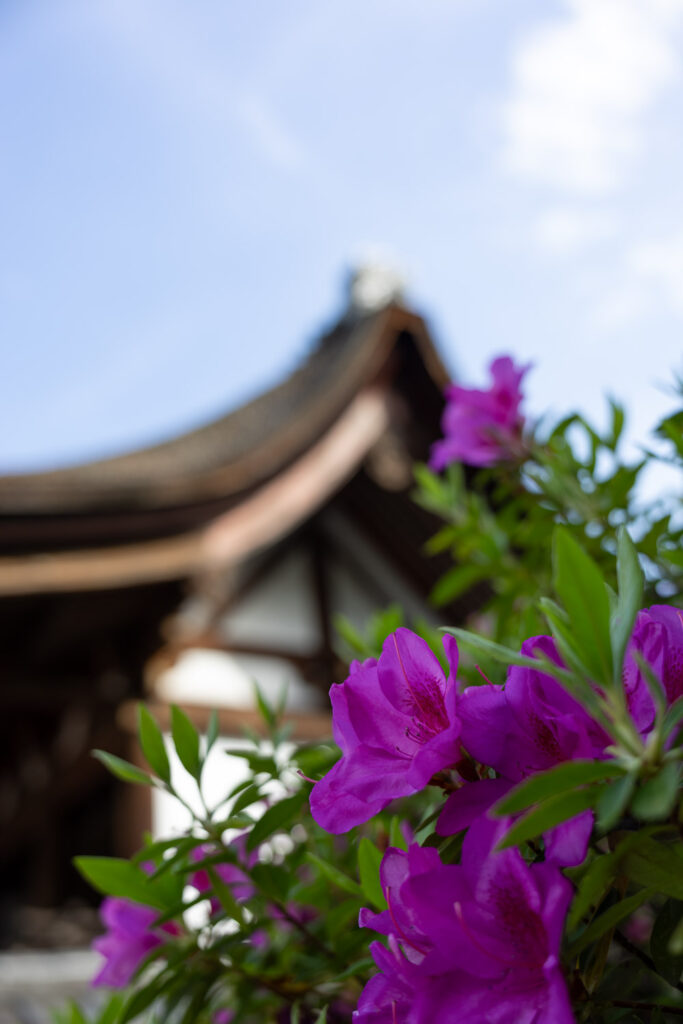
In late April, azaleas bloom around the shrine buildings in a particular shade of purple that has no name in English. The Japanese word is fuji-iro — wisteria color. It’s close to magenta but softer. Against the shrine’s dark roof tiles and blue sky, the combination is almost shocking.
This is a good time to visit. The cherry blossom crowds have thinned but the spring green is still at its best. Byodoin will have visitors; Uji Shrine will have quiet.
Practical Information
Address: 1 Ujiyamada, Uji City, Kyoto Prefecture 611-0021
Hours: Grounds open at all times. Shrine office (for ema, omamori, and goshuin) open 9:00 AM – 4:00 PM daily.
Admission: Free
Access:
- Keihan Uji Station: 5-minute walk
- JR Uji Station: 15-minute walk
What to buy:
- Mikaeri usagi ema (¥500) — for the Usagi-san Meguri
- Michibiki usagi ema (¥1,000) — blessed at the main altar
- Mikaeri usagi omikuji fortune (¥300) — a small white rabbit to take home
- Goshuin (shrine seal): ¥500 written in the book, various printed versions available
Note on combining visits: Uji Gami Shrine (UNESCO World Heritage Site, the oldest surviving shrine architecture in Japan) is a 3-minute walk uphill from Uji Shrine. Visit both. Byodoin is across the river and takes 30–60 minutes depending on whether you pay for the interior. The full circuit — shrine, river, temple — takes about two hours at a comfortable pace.