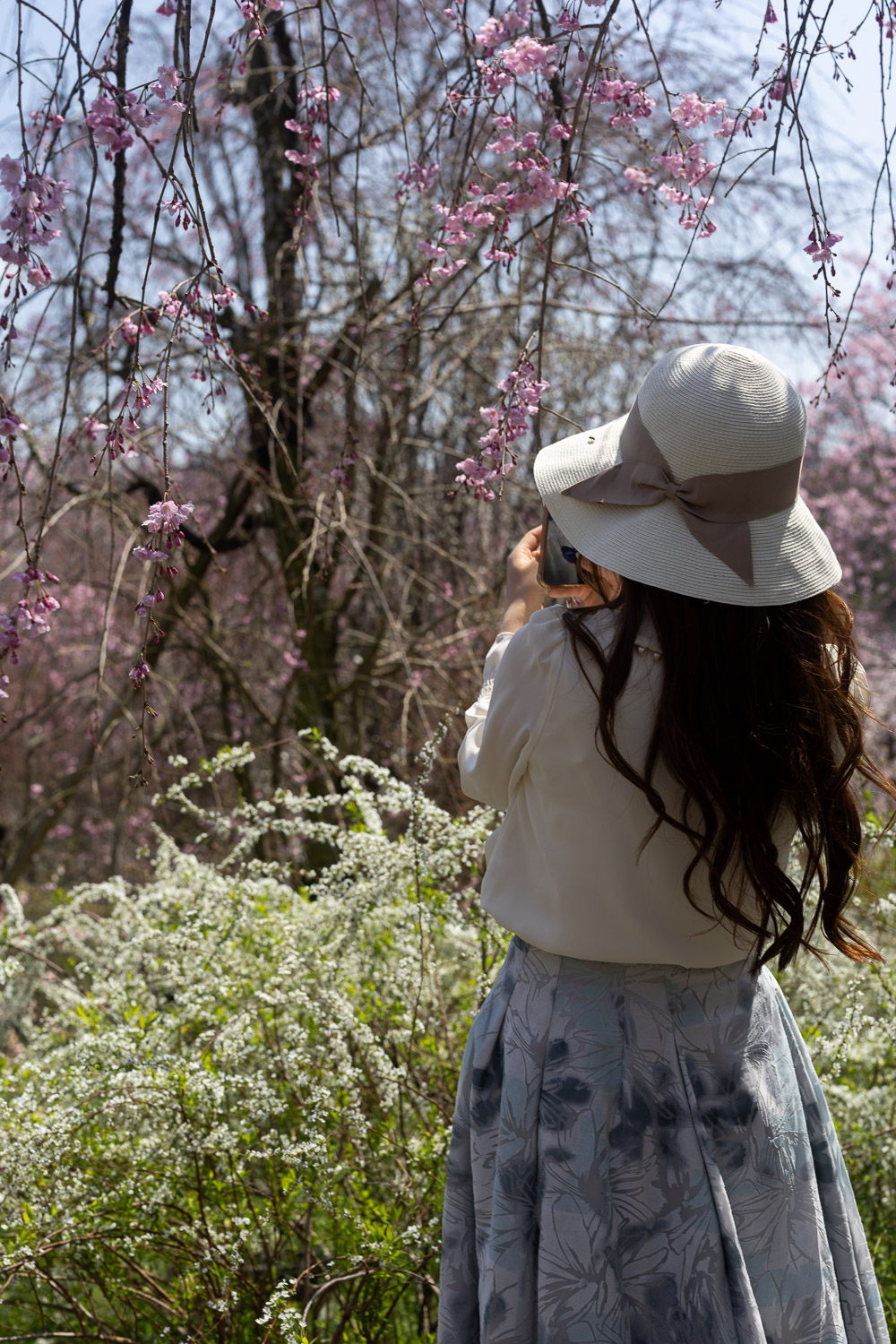
“Hidden gem is NOT hidden gem.”
That’s what my English teacher told me. And she’s right. I don’t use the phrase lightly. But Haradanien in cherry blossom season is almost entirely Japanese visitors — no tour groups, no matching caps, no selfie sticks sweeping the crowd. If a true hidden cherry blossom spot still exists anywhere near Kyoto or Osaka, this might be the last one.
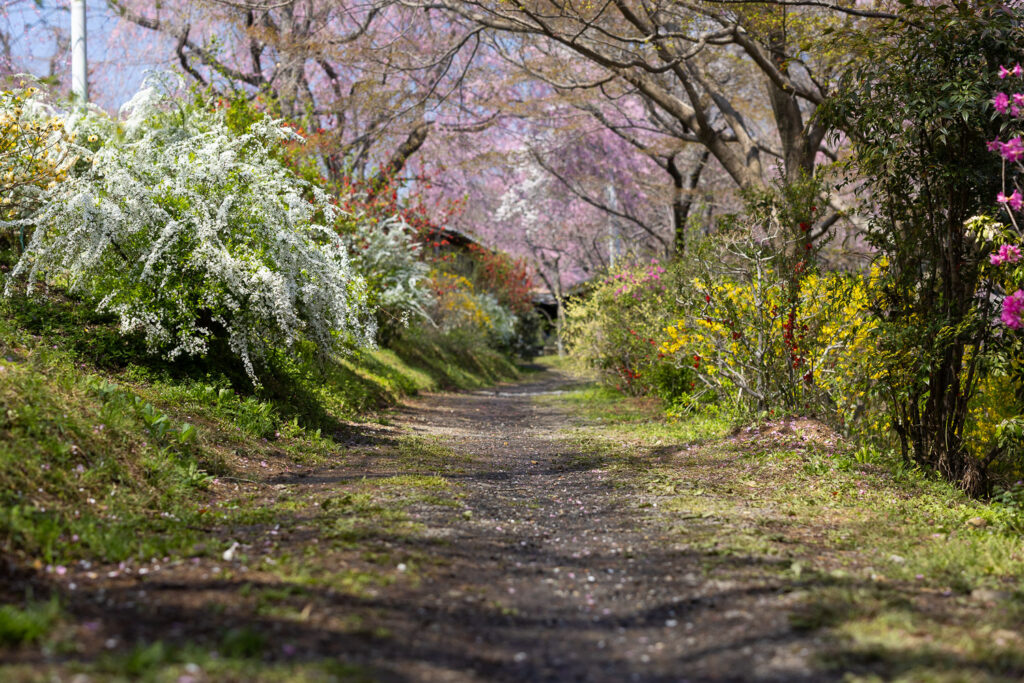
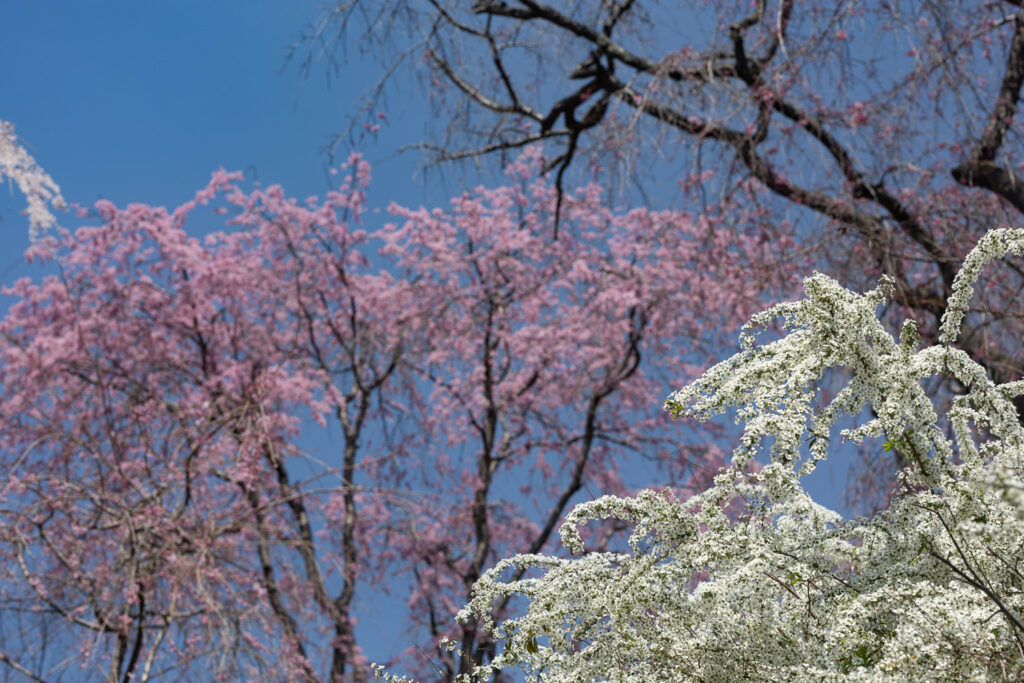
The day I visited — April 2, 2026 — the skies had turned miraculously clear after the previous day’s heavy rain. What greeted me inside was color so vivid it felt almost aggressive: weeping cherry trees in full bloom, clouds of white snow willow, petals trembling against a blue sky so sharp it hurt to look at.
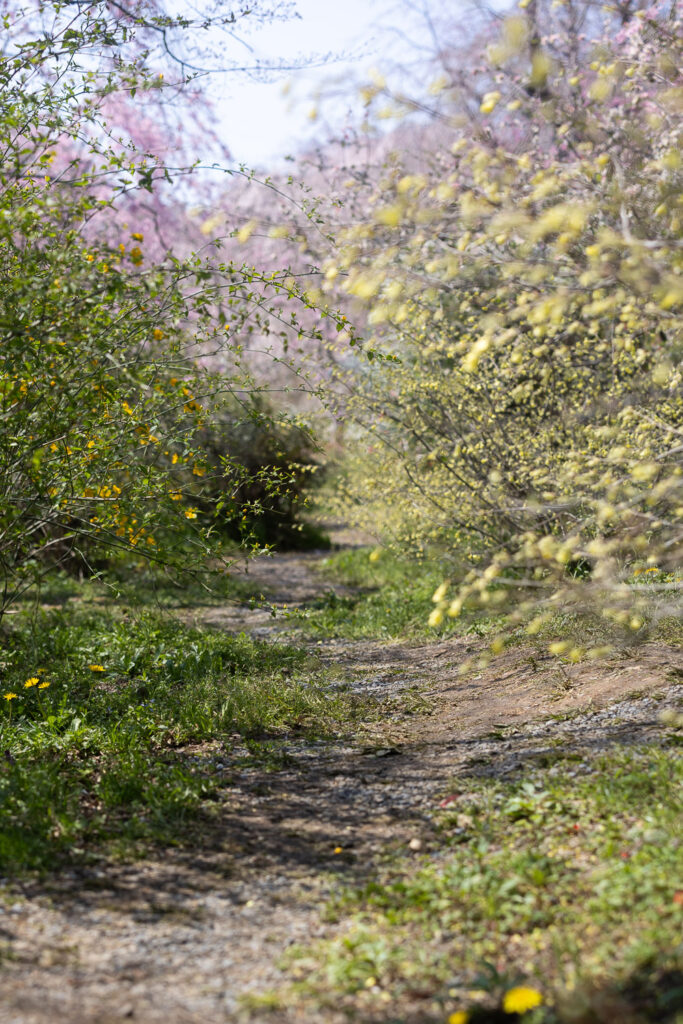
An unspoiled hanami destination, I’d say — though the ground was thoroughly muddied by rain. And by me. I had chosen that morning to break in a brand-new pair of shoes. I had not anticipated becoming part of the problem.
The Mystery of Haradanien
Haradanien resists easy definition. It is a privately owned garden, not a park. It opens for only a few weeks each spring, then disappears from public life entirely. It sits far from Kyoto’s tourist center, with almost no English-language information available. The official website is in Japanese only.
None of that mystery would matter if the garden weren’t extraordinary. It is.
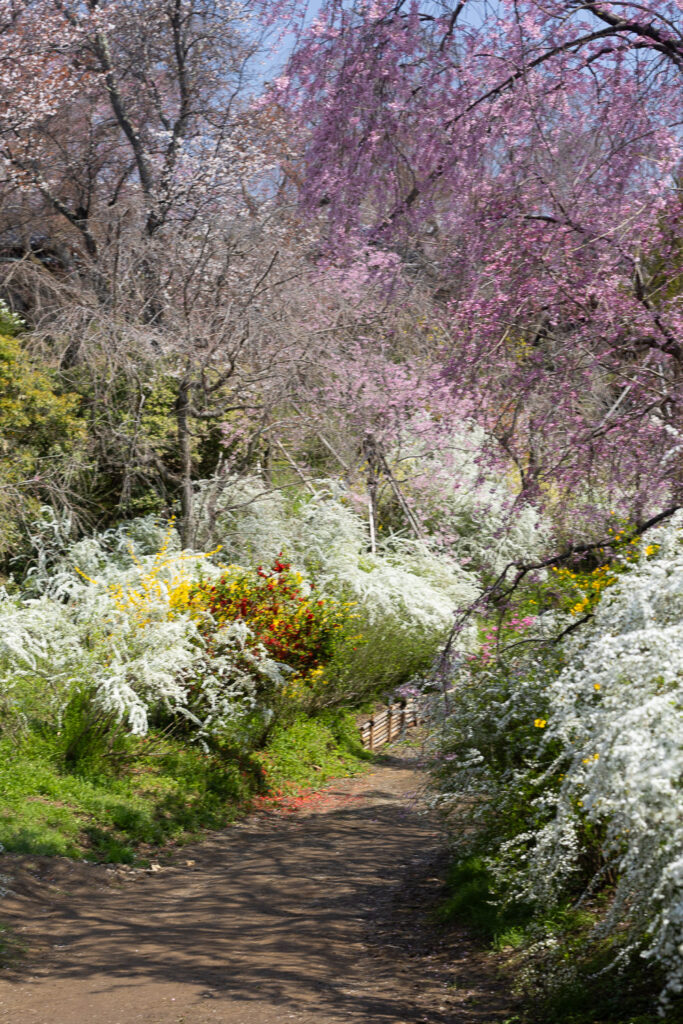
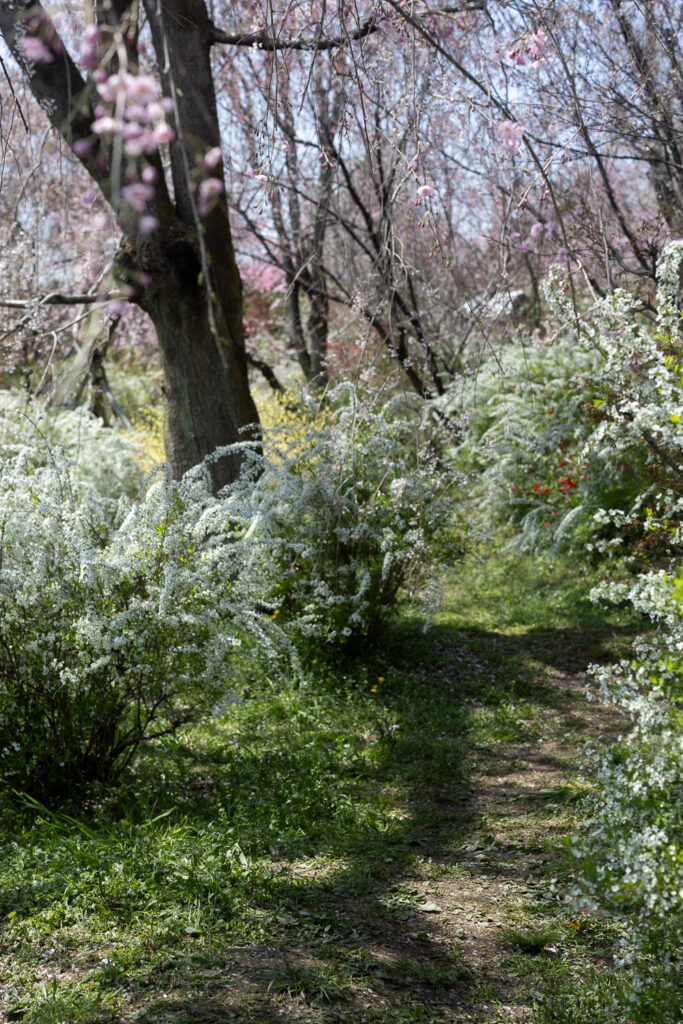
Weeping cherry trees and snow willow were in full bloom the day I visited. The pure white of the snow willow made the pink of the sakura burn brighter — the contrast against the blue sky was almost unbearable in the best possible way.
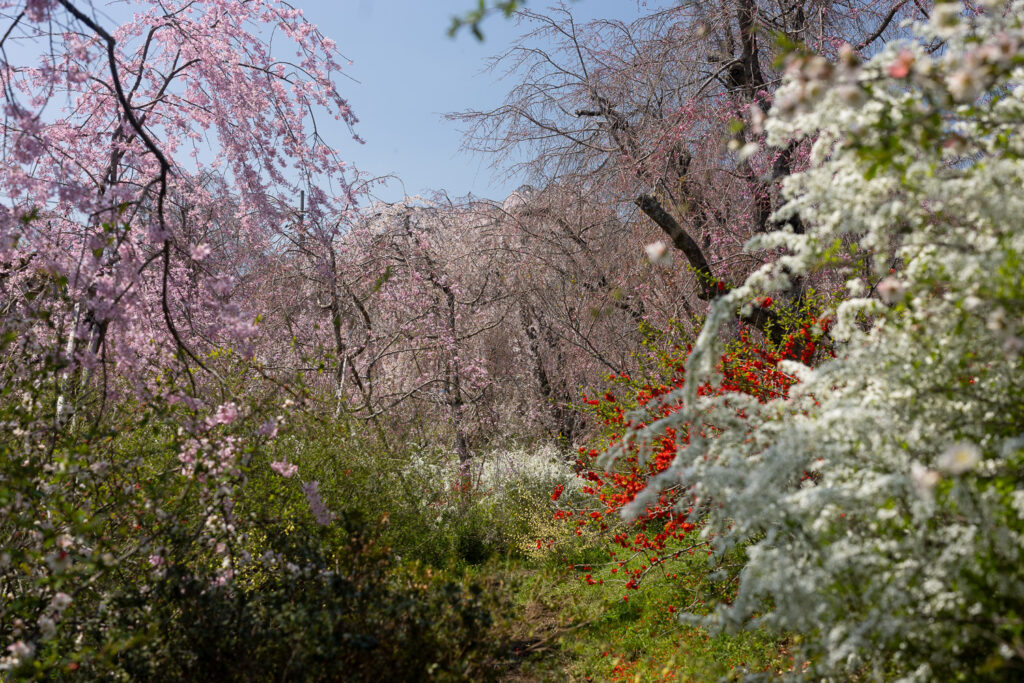
The garden layers greens, yellows, and reds across slopes in combinations that made me grateful I am not a painter. I would never have gotten it right.
The crowds were present, but not oppressive. There were simply too many beautiful corners to photograph — no bottlenecks, no queuing for a single famous shot. In Kyoto, this is genuinely unusual. In Kyoto, this is practically an anomaly.
Two older women in front of me were laughing and spinning in front of a cascade of blossoms. “I’ve turned back into a little girl!” one announced at full volume. Then she noticed me watching. In an instant, she composed herself back into dignified adulthood. I felt terrible about it.
A Garden Built from Nothing: The History of Muraiwa Noen
I found myself wondering how a garden this extraordinary came to exist as a private creation at all. I looked it up on the official website, and what I found was not what I expected.
(The following history is based on information provided on Haradanien’s official website.)
Few visitors know what this land once was.
After World War II, families who had fled back from Manchuria were ordered by the government to settle and cultivate this remote hillside — land that sat behind a crematorium. Those who stayed tried everything: orchards, vegetable farming, cattle, poultry. The land resisted them at every turn.
In 1957, Tsunetaro Murase of the Muraiwa forestry family acquired the plot, on the condition that he continue the work of cultivation. The soil was poor and contaminated. Almost nothing would grow.
So the family planted trees instead. Cherry trees. Maples. Azaleas. Plum, peach, persimmon, chestnut, yuzu — dozens of species went into the ground from around 1958 onward.
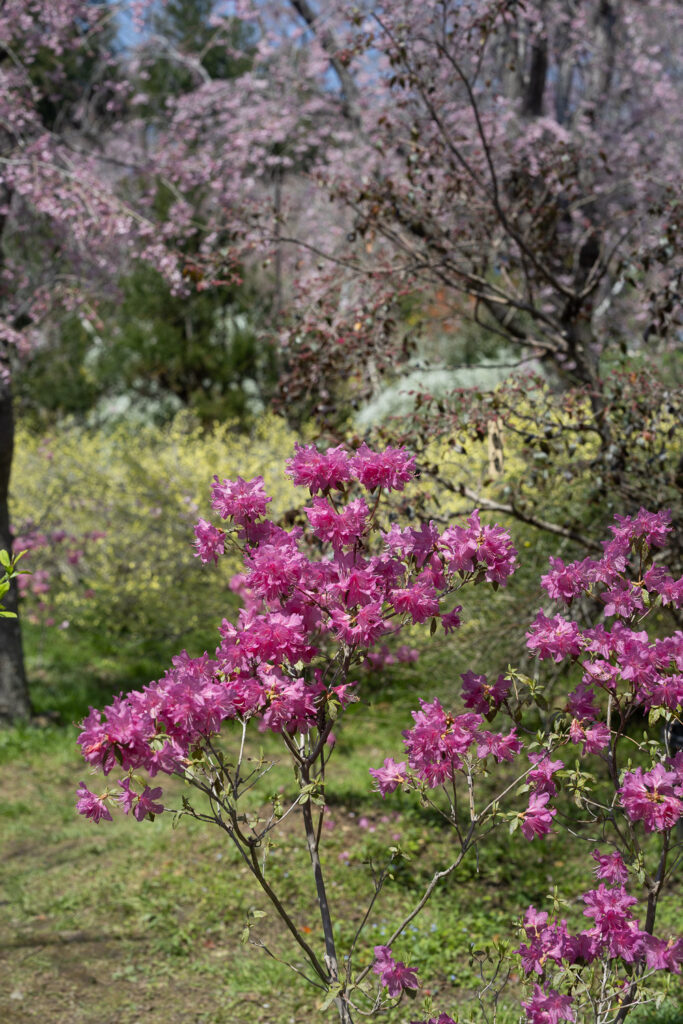
The cherry trees thrived.
By the 1960s, the family had begun inviting relatives and friends to simple flower-viewing gatherings — sukiyaki over an open fire, homegrown chicken and vegetables, nothing formal. Word spread slowly, the way it does with things worth keeping. Eventually, the garden opened to the public during cherry blossom season. They named it Haradanien.
What you see today is the cumulative work of four generations of one family, planted into ground that once refused to grow anything at all.
Admission: A Price That Moves With the Blossoms
Haradanien uses a dynamic admission pricing system — rare in Japan — with the entrance fee changing daily based on the state of the blossoms. The closer to peak bloom, the higher the price.
In 2026, the maximum admission was ¥1,800. Daily prices are announced on Haradanien’s official X (formerly Twitter) account each morning.
When my taxi pulled up to the gate, I learned I was paying ¥1,800 — the day before had been ¥1,500. I felt, briefly, like a taxi meter had ticked over at exactly the wrong moment. Then I walked inside.
I was glad it was a ¥1,800 day.
Cash only. No exceptions.
Inside the Garden
Food and drink are available for purchase inside, including bento boxes, beverages (alcoholic options included), and traditional Japanese sweets. By early afternoon, popular items begin to sell out. Prices are reasonable — not inflated for tourists.
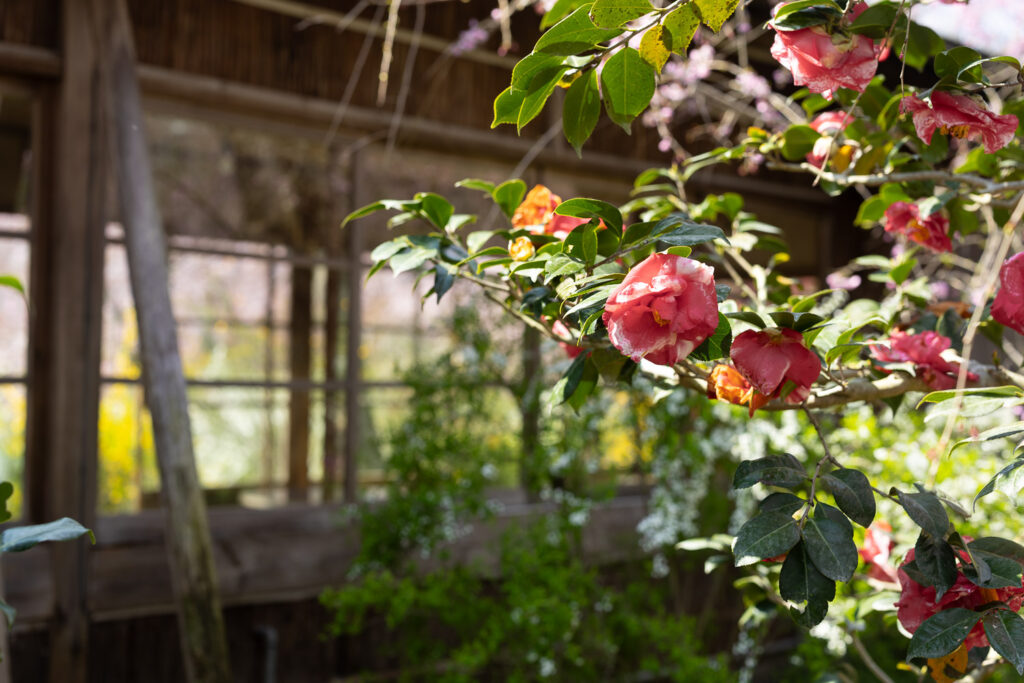
Plenty of benches are available throughout the garden, which is itself not very Kyoto. A wooden building reminiscent of a Showa-era schoolhouse offers indoor seating for those who want to eat out of the wind.
Two restrooms are available on the grounds.
What is not permitted:
- Touching, holding, or shaking cherry blossom branches for photographs
- Tripods, monopods, or picnic blankets
- Bridal or formal photography sessions that may inconvenience other visitors
The garden is not wheelchair accessible. Strollers are permitted but the terrain — uneven soil, gentle slopes, some steps — will limit mobility significantly.
Getting There
Free Shuttle Bus (recommended)
A free shuttle bus operates from in front of Wara Tenjin Shrine during the open season. Look for the signboard near the torii gate — staff will be present. Seats are limited; if the bus is full, the next departure is approximately 20 minutes later. Wara Tenjin is a 15-minute walk from Kitano Hakubaicho Station (Hankyu Kyoto Line).
By Taxi
- From Kitaoji Station (Subway) or Enmachi Station (JR): approximately 10 minutes
- From Saiin Station (Hankyu): approximately 15 minutes
- From Kinkakuji Temple taxi stand or Wara Tenjin: approximately 5 minutes
By Foot (not recommended, but possible)
- From Genkoan bus stop (City Bus Route Kita-1): approximately 2.5 km (30–40 minutes)
- From Kinkakuji Temple: approximately 2.2 km (30–40 minutes)
- From Ninnaji Temple: approximately 2.1 km (30–40 minutes)
Note: Approaching on foot means narrow roads in places. Plan accordingly.
2026 open season: March 23 – April 20
2027 dates: Not yet announced. This article will be updated as soon as the official schedule is confirmed.
Getting there: Haradanien is approximately 5 minutes by taxi from Kinkakuji Temple. Consider combining both on the same morning.
Frequently Asked Questions
Q: Is Haradanien open every day during the season?
A: Yes, the garden is open daily throughout its announced season. Hours may vary — check the official X account for that day’s admission price and any schedule changes.
Q: Do I need to make a reservation?
A: No reservation is required. Entry is walk-in only during open hours.
Q: How much does admission cost?
A: Admission varies daily based on the bloom condition. In 2026, prices ranged up to a maximum of ¥1,800. Check Haradanien’s official X account on the morning of your visit.
Q: Is cash required?
A: Yes. Haradanien accepts cash only. There are no card or electronic payment options available.
Q: What is the best way to get there by taxi?
A: The most convenient taxi options are from Kinkakuji Temple taxi stand or from Wara Tenjin Shrine — both are approximately 5 minutes away. From Kitaoji Station (Subway) or Enmachi Station (JR), expect around 10 minutes. From Saiin Station (Hankyu), approximately 15 minutes. Taxi is a reliable choice, particularly if you are carrying camera equipment or prefer to avoid the shuttle bus queue.
Q: Is English spoken at the garden?
A: The official website is in Japanese only, and English signage inside the garden is limited. Staff on-site may have basic English. It is worth pointing to information on your phone if needed — the staff are helpful.
Q: Is the garden wheelchair accessible?
A: No. The terrain — uneven soil, slopes, and some steps — makes wheelchair access not feasible.
Q: Can I bring a stroller?
A: Yes, strollers are permitted, but mobility inside the garden will be limited by the terrain.
Q: Can I photograph freely?
A: Photography for personal use is welcome, with restrictions: do not touch or shake the cherry branches, and tripods, monopods, and picnic blankets are prohibited. Formal or bridal photography sessions are not permitted.
Q: When is the best time to visit?
A: Peak bloom varies by year. The daily admission price is your best real-time indicator — higher prices reflect peak bloom conditions. Check the official X account the morning of your visit.
Practical Information
Name: Haradanien (原谷苑)
Location: Haradani Inuicho, Kita-ku, Kyoto
Open season 2026: March 23 – April 20
Open season 2027: To be announced. This page will be updated when dates are confirmed.
Admission: Variable (up to ¥1,800 in 2026). Check official X account on the day.
Payment: Cash only
Haradanien’s official website: http://www.haradanien.com/
Haradanien’s official X account: https://x.com/haradanien
Accessibility: Not wheelchair accessible