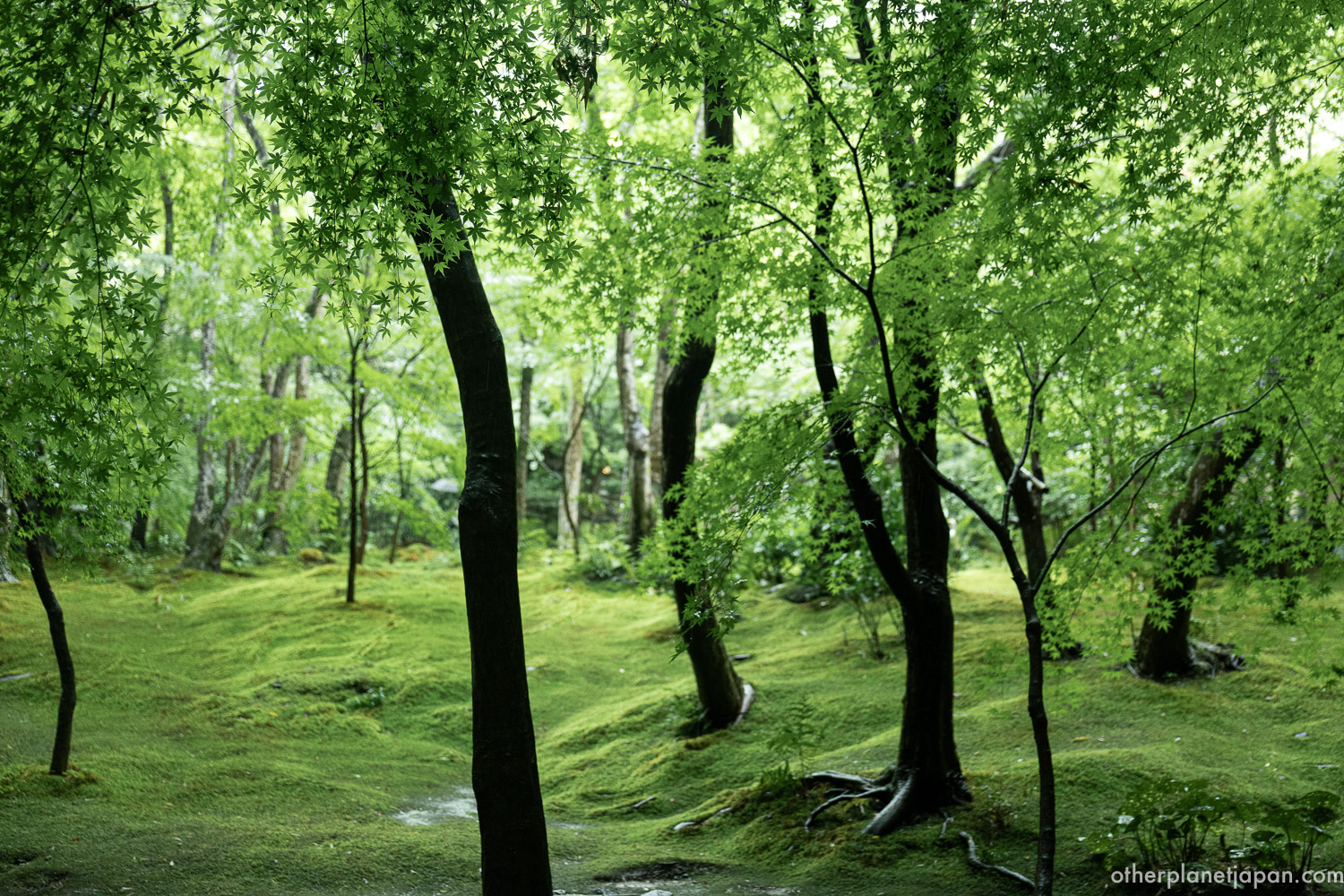
Gioji Temple is a small nunnery tucked into the far reaches of Sagano, in the northwest of Arashiyama. It is best known for two things: its connection to the Tale of the Heike, and a garden carpeted almost entirely in moss. Few places in Kyoto change in atmosphere so completely with just a short walk away from the main tourist routes—step off the crowded lanes near the Bamboo Grove, and the noise falls away within minutes.
The temple takes its name from Gio, a shirabyoshi dancer of the late Heian period who, according to legend, retreated here to live as a nun after falling out of favor with Taira no Kiyomori. That history gives the place its quiet, inward mood. But you do not need to know the story to feel it. The garden does most of the talking.
The Moss Garden
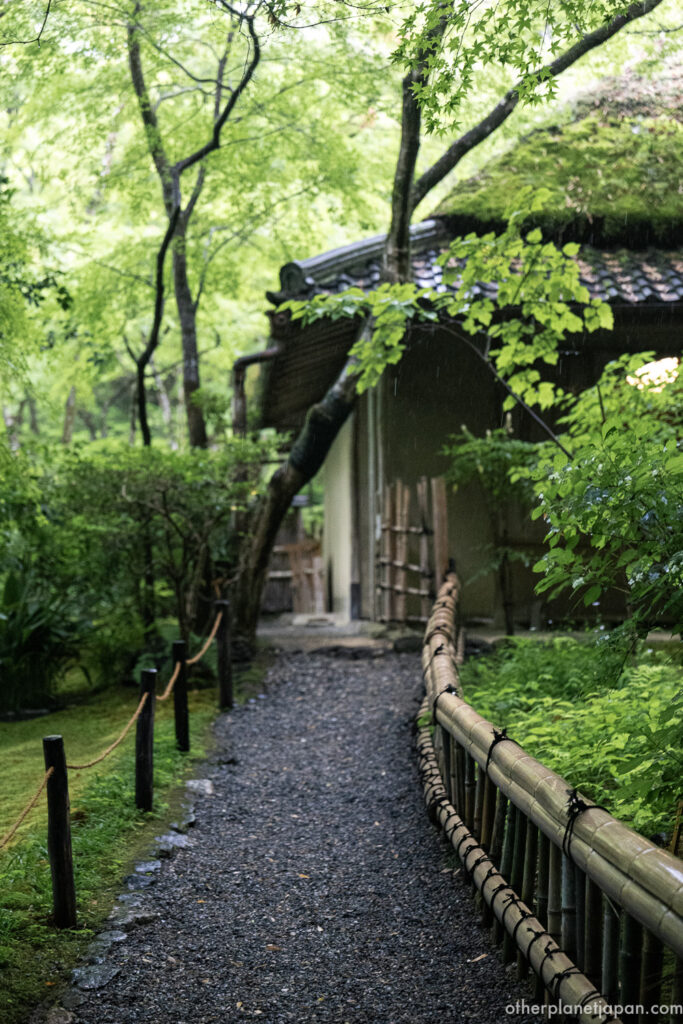
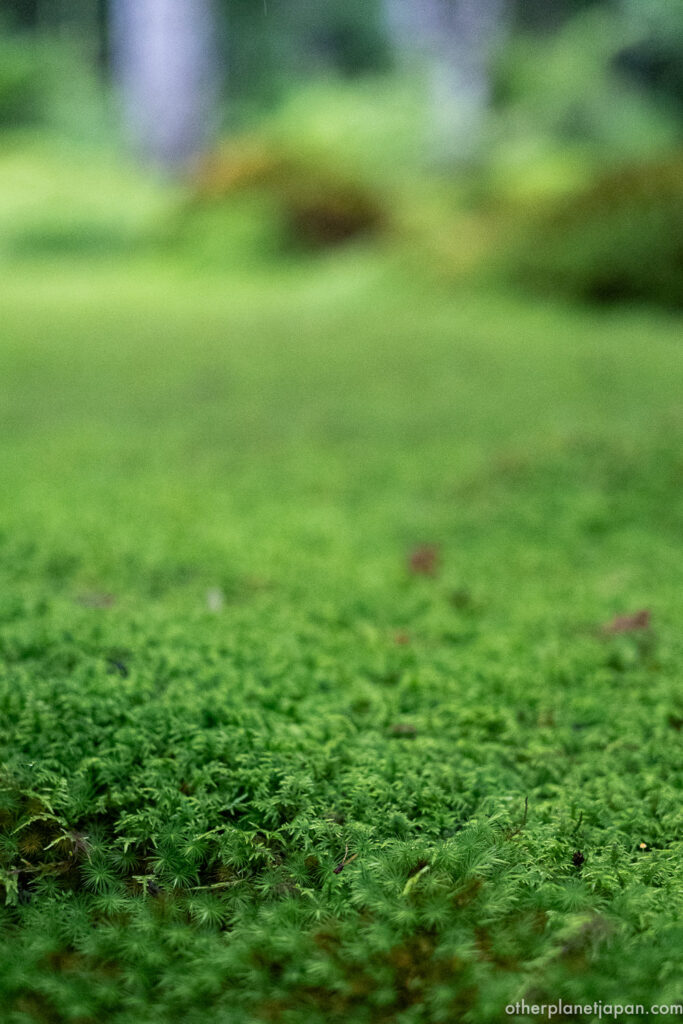
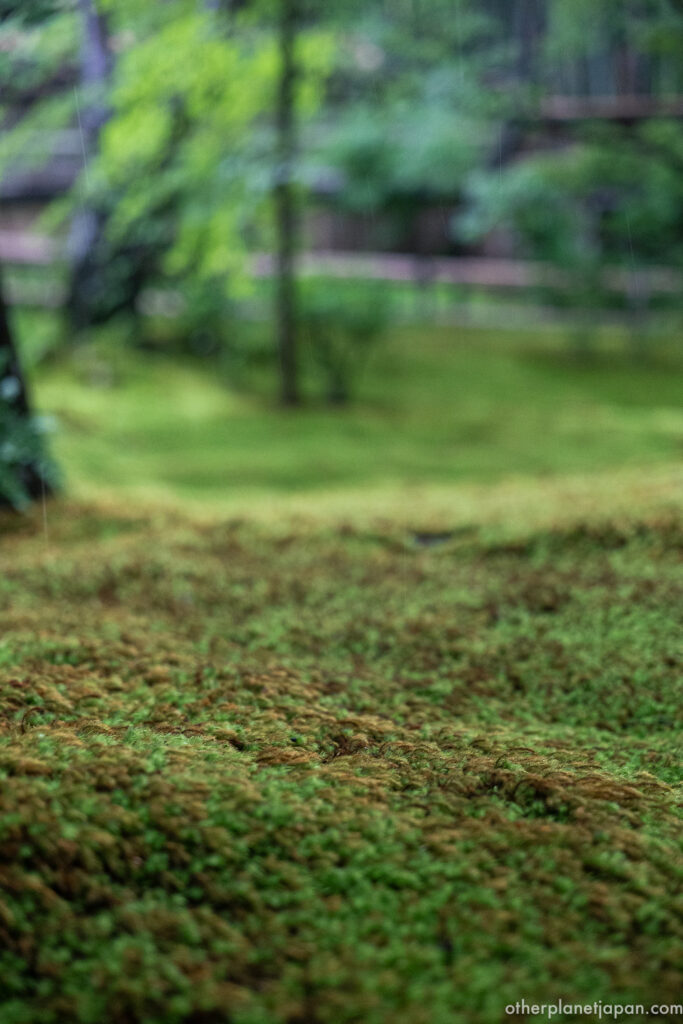
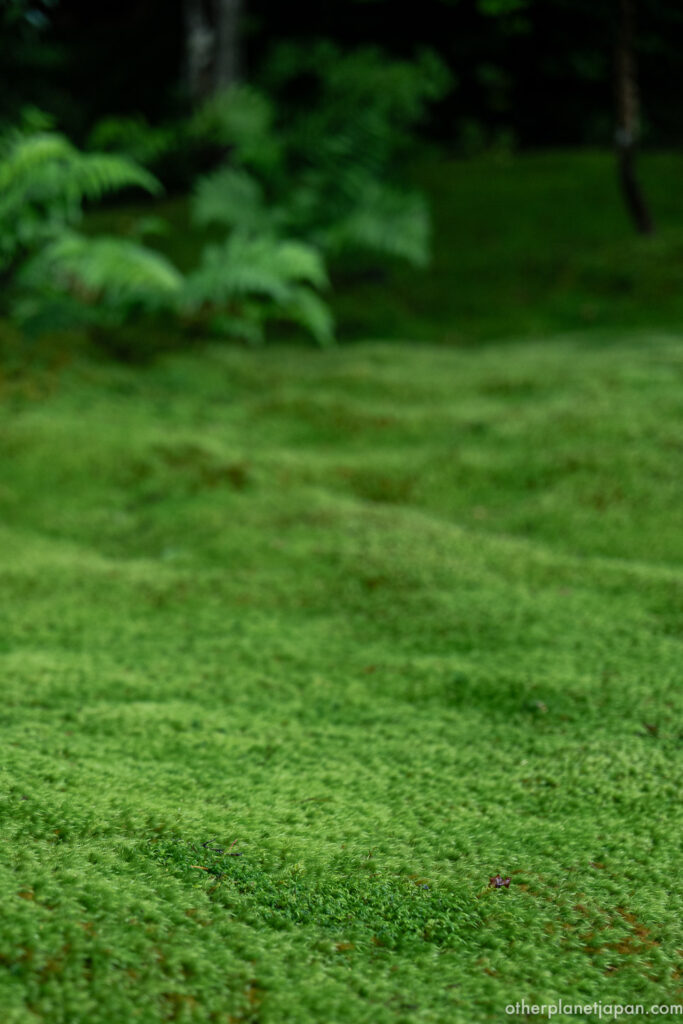
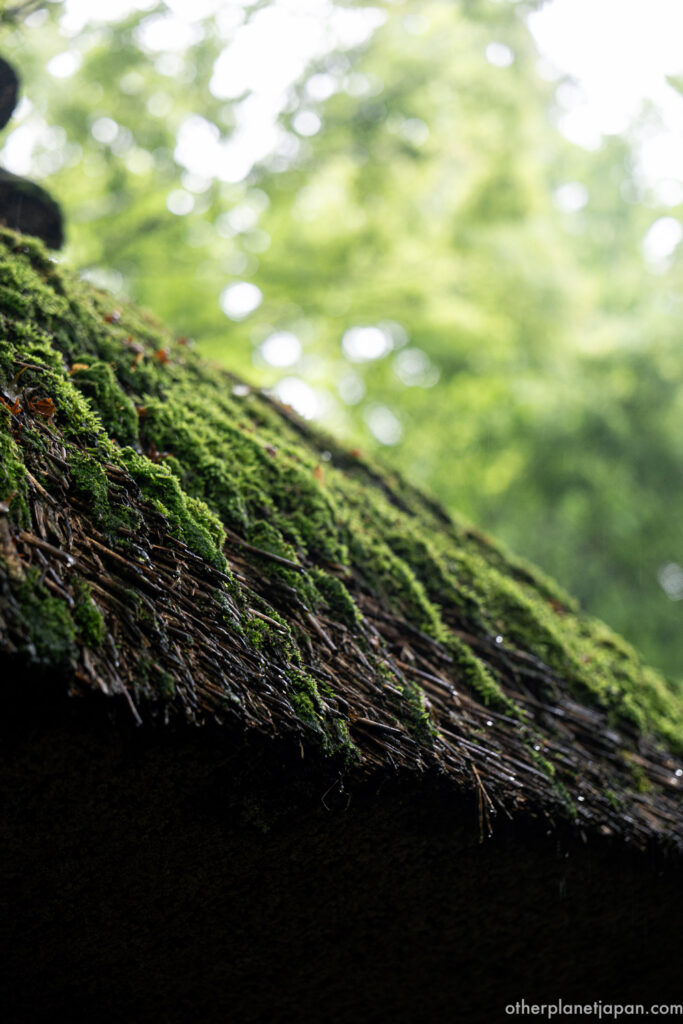
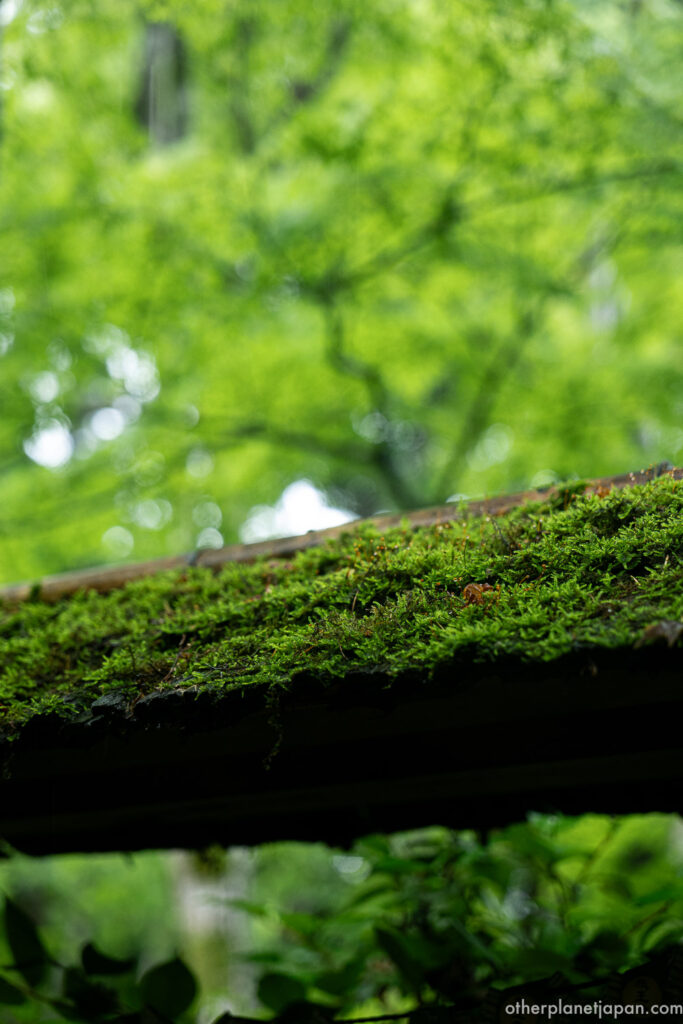
The garden that fills most of the grounds is a tapestry of mosses—hair moss and many other species blanketing the earth beneath a canopy of maples. The effect is less a manicured “garden” than a slice of forest floor, layered and slightly wild. Low mounds rise and dip beneath the trees, and the green seems to absorb both light and sound.
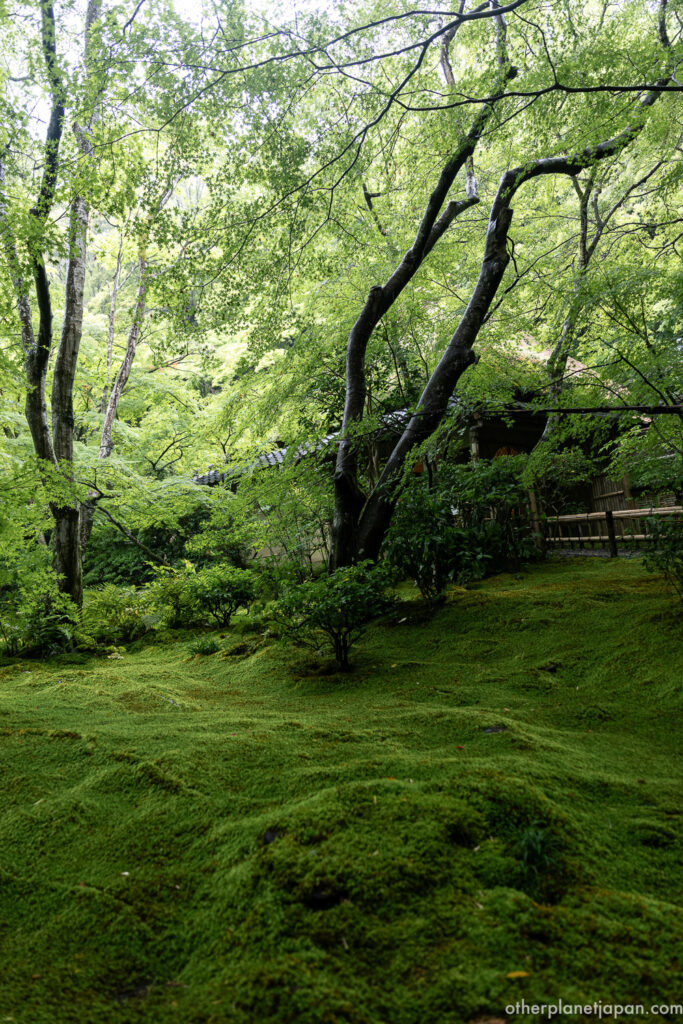
The moss is at its most brilliant just after rain, or during a light drizzle. Saturated with moisture, the green deepens several shades and the whole compound takes on a hushed, glistening quality. Do not assume clear skies are the ideal condition here. An overcast day, or even a soft rain, suits this garden far better than bright sun—the light stays even, the colors stay rich, and the crowds stay thin.
The Hermitage and the Yoshino Window
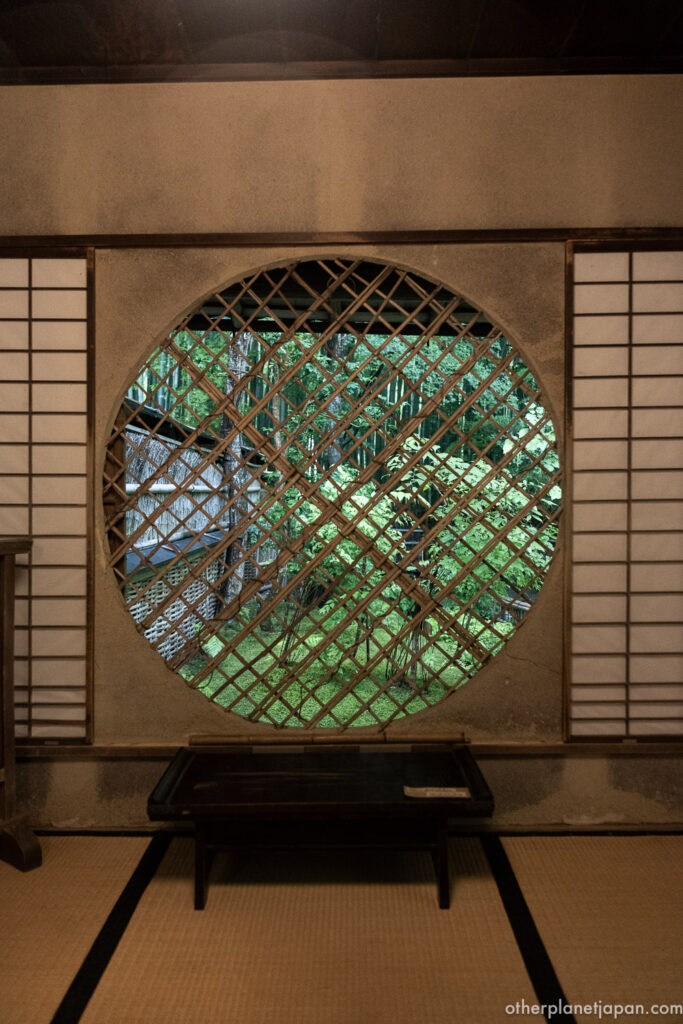
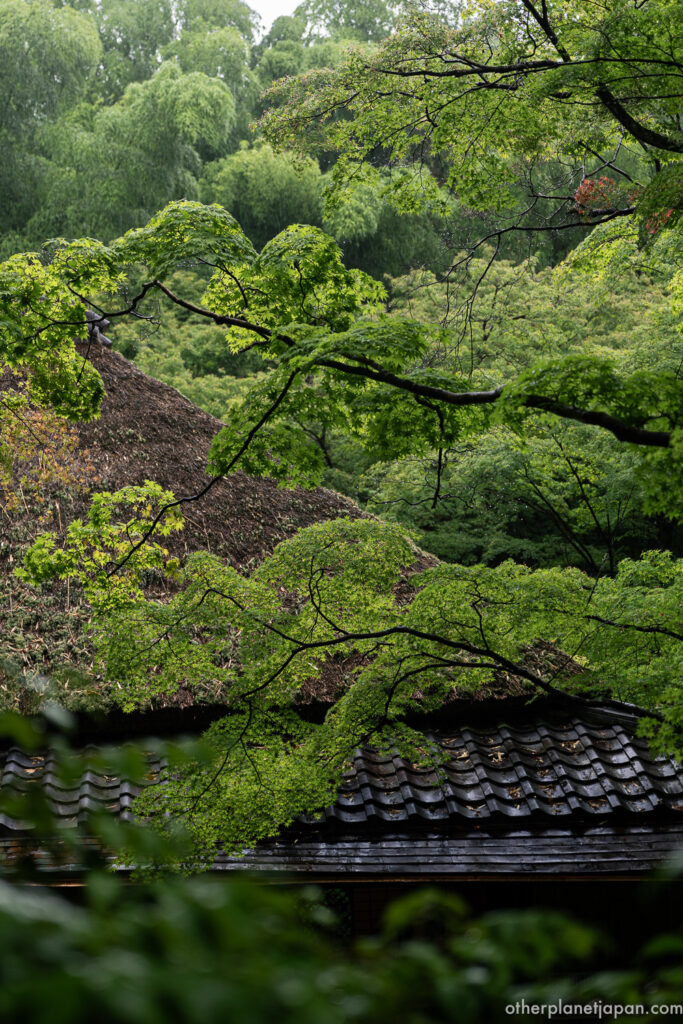
At the center of the grounds stands the thatched-roof hermitage, the building that defines Gioji. From inside, the Yoshino window—a large circular opening—frames a perfectly round view of the moss garden through its lattice. The composition reads almost like a hanging scroll, and it is one of the most photographed spots at the temple.
Please note that photography of the Buddhist statues inside the hermitage is not permitted.
Goshuin (Temple Seal)
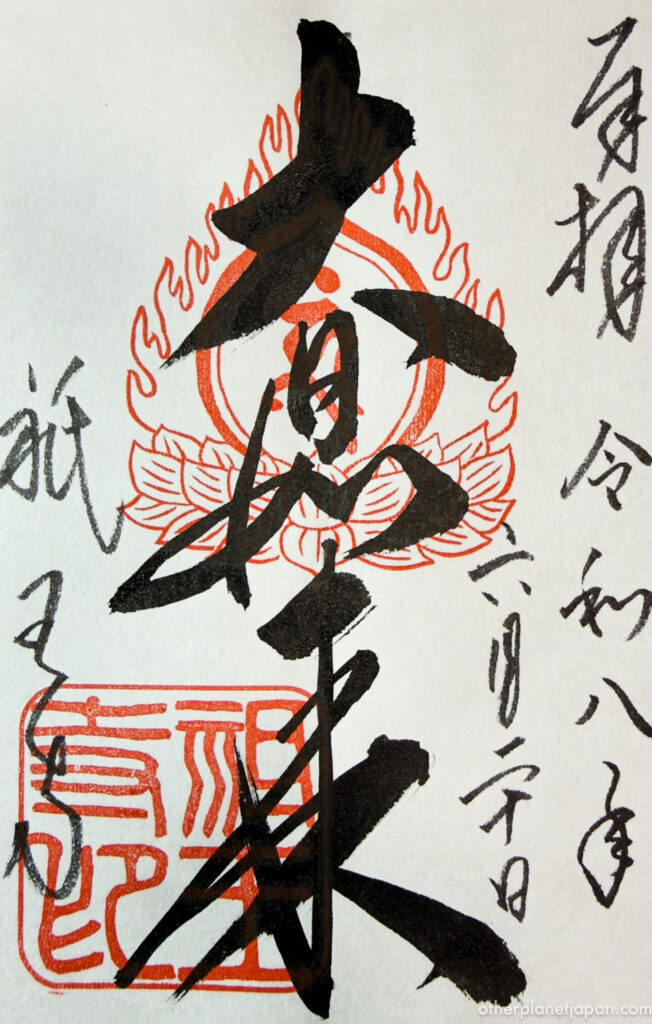
The goshuin (temple seal) is offered as a pre-written sheet (500 yen). Although pre-written, each sheet is prepared with the date of your actual visit already inscribed, so it still serves as a dated record of the day you came.
How to Get There
Gioji sits at the northern end of the Sagano walking trail, deeper into the hills than most Arashiyama temples. The most practical way to reach it is on foot from one of two train stations.
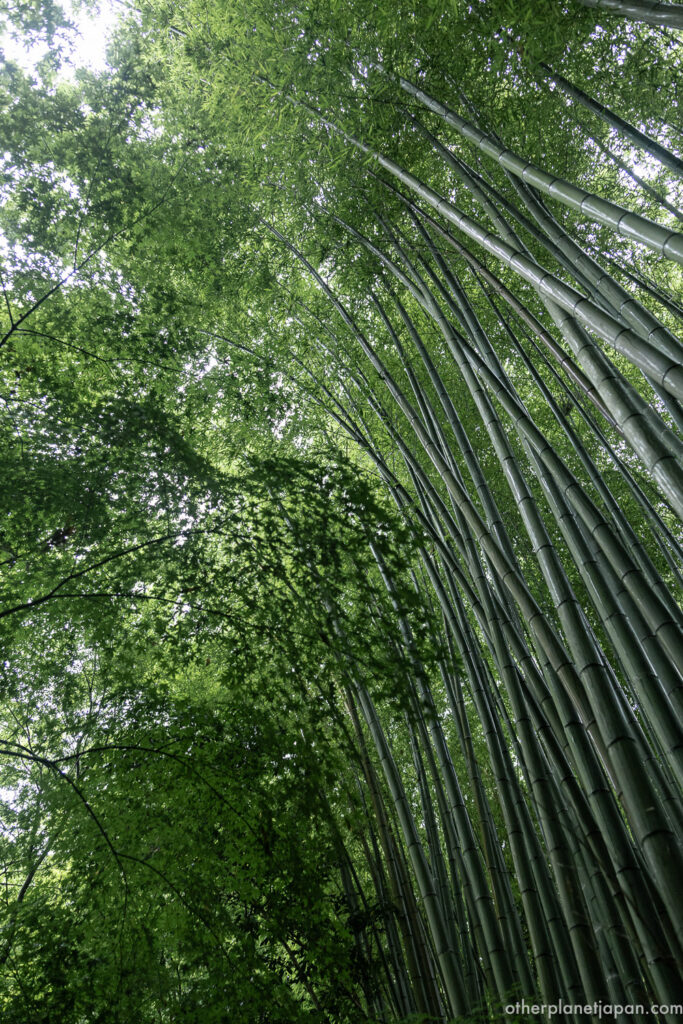
From JR Saga-Arashiyama Station or Keifuku (Randen) Arashiyama Station, the walk takes about 20 minutes. The recommended route heads north through the Bamboo Grove, past Jojakko-ji Temple (a 10-minute walk from Gioji), and on through Nisonin before arriving at the temple gate. The distance is real, but the path passes through some of the best scenery in Sagano, so it never feels like a detour.
If you prefer the bus, take City Bus 28 or 91 to the Saga Shakadomae (嵯峨釈迦堂前) stop and walk about 15 minutes northwest. From Kyoto Station, the bus ride on the 28 line takes roughly 50 minutes—long enough that the train-and-walk option is usually faster and more pleasant.
There is almost no parking at the temple (only three spaces), and the narrow lanes around Sagano get congested during peak seasons. Public transit is strongly recommended.