I have always thought patron saints were one of Catholicism’s best ideas.
Every profession gets one. Every city gets one. My closest friend has Saint Ambrose, who is also the patron saint of Milan. The saint who watches over one of Europe’s great cities also watches over my friend, personally. When he told me this, I was jealous in a way I couldn’t quite justify. It felt like learning that his family lawyer was also the Pope’s.
Japan doesn’t do this. That is what I believed. We have broad departments, a god of learning, gods of commerce, but nobody assigns you a deity by trade.
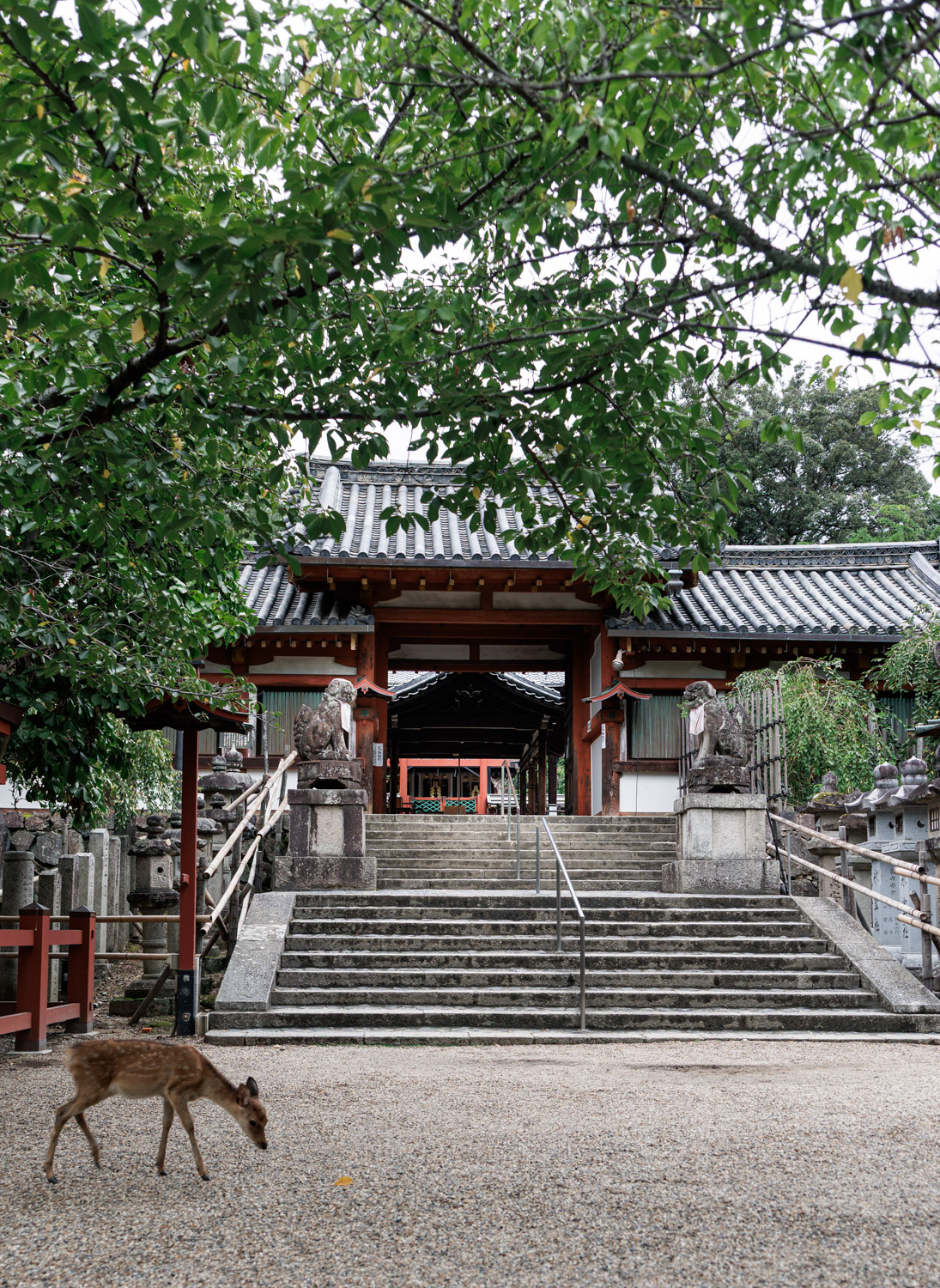
Then, on the edge of Nara Park, I walked into Himuro Shrine.
The God of Refrigeration
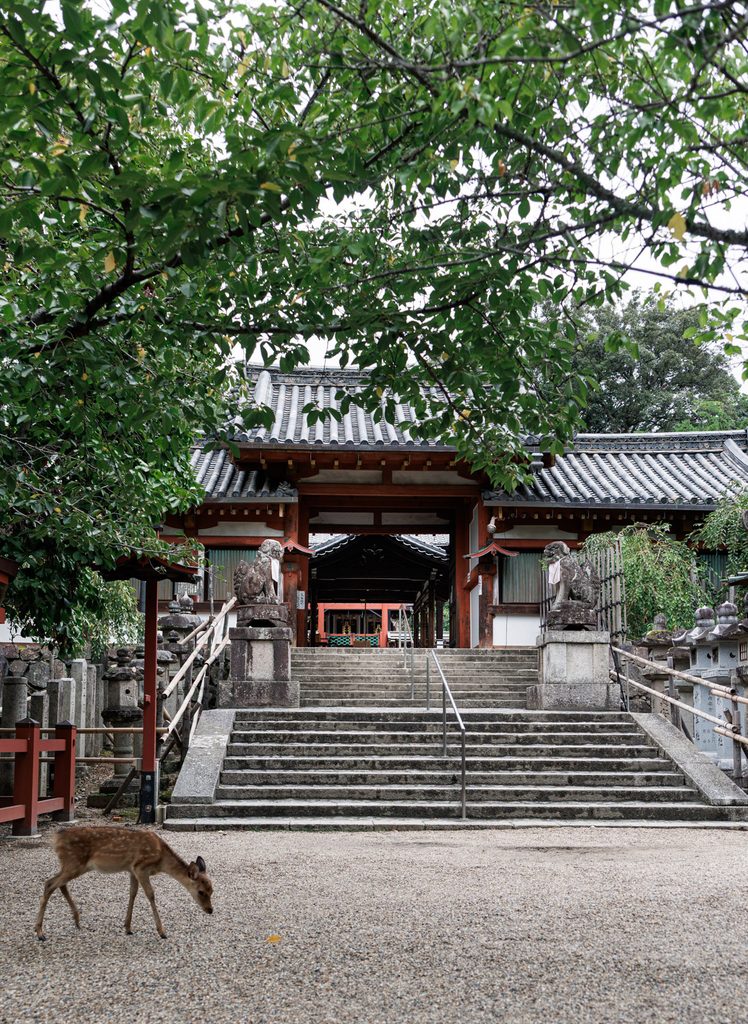
Himuro Shrine (氷室神社, Himuro Jinja) sits a few minutes from Todaiji’s Great Buddha Hall, directly across from the Nara National Museum. The name is the first clue. A himuro is an icehouse: a cold-storage chamber, used in Japan since antiquity, where natural ice and snow cut in the depths of winter were kept all the way into summer. This is the ice shrine of Nara, and it has been in that line of work since 710.
This is a shrine to the gods of ice. Not poetically. Professionally. Himuro Shrine is the guardian shrine of Japan’s refrigeration, cold-storage, and ice-making industries, and the people who work in those trades still come here to pray. Every May 1, ice makers and wholesalers from across the country gather for the annual ice-offering festival, presenting great frozen pillars with sea bream and carp inside.
A country where the cold chain has its own guardian deity. All those years I spent envying my friend, my assigned gods had been sitting quietly in Nara, waiting for me to notice.
Japan, I should admit, keeps more of these than I knew. There is a shrine for medicine, and one now famous for blessing smartphones. It took this one to make me start counting.
But none of them serves dessert. Nara, meanwhile, has quietly become one of Japan’s shaved ice capitals, with specialist kakigori shops drawing lines through the old merchant quarter. They all trace back, one way or another, to this courtyard.
Which is where I was standing.
Offering Shaved Ice to a God
August in the Nara basin is a physical experience; the humidity meets you at the station and follows you around like a debt collector.
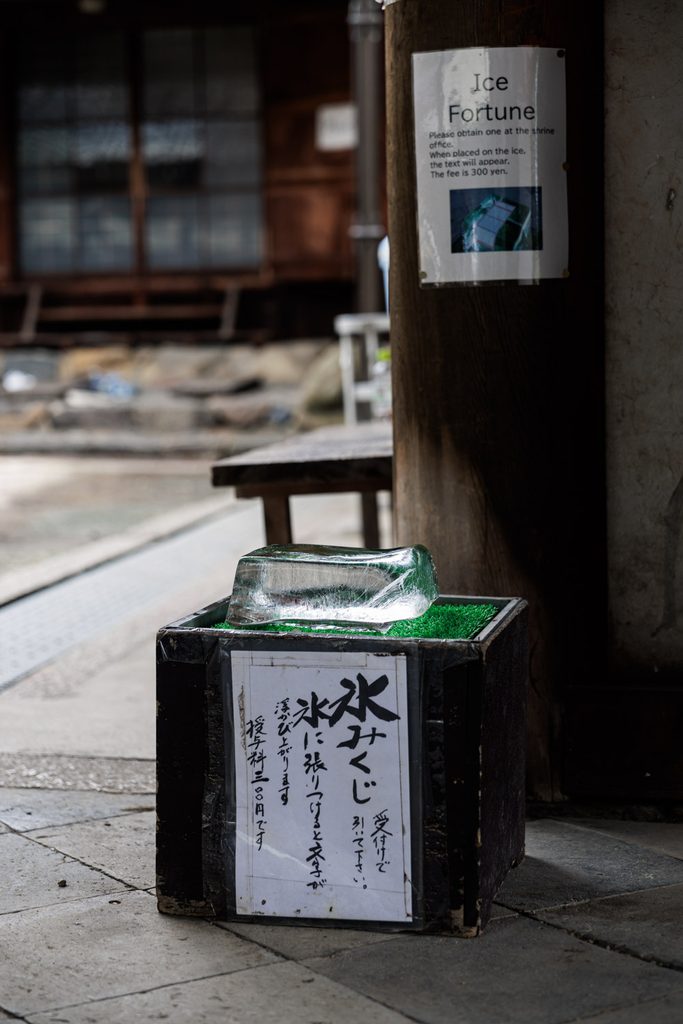
Which may be why the first thing I registered inside the grounds was ice. Two large blocks of it, set out in the open for the ice fortunes, glinting in the shade, each with a handwritten sign taped to the stand explaining what to do. The sight alone seemed to lower the temperature a degree. What puzzled me was how little of them had melted in that heat. By my estimate, the worshippers were losing more water than the ice was.
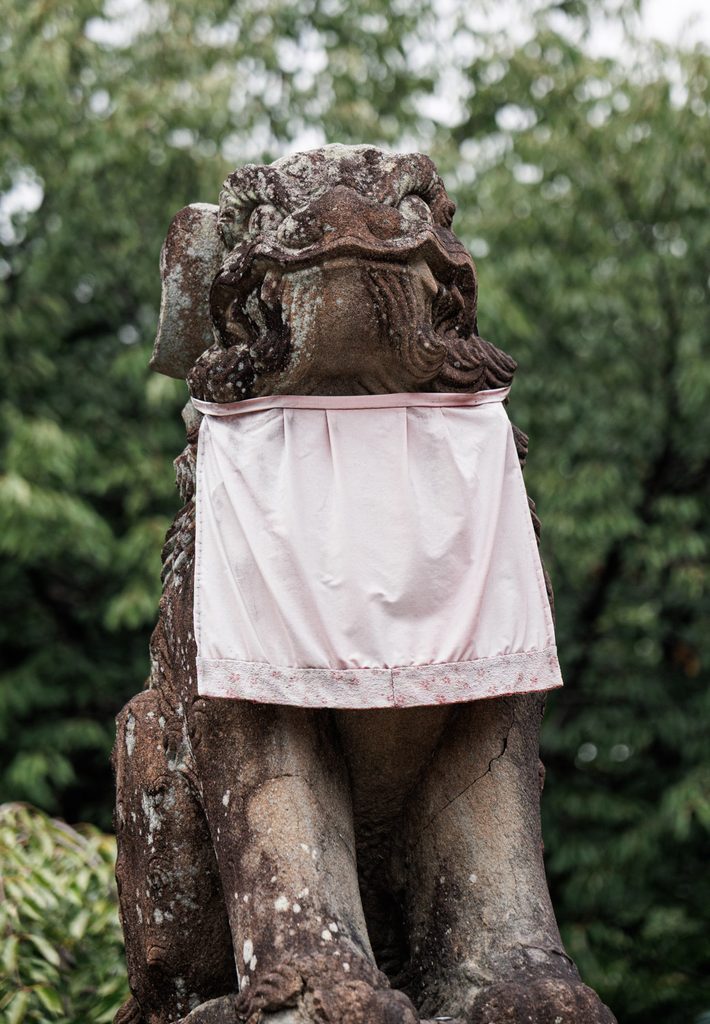
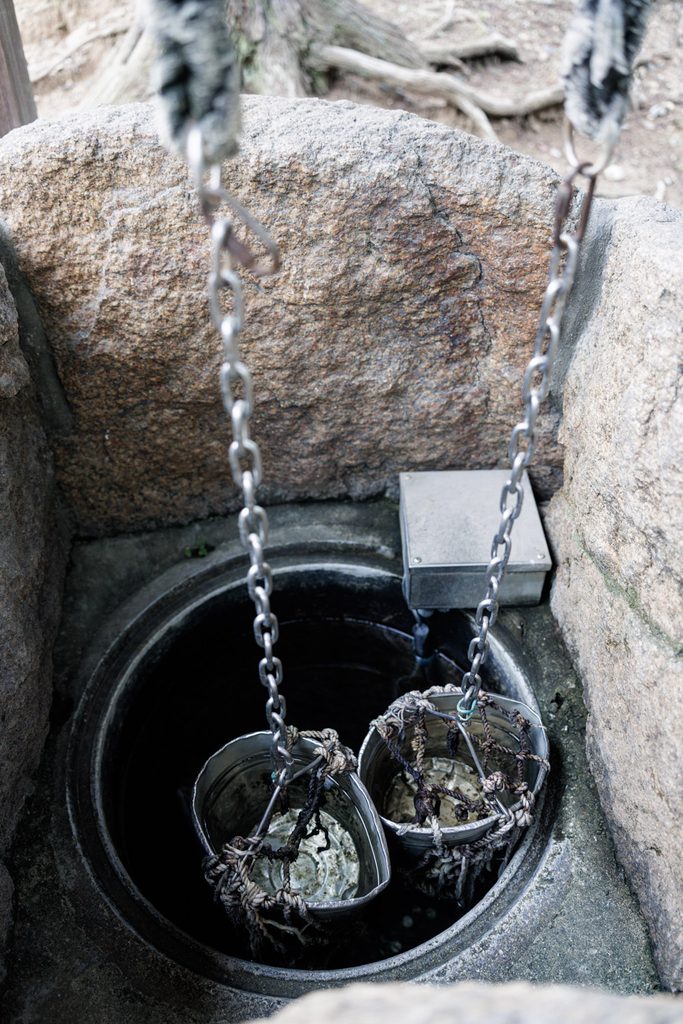
The handwriting brought back what I had walked past to get there. A stone guardian lion at the gate wearing a cloth bib gone soft and colorless with weather. A stone well beside the path, the kind you rarely see anymore, buckets still hanging on their chains. None of it restored, none of it new. That is part of the history too. Perfect and modern are not the only things worth being.
From June 1 to August 31, Himuro Shrine lets you offer kakigori, Japanese shaved ice, directly to the gods. You request it at the shrine office and receive a bowl of ice shaved into a soft white peak. The prayer has a set wish: nanmon hyokai, “may your hardest problems melt away like ice.”
You carry the bowl to the worship hall yourself, set it on a sanbo, the small wooden stand used for presenting offerings, and pray. That short walk is the image that stayed with me: a peak of ice, white as fresh snow, crossing a shrine courtyard in the dead of August. Midsummer is not supposed to contain fresh snow. For a few dozen steps, it did.
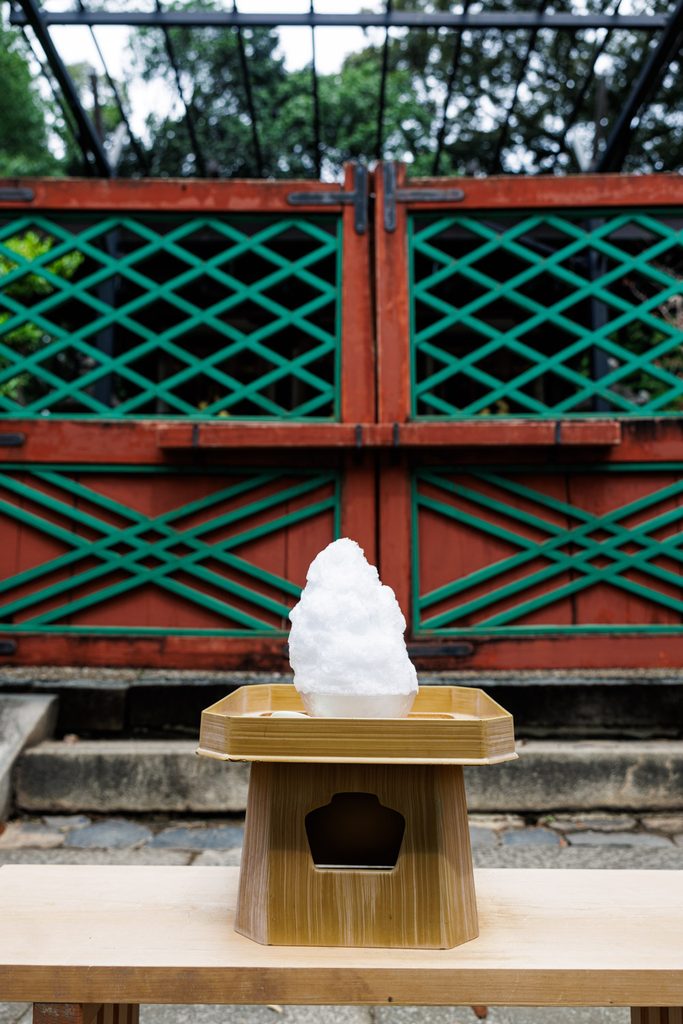
Then comes the part I still can’t quite believe. Once the offering is made, you take the ice back and eat it. This is osagari, the old custom of receiving food after the gods have had their share. Syrup waits beside the shrine office, self-serve, which is why photographs of the offering show the ice pure white. You dress it only when it becomes yours again.
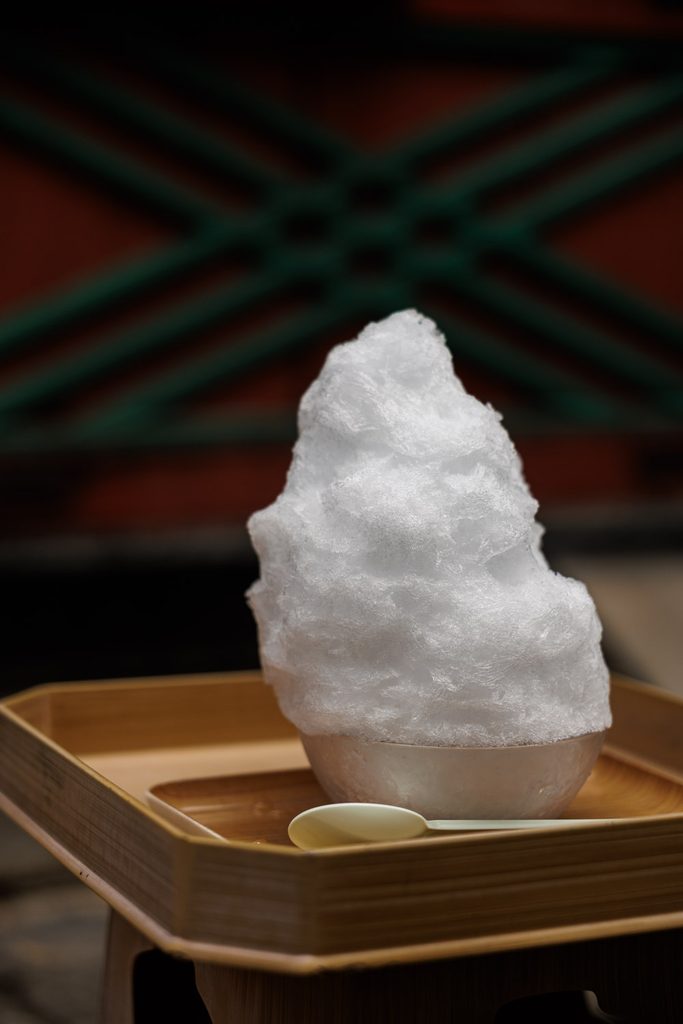
On a brutally humid afternoon, eating ice that had just been presented to a god of ice felt less like a snack and more like a prescription.
Five more worshippers lined up to offer kakigori right after me, and a small worry surfaced: that is a great deal of shaved ice for one deity in a very short window. Can a god get brain freeze? A god of ice, of all gods, must have built up a tolerance.
The Tourists Were Missing the Ice
Something nagged at me, though.
Nara Park was full of Western travelers that day, and plenty of them wandered in through the torii gate. They took photographs. Some bowed. Then they left. As far as I could tell, not one of them knew about the shaved ice, or the ice fortune, or the flint. Hard to blame them. The shrine’s official website exists only in Japanese.
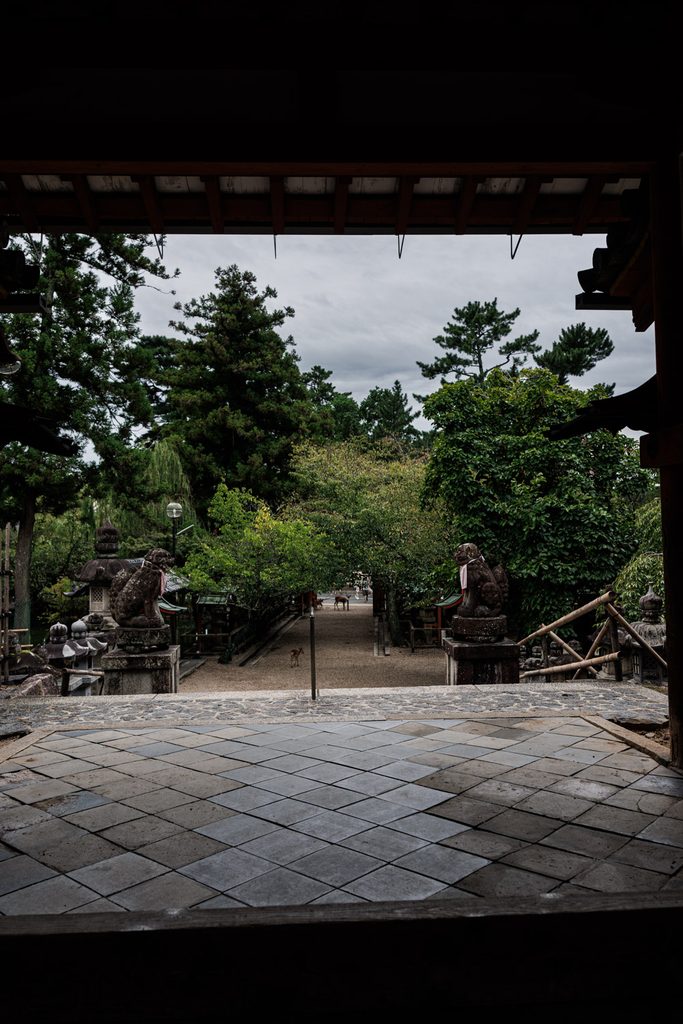
The heat was so absurd that I nearly recommended the kakigori to a tourist standing nearby. I stopped myself, for two reasons.
First, shaved ice takes longer to eat than it looks, and recommending a race against melting ice to someone on a tight itinerary felt irresponsible. Second, and more embarrassing: I did not know how to say 頭がキーン in English. That stabbing headache when you eat ice too fast. I knew the sensation intimately. I had no words for it.
That evening, I looked it up. Brain freeze. Two words.
So the next time I see a traveler wilting at the gate of Himuro Shrine, I will be ready. Consider this article my rehearsal.
The Hundred-Yen Gagaku Machine
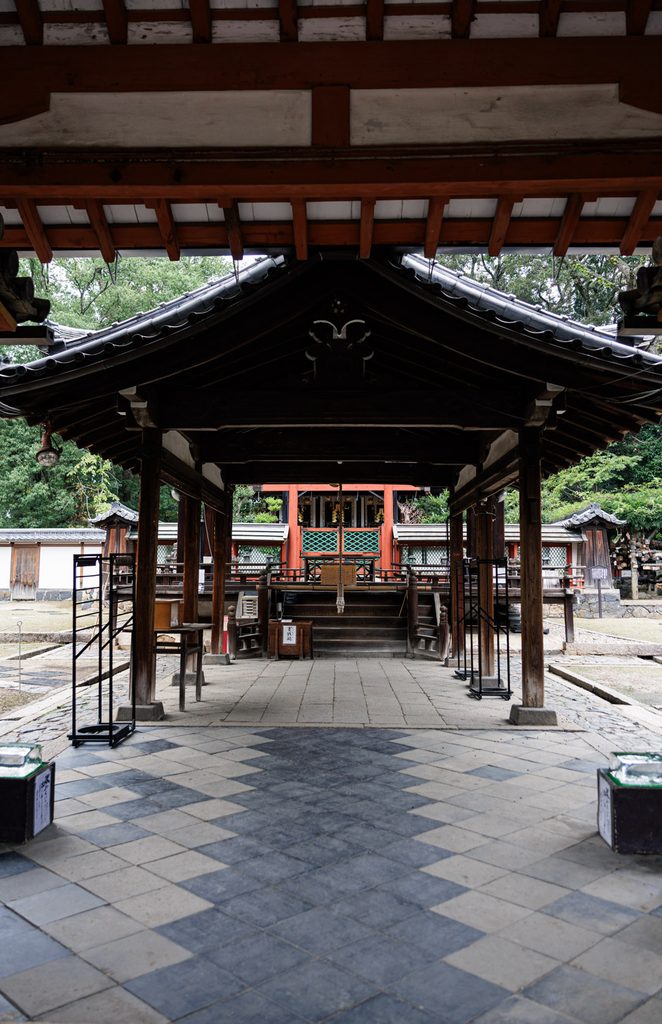
Beside the offering box in the worship hall sits a small machine. A sign explains that if you drop in a 100-yen coin as an offering, it plays “Kaden,” a piece of gagaku, the ancient court music of Japan.
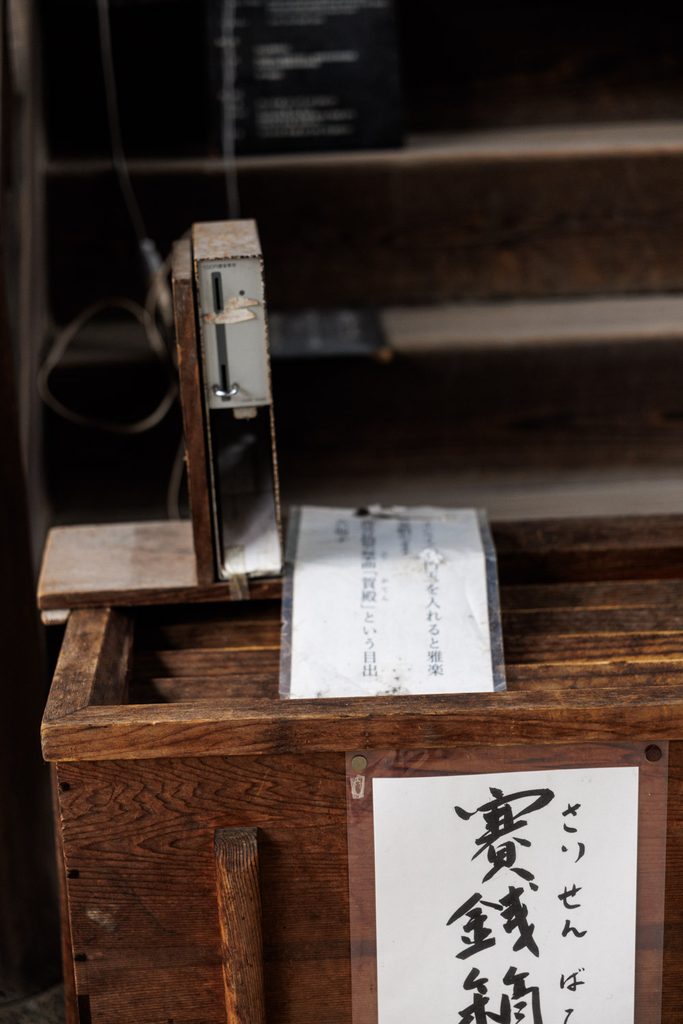
I was interested. I had the coin in my hand. And then some instinct, some guardian angel of social self-preservation, made me put it away.
Moments later, another visitor fed the machine. Court music erupted across the quiet grounds at a volume I can only describe as municipal. Every head turned toward him. I have rarely been so grateful for a decision I couldn’t explain at the time.
The Himuro Shrine Goshuin, and the Flint That Comes With It
Himuro Shrine offers two goshuin, the calligraphed seal stamps that shrine-goers collect in dedicated books: one for Himuro Okami, the shrine’s principal deity, and one for Bukosha, a small auxiliary shrine within the grounds. Each costs 600 yen, a touch above the usual 300 to 500.
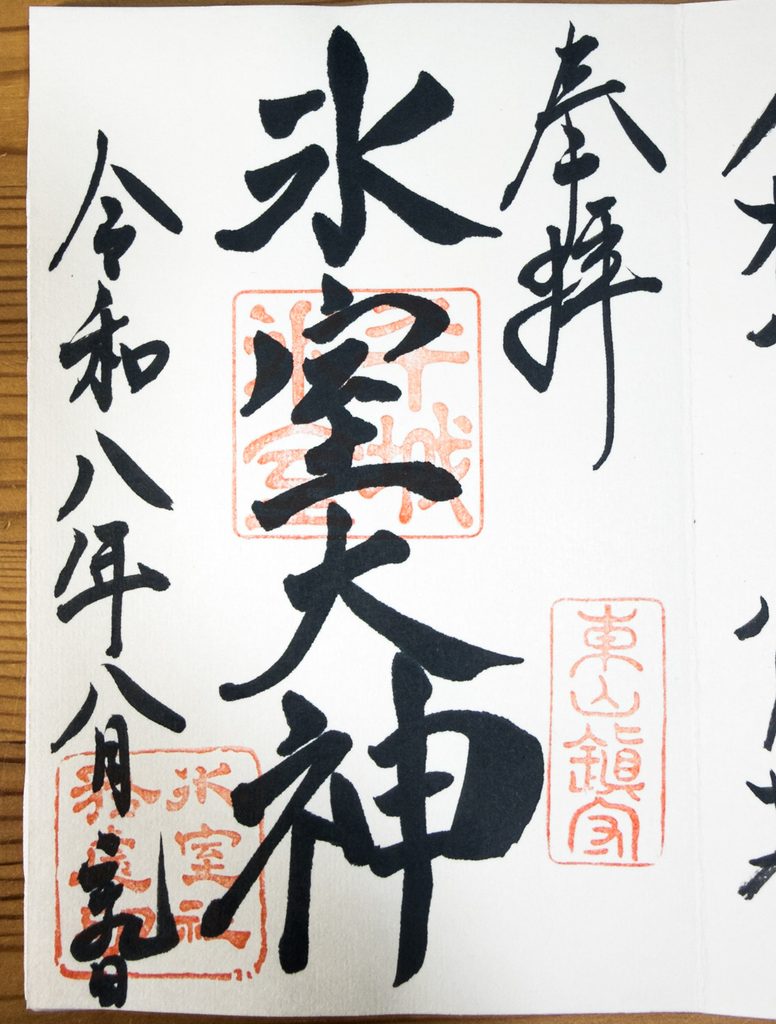
But no shrine has ever handed my book back the way this one did. As the attendant returned it, she struck a flint above the pages. A small spark cracked in the air, a purification called kiribi. If you have watched Japanese period dramas, you know the gesture: the wife striking sparks behind her husband as he steps out the door toward something dangerous, a blessing for the road ahead.
I walked down the steps with a spark-blessed goshuin book and, still, no patron saint of my own. But I had stopped being jealous. Catholicism assigns you one saint. Japan raised the bet long ago: eight million gods, the yaoyorozu no kami, enough to cover every trade, every tool, and evidently every block of ice. My friend has Ambrose and Milan. I have a country where even the refrigerator is looked after.
I am calling it a draw.
What follows is the part I wish someone had handed me at the torii: what Himuro Shrine is, how the kakigori offering works, and how to fold it into a Nara day.
What “Himuro” Means: A 1,300-Year-Old Cold Chain
The shrine’s three gods come out of a single story. The Nihon Shoki, Japan’s oldest imperial chronicle, tells of a prince who went hunting in the hills near Nara and spotted a strange thatched hut. It was an icehouse, the local chieftain explained: winter ice, cut and insulated, kept solid into the summer months. The prince carried ice back to the emperor, his brother, who was delighted. Prince, chieftain, emperor: those three figures are the deities enshrined at Himuro Shrine today.
History here runs in two streams: ice, and music.
The ice came first. In 710, the year the capital moved to Heijo-kyo, an imperial decree of Empress Genmei enshrined the god of ice on the sacred mountain above the new city. The shrine’s own account of what happened next is unusually practical for a founding legend: the god taught people to store water and to put cold to use. Ice ponds and icehouses went up in the meadows nearby, and every year from April 1 to September 30, ice cut in the coldest weeks of winter was delivered to the palace. Summer ice was treasure, and it belonged to the court. The tribute ran through the Nara period and ended when the capital moved to Kyoto; in 860, the shrine was transferred to its present site.
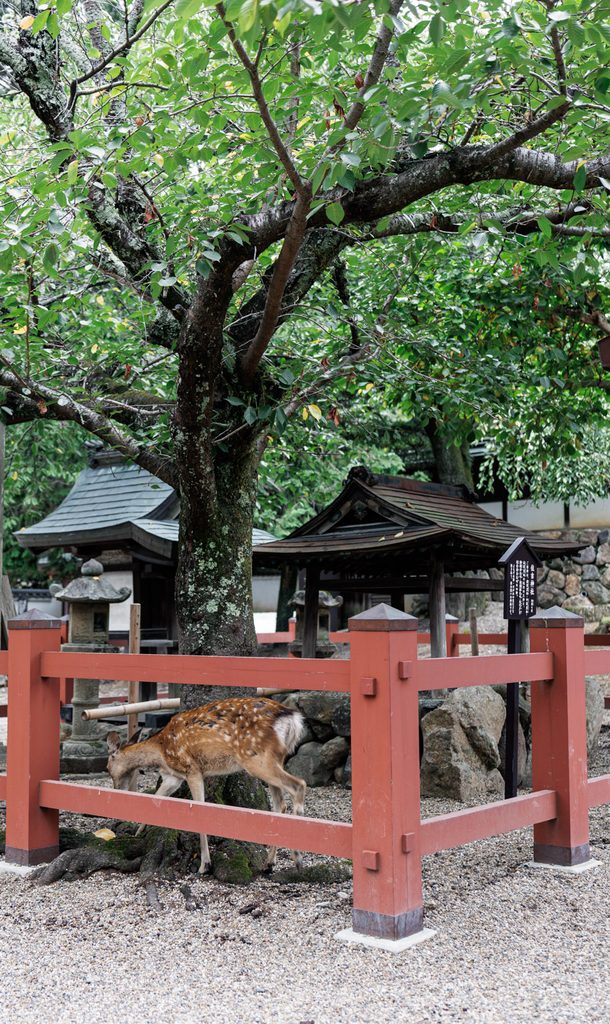
The music came with the neighbors. Himuro Shrine long belonged to Kasuga Taisha as a subsidiary shrine, and its grounds housed the Nanto Gakuso, the institution that carried Nara’s tradition of court music and dance until 1870.
Both streams are still running. The shaved ice continues an offering that began 1,300 years ago. The hundred-yen machine, blaring “Kaden” across the courtyard, is the last echo of a music institution that operated here for a millennium. Nothing at Himuro Shrine is a gimmick. It is all very old business, still open.
How to Offer Kakigori (Shaved Ice) at Himuro Shrine
- The offering runs in summer only, from June 1 to August 31.
- Ask at the shrine office for the kakigori offering and receive your bowl of shaved ice.
- Carry it to the worship hall, place it on the sanbo stand, and pray.
- Place your monetary offering in the box; 500 yen or more is the customary guide.
- Take the ice back as osagari and eat it. Syrup is self-serve beside the shrine office.
One rule to know: eating and drinking are otherwise prohibited on the shrine grounds, and the osagari kakigori is the single exception. The deer do not get one. Nara Park’s herd wanders right up to Himuro Shrine and will approach anything that looks edible, so keep your bowl close and never share it.
The Ice Fortune at Himuro Shrine, Available Year-Round
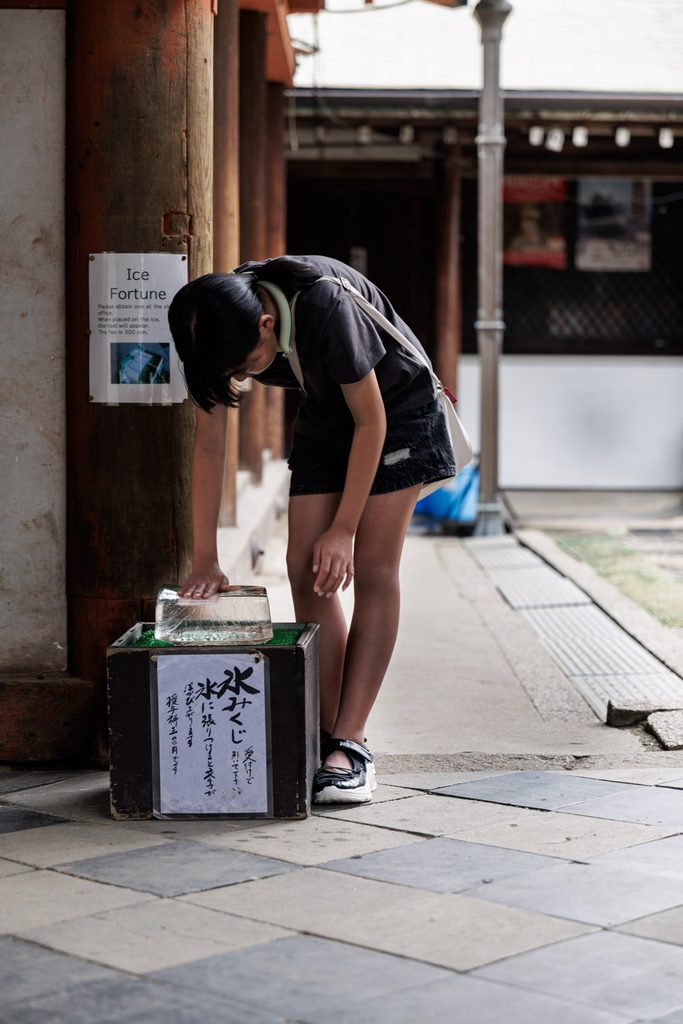
Himuro Shrine’s omikuji comes blank. You receive the slip at the office (300 yen) and press it onto one of the large ice blocks set out in the grounds; the chill draws the characters of your fortune out of the paper. An English sign reading “Ice Fortune” marks the spot. Unlike the kakigori, the ice fortune is offered year-round.
Himuro Shrine Goshuin
Two types, Himuro Okami and Bukosha, 600 yen each, with the kiribi flint purification performed when your book is returned. The shrine office is open 9:00 a.m. to 5:00 p.m.
When to Visit Himuro Shrine
- Summer (June 1 to August 31): the kakigori offering season. Everything in the first half of this article happens only in these three months.
- May 1, the Kenpyosai ice-offering festival: ice makers and wholesalers from across Japan attend, and large pillars of ice with fish and flowers frozen inside are presented at the altar. Bugaku court dance is performed from 2:00 p.m.; general visitors are admitted in the afternoon.
- The 1st of every month: at dusk, candles are lit inside lanterns made of ice.
- Mid-March: the shrine’s weeping cherry is known as Nara ichiban-zakura, Nara’s first cherry. It opens ahead of the somei-yoshino that fill the rest of the park, which means there is a window when the whole of Nara is still bare and this one courtyard is not. This is not a grove, and that is the appeal: one tree, and nothing competing for your attention. Come at the wrong end of March and you will find either a bud or a bare branch, so check bloom reports before you build a day around it.
Himuro Shrine, Nara: Hours, Fees, and Access
| Hours | April to October, 6:00 a.m. to 6:00 p.m. November to March, 6:30 a.m. to 5:30 p.m. |
| Closed | Open daily |
| Admission | Free |
| Shrine office | 9:00 a.m. to 5:00 p.m. |
| Kakigori offering | June 1 to August 31, roughly 9:00 a.m. to 4:00 p.m. |
| Ice fortune | 300 yen, year-round |
| Goshuin | 600 yen, two types |
| Access | A 15-minute walk from Kintetsu-Nara Station, or the city loop bus to the Himuro-jinja / Kokuritsu Hakubutsukan-mae stop, right outside the shrine |
| Official website | Japanese only |