I was looking for a place to sit.
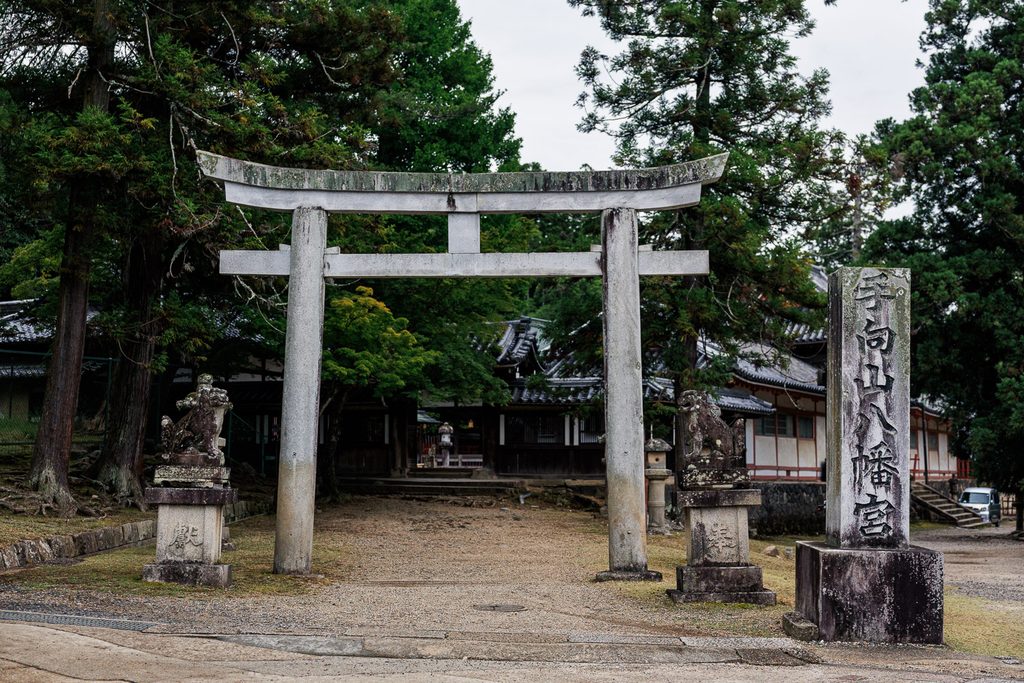
Nothing more noble than that. My feet were done with the Todaiji crowds, and I drifted toward a shaded corner where a few tourists were already resting on benches. Quiet. A deer. It took me a while to understand that the benches stood inside the grounds of a shrine, and that the shrine had a name: Tamukeyama Hachimangu Shrine. I had never heard it in my life. The vermilion on the torii gate was peeling. The people around me were resting, not visiting. Neither was I.
Later, I looked it up. The shrine has stood on that spot for more than 1,200 years, it owns a National Treasure, and it had been sitting somewhere in my memory since I was thirteen without my ever knowing it.
Only the Vending Machines Were Shining
I came back a few weeks later, early, a little before nine. The grounds were empty. The air was thick, the sky low and about to rain, and the humidity had already worked its way inside my shirt.
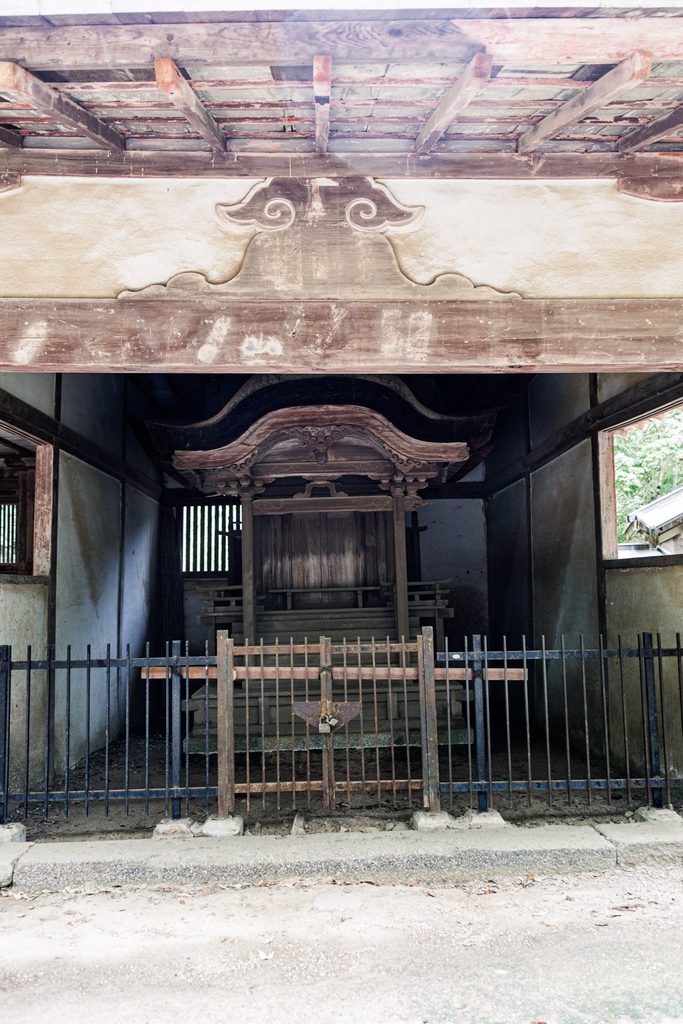
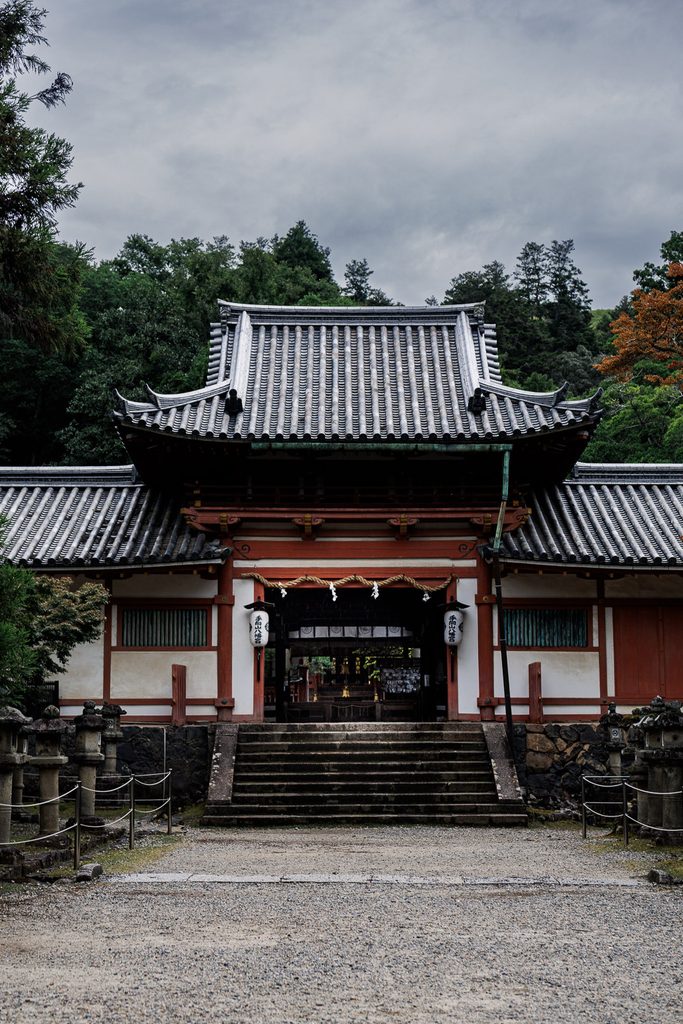
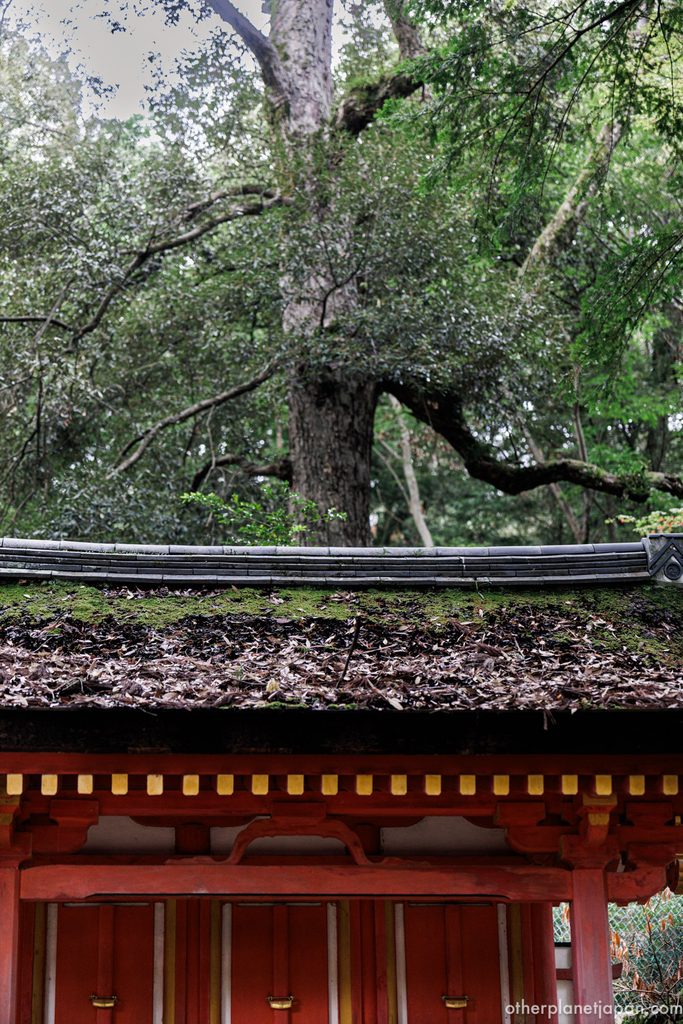
Up close, the vermilion had peeled further than I remembered, and the roof of one small sub-shrine looked ready to slide off. Toward the back, as if pushed there decades ago, stood an older shrine inside a shelter. Through a rusted iron fence and a padlock, I could make out a weathered little sanctuary. I later learned this is a Toshogu, a shrine to Tokugawa Ieyasu. The same shogun who blazes in gold at Nikko lives here behind a padlock.
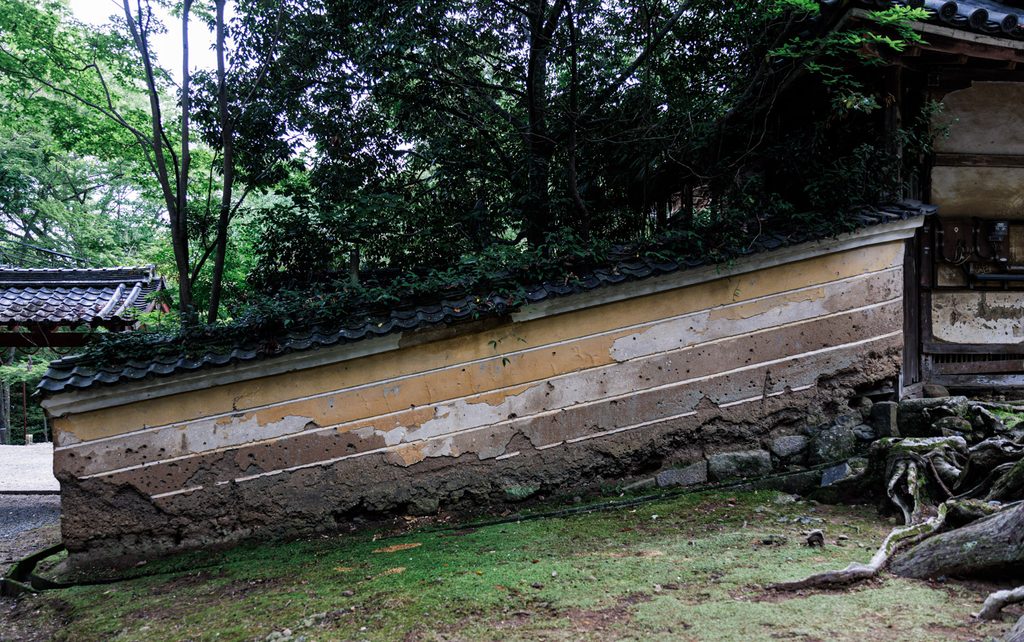
The earthen wall along the path has gone unrepaired for years. Its outer layers have flaked away, and you can read the striped layers underneath as if the wall were showing its work.
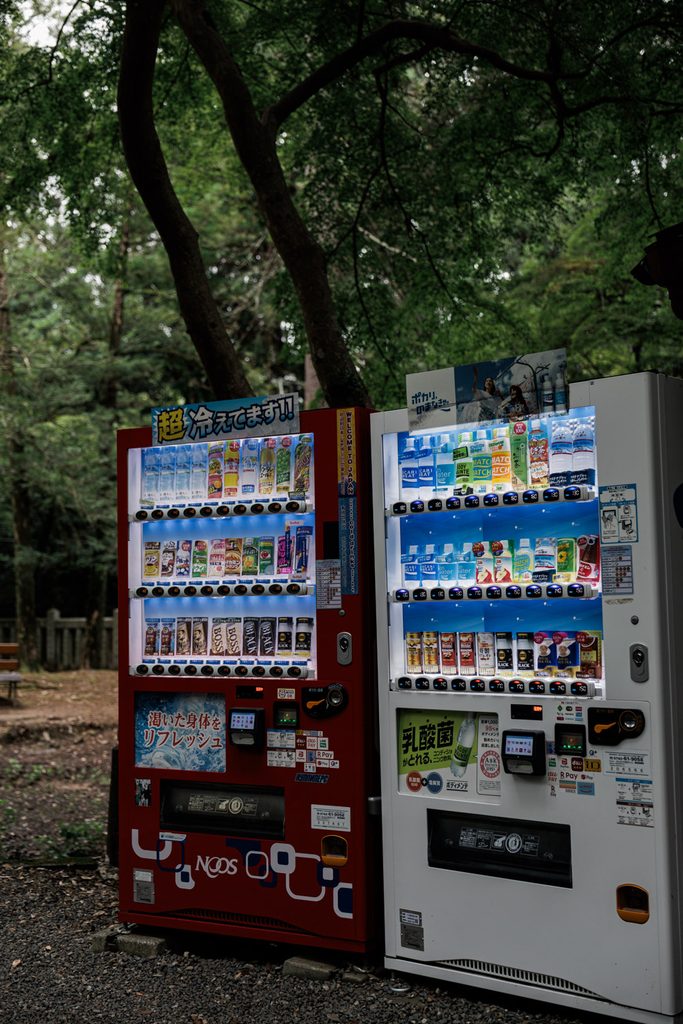
And in the middle of all this, the vending machines glowed. Two of them, side by side near the approach, lit up like a convenience store at midnight, every row fully stocked. It was the first shrine I had ever seen where the vending machines are better maintained than the buildings.
This Is Still Nara Park
That was the surprising part.
A short walk away stands Kasuga Taisha, with its polished vermilion, its thousands of tended lanterns, its unbroken stream of visitors. Comparing the two would be cruel. Then again, when the gap is this wide, nobody bothers to compare.
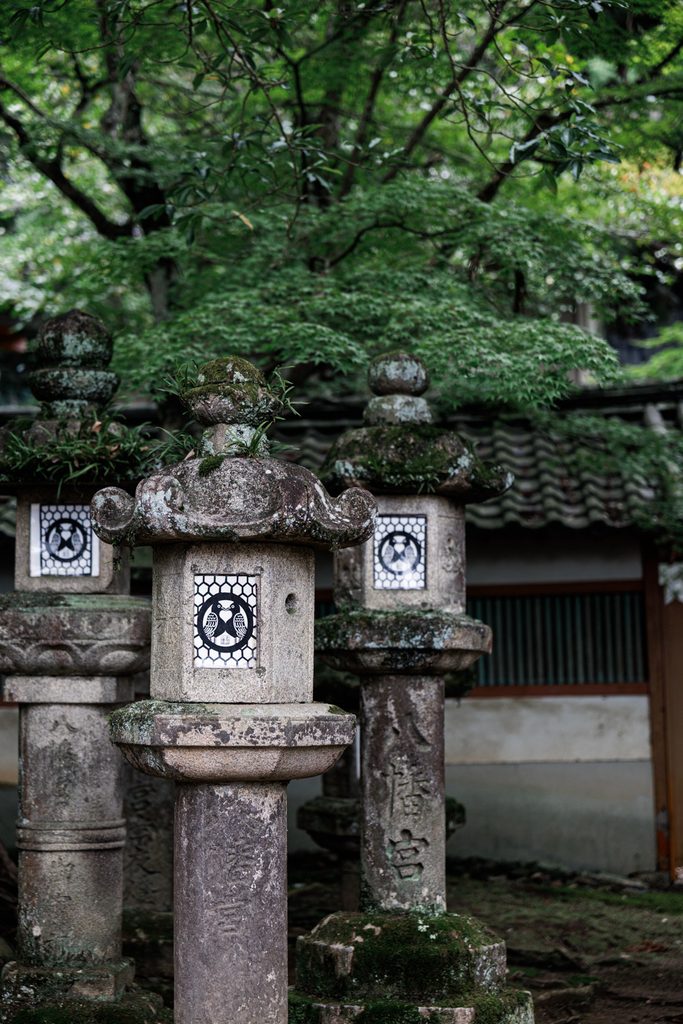
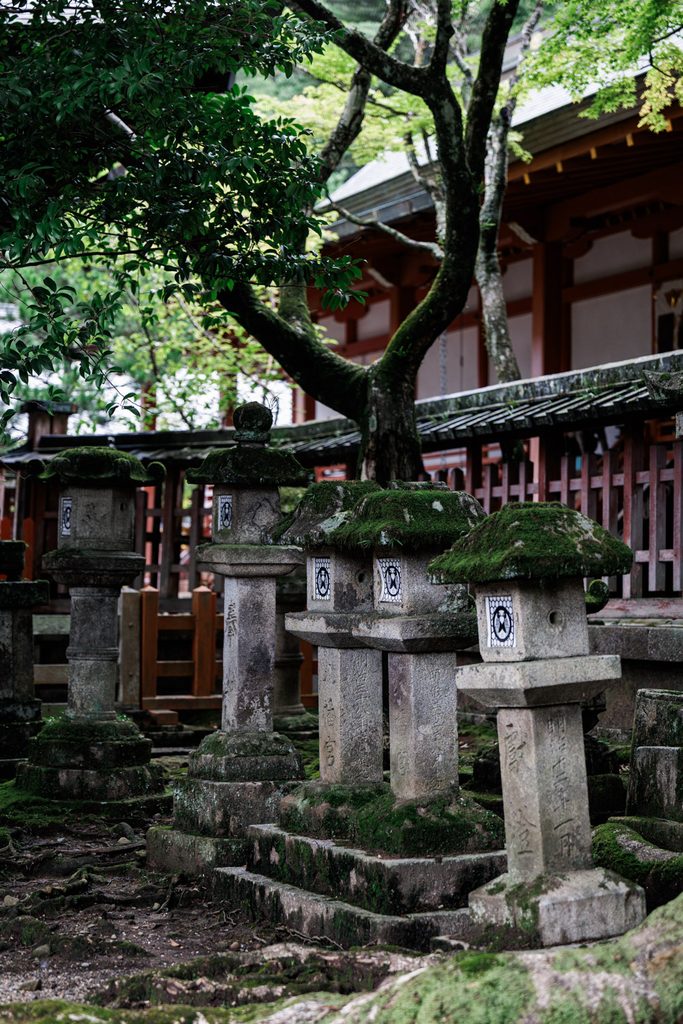
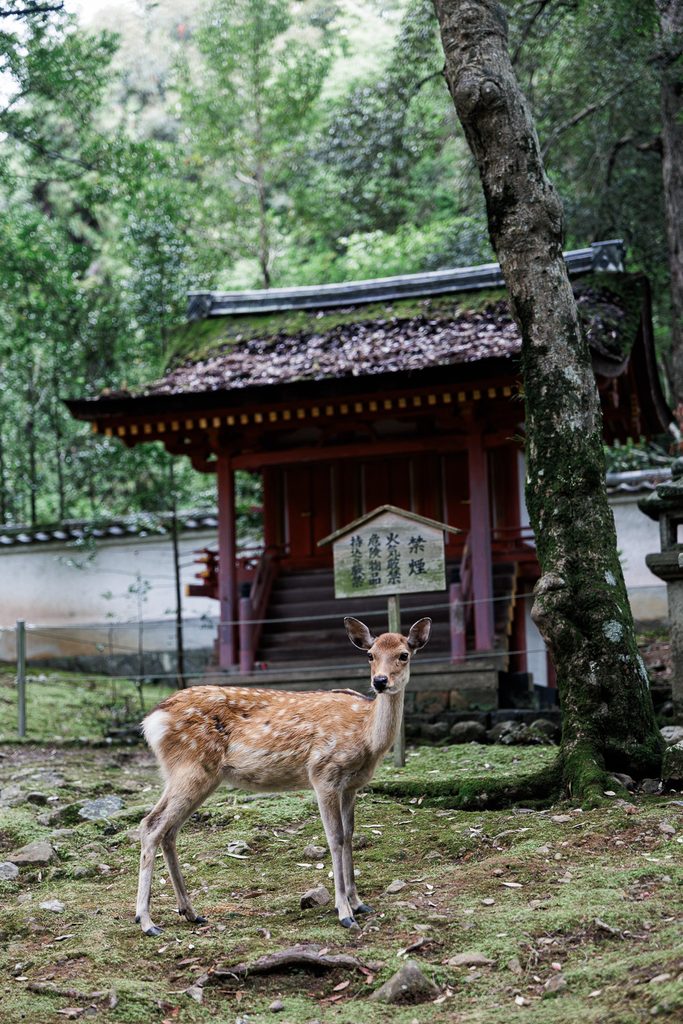
Here, the stone lanterns wear coats of moss, and some lean at angles no stonemason intended. Somewhere in the trees a deer called, and I went toward the sound, which is the reliable way to make a deer leave. Another one stayed. It stood in front of a sagging shrine building, not eating, not moving, watching me the way a resident watches a stranger reading the street signs. I have never worked out whether the deer of Nara feel the summer the way we do, and standing there in that heat, I resented that I could not ask.
Still, looking up at the canopy, I thought: in autumn, the maples here must be beautiful. For that one season, this shrine might hold its own against Kasuga Taisha.
I dropped a coin into the offering box. My coin will not fund the restoration of this shrine. No one knows this better than I do.
Two Doves Making a Heart
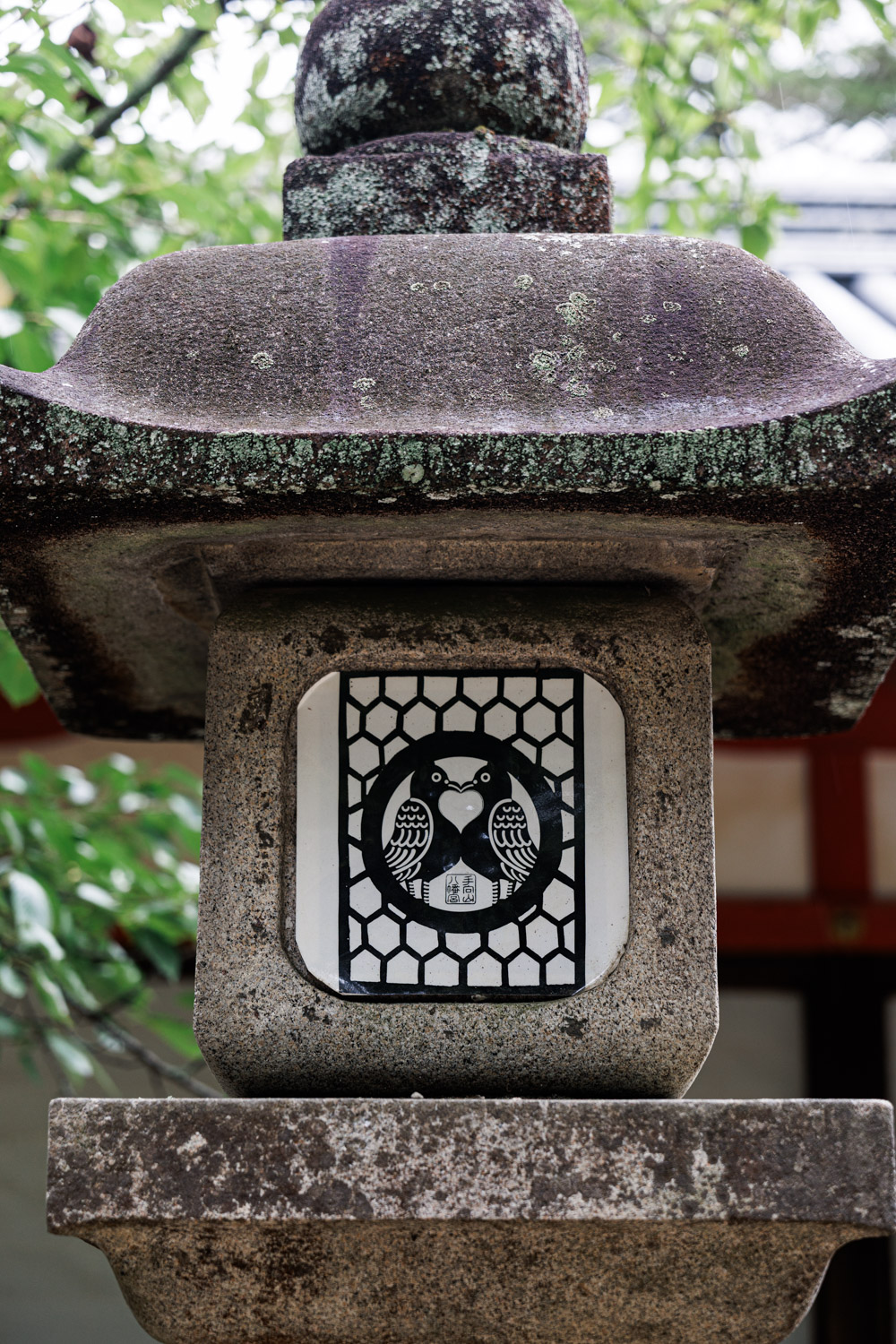
Set into the stone lanterns is a crest: two doves facing each other inside a circle, and in the space between them, a heart. Doves are the messengers of Hachiman, the deity enshrined here, which is why this design exists at a Hachiman shrine and nowhere else.
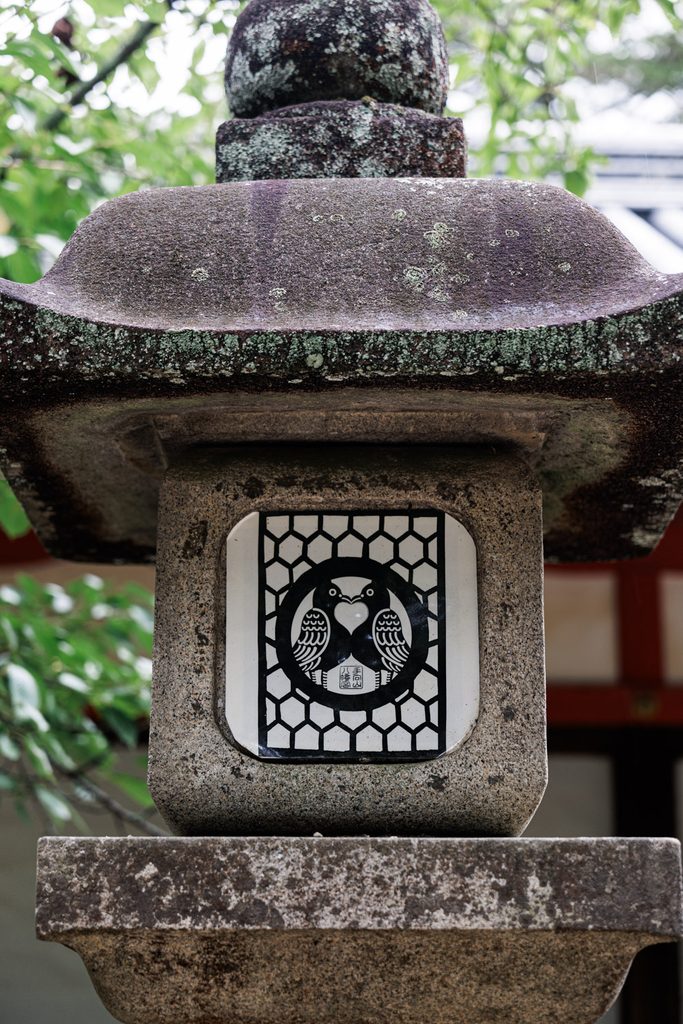
I did not expect to find a design this beautiful in a compound this ruined. Of all the shrines and temples I have visited in Japan, this is the most beautiful crest I have come across at any of them. It could catch on with young Japanese women any day now. Then again, my aesthetic judgment has a poor track record.
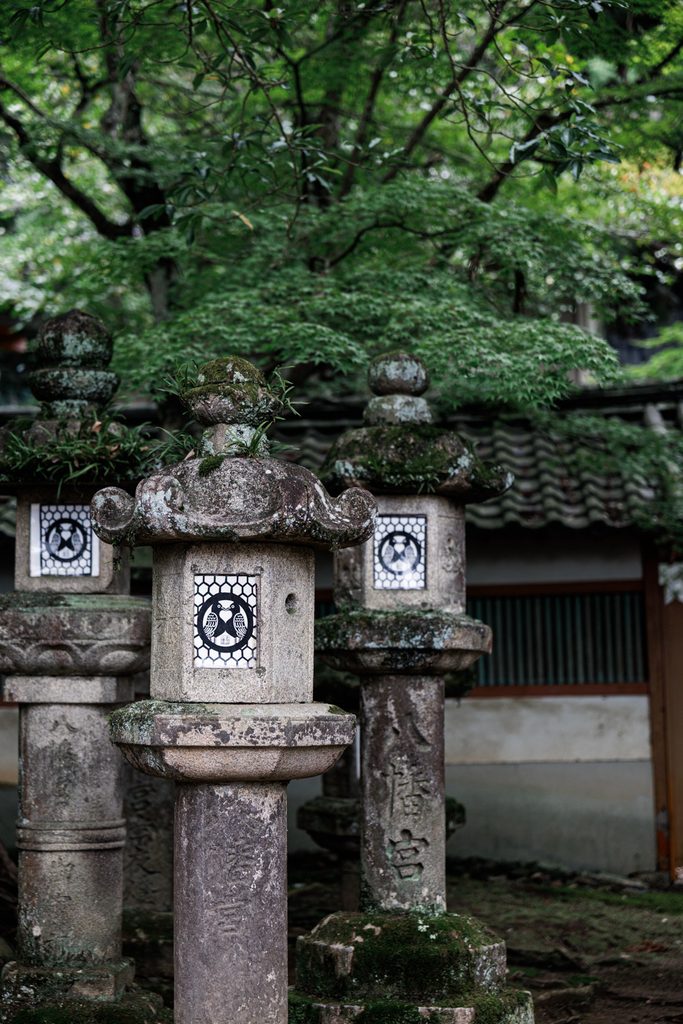
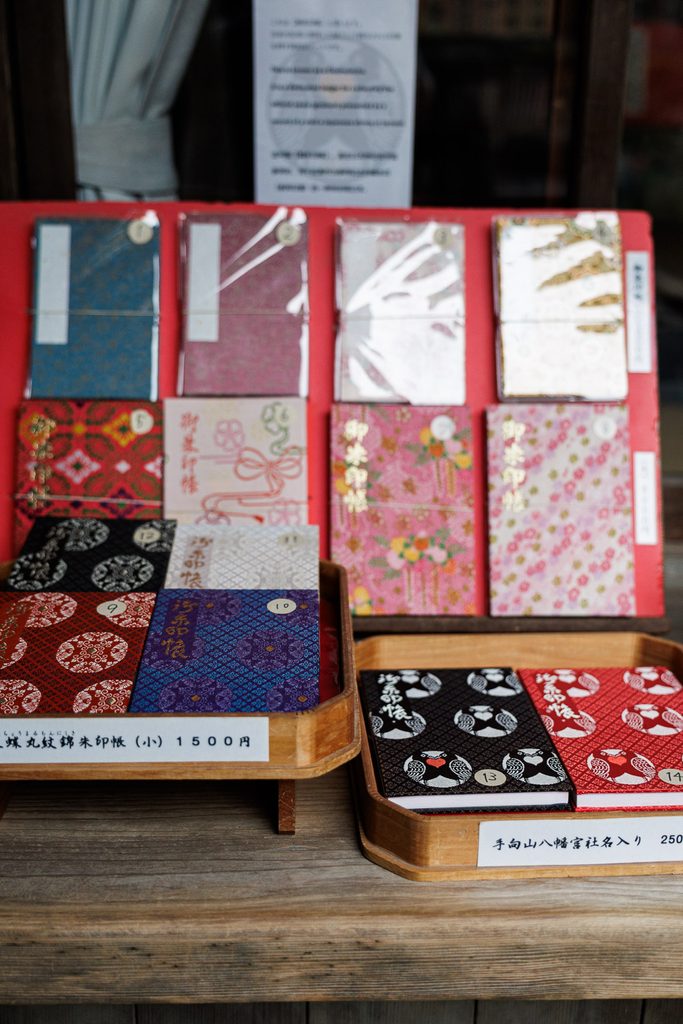
The shrine office sells goshuincho, the books used to collect shrine stamps, woven with that dove crest and the shrine’s name. Black or red. I did not pick one up. They looked too fine to be handled by someone who had already decided not to buy one that day, and picking up something you have no intention of buying felt like an imposition. Next time I will be buying one, and then I will have earned the right to touch it.
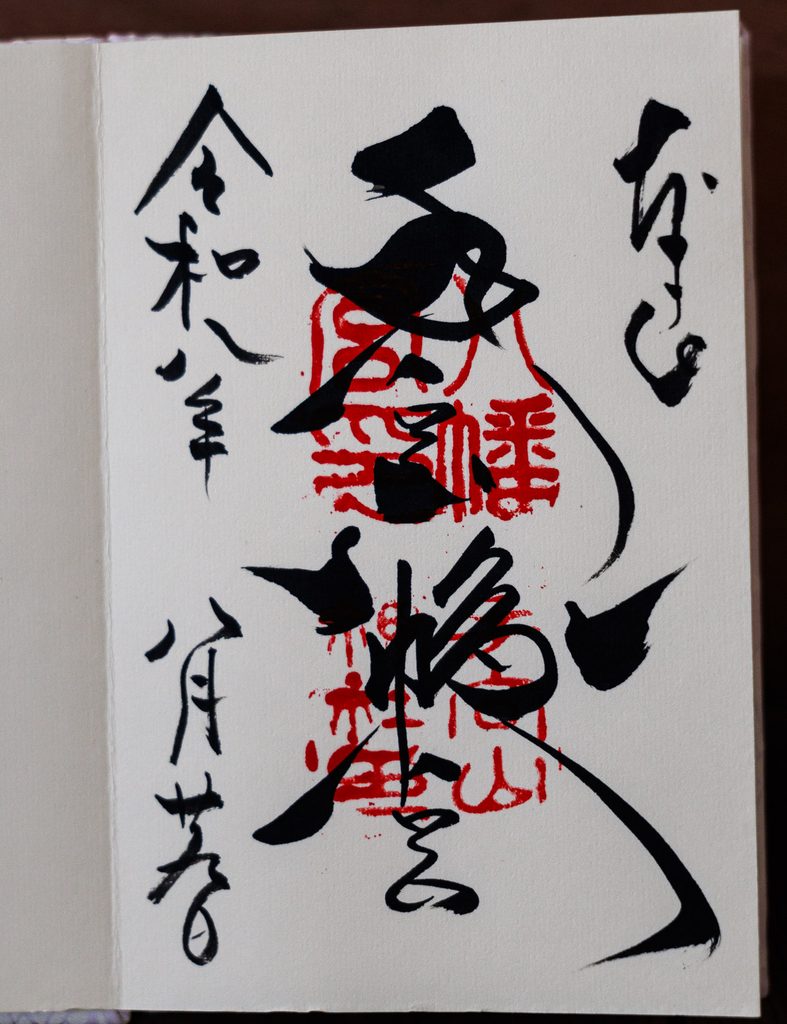
I did ask for a goshuin in the book I brought with me. The woman at the counter, a shrine employee rather than a priest, wrote the shrine’s name and then, without a word, drew two doves into the ink. In years of collecting goshuin, nobody had ever drawn a picture in mine. There was no one else in the grounds. There was time to ask her about it. I could not bring myself to.
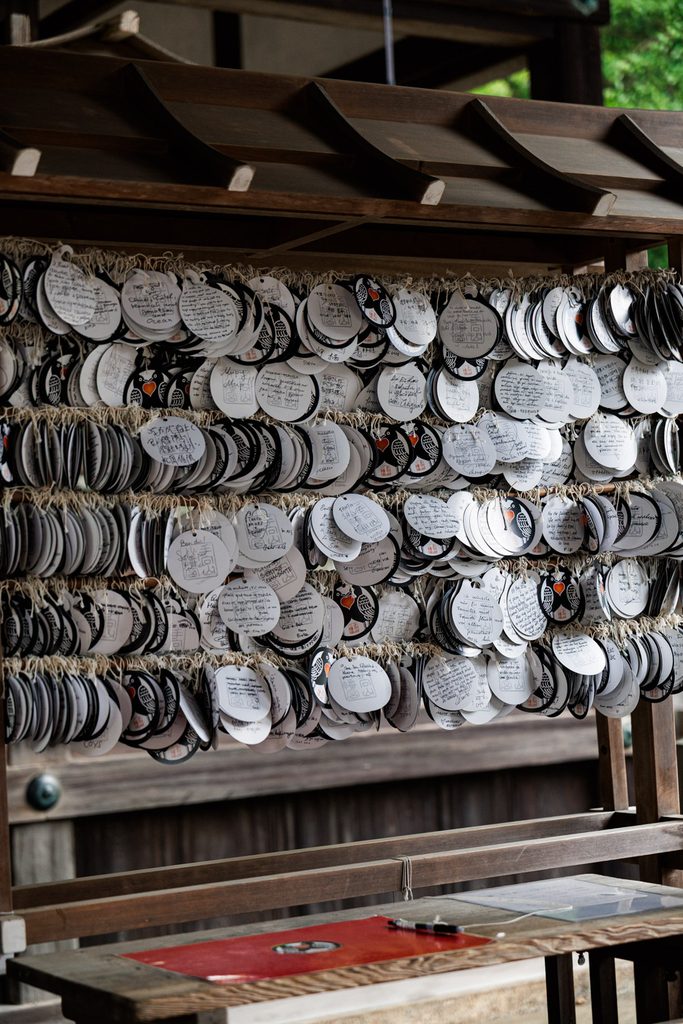
The ema are doves too. Round paper discs rather than the usual wooden plaques, the same two birds printed on them, wishes written across them in several languages, hanging in layers and swaying together.
The Gate I Had Never Noticed
Back home, I read up on the shrine, and one mystery dissolved on the spot.
Tamukeyama Hachimangu is the guardian shrine of Todaiji. In 749, as the Great Buddha was taking shape, a deity was invited all the way from Usa Jingu in Kyushu to protect the project. The shrine has watched over the temple ever since. For most of its history it was not even a separate institution; it belonged to Todaiji, until the government pried temples and shrines apart in the Meiji era.
Which finally explained the torii. Just east of the Great Buddha Hall stands an enormous vermilion torii gate. I had passed it many times. It belongs to Tamukeyama Hachimangu.
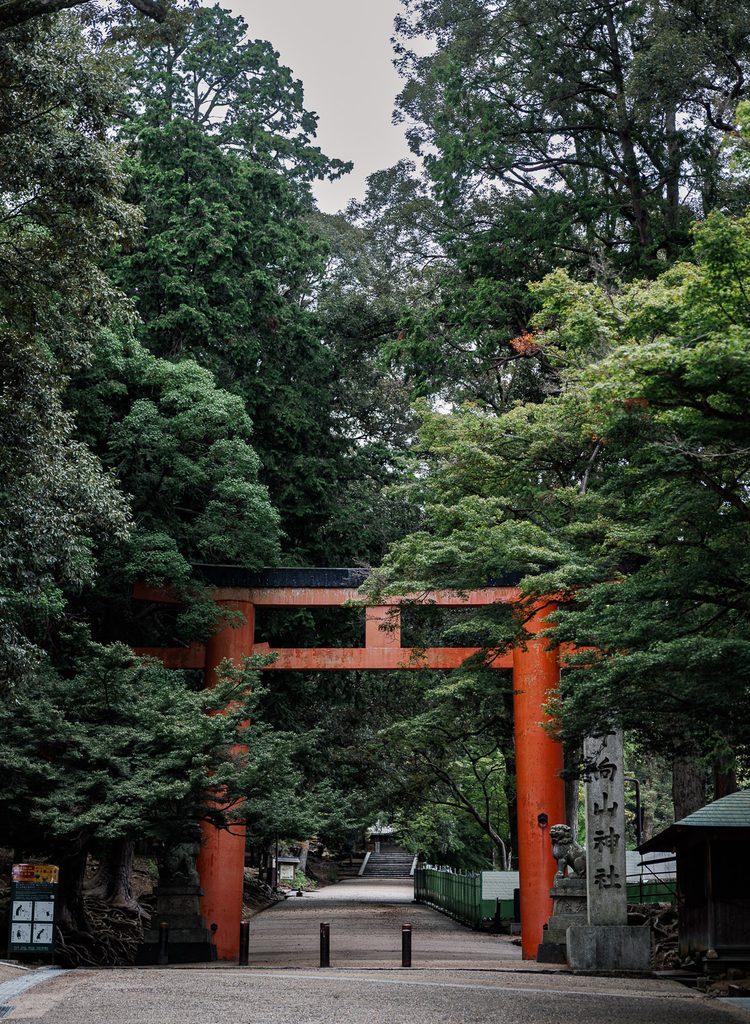
The strange part is that I had never once wondered about that gate. Nara Park is Japan’s great anything-goes religious district. A temple sits beside a shrine, deer cross the sacred approach, and a World Heritage Site waits at the end of the path. Anywhere else in the world, a gate that size stops you in your tracks. In Nara Park, it dissolves into scenery.
The Poem I Learned at Thirteen
A shrine I had never heard of, in a corner nobody visits, is said to be the place where Sugawara no Michizane composed one of his poems. Michizane is not a minor figure. He is the scholar-official the Japanese later enshrined as the god of learning, and students still buy charms in his name before entrance exams.
Then I read the poem itself, and it was the first poem I ever memorized.
Kono tabi wa / nusa mo toriaezu / Tamukeyama
Sugawara no Michizane, Hyakunin Isshu
momiji no nishiki / kami no manimani
“This journey came too suddenly for me to bring the paper offerings the gods are owed. So take instead the brocade of autumn leaves on Tamukeyama, as it pleases you.” (my translation)
I was thirteen. The Hyakunin Isshu, an anthology of a hundred classical poems, is something Japanese students commit to memory at that age, and this was the one I learned first. Not because I understood it. Because of the sound of the last three words, kami no manimani, which to a thirteen-year-old was less a phrase about divine will than a small rhythmic joke you could say over and over. Manimani. I kept the sound. Everything else went, including the name of the hill.
This was that hill. The word tamuke means an offering made to the gods, which is how the hill got its name in the first place. And in the grounds, behind a peeling vermilion torii, sits the stone where Michizane is said to have rested while he composed it.
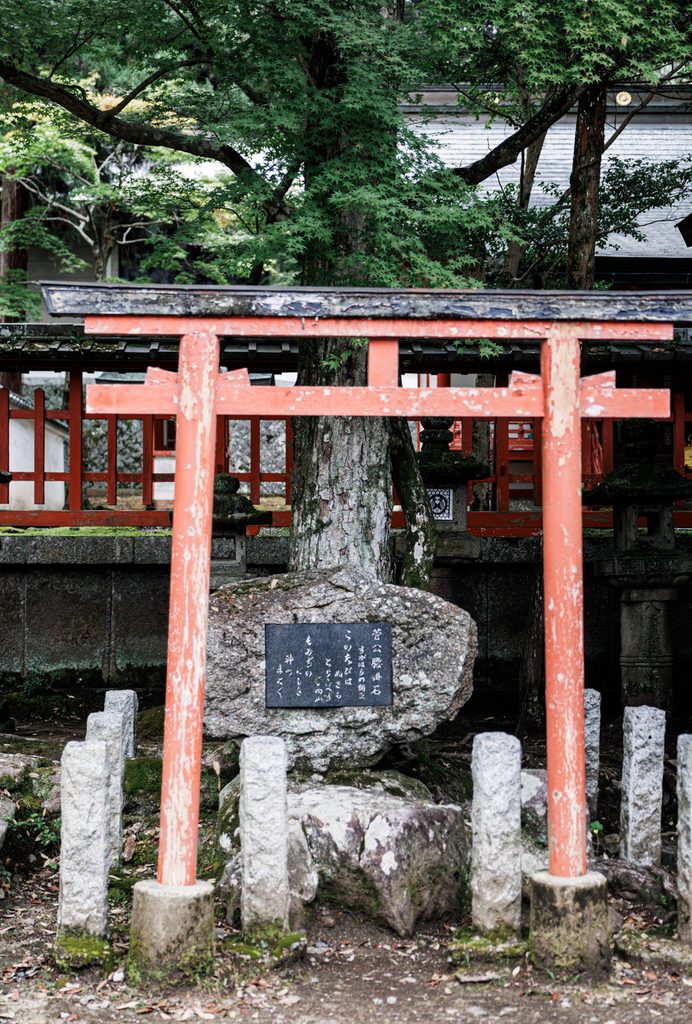
A brocade of autumn leaves. More than a thousand years ago, the maples on this hill were judged fine enough to stand in for offerings to the gods themselves. The thought I had under those trees, about coming back in autumn, came from a poem I learned at thirteen and then forgot I knew.
The National Treasure Nobody Gets to See
Tamukeyama Hachimangu owns a National Treasure. It is the karakura, an ornate ceremonial horse saddle used in the shrine’s festival, and it carries the highest designation Japan gives to a cultural artifact.
You cannot see it. The treasure hall is not open to the public. A shrine that owns a National Treasure and does not show it to anyone. The word for that is modesty, and this place has more of it than is good for it.
What you can see is standing in front of you. The small Sumiyoshi-sha under that blanket of moss and fallen leaves is Kamakura period, an Important Cultural Property. So is the log-built storehouse in the grounds, which dates to the Nara period. Altogether, eighteen cultural properties designated by the national, prefectural, and city governments sit inside this compound, and the compound is free to walk into.
So the shrine that looks abandoned has lost nothing at all. It has guarded the same temple from the same corner for 1,200 years, on a hill whose autumn leaves a country recites from memory. The disrepair is not a verdict on the shrine. Nara Park holds more things that need saving than there are hands to save them, and this one is waiting its turn.
The vending machines were not the only thing shining that morning.
What follows is everything I wish I had known before I sat down on that bench.
About Tamukeyama Hachimangu Shrine
The shrine was founded when the deity Hachiman was invited from Usa Jingu in Kyushu to protect the construction of Todaiji and its Great Buddha. It stood in two earlier locations before settling on its present site, and for eleven centuries it was not an independent shrine at all but a part of Todaiji. Doves serve as the messengers of Hachiman, which is why two of them appear on the shrine’s crest, its ema, and its goshuin.
- 749: founded as the guardian shrine of Todaiji
- 1180: destroyed when Nara was burned
- 1250: moved to the present site by the regent Hojo Tokiyori
- 1691: current main hall rebuilt
- 1871: separated from Todaiji under the Meiji religious reforms
Visiting Tamukeyama Hachimangu Shrine: Hours and Access
The shrine stands a few minutes’ walk east of the Great Buddha Hall, next to Hokkedo, also known as Sangatsudo. From JR Nara or Kintetsu-Nara Station, take the city loop bus to Todaiji Daibutsuden Kasuga Taisha-mae and walk about 15 minutes. On foot, it is about 30 minutes from Kintetsu-Nara Station.
If you have ever walked from the Great Buddha Hall up to Nigatsudo, you have already walked past this shrine. That is the useful way to think about it. Do not plan a separate trip. Thirty minutes covers the grounds, and it is a detour you have been making for years without knowing what you were looking at.
- The gates are open from 7:00 a.m. to 4:00 p.m.
- The shrine is closed every Thursday.
- The shrine office, where you receive goshuin and buy the dove-crest goshuincho, opens at 9:00 a.m.
- Admission to the grounds is free.
- The treasure hall is not open to the public.
- The shrine has no official website, but it does run an Instagram account.
The two-hour gap between the gate and the office is worth planning around. Arrive at seven and the grounds are yours; arrive after nine and you can have the dove goshuin brushed for you. I turned up just before nine.