Witnessing Shunie: 1,270 Years of Darkness and Devotion
“What kind of line is this?”
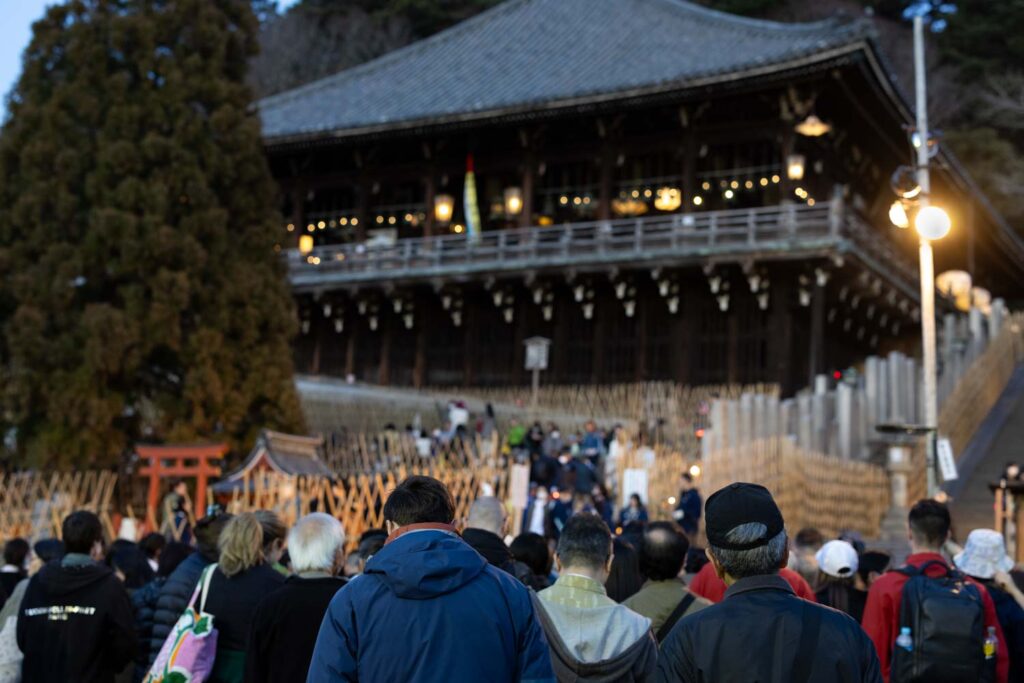
The American couple looked genuinely baffled. They had wandered into Todai-ji’s grounds on a Sunday afternoon and stumbled upon a scene that defied every tourist instinct: dozens of people bundled in down jackets, seated in folding chairs, arranged in a patient queue that led to nothing visible. It was 2:00 PM. The ceremony wouldn’t begin for another five hours.
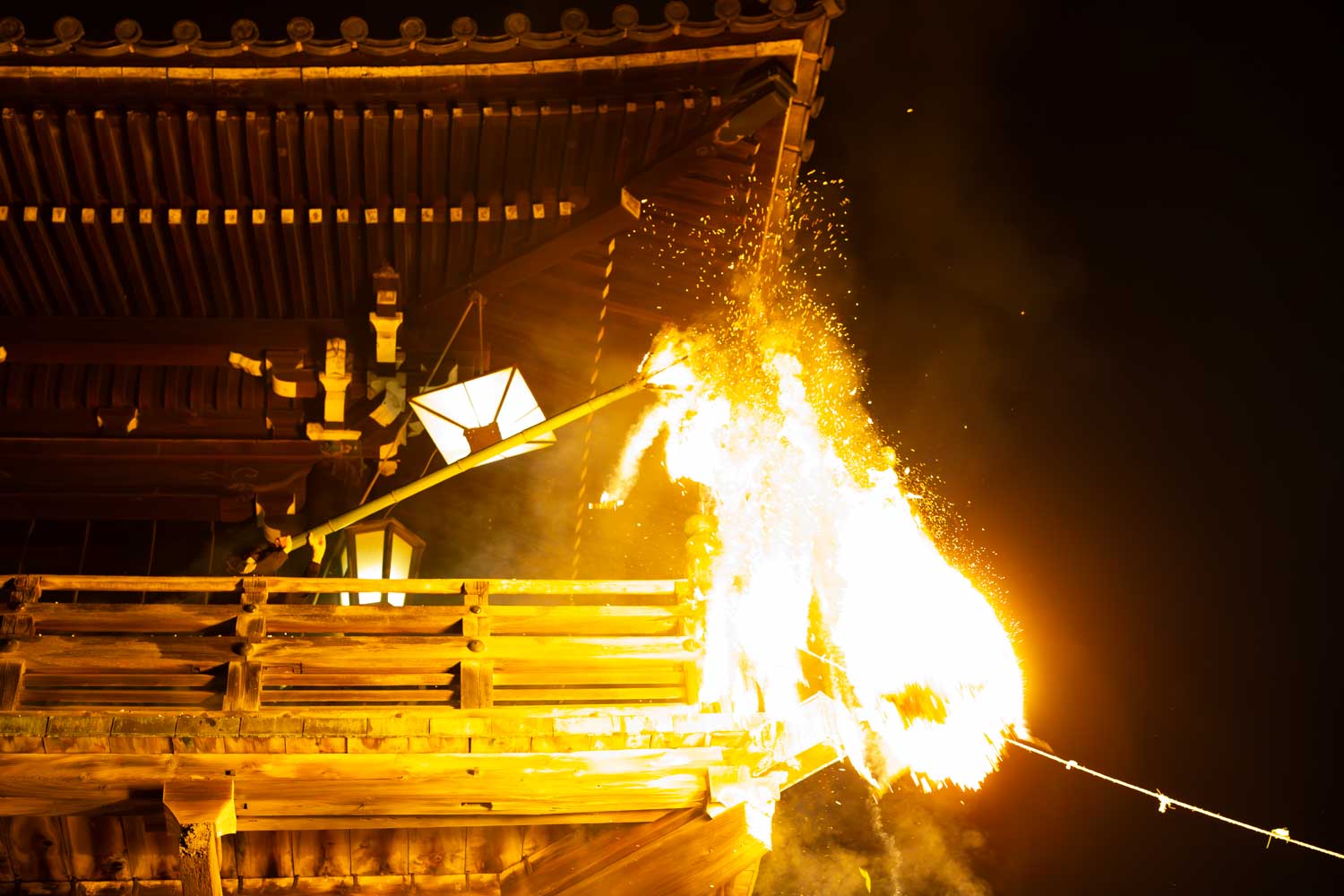
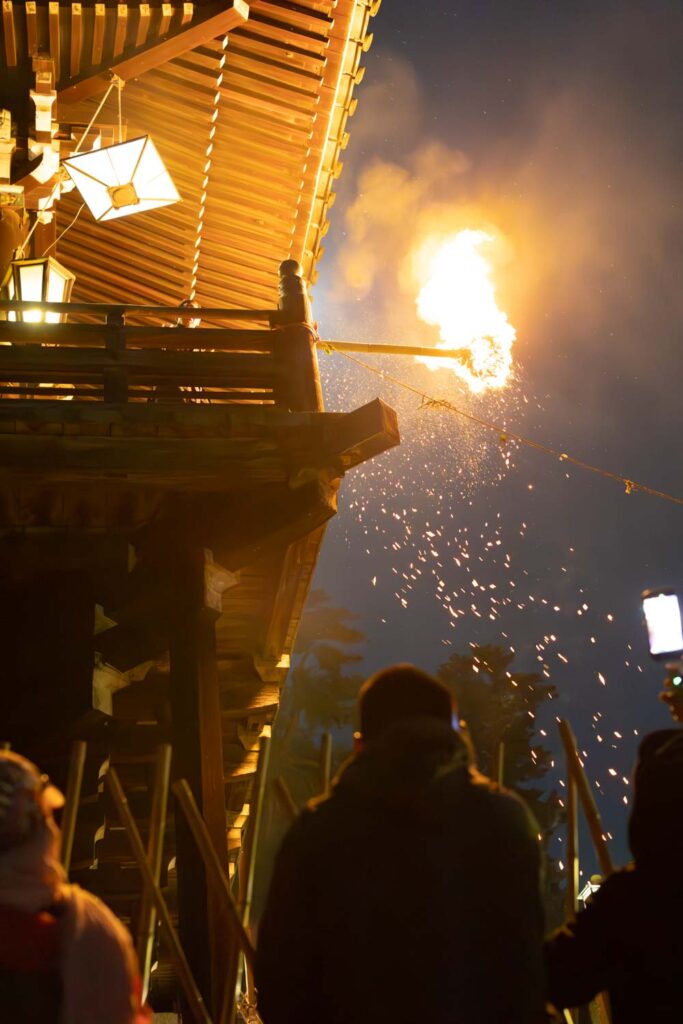
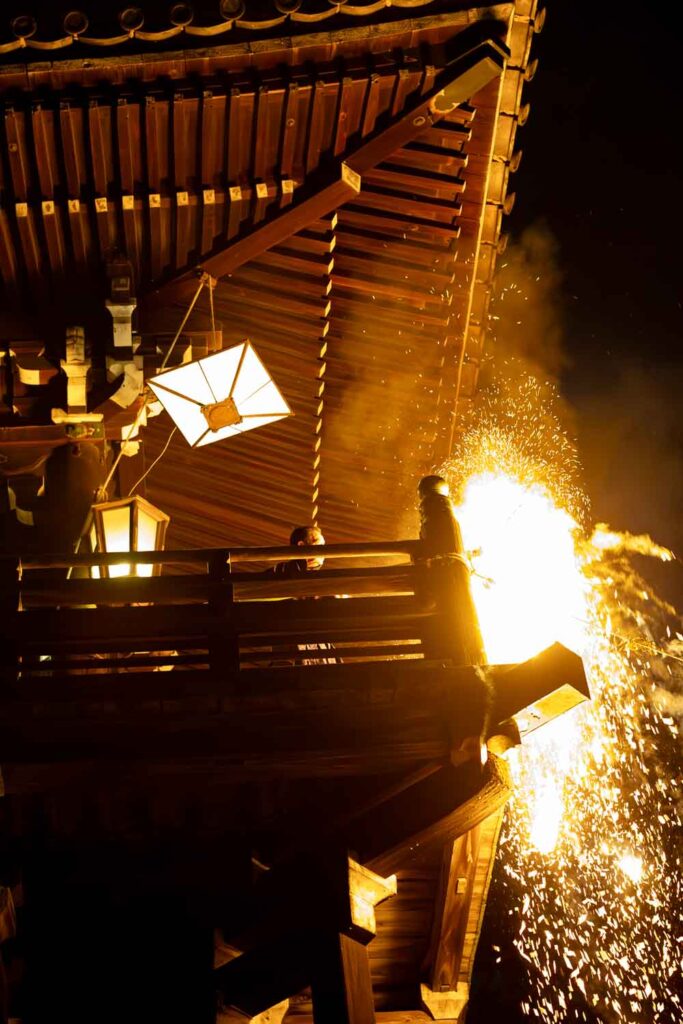
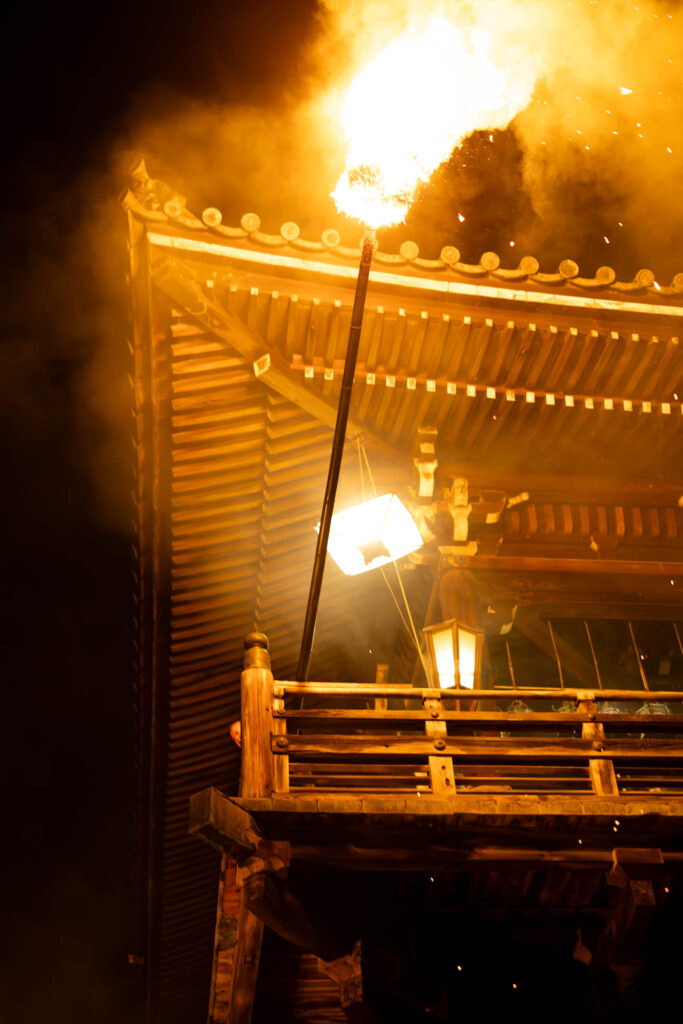
I tried to explain Shunie. A 1,270-year-old Buddhist rite of collective repentance. Monks carrying flaming torches across a wooden balcony suspended in darkness. A ceremony performed not for spectacle, but for the sins of all humankind. The words came out in fragments — some things simply refuse to fit inside a casual explanation between strangers.
They took a photo of the line and left.
The Queue, the Cold, and the Unspoken Rules of HeatTech
Joining the queue at 2:00 PM put me roughly fifteenth. The days before had swung between unseasonable warmth and cold rain, and this one had split the difference: sharp sunlight, bitter air. Ahead of me, among the regulars — men cradling expensive lenses like newborns, the kind who have been staking out this exact spot since before I was born — stood three women who clearly weren’t here for the photography. I was curious what had brought them. Before I could ask, a scrap of their conversation floated back: one had admitted she wasn’t wearing Uniqlo HeatTech, and the other two were treating this disclosure as a lapse in basic human judgment — as though not wearing HeatTech in March were not a personal choice but a breach of common sense. I was also not wearing HeatTech. I chose not to volunteer this information.
Sacred Ground, Vegetarian Sushi
For a late lunch, I bought kakinoha-zushi — the pressed sushi wrapped in persimmon leaves that Nara is known for — from a sushi shop running a pop-up on the temple grounds. Except there was no fish. No salmon, no mackerel, no sea bream. Only lotus root, corn, and pickled radish. I discovered this after paying 880 yen, which produced a brief but genuine sense of loss. The vendor explained that only shojin ryori — Buddhist vegetarian cuisine — may be sold within the sacred precincts. The vegetable sushi, against my wallet’s better judgment, was delicious.
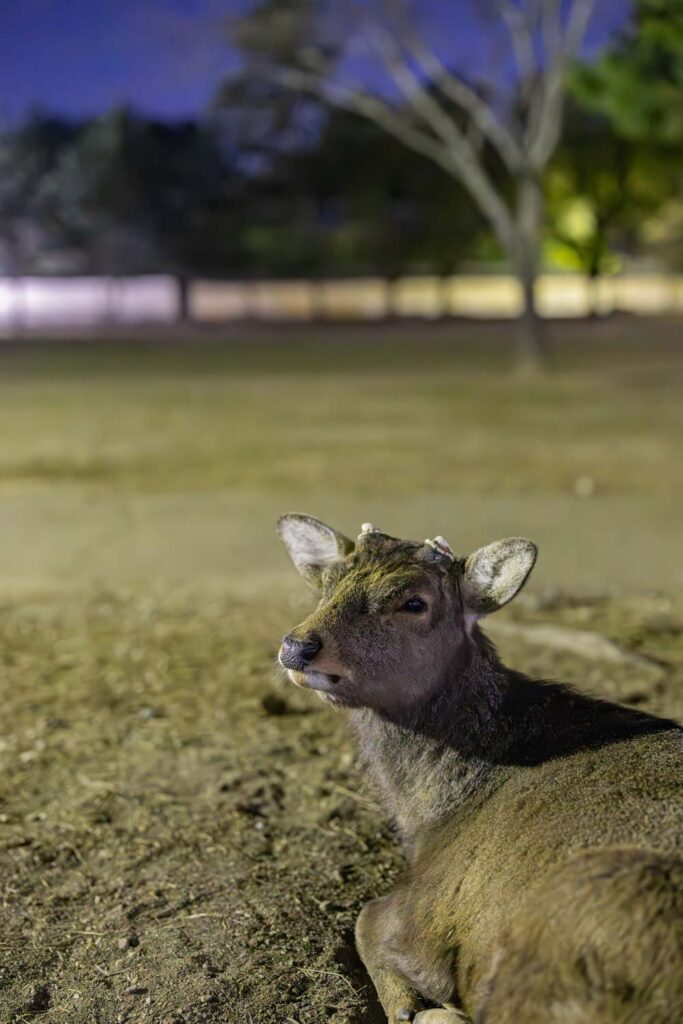
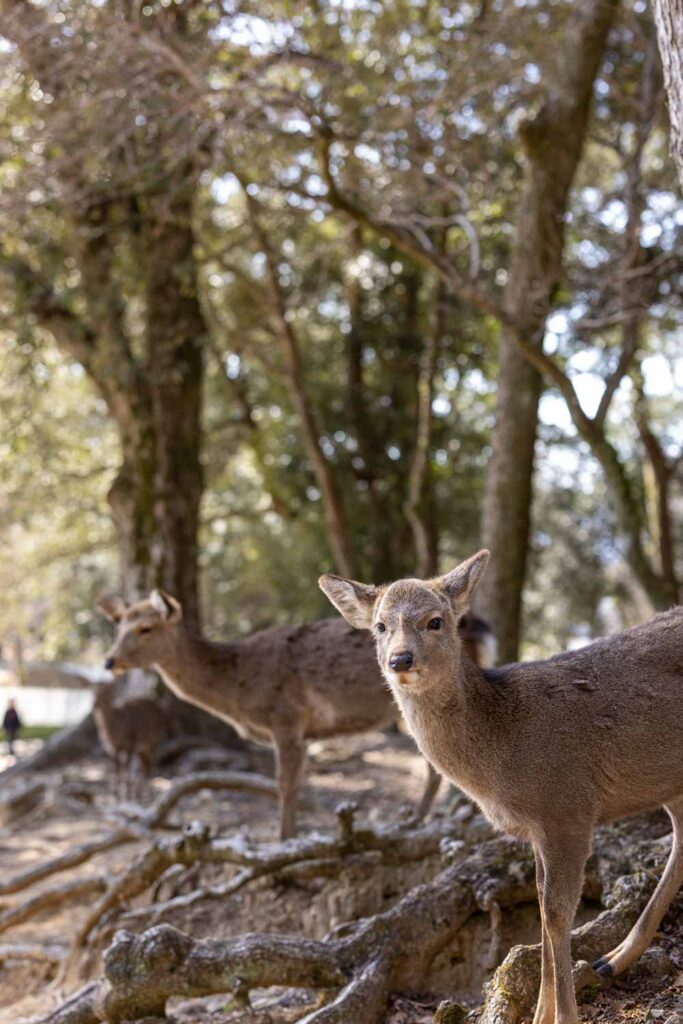
People in folding chairs, waiting for something they cannot yet see. Foreign tourists squinting at the queue, trying to decode it. An unusual number of security guards for a temple that normally has none. A sushi chef selling fish-less sushi because the sacred ground demands it. And deer — standing among all of it with the serene indifference of creatures who have watched twelve centuries of human ritual and remain thoroughly unimpressed.
That is the scene at the foot of Nigatsu-do during Shunie.
You can eat persimmon-leaf sushi. You can attempt to explain an ancient fire ceremony to bewildered Americans. You can eavesdrop on the thermal-underwear philosophies of Japanese women in folding chairs. None of it fills more than an hour.
Meanwhile, above — behind the wooden walls of the hall, in a darkness no visitor will ever enter — the monks are praying for the peace of the world and the abundance of the harvest. On behalf of all humankind.
They have been fasting for fourteen days.
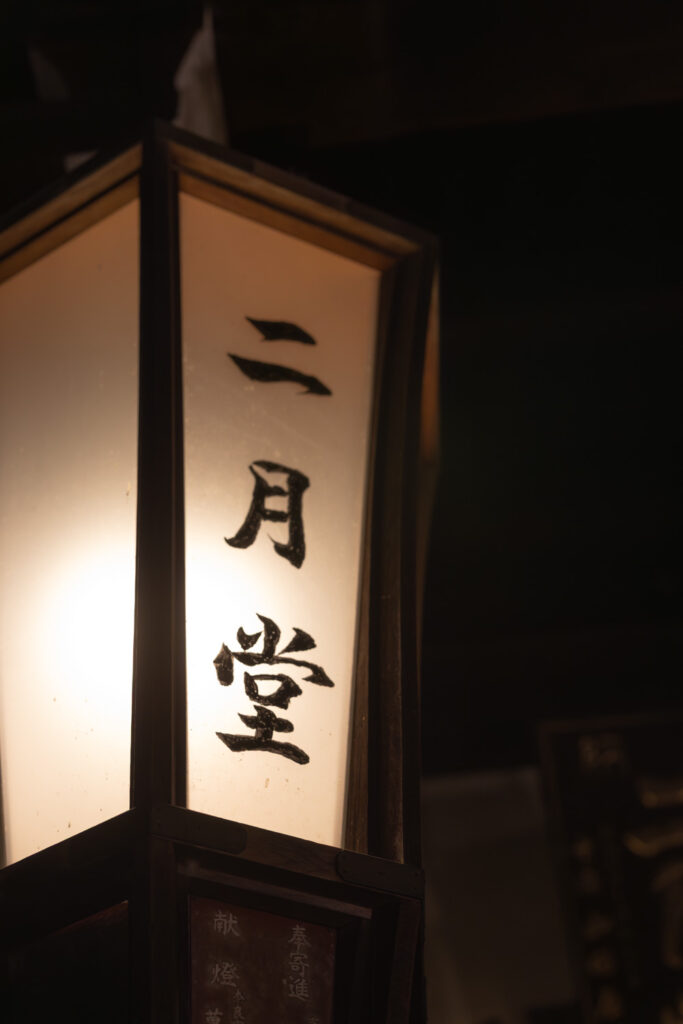
What Is Omizutori? Understanding the 1,270-Year Tradition
Look beyond the flames. Look past them, into the darkness behind. What you are witnessing is the quiet, fathomless reservoir of human will that has sustained this ceremony without a single interruption since 752 CE. War burned this city to the ground. Fire reduced the hall itself to ash — not once, but repeatedly. And still the monks found a way to continue. When civil wars destroyed the hall in 1180 and again in 1567, the rengyo-shu built makeshift shelters in the ruins and refused to let the prayers die.
Don’t just photograph the fire. Witness the time.
Most people call it a “festival.” It is not.
Shunie — also known as Omizutori — is a 1,270-year-old ceremony of collective repentance. It is a spiritual practice woven so deeply into the Japanese calendar that people say, with the quiet certainty of weather: “Spring doesn’t arrive until Omizutori is over.”
At the ceremony’s core is the Juichimen Keka — the Great Repentance before the Eleven-Faced Kannon. Eleven monks called rengyo-shu take the weight of the world’s sins upon their own bodies. For fourteen days and fourteen nights, they repent, pray, and fast — not for Japan alone, but for every human being alive. It is a collective reset for world peace, performed in near-total darkness, witnessed by almost no one.
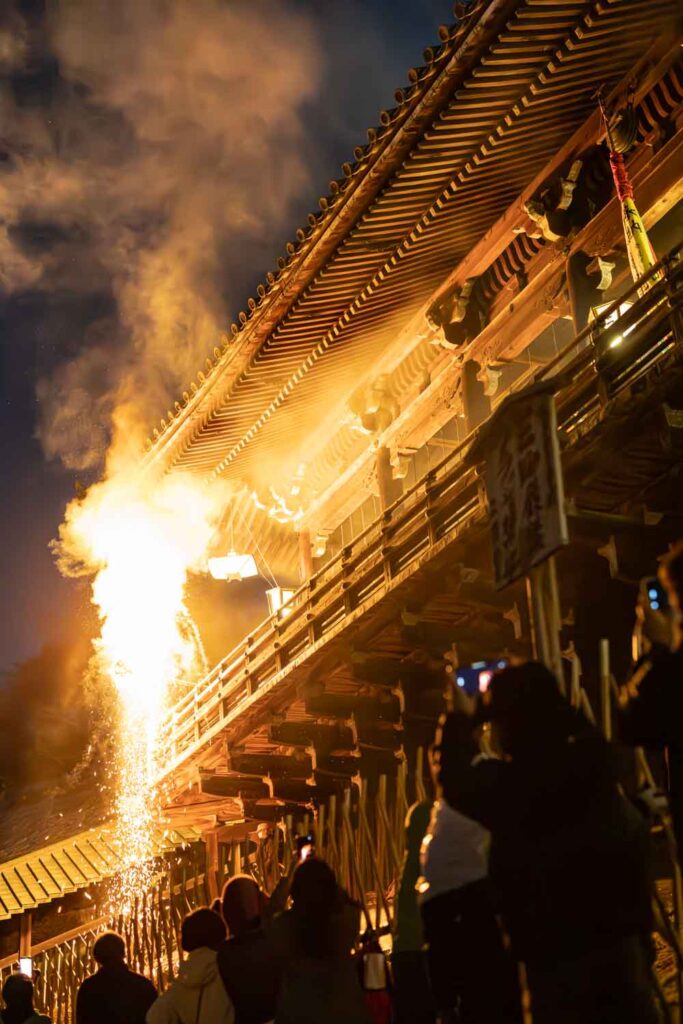
What you see from below — the flames, the cascade of sparks — is merely the outermost edge of something far older and far more unsettling.
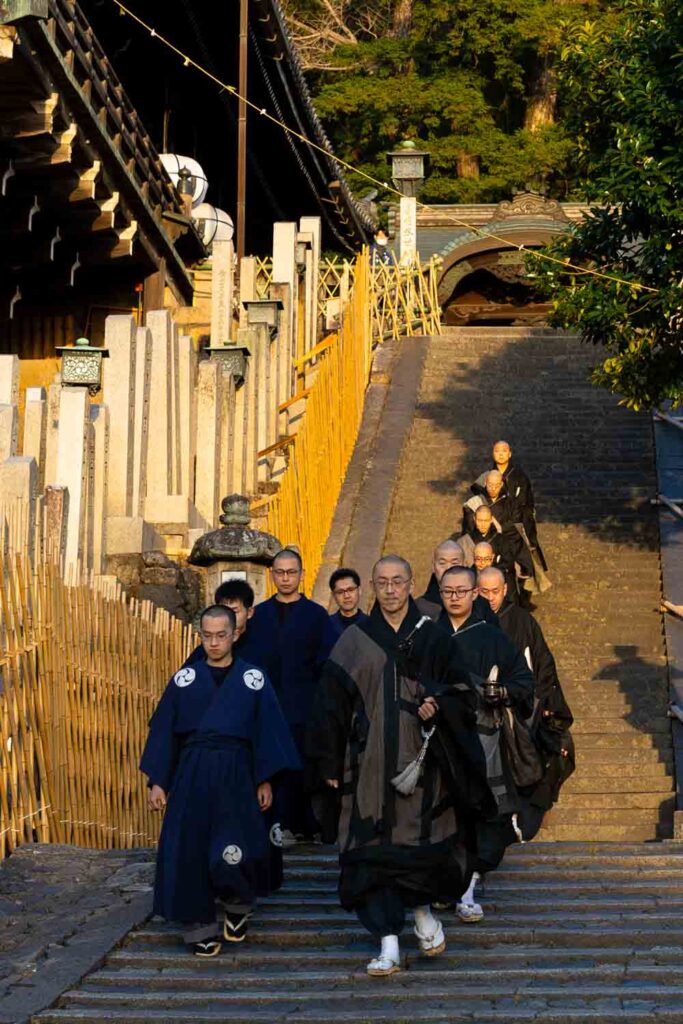
Todai-ji Shunie 2026 Schedule: Otaimatsu Torch Times
The ceremony runs March 1–14. Otaimatsu begins each evening after sunset. Admission is free, no reservation required — arrive early and follow the current of people.
- Regular Nights (March 1–11 & 13): Around 7:00 PM. Ten torches, approximately 20 minutes.
- The Climax — March 12: Around 7:30 PM. Larger kago-taimatsu (basket torches), eleven of them, approximately 45 minutes. This is the most crowded night. You will not stand still and watch; you will view the spectacle while moving through a slow procession.
- The Finale — March 14: Around 6:30 PM. All torches appear simultaneously in a concentrated sequence lasting roughly 10 minutes. Brief — but the only moment of its kind in the entire two-week ceremony.
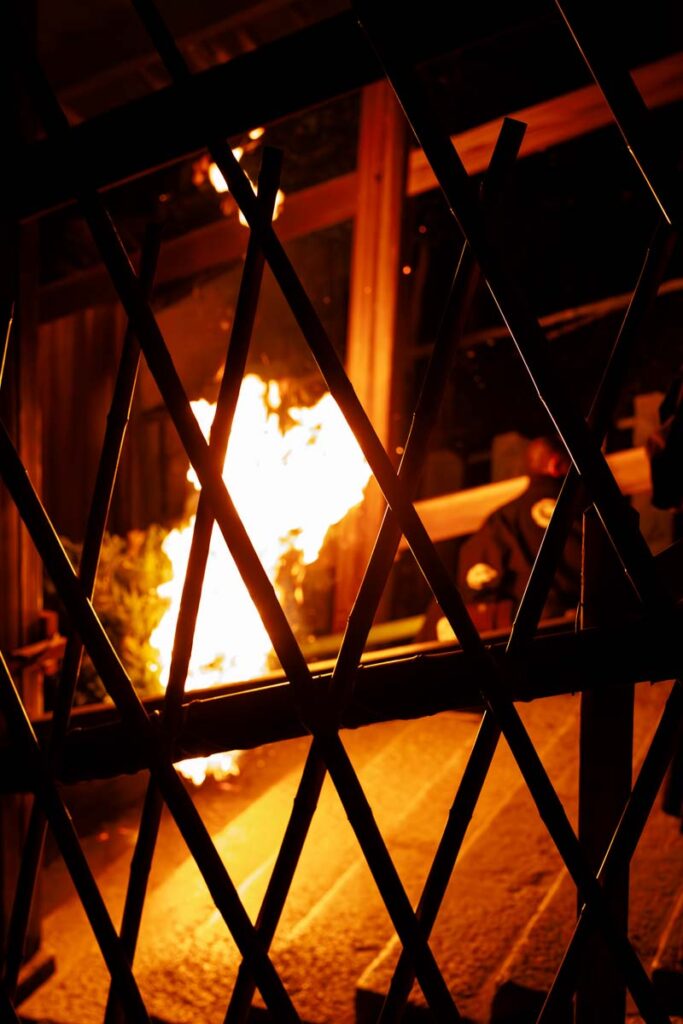
How to See the Omizutori Fire Ceremony: What the Guidebooks Won’t Tell You
If you’re wondering how to see Omizutori in Nara, the answer begins with one word: preparation. I joined the photographers last year for the first time, and by the end of that night I had solved exactly one problem — which lens to bring. Everything else — where to stand, how long to wait, how to survive the cold — I had to learn the hard way. Consider this your shortcut.
Essential Gear for Omizutori Night
- Leisure sheet and folding cushion (100-yen shop): You will be sitting on frozen stone or frigid asphalt for hours. These two items cost less than a dollar each and outperform gear at ten times the price. A word of caution: don’t bulk-buy them and attempt resale on-site. The odds of growing your travel fund are considerably lower than the odds of growing your collection of travel anecdotes.
- Disposable hand warmers (convenience store near Kintetsu Nara Station): If it feels cold when you arrive, it will feel colder by the time the torches are lit. There is a convenience store directly at the station exit. Walk in.
- Natural-fiber clothing only: Sparks rain down from the torches above. Nylon melts on contact — wear natural fibers, or at the very least, something you are not emotionally attached to.
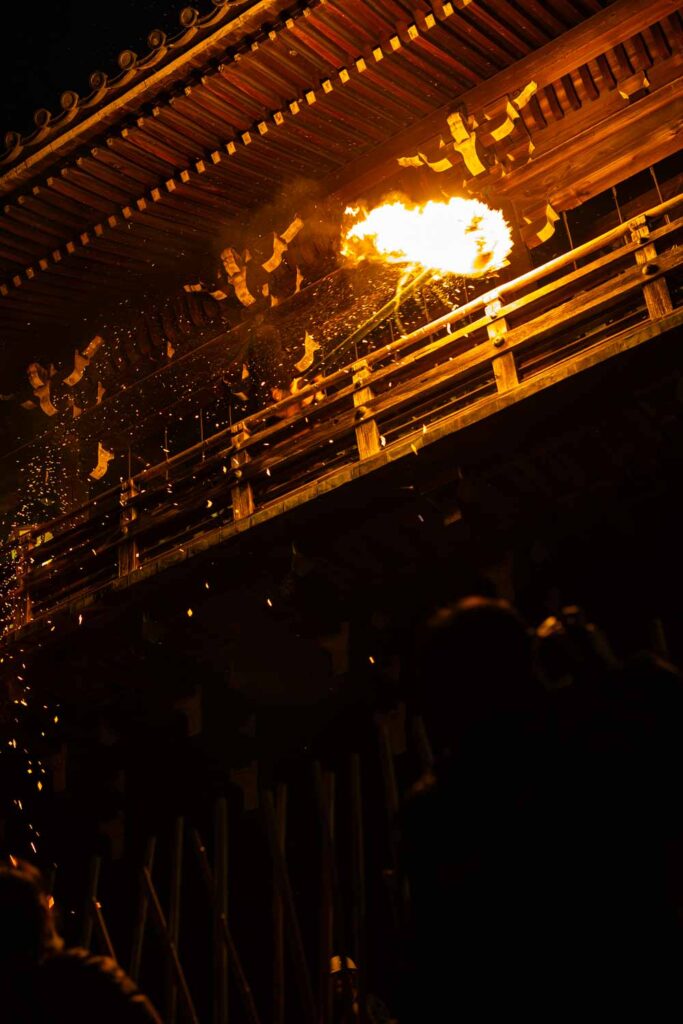
Before You Join the Queue
- Use the restroom first. There is a public restroom near Nigatsu-do. Once you’ve entered the grassy viewing area, you can request a re-entry pass to step out — but it is far simpler to take care of it beforehand.
- Understand what the queue is for. The line that forms in the afternoon is for entry to the grassy area directly below the hall. If this is your first time, join it — it is the most straightforward way to secure a spot, and the experience of standing directly beneath the flames is extraordinary.
- Know the trade-off. You won’t have a panoramic view from the grassy area, but for a first encounter, the sheer physical proximity to the fire is worth everything. If you prefer to take in the full arc of the ceremony from a distance, skip the queue and find a position further back.
Photography Rules and Security
All crowd-control instructions are given in Japanese. There are no English announcements. The guards are generally unhurried, and photography, video, and social media posting are all permitted. Flash and artificial light, however, are strictly forbidden — and on this point, there are no smiles. If you are shooting with a smartphone, confirm before the ceremony begins that your flash and screen brightness will not flare unexpectedly.
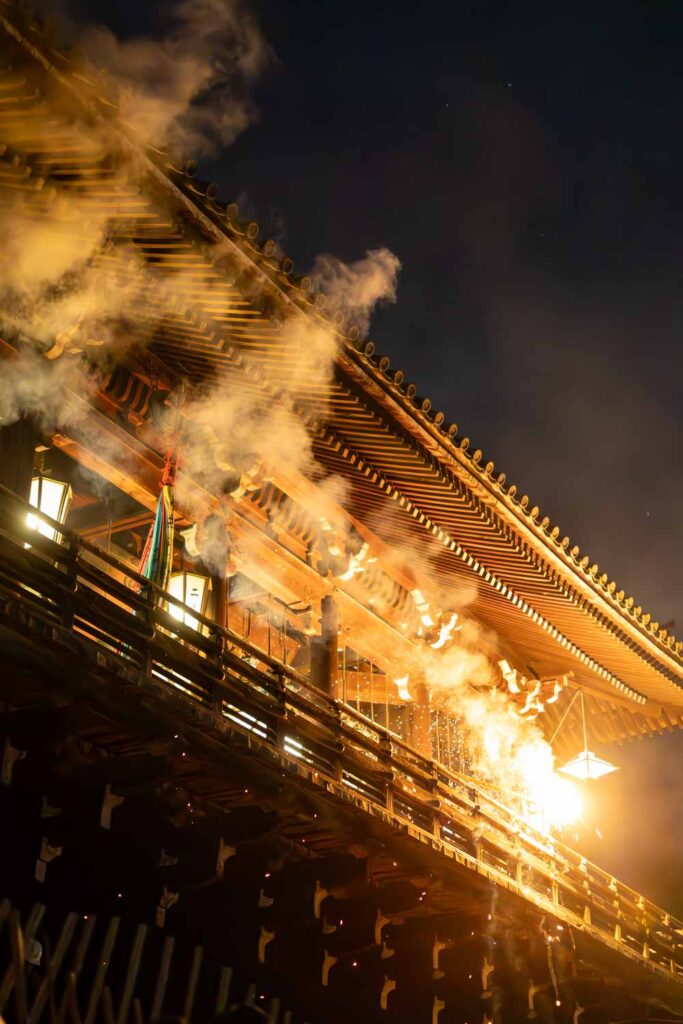
After the Flames: The Nigatsu-do Stage and the Monks’ Chanting
When the fire goes out, don’t leave.
Climb the stone steps beside Nigatsu-do and make your way toward the wooden stage. If there is a long line, it is not an exit queue — it is the line to enter the space where the monks’ prayers can be heard. Shomyo — the low, resonant Buddhist chanting — seeps through the ancient walls, and here, pressed against the worn timber, you hear it at its closest. The sound is not melodic in any familiar sense. It is something older than melody — a vibration that seems to rise from the floorboards themselves.
The stage also opens onto the Nara Basin at night — city lights spreading toward the mountains in a quiet lattice. You stand with the eighth century at your back and the twenty-first century glowing beneath your feet.
Visitors are technically permitted to enter the hall itself, but I would advise against it. This is an active place of prayer, not a sightseeing stop, and the atmosphere inside makes that distinction felt without a single word being spoken.
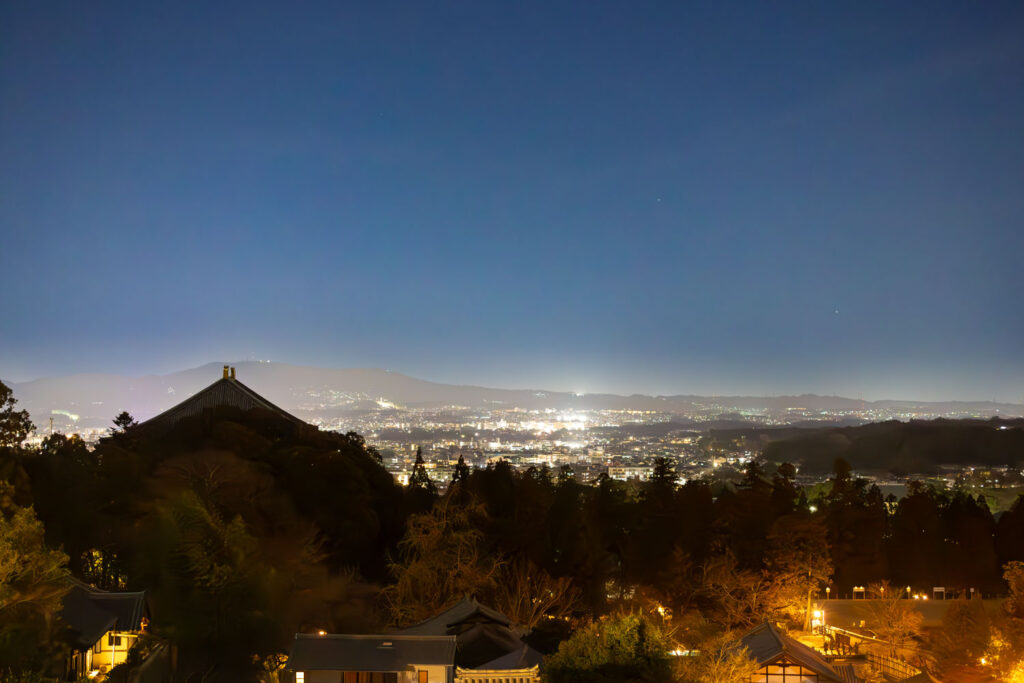
Walking Home Through Nara Park at Night
The transformation doesn’t end on the stage. It completes itself on the walk home.
The path toward Kintetsu Nara Station takes about fifteen minutes. Most of the crowd is heading in the same direction, and even solo female travelers tend to find the walk comfortable and well-populated. Parts of the path are dark, so keep some battery in your phone for the flashlight. Walk slowly.
And don’t expect the deer. After dark, Nara’s deer retreat to their resting places throughout the park — they do this every night, year-round. The park you walk through will be quiet in a way that feels different from ordinary quiet.
Plan any deer encounters for the afternoon, well before the ceremony begins.
You will move through that darkness alone, in a park that predates the concept of a park, on a night that has been held in the same form for over twelve hundred years. You will return to the station not quite the same person who left it.
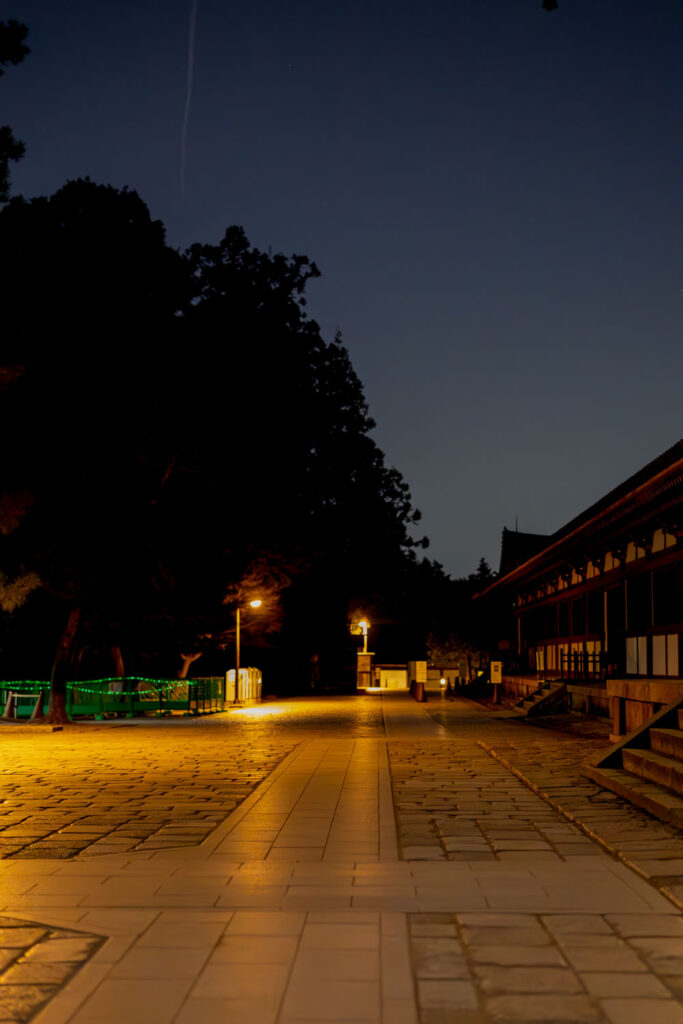
Practical Details
Nigatsu-do is about a 10-minute walk uphill from Todai-ji’s Great Buddha Hall. The nearest stations are Kintetsu Nara (approx. 30-minute walk) or take the city loop bus to the Todai-ji Daibutsu-den/Kasuga-taisha-mae stop. For the latest logistics, check the official Todai-ji Temple Website and the Nara Prefecture Tourism Board.
Related Articles
- The 6:03 to Yodo: Kyoto’s Early Cherry Blossoms Before the Crowds
- Kiyomizu-zaka, Sannen-zaka, and Ninen-zaka: A Walking Guide to Kyoto’s Higashiyama