A little after five o’clock, the last few visitors at Shinnyodo began drifting toward the gate.
Then the sun set. Nobody else stayed.
I did. It was November 28, 2025, the tail end of Shinnyodo Temple autumn color, and I had decided the maples were still visible. They were not, really. A faint red, perhaps, if you wanted it badly enough. I suspect the people walking out gave me a look or two on their way past, the look you save for someone who has confused stubbornness with appreciation.
A Japanese guide to Kyoto’s fall foliage describes Shinnyodo as a former hideaway, a temple whose maples used to be something of a local secret. For one evening, it was a hideaway again.
Too Early: November 18
The first visit was a miss. I came on November 18, sure I had the timing right, and as it happens, that is the very day the temple now marks as the start of its maple season. The trees were not ready.
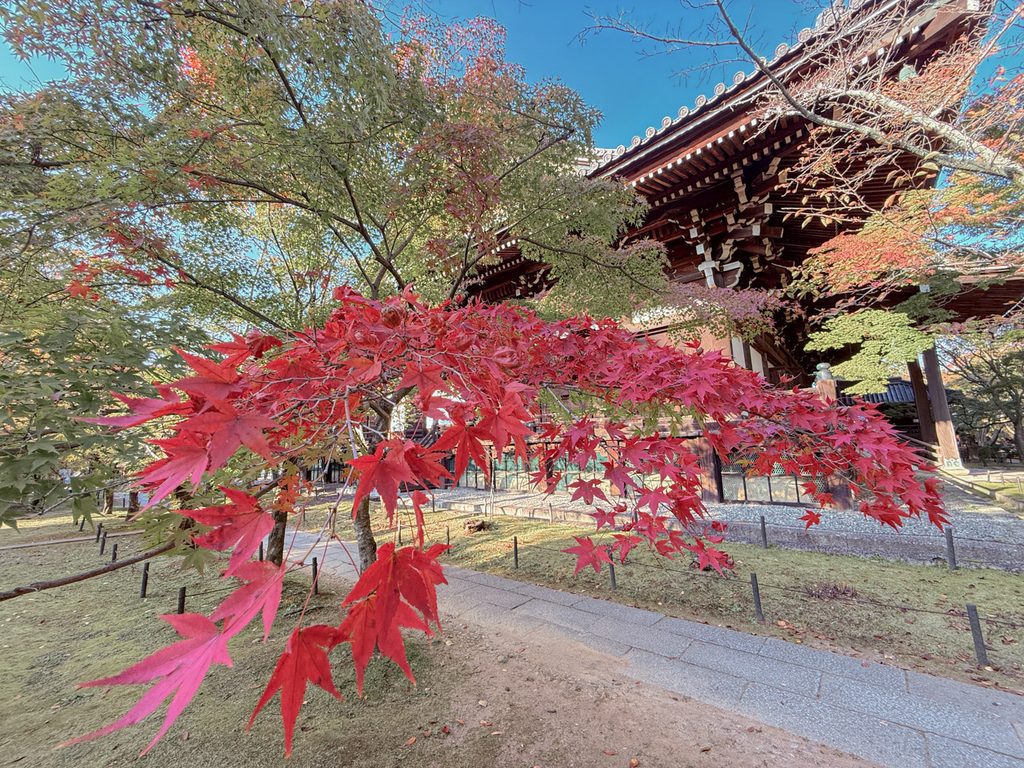
Most of the grounds were still green. Near the main hall, a single maple had started to turn, and only partway, so that one branch of red hung in front of the dark timber like a paint chip held up against a wall. I photographed it anyway, and on the way home I was already planning a second trip. The temple’s own website, as it happens, says a second visit to Shinnyodo should be the more memorable one.
Too Late, Twice Over: November 28
Ten days later, I was late again, and this time it was my own doing. I had stopped first at Konkai-Komyoji next door, where a handful of people stood watching the sunset, and not one of them moved. Neither did I. Leaving first would have marked me as the only person there with no feeling for the moment.
Late November in Kyoto should be cold, but the distant sun still laid a faint warmth on my face and skin. Crows were calling somewhere, as if to announce that the day was over. By the time I walked over to Shinnyodo, the season had gotten ahead of me too. Leaves covered the gravel, the branches had thinned, and I was late for the peak as well as for the light.
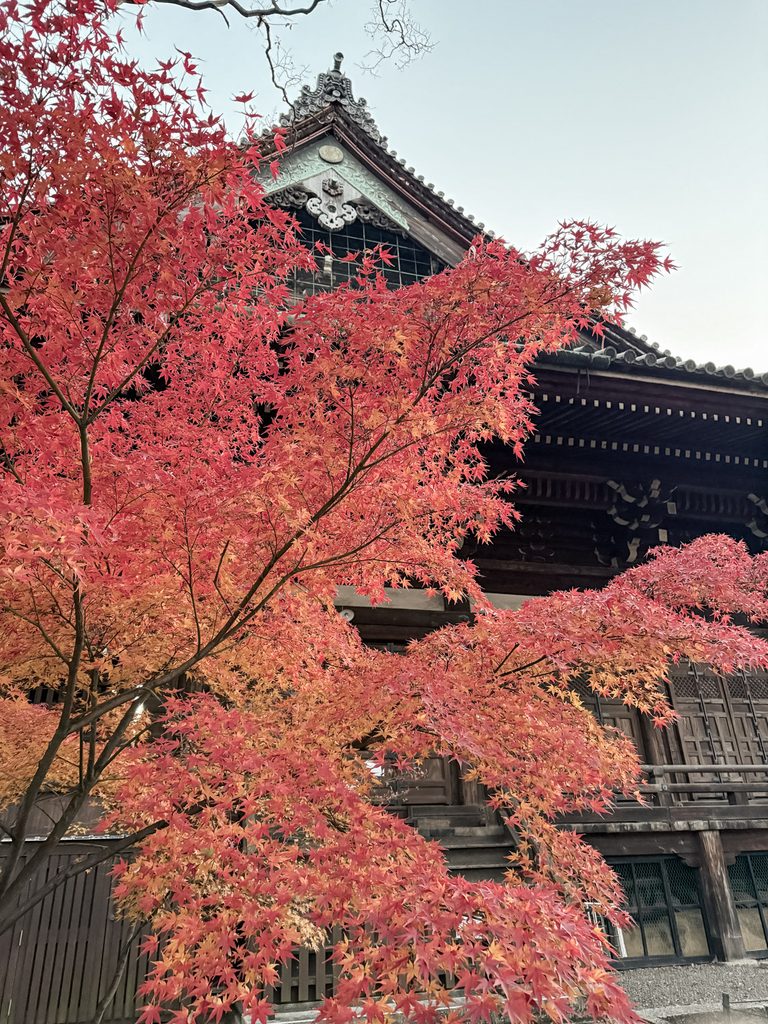
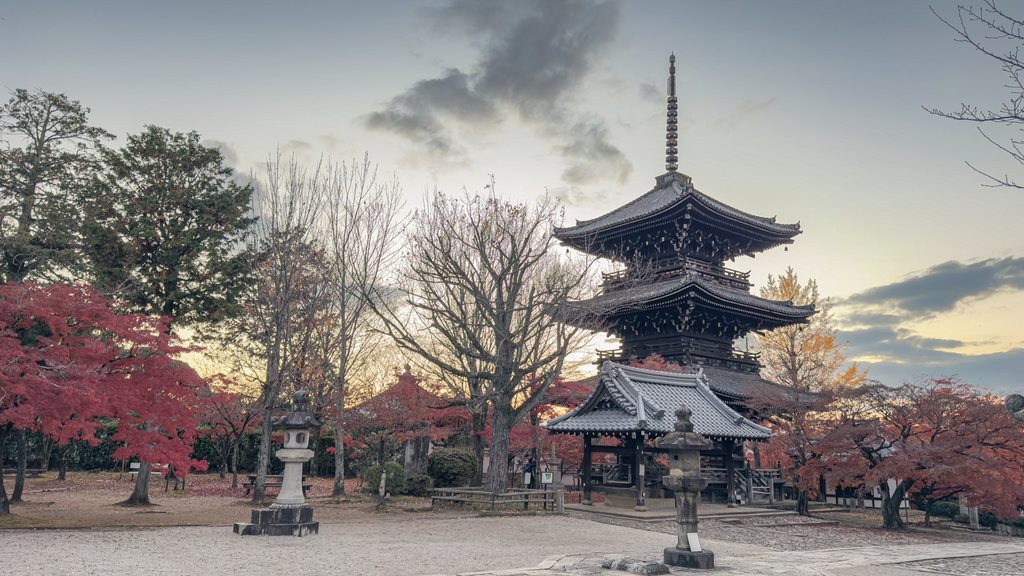
Still, the color held. Around the main hall, the maples ran from deep red into orange, vivid against the brown wood and gray roof tiles, while the leaves on the ground had faded to something closer to rose, as if the temple had laid out a rug and forgotten to roll it back up. The hall was rebuilt in the Edo period. In the centuries after the Onin War, the temple had been forced to move more than once, and the hall now has the settled look of a building that no longer expects to go anywhere.
A Former Hideaway
Even in maple season, the grounds seemed to belong to the neighborhood. People walked their dogs along the paths, and others stopped to talk, in no particular hurry, the way you might outside your own front door. The temple sits on a low hill in eastern Kyoto, sharing it with Konkai-Komyoji, and its grounds double as a local walking route.
The two descriptions of this place do not quite agree. The guidebook I mentioned calls Shinnyodo a former hideaway, while the temple’s own website still describes it as a hidden temple of eastern Kyoto. On my evening there, the temple had the better argument.
The Buddha Who Nodded
The temple’s formal name makes a confident claim. Shinnyodo is officially Shinsho Gokurakuji, and gokuraku refers to the Pure Land of Amida Buddha. According to the temple, the name was chosen because many temples call themselves Gokurakuji, while this one was meant to be the true one. Shinnyodo was originally just the name of the main hall, and over time it became the name everyone used.
Inside that hall stands the principal image, an Amida Buddha that the temple attributes to the monk Ennin. The story goes that Ennin asked the finished statue to serve the monks of Mount Hiei, and it shook its head. He then asked it to go down to Kyoto and save all people, especially women, and it nodded three times. That is why it is known as Unazuki no Amida, the Nodding Amida. The statue is normally kept from public view and shown only once a year, on November 15.
I liked that story more than I expected to. Refused on the first request, granted on the second. My maples had followed roughly the same script.
Alone on the Approach After Dark
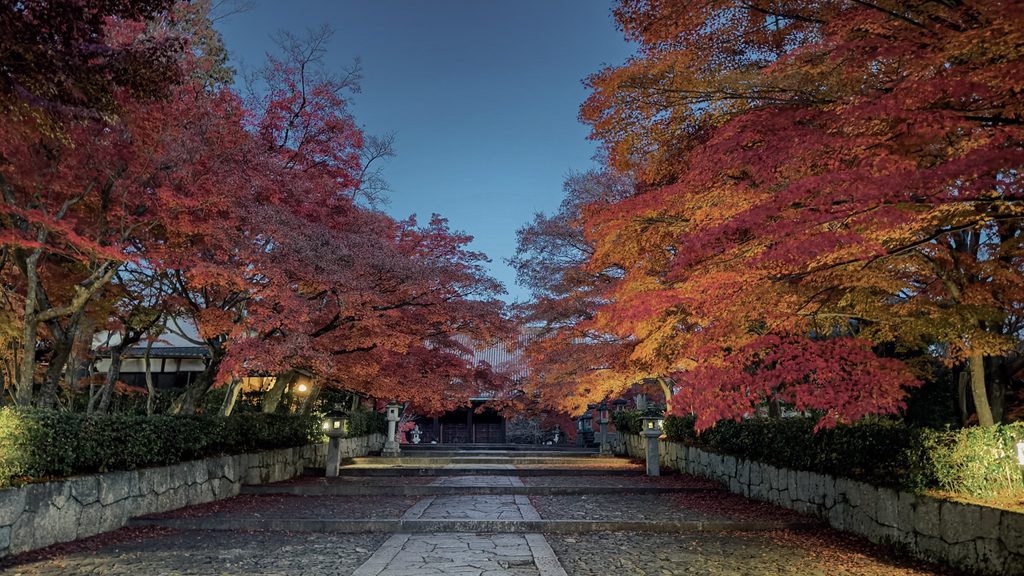
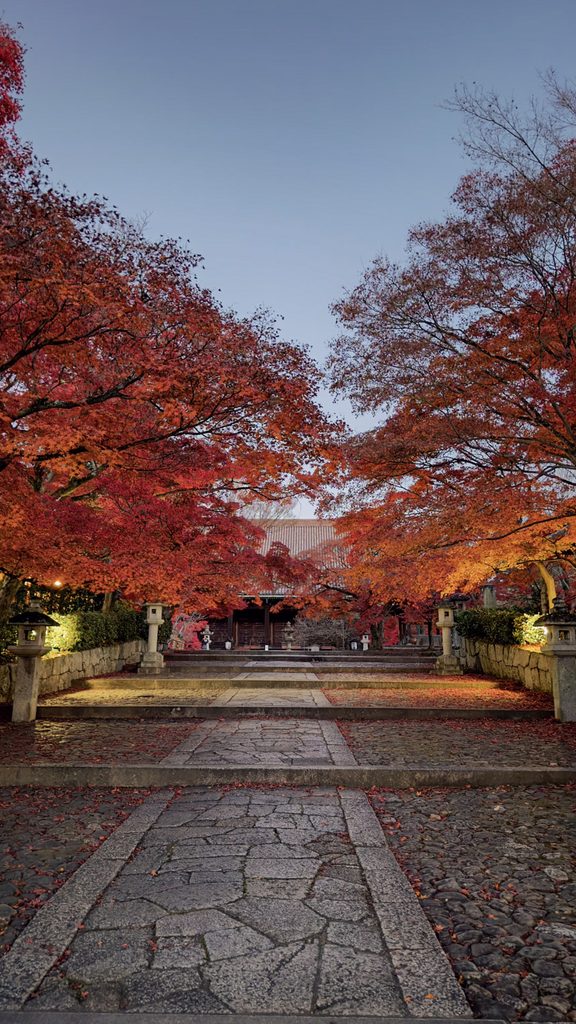
Then the light went. The stone approach runs straight toward the main hall, with maples leaning in from both sides, and after sunset the lamps along it came on. Shinnyodo holds no light-up. These are ordinary lamps, there because people use the grounds as a way through.
They made a difference all the same. Warm light caught the undersides of the branches while the sky turned a deeper blue, and the red, fading as it was, had not quite gone. I walked the full length of the path, filming as I went, and had all of it to myself. In Kyoto, in November, that is not supposed to happen.
Solitude like that comes down to luck. Timing does not have to.
When to See Shinnyodo’s Fall Foliage
According to the temple, the autumn leaves at Shinnyodo are usually at their best from mid-November to early December. My two visits in 2025 fell on either side of that year’s best days, with the color barely begun on November 18 and the leaves already falling on November 28. That is an inference from two visits rather than a measurement, and the timing shifts every year with the weather, so check Japanese fall foliage reports a few days before you go.
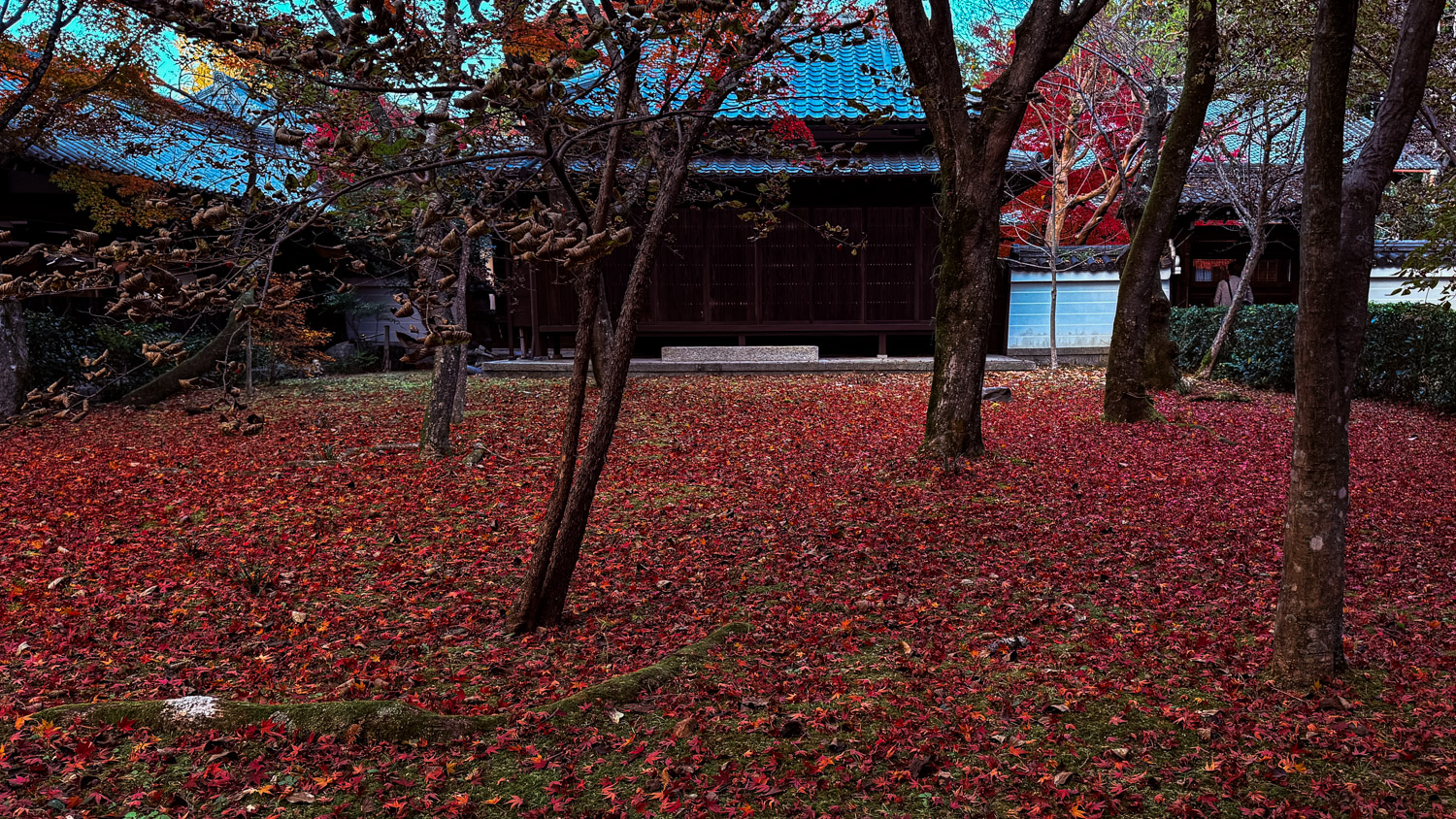
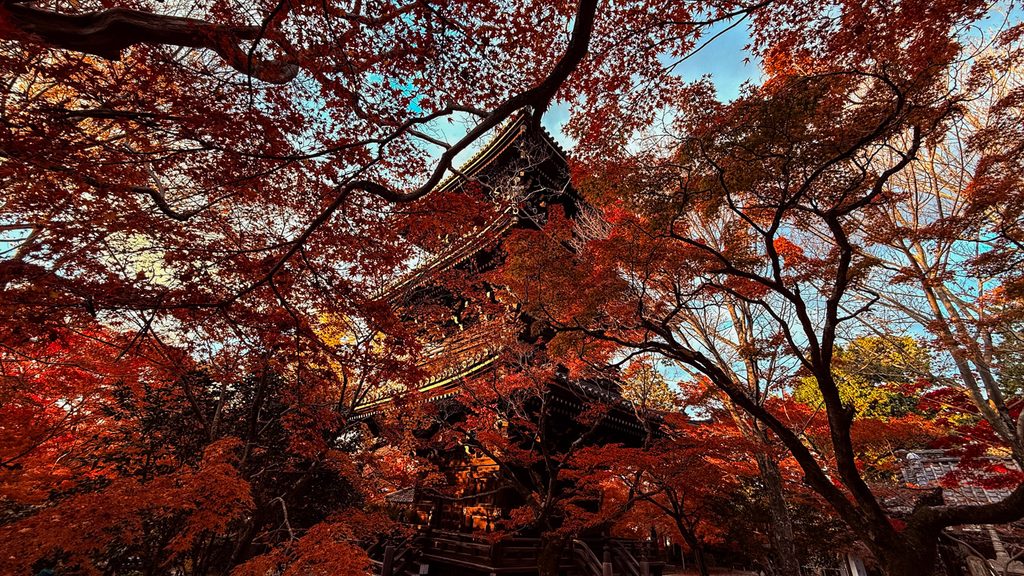
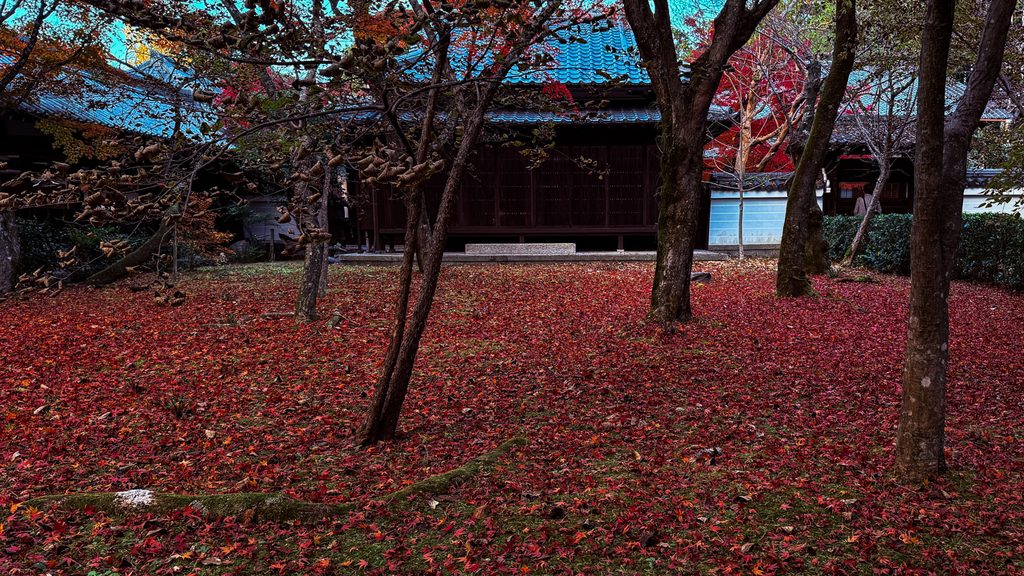
The late end of that window belongs to the fallen leaves. On December 4, 2024, the maples were past their peak and dropping fast. The trees around the pagoda still carried color, and the ground beneath them had gone solid red.
Shinnyodo Temple Autumn Fees and Hours (2026)
During maple season, an adult pays ¥500 to enter the grounds, or ¥1,000 in total with the main hall and study hall. The figures below follow the fee schedule the temple revised in August 2026. Confirm them on the temple’s official visitor information page (Japanese only) before you go.
| Hours | 9:00 a.m.–4:00 p.m. (last entry 3:45 p.m.) |
| Grounds and main hall worship (outside maple season) | Free |
| Inner main hall, study hall, and garden (regular season) | Adults ¥500 / High school students ¥300 / Junior high students and younger free |
| Autumn special viewing | Adults ¥1,000 / High school students ¥500 / Junior high students and younger free (2026 dates not yet announced) |
| Maple season entry fee (November 18–December 7) | Adults and high school students ¥500 / Junior high students and younger free |
| Maple season main hall and study hall | Adults ¥500, including the Kangyo Mandala special viewing / High school students and younger free |
| 2026 garden closure | November 15 |
The New Maple-Season Entry Fee
The entry fee was introduced for 2026, and the temple says it is meant to protect the grounds. From November 18 to December 7, adults and high school students pay ¥500 to enter, while junior high students and younger are free. When I visited in 2025, no such fee existed, so older guides that describe the grounds as free are out of date for the maple season. The separate main hall ticket is paid at the reception desk on the left inside the hall.
Getting There
The Kinrin Shako-mae stop on Kyoto City Bus gives the easier approach, roughly eight to ten minutes on foot. The closer Shinnyodo-mae stop leaves you at the bottom of a steep slope. My complete guide to Shinnyodo Temple covers both routes, along with the back way from Konkai-Komyoji.
Photography Rules
Photography is not permitted inside the main hall, and the temple prohibits tripods, monopods, organized photo shoots, commercial photography, costume photography, and sketching anywhere on the grounds. Ordinary handheld photography outdoors is allowed within those rules.
Pairing Shinnyodo With Nearby Sights
You do not have to go far for a second stop. Konkai-Komyoji shares the same hillside, about a five-minute walk between the two main halls, and Okazaki Shrine, known for its rabbit motifs, sits further down in the Okazaki area.
Shinnyodo in June: Hydrangeas and a Goshuin
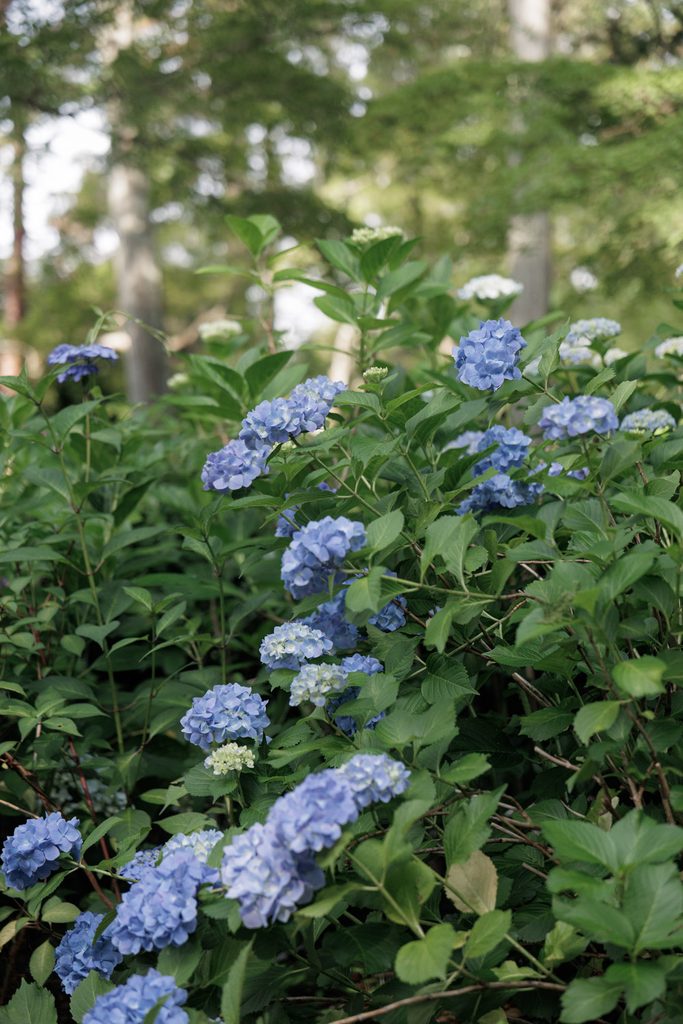
I went back on June 27, 2026, in the rainy season, when the hydrangeas were out in soft blue and the maples were a fresh early-summer green. It was the same hillside, and it felt like a different temple.
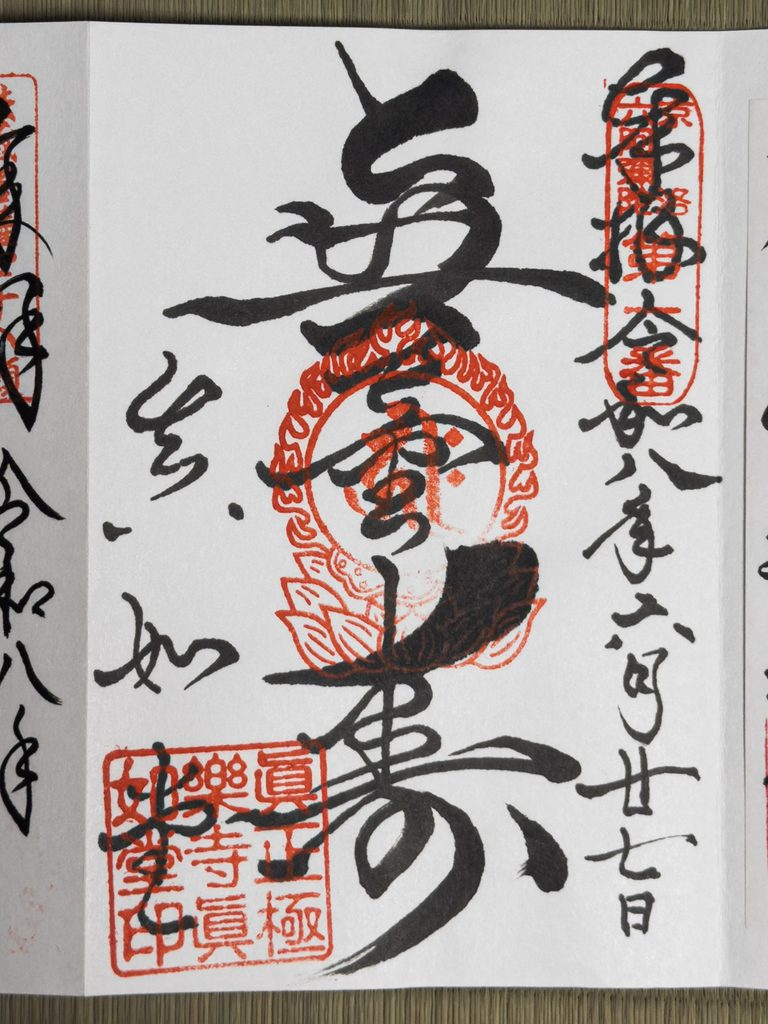
On that visit I received a goshuin, the brushed calligraphy and red stamps a temple adds to a pilgrim’s book. Shinnyodo’s reads Muryoju, meaning “immeasurable life,” one of the names of Amida, and it was written directly into my book.
Frequently Asked Questions
What makes Shinnyodo worth visiting in autumn?
Maples surround the main hall and the three-story pagoda, yet the temple still feels tied to the residential neighborhood around it. On my evening visit in 2025, it felt close to private.
Is Shinnyodo worth visiting after peak color?
In my experience, yes. On November 28, 2025, after the peak, the maples around the main hall were still deep red and orange, and the fallen leaves colored the paths. On December 4, 2024, also past peak, the ground under the trees had turned solid red.
Do I need to pay the entry fee just to walk through the grounds?
From November 18 to December 7, yes. The temple says the entry fee also applies to people passing through, including walking groups. Adults and high school students pay ¥500, and junior high students and younger are free. Outside that period, the grounds are free to enter.
Do I need to pay admission to get a goshuin?
Not outside maple season. I received mine for ¥300 after visiting only the main hall, which is free to enter, with no garden ticket. From November 18 to December 7, you need the ¥500 entry fee to reach the main hall.
Can you see the maples at Shinnyodo after dark?
Not well. There is no light-up, and the temple’s current visiting hours end at 4:00 p.m. In 2025, I found the approach still open after dark, with lamps along the path, but I would not plan a 2026 visit around that unless the temple confirms evening access.