I had never heard of Shinnyodo Temple until I was standing almost on top of it. I spotted its name on a wooden signboard inside the grounds of the neighboring Konkai-Komyoji, walked over almost as an afterthought, and ended up spending one of the most quietly memorable hours of that week in Kyoto there.
A staff member at the main hall suggested I also visit the inner garden. I paid the small admission, slid open the wooden door, and stepped into a stillness I don’t usually associate with central Kyoto. The hall was nearly empty. I sat on the polished floor for a while, looking out at the garden, and understood why the staff had recommended it.
Shinnyodo is the kind of temple locals know, photographers post about quietly, and most international visitors walk right past on their way somewhere louder. If you’re looking for a place to slow down between Ginkakuji and the Philosopher’s Path, this is the stop to make.

Shinnyodo Temple Essentials
| Official Name | Shinsho-gokuraku-ji (commonly known as Shinnyodo) |
| Buddhist School | Tendai |
| Founded | 984 CE, by the monk Kaisan |
| Address | 82 Jodoji Shinnyo-cho, Sakyo-ku, Kyoto |
| Hours | 9:00 – 16:00 (last entry 15:45) |
| Admission – Main Hall & Grounds | Free |
| Admission – Treasures & Garden | Adults ¥500 / High school ¥300 / Middle school and younger free |
| Special Viewing (Spring/Autumn) | ¥800 |
| Official Website | Japanese only — no English version |
| Typical Visit Time | 30–60 minutes |
2026 closure notes: The garden and study hall (shoin) have limited access on certain dates. The garden is closed on the morning of January 27, then every second Sunday of the month (except August and November, when it remains open), and on May 6, October 13, and November 15.
Special viewings typically include the Spring exhibition (Nehan-zu image, March 1–31), the Autumn exhibition (Kankyo Mandala and temple treasures, November 1–16, closed November 15), and the Maple Season exhibition (November 17 – December 7). Dates are subject to change—confirm on the official site before visiting.
Photography Rules You Should Know
Photography is not permitted inside the main hall. The temple also prohibits tripods and monopods, organized photo shoots, commercial photography, costume photography of any kind, and sketching on the grounds (including personal sketching).
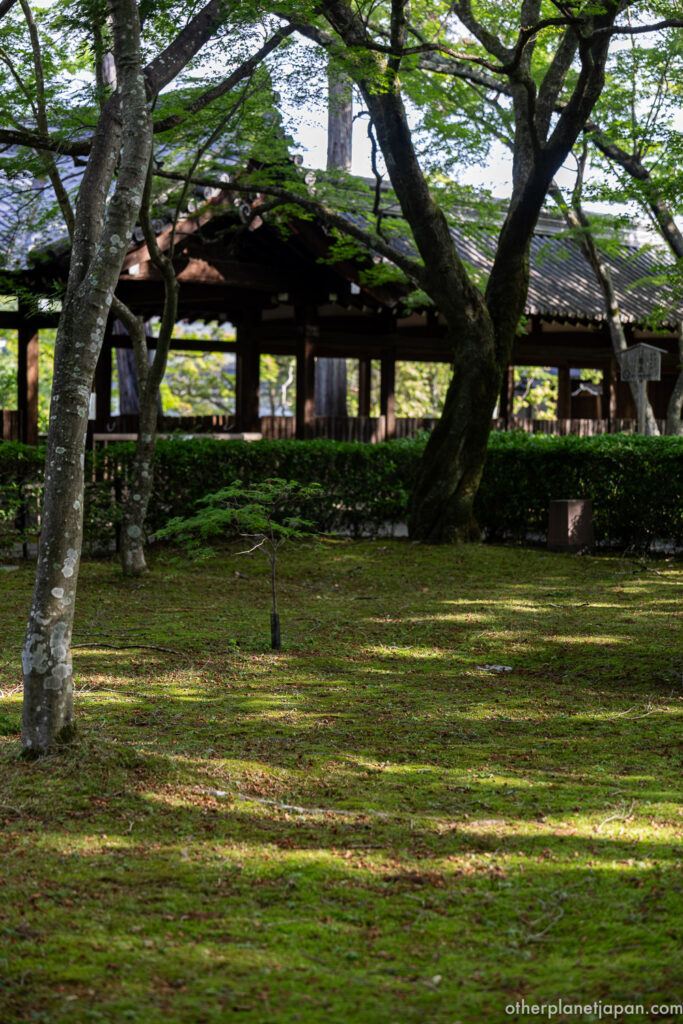
The outdoor grounds, however, are fine for handheld photography. You can still capture the maples, the three-story pagoda, and the garden paths without restriction.
How to Get to Shinnyodo Temple
Shinnyodo sits on a low hill in eastern Kyoto, in the Sakyo Ward. The most common mistake visitors make is heading straight for the nearest bus stop—which happens to be at the bottom of a steep slope.
Recommended: Kinrin Shako-mae Bus Stop
Get off at Kinrin Shako-mae, one stop earlier than the namesake “Shinnyodo-mae.” From here it’s an easy 8-minute walk along a gentler route. Kyoto City Bus lines 5, 7, 100, 102, 203, and 204 all stop here.
Alternative: Via Konkai-Komyoji
If you’re already exploring the Kurodani area, walk through the grounds of Konkai-Komyoji and approach Shinnyodo from the back. The two temples share a hillside and a graveyard, and you can cross directly between them through the cemetery without climbing any steep stairs. From the Konkai-Komyoji main hall, Shinnyodo is about a 5-minute walk.
Not Recommended: Shinnyodo-mae Bus Stop
This is technically the closest bus stop, but it deposits you at the bottom of a sharp uphill slope. If you have luggage, mobility concerns, or are traveling with older companions, skip it.
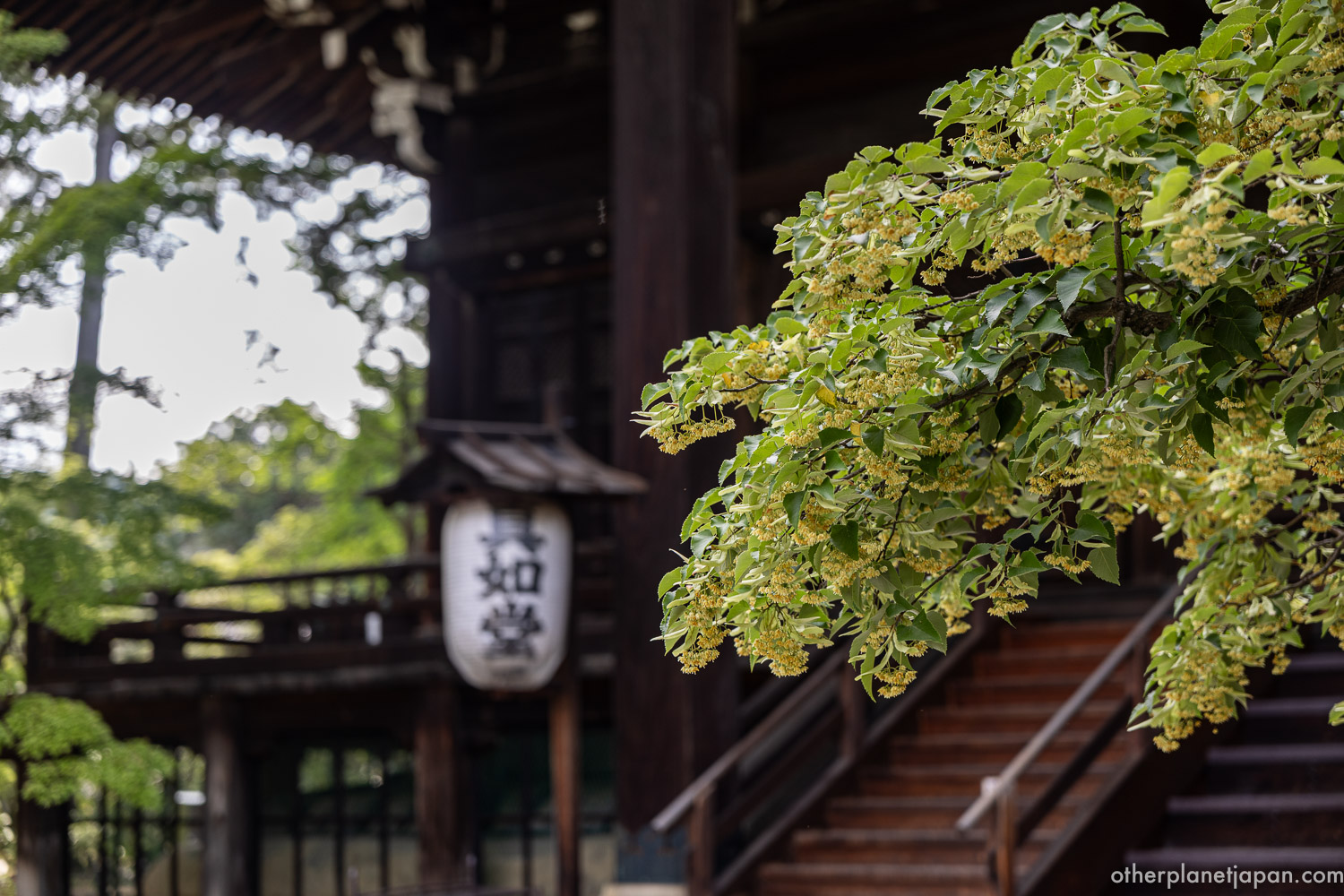
By Taxi
From Kyoto Station, a taxi takes about 25 minutes and costs roughly ¥3,300.
When to Visit: Seasons at Shinnyodo
Shinnyodo is one of those temples whose entire character shifts with the calendar. The grounds are dense with maples and quietly tended garden corners, so the same path looks like three completely different places across the year.
Spring and Early Summer: Aomomiji
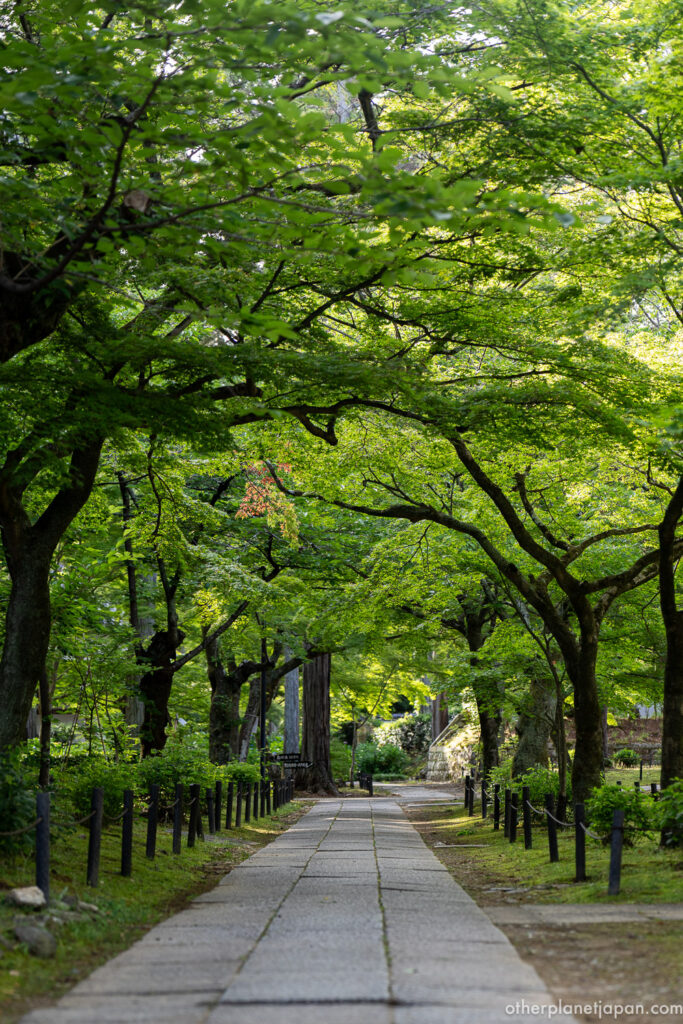
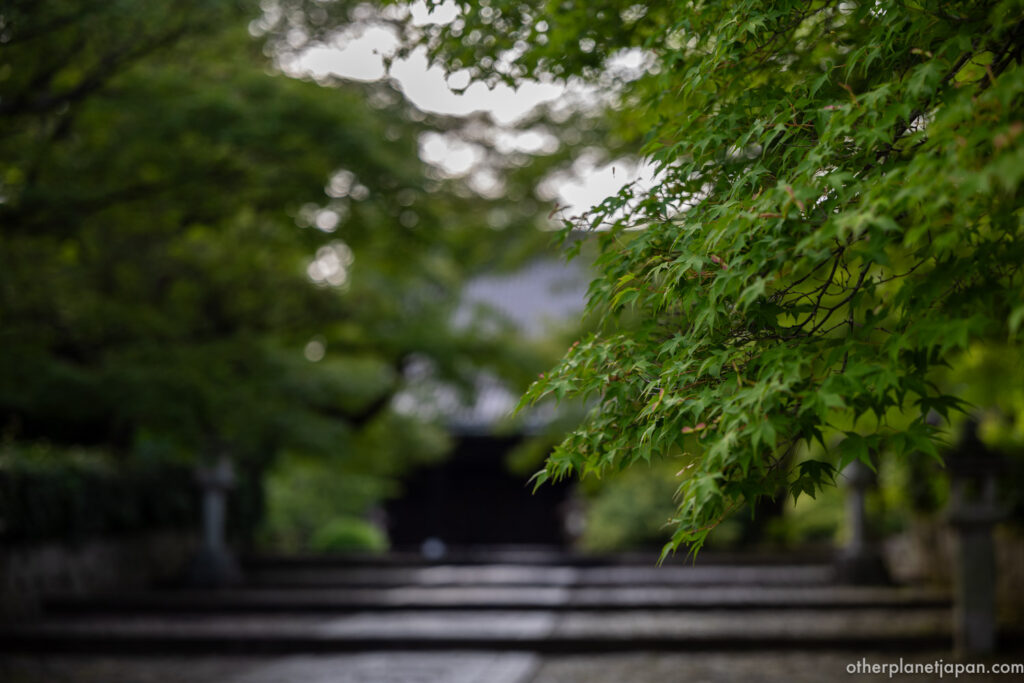
From mid-April through June, the maple canopy comes back in full force—not red yet, but a luminous, almost glowing green. Locals call this aomomiji (“blue maples”), and at Shinnyodo it forms an arching tunnel over the central stone path. The temple is nearly empty in this season, which makes it one of my favorite times to visit.

Rainy Season: Hydrangeas in June
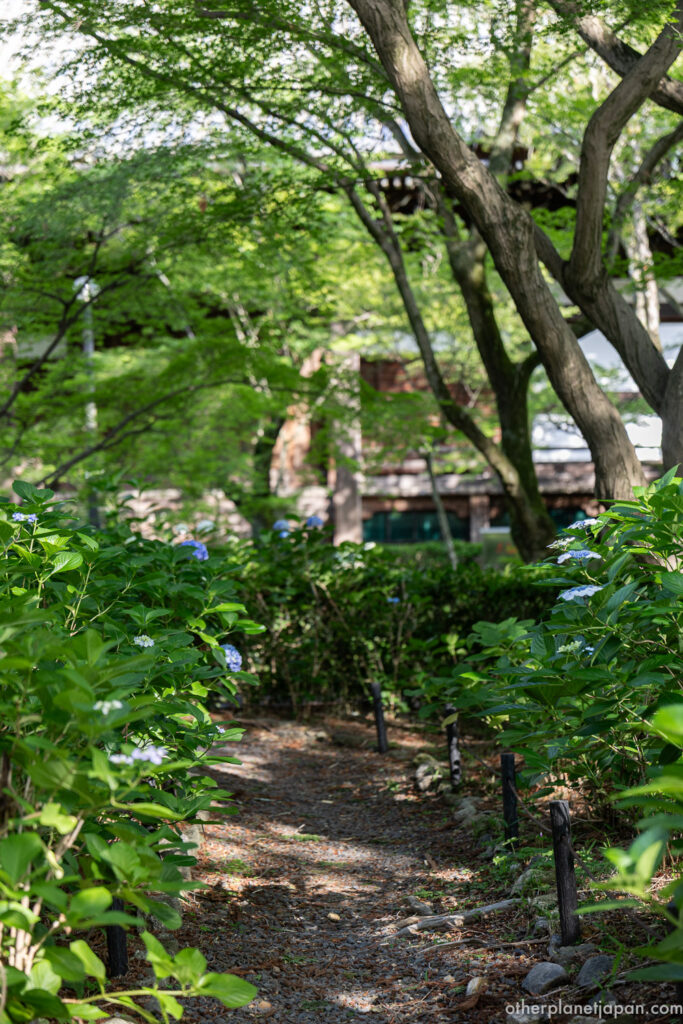
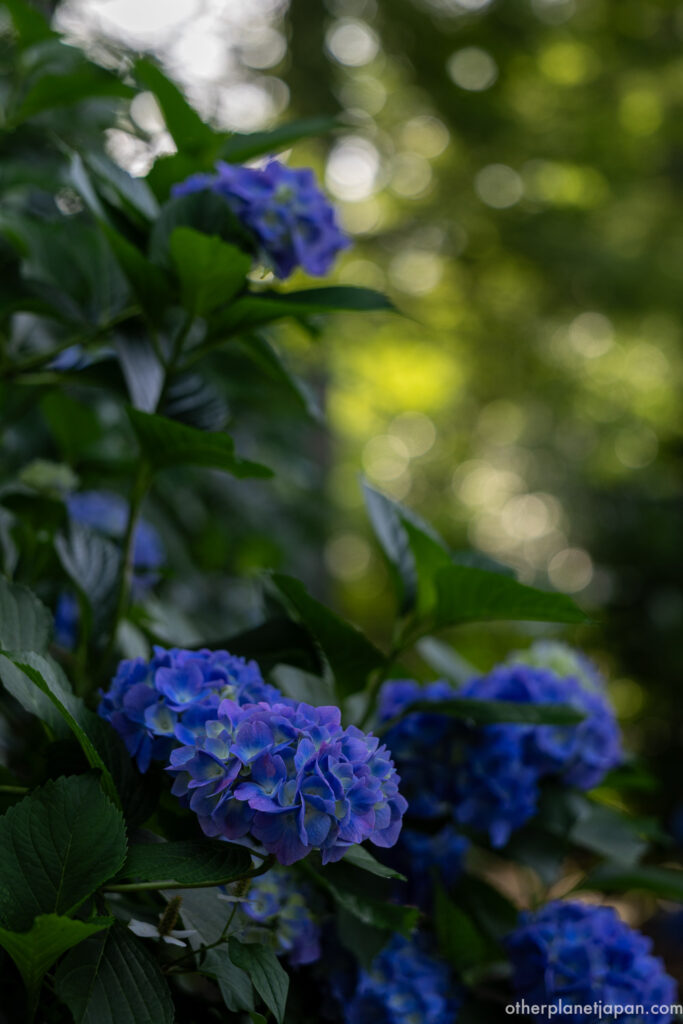
In June, blue and purple hydrangeas open along a small side path on the temple grounds. This isn’t a famous hydrangea destination like Mimuroto-ji in Uji—it’s smaller, less manicured, more like stumbling onto a neighbor’s quiet garden. The intimate scale is the point.


Autumn: Kyoto’s Quiet Maple Sanctuary
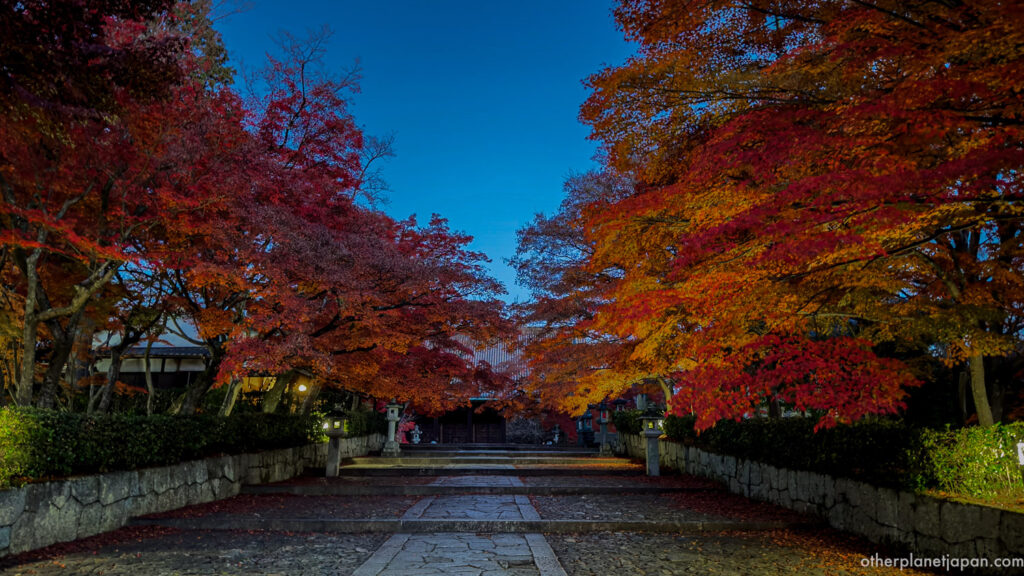
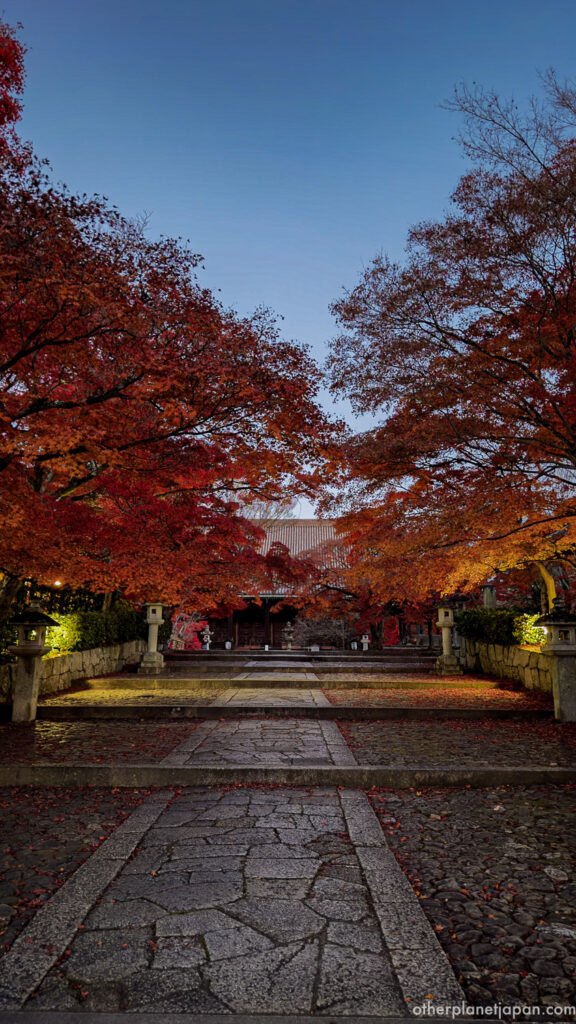
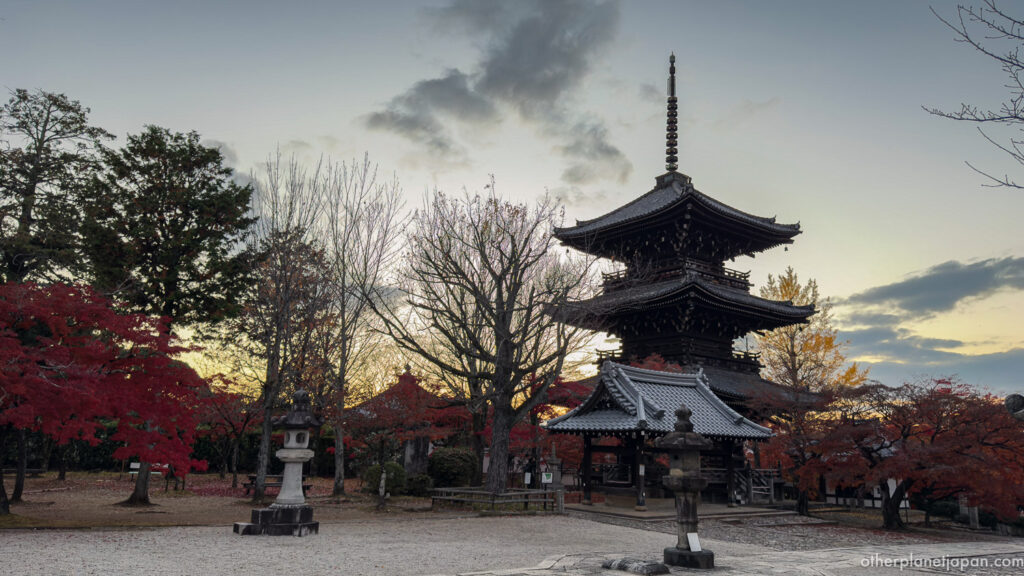
From mid-November to early December, the maples turn. Shinnyodo is one of Kyoto’s recognized maple-viewing temples, but unlike Tofuku-ji or Eikando, it never feels overrun. The trees frame the three-story pagoda at sunset in a way that—I’ll say it—is one of the most photogenic compositions in the city.


One detail worth knowing: the most famous autumn scene at Shinnyodo isn’t the leaves on the trees—it’s the shiki-momiji, the carpet of fallen red leaves that gathers behind the main hall. Local photographers come specifically for this, and it peaks slightly later than the canopy color.
Inside the Main Hall: A Quiet Surprise
Because photography is forbidden inside, I can only describe it in words. When I visited, the hall was nearly empty. A few people sat in silence on the tatami, looking out at the garden. The smell of old wood and faint incense settled into the air. I stayed longer than I had planned.
The garden visible from the hall, called Nehan-no-niwa (“Garden of the Buddha’s Passing”), is a dry-landscape composition that uses Mount Daimonji as borrowed scenery. Even from a single angle on the wooden veranda, it rewards a long, quiet look.

What Makes Shinnyodo Different
Most famous Kyoto temples have been polished into postcard versions of themselves. Shinnyodo hasn’t. The outdoor grounds are free to enter, and they genuinely function as a neighborhood park. On my visit, I watched several locals walking their dogs along the stone path, an older man reading on a bench, and a couple eating konbini onigiri under the maples.
This is not stage-managed atmosphere. It’s a working temple that happens to also be a community green space, and the result is one of the most relaxed environments I’ve encountered at a major Kyoto temple. If you’ve felt over-touristed by Kiyomizudera or Fushimi Inari, Shinnyodo is the antidote.
Walking Distances from Shinnyodo
Shinnyodo is well-placed for combining with other eastern Kyoto highlights. All distances below are on foot:
| Konkai-Komyoji (main hall) | 5 minutes |
| Okazaki Shrine | 10 minutes |
| Eikando | 16 minutes |
| Heian Shrine | 18 minutes |
| Ginkakuji | 20 minutes |
If I had to recommend one short pairing, walk 10 minutes to Okazaki Shrine, known locally as the “rabbit shrine” for its hundreds of rabbit statues. It’s small, charming, and known among Japanese visitors as a destination for safe childbirth and matchmaking blessings. The walk between the two temples passes through a quiet residential neighborhood.
Frequently Asked Questions
How long should I spend at Shinnyodo Temple?
Most visitors spend 30 to 60 minutes. If you’re visiting the paid garden and treasure hall, plan for the full hour.
Can I take photos inside the main hall?
No. Interior photography is strictly forbidden. The temple also bans tripods, monopods, commercial shoots, costume photography, and sketching anywhere on the grounds.
Is the bus stop access difficult?
The closest bus stop, Shinnyodo-mae, sits at the bottom of a steep slope. To avoid the climb, get off at Kinrin Shako-mae instead and walk 8 minutes on a gentler route.
What time does Shinnyodo close?
The main hall closes at 16:00, with last entry at 15:45. The outer grounds, however, remain accessible afterward—useful to know for late-afternoon photography.
Why is Shinnyodo considered a hidden gem?
The shiki-momiji (carpet of fallen red leaves) behind the main hall is genuinely famous among Japanese photographers and maple enthusiasts. But Shinnyodo sits slightly off the main tourist routes, so it stays comparatively quiet even at peak season.
Can I get a goshuin (temple stamp) without paying admission?
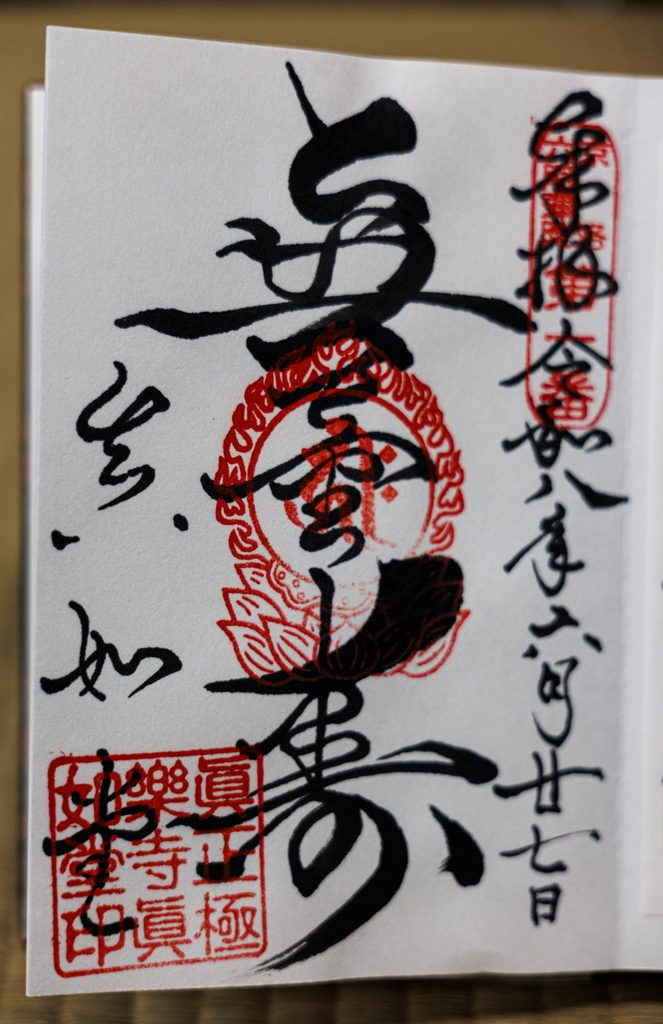
The temple does not offer goshuin separately. You’re expected to pay your respects at the main hall first, then receive the stamp. Entering only the main hall is free; the paid admission is for the inner garden and treasure hall.