The typhoon never came.
The news the night before had warned that trains might stop, and most of Kyoto seems to have believed it and stayed home. The sky that June Saturday turned out clear anyway, and I had the Miedo, the great hall dedicated to the monk Honen, nearly to myself. I am a regular here, the kind who keeps the Konkai Komyoji autumn special opening circled on the calendar, and I had never seen the temple this empty.
“About five people today,” a member of the temple staff told me.
On busy days, he said, around a hundred come through. There are usually monks moving about, and sometimes you can hear sutras. That day there was only the smell of the tatami and the warmth of old wood rising through my socks.
I live in Kansai, and an empty famous temple in Kyoto is a rare thing even for me. I felt oddly grateful to a typhoon that never showed up. The staff member had once worked as a guide, and our conversation drifted from the temple’s history into the small stories tucked into corners of the grounds. It went on for a long time.
Kurodani, the Temple on the Hill
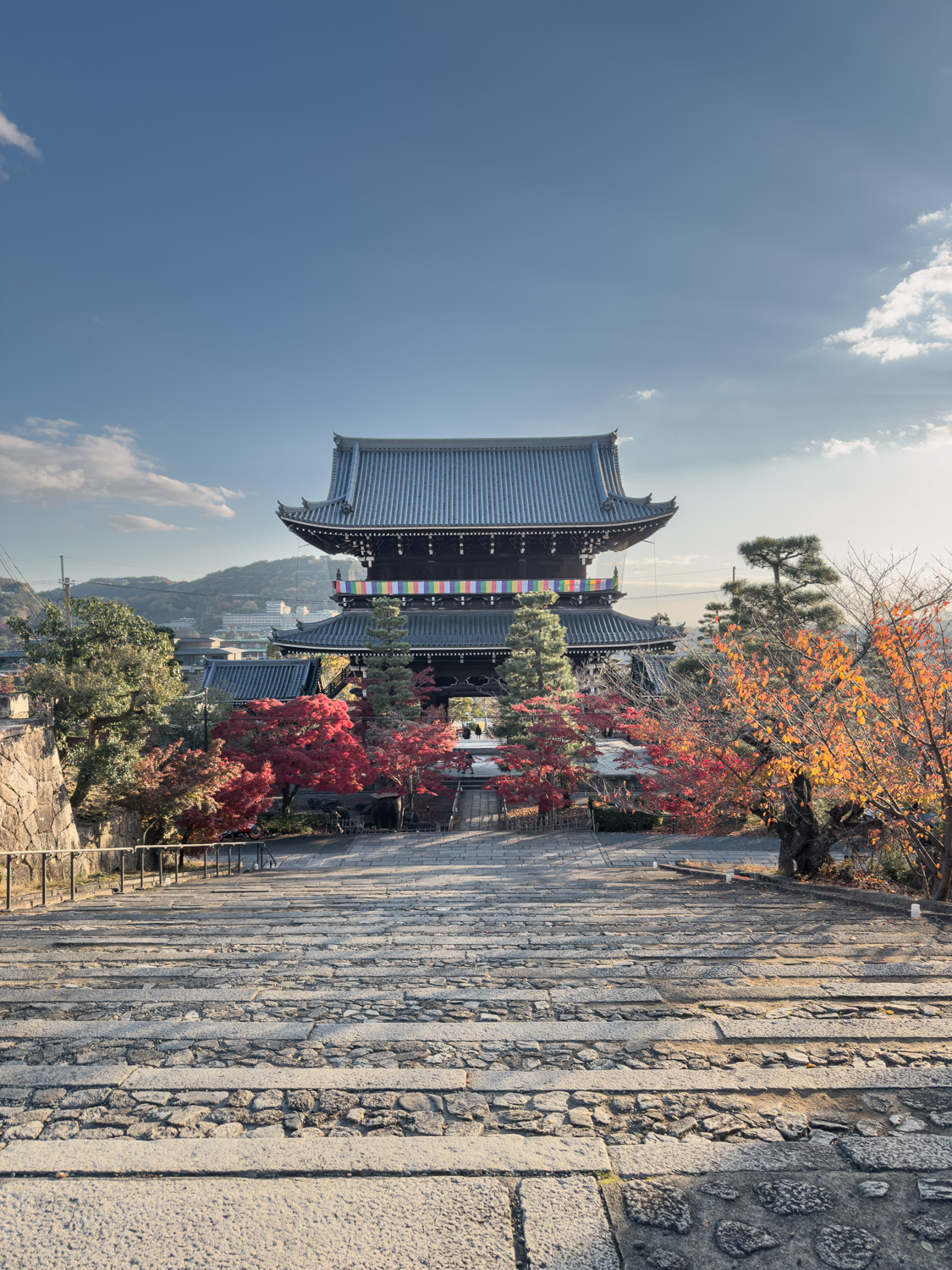
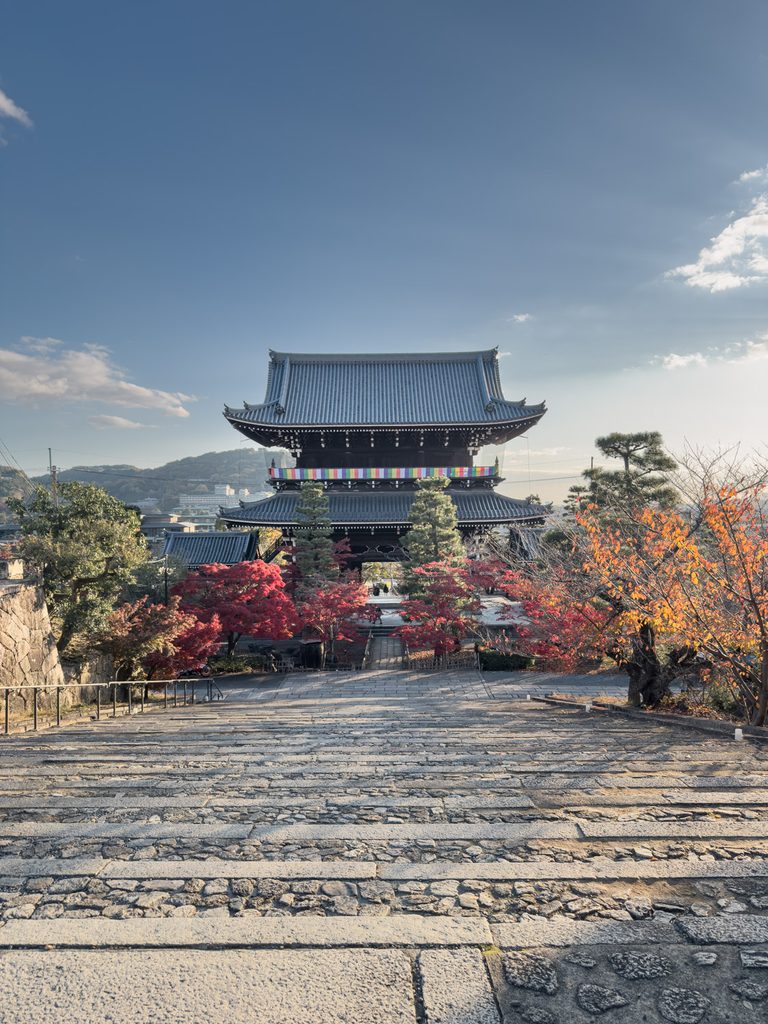
In Kyoto, most people call it Kurodani. Konkai Komyoji is a head temple of the Jodo, or Pure Land, school of Buddhism, and it is said to stand where Honen first chanted the nembutsu, the repeated recitation of Amida Buddha’s name at the center of Pure Land practice. By tradition, that makes it the first temple of the Jodo school. Walk north from the museums and the giant torii of Heian Shrine and the streets begin to tilt uphill. At the top of the stone steps, the city lies spread out below, quiet at that distance.
That height mattered in the 1860s. When Matsudaira Katamori, lord of the Aizu domain, was appointed in 1862 to keep order in an increasingly violent Kyoto, Aizu made this hilltop temple its headquarters. The Shinsengumi, the armed police force that patrolled the city in the last years of the shogunate, operated under Aizu’s authority.
According to the staff member, Shinsengumi fans still make the climb today. I have never met one. Not one. For most Japanese people, the Shinsengumi live somewhere between a history textbook and a TV period drama. Apparently they have fans, the fans have legs, and the legs bring them here.
Now and then a car rolls slowly into the grounds, gravel crackling under its tires, and the sound tells you this is not a temple built for sightseers. Families still come here for memorial services, and a large cemetery spreads across the hillside behind the halls. That explains the stillness of that June day. The temple wasn’t waiting for visitors. It was simply going about its work.
A Buddha With an Afro
The temple’s best-known resident doesn’t live in a hall.
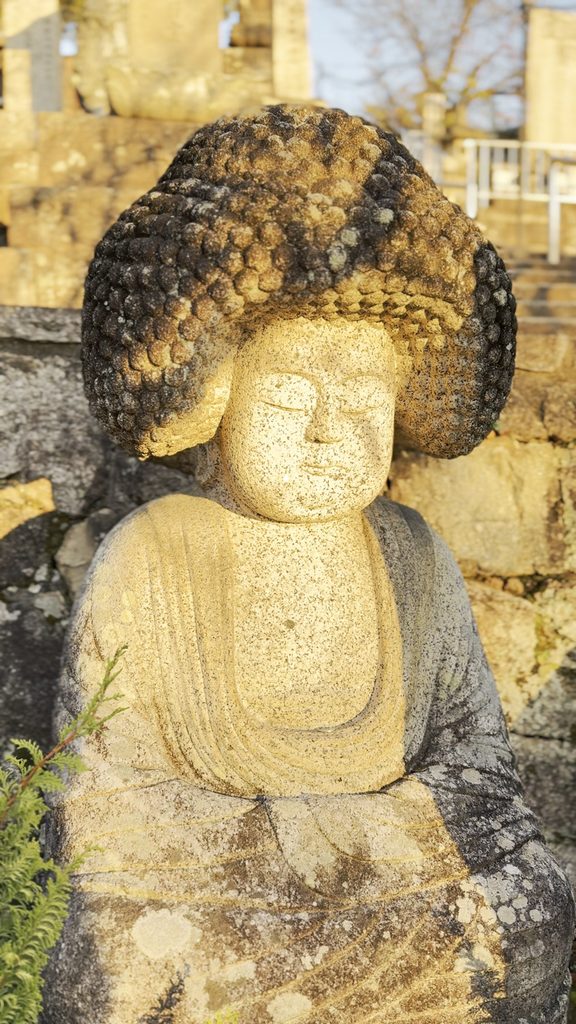
Partway up the stone steps toward the three-story pagoda, a stone Buddha sits under an astonishing mass of hair. His proper name is Goko Shiyui Amida. A kalpa is a span of time too long to picture, and this Amida is said to have spent five of them lost in thought, working out how to save every living being. His hair kept growing the whole time.
Too absorbed to get a haircut. I know that state well. It’s called a deadline.
Somewhere along the way people began calling him the Afro Buddha, and plenty of visitors now climb the steps mainly to see him. The staff member told me something I hadn’t known: the statue isn’t the temple’s property but belongs to a private individual, so the temple can’t simply move it. Five kalpas of contemplation, and he still doesn’t get a say in where he sits.
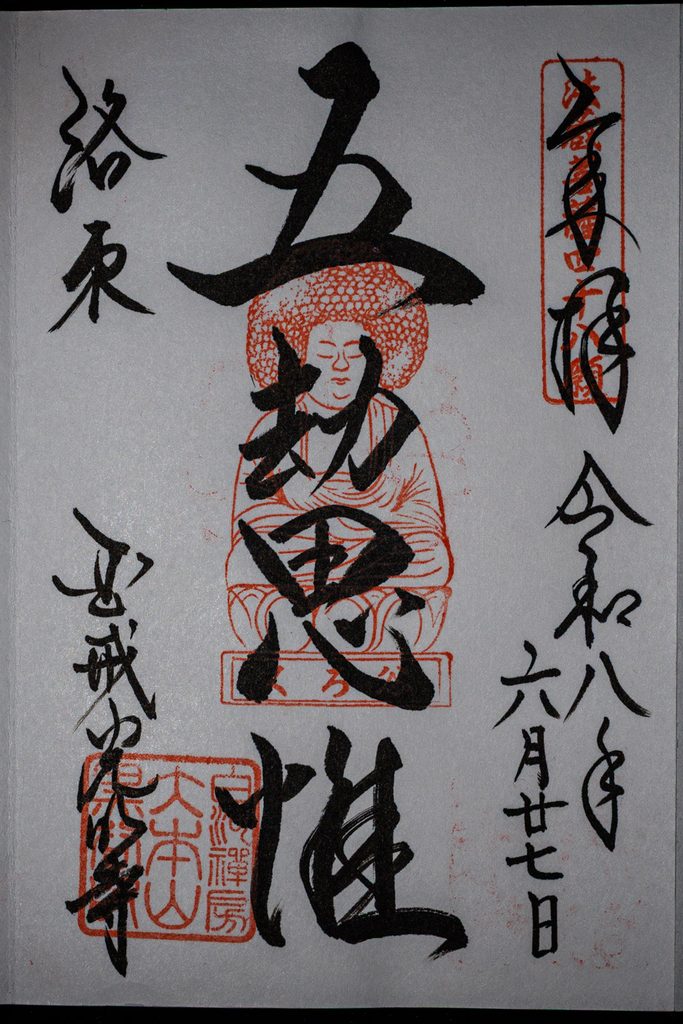
He appears on the temple’s goshuin, too. A vermilion stamp of the statue sits behind four bold black characters that mean “five kalpas of contemplation,” and the brushstrokes run straight through his body. His eyes stay closed. He has been thinking far too long to be bothered by a little ink.
The Sunset Spot, on Hold
The staff member also had news about the three-story Monju Pagoda at the top of the steps, whose surroundings have long been one of the places to watch the sun go down over Kyoto. For now, that view is closed. The pagoda is in the middle of a major restoration, and the notice posted on site puts the work at about five years, running until around December 2030. I went up to see for myself. The sunset will have to wait.
As I was leaving, he added one more thing. “In autumn,” he said, “there’s the special opening.” I already knew. I had stood in that garden the November before with my mouth open. But he was so pleased to tell me that I nodded as if I were hearing it for the first time.
The Doors That Open Only in Autumn
Most of the temple stays shut.
Three places are closed to visitors for most of the year: the Ohojo, the abbot’s great hall; the pond garden called Shiun no Niwa; and the upper floor of the Sanmon gate. The autumn special opening is the only time all three open together, and it falls right in the middle of Kyoto’s autumn leaves season. Last November, I went in.
From the Miedo to the Ohojo
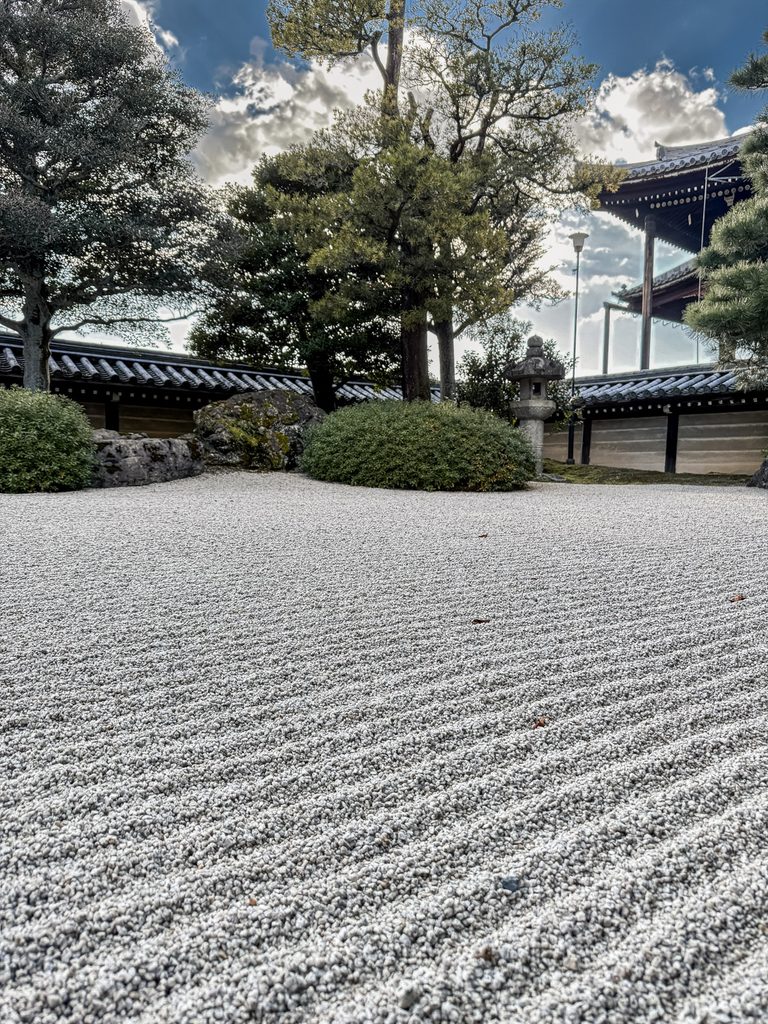
The route begins in the Miedo. From there, a passage leads toward the Ohojo, and on the way a dry garden of white gravel opens up beside you. Raked lines, clipped shrubs, pines, a stone lantern, and beyond the wall the eaves of a great hall. I had been in the Miedo more times than I could count. I had never seen this side of it.
Inside the Ohojo is a room of tigers painted on sliding doors. Open or close the doors and the number of tigers you can see changes. I tried counting them and lost track.
Shiun no Niwa, the Garden of Purple Clouds
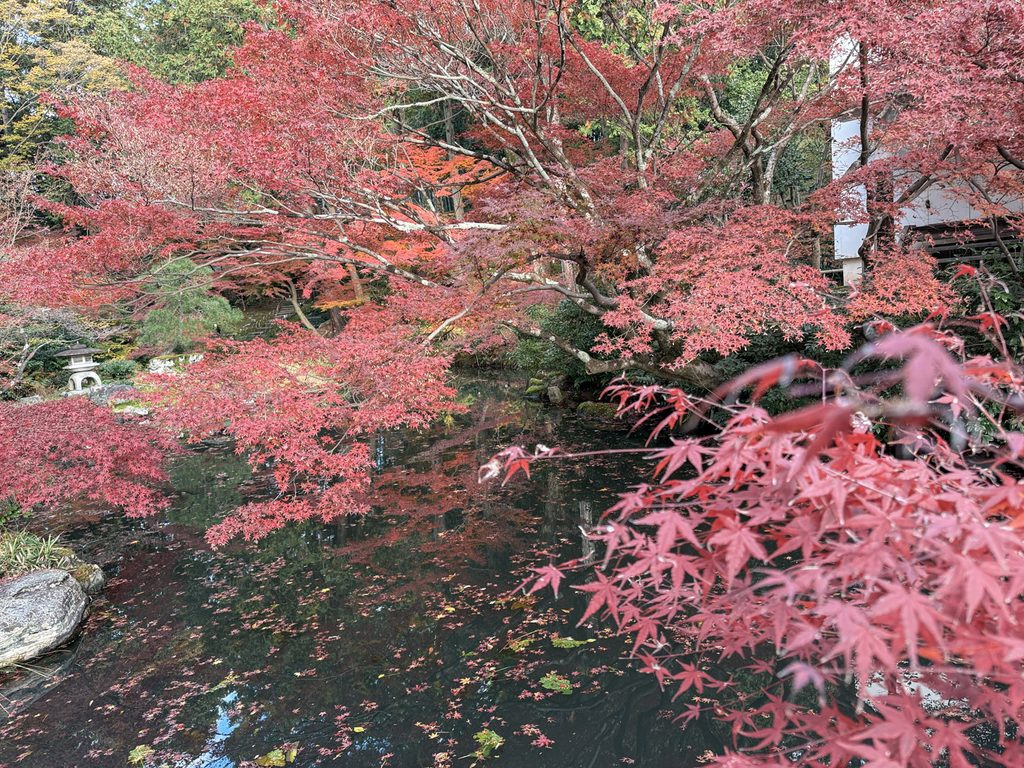
Stepping out of the Ohojo, I stopped in my tracks and honestly wondered where the temple had been hiding this. Shiun no Niwa is a stroll garden laid out around a pond, and the pond holds everything: maples burning red and orange overhead, the blue of the sky, the black lines of branches. Near the water, a shishi-odoshi, a bamboo tube that slowly fills, tips, and knocks against stone, marks the quiet with a hollow clack. In Pure Land Buddhism, purple clouds announce Amida Buddha coming to welcome the faithful. Maybe it was the leaves doing the work. Still, I had walked these grounds many times and never once sensed that a garden like this was waiting behind the buildings.
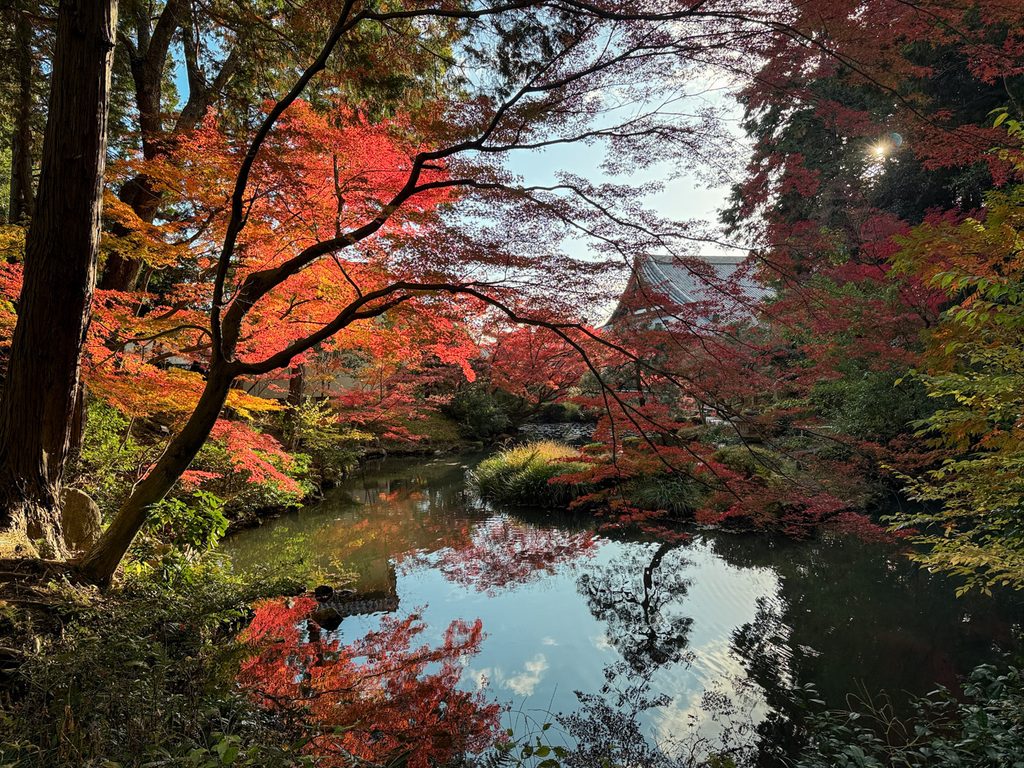
That year, 2025, the color seemed deepest to me around November 28. Leaves follow each year’s temperatures, though, so take that as one year’s reading, not a forecast.
Up Into the Sanmon Gate
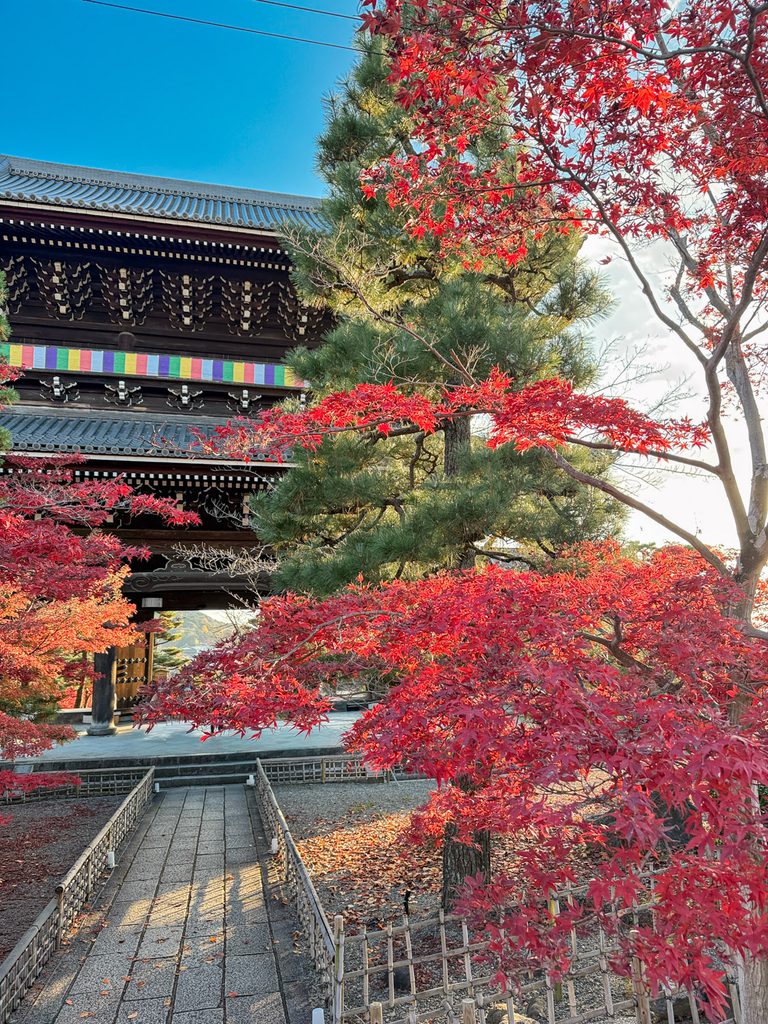
The other thing the autumn opening unlocks is the Sanmon. Kyoto has a number of great temple gates, but the chances to actually climb one are limited. At Konkai Komyoji, the upper floor of the Sanmon opens only during the daytime hours of the autumn special opening. The stairs are steep. At the top is a dim room where Buddhist statues sit in a row, and photography inside is not allowed. You may photograph the view toward the main hall, but a net is stretched across the outside, so every shot comes out through the mesh.
I put the phone away and simply looked, which I should do more often. The rooftops of Kyoto run all the way out to the mountains. On a clear day, according to the temple, you can pick out Abeno Harukas, the skyscraper in Osaka.
Kurodani After Dark: The Night Illumination
Autumn belongs to the evening.
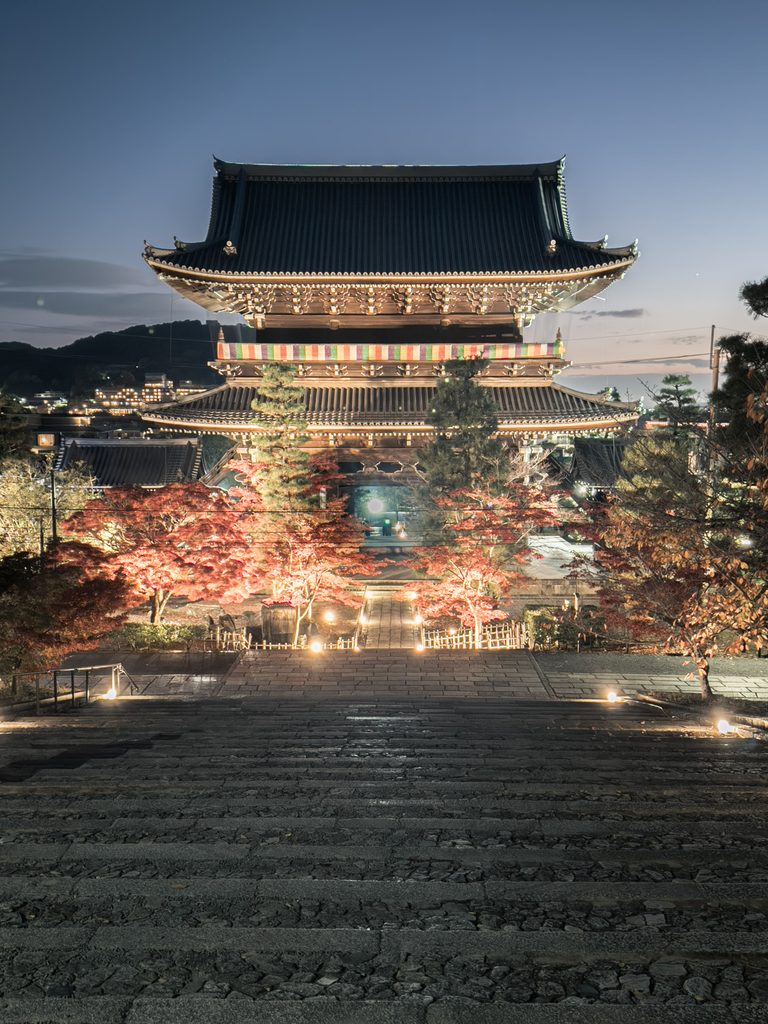
Sei Shonagon said so in The Pillow Book about a thousand years ago, and the temple still promotes itself as a place for autumn dusk. Arrive a little before the evening opening and stand at the top of the stone steps in front of the Sanmon. The sky over the city shifts color slowly. Then the lights come on.
At night, the Miedo, the Sanmon, the bell tower, and the approach are all lit. The thing to see is the garden again: the maples of Shiun no Niwa reflected upside down in the black water, the same pond you may have walked past that afternoon, now black and mirrored. Three times each night, musicians play the koto and the shinobue bamboo flute inside the Miedo. The hall also houses the Kibi Kannon and a statue of Monju Bosatsu, both designated Important Cultural Properties.
The sub-temple Eishoin also opens in the evening. Its polished floor mirrors the lit maples outside, and you are allowed to photograph the reflections.
In June, the temple had five visitors and one talkative former guide. On a late-November night, the steps fill up after dark. I like Kurodani both ways, but only one of them comes with the garden.
The details below come from the temple’s announcement as of September 2026, along with notes from my own visits.
Konkai Komyoji Autumn Special Opening 2026: Dates, Hours, and Fees
Details can change, so check the temple’s official special opening page before you go.
| Dates | November 13 (Fri) to December 6 (Sun), 2026 |
| Reservations | Not needed for regular day or night visits |
| Payment | Cash only |
| Monju Pagoda | Under restoration until around December 2030; no sunset viewing |
Daytime Viewing
| Hours | 10:00 to 16:30 (last entry 16:00) |
| Reception | In front of the Miedo |
| Open areas | Miedo, Ohojo, and garden; Sanmon gate upper floor |
| Time needed | About 60 minutes; about 90 minutes including the Sanmon |
| Goshuin | 9:00 to 16:00, inside the Miedo. Six regular designs at ¥500 each (five written directly in your goshuin book, one pre-written sheet), plus a special pre-written sheet at ¥1,000, available year-round |
| Daytime admission | Adults | Elementary students |
|---|---|---|
| Miedo, Ohojo, and garden | ¥1,000 | ¥500 |
| Sanmon gate | ¥1,000 | ¥500 |
| Combination ticket (all areas) | ¥1,600 | ¥800 |
Groups of 15 or more pay ¥900 per adult and ¥450 per elementary student for each individual area.
Night Viewing
| Hours | 17:30 to 20:30 (last entry 20:00) |
| Reception | Tent in front of the Miedo |
| Open areas | Miedo, Ohojo, and garden; Eishoin (the Sanmon is closed at night) |
| Goshuin | Pre-written sheets only, at the reception inside the Miedo |
| Night admission | Adults | Elementary students |
|---|---|---|
| Miedo, Ohojo, and Shiun no Niwa | ¥1,000 | ¥500 |
| Eishoin | ¥800 | ¥400 |
| Combination ticket (all areas) | ¥1,600 | ¥800 |
Premium Viewing (Advance Booking Required)
On Fridays and Saturdays during the opening period, a group capped at 30 people gets in 30 minutes before the regular evening crowd, with commentary from craftsmen of the landscape firm that tends the garden. Entry starts at 17:00 (reception from 16:30) and costs ¥2,000 for adults and ¥1,500 for elementary students, paid in cash on the day. The route runs through the Miedo, the Ohojo, and the garden before free viewing. Bookings are made through the temple’s website, and the booking page was expected to open around October. The temple’s announcement does not mention commentary in English.
During the same period, the temple also runs guided walking tours on the Bakumatsu era, the Aizu domain, and the Shinsengumi. The draw is access to the audience room where Shinsengumi leaders Kondo Isami and Hijikata Toshizo once set foot. Dates and details are on the official page.
Day or Night?
Go twice if you can.
The Sanmon’s upper floor opens only in daylight, and the garden’s colors are easiest to appreciate in natural light. My plan would be the daytime viewing in the late afternoon, a slow wander near the Sanmon as dusk falls, and a second entry once the lights are on. You pay twice, and you see the garden in two lights in a single day.
If you can manage only one evening and it falls on a Friday or Saturday, book the Premium Viewing. You are in the garden half an hour before everyone else, guided by the people who actually tend it, and at the peak of the season, thirty quiet minutes in that garden are worth more than the price of the ticket. The temple has not mentioned English commentary, so think of it as early access rather than a lecture.
For the daytime viewing, a weekday morning right at opening is the calmest option.
Getting There
| From Kyoto Station | City Bus 5 to Higashi-Tennocho, then about 10 minutes on foot |
| City Bus 32, 203, or 204 | To Okazaki-michi, then about 10 minutes on foot |
| Subway | Keage Station on the Tozai Line, then about 30 minutes on foot |
| Taxi | Taxis can drive up into the temple grounds |