Planning a visit? Jump to How to Visit Sento Imperial Palace for booking, same-day tickets, and access.
The first thing I noticed at Sento Imperial Palace wasn’t a maple. It was a young Western couple at the entrance, leaning in to talk with the staff. No reservation, I guessed. They were probably asking whether anyone had canceled.
I had booked in August, timing it for the leaves. November 30 was three months away, and I had no real basis for choosing it; I simply guessed at the peak. It turned out to be one of the most beautiful days of the year. I would love to call that strategy. It was luck.
I had been here once before, out of season, and left with a quiet promise to come back when the leaves turned. Sento Gosho, as the palace is called in Japanese, sits inside Kyoto Gyoen, the great park in the center of the city that is also home to the Kyoto Imperial Palace. The park is open to anyone who walks in. This garden is not.
A Garden You Don’t Get to Wander
Nobody walks this garden alone. Every visitor follows a guide.
The name hints at its past. Sento originally meant the secluded home of mountain immortals, far from the noise of the world, and came to mean the residence of an emperor who had given up the throne. This one was built in the early 17th century for the retired Emperor Go-Mizunoo. Fire took its buildings again and again, and after a great fire in 1854, most of them were never rebuilt. The garden is what remained.
The tour starts at the Kyoto Omiya Palace, which stands on the same grounds. Its main residence, the Otsunegoten, is still where the Emperor and Empress, the Emperor Emeritus and Empress Emerita, and Crown Prince and Crown Princess Akishino stay when they visit Kyoto. We saw it only from the outside.
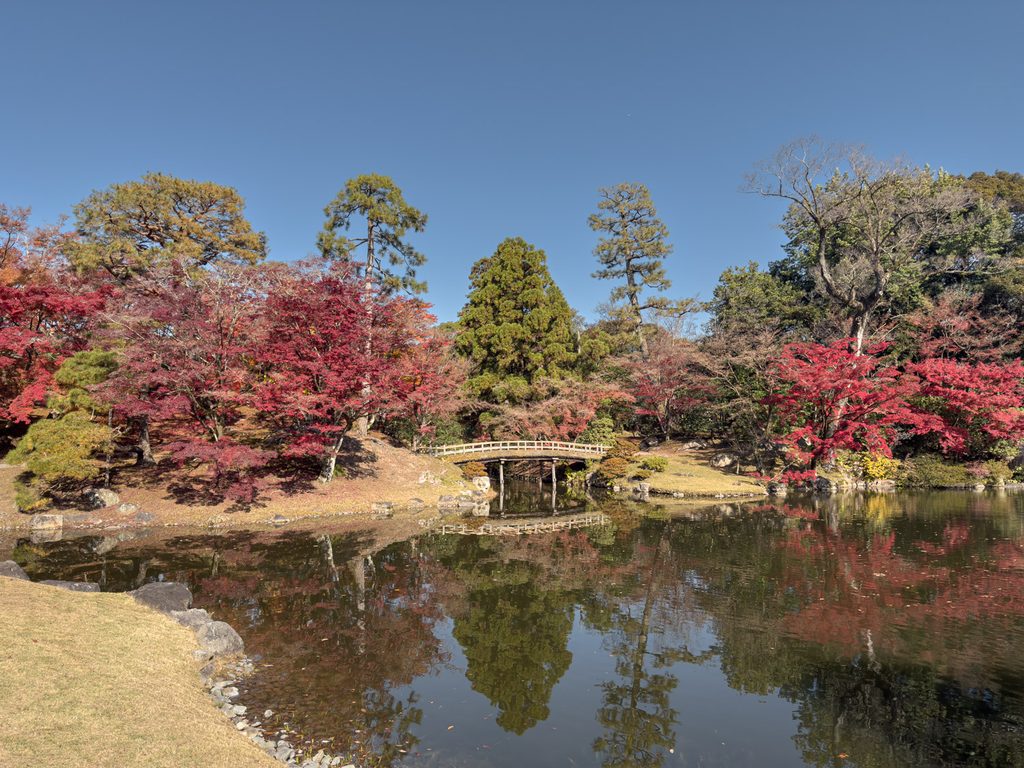
Near it, the guide stopped beside a pine, a stand of bamboo, and a plum tree: sho-chiku-bai, Japan’s trio of good fortune. If you’ve ever ordered a bottle of Sho Chiku Bai sake at an American sushi bar, you’ve already met them. Past them, the garden opened up, so thick with trees and water that I felt I’d wandered out of Kyoto altogether.
The Tail of the Tour
There were plenty of us. The group stretched out faster than I expected, and within a few stops it looked something like a comet: the guide’s voice at the head, a long tail of cameras behind, well out of earshot.
For many of us, the photographs had quietly become more important than the explanations. I was one of them. Each time the guide turned around to find half the audience missing, I felt a small pang of guilt. Then I took another picture.
At the very back walked an officer of the Imperial Guard. He never said a word to any of us. At Katsura Imperial Villa, which I’ve visited several times, officers of the same Imperial Guard are firm about one thing: do not step on the moss. Not because you might slip. Because you might damage the moss. At Katsura, the moss outranks the visitor. At Sento, there was no moss along the path, which may explain why the officer here had nothing to say to the stragglers.
Sunrise Yellow, Sunset Orange
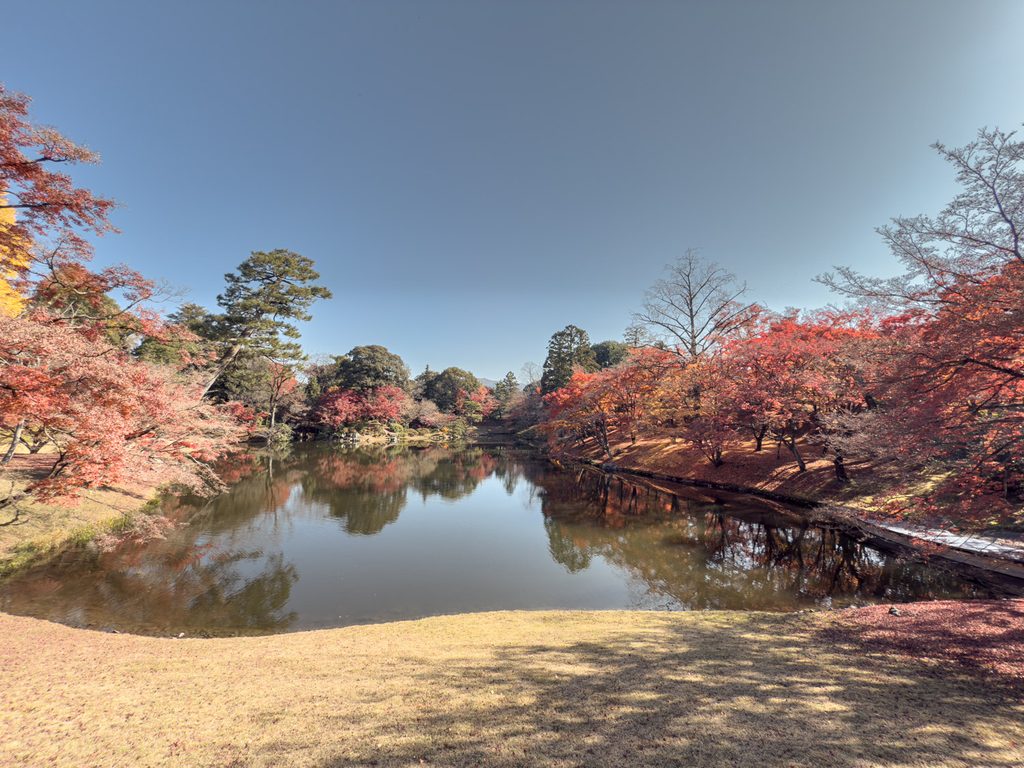
The day was unseasonably warm. Warm enough to make me sweat, and this was the last day of November. The sky was a hard, clean blue.
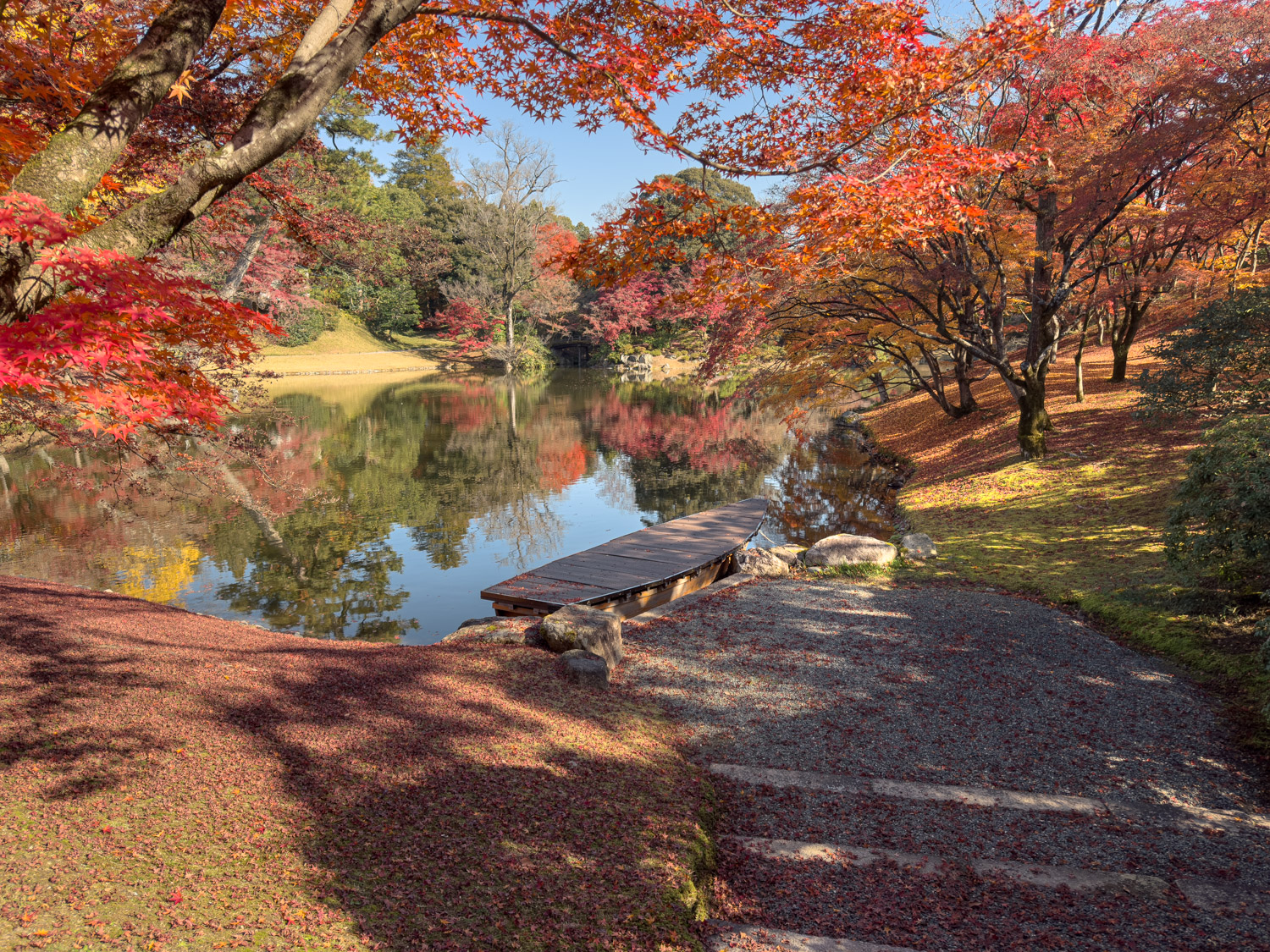
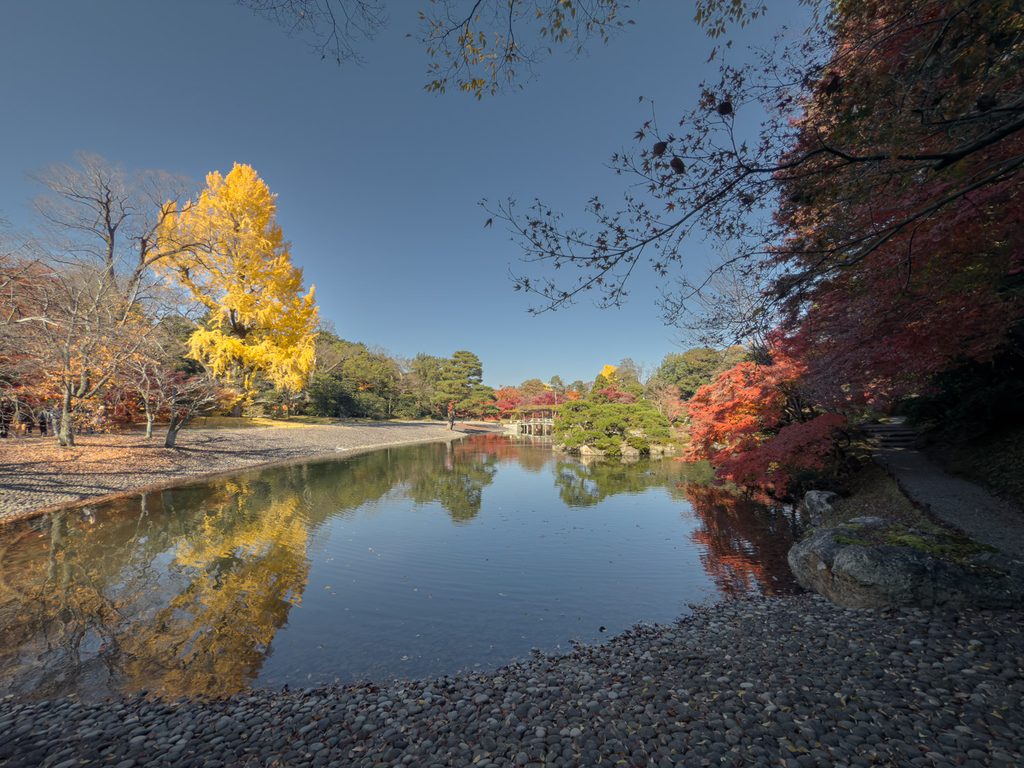
The maples had not agreed on a single color. Some leaves held the pale yellow of a sun just clearing the hills; others had deepened to the orange that same sun turns at dusk, and here and there a tree had gone all the way to red. Above them, the ginkgo was pure yellow.
The gravel crunched dry underfoot, and my footsteps didn’t quite sound like my own. Kyoto has no skyscrapers, so the city never feels truly urban. Still, it was hard to believe that a place this quiet sat just inside these walls, a few minutes’ walk from ordinary traffic.
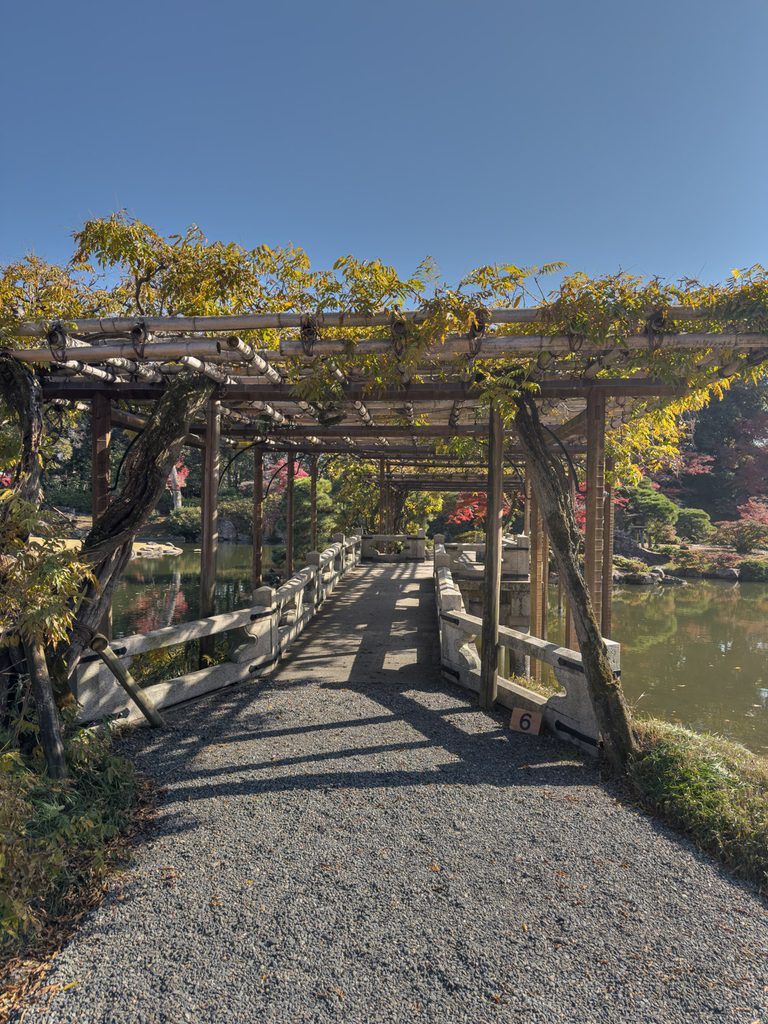
On the South Pond, a granite bridge runs from the western shore to an island, changing direction as it goes, under a long wisteria trellis. It’s called Yatsuhashi, a zigzag plank bridge named after an episode in The Tales of Ise, the Heian-era classic. In it, a traveling courtier, traditionally identified as the poet Ariwara no Narihira, stops at such a bridge among blooming irises and writes a poem that hides the flower’s name, kakitsubata, in the first syllable of each line. On my visit, the trellis leaves had gone the color of old gold.
Every stone on the next stretch of shore, the story goes, cost a measure of rice. The porters who carried them were promised one sho, roughly three pounds of rice, per stone, and they are still called isshoishi, “one-sho stones.” There are about 111,000 of them, smooth and slightly flattened, each four to six inches across, sloping from the west and south banks into the water like a beach. They came from the coast near present-day Yugawara, south of Tokyo, gathered on the orders of the local lord when the palace was renovated in the early 19th century. That afternoon, the ginkgo’s reflection lay right beside them.
Listen, Snap, Move On
Listen to the guide. Take a photograph. Move on. Repeat. It took us fifty minutes to complete a single loop of the garden. That’s how you walk Sento.
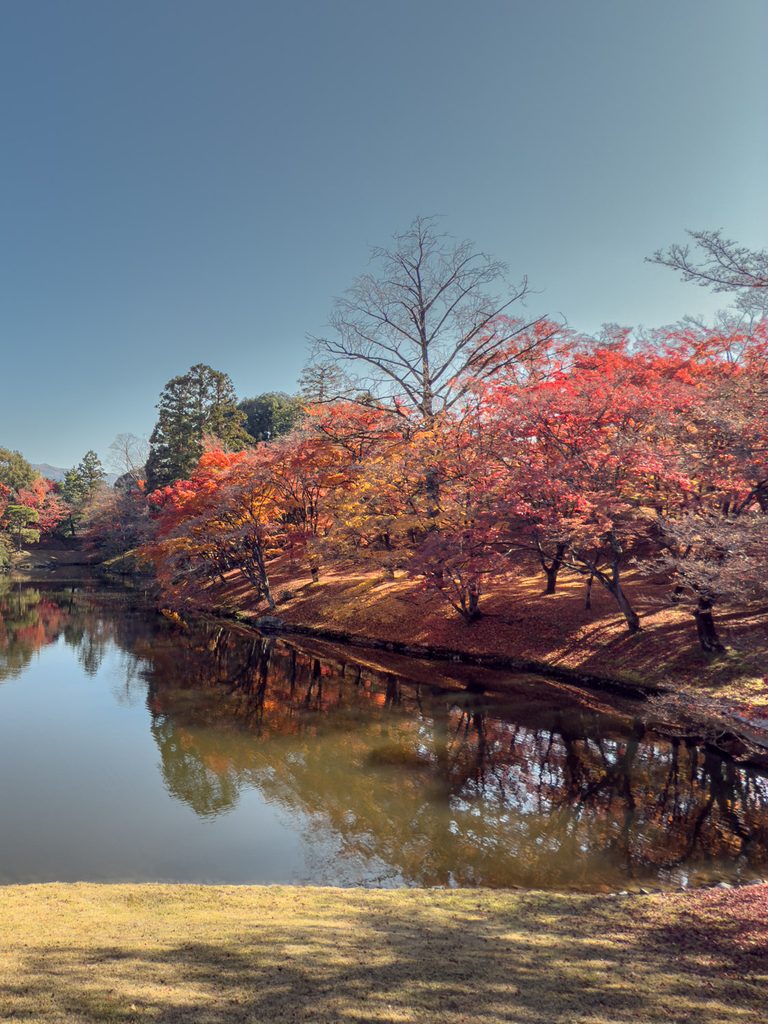
The garden was first laid out by Kobori Enshu, the early Edo-period tea master known for his architecture and garden design. Later renovations reshaped it, enlarging the North and South ponds and joining them with a channel. Knowing how much planning had gone into every curve of the shore, I kept waiting for the garden to look designed, and it never quite did.
I’ll admit that the deeper ideas, wabi and sabi and the rest of the vocabulary of Japanese aesthetics, stayed just out of reach, even with the guide’s help. Without the explanations, though, I would have walked past a pond and some trees and never suspected there was anything more to see.
The Couple at the Gate
Then, right at the hour mark, it was over. No ceremony, no goodbye. We simply drifted back out into the afternoon.
On my way out, I thought about the couple at the gate. If they had made it inside, they probably caught things I walked right past, and they may be telling people about Sento better than I ever will.
Had they gotten in?
How to Visit Sento Imperial Palace
Admission is free, but you can only enter the garden at a set time, with a staff guide, after booking through the Imperial Household Agency or picking up a same-day ticket. The details below come from the agency’s official guidelines and my own visit. Rules can change, so check the Imperial Household Agency’s visit guidelines for Sento Imperial Palace before you go.
| Admission | Free |
| Format | Guided garden tour only, about 60 minutes; no building interiors |
| Tour times | 9:30 a.m., 11:00 a.m., 1:30 p.m., 2:30 p.m., 3:30 p.m. (mainly 9:30, 11:00, and 3:30 in July and August) |
| Language | Japanese; free audio guides in English, Chinese, French, Korean, and Spanish (limited number) |
| Age | 18 and older only |
| ID | Required for every visitor (passport for overseas travelers) |
| Route | About 1 km (0.6 mile) with uneven footing |
| Closed | Mondays (the following day if Monday is a holiday), December 28 to January 4, and days with official events |
Booking Your Sento Imperial Palace Tour Online
Online applications open at 5:00 a.m. Japan time on the first day of the month, three months before the month you want to visit, and close at 11:59 p.m. three days before your tour. For a November 10 visit, for example, you can apply from August 1 through November 7. The booking page shows how many spots remain in each time slot, and confirmation arrives by email, usually within three business days.
Applications are handled in the order they arrive. Only when more requests come in on the same day than there are spots does the agency draw lots. Each tour takes 50 advance bookings, and autumn slots can fill quickly. I booked in August for November 30 and got my slot easily, but I wouldn’t leave a late-November date until the last week.
Same-Day Tickets
Starting at 8:40 a.m., staff at the palace hand out a limited number of numbered same-day tickets for specific tour times, first come, first served, until they run out. The daily allotment is 50, about 10 per tour, plus any advance spots that go unused, and the agency posts the count on its website. The person collecting the tickets must show ID. If you’re hoping for a late-November slot this way, arrive close to opening.
On the Tour
The route covers about a kilometer of gravel paths, stepping stones, large steps, and narrow stone bridges without handrails. I spent much of that hour looking through a camera, and I’d suggest keeping one eye on your feet if you do the same. Wear comfortable walking shoes, and bring a layer you can take off; my late-November afternoon felt closer to early fall. If you want to hear the explanations, stay near the front of the group.
When to See the Autumn Leaves
Foliage in Kyoto usually peaks from late November into early December, and the timing shifts from year to year. On November 30, the maples were near their best and the ginkgo was in full color. Because you book up to three months ahead, any date is an educated guess. The final week of November is a reasonable starting point for planning, but no calendar can guarantee the peak.
Getting There
The palace sits in the southeastern part of Kyoto Gyoen. From Marutamachi Station on the Karasuma subway line, it’s about a 15-minute walk from Exit 1. By city bus, get off at Furitsu Idai Byoin-mae and walk about 10 minutes. Kyoto Gyoen is large, so leave extra time to find the entrance before your tour.