I got to Nanzenji a little after six in the morning. It was late November, the height of the Nanzenji Temple autumn season, and I expected to have the place to myself. I didn’t. A handful of people were already crossing the gravel, and none of them looked surprised to see me either.
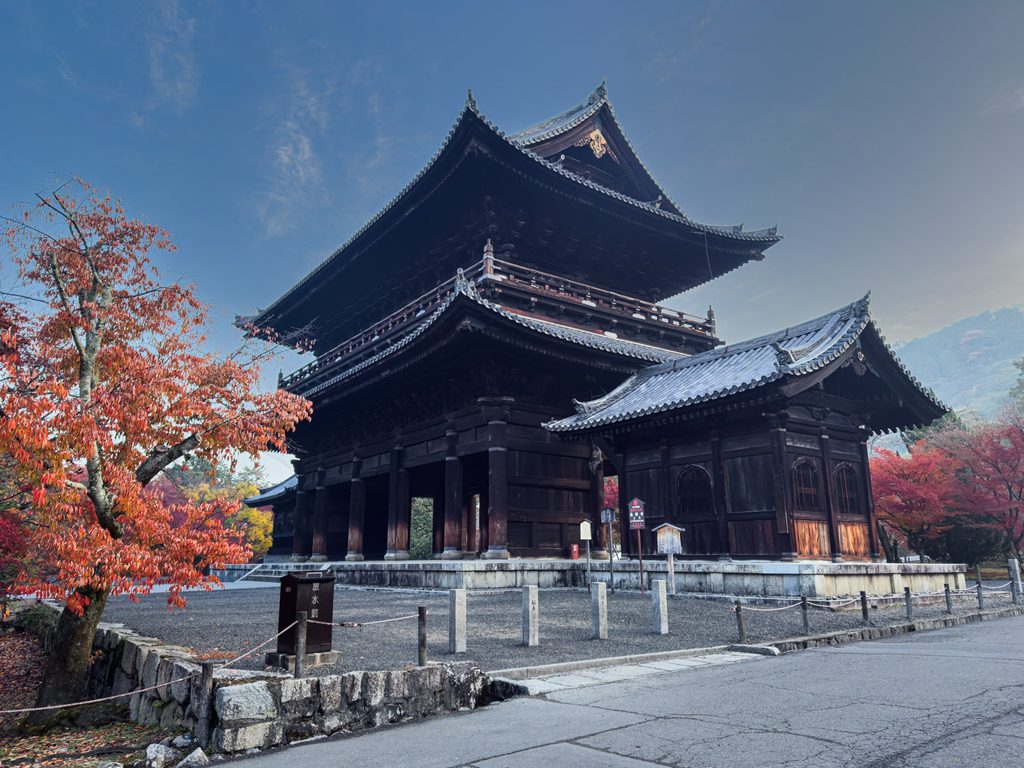
I had come for the Sanmon, the temple’s great wooden gate. In Japan it is famous for a quote from a kabuki thief who, in fact, never stood on it. The upper floor would not open until 8:40, but the grounds were already open. That left me two hours and forty minutes. I prayed. I took photos. I prayed again. I still had time to spare.
Not Enough Smoke
Someone had beaten me to the Dharma Hall.
In front of the Hatto, as the hall is called, incense was already burning at a few minutes past six. A thin ribbon of smoke drifted across the courtyard.
At Japanese temples, people wave incense smoke toward themselves, over the head for a clearer mind, or over a sore shoulder or knee in the hope that it will ease. It is part prayer, part custom. This morning, though, there was not enough smoke to go around. Someone had come early, lit a few sticks, and left. I got nothing.
A Brick Aqueduct in a Zen Temple
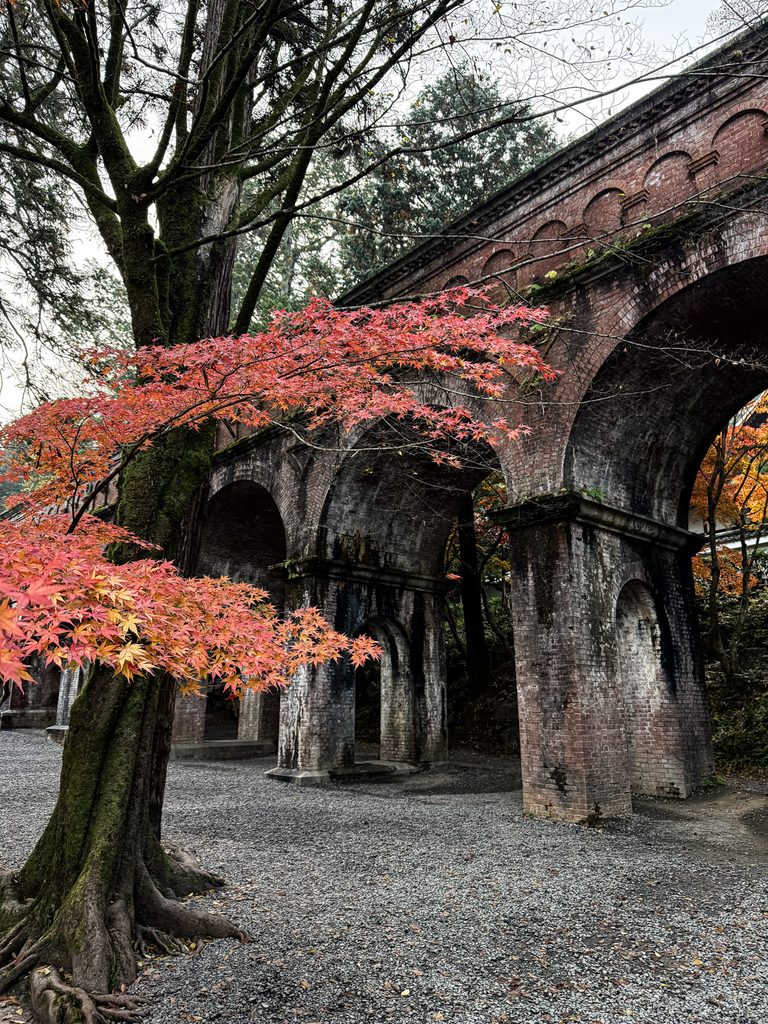
Just past the Hatto, a row of red brick arches cuts across the temple grounds. This is the Suirokaku Aqueduct, part of the Lake Biwa Canal, which brought water from Japan’s largest lake into Kyoto in the Meiji era. It was finished in 1890, and water still runs along the top.
To me, this is the strange part. Kyoto’s temples are mostly wood, earth, paper, and stone. Brick belongs to the Meiji era, to banks, railway stations, and a country hurrying to catch up with the West. At Nanzenji, that hurry runs straight through a Zen precinct, and more than a century later the moss has grown over the brick as if it had always been here.
No One at Saishoin, and Not a Single Leaf on the Path
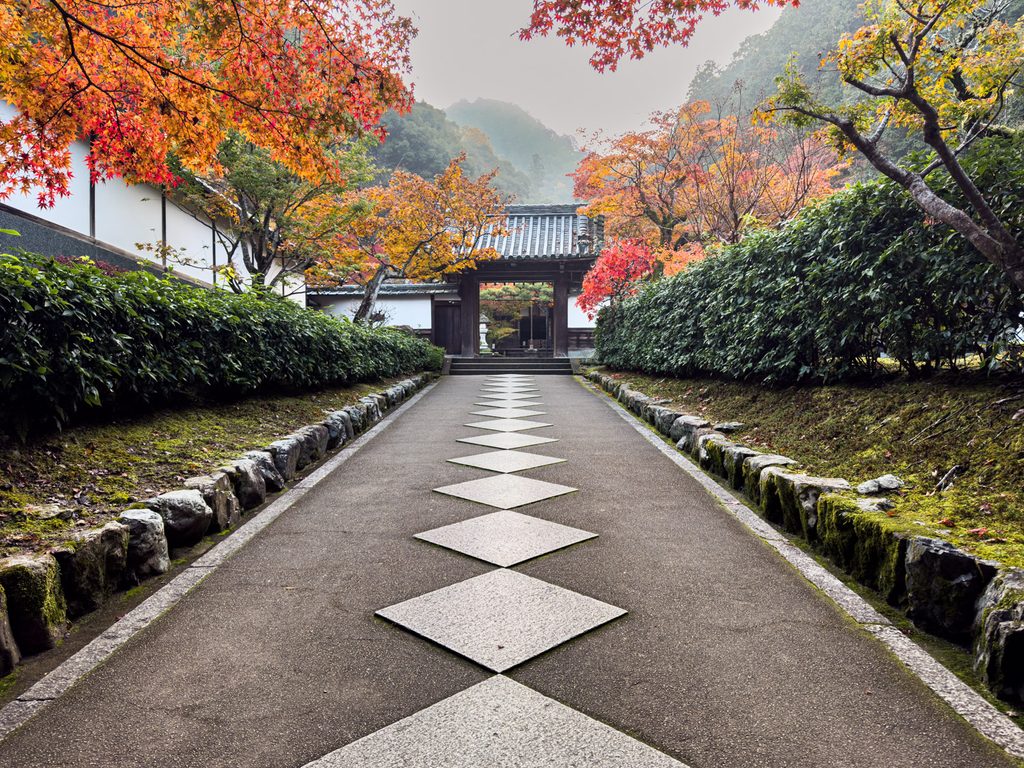
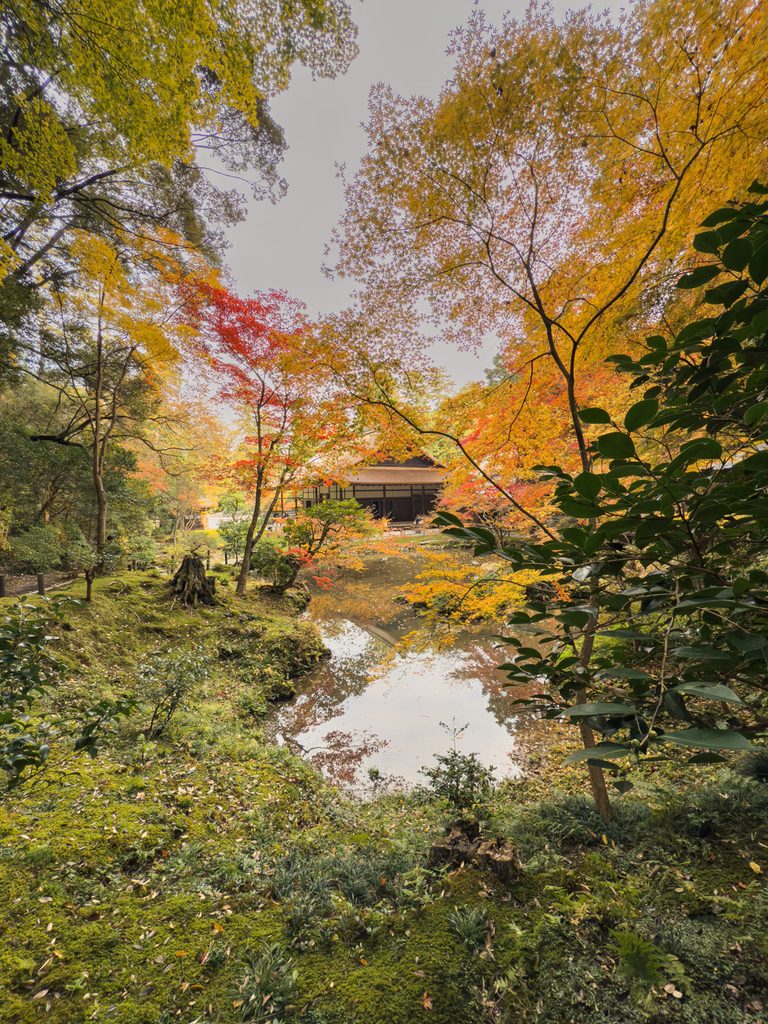
Beyond the aqueduct, on the hillside, sits a small temple called Saishoin. It is Nanzenji’s okunoin, its inner temple, and it takes no effort to find. The maples here are just as vivid as the ones below.
Every time I come up, I ask myself the same question. Where is everyone? The crowd at the Sanmon Gate is a short walk downhill, and almost none of it makes the climb.
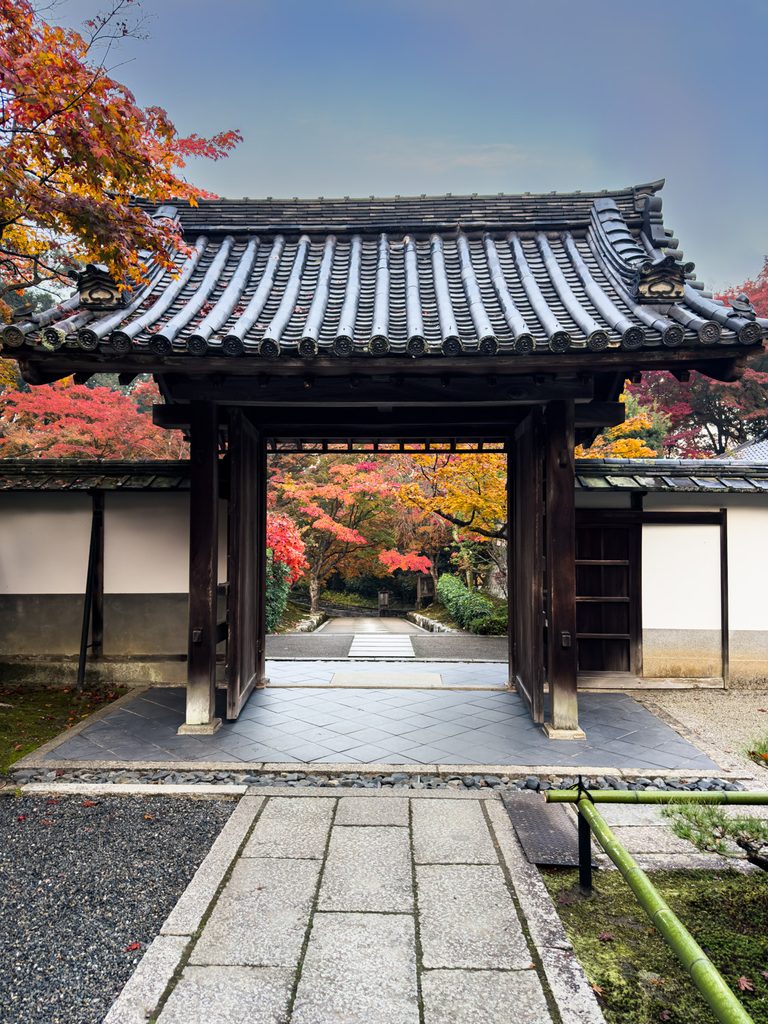
And yet, a little after six in the morning, there was not one fallen leaf on the path. Diamond-shaped paving stones ran in a straight line to the gate, and the red and orange stayed at the edges. Somebody had swept it, and not long before. I have no idea who does it, or when. In all my visits, I have never once seen them.
From inside, the gate frames the maples like a picture.
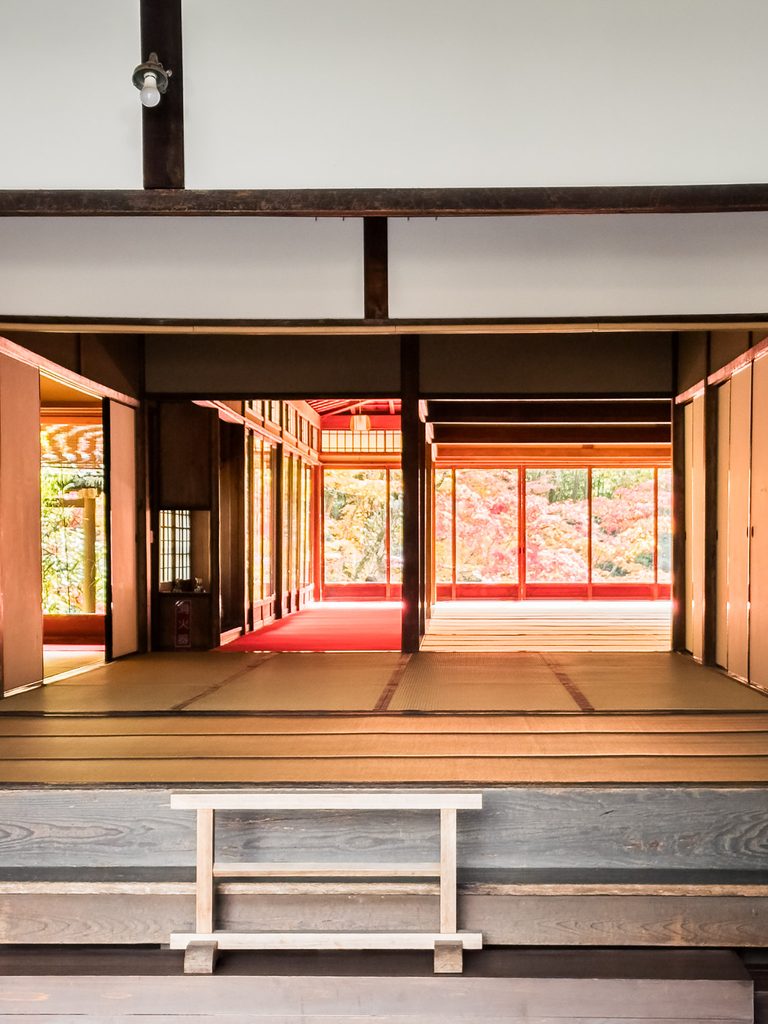
Inside the hall, the same colors fill the glass doors.
Komagataki, a Training Waterfall Still in Use
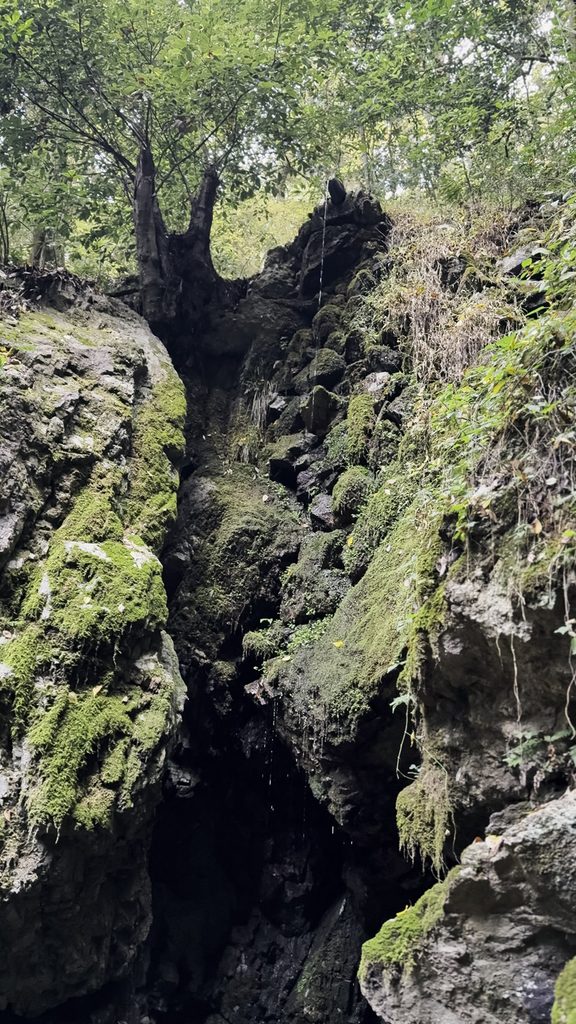
Past Saishoin, farther up the hill, is Komagataki, a waterfall used for takigyo, the ascetic practice of standing beneath falling water. I have never seen anyone training here. But there are notices posted about waterfall practice, which tells you the falls are still in use. A short walk from the busiest gate in the temple, someone, it seems, still comes to stand beneath the falls on purpose.
8:40 a.m., Up the Sanmon Gate
At 8:40, the gate opened.
Getting to the top of the Sanmon means climbing a very steep wooden staircase. A rope runs alongside it, and when I take hold of that rope, I always think the same thing: I’m back. My hand remembers it before I do.
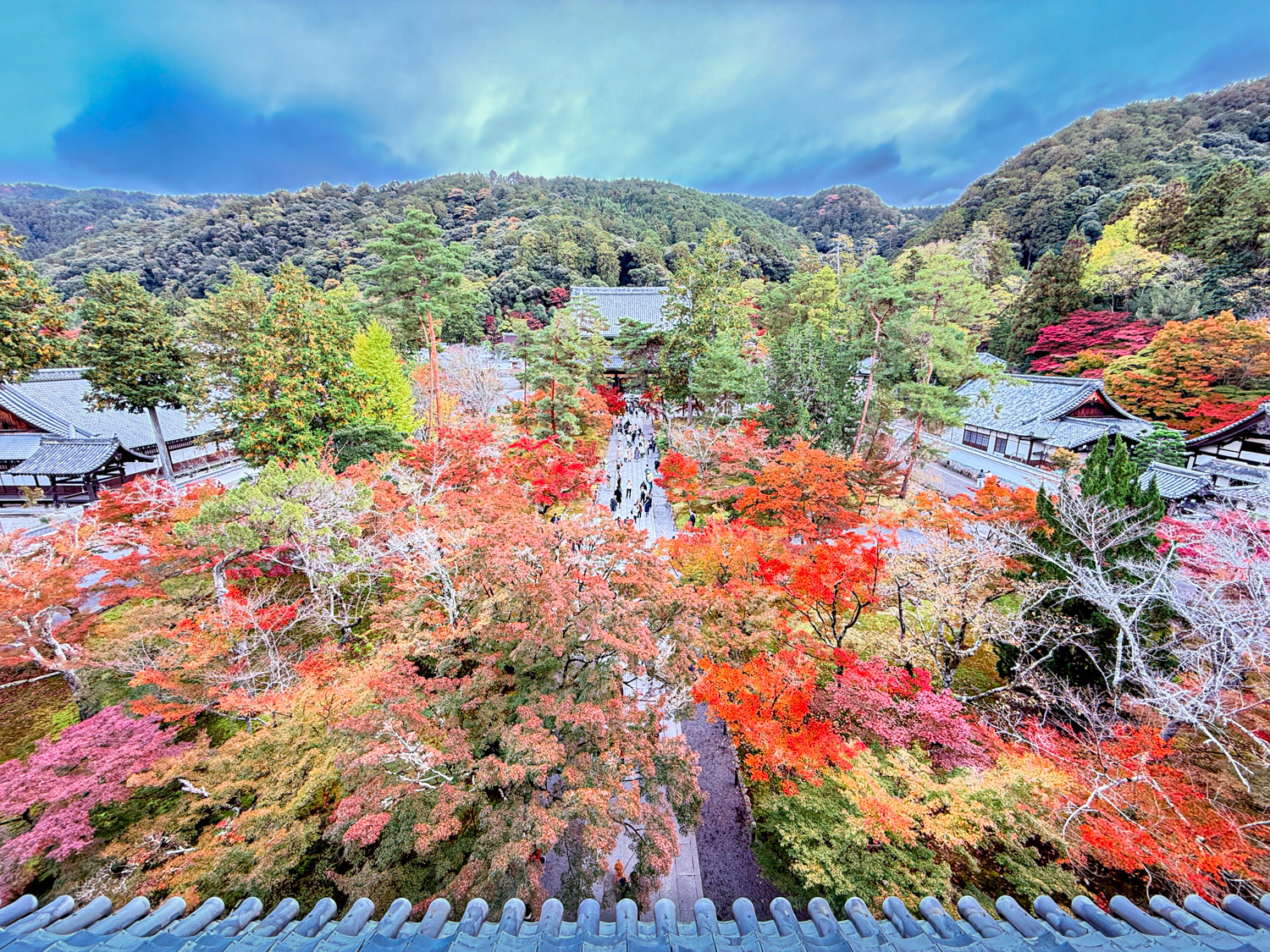
At the top, the floorboards were cold, and so was the wind, and I felt both at once. Below me was the whole temple.
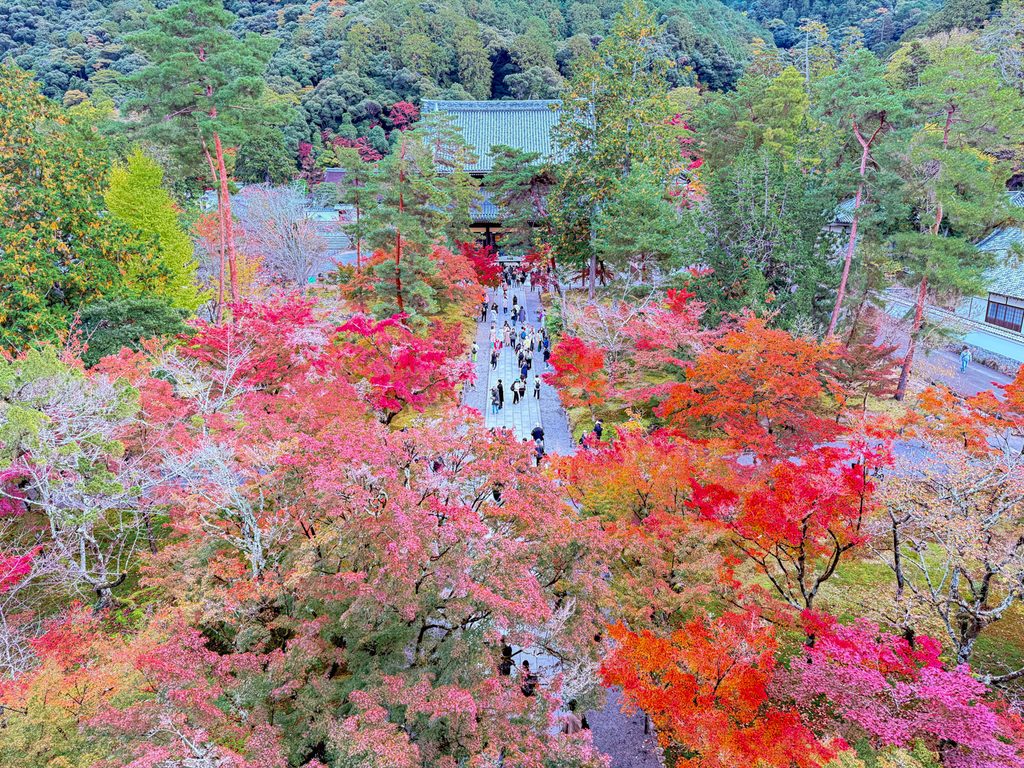
Two hours and forty minutes on the ground had not shown me what I could see in a few seconds from up here. Which trees were at their peak right now. Which were still turning. The Sanmon Gate is a map of the temple, and you can only read it from the top.
The map also explained the line. Since early morning, people had been waiting outside Tenjuan, one of Nanzenji’s subtemples. From the gate I could see why. In that one corner of the grounds, yellow, orange, and red stood against each other more vividly than anywhere else.
Hurrying down would not have put me any closer to the front of that line. So I stayed. (I did end up waiting in it later, but that is a story for another article.)
From up there, I watched the morning fill in. A little after nine, people began to arrive in numbers. The grounds are large enough that even then, it never looked crowded. And the aqueduct, so solid on the ground, looked tiny, a thin brick line half buried in leaves.
“What a View, What a View”
Now, about that thief.
“Zekkei kana, zekkei kana.” What a view, what a view. The words come from the kabuki play Sanmon Gosan no Kiri, in which the legendary thief Ishikawa Goemon stands on Nanzenji’s gate and admires the cherry blossoms in full bloom. The phrase has become inseparable from the view from the Sanmon.
There is just one problem. The gate standing today was built in 1628 by the warlord Todo Takatora. Goemon was executed in 1594. Goemon never climbed this gate. The most quoted words about this view belong to a man who died thirty-four years before it was built. Details.
Up there, the words came to mind anyway. Goemon was looking at cherry blossoms. The words work just as well for maples.
I have stood here in cherry blossom season and in the season of new green leaves. Each time, I had to ask myself whether it was really the same view. For me, this gate is where Kyoto’s seasons are easiest to see.
For all the people who come to Nanzenji, surprisingly few climb the Sanmon. Be one of them.
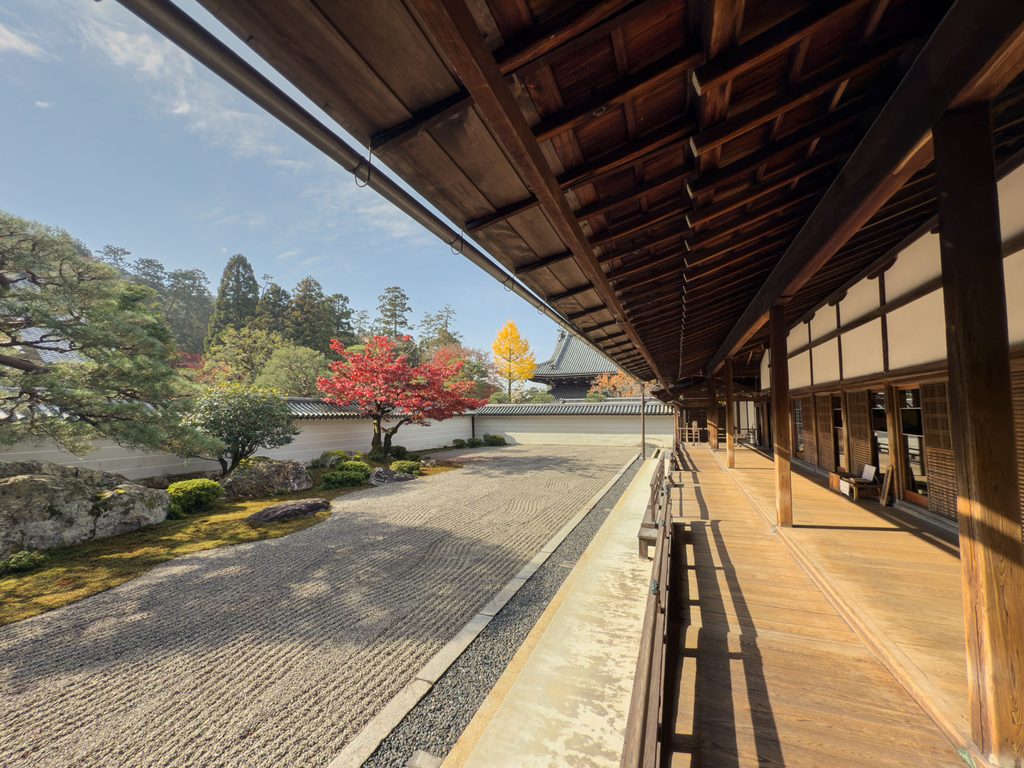
Once you are back on the ground, the Hojo is worth your time too. I wrote about it separately in my guide to Nanzenji’s Hojo and its rock garden.
Planning Your Nanzenji Temple Autumn Visit
The view from the gate is the reward. Getting it without the crowds comes down to timing and knowing which ticket buys what.
When to Go
On the day I visited, November 27, 2025, the maples were at their peak. The timing shifts from year to year, so check recent foliage reports before you go. On my visit, the crowds began to build a little after 9:00 a.m. If you want the quiet I had, arrive closer to six.
Nanzenji Hours and Entrance Fees
The official hours below apply to the ticketed areas: the Sanmon Gate, the Hojo garden, and Nanzenin. On my visit in November 2025, the open grounds, including the Suirokaku Aqueduct, Saishoin, and Komagataki, were already accessible when I arrived a little after 6:00 a.m. Early access can change from year to year, so check the temple’s current notices before planning a dawn arrival.
| Season | Hours |
|---|---|
| March 1 to November 30 | 8:40 a.m. to 5:00 p.m. |
| December 1 to February 28 | 8:40 a.m. to 4:30 p.m. |
Ticket sales end 20 minutes before closing. The ticketed areas are closed to general visitors from December 28 to 31.
Each area has its own ticket. There is no combined pass.
| Area | Adults | High school students | Elementary and junior high students |
|---|---|---|---|
| Sanmon Gate | ¥600 | ¥500 | ¥400 |
| Hojo garden | ¥600 | ¥500 | ¥400 |
| Nanzenin | ¥500 | ¥450 | ¥350 |
Tenjuan
Tenjuan is a subtemple of Nanzenji with its own entrance and ticket. It is open from 9:00 a.m. to 4:45 p.m. (until 4:30 p.m. from November 15 through the end of February), and admission is ¥500. It closes from the afternoon of November 11 through the morning of November 12. Tenjuan opens 20 minutes after the Sanmon Gate, and in foliage season the line forms well before that.
Special Openings in Autumn 2026
Nanzenin: This subtemple, considered the birthplace of Nanzenji, was closed for a long time for garden restoration. It reopens for a limited period from November 1 to 30, 2026. Admission is the same as above.
Inner sanctum of the Hatto (Dharma Hall): Open from November 16 to 29, 2026, except November 26, when it closes for a temple ceremony. Hours are 9:00 a.m. to 4:00 p.m., with a break from noon to 1:00 p.m. Admission is ¥500 for high school students and older, and free for elementary and junior high students.
How I’d Walk It
- From around 6:00 a.m. until 8:40 a.m., walk the open grounds: the Dharma Hall, the Suirokaku Aqueduct, Saishoin, and Komagataki.
- At 8:40 a.m., climb the Sanmon Gate as soon as it opens.
- Use the view from the top to decide where to go next: the Hojo garden, Tenjuan, or Nanzenin.
Getting There
Nanzenji is about a 10-minute walk from Keage Station on the Tozai subway line. If you plan to see Eikando the same day, there is no need to return to Keage Station first. Eikando is a short walk north of Nanzenji.