“Is this a good place for autumn leaves?”
If so, I’d come back when the maples turned.
The woman at the reception desk didn’t hesitate. “For autumn leaves, I’d go to Obai-in next door.”
She looked like a college student, not someone you would expect to find behind the desk of a five-hundred-year-old Zen temple. A temple, sending me to the neighbors. I paid the 400 yen on the spot. It may be the only sales pitch that has ever worked on me, and it worked by not being one.
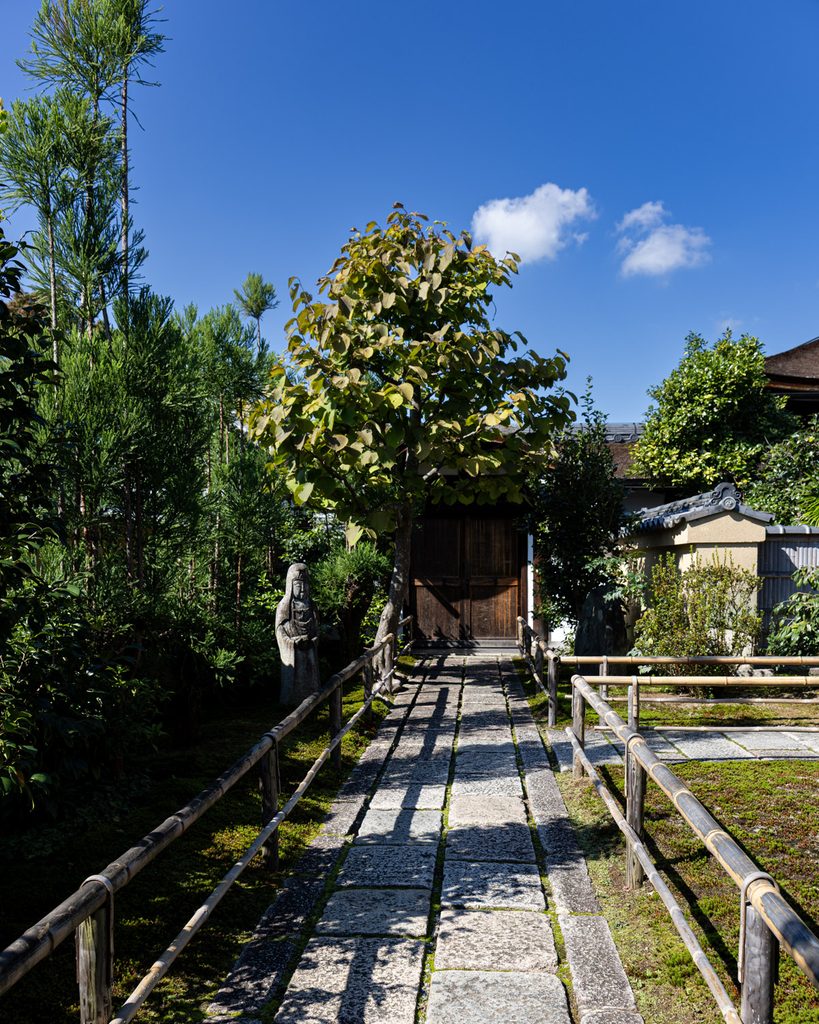
That is how my morning at Daitoku-ji began, and how I found Ryogen-in and Zuiho-in, two sub-temples open every day, a few minutes’ walk apart. Each has a dry garden that evokes the sea. At Ryogen-in the sea lies calm. At Zuiho-in it breaks against the rocks. Neither had more than a few other visitors, and Ryogen-in had almost none.
Finding the Open Gates at Daitoku-ji
Daitoku-ji is less a single temple than a walled neighborhood of them, a Rinzai Zen headquarters ringed by sub-temples called tatchu. Most stay closed. Some open for special viewings, a few weeks at a time. From home, I couldn’t work out which was which. The maps online were a fog of kanji and seasonal footnotes.
On the ground, it took about a minute. Inside the precinct stands a map that shades the sub-temples open to visitors every day. The other thing I couldn’t learn from home was where the autumn color would be. I asked, and the first person I asked told me the truth.
I already knew I would be back many times, first for zazen, then for the maples, the snow, and the new green of spring. These two temples turned out to be a good first door.
Ryogen-in: The Garden Nobody Was Looking At
Ryogen-in was founded in 1502 by the Zen master Tokei Soboku, with the backing of several regional lords. One of them was Otomo Yoshinaga of Kyushu. Remember his name, because his grandson built the other temple in this story. Ryogen-in counts itself among the oldest temples in the Daitoku-ji complex. Its abbot’s hall and two gates date from the founding and are Important Cultural Properties, and the temple says the abbot’s hall is the only Muromachi-period Zen abbot’s hall in Japan that survives with its original structure fully intact.
Kodatei: The Garden I Almost Shrugged At
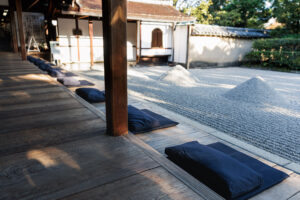
Kodatei sits in front of the first room, a strip of white gravel with two stones set in it, also called the Garden of A-un. The stones are said to have come from Jurakudai, the lavish palace Toyotomi Hideyoshi built in Kyoto. But the first thing I noticed wasn’t the stones. It was the light. The white gravel glared. I had never thought of a dry garden as something that reflects light, and I would be squinting at every garden I saw that morning. I’ll be honest. I wanted a little more. Then I turned the corner.
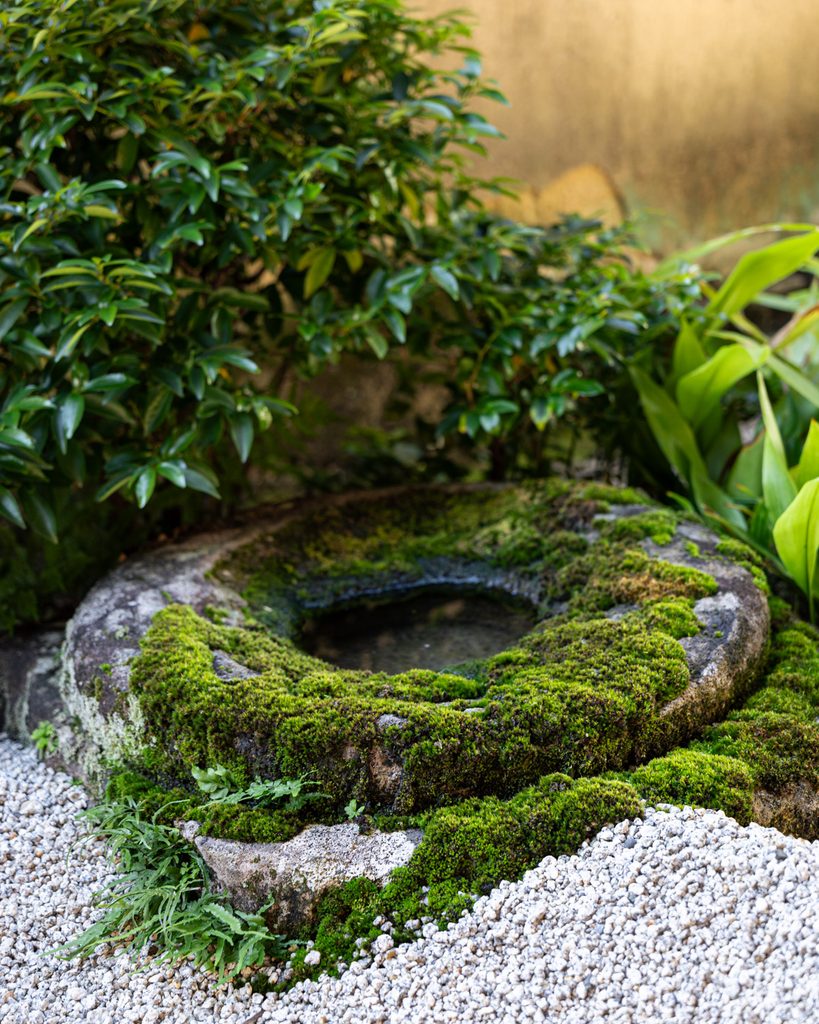
Isshidan: Moss, Stone, and No One Else
This is the one.
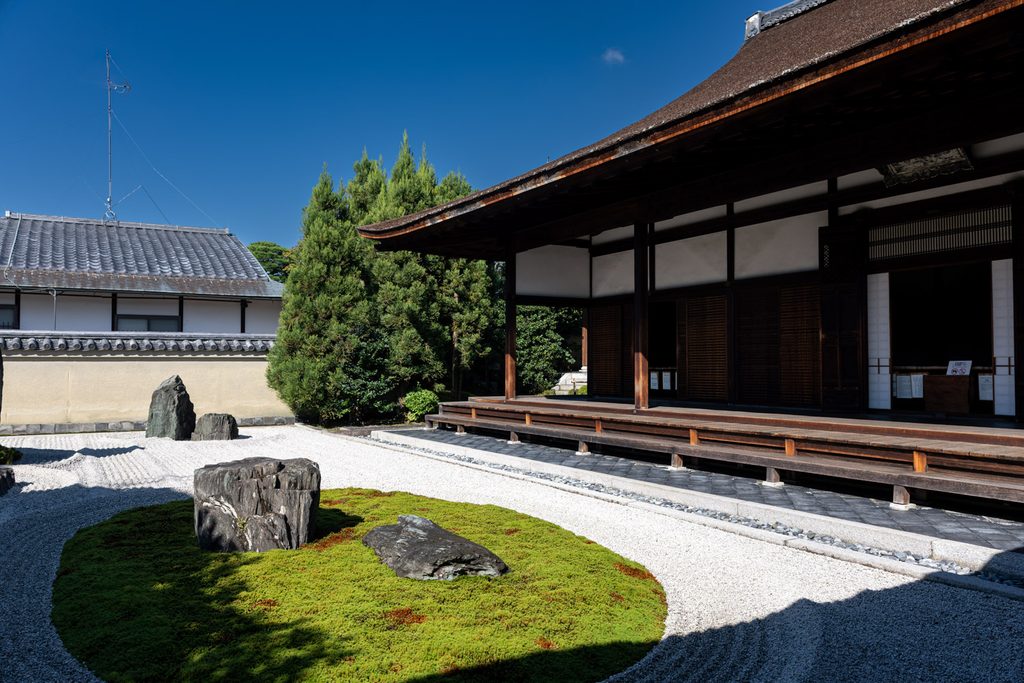
Isshidan, the south garden of the abbot’s hall, is a dry landscape built around one idea of paradise. The tall rock group at the back is Mount Horai, the island of the Immortals. The smaller group is a crane island. The round mound of moss is a turtle island, and the white gravel around everything is the open sea, raked in lines that are just as modern as the rest of it.
The garden is younger than it looks. A camellia believed to be some seven hundred years old once stood here, blooming crimson from mid-November into April. It died in the spring of 1980, and that same year the abbot, Katsudo, designed the garden you see today and oversaw its making.
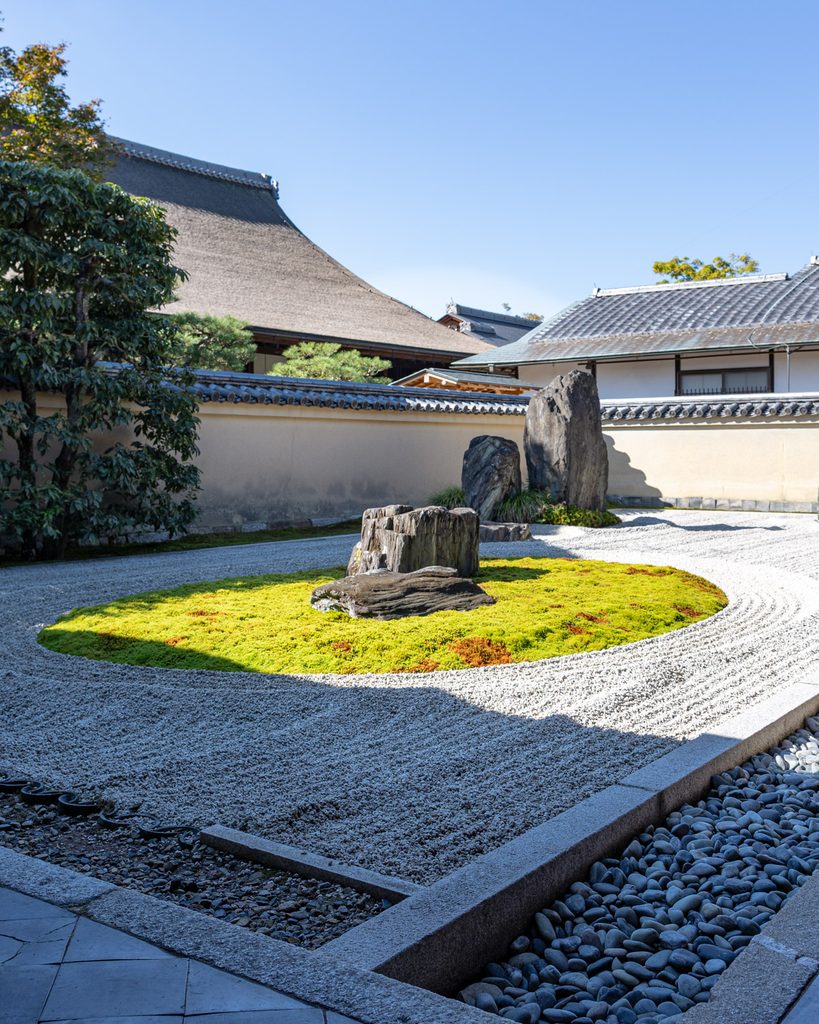
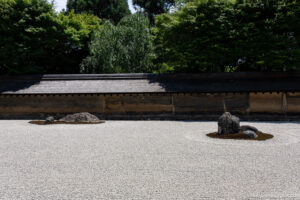
It was the green that held me. After all that glare, the moss island gives the eye somewhere soft to land. And there was no one else on the veranda, which I still can’t quite explain. I kept thinking about Ryoan-ji, the most famous rock garden in Kyoto. Whatever Ryoan-ji gained by becoming famous, it gave up this kind of silence to get it. I have sat in front of a good many Zen gardens in Kyoto. I got more out of this one than I ever have out of Ryoan-ji.
Ryogin-tei: Trying to See the Universe in Moss
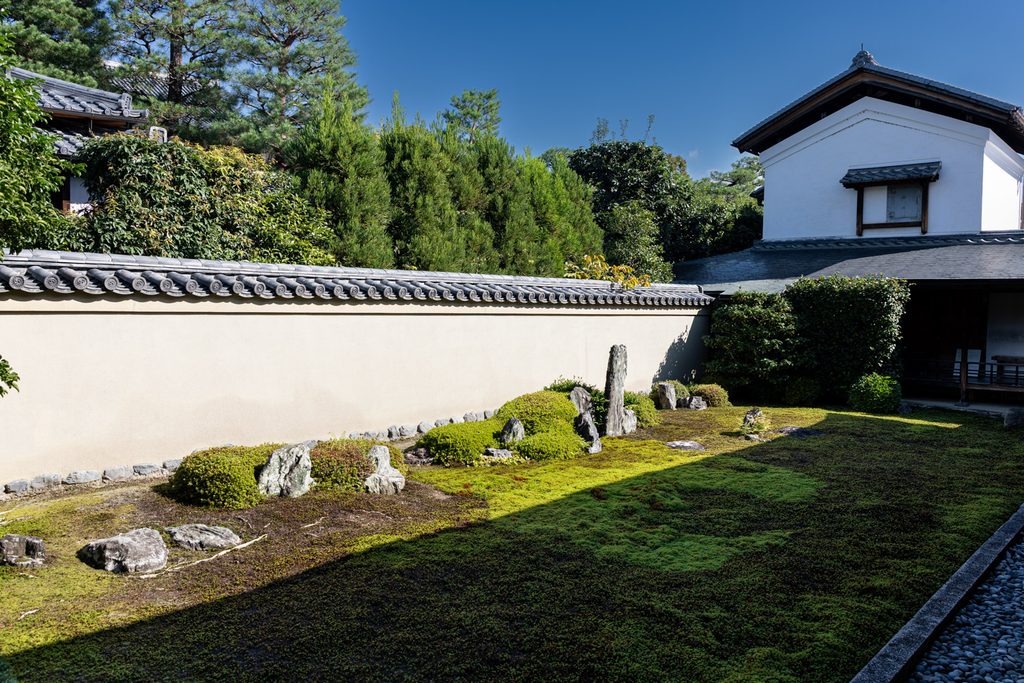
Around the north side of the abbot’s hall is the oldest garden here. Ryogin-tei is attributed to Soami, a Muromachi-period painter and garden designer. A tall, jagged stone rises from the middle: Mount Sumeru, the peak at the center of the Buddhist universe. Here the moss is the sea, and the stones rise from it like land.
Feeling the cosmos in white gravel comes easily, maybe too easily. Feeling it in moss was harder. It was early October, but the sun felt like August and lay full across the garden. Before I could find the universe, I started worrying the light was too strong for the moss. I had come to contemplate infinity. I ended up fretting like a groundskeeper.
Totekiko: Japan’s Smallest Rock Garden
I almost walked past it.
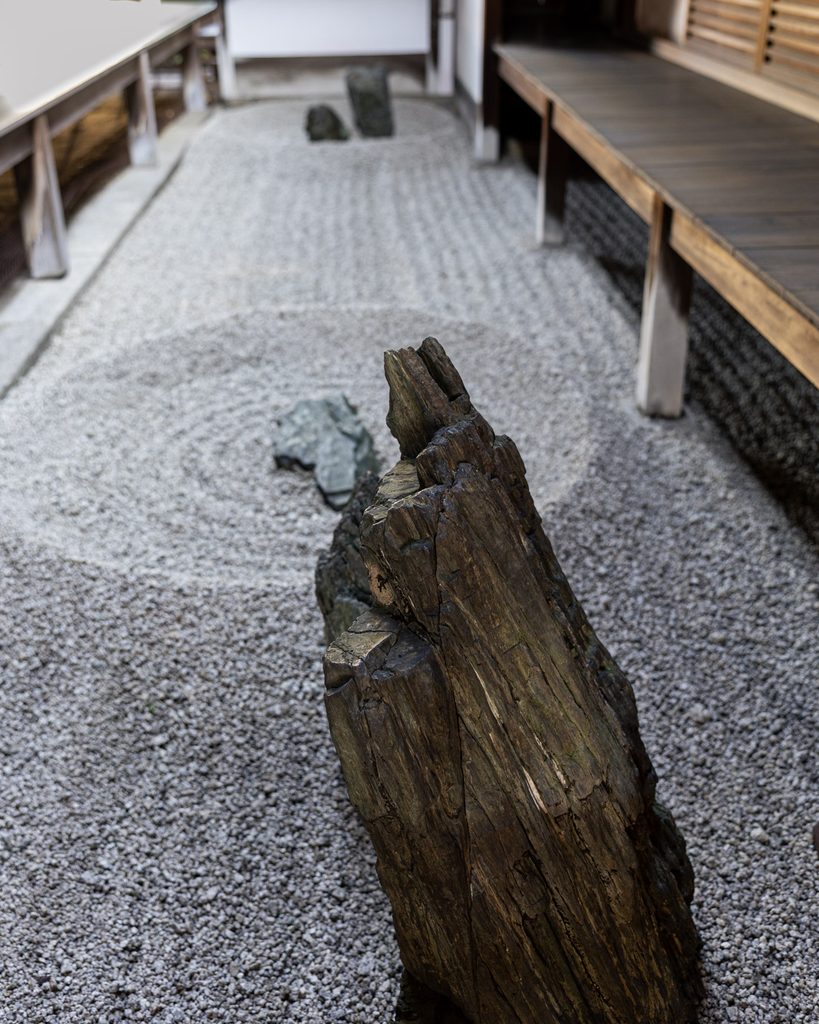
Totekiko is squeezed into the narrow gap between the abbot’s hall and the priests’ quarters. It covers about four tsubo, roughly 140 square feet. Five stones sit in white gravel, in a group of three and a group of two, and the gravel is raked into rings like drops landing in still water. Something about it kept pulling me back. Only later did I learn that it is known as Japan’s smallest rock garden, and that it was made in 1960 by the garden designer Nabeshima Gakusho. My eye had found it before any leaflet told me why.
A Goshuin with a Cat
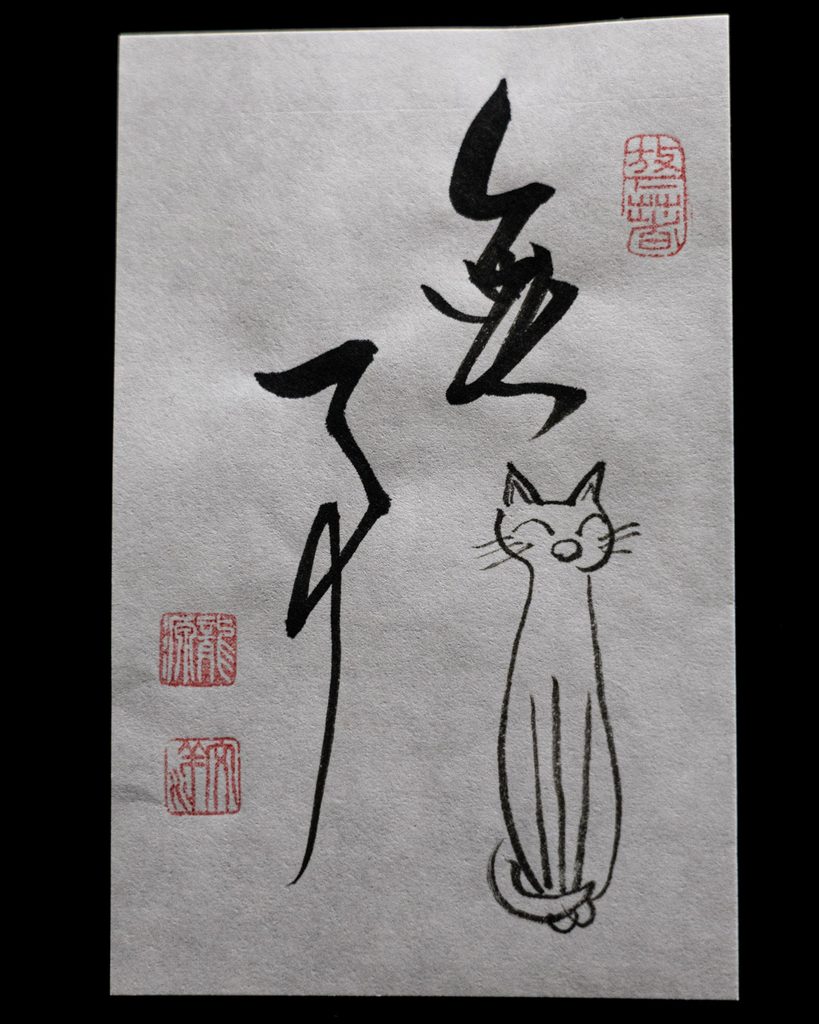
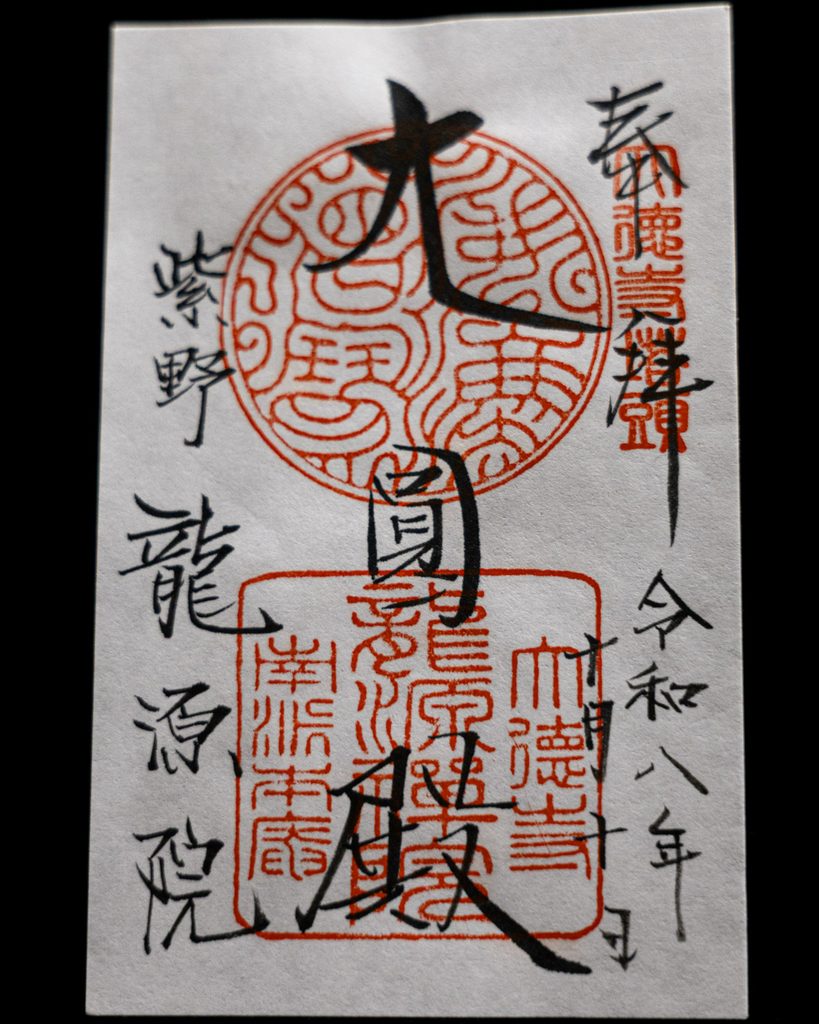
On my way out, I asked the same young woman for a goshuin, the handwritten seal temples give to visitors. Two designs, 300 yen for both. One came with a cat.
“The priest wrote both of them,” she told me. Anywhere but a temple, I’m sure she would have leaned in and waited for me to agree: “Cute, right?”
Zuiho-in: A Storm Raked in Gravel
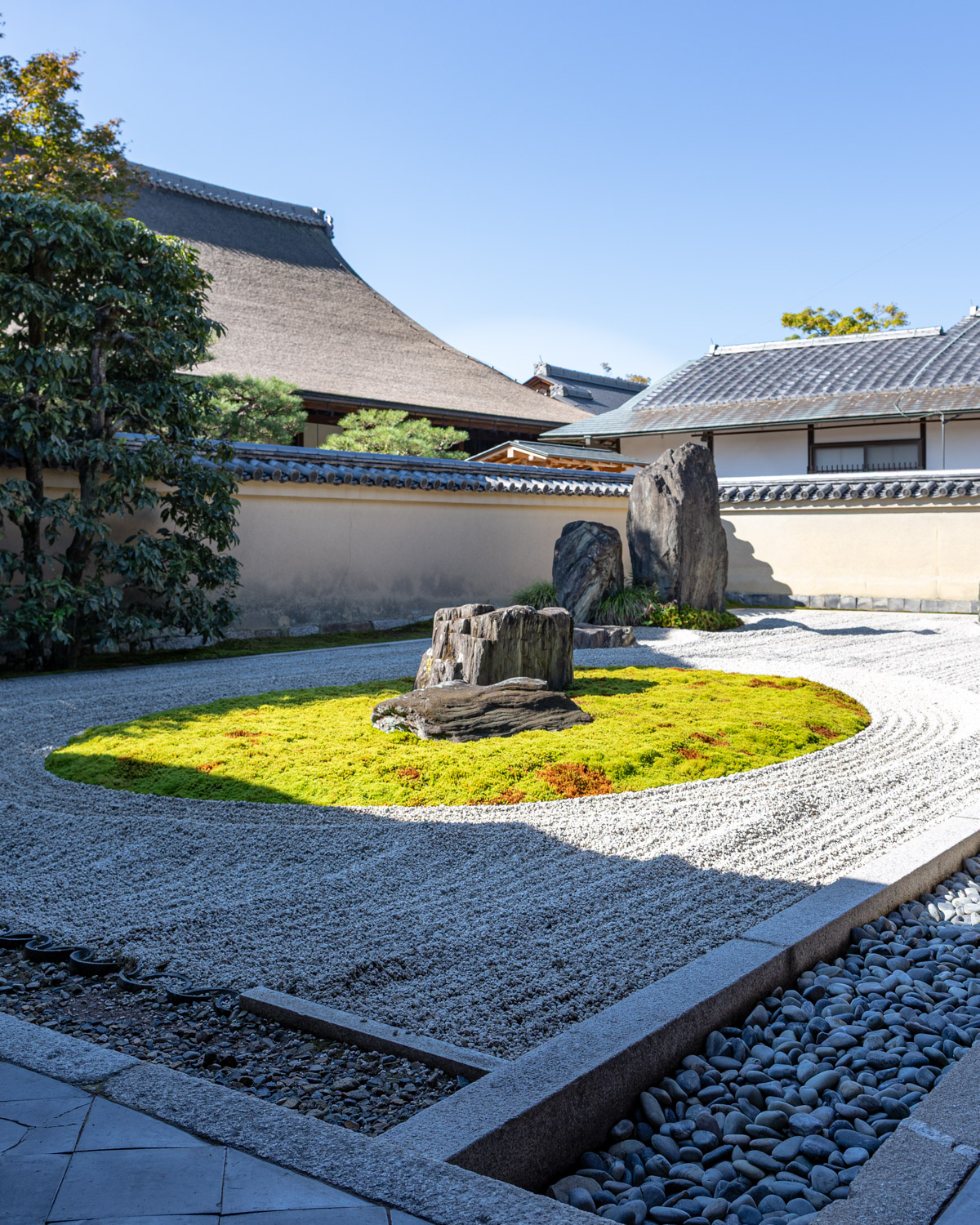
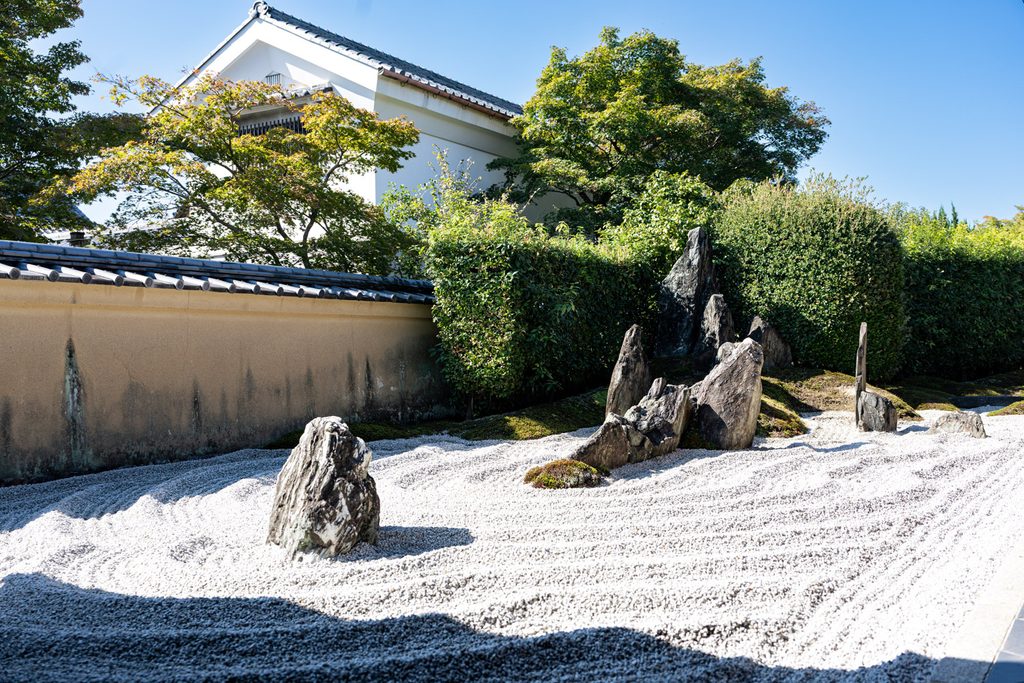
Zuiho-in didn’t knock me flat, but it showed me something I hadn’t imagined. In front of the abbot’s hall, the gravel doesn’t lie still. It is raked into high, rolling swells that run straight at a peninsula of rock. I had just come from Ryogen-in’s flat, sleeping sea. Same white gravel, a few minutes’ walk away, and here it was a storm. I had seen plenty of rock gardens, and it still caught me off guard that anyone could do this with gravel.
Otomo Sorin: The Christian Daimyo’s Temple
Here is the grandson. Zuiho-in was built by Otomo Sorin, lord of Bungo in Kyushu and one of the best-known Christian daimyo of sixteenth-century Japan. He founded it as his family temple, took Buddhist vows under its first abbot, Tesshu Sokyu, and gave the temple his Buddhist name.
Later in life, Sorin turned to Christianity. He welcomed the Jesuit missionary Francis Xavier to his domain and was eventually baptized. So the man who endowed a Zen temple in Kyoto died a Christian, and his temple remembers him both ways. The abbot’s hall dates from 1535 and, with the Chinese-style gate and front gate, is an Important Cultural Property.
Dokuza-tei: Waves That Never Move
Dokuza-tei, the south garden, takes its name from a Zen phrase about sitting alone on a great peak. Rocks run from a mountain out into the sea as a long peninsula, and the waves keep coming at it. The rock holds.
I sat down on the veranda and let it overwhelm me. The swells looked ready to roll forward at any second. They never did, and the longer I watched, the more they seemed about to. A few other visitors came and went behind me. I stayed.
Both of Zuiho-in’s gardens were designed in 1961 by Shigemori Mirei, one of the boldest garden designers of the twentieth century, to mark the four hundredth anniversary of the founder’s death. Ryogen-in’s Totekiko dates from 1960 and its Isshidan from 1980. The buildings at both temples are Muromachi. The gardens that stop you in your tracks are almost all modern.
Kanmin-tei: The Cross I Didn’t See
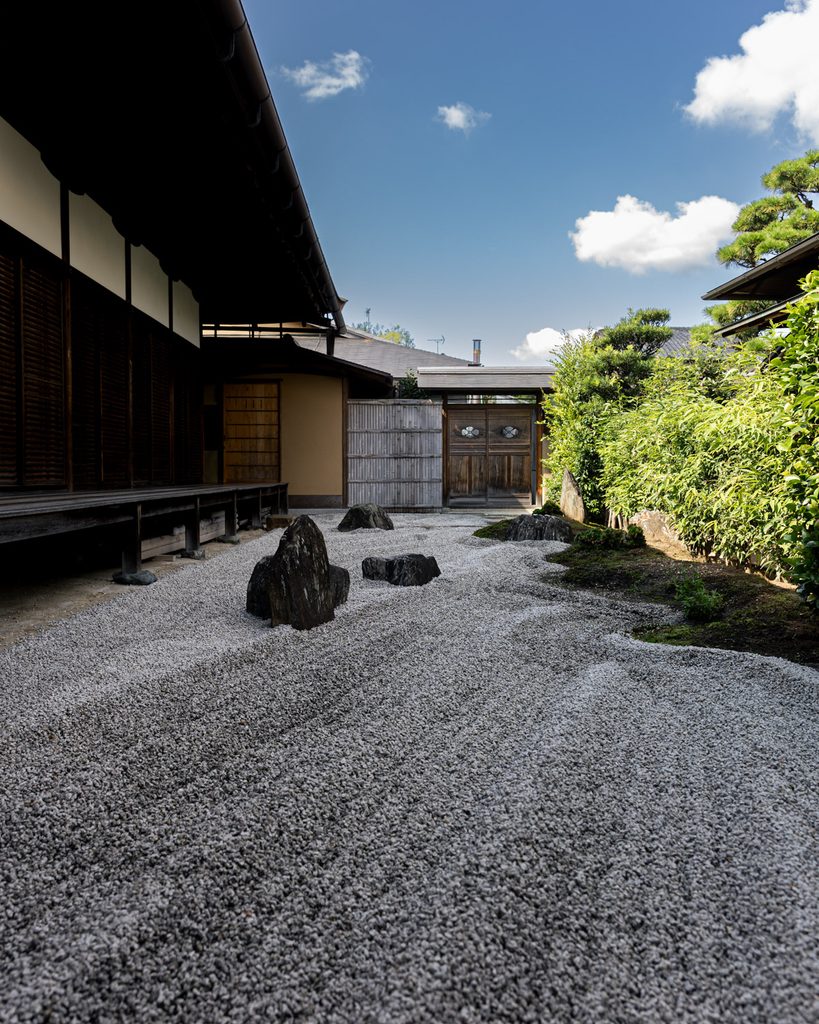
Behind the abbot’s hall lies Kanmin-tei, named for a Zen line about lying at ease and gazing at green mountains. It is quieter than the storm out front. Its seven stones are set four in a vertical line and three across, so that together they form a cross, in honor of Sorin’s faith.
I walked right past it. I saw rocks in gravel, admired them, took a picture, and moved on. Only later, reading the temple’s leaflet, did I learn what I had been looking at. Know what you’re looking for before you go, then trace the four stones down and the three across.
Goshuin, Matcha, and the Order I Got Wrong
I did it backward.
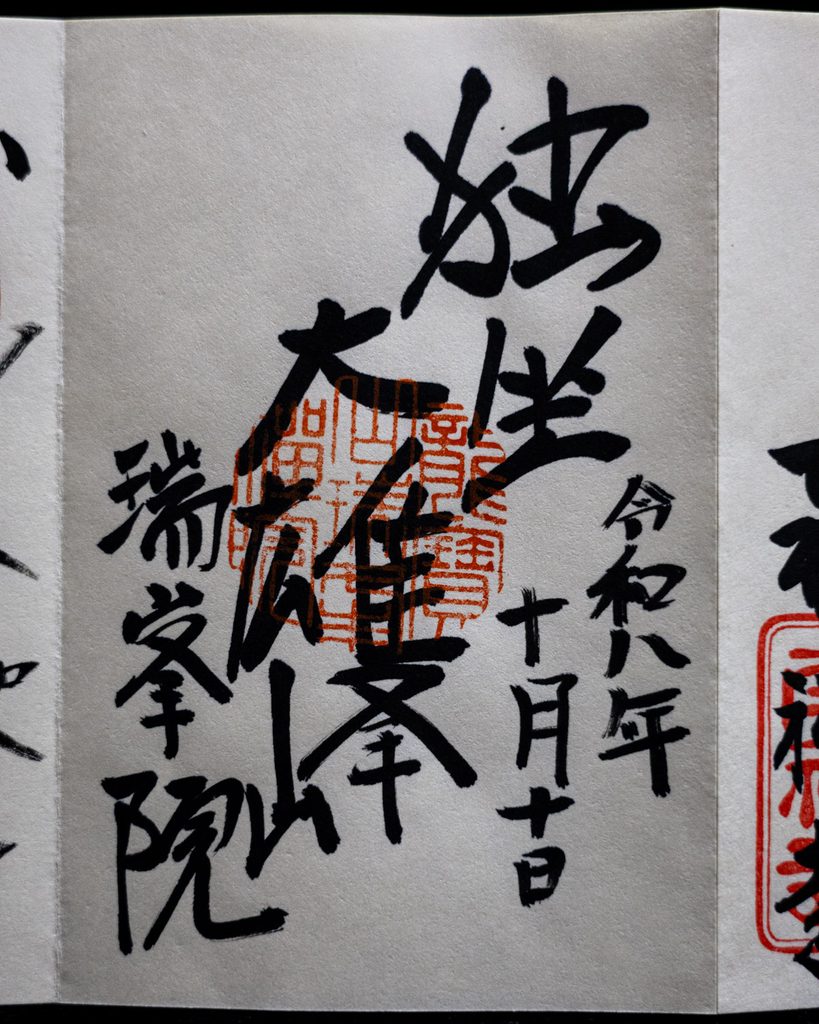
On my way out, I asked for a goshuin, 500 yen. Writing it took longer than I expected, and I stood at the desk waiting. While I waited, I noticed the sign: matcha, 500 yen. The right order was obvious. Hand over your goshuin book when you arrive, order a bowl of tea, and let the seal be written while you sit in front of the storm. I figured this out on my way out the door. Next time, in the snow, I’ll get the order right.
Visiting These Zen Gardens in Kyoto: Practical Information
Neither temple has an official website. The details below are what I found on my visit; fees and hours can change, so confirm at the reception desk. Both are open year-round and sit a few minutes’ walk apart inside Daitoku-ji, about five minutes on foot from the Daitokuji-mae city bus stop.
Both temples are small. You can walk through either one in about five minutes. Don’t. The point is to sit.
Ryogen-in
| Address | 82-1 Murasakino Daitokuji-cho, Kita-ku, Kyoto |
| Hours | 9:00 a.m. to 4:20 p.m. |
| Admission | 400 yen |
| Goshuin | Two designs, 300 yen for the pair |
| Access | About a 5-minute walk from the Daitokuji-mae city bus stop |