The Bamboo Grove had been loud. Not loud like a city—loud like a crowd that has all decided, at once, to raise their phones above their heads. Selfie sticks. Shutter clicks. The shuffle of a few hundred people trying to photograph emptiness and finding each other instead.
Then I walked through a gate. And one minute later—I mean that literally, one minute—the noise was simply gone.
This is the strange gift of Okochi Sanso. The most crowded place in Arashiyama and the most silent one are practically neighbors. You do not need to escape Arashiyama by leaving it. The nearest refuge is right here, a sixty-second walk from the chaos, behind a wooden gate most people never think to open.
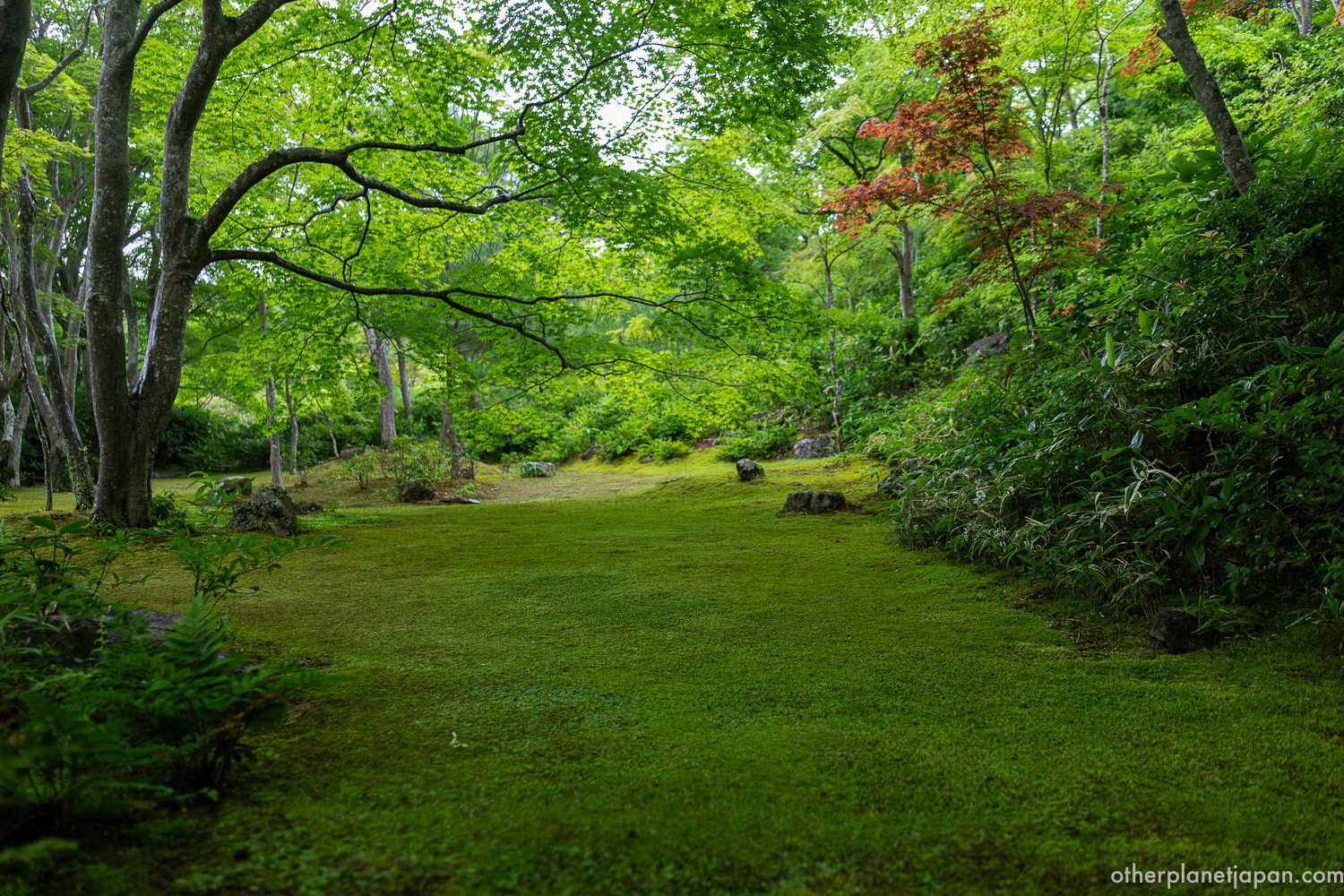
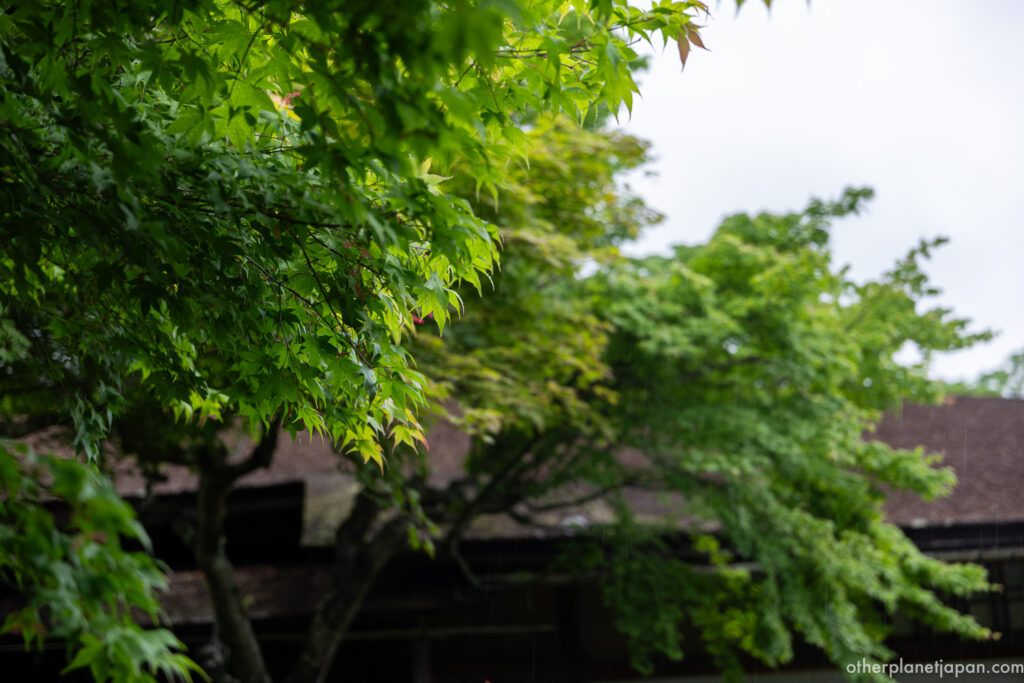
It was raining the day I came, and the rain only made it better. The moss drank it in. The maples held it on their leaves. And those maples—green, impossibly green, the aomomiji of early summer—were so beautiful that I found myself doing arithmetic I couldn’t finish. If the green is this lovely, I kept thinking, what on earth does autumn look like here?
I still don’t know. But I have a theory, and the theory keeps me up at night.
What Is Okochi Sanso? A Garden One Actor Spent 30 Years Building
Okochi Sanso is not a temple, though it can feel like one. It is the private mountain villa of Denjiro Okochi, a star of Japan’s silent-film era who specialized in samurai roles—the kind of actor whose face a whole generation knew before sound ever reached the screen.
Beginning at age 34, in 1931, Okochi devoted roughly thirty years to this hillside. He was not building an attraction. He was building a garden the way some people build a life: slowly, privately, in pursuit of a beauty only he could fully see. The villa, the teahouse, the prayer hall, the long looping paths—he laid them out over decades on the southern slope of Mount Ogura, and kept refining them until the end.
That history changes how it feels to walk here. Other Arashiyama sights belong to everyone. This one still feels like it belongs to one man, and you are simply being allowed inside.
Walking the Garden, Step by Step
Through the Gate
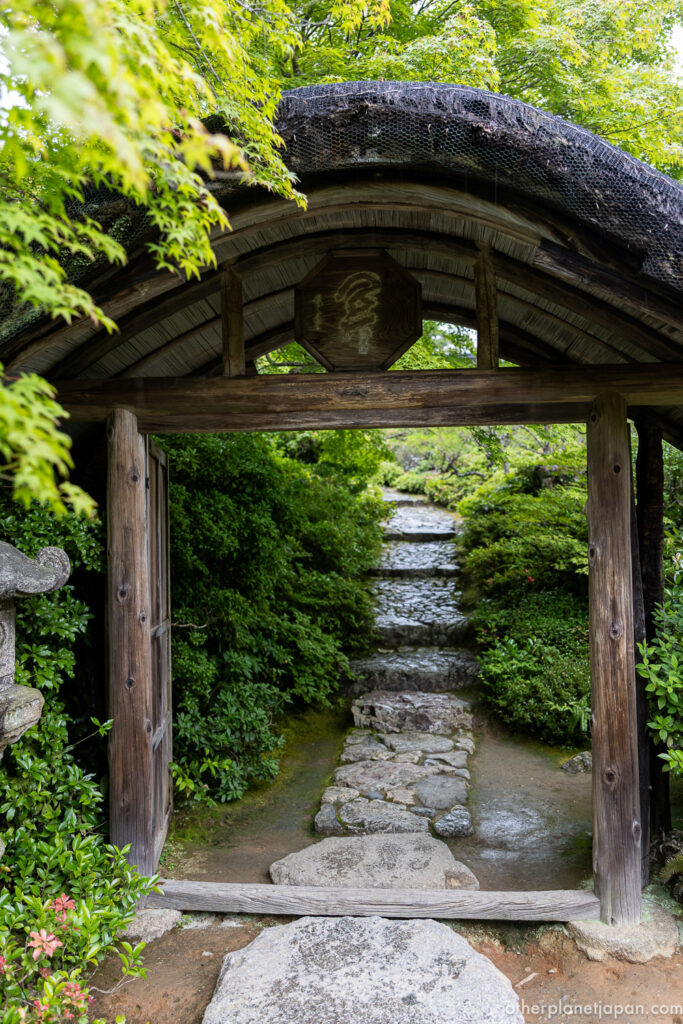
The entrance sets the tone before you’ve paid. A thatched gate, soft with age and moss, frames a flight of rough stone steps climbing into green. There is no grand approach, no ticket gate spilling people into a plaza. Just a threshold, and the quiet on the other side of it.
The Path of Moss and Green Maples
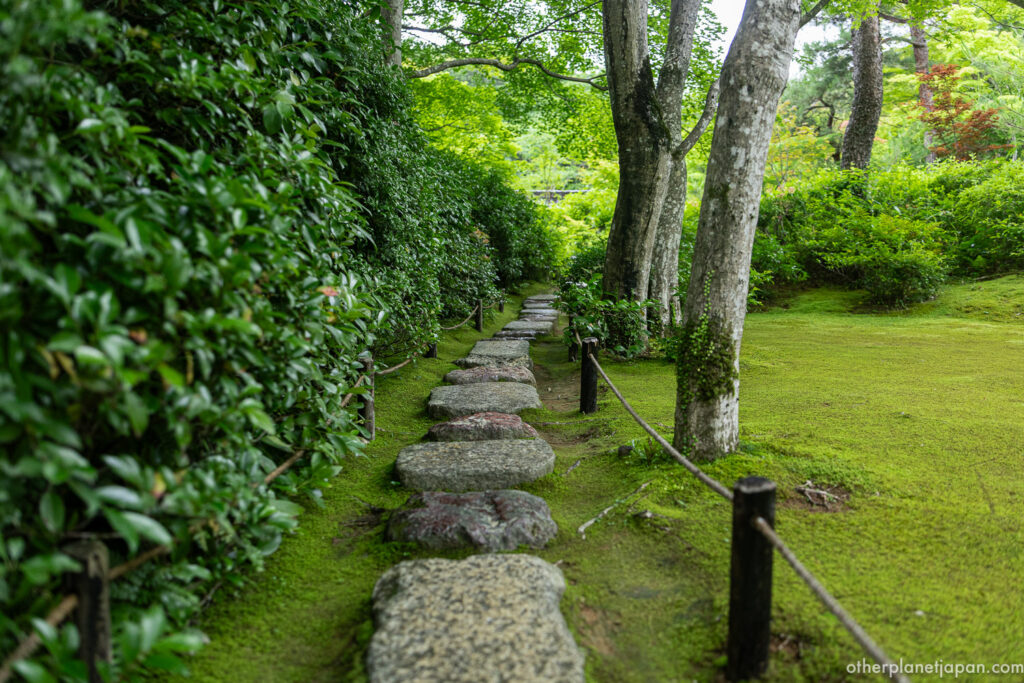
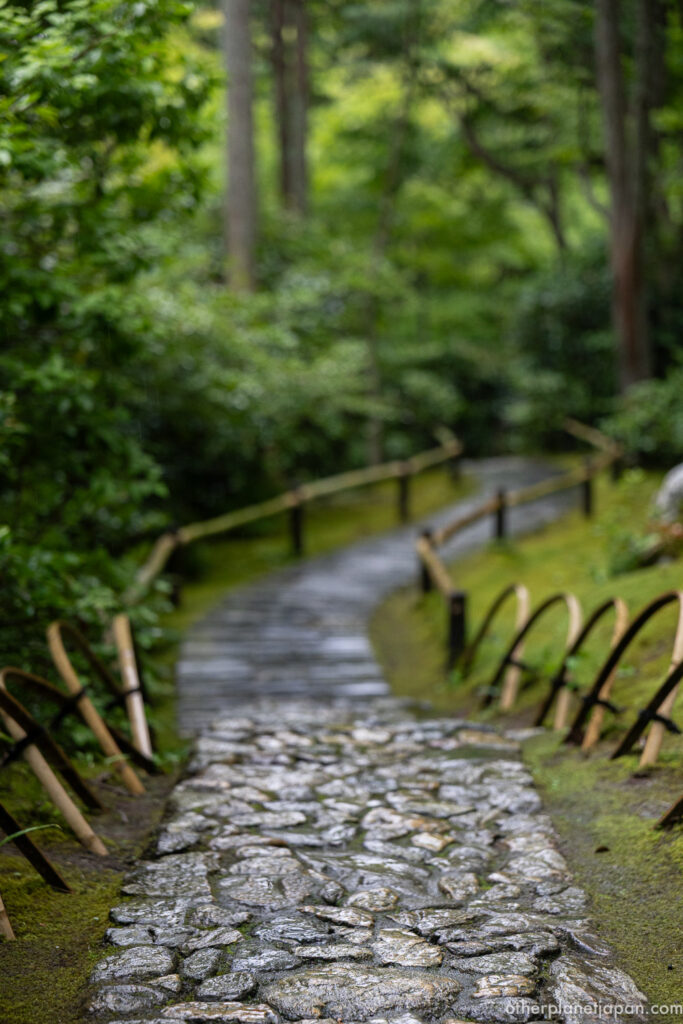
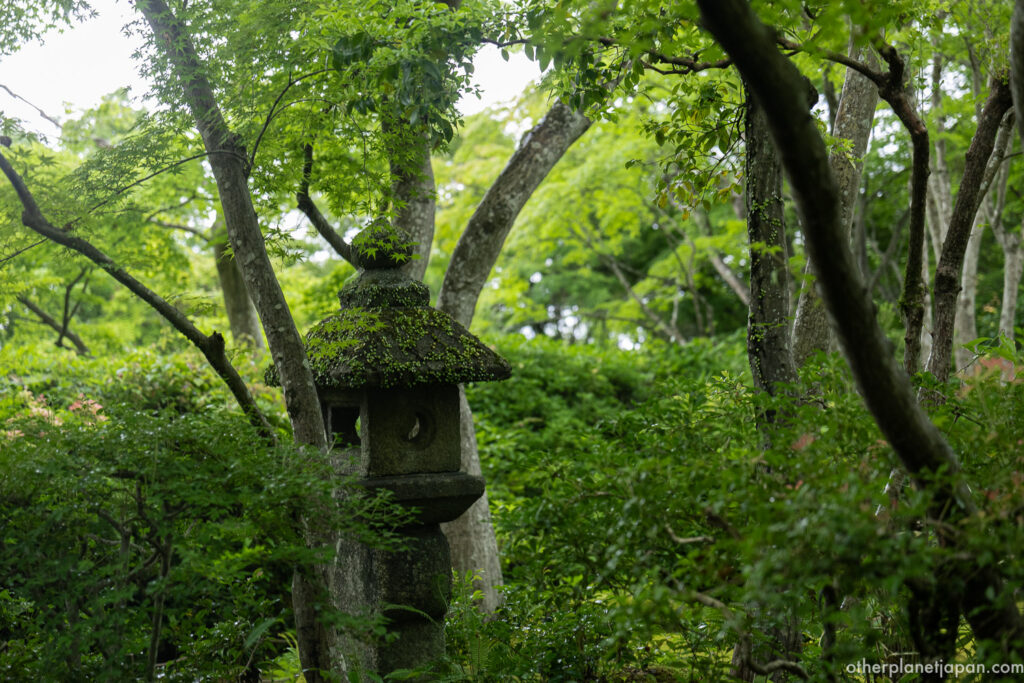
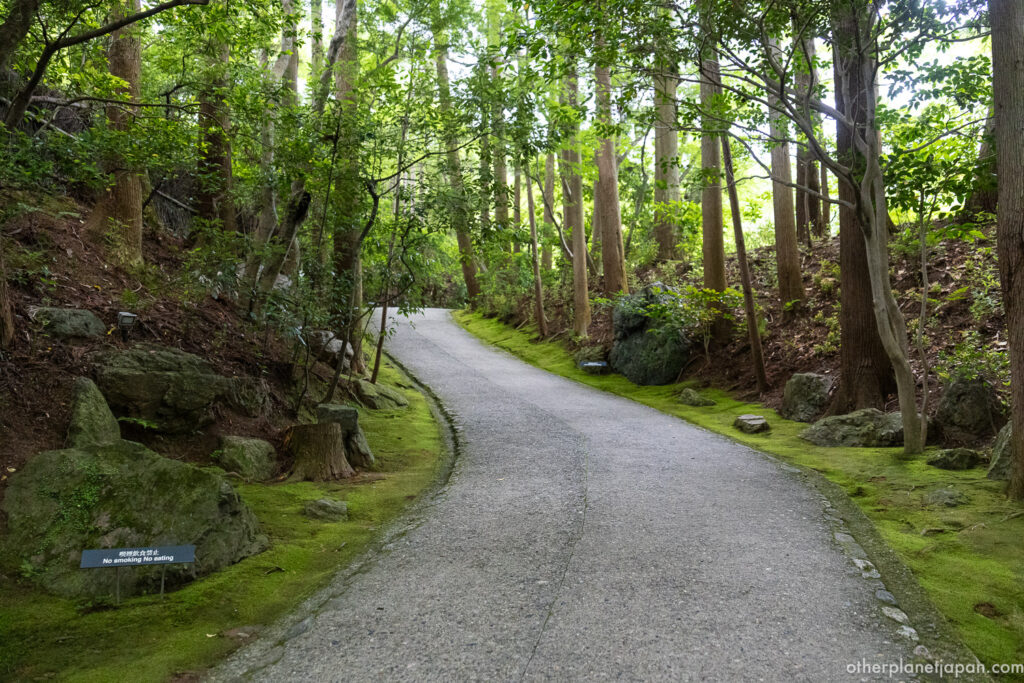
The path is a kaiyu-shiki—a circuit garden, meant to be walked rather than viewed from one fixed spot. Flat stepping stones lead you across beds of moss so even they look poured. Old trees lean over the route. A simple rope fence marks the edge, less a barrier than a suggestion.
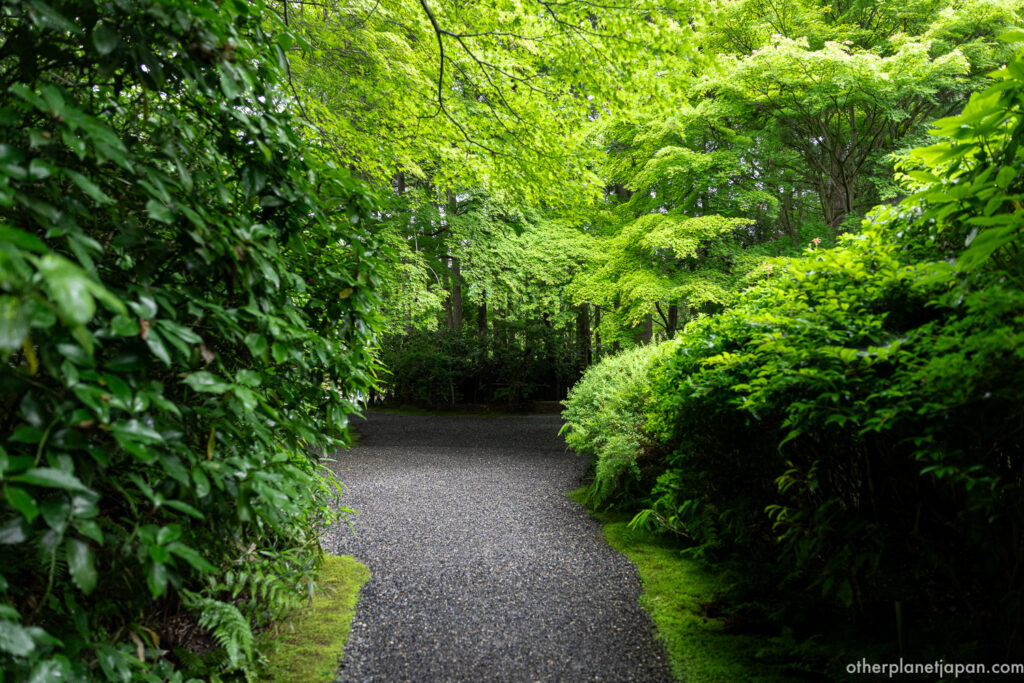
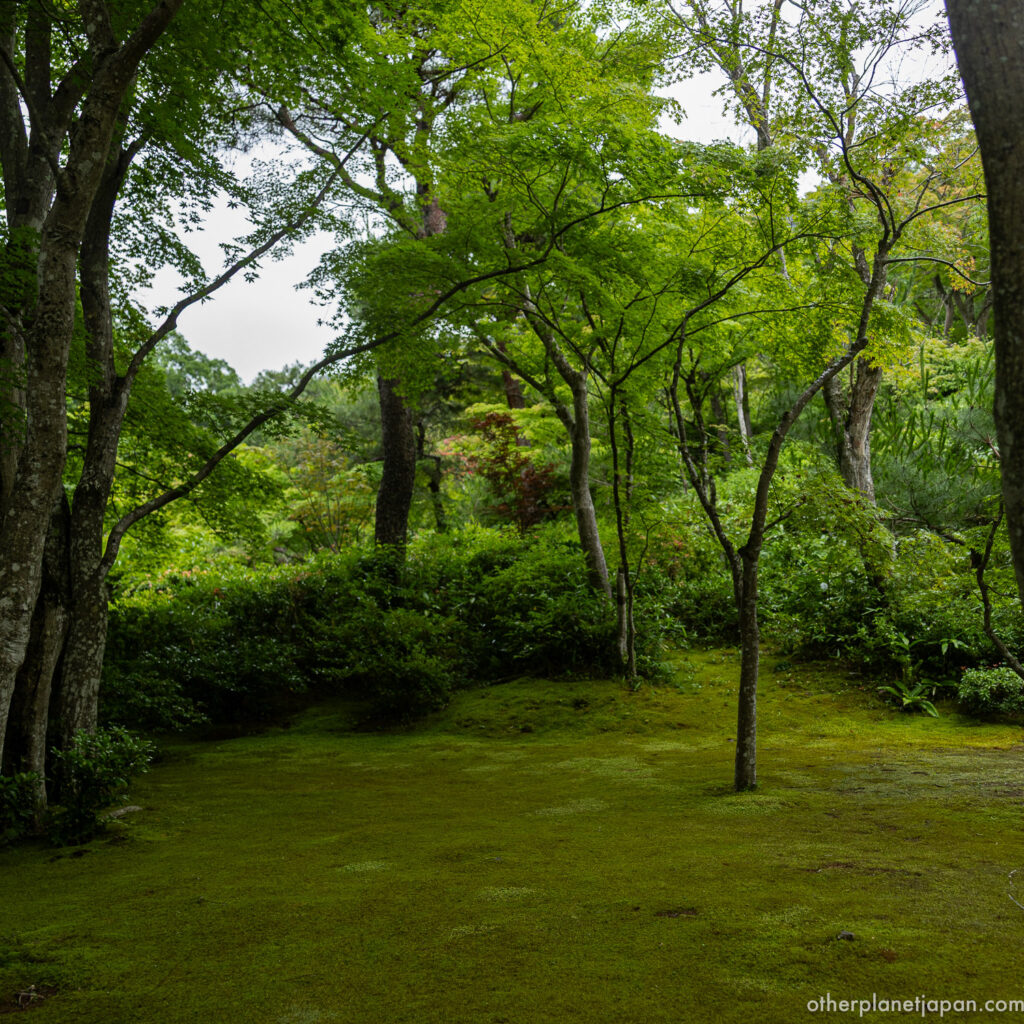
In early summer the maples form a tunnel of light. The leaves are not the dark, settled green of an old forest—they are translucent, almost lit from within, the green of leaves that opened only weeks ago. Rain beaded on every one of them the morning I walked through.
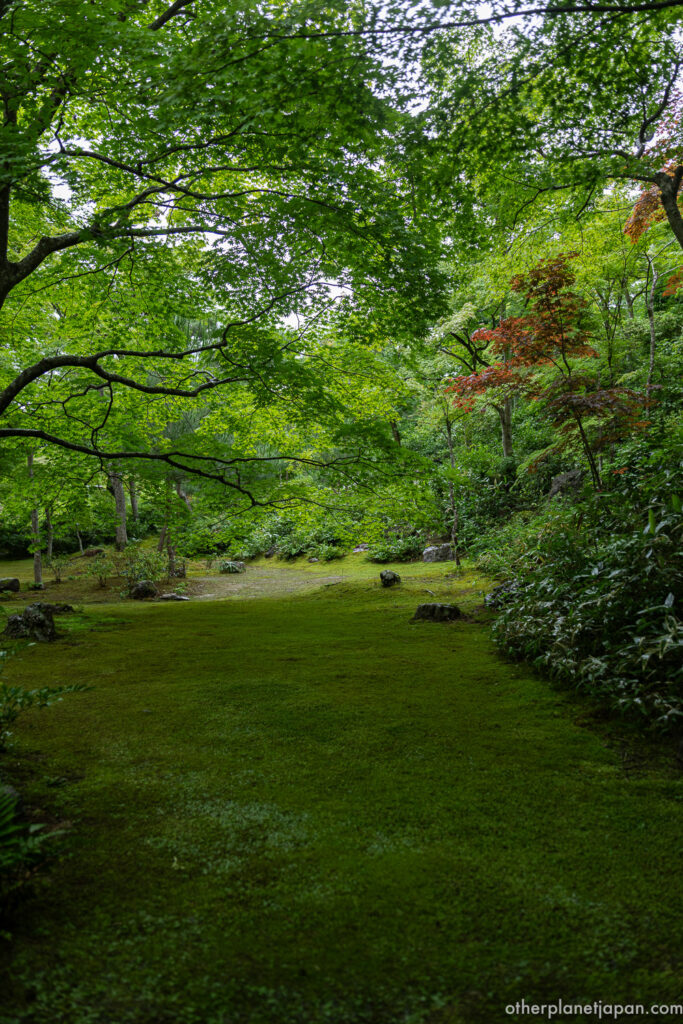
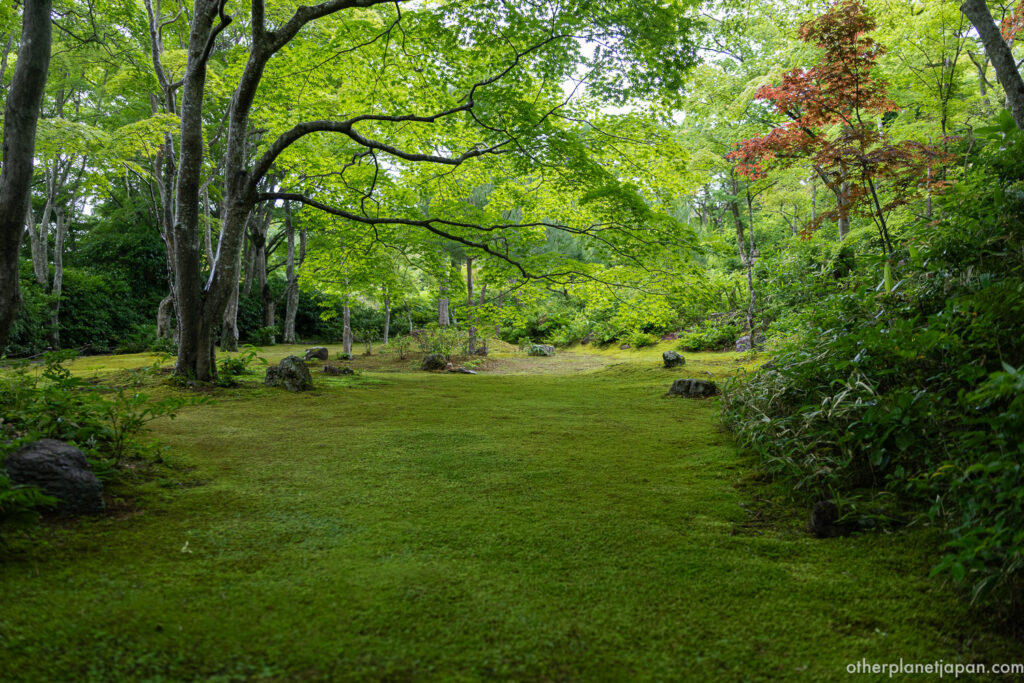
There are open clearings, too, where the moss spreads out into something like a lawn and the trees step back. This is where the aomomiji did its quiet work on me. Green leaves shouldn’t make you think about red ones. But standing there, I couldn’t stop. If this is the rehearsal, the autumn performance must be almost unfair.
Tekisui-an, the Teahouse
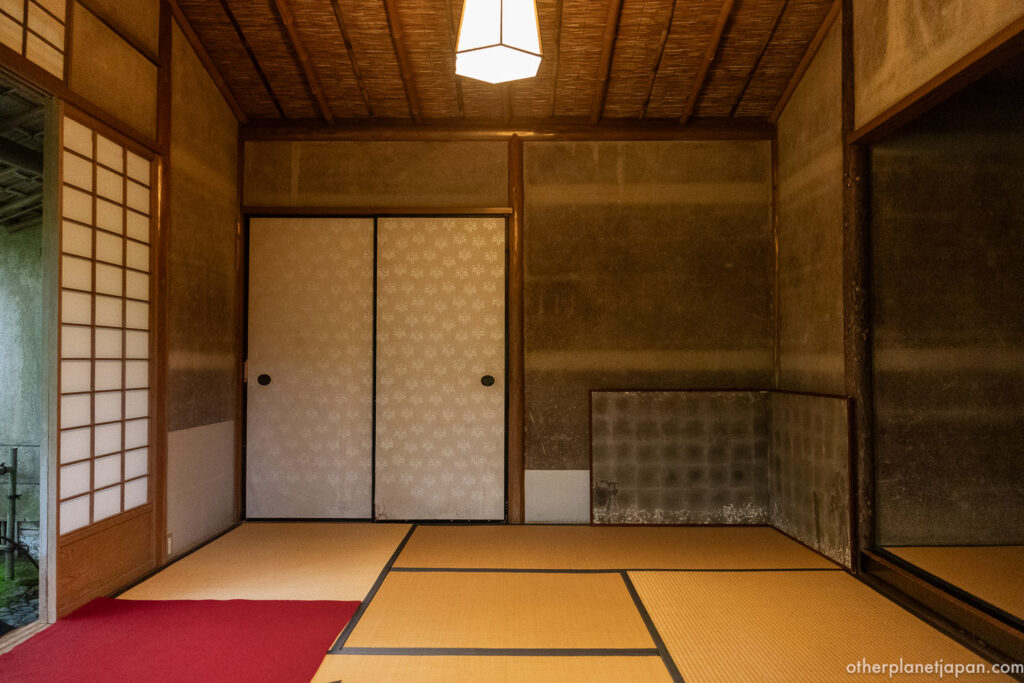
Tekisui-an, the teahouse, is small and dim and exact. Tatami, a strip of red felt, fusuma sliding doors, a paper lantern overhead—nothing more than needed, which is the whole point of a teahouse. After the wet brilliance of the path outside, the muted interior feels like holding your breath on purpose.
Jibutsudo, the Prayer Hall
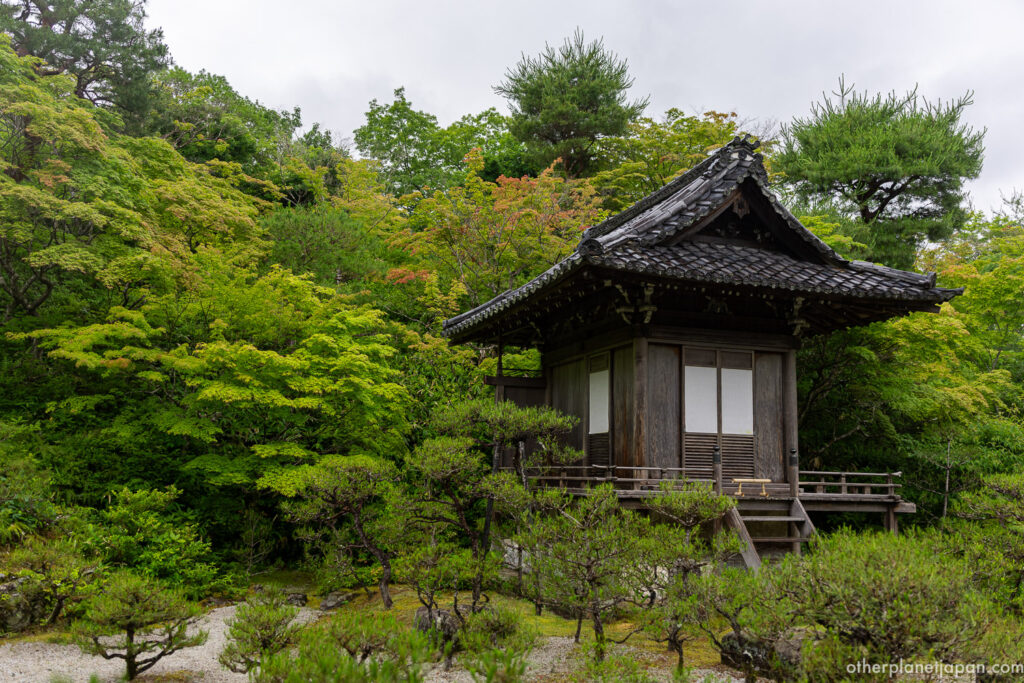
The Jibutsudo, Okochi’s private prayer hall, sits raised on wooden posts at the edge of the trees. Its dark tiled roof and weathered timber settle into the slope as if they grew there. This was a personal place of devotion, not a public temple—and it shows in the scale. It was built for one man’s prayers, not for a congregation.
Daijokaku and the Borrowed View
Daijokaku, the main villa, is the architectural heart of the property, half-hidden in foliage that shifts color with the seasons.
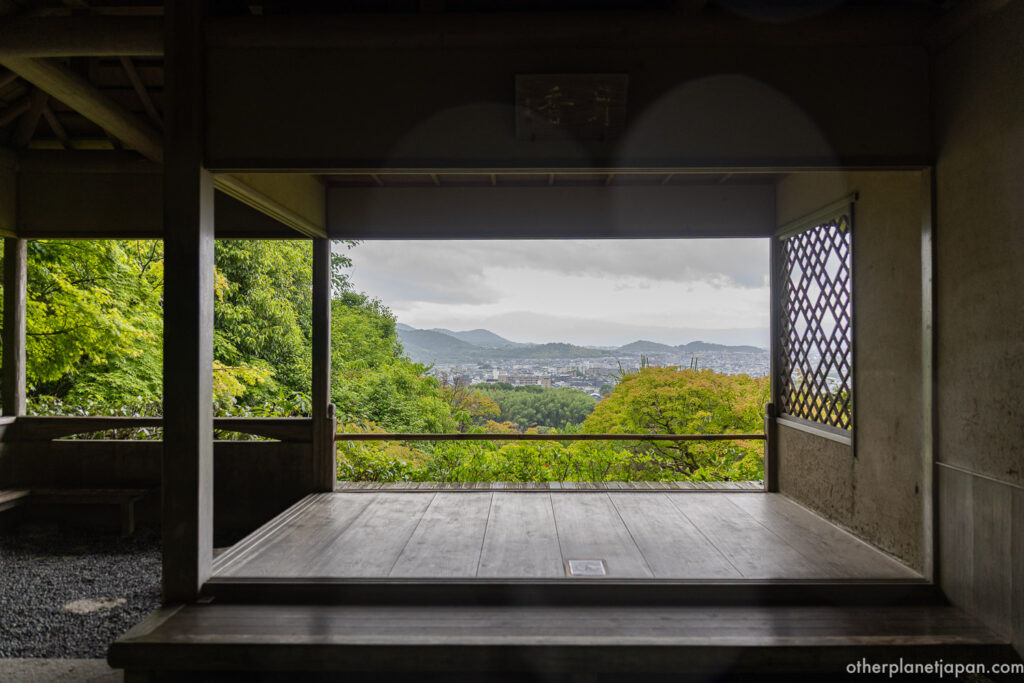
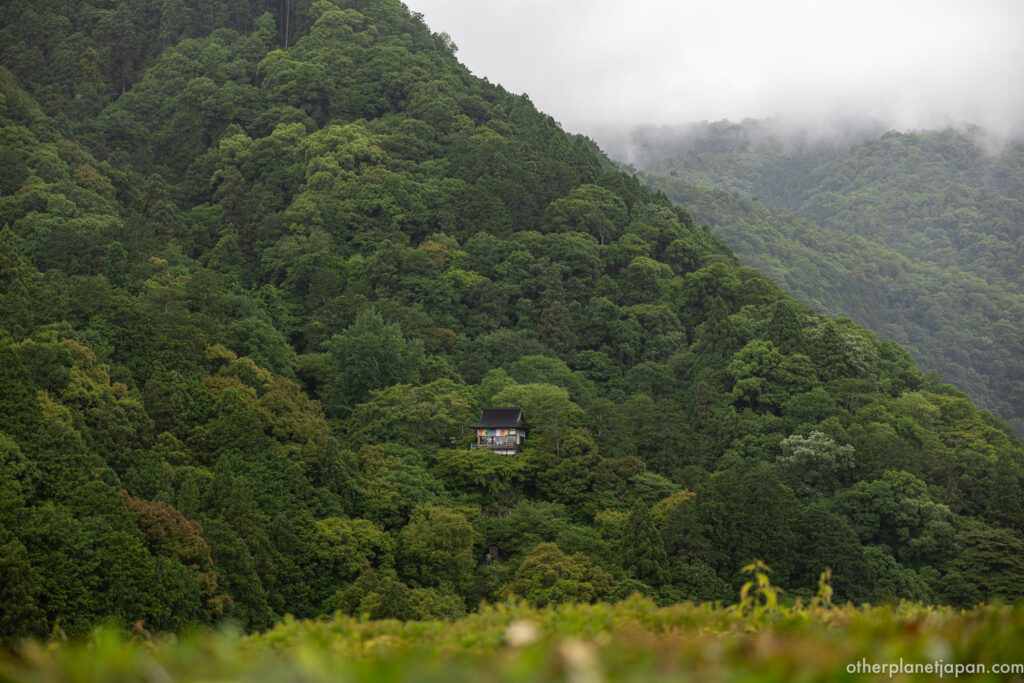
But it is the view that stops you. From the high point of the garden, the design opens deliberately onto Kyoto below—the city laid out like something framed, the way a shakkei or “borrowed scenery” garden is meant to pull the distance into the composition. Across the valley, on the far slope above the Hozu River, you can pick out Daihikaku Senkoji, a temple clinging to the opposite mountainside. Okochi did not build that view, but he built the place to see it from.
The Denjiro Okochi Memorial Museum
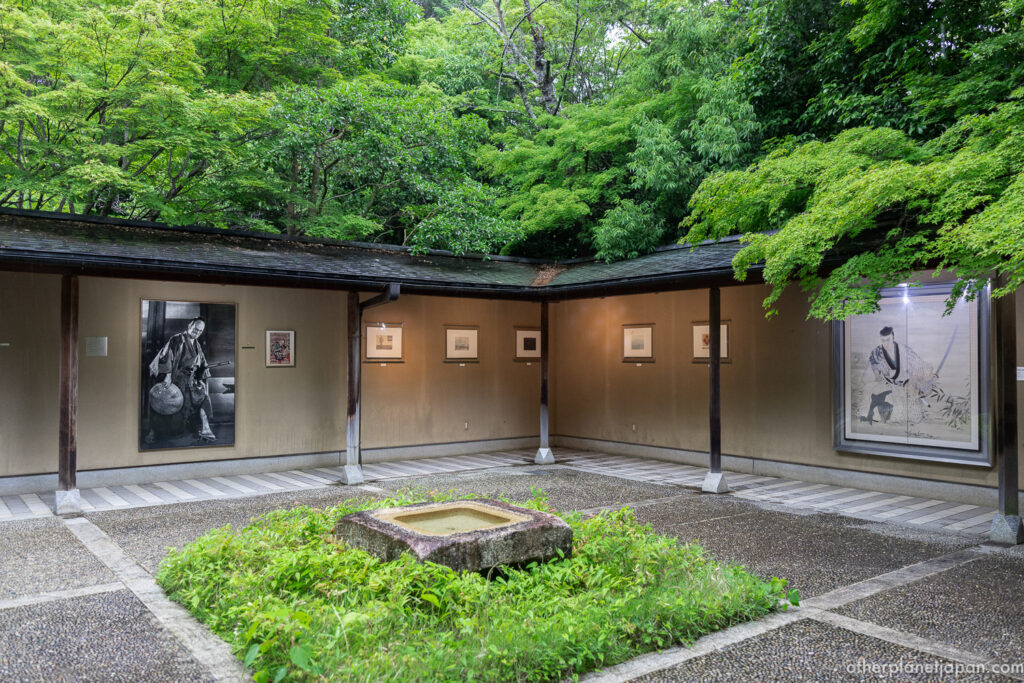
Near the end of the circuit, a small museum gathers stills, posters, and photographs from Okochi’s film career. It is a modest space, but it answers a question the garden raises on its own: who was the man who needed thirty years and a whole mountainside to feel at peace? The samurai roles look back at you from the walls, and the silence of the garden suddenly makes a little more sense.
Practical Information for Visiting Okochi Sanso
Okochi Sanso sits at the northern end of the Bamboo Grove, which makes it one of the easiest detours in all of Arashiyama—and one of the most rewarding.
Address: 8 Sagaogurayama Tabuchiyamacho, Ukyo Ward, Kyoto
Hours: 9:00–17:00 (last entry 16:30)
Closed: Open year-round
Admission: ¥1,000 (adults)
Time needed: 20–60 minutes
Strollers: The garden paths are uneven stone and steep in places, so strollers cannot be taken inside. You can leave yours at the reception desk before entering.
Best season: Early summer brings the green maples, or aomomiji; autumn brings the famous red foliage. If the green alone is this striking, the autumn color is almost certainly extraordinary—plan ahead, because so will the crowds.
Visiting in the rain: Do not be put off by wet weather. The rain deepens the moss, darkens the stone, and gives the whole garden a stillness that a sunny day cannot match. Some of Arashiyama’s loveliest moments happen under an umbrella.
A note on matcha: Older guides mention a bowl of matcha included with admission, but this is no longer offered.
Crowds: This is the quietest major spot in Arashiyama, full stop. The Bamboo Grove next door can be shoulder-to-shoulder; Okochi Sanso, one minute away, rarely is. That contrast alone is worth the admission.
Access
By train: JR Sagano Line to Saga-Arashiyama Station, about 15 minutes on foot. Alternatively, Randen Arashiyama Station, about 10 minutes on foot.
From the Bamboo Grove: About 1 minute on foot. The entrance is at the northern end of the grove.
Combine it with: The Bamboo Grove, Jojakkoji, and Nisonin temples are all within an easy walk, making for a natural half-day in the Sagano hills.
Map
Frequently Asked Questions
How close is Okochi Sanso to the Bamboo Grove?
About one minute on foot. It sits right at the northern end of the grove, yet feels worlds away from the crowds.
How long does a visit take?
Anywhere from 20 to 60 minutes, depending on whether you linger at the villa, the view, and the memorial museum.
Is matcha included in the admission fee?
No. Some older sources mention complimentary matcha, but it is no longer offered.
Can I bring a stroller?
The garden paths are uneven stone and include steep sections, so strollers are not permitted inside. You can leave yours at the reception desk.
Is it better to visit for the green maples or the autumn colors?
The early-summer aomomiji is beautiful enough on its own that the autumn foliage is almost certainly even more spectacular. Both are worthwhile; autumn simply draws far larger crowds.
Is it worth visiting in the rain?
Yes. Rain gives the moss and stone a depth and quiet that dry weather cannot, and the garden takes on a particular atmosphere that many visitors come to prefer.
Does Okochi Sanso have an official website?
No. Unlike many Kyoto attractions, Okochi Sanso does not maintain an official website. The practical information in this guide is based on the latest on-site signage and pamphlets.