Every Japanese child learns the rule early. Tell a lie, and Enma, the King of Hell, will pull out your tongue.
Nobody remembers who said it first. A grandmother, maybe, or a teacher who had heard one excuse too many. The warning settles in young and stays for life.
My tongue, for the record, is still attached.
So I was caught off guard to learn that in northwest Kyoto, a temple enshrines Enma as its principal deity. He isn’t there to scare children. He is the reason the place exists. I had never heard of anyone praying to the King of Hell. At Senbon Enmado, people do, and they do it quietly.
Senbon Enmado at a Glance
| Location | Senbon-dori, northwest Kyoto; about 15 minutes on foot or 4 minutes by taxi from Kitano Tenmangu |
| Grounds | Free to enter |
| Sanctuary viewing | ¥500, at set times only |
| Best time | Late September to early October for spider lilies; May 1–4 for Dai-Nenbutsu Kyogen |
| Time needed | About 10 minutes for the grounds; allow extra time for a sanctuary viewing or a hand-written goshuin |
Arriving at Senbon Enmado
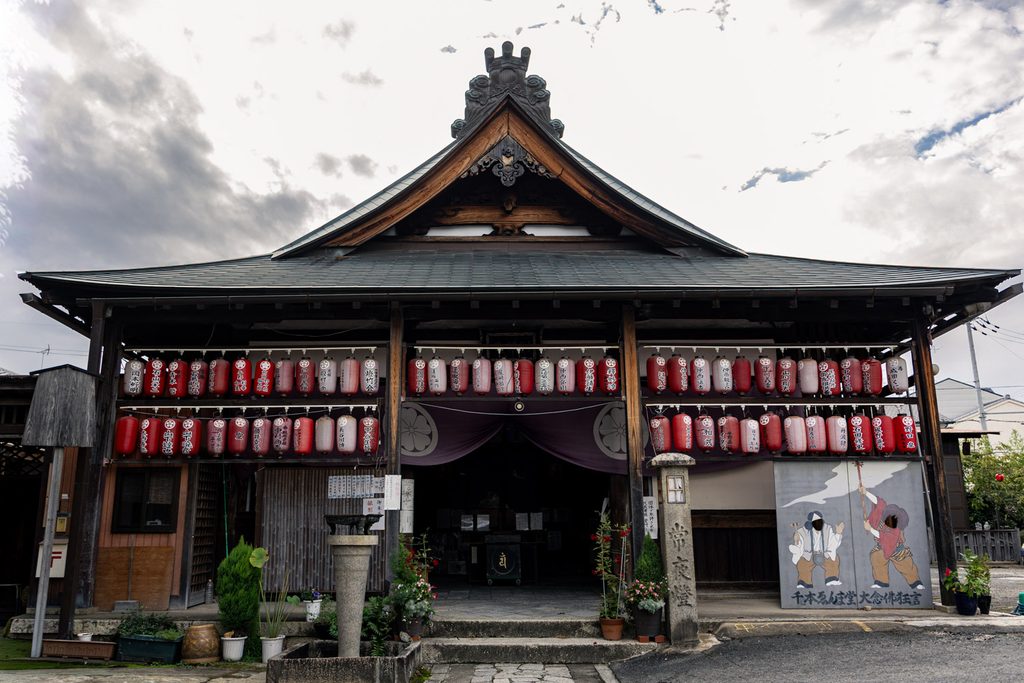
I almost walked right past it. Senbon Enmado stands on Senbon-dori, and it blends so completely into the streetscape that I nearly missed the entrance. There is no grand gate and no long approach. The grounds are fairly spacious, but the buildings are small and plain. Paper lanterns hang in rows across the front of the main hall, each brushed with a donor’s name.
An elderly man was walking three steps ahead of me. He stopped before the hall, bowed once, and left. That was all. It looked like someone dropping in on a neighbor.
A large incense burner stood in front of the hall. Burners like this usually smolder, but not a single stick was lit, and it smelled of ash rather than incense. Anything I added would have been a drop in the bucket.
The doors of the hall stood open. Through the glass, deep in the dark, I could make out Enma. I felt a small, old fear rise up from childhood. I hadn’t told a lie that day. I checked anyway.
Who Is King Enma (Enma Daio)?
Enma came a long way. He began as Yama, a lord of the dead in ancient India, and arrived in Japan with Buddhism. In Japanese Buddhist tradition, he is the judge of souls, reviewing the record of your life and deciding where you go next. Temple paintings give him a scowl and a judge’s cap.
Readers who grew up on anime may know him as King Yemma from Dragon Ball, a giant clerk stamping souls through like paperwork. When I first read about this temple, that was the picture in my head, not the terror of my childhood.
Ono no Takamura: The Poet Who Worked for Hell
Ono no Takamura was a real ninth-century court official and poet, and one of his verses appears in the Hyakunin Isshu, the classical anthology Japanese schoolchildren still study. According to legend, he served the emperor by day and Enma’s court in the underworld by night.
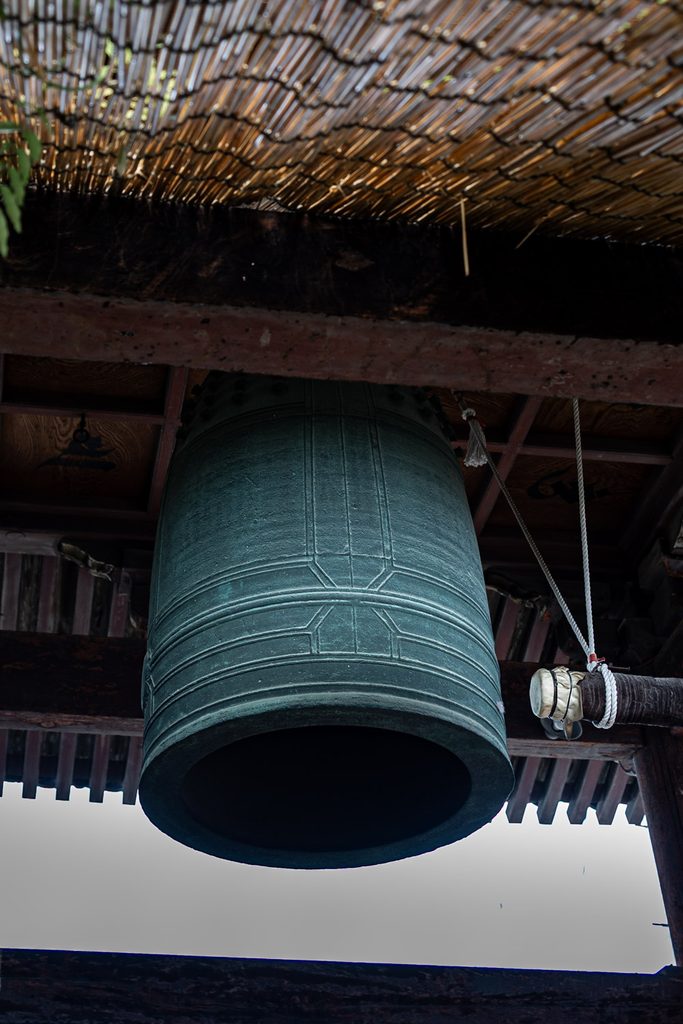
Tradition holds that Takamura carved an image of Enma and founded this temple. Enma is also said to have taught him a rite for welcoming the spirits of the dead back to this world. The temple still performs it every August during Obon, when families ring the temple bell to call their ancestors home.
The temple’s formal name, Injoji, comes from a Buddhist term for leading souls toward salvation. For the house of the King of Hell, it is a gentle name.
A Stupa for Murasaki Shikibu
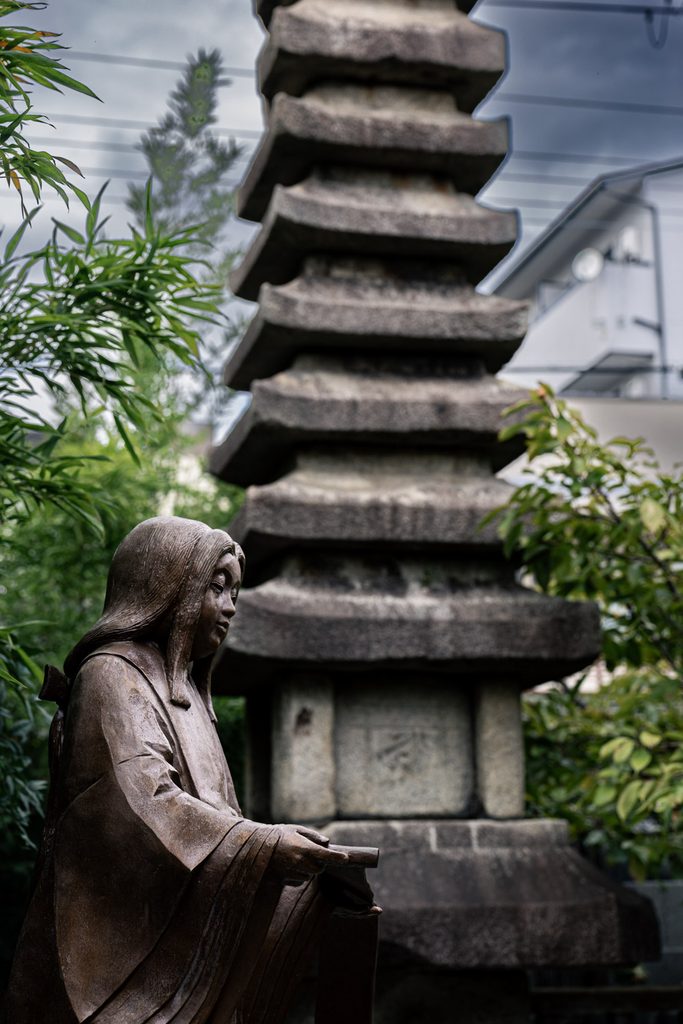
In the northwest corner of the grounds stands a ten-tiered stone stupa. It is about six meters tall and designated an Important Cultural Property of Japan, and according to the temple, its inscription dates it to 1386. It is dedicated to Murasaki Shikibu, author of The Tale of Genji, often called the world’s first novel. Tradition says it was raised after she was seen suffering in the afterlife, so that she might finally rest.
Why would she suffer? In medieval Japan, some Buddhists regarded fiction as a kind of lying, and a rumor spread that Murasaki had fallen into hell for writing Genji. So here she is, remembered at the temple of the judge who punishes liars.
Her bronze statue stands before the stupa, scroll in hand, face calm. I would like to think the stupa worked.
Dai-Nenbutsu Kyogen: The Board That Wasn’t a Prop
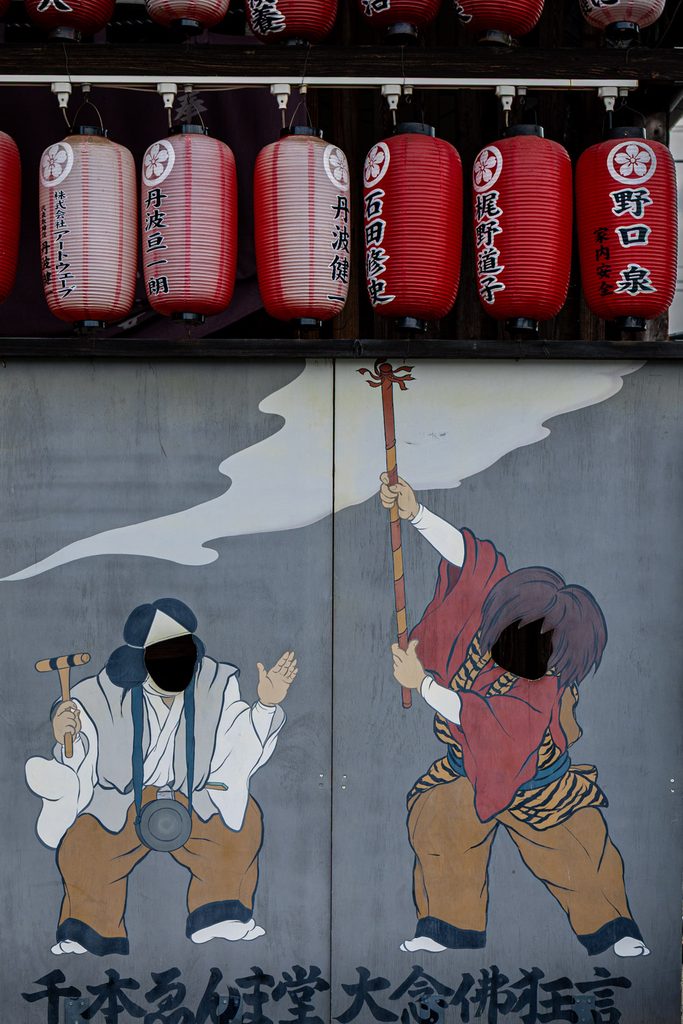
I misread this one. Beside the main hall stands a painted board with two costumed figures and holes where their faces should be, and I took it for a photo spot for tourists.
It turned out to be an advertisement for Senbon Enmado Dai-Nenbutsu Kyogen, a Buddhist folk drama performed here every May and registered by the City of Kyoto as an Intangible Folk Cultural Property. Standing there in September, May felt a long way off. I have already decided to come back for it.
A Goshuin Worth Waiting For at Senbon Enmado
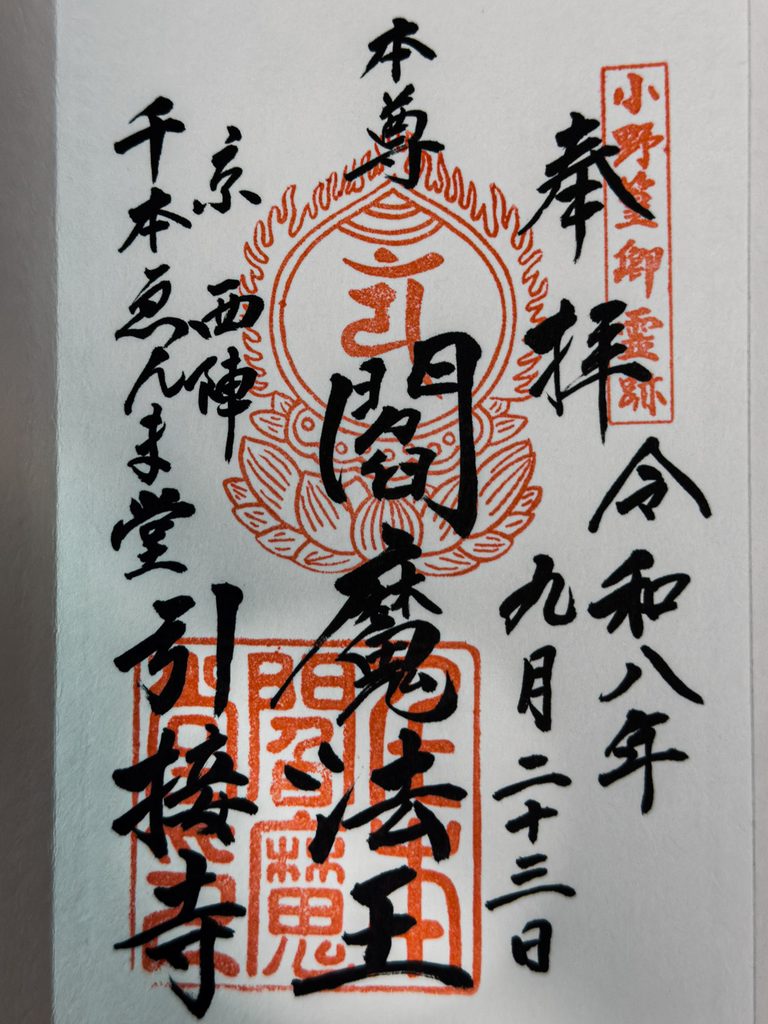
No one else was waiting. A goshuin is a temple seal brushed by hand into a special book, and at most temples it takes a few minutes. Mine took much longer. When the young man at the temple office handed the book back, I understood why. The page was dense with carefully written characters, more than I had ever seen on a single goshuin, and none of the many I have collected had been written with this much care.
He apologized softly for the wait.
I wanted to tell him how beautiful it was, but I didn’t. That much praise can sound like a lie, and this was the last place I wanted to be suspected of one.
Red and White Spider Lilies at Senbon Enmado
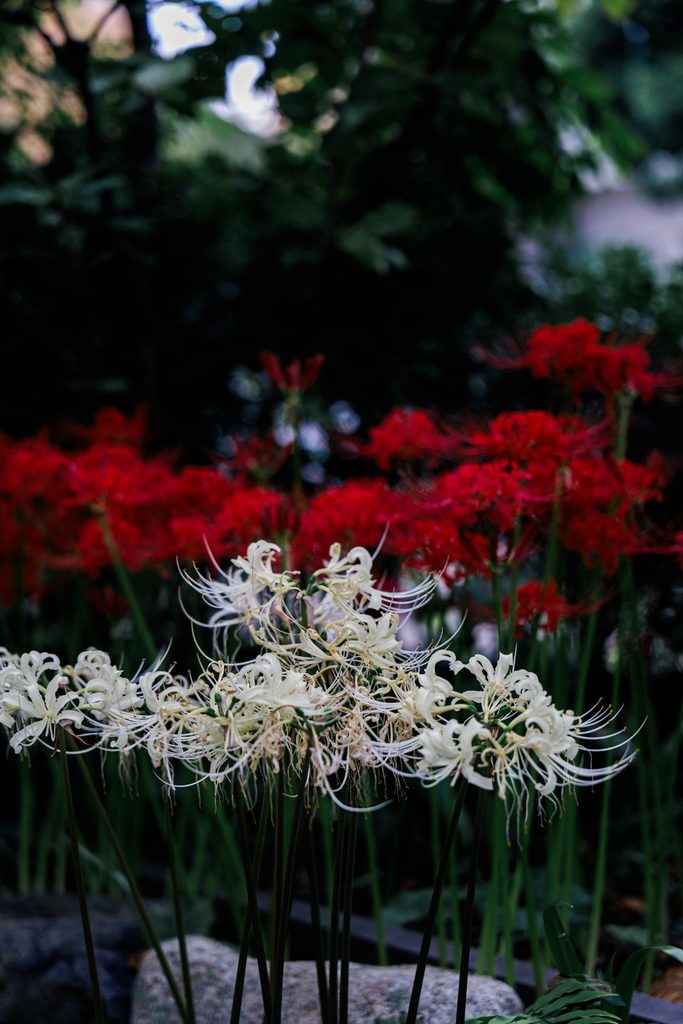
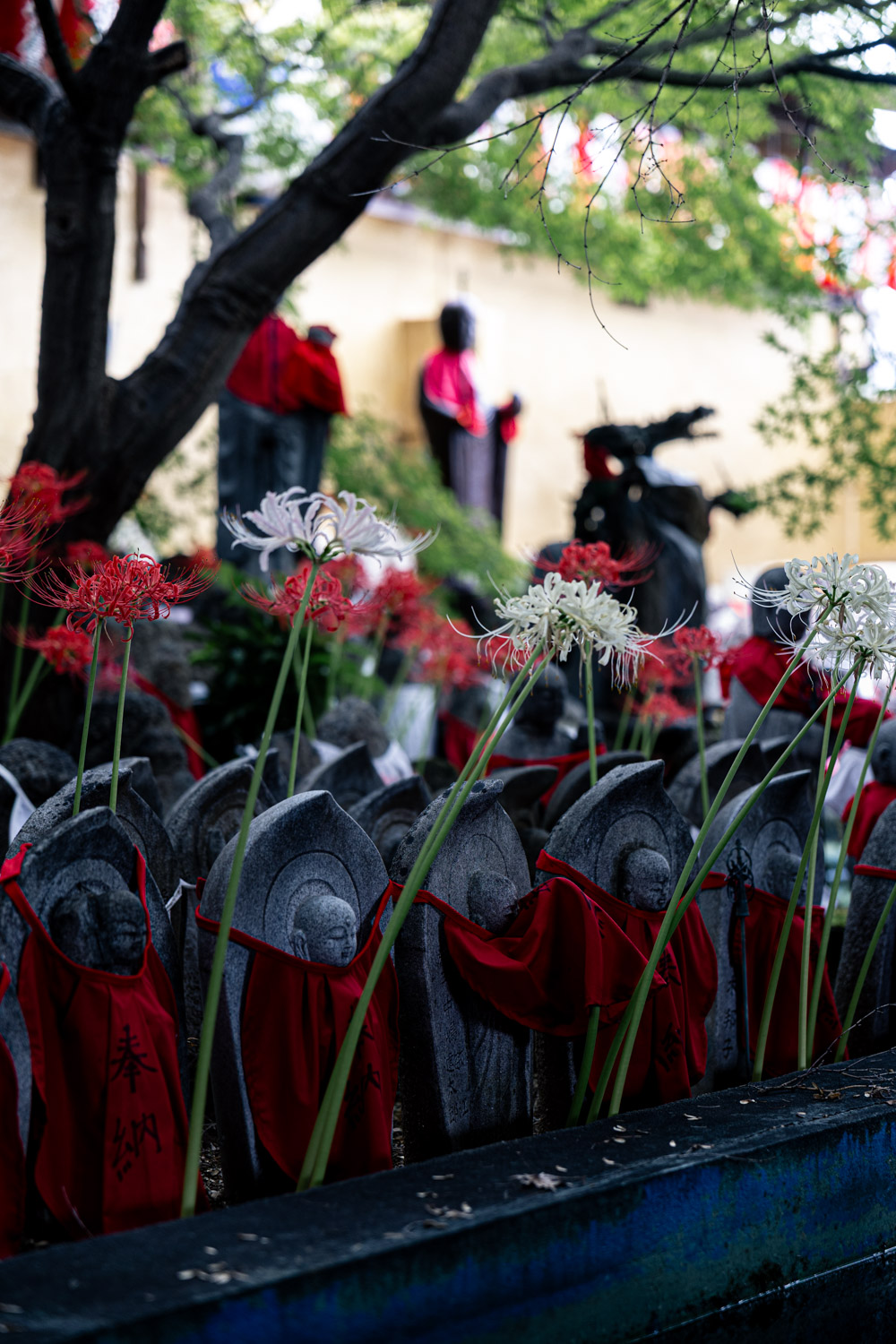
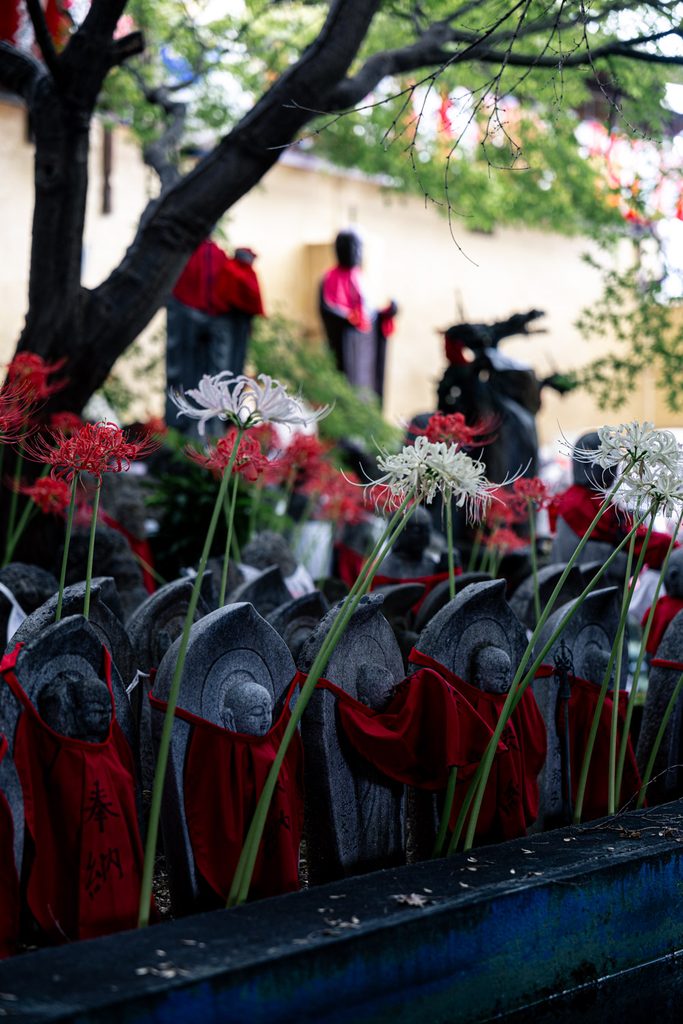
The day felt as hot as midsummer. Then I noticed the spider lilies and realized my body had the season wrong. Red higanbana pushed up between the Jizo statues and bloomed in corners all over the grounds. In Japan they open around the autumn equinox, when families visit their ancestors’ graves, and they have long been linked to the border between this world and the next.
A few white ones grew among the red, less common and easy to miss.
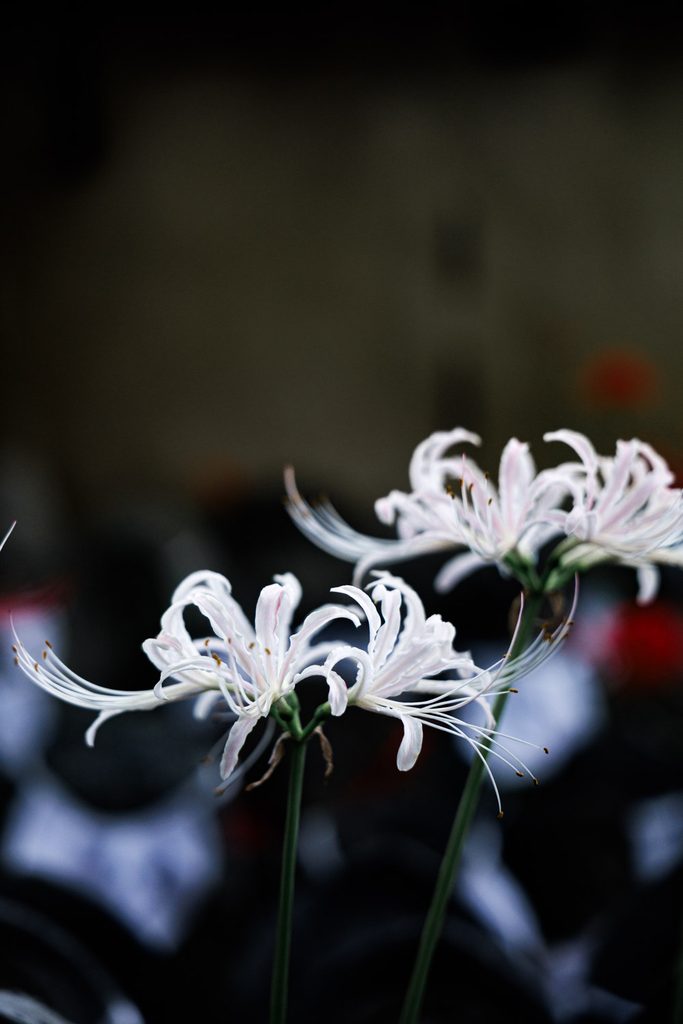
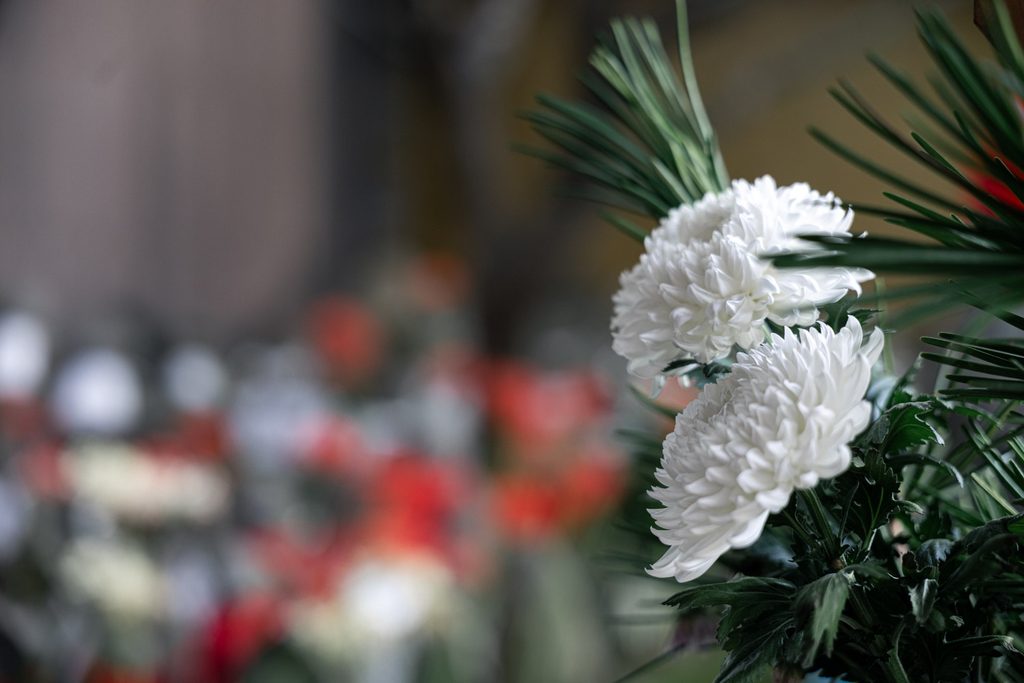
Near the hall, someone had left white chrysanthemums, the flower of mourning in Japan.
I ran out of time that day and never made it inside the sanctuary. I’ll be back for the Nishijin brocade goshuin book with Enma on the cover, and I’ll time the visit to one of the temple’s festivals. That isn’t a lie either.
Planning Your Visit to Senbon Enmado
If you go, here is what I wish I had known before my own visit.
Sanctuary Viewing: Timed Entry Only
I arrived between viewings and had to leave before the next one began. Entry to the sanctuary follows a fixed schedule, posted at the hall during my visit in September 2026. Gather in front of the temple office five minutes before your slot. The hall is small, roughly ten tatami mats, about the size of a small bedroom, and the viewing lasts about 10 minutes. Photography is not permitted inside.
| Item | Details |
|---|---|
| Admission | ¥500 |
| Viewing times | 9:30 / 10:30 / 11:30 / 13:00 / 14:30 / 16:00 |
| Meeting point | In front of the temple office, 5 minutes before each slot |
| Duration | About 10 minutes |
| Temple office hours | 9:00–17:00 |
Goshuin and Goshuin Books
Leave time for the goshuin. The hand-written ones here are brushed slowly, and they are worth the wait.
| Item | Price |
|---|---|
| Hand-written goshuin: Enma Hoo | ¥500 |
| Hand-written goshuin: Ono no Takamura | ¥500 |
| Limited autumn equinox goshuin (pre-written) | ¥600 |
| Kirie (paper-cut) goshuin, 2 designs | ¥1,300 each |
| Nishijin brocade goshuin book | ¥3,500 |
When to Go: Annual Events
The temple’s year runs well beyond spider lily season. Some dates shift from year to year, so the 2026 dates are shown where they differ, and it is worth checking the temple’s website before you go.
| When | Event |
|---|---|
| Jan 1–3 | New Year prayers |
| Feb 2–3 | Setsubun |
| Mid-April (April 19 in 2026) | Fugenzo Cherry Blossom Evening |
| May 1–4 | Dai-Nenbutsu Kyogen (evening performances; daytime performances on May 3–4) |
| Early July (July 4, 5, 7, 11, 12 in 2026) | Kaze Matsuri: evening wish-making and incense ceremony (paid; reservation required) |
| Aug 7–12 (2026) | Oshorai Mukae: welcoming ancestral spirits for Obon |
| Aug 16 | Oshorai Okuri: sending the spirits off |
| Dec 31 | New Year’s Eve bell ringing |
| 16th of every month | Enma’s Day: memorial service with a sermon (no reservation needed) |
One caution for August: during the Obon rites, the temple is open only to those taking part, not to sightseers, and photography is not permitted.
Getting to Senbon Enmado
The easiest approach is from Kitano Tenmangu. Taxis often wait near the shrine’s main torii gate, and the ride takes about four minutes. On foot, allow about 15 minutes. From Seimei Shrine, it is about a 20-minute walk, but hailing a cab in that area can be difficult.
| Address | 34 Enmamae-cho, Kamigyo-ku, Kyoto (on Senbon-dori) |
| Phone | +81-75-462-3332 |
| Bus | Kyoto City Bus to “Senbon Kuramaguchi,” then a short walk south; or to “Kenryuko-mae,” then a short walk north |
| Parking | Very limited; the temple asks visitors to use public transportation |
| Website | Japanese only |