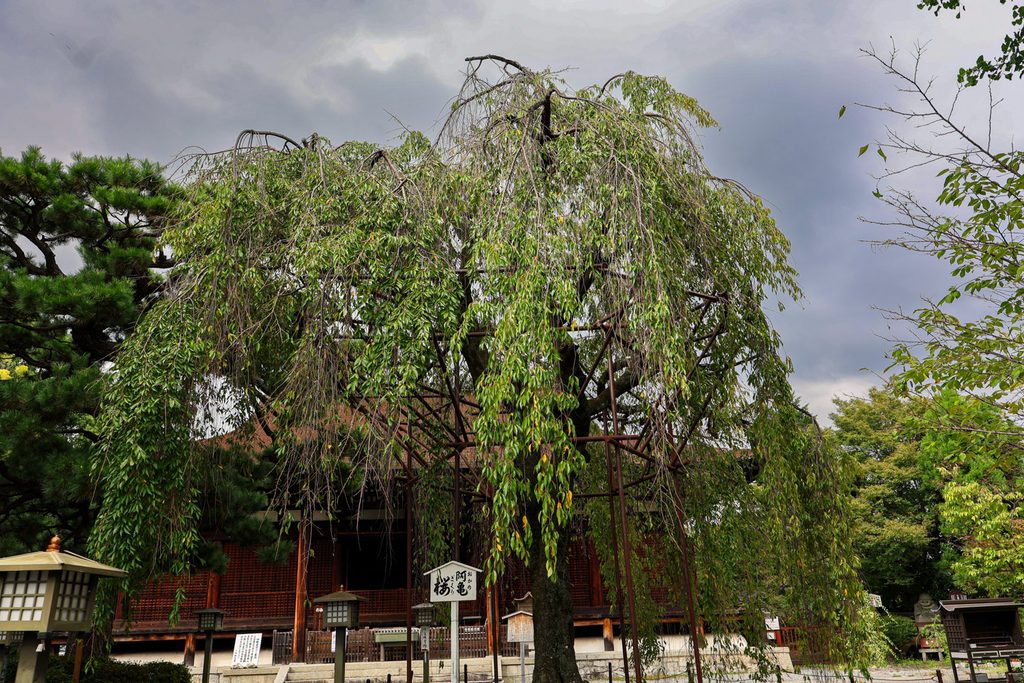
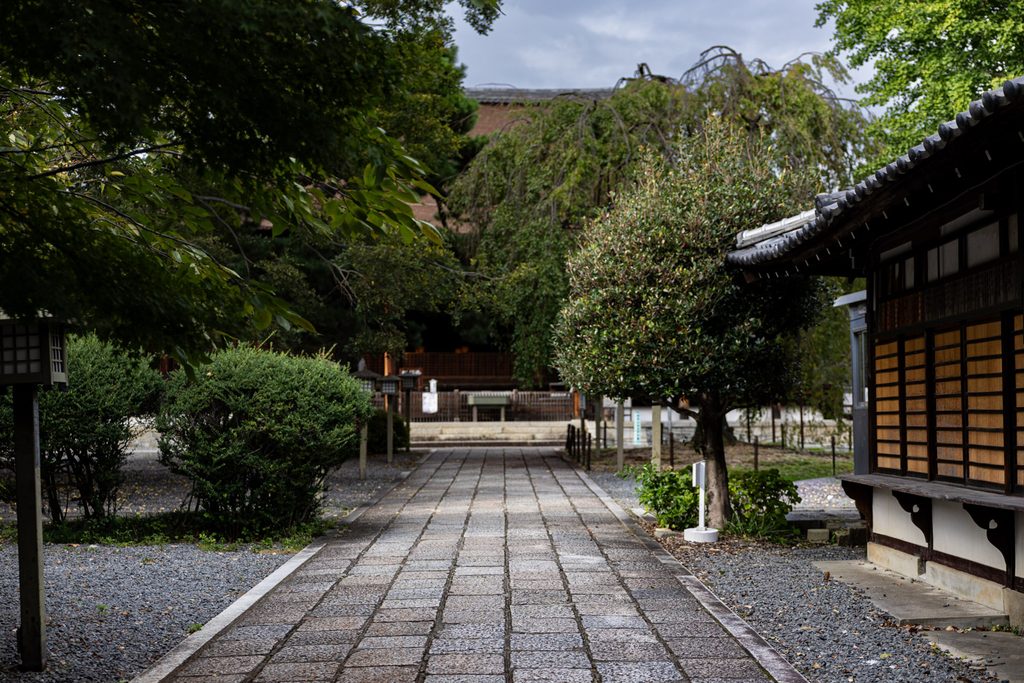
The smell hit me as soon as I walked through the gate. Ginkgo. Sharp and sour, a little rude, the smell of fallen nuts splitting open on the stone path. It was September 23, and the rest of Kyoto was still dragging summer behind it. But inside the grounds of Senbon Shakado, one ginkgo tree had already moved on to autumn without asking anyone.
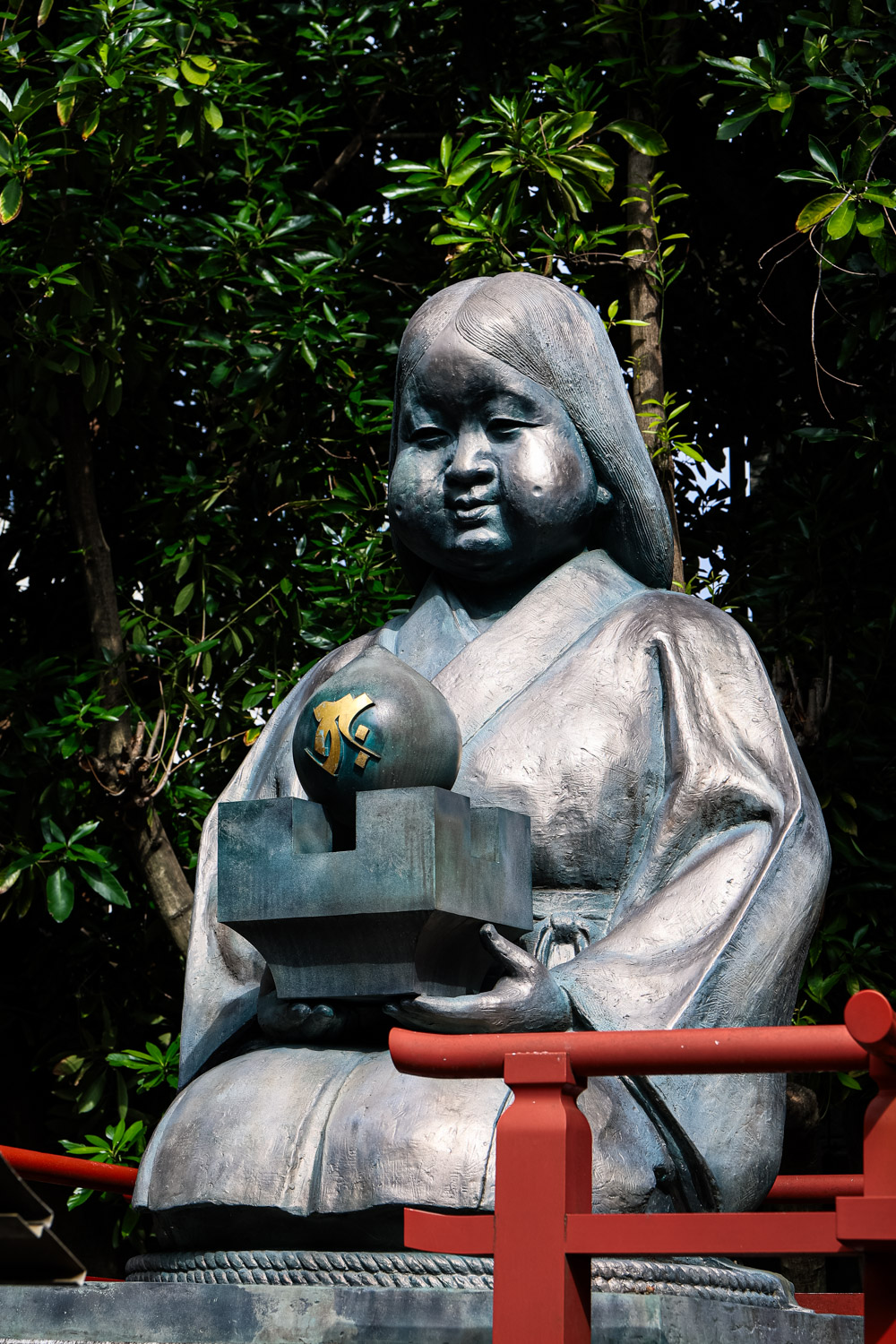
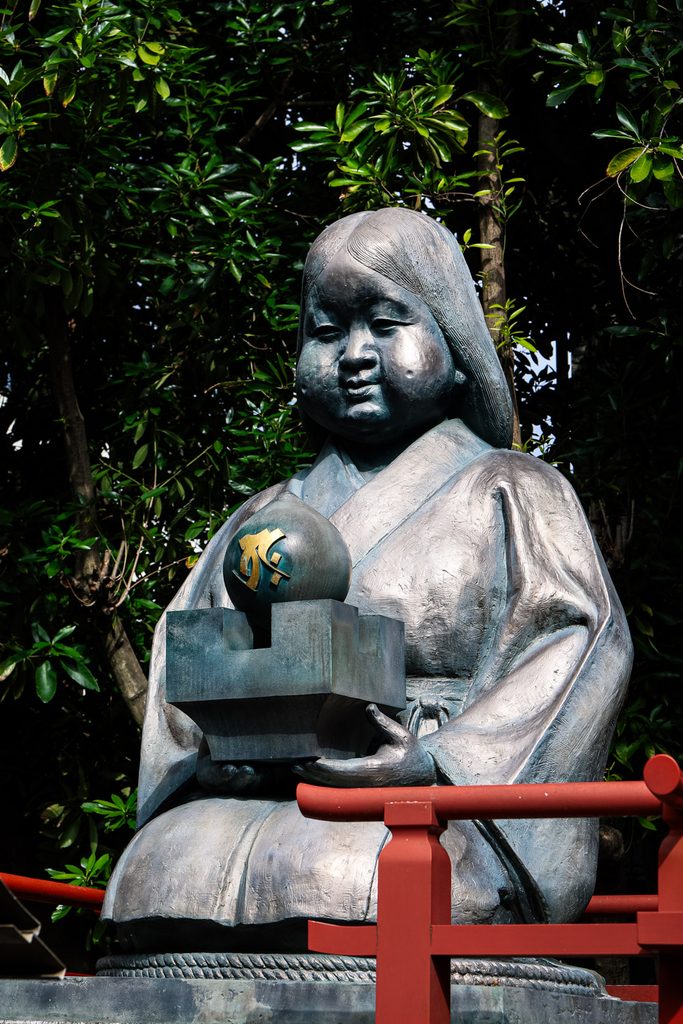
Just past the tree, she was waiting. Round cheeks. Narrow eyes. A small, closed-mouth smile. Okame.
Who Was Okame?
Almost every Japanese person knows this face.
She is the mask hanging at festival stalls, the round-cheeked woman also called Otafuku, the face of good luck. She is also, and here my standing as a cultural guide takes a hit, the smiling logo on a brand of natto, the sticky fermented soybeans that Japanese people eat for breakfast and visitors approach like a dare. For most of my life, Okame was the natto lady.
So I was already an adult when I learned she was remembered as a real woman. There is a statue of her here, and a memorial mound, and people still pray for her. Behind the mask, there had been a person.
The temple’s formal name is Daihoonji. It has a National Treasure main hall and Kamakura-period sculpture good enough to stop you mid-step, and yet in Kyoto it is known less for any of that than for Okame.
I learned her story inside the main hall.
The Oldest Hall in Central Kyoto, and a Thousand Okames
The main hall went up in 1227.
Kyoto has burned many times, most famously during the Onin War of the fifteenth century, when fighting reduced much of the city to ash. This hall came through it. Nothing older still stands in the old city center.
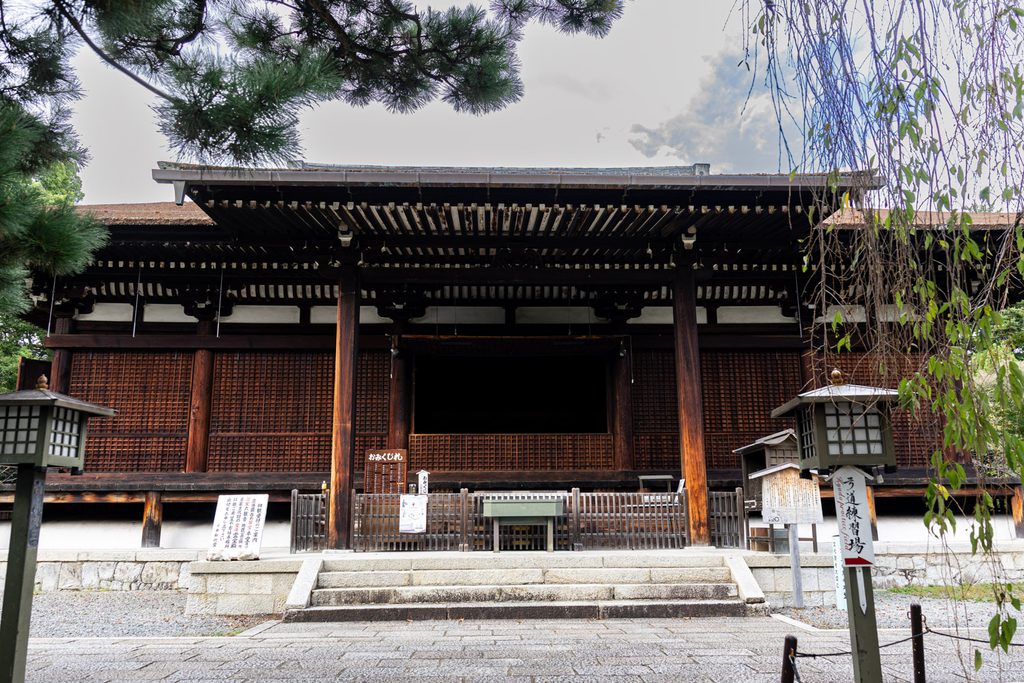
Step inside, and Okame is everywhere. Shelf after shelf of Okame dolls, donated from all over Japan, the same smile repeated over and over. The temple puts the number at more than a thousand.
Above them, painted panels tell her story. The explanations are in Japanese only, so here is what they say.
In 1223, a renowned master carpenter named Nagai Hida-no-kami Takatsugu took charge of building this hall. Partway through, he cut a pillar too short. Not just any pillar, either. It was a precious timber donated by the faithful, and there was no way to replace it.
Nothing he tried worked. His wife, Okame, watched him come apart and began to pray, day and night, before the temple’s Buddha, which sat in a temporary hall while the new one rose. At dawn on the seventh day, she saw the Buddha glowing inside its shrine, holding a set of masugata in its lap. These are the stacked wooden brackets that sit on top of a pillar and carry the weight of the roof.
She told her husband what to do. Cut every pillar down to the same length, then set brackets on top of each one to make up the difference. He did exactly that, and the result was better than anyone expected: a low, gentle roofline and a frame that seems planted in the earth.
The ridgepole-raising ceremony was held on December 26, 1227. Okame was not there. She had worried that if people learned the hall had been saved by a woman’s idea, her husband’s name as a master builder would never recover. The day before the ceremony, she took her own life.
How much of this really happened, I can’t say. I kept wondering whether that was simply what marriage meant in the thirteenth century, that a story which could have been a comedy had to end as a tragedy. Maybe that is exactly why people kept telling it.
At the ceremony, Takatsugu fixed a mask of her face to the top of the gohei, the ceremonial wand of paper streamers, and prayed for her. Japanese builders still attach an Okame mask to the gohei at ridgepole ceremonies, and the custom is said to begin with this story. The monk Giku, the temple’s founder, built a memorial mound for her on the grounds, and people came to call it Okame-zuka. From around the middle of the Edo period, faith in Okame as a bringer of good fortune spread across the country.
I hadn’t known the ending. I suspect most of the Japanese people who know her face haven’t either. The woman smiling on my natto came from this.
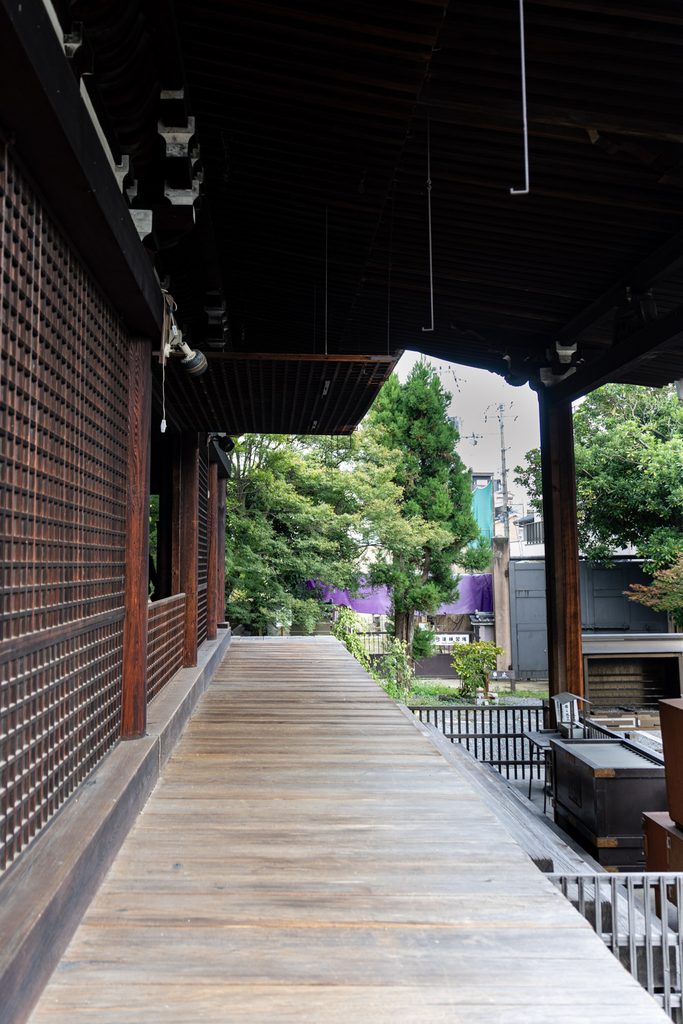
I walked back out along the veranda. Before I read those panels, the brackets over the pillars had looked like old joinery. Now I couldn’t stop looking up.
The Thing in the Treasure Hall I Couldn’t Name
In the Reihokan, the temple’s treasure hall, I found the Six Kannon, a National Treasure. Jokei, a sculptor of the Kei school associated with Unkei and Kaikei, is credited with carving them from wood roughly eight centuries ago. Their skin looks as soft as a baby’s cheek. I did not touch them.
Each of the six watches over one of the six realms of rebirth in Buddhist thought. According to the temple, this is the only place in Japan where all six are preserved and enshrined together.
Further in stood something I couldn’t identify. Two enormous frames, about seven meters tall, carved with a phoenix and a dragon. I grew up in this country. I had no idea what I was looking at.
They turned out to be the ornamental frames of a dadaiko, the giant drum that accompanies bugaku, the court dances once performed as offerings. This pair dates to the Muromachi period and came from a great sutra hall that used to stand in Kitano, a few minutes from here.
The hall has touch-screen guides. Oddly, the Japanese text is so brief it borders on curt, while the English version goes into real detail. It may be the only spot in the temple where reading English puts you ahead.
About Senbon Shakado (Daihoonji)
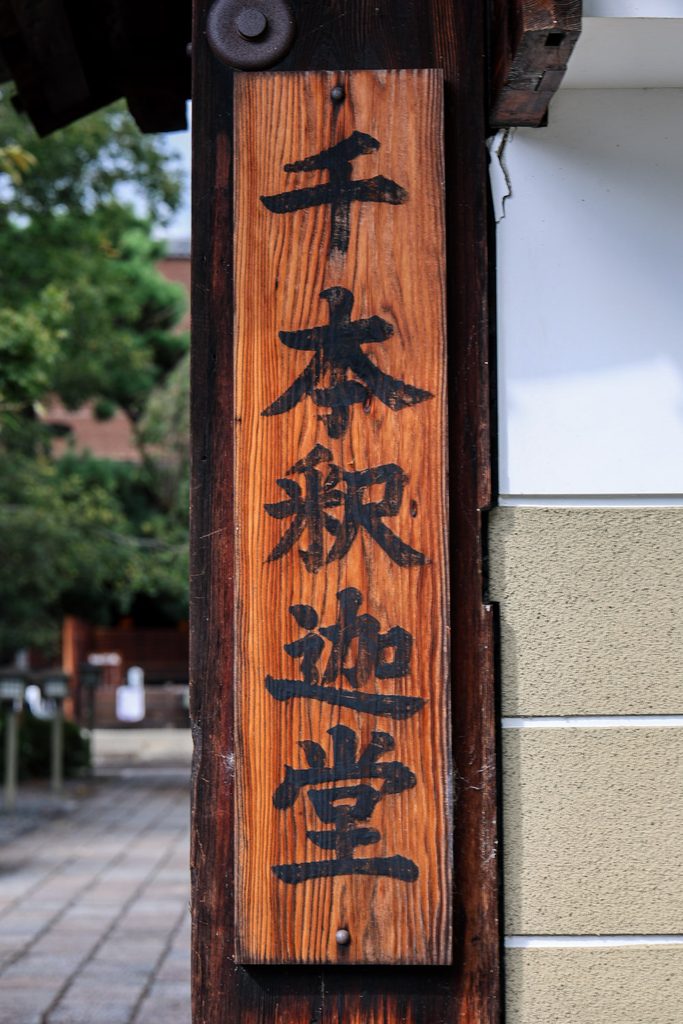
Senbon Shakado is the everyday name of Daihoonji, a temple of the Chizan branch of Shingon Buddhism in Kyoto’s Kamigyo Ward. The monk Giku founded it in 1220, early in the Kamakura period. The main image is Shakyamuni, the historical Buddha, and it is a hidden Buddha, kept out of view on all but a few days a year.
The main hall, raised in 1227, is the oldest building standing in rakuchu, the historic heart of Kyoto, and is designated a National Treasure. The temple is a five-minute walk from Kitano Tenmangu Shrine, yet outside festival days it is rarely crowded.
What to See at Senbon Shakado
The main hall. The Okame dolls and the painted panels of her story are inside. From the veranda, look up at the bracket sets over the pillars.
The Okame statue and Okame-zuka. The statue stands just past the ginkgo near the entrance. Her memorial mound, Okame-zuka, is nearby.
The Reihokan (treasure hall). Along with the Six Kannon and the dadaiko frames, it holds the Ten Great Disciples attributed to Kaikei, also a National Treasure.
Okame-zakura. The weeping cherry in front of the main hall carries Okame’s name. In spring, its branches hang over the hall in bloom.
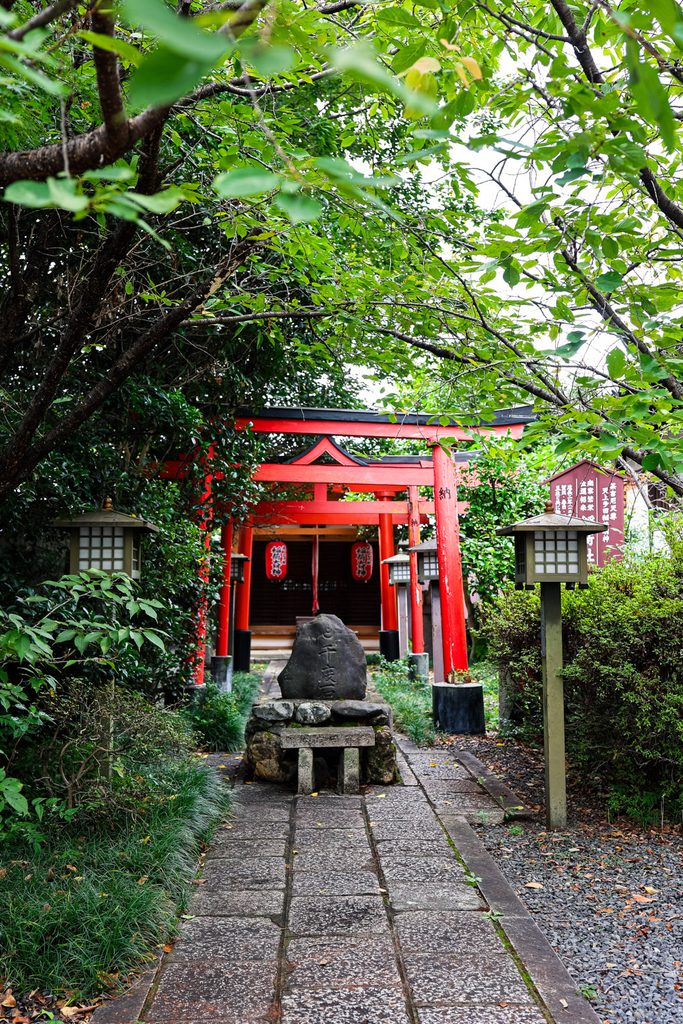
The Inari shrine. A small shrine sits behind a line of vermilion torii in one corner of the grounds, down a quiet path wrapped in green.
Senbon Shakado Hours, Fees, and Time Needed
Plan on under an hour.
| Hours | 9:00 a.m. to 5:00 p.m. (enter the Reihokan by 4:00 p.m.) |
| Closed | Open every day |
| Admission | ¥700 for the main hall and Reihokan |
| Time needed | 30 to 60 minutes |
| Goshuin | ¥500, written by hand |
You can walk the grounds freely. The admission fee covers the main hall and the Reihokan.
Outside festival days, crowds are unlikely to be a problem. I arrived around 2 p.m. on a national holiday, exactly when I expected company, and found only a few other visitors. It was quiet enough that when someone dropped a coin into the offering box on the far side of the grounds, I heard it land. Festival days are a different story, and the December Daikon-daki in particular draws long lines.
Goshuin at Senbon Shakado
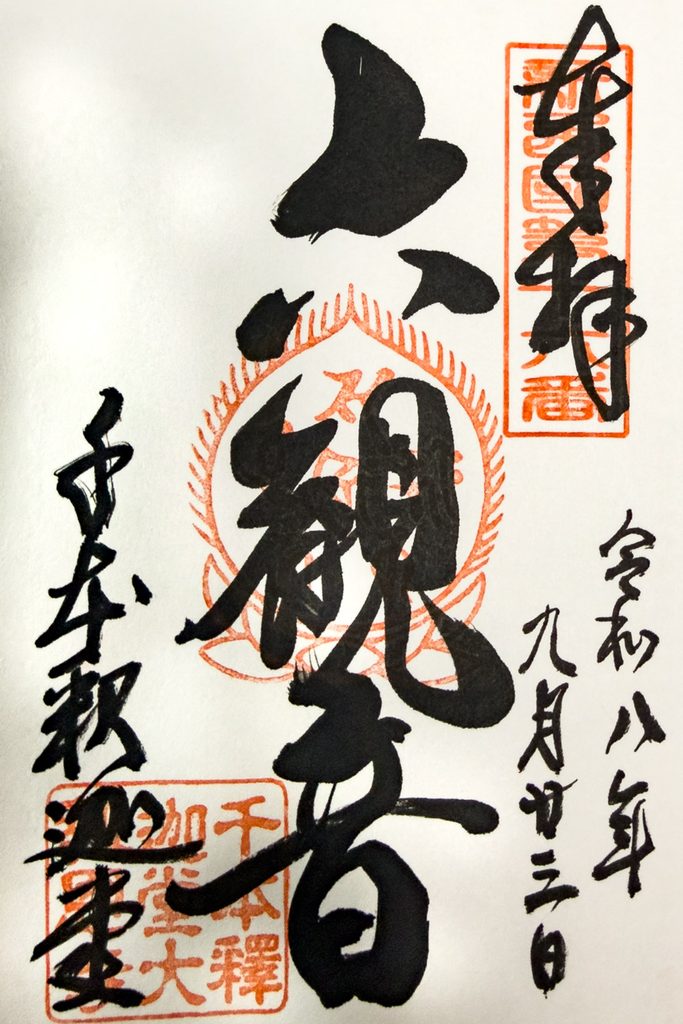
The goshuin reads Rokkannon, Six Kannon, after the statues in the Reihokan. It costs ¥500 and is brushed directly into your book. If you plan to go inside the halls, hand your book over first and collect it on your way out. No one gave me a number tag the day I visited, which suggests requests are not heavy here. You won’t find the long lines of Kyoto’s busier temples.
Seeing Senbon Shakado in English
The temple’s website has no English pages, and the Okame panels in the main hall are in Japanese only. For a detailed English introduction, the multilingual VR map guide to Senbon Shakado is worth a look before you go. Inside the Reihokan, the English touch-screen text is more detailed than the Japanese.
Festivals and When the Hidden Buddha Is Shown
The hidden main Buddha is unveiled only on a handful of festival days each year.
| Date | Event | Hidden Buddha on view |
|---|---|---|
| January 1 | Makiwara-sharei (ceremonial archery) | Yes |
| January 2 | Chona-hajime (carpenters’ first work of the year) | No |
| February 3 | Okame Fuku Setsubun-e (Setsubun bean-throwing) | Yes |
| May 8 | Hanamatsuri (the Buddha’s birthday) | Yes |
| August 8 to 16 | Rokudo Mairi (Obon rites for ancestral spirits) | Yes |
| December 7 to 8 | Jodo-e and Daikon-daki (simmered radish) | Yes |
During Rokudo Mairi, ancestral spirits are welcomed from August 8 to 12 and sent off on August 16. The December Daikon-daki is a Kyoto winter tradition: bowls of hot simmered daikon radish, eaten as a prayer for good health through the year. The January 2 Chona-hajime is a ritual in which temple carpenters pray for safety in the year’s work, and it is designated an intangible folk cultural property by the city of Kyoto. For a temple whose founding story turns on a carpenter, it fits. Dates can shift, so check the events page on the temple’s official website (Japanese only) before you plan around one.
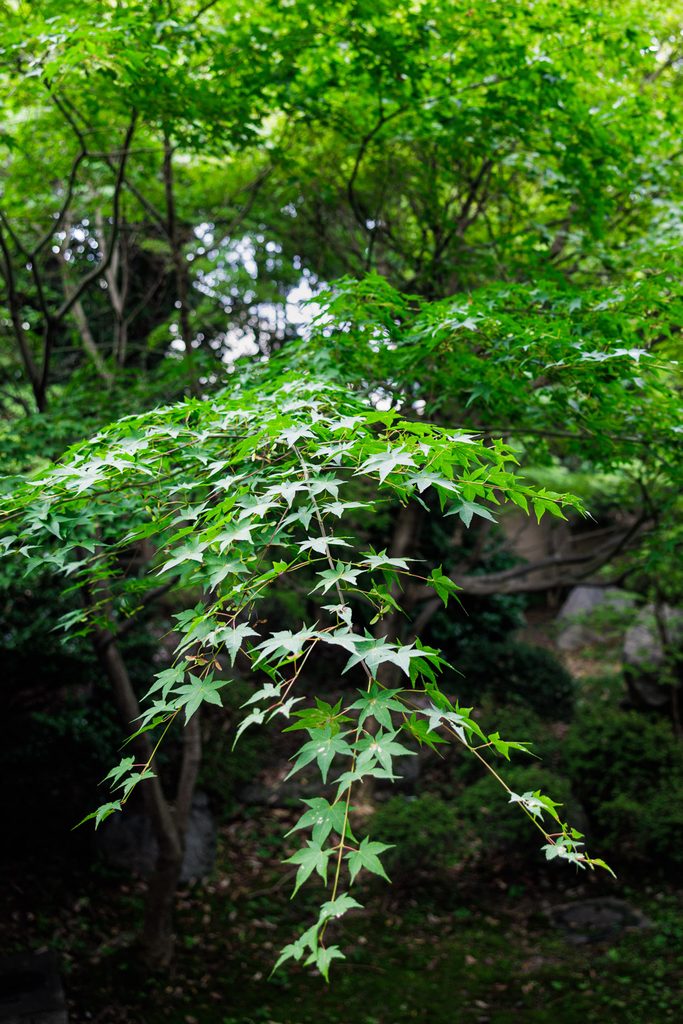
The grounds have hydrangeas, cherry blossoms, ginkgo, and maples. None of them is famous, and few people come to see them. When I visited in late September, it was the ginkgo that announced autumn first.