One sentence led me back to Daisen-in.
Keep your patience long and your heart round. Don’t lose your temper. Make much of others, and little of yourself.
Ki wa nagaku, kokoro wa maruku, hara tatezu, hito wa okiku, onore wa chiisaku.
That was everything I knew about Daitoku-ji, the sprawling Zen temple complex in northern Kyoto. My father went first. Years later, my older brother went on his school trip and came home talking about it. Then my own school trip took me through the same gates. Nobody in my family passed down the name of a building or the shape of a garden. Only this line.
It was not much to go on. Daitoku-ji is not a single Kyoto Zen temple but a walled neighborhood of more than twenty sub-temples, each behind its own gate. Somewhere inside was the one that had given my family that line. Finding it with nothing but the line itself was like hunting for a house with the family motto in place of an address.
Daitoku-ji, Gate by Gate
The grounds go on and on, full of striking buildings and gardens, and I remembered almost none of them. That surprised me more than anything I saw.
I should have seen it coming. School trips have left me with strange souvenirs before. At Tofukuji, the only thing I remembered was a 600-year-old toilet. So I did the only thing I could think of, and went gate by gate. Rock gardens, Buddhist statues, moss. Nothing. At Ryogen-in and Zuiho-in, I found two fine gardens and not one memory between them.
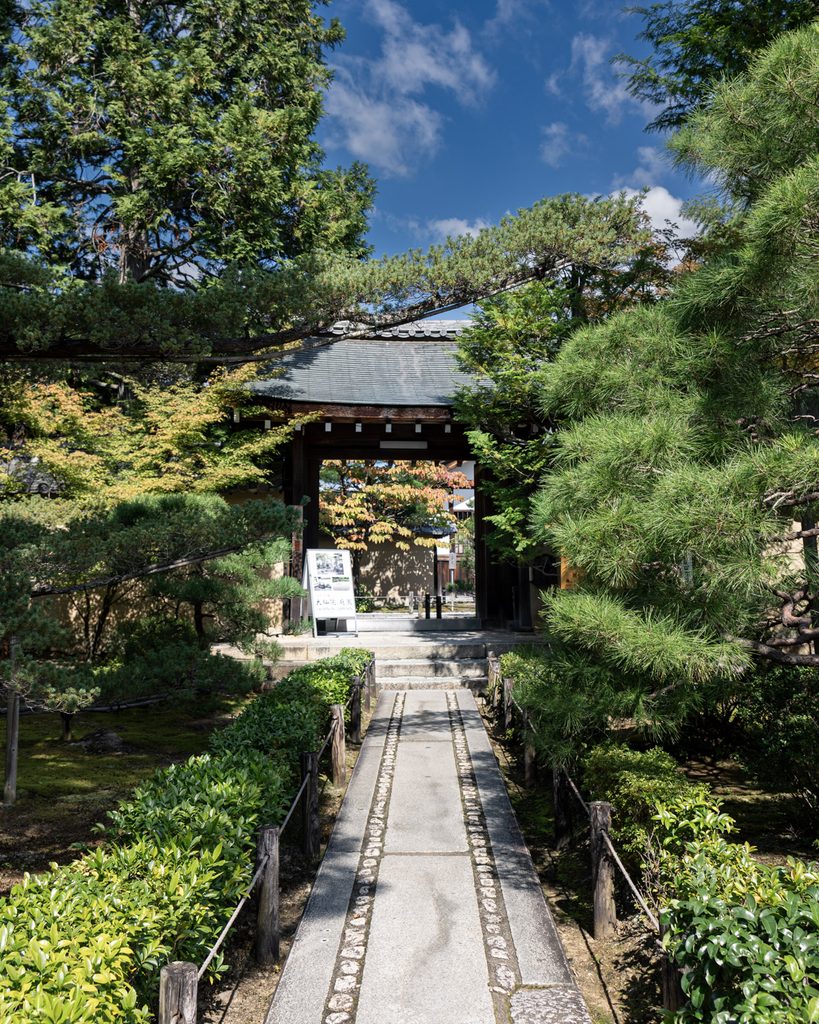
The gate I finally reached was Daisen-in.
A Name I Didn’t Know I Was Carrying
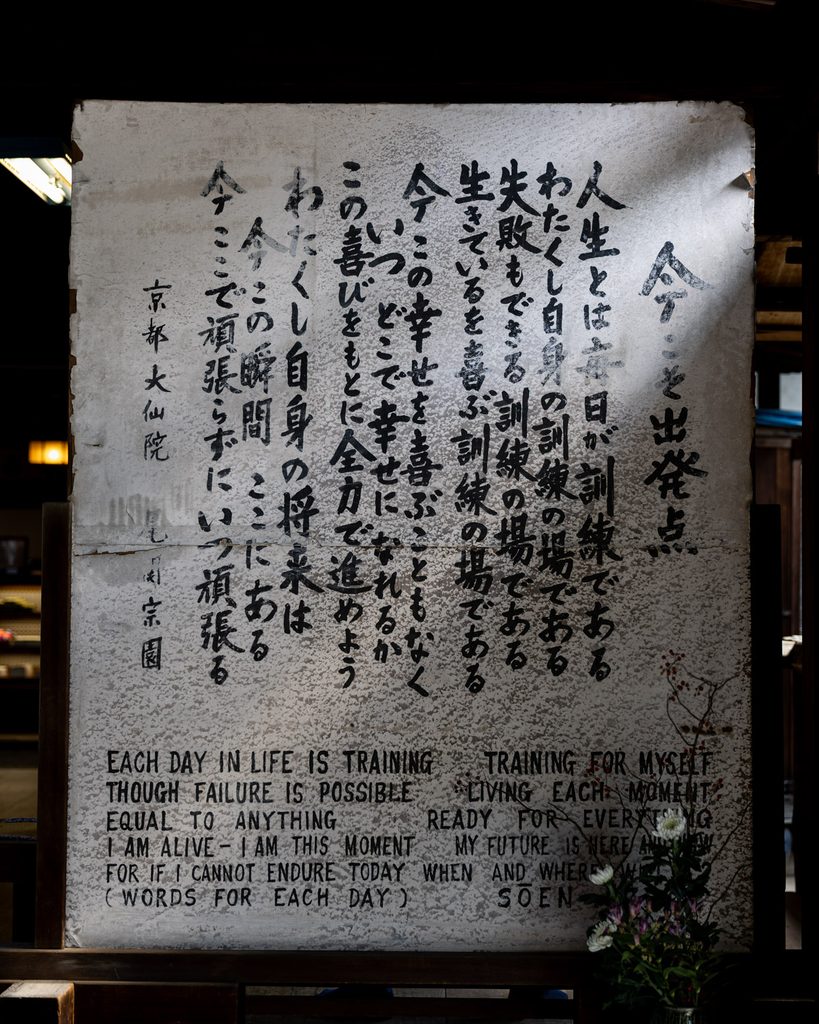
Inside Daisen-in stands a large board, so worn and stained that at first I had no idea what I was looking at. Then I read it. Ima koso shuppatsuten: now is the starting point. Below it run the words of Ozeki Soen, the temple’s longtime head priest and a monk known for his books. Underneath, an English version begins, “Each day in life is training.”
His books were for sale nearby. I saw the name on the covers, and I knew. This was the place.
I couldn’t have described the garden if you had paid me. Yet a Zen priest’s name had stayed with me the whole time. It turned out one of his books had been on a shelf at home all along.
The Scroll
I was sure. I still wanted proof.
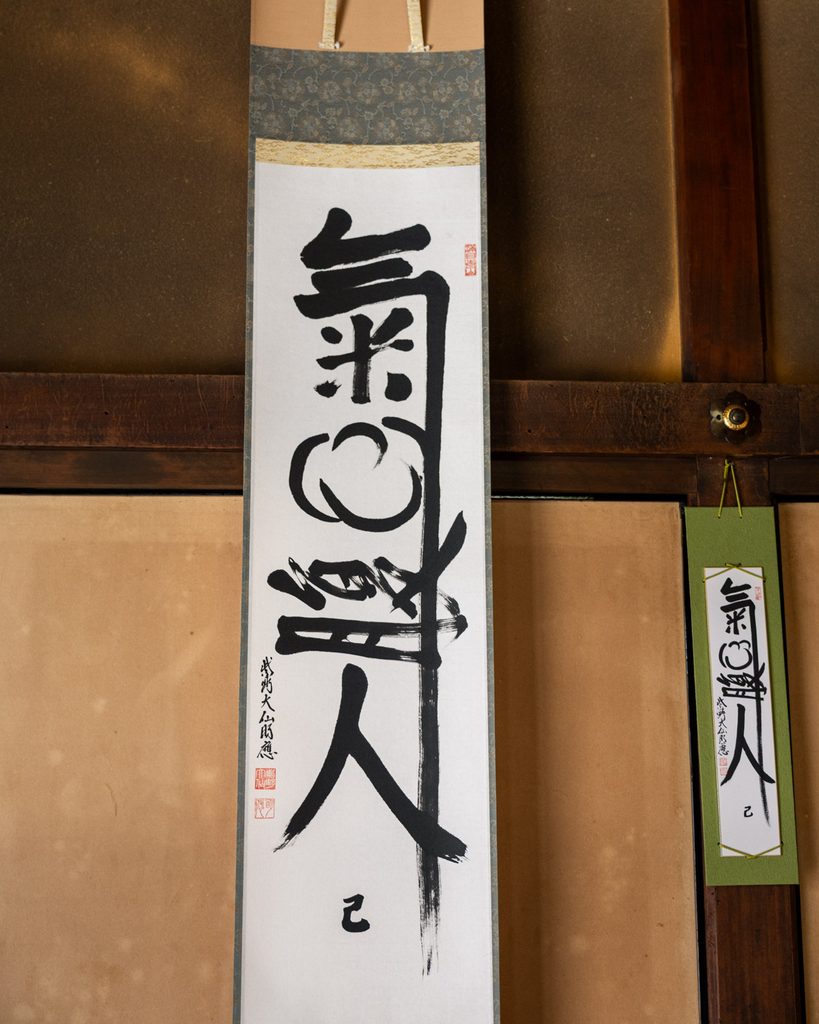
Several hanging scrolls are on display inside the temple, and one of them carried the line. I can’t swear it was the same scroll I saw as a student. But the moment I read the opening characters, ki wa nagaku, I knew it.
The brushwork follows its own advice. The character for heart is drawn as an open circle. The character for person stands tall and wide. The last one, onore, the self, sits at the bottom of the scroll, small enough to overlook. The calligraphy is by Fukumoto Sekio, a priest of the Daitoku-ji school of Rinzai Zen.
Beside it hung a smaller copy of the same words. That one was for sale.
A Tea Room You Can Only Look Into
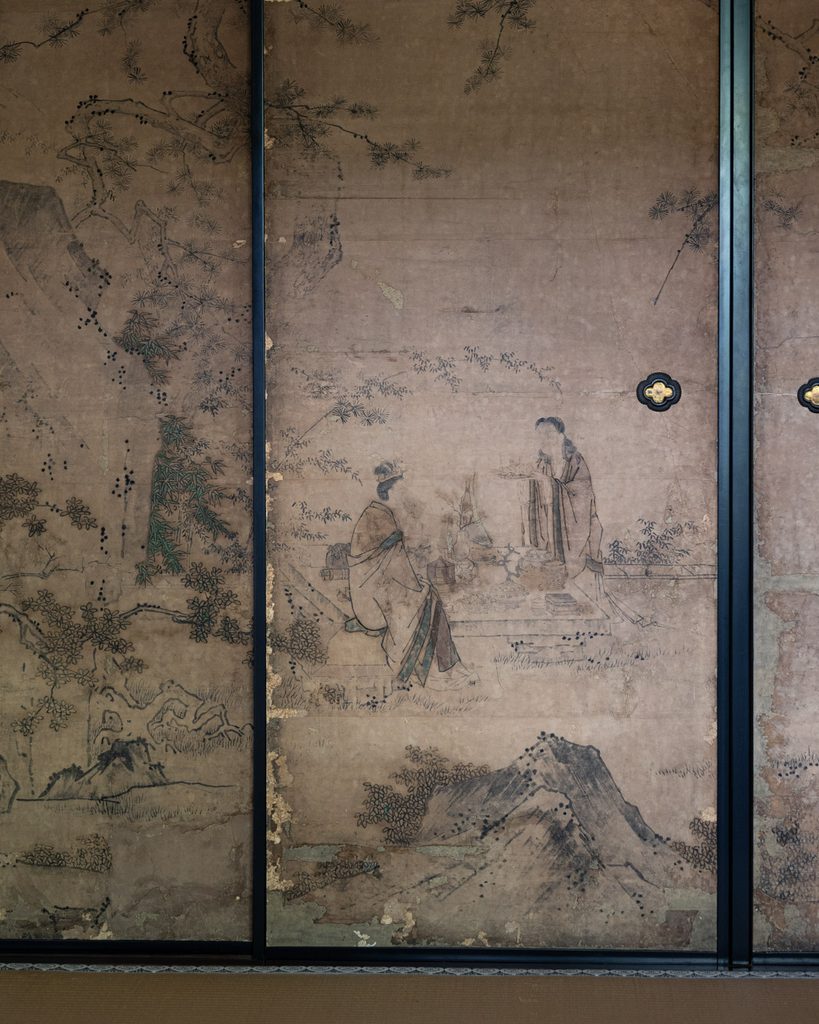
A wooden sign stands on the tatami: National Treasure, Shoin Tea Room, No Entry. A board beside it recounts what happened here, as the temple tells it. One summer, the warlord Toyotomi Hideyoshi came to Daisen-in, and the tea master Sen no Rikyu served him here.
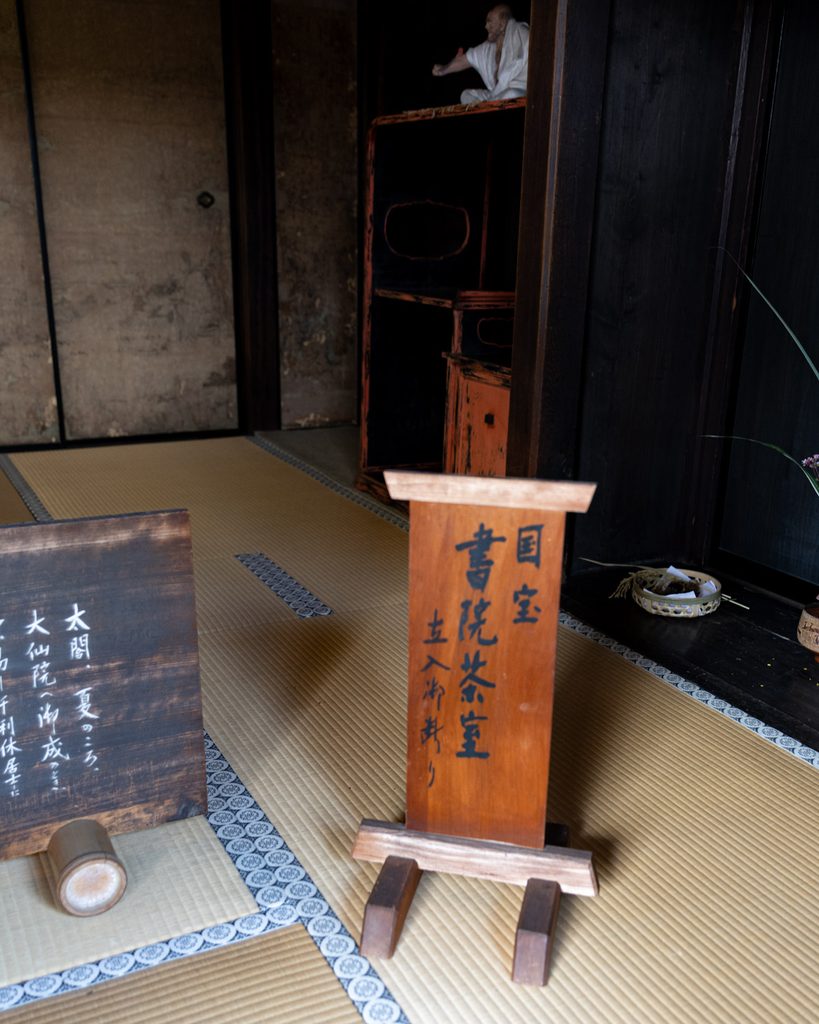
The sliding doors are worn, their paintings rubbed thin. Still, the brushwork is finer than I expected, delicate even where it has faded. Even for a Japanese visitor, paintings that unfold across a room like a story are something you meet almost nowhere but a temple.
I doubt I forgot them. More likely, my fourteen-year-old self walked right past.
The Thick Binder
On the veranda, I sat down with my pamphlet and tried to understand the temple in front of me. It was a single sheet, the free kind you pick up if you feel like it, and I studied it hard. Then I looked around. The travelers from abroad on the veranda were holding thick binders, practically guidebooks.
Earlier, I had heard the staff greet other visitors in English and ask where they were from. I had spoken Japanese. So I got the pamphlet. Not one Japanese visitor had a binder.
The binders seemed to come in several languages. Honestly, I wanted one too.
Two Cones of White Sand
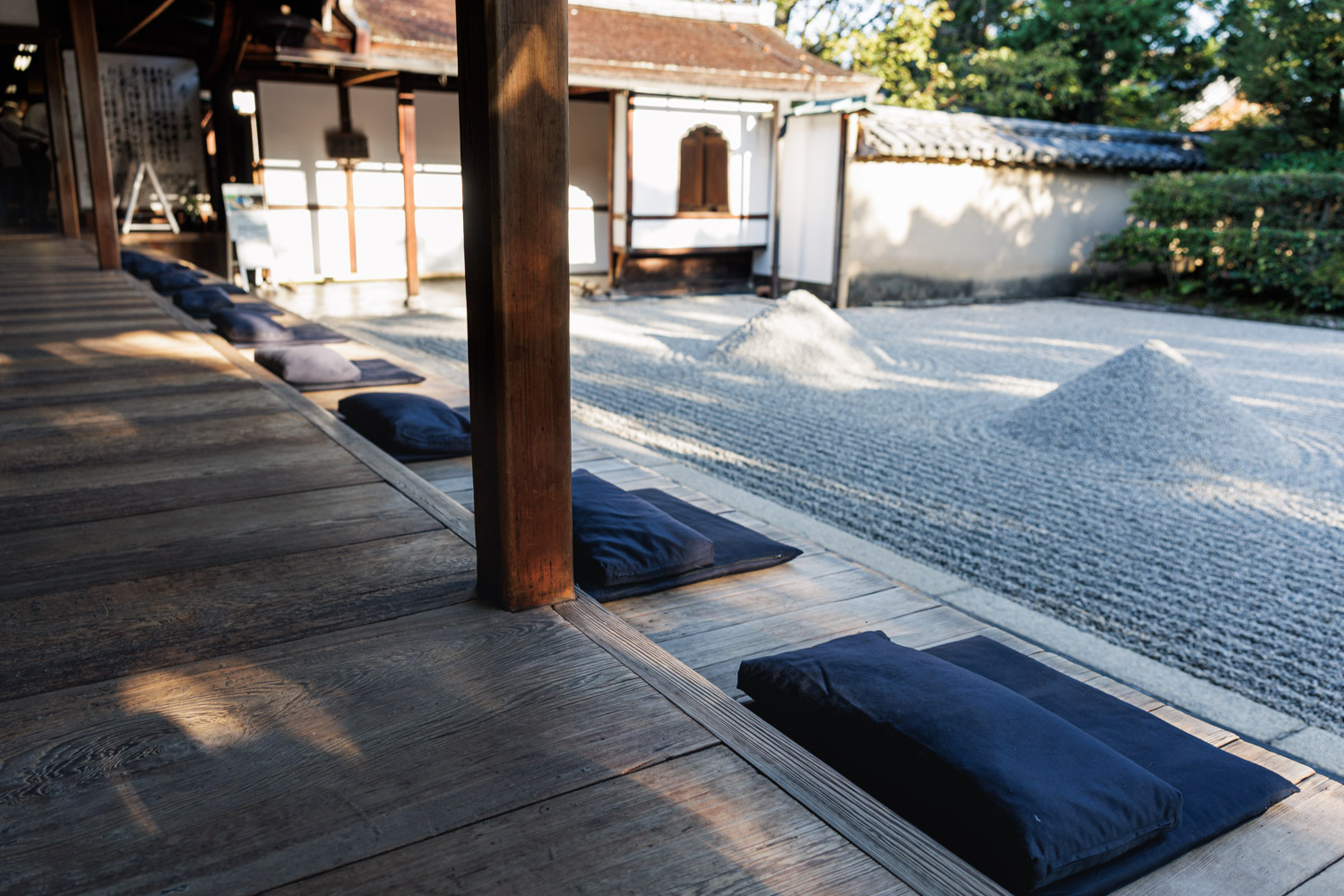
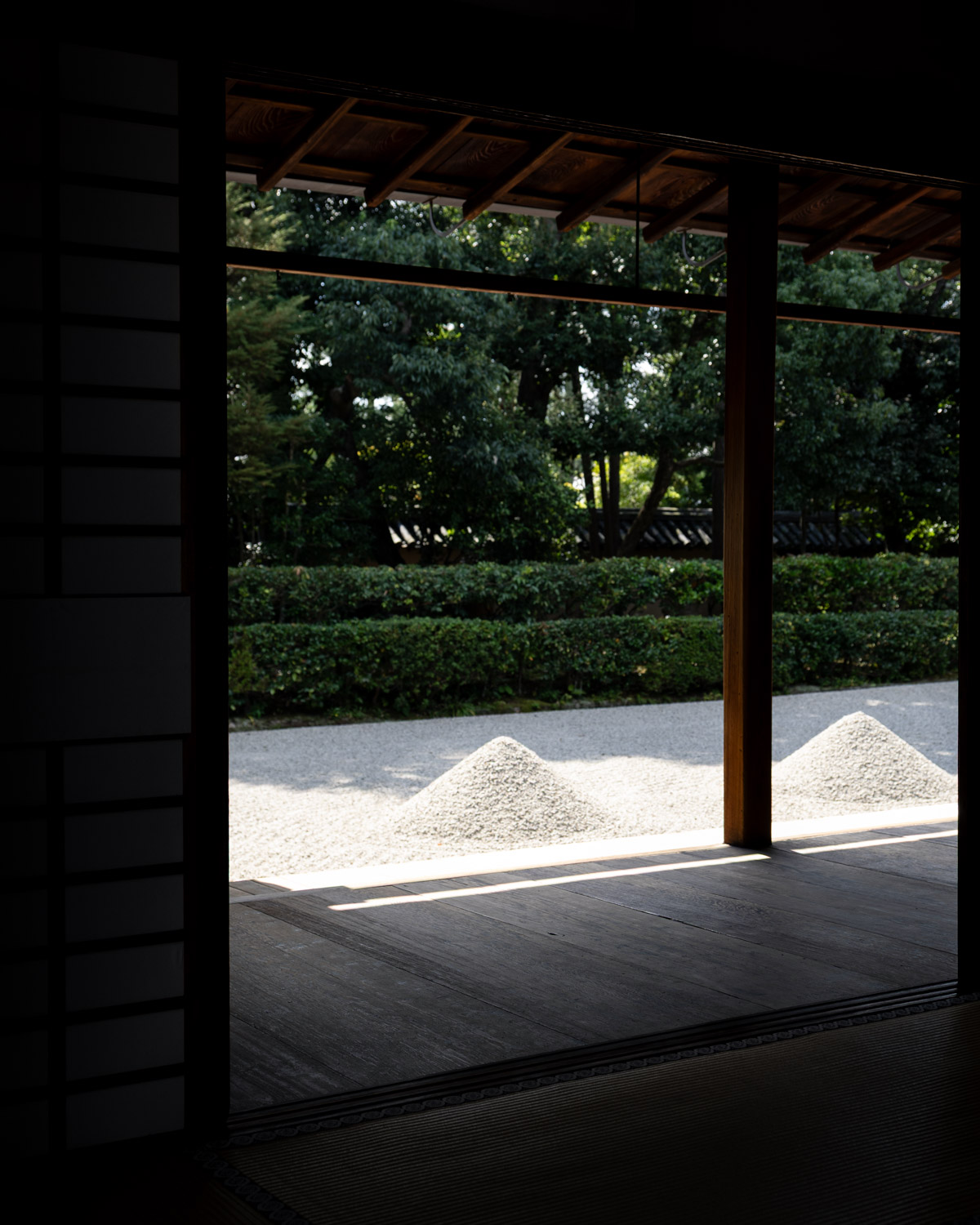
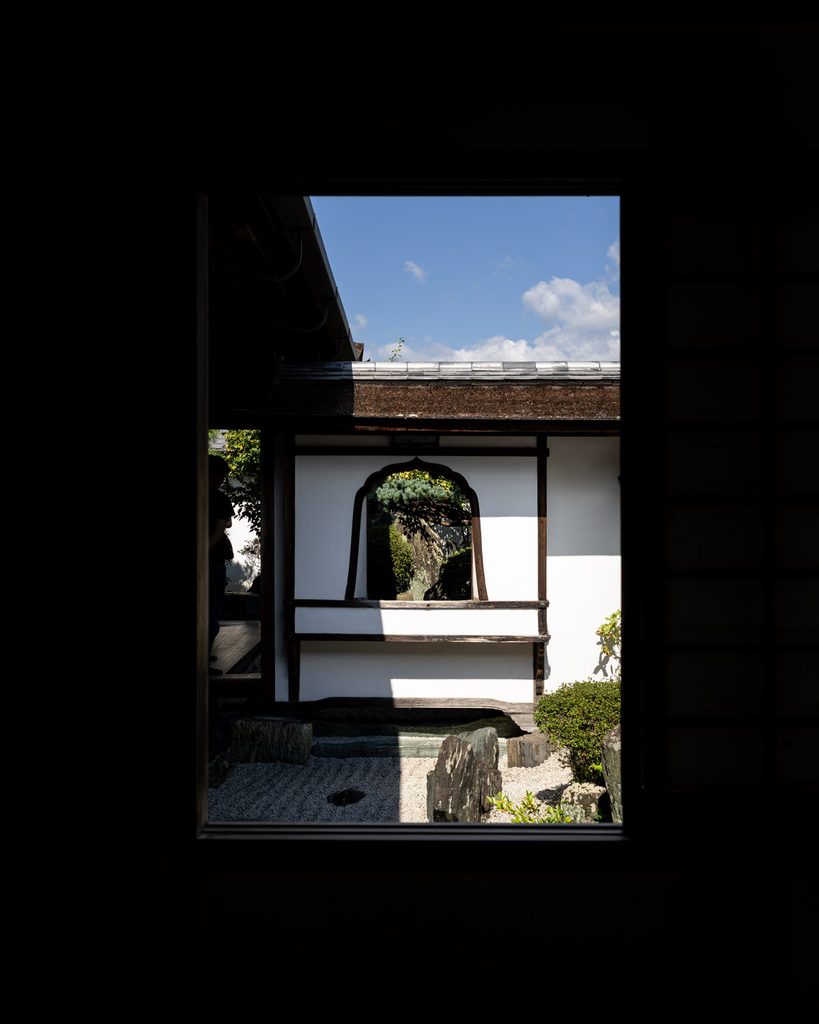
It was never what I’d call crowded, but Daisen-in drew more visitors than any other sub-temple at Daitoku-ji that day. In front of the abbot’s hall, white gravel lies flat, and two cones of sand rise out of it. I sat down on the veranda facing them. The voices behind me fell away, and then any sense of other people did, too. At a temple this famous, that may not happen often. It felt as if the temple had let me in.
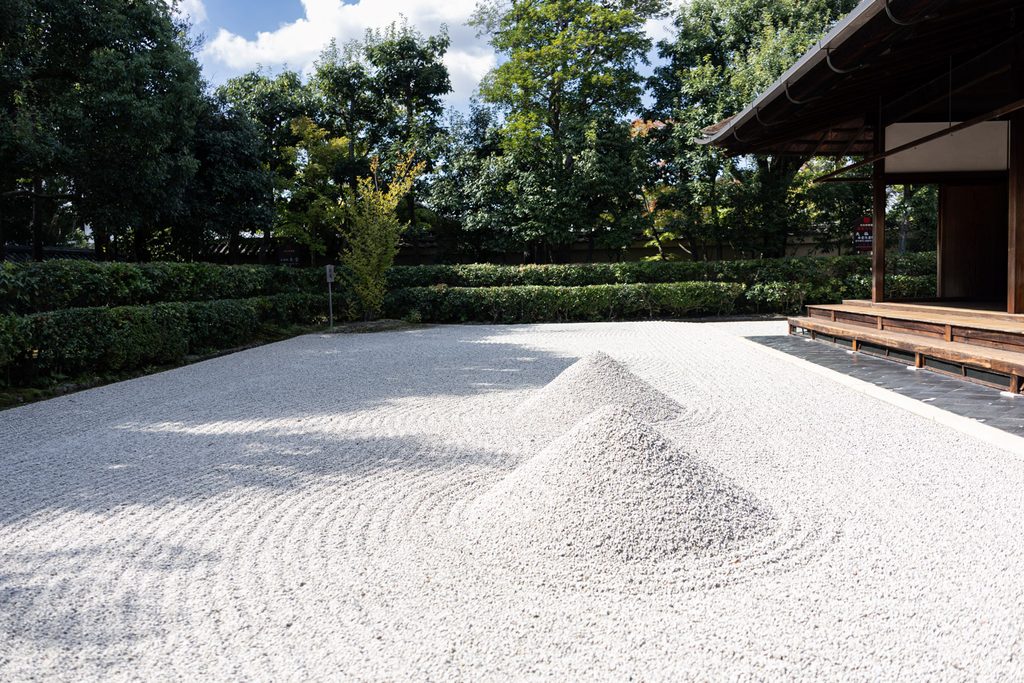
It is a veranda you could stay on for hours. What did I feel, the first time I looked at this garden on that school trip? Trying to work out what my fourteen-year-old self made of it would be enough to let the sun go down.
Nothing came back. Not the garden, not the hall. All my school trip had left me was a priest’s name and one line of calligraphy.
But I wasn’t finished with the place. I decided to come back the following weekend to sit zazen here. I did, and that is another story.
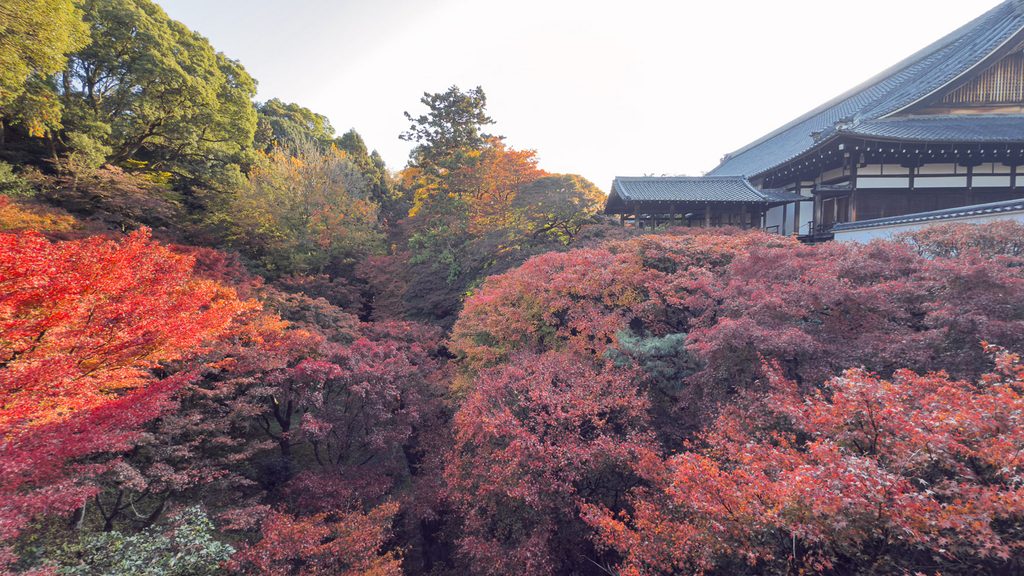
On my way out, I noticed the maples. They were still green, with just a little yellow creeping in. Now I couldn’t decide whether to come back in autumn, too.
Visiting Daisen-in: What to Know Before You Go
Here is what I wish I had known before I sat down with that one sheet of paper. Daisen-in is small, and it is open every day of the year.
What Is Daisen-in?
On paper, it is a heavyweight. Daisen-in is a sub-temple of Daitoku-ji, a head temple of the Rinzai school of Zen, founded in 1509 by Kogaku Soko, Daitoku-ji’s 76th abbot. Its abbot’s hall is said to date from 1513. It is the oldest Zen guest hall within Daitoku-ji and a National Treasure, and the temple says it has the oldest surviving tokonoma alcove and genkan entrance in Japan.
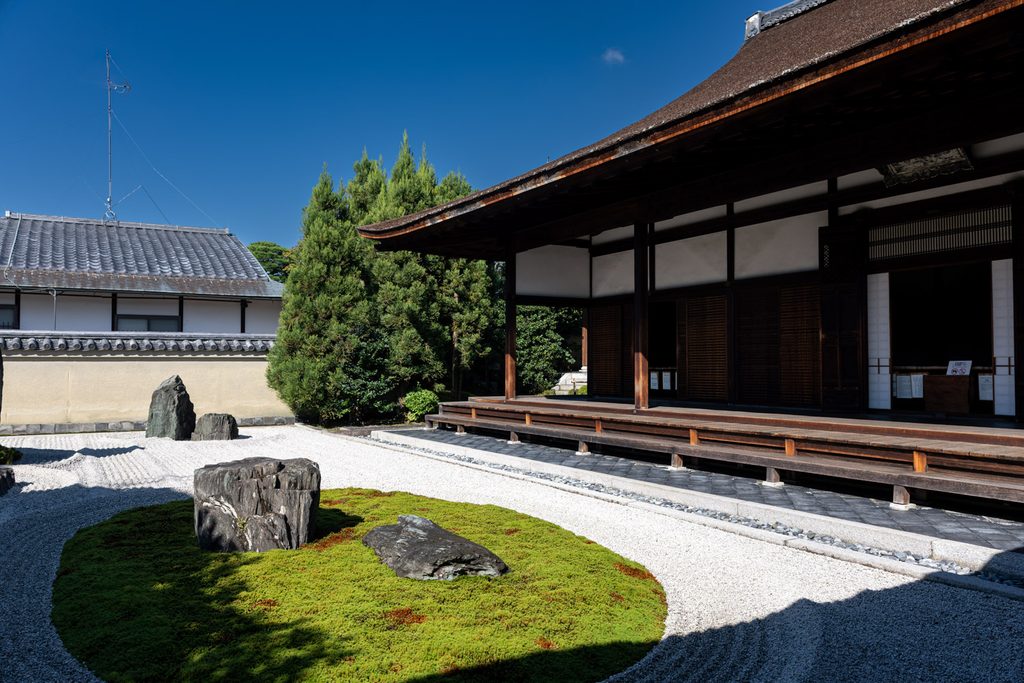
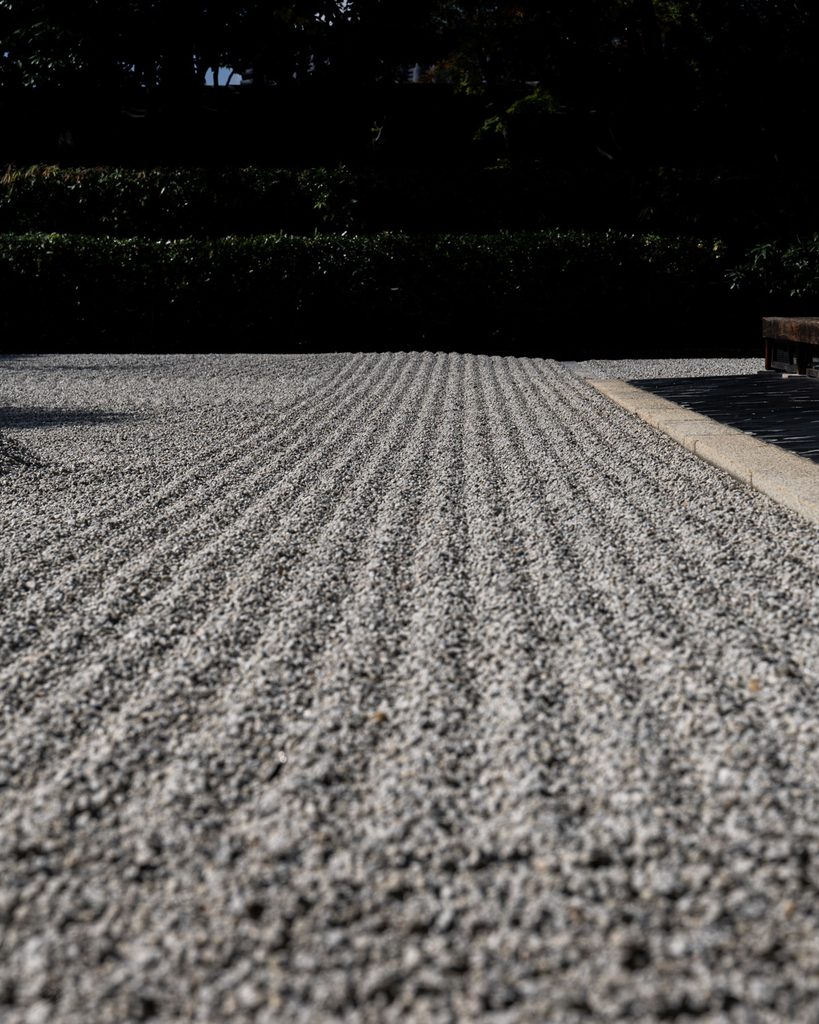
The karesansui, or dry landscape garden, wraps around the building and is designated a Special Place of Scenic Beauty and Historic Site. It tells one story in stone and sand. Water falls from Mount Horai, the mythical island of the immortals, becomes a river, and runs out into the great sea. A boat-shaped stone rides the current. With the English binder in hand, you can follow it from mountain to sea.
The sliding-door paintings by Soami, Kano Motonobu, and Kano Yukinobu, all Muromachi-period masters, are Important Cultural Properties. The temple also keeps two famous stories. One is the tea that Rikyu served Hideyoshi. The other holds that Takuan, the temple’s seventh head priest, taught the swordsman Miyamoto Musashi the secret of his art here.
Hours and Admission
| Address | 54-1 Murasakino Daitokuji-cho, Kita-ku, Kyoto |
| Hours | 9:00 a.m. to 4:30 p.m. (shorter on some days) |
| Admission | 500 yen for adults, 300 yen for elementary and junior high school students |
| Matcha | 500 yen |
| Closed | Open every day of the year |
| Time needed | About 30 minutes, longer if you linger on the veranda |
| Photography | Allowed when I visited; the tea room is view-only |
Hours change on some days, so check the calendar on Daisen-in’s visitor information page before you go.
Borrow the English Guide Binder
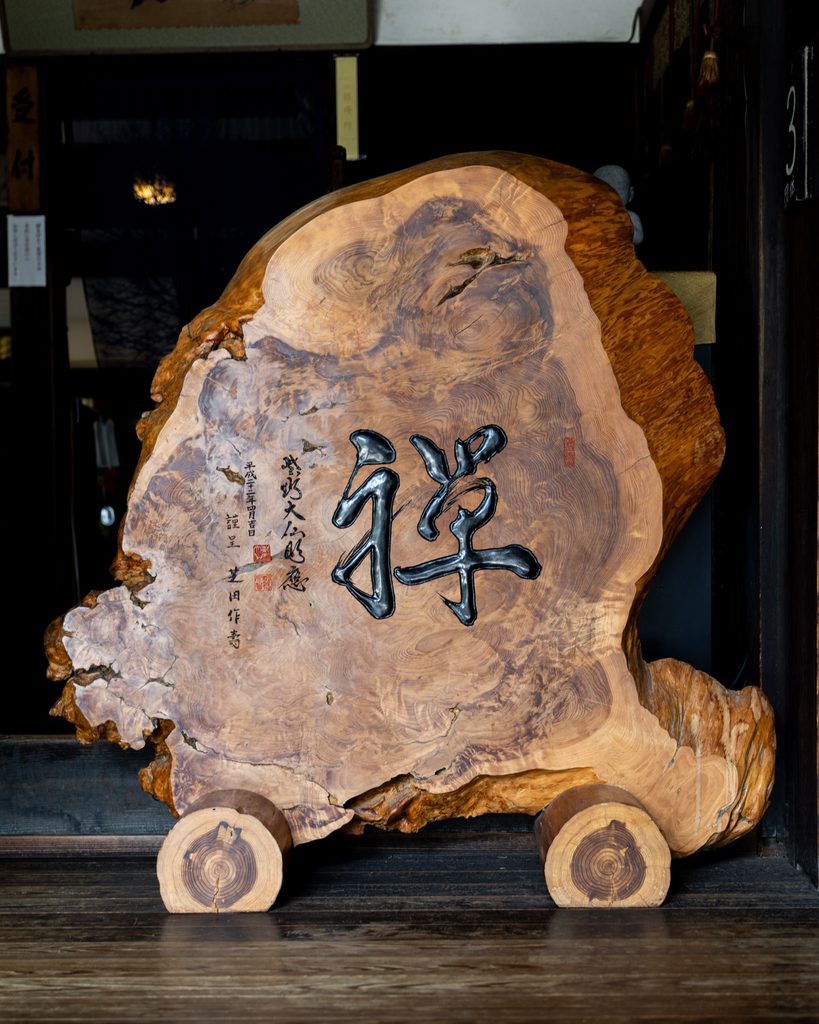
You’ll pass the kanji for Zen, carved into a slab of burl wood, at the reception desk. That is also where the thick guide binders are lent out, in English and several other languages. They hold far more than the free one-page pamphlet. Ask for one when you pay.
Matcha on the Veranda
A bowl of matcha costs 500 yen, and it is proper matcha. I had one, and if you have time, I recommend you do the same. No one will hurry you off the veranda in front of the rock garden, so there is no reason to rush the tea, either.
Goshuin
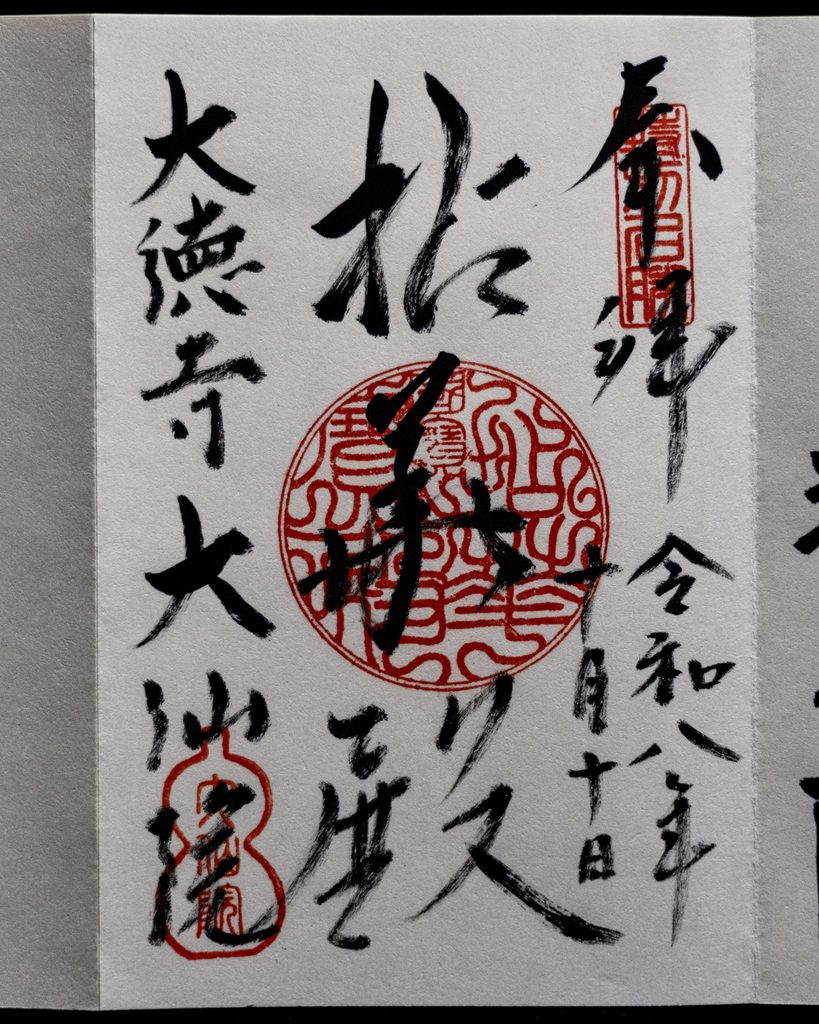
The goshuin, a temple’s hand-brushed seal, costs 500 yen. Hand over your goshuin book when you arrive, and it will be ready when you leave.
Mine reads Nengeden, another name for Daisen-in’s main hall. Nenge means to twist a flower. In Zen, it recalls the story in which the Buddha held up a flower without a word and a disciple smiled, the teaching passed from mind to mind.
Zazen at Daisen-in
Daisen-in holds evening zazen on weekends, with instructions in English for visitors from overseas. If you are looking for zen meditation in Kyoto that welcomes first-timers, it is a good place to start. I wrote about my session in Zazen in Kyoto: Learning to Think of Nothing at Daitoku-ji.
Getting There
Take a city bus to the Daitokuji-mae stop, then walk about eight minutes through the Daitoku-ji grounds to Daisen-in’s gate. From Kyoto Station, buses 206 and 205 stop there. From Kitaoji Station on the Karasuma subway line, take bus 1, 204, or 205. Bus routes change from time to time, so check the latest information before you go.