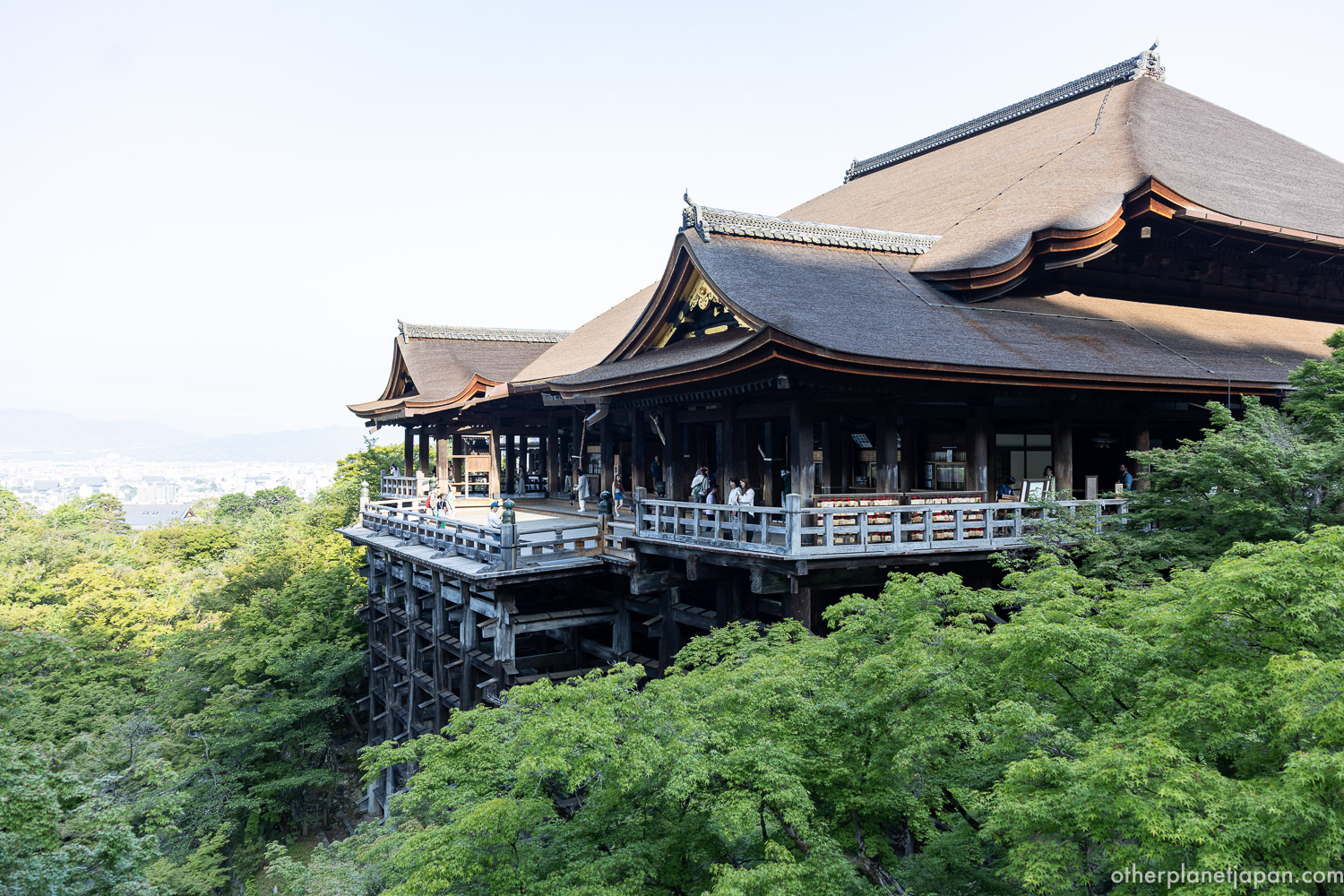
Most people visit Kiyomizudera between ten and noon. I went at six-thirty — and the temple was entirely different.
Why Does Kiyomizudera Open at 6:00 A.M.?
That was the question that brought me here before sunrise.
Not the crowds, not the photographs. The question itself: why does one of Japan’s most visited temples open its gates at six in the morning? What remains of a place like this before the day begins?
The answer is older than tourism. For centuries, Kiyomizudera has opened at dawn for those who wished to offer their prayers to Kannon — the bodhisattva of compassion — in the clear, unhurried hours of early morning. The gates open early because devotion has always been an early riser.
Today, the early hours carry practical appeal as well. The grounds are quiet. The famous wooden stage is empty. The light is soft and unhurried in a way that afternoon light, filtered through crowds and noise, never quite manages.
My own answer is simpler than any of that. Kiyomizudera at six-thirty in the morning simply feels good. That is reason enough.
Getting to Kiyomizudera from Osaka — The First Train
The first Keihan train leaves Nakanoshima Station at 5:00 a.m. Transfer to the limited express at Neyagawa, and you reach Kiyomizu-Gojo at 6:16. From Osaka, this is as fast as it gets.
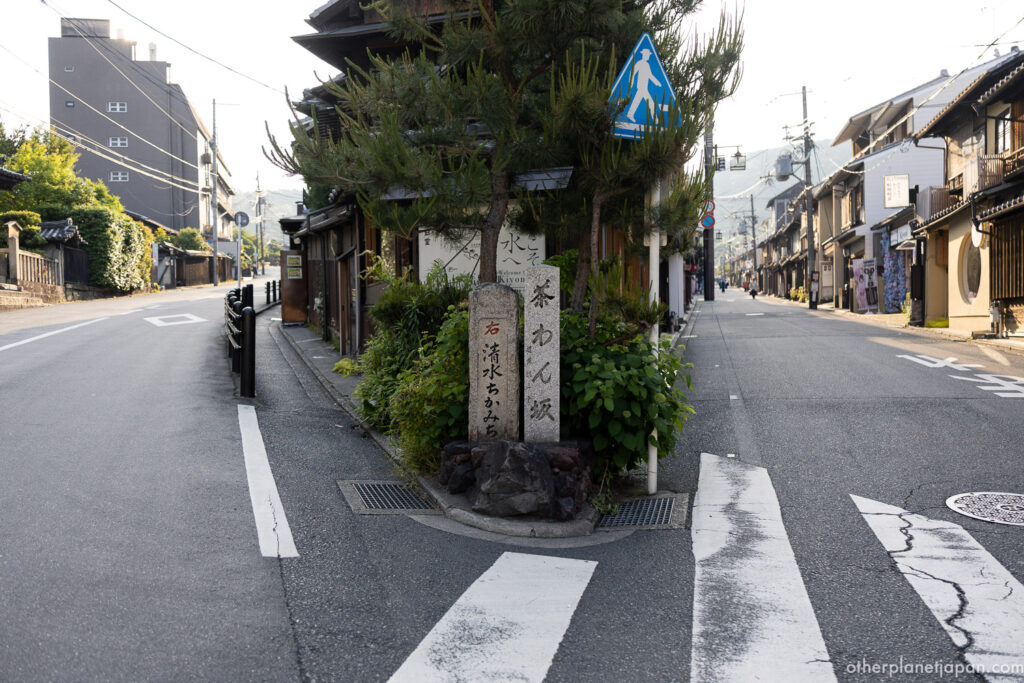
The walk to the temple takes roughly twenty-five minutes. I went up Chawanzaka — the quieter lane that branches off from the main Sannenzaka approach, marked at its entrance by a stone pillar that reads, in elegant characters: Kiyomizudera, shortcut this way.
In ordinary hours, this is a genuine shortcut. A way to slip past the crowds surging up Sannenzaka and arrive at the temple through a calmer street, lined with pottery shops and small cafés that spill the smell of fresh tea into the lane.
At six-fifteen in the morning, every single one of those shops is closed.
The sign keeps pointing the way regardless. It has no idea.
Inside the Gates — A Temple at Rest
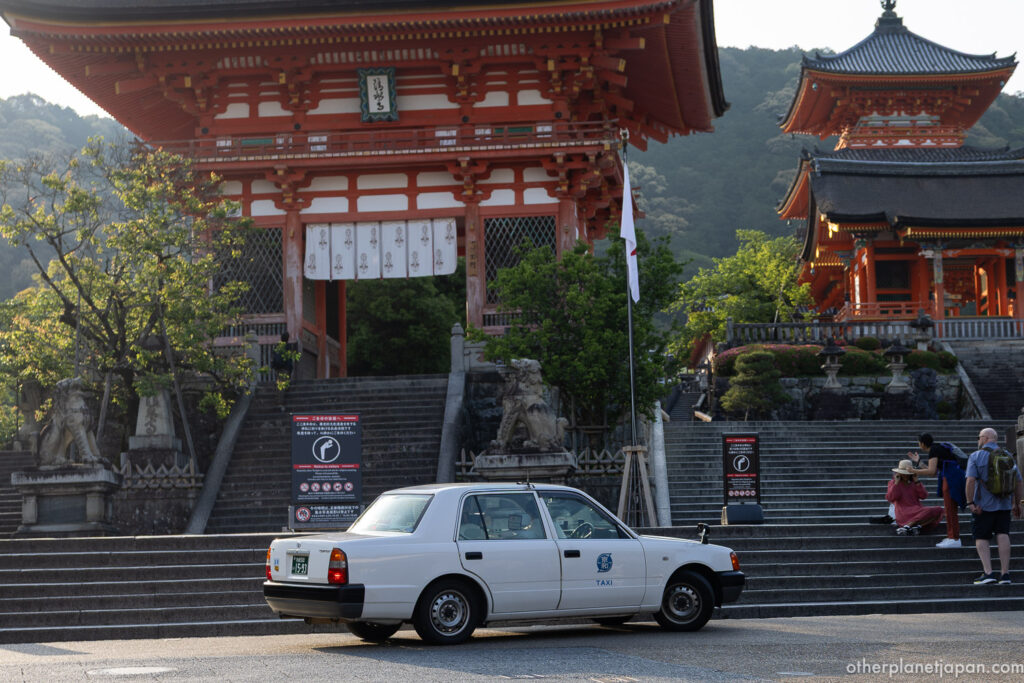
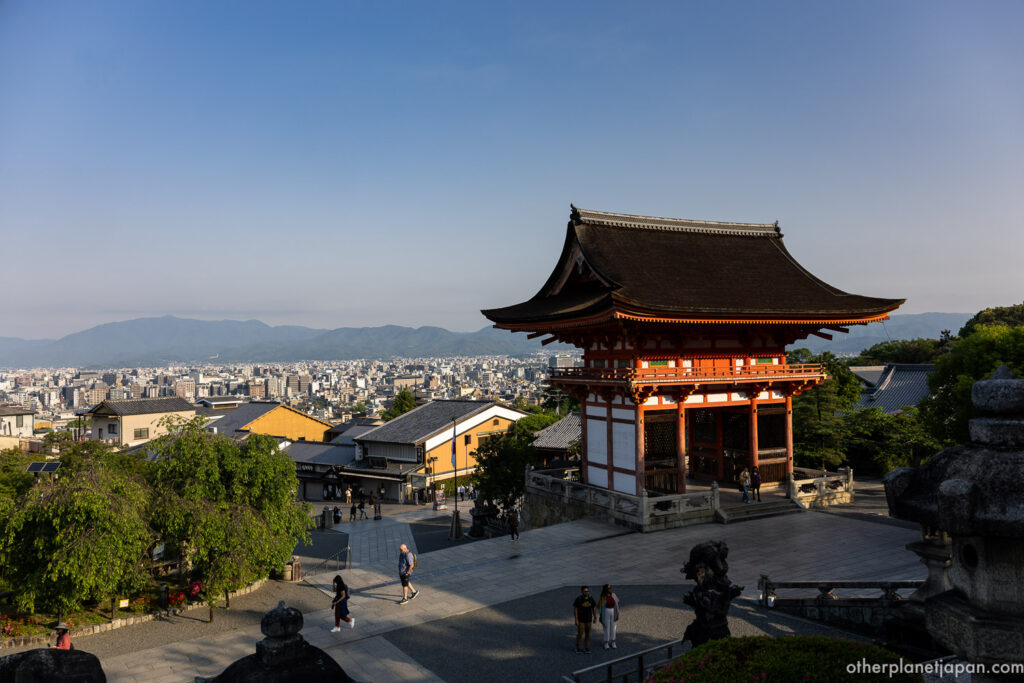
The security staff were sparse when I arrived — a few figures moving slowly through the grounds, in no particular hurry. Then a taxi appeared, pulling directly up to the Nio-mon gate.
During the day, this approach is pedestrian-only. In the early morning, a cab can drive straight to the entrance. I watched it for a moment and felt, obscurely, that I had seen something I was not supposed to see. A small privilege of the early hour.
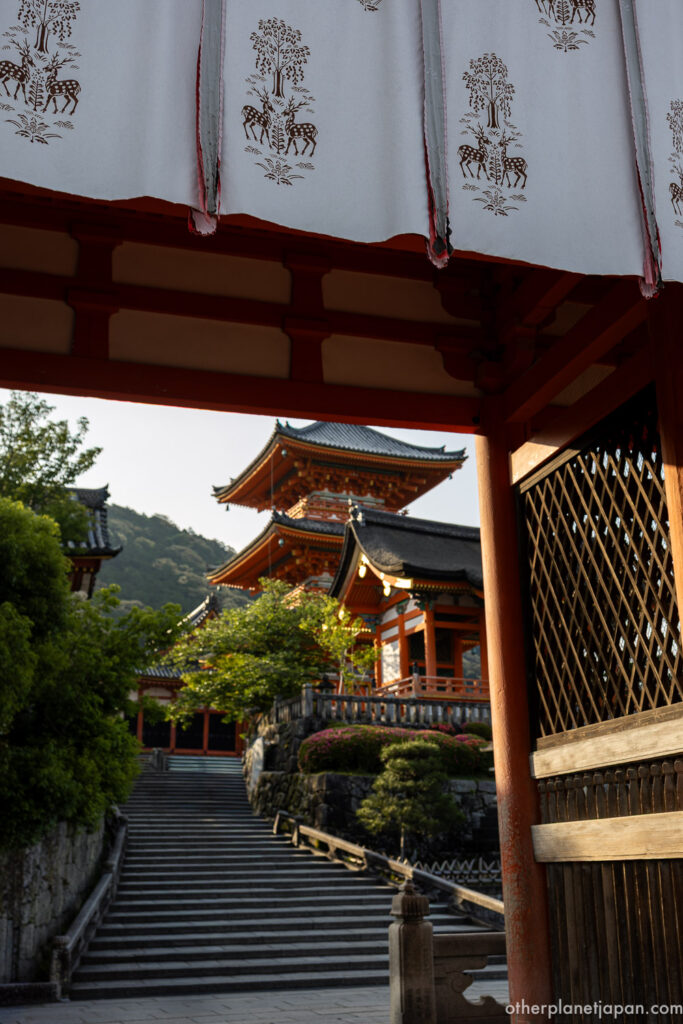
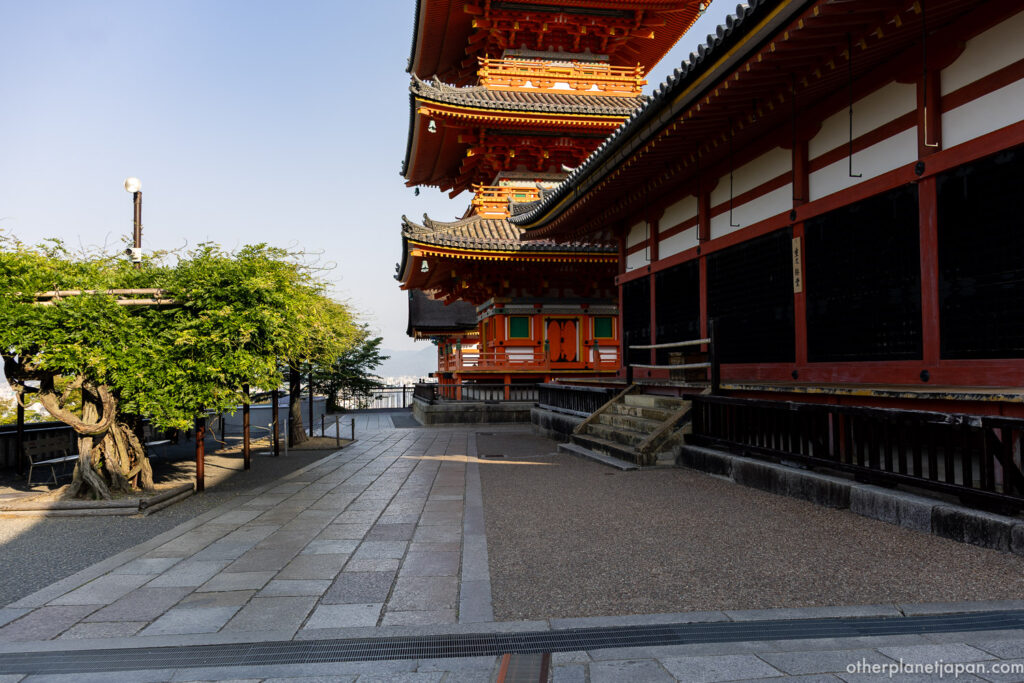
There were other visitors — not many, but not none. A handful of people moved quietly through the grounds, cameras raised. I photographed the Nio-mon and the three-story pagoda without a single head in the frame. The morning light caught the vermilion lacquer from the side, dividing it cleanly between shadow and color. The kind of photograph that, on an ordinary afternoon, simply does not exist.
The Ticket Booth — and a Brief Moment of Hope
The regular admission booth was shuttered.
I will be honest: something in me stirred. The quiet logic of early rising — that it ought to carry some reward beyond the hour itself. Free entry, perhaps. A small compensation for the 5:00 a.m. train.
A staff member at the inner gate collected five hundred yen with calm efficiency. Same as always. Worth every one of them.
The Main Hall — Silence, and the Bell
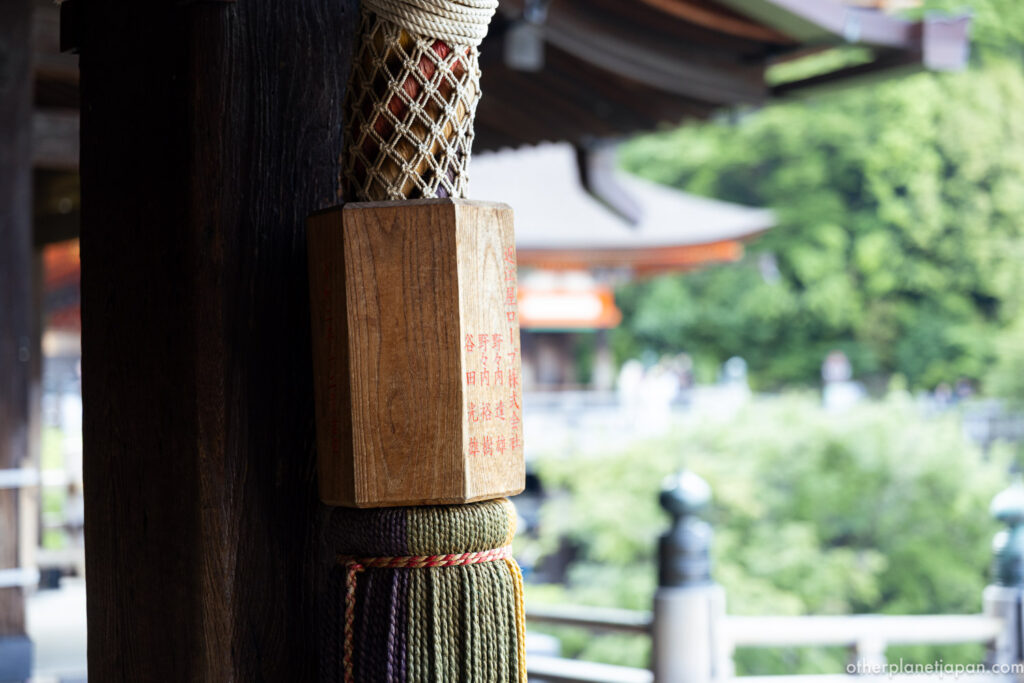
Remove your shoes before entering the main hall.
The moment the threshold is crossed, the uguisu — the Japanese bush warbler, whose song had followed me through the entire grounds — goes silent. Outside, the bird had been calling without pause since I arrived. In here, there is only stillness.
At the back of the hall stands a large orin, a temple bell used in prayer. In form, it resembles the small brass bowls kept in Japanese homes, used to mark the rhythm of daily devotion. In scale, it resembles nothing domestic at all.
I struck the rim gently. A low, sustained tone moved through the hall and dissolved slowly into the dark.
I put my palms together and thought of those who came before me. I held the moment longer than usual. Something about the silence made that easier — as though the absence of noise had left more room for whatever prayer actually is.
The Wooden Stage — Green, Light, and the Sound of Birds
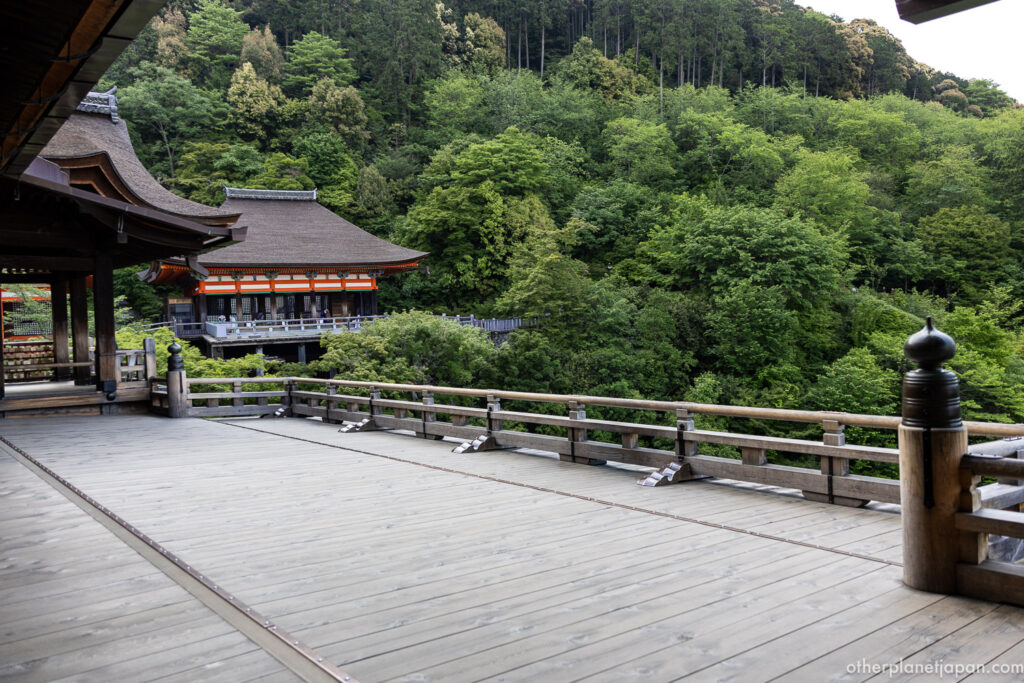
Step through the inner doors, and the stage opens before you.
The mountain rises to the east, and at this hour the sun has not yet cleared it. The light holds somewhere between night and morning — soft, directionless, the color of patience. The hillside’s maples have not yet caught their full green. In an hour, perhaps less, the canopy will be luminous. For now, it simply waits.
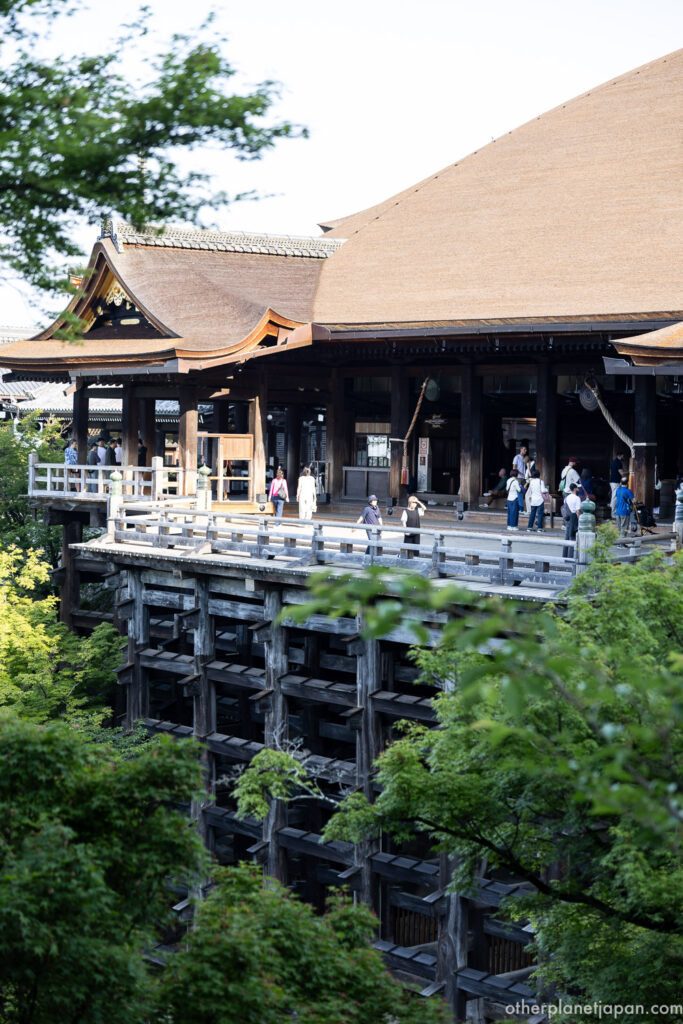
I know the city is close. Kyoto spreads just beyond the tree line, its grid of streets and rooftiles invisible from here. But standing on this platform before seven in the morning, with the uguisu calling from somewhere unseen, the sensation was of deep forest — not of one of the most photographed temples in the world.
In the afternoon noise, the bird would have been inaudible.
Okuno-in — and the Sound of Sutras
From Okuno-in, the inner sanctuary at the far end of the complex, the main stage comes into full view across the ravine.
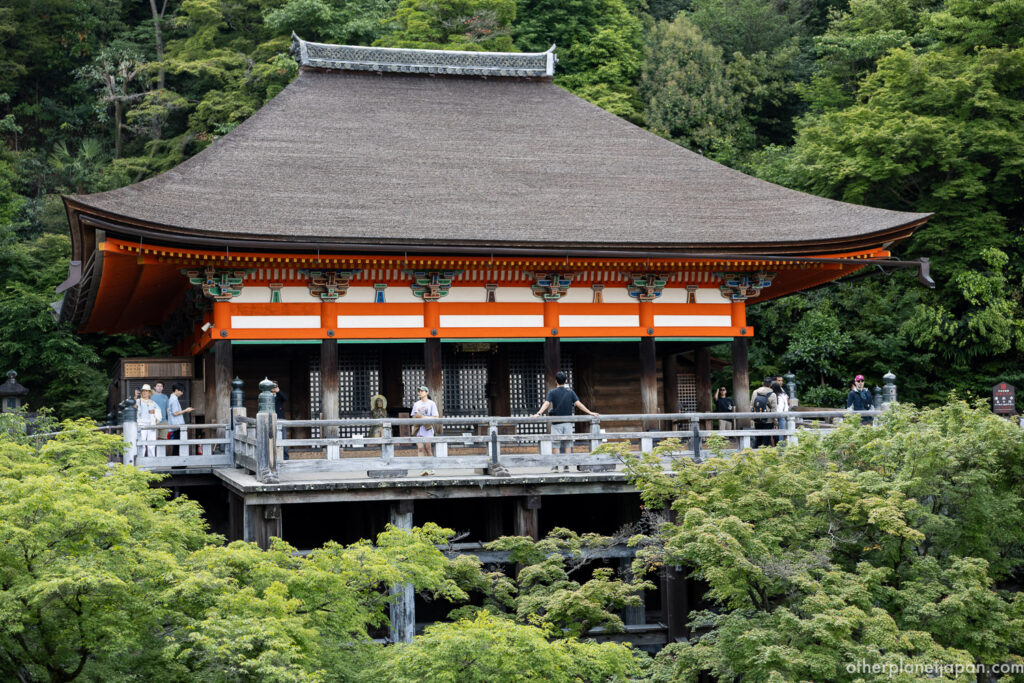
The fortune slip counter was unstaffed. The goshuin stamp office would not open until eight. The grounds held the particular stillness of a place not yet fully awake.
Then, just before seven-thirty, I heard it: monks chanting sutras somewhere within the complex, the sound low and rhythmic, present in the air the way incense is present — not located, simply there. In the middle of the day, I am not certain it would reach you at all.
Otowa Waterfall — All Three Streams
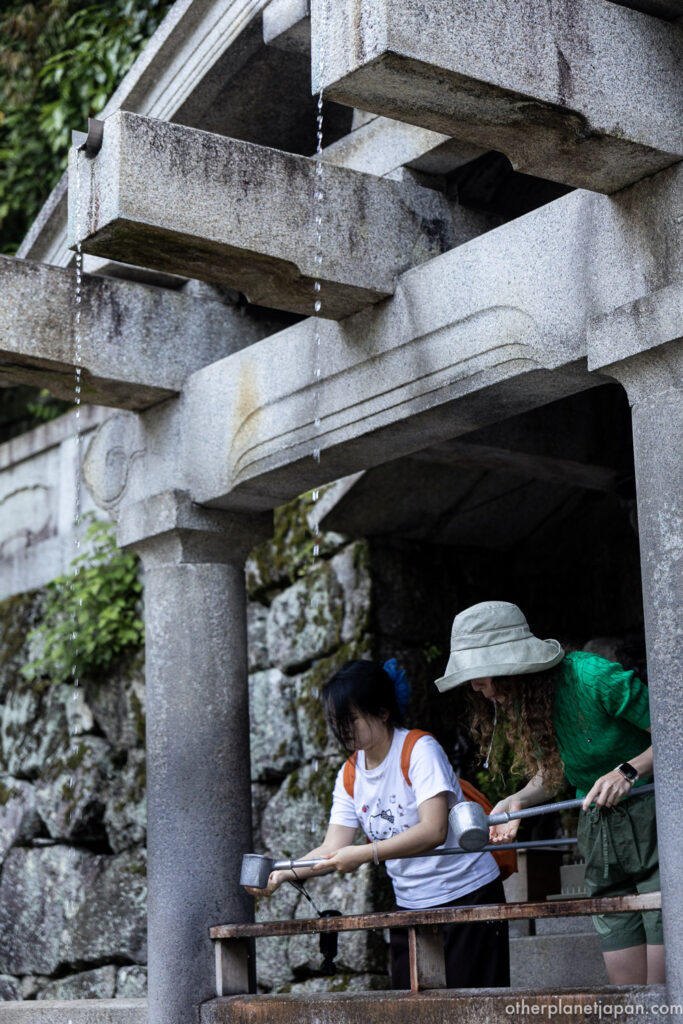
At the base of the main hall, Otowa Waterfall divides into three streams beneath a stone pavilion. On a normal visit, you queue, choose one stream, and drink.
Left for scholarship, center for love, right for a long life. Everything a person spends a lifetime wanting, arranged in stone beneath a mountain.
At six-thirty, there is no queue.
I took the ladle and began, with some deliberateness, to go through the proper form. Partway through, I became aware of being watched. A Western couple stood nearby, observing with an expression of focused sincerity — the look of people trying to learn something correctly.
We made eye contact.
This was a problem. My form is not something anyone should study. Compared to the average Japanese visitor, my ritual movements are, at best, approximate. I wanted to say: please do not use this as a reference. What I did instead was slow down, straighten my posture, and drink with a gravity I have never before applied to the act of drinking water. The quiet weight of national representation, felt unexpectedly at a stone basin before breakfast.
One further note: drinking from all three streams is considered an act of greed, and is said to nullify the blessings entirely. The temple has been managing human nature for over twelve centuries. It has considered every possibility.
Plan Your Visit
| Opening time | 6:00 a.m. |
| Admission | ¥500 |
| Goshuin / omamori | Available from approx. 8:00 a.m. |
| Access from Osaka | Keihan Line, Nakanoshima 5:00 a.m. → limited express at Neyagawa → Kiyomizu-Gojo 6:16 a.m. |
| Walk to temple | Approx. 25 min on foot from Kiyomizu-Gojo Station |
| Best arrival | 6:15–6:30 a.m. |
For a complete guide to Kiyomizudera — architecture, festivals, seasonal highlights, and everything you need to plan your visit — read our Kiyomizudera Temple: A Local’s Complete Guide.
FAQ
What time does Kiyomizudera open?
Kiyomizudera opens at 6:00 a.m. Hours may vary slightly by season — confirm on the official website before visiting.
Is admission free in the early morning?
No. The standard admission of ¥500 applies regardless of arrival time. The main ticket booth near the entrance may be closed early, but admission is collected at a gate further inside.
How do you get to Kiyomizudera from Osaka in the morning?
The first Keihan train from Nakanoshima departs at 5:00 a.m. Transfer to the limited express at Neyagawa and arrive at Kiyomizu-Gojo at 6:16 a.m. — in time to reach the temple shortly after it opens.
Can you get a goshuin stamp or buy omamori early in the morning?
Both are available from approximately 8:00 a.m. If collecting a stamp or purchasing an amulet is part of your plan, budget time to wait — or explore the grounds first and return.
Are the shops along Sannenzaka and Chawanzaka open early?
Most souvenir shops open around 9:00 a.m. If you are hoping to eat or drink before heading up, note that most cafés and restaurants along the approach do not open until around 10:00 a.m. Arriving early means arriving on an empty stomach — plan accordingly.