Someone in the crowd cheered.
I was looking through my viewfinder when it happened. By the time I turned to look, the man who had drawn the crowd’s attention was already gone. Only the ring of onlookers remained, their eyes already shifting to the next challenger. This time, there was no cheer. Just silence — and then a long, collective exhale.
One by one, tourists were stepping forward to lift Benkei’s iron staff.
It weighs approximately 90 kilograms. Stands around two meters tall. This staff, kept at Kiyomizudera, is said to have belonged to Musashibo Benkei — a name every Japanese person knows. The historical record is thin. But legends don’t need documentation. He appears in manga, in video games, and somewhere deep in the Japanese imagination. In fact, the sensitive spot on the inside of your shin — the one that makes you yelp when you knock it — is called “Benkei’s crying spot” in Japanese. That’s how thoroughly this man has written himself into the language.
Standing before this iron rod that no one can move, the legendary giant suddenly feels real.
I found myself joining the line.
I had tried the year before and failed. But today felt different. This many witnesses. The impossible always feels briefly possible when enough eyes are watching. I was already picturing the moment — the cheer, the disbelief, the man who moved Benkei’s staff.
My turn came. I pulled with everything I had.
No cheer. No applause. Just a long silence, followed by that low collective exhale. This time, it was for me.
The smell of iron rust stayed on my hands. At the very least, I thought, I probably earned some points toward good health. The staff is said to grant a health blessing to those who try.
Why is a relic belonging to a historical figure sitting here, available for anyone to touch, rather than locked away in a national museum? It’s a baffling question. Best not to ask.
That’s Kiyomizudera. And this temple does not explain itself.
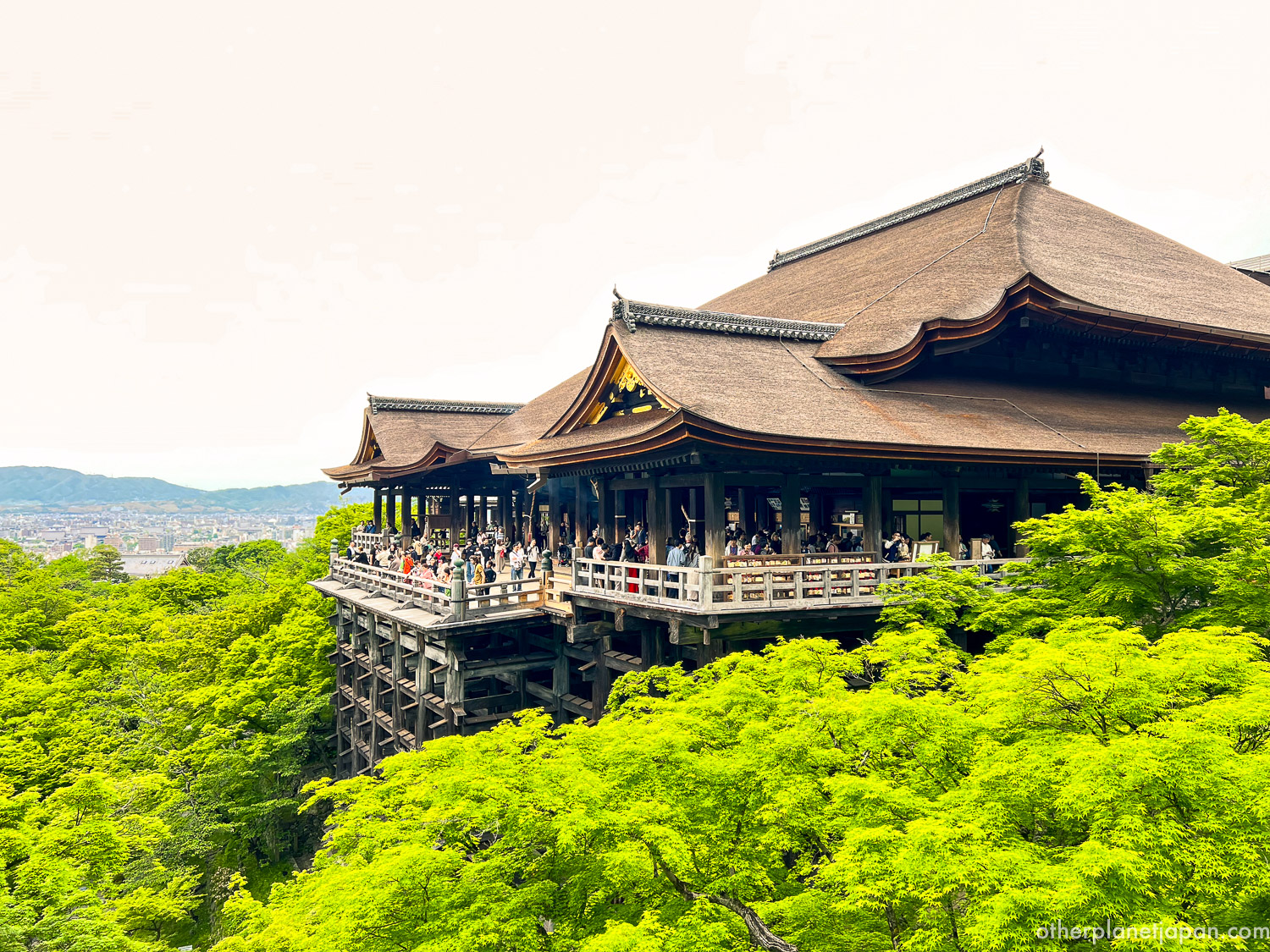
Kiyomizudera’s Famous Wooden Stage: A 13-Meter Decision
I stepped onto the stage and looked down.
Thirteen meters. The equivalent of a four-story building. Enough to make a fall very bad.
And yet the records are there. Between 1694 and 1864, 234 people jumped from this platform. Thirty-four died. The survival rate was approximately 85 percent. They weren’t trying to end their lives — they were making a vow to Kannon, the goddess of mercy. The belief: if the goddess saves you, your wish will be granted.
Approximately 85 percent. Honestly, higher than I expected. In an era with no hospitals, no ambulances, no antibiotics.
In 1872, the Kyoto Prefectural Government banned the practice.
The phrase lives on in the Japanese language. “Jumping from the stage of Kiyomizudera” means taking a bold, irreversible leap — a commitment made knowing there’s no going back. These days it gets invoked for online shopping purchases that probably cost more than they should. The metaphor scales easily.
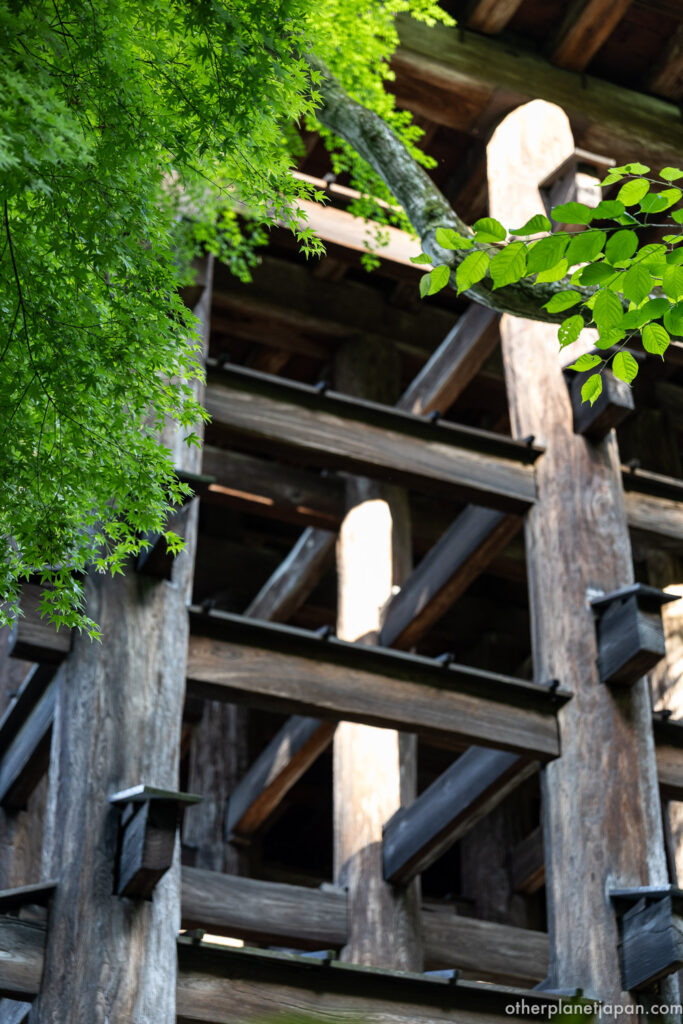
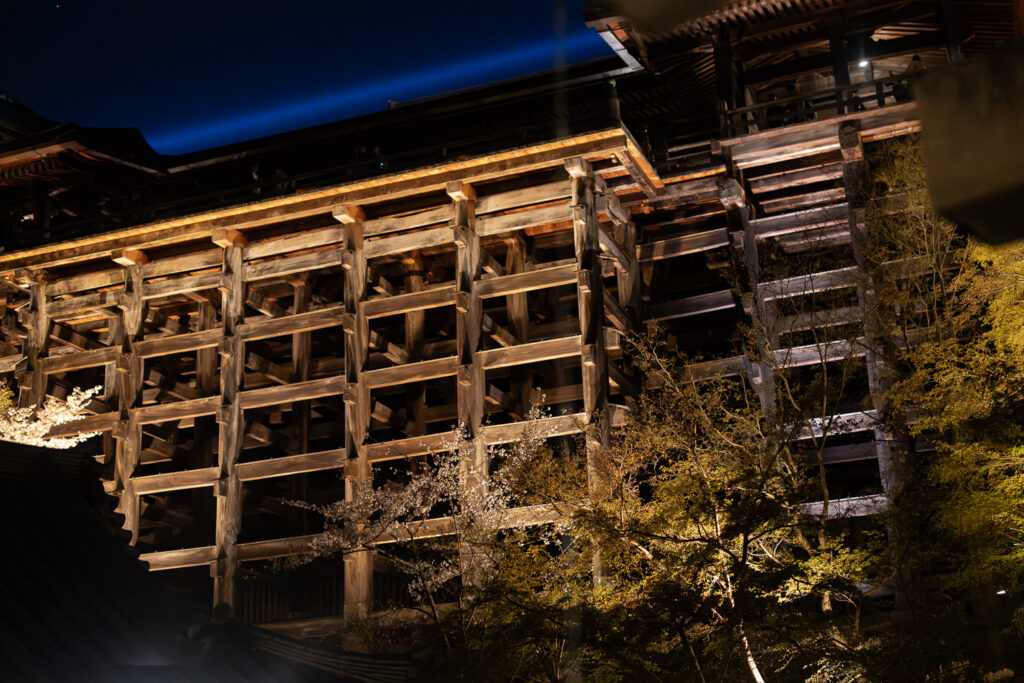
The stage itself is a masterclass in structural philosophy. The traditional joinery technique used here — known as nuki joint construction — combines pillars, beams, and wooden wedges into a system built without a single nail. At first glance, it looks almost too simple. But this is the principle that was refined over more than a thousand years on this cliff face — and in 2025, the designers of the Grand Roof Ring at the Osaka-Kansai Expo, a circular wooden structure approximately 600 meters in diameter and the largest of its kind in the world, cited Kiyomizudera’s wooden stage as one of their inspirations.
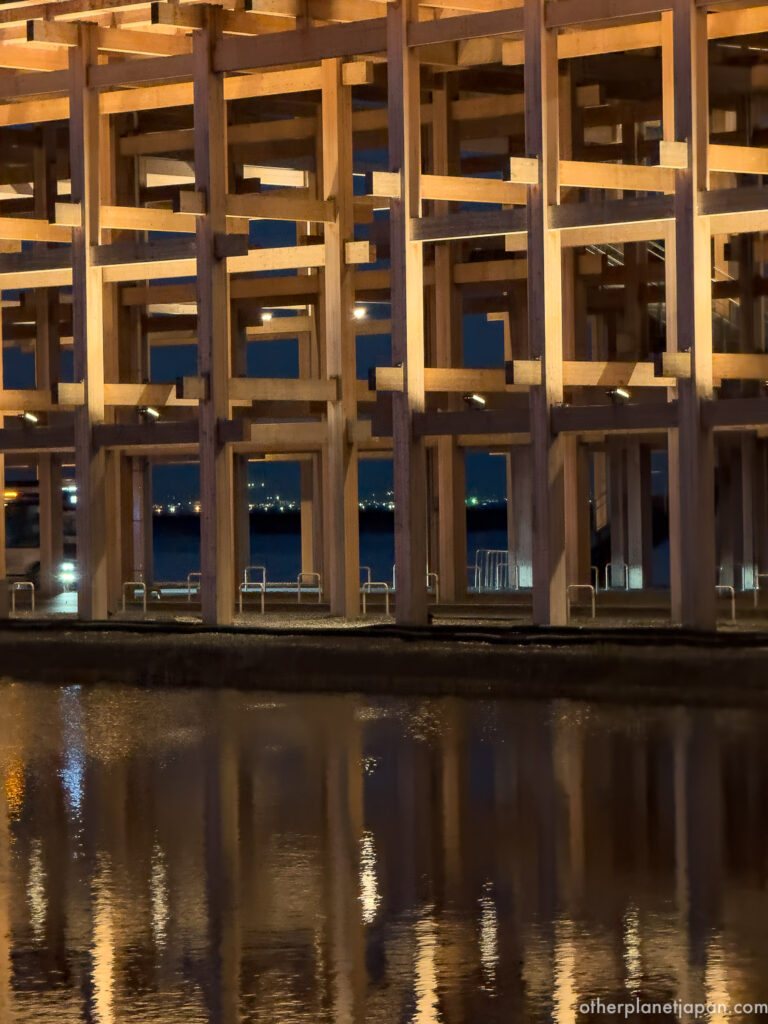
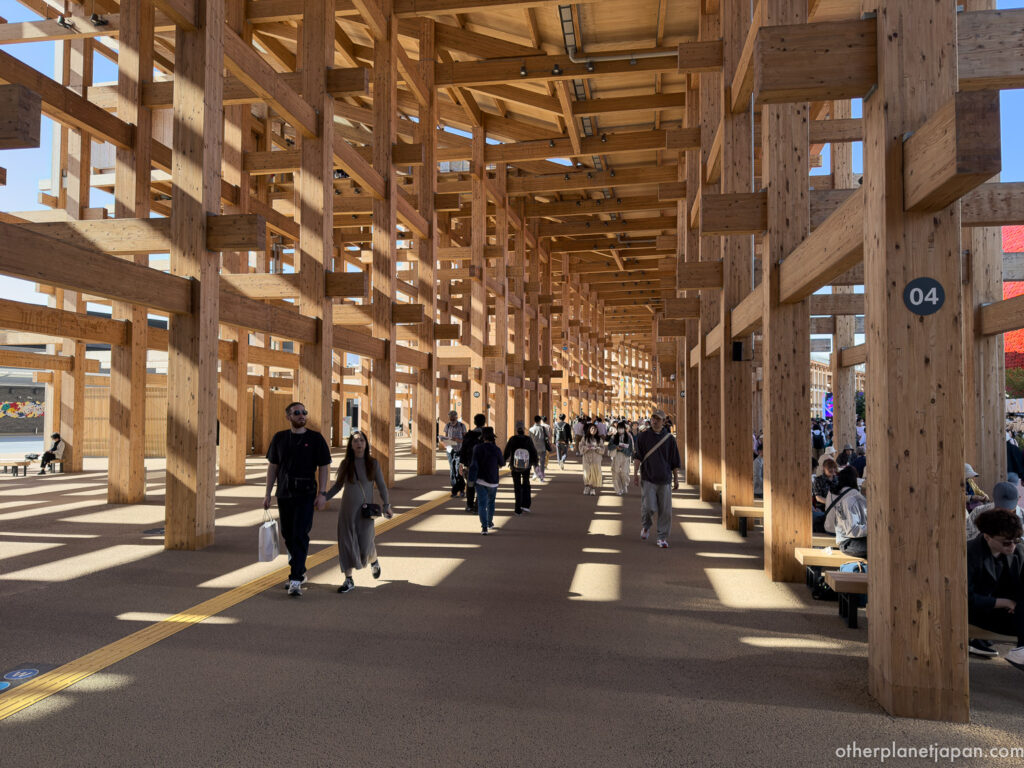
I visited the Expo site multiple times. Standing inside that enormous ring, I kept thinking about this hillside in Kyoto. There is a quiet satisfaction that comes when something very old is proven correct.
What to See at Kiyomizudera Temple
Kiyomizudera is larger than it first appears. Give yourself more time than you think you need.
Main Hall (Hondo) — National Treasure
The heart of the temple complex. Rebuilt in 1633. Enshrined within is a secret Buddha — the Eleven-Faced, Thousand-Armed Kannon — a principal image that is revealed only once every 33 years. The next unveiling is 2033. As of today, almost no one alive has seen it.
What you can always visit is the o-maedachi: a proxy image that stands in for the hidden deity. The real one waits behind it, in the dark, for another decade.
When the barrier is removed, visitors can strike the large temple bell — roughly 80 centimeters in diameter — near the entrance. Instructions on how to ring it are posted nearby: strike it gently along the rim. The sound that comes out is anything but gentle. It fills the hall.
Photography is not permitted inside the Main Hall. Remove your shoes before entering. Omikuji (fortune slips) can be drawn at the corner of the hall — you’ll hear where they are from the constant sound of wooden tubes being shaken.
The Wooden Stage (Kiyomizu no Butai)
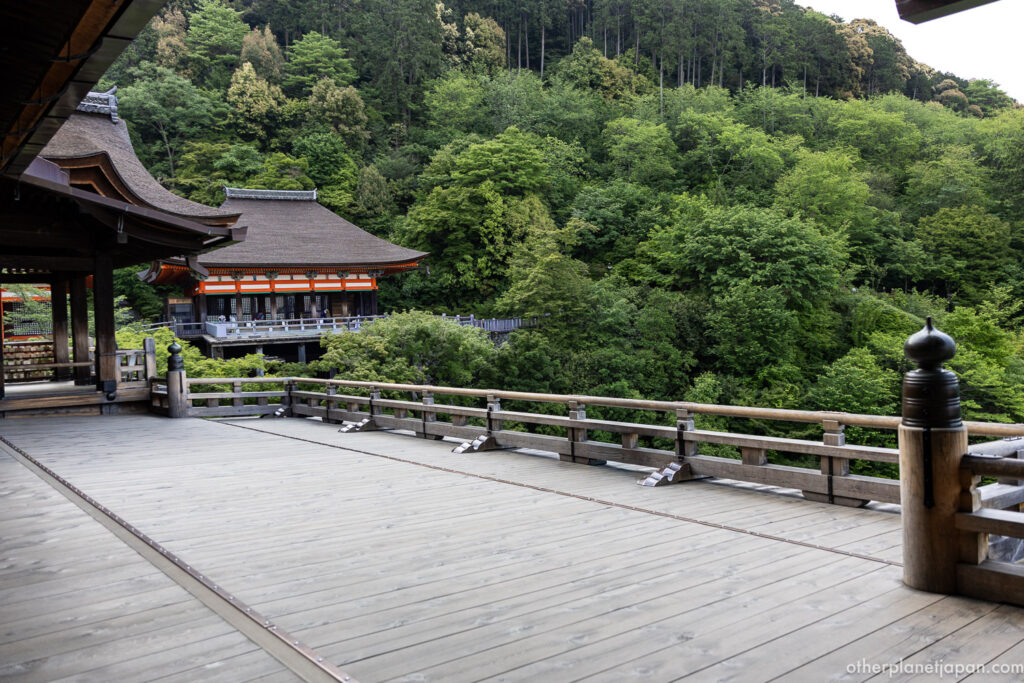
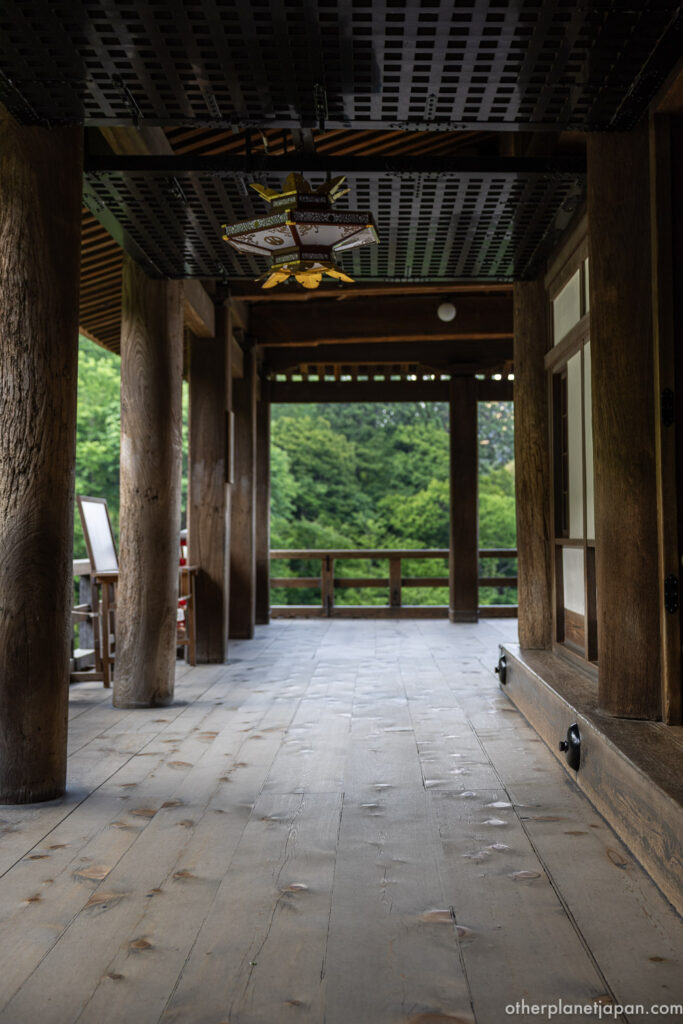
The open platform that extends from the Main Hall over the cliff. Eighteen zelkova pillars. One hundred and sixty-seven floorboards. Not a single nail. Originally built as a stage for sacred dance offered to Kannon.
The large incense burner in front of the stage is always lit. During night illuminations, the smoke rises through the light in a way that makes it visible from across the valley. Visitors bathe themselves in the smoke — it’s believed to carry blessings. Do what the people around you are doing. It takes thirty seconds and costs nothing.
Niomon Gate — Important Cultural Property
The vermilion gate, rebuilt in 1469, restored in 2003. Generations of Japanese middle school students have taken class trip photos here. I was one of them. The gate looked exactly the same.
Three-Story Pagoda (Sanjunoto) — Important Cultural Property
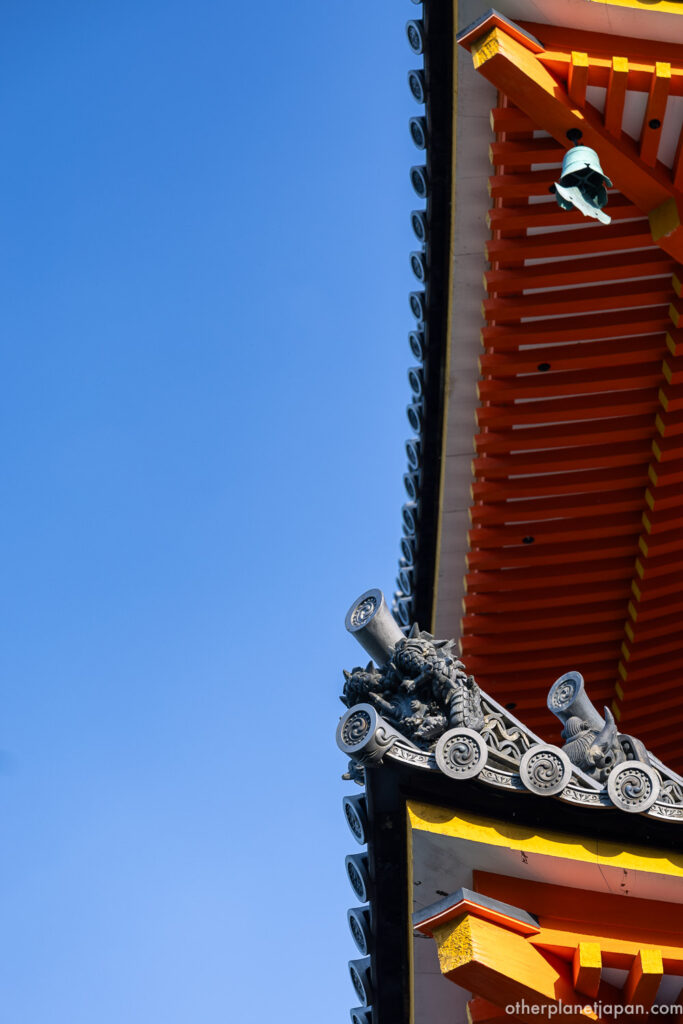
Don’t photograph it and move on. Find the dragon first.
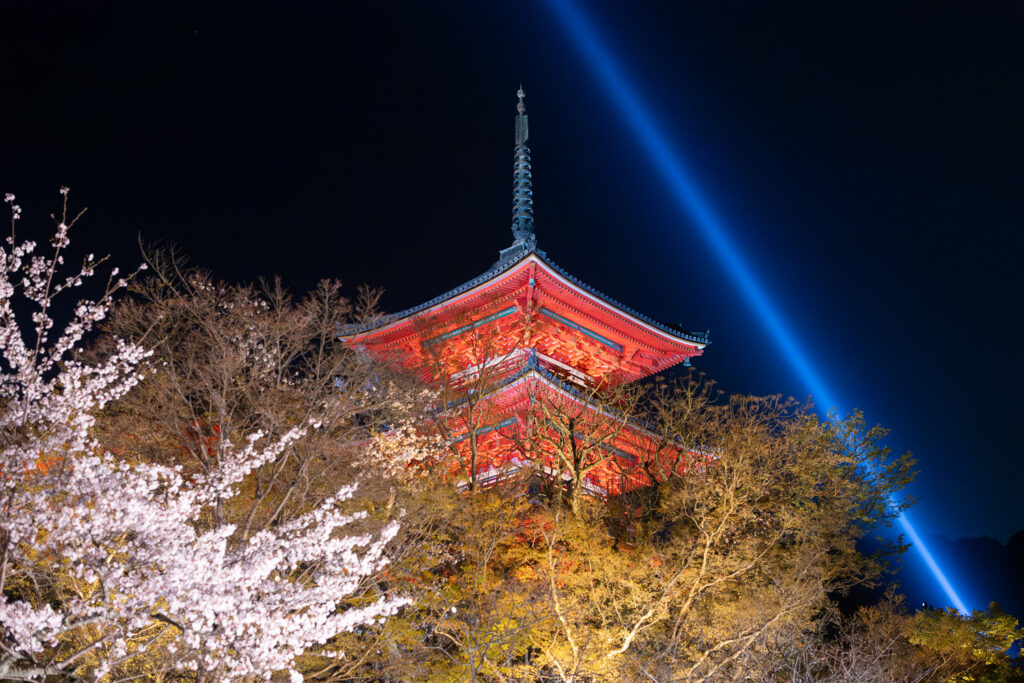
Thirty meters tall, built in 1632 on foundations that go back to 847. The roof carries onigawara — demon tiles, used to ward off evil. But one corner has a dragon instead. Kyoto’s northwest is guarded by the fire deity of Mt. Atago. The southeast had nothing. So they placed a dragon here, facing that direction, to cover the gap. A city’s anxiety, rendered in roof tile.
I walked past it three times before I finally noticed.
Circle around to the back of the pagoda — the side away from the entrance — and Kyoto opens up below you without obstruction.
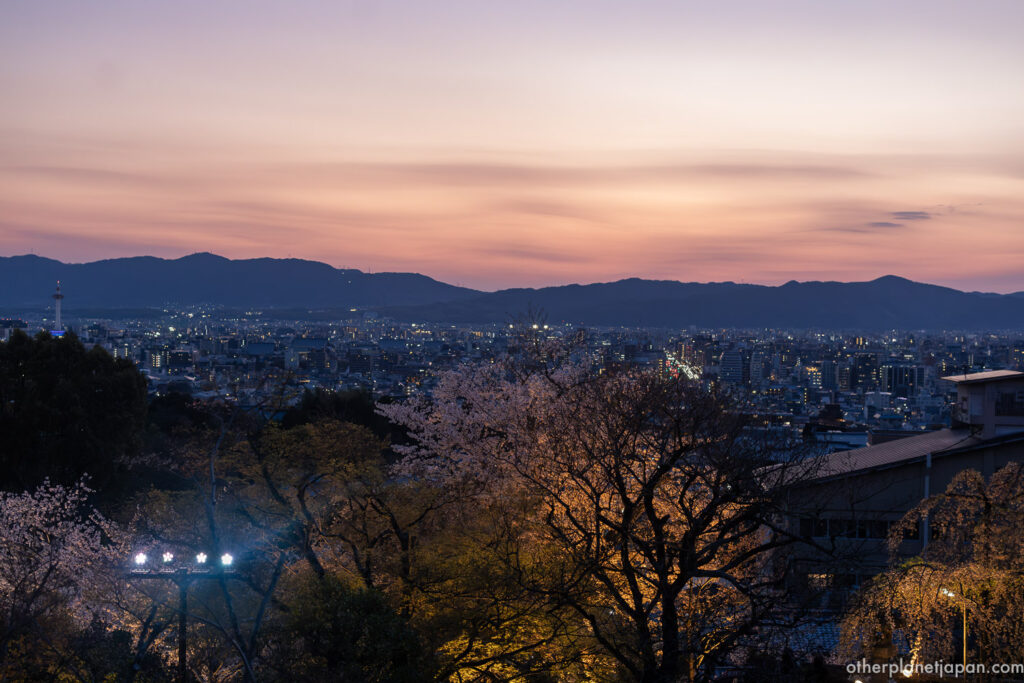
One evening, I was at the foot of the pagoda during a night viewing. The Kyoto cityscape spread out at my feet.
A woman approached and asked me to take her photo with the night view behind her. She was from Hong Kong, she said.
I had visited Hong Kong several times before. I had even attempted to learn Cantonese once — and given up. Now here I was, face to face with someone from Hong Kong, and not a single passable phrase in Cantonese came to mind. If I had known I would meet someone this captivating, I never would have quit.
After she left, I walked to the Main Hall. I stood before the Kannon and pressed my palms together. Not for health. Not for academic success. Not for love. I prayed to be able to speak Cantonese.
Okuno-in — Important Cultural Property
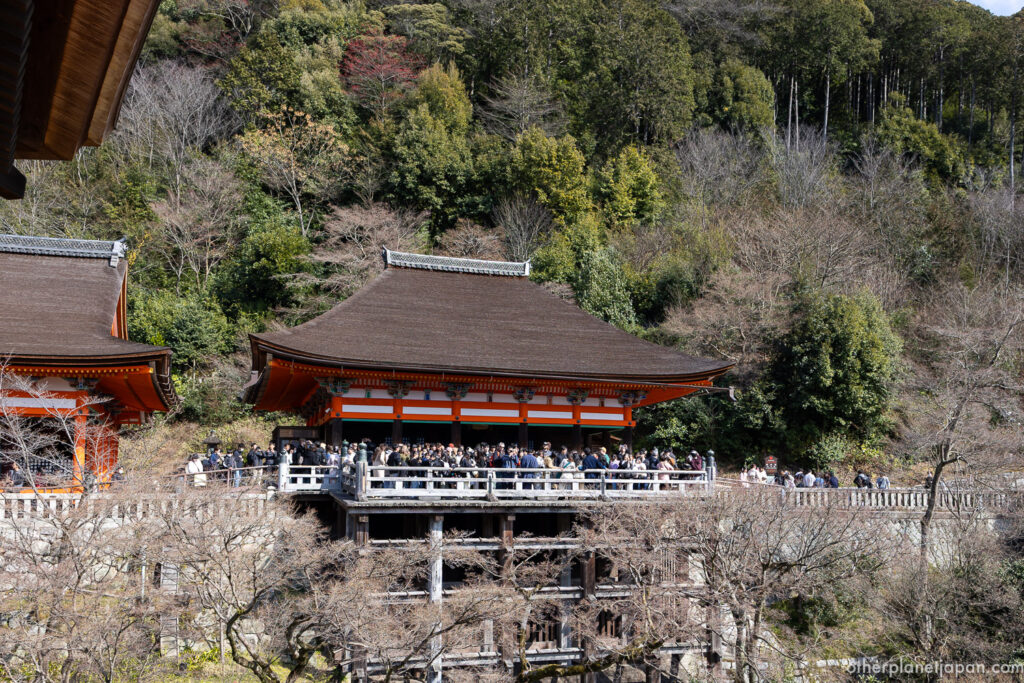
This is where you see it all at once.
The Main Hall. The wooden stage. The valley between you and them. It’s the only spot in the complex where the whole composition makes sense — where you understand what Kiyomizudera actually is, as a thing built into a hillside, rather than just a series of structures you’re walking through.
Half the people here have their phones out before they’ve even looked up. Look up first.
In summer: dense green around aged timber. In autumn: burning red maple. In spring: cherry blossoms drifting past the eaves. Each version of this view is a different argument for coming back.
Koyasu-no-to (Koyasu Pagoda) — Important Cultural Property
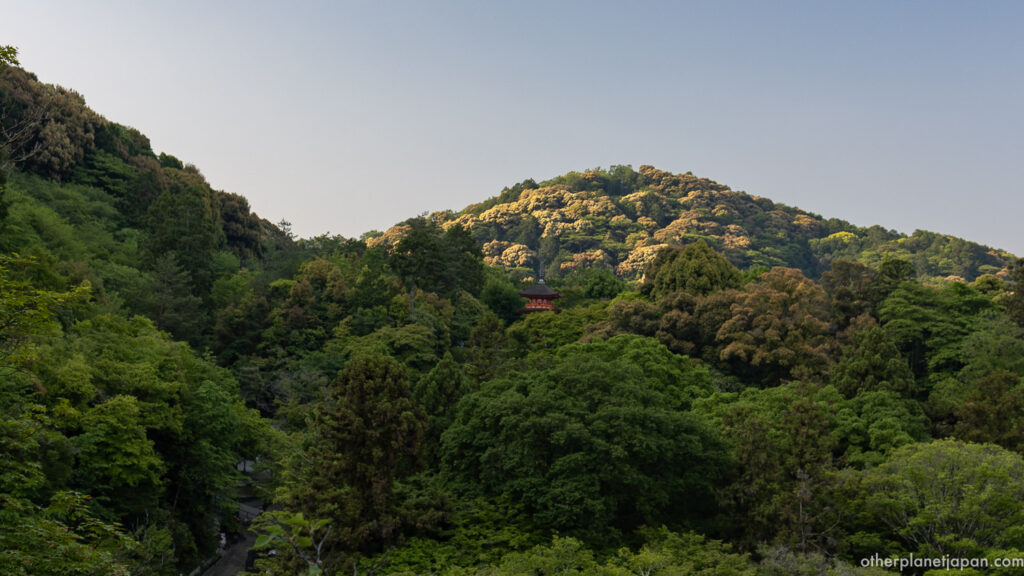
It took me four visits to find this angle.
Koyasu-no-to sits at the southern edge of the grounds — small, easy to miss, associated with prayers for safe childbirth. But stand here and turn around: the Main Hall faces you directly, framed in a way that doesn’t exist anywhere else on these grounds. Four visits. I’m telling you so you don’t need four.
Closed during night illuminations.
Otowa Waterfall (Otowa-no-taki)
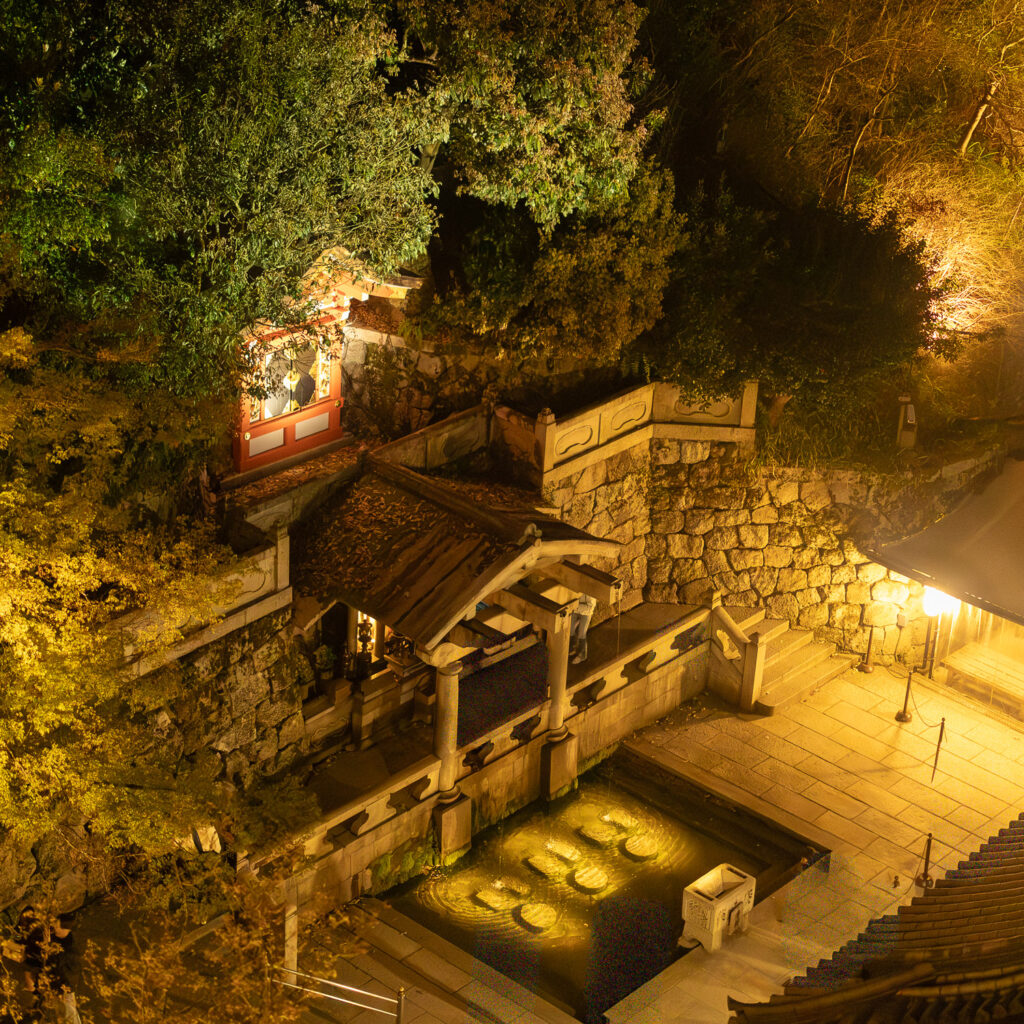
The spring running directly beneath the Main Hall — the water source that gave Kiyomizudera its name. Kiyomizu means “pure water.” Three separate streams, each associated with a different blessing: longevity, academic success, and luck in love. You drink from a ladle.
The line moves. The water is always cold. Both of these things are true no matter when you visit.
Zuigu-do Hall
One hundred yen. In exchange, you go completely blind.
The tainai meguri beneath Zuigu-do Hall is a passage through artificial darkness — a rope, your hand, and nothing else. The idea is that you are moving through the womb, and emerging on the other side as something slightly new. Whether you believe that or not is your business. The dark is real either way.
Do not bring your outdoor footwear inside.
→ Zuigu-do and the Womb Pilgrimage: Complete Guide (coming soon)
Kiyomizudera Temple Events and Special Viewings
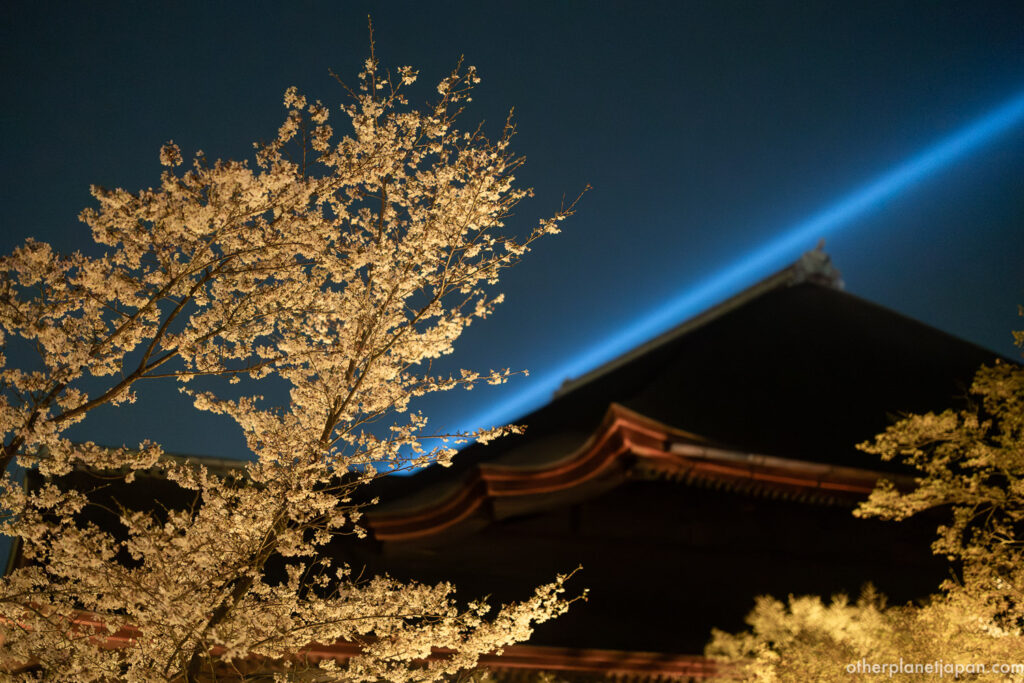
Spring Cherry Blossoms and Night Illuminations
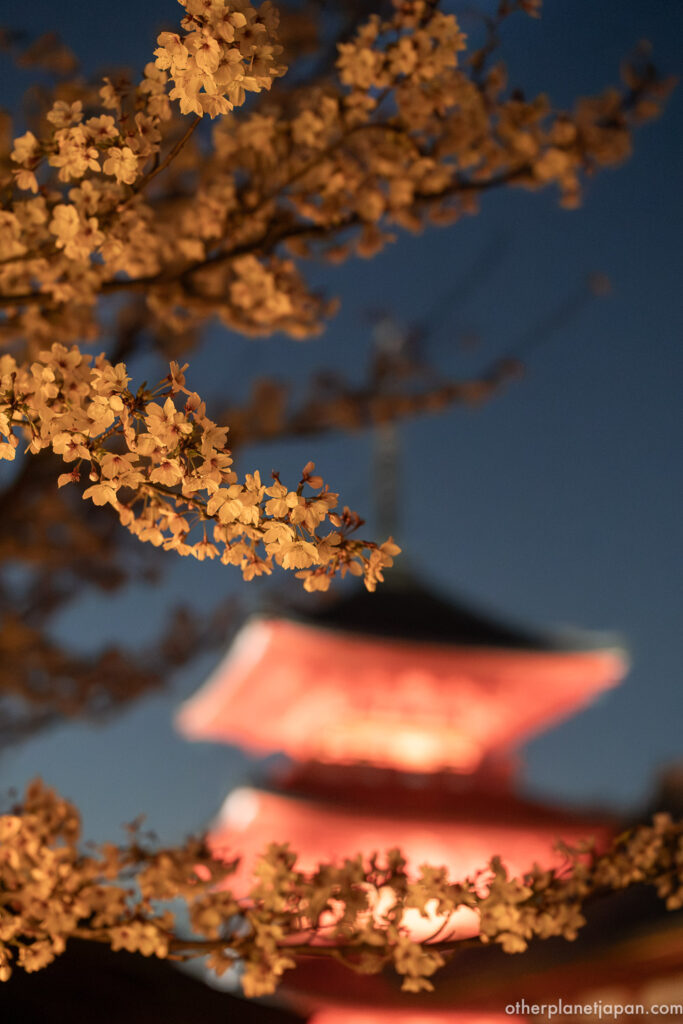
Late March through early April, approximately 1,000 cherry trees come into bloom across the grounds. During the spring night illumination period, the Main Hall and the wooden stage are lit up, and a single beam of blue light — called Kannon Jihi-ko, the Light of Kannon’s Compassion — extends westward into the night sky.
→ Kiyomizudera in Spring: Cherry Blossoms and Night Viewing Guide
Sennichi Mairi (August 9–16)
A single visit during this period is said to carry the merit of one thousand days of prayer. During these eight days only, the inner sanctuary of the Main Hall — a space normally off-limits even to many priests — is opened to the public.
→ Sennichi Mairi at Kiyomizudera: What to Expect
Seiryu-e (Blue Dragon Ceremony)
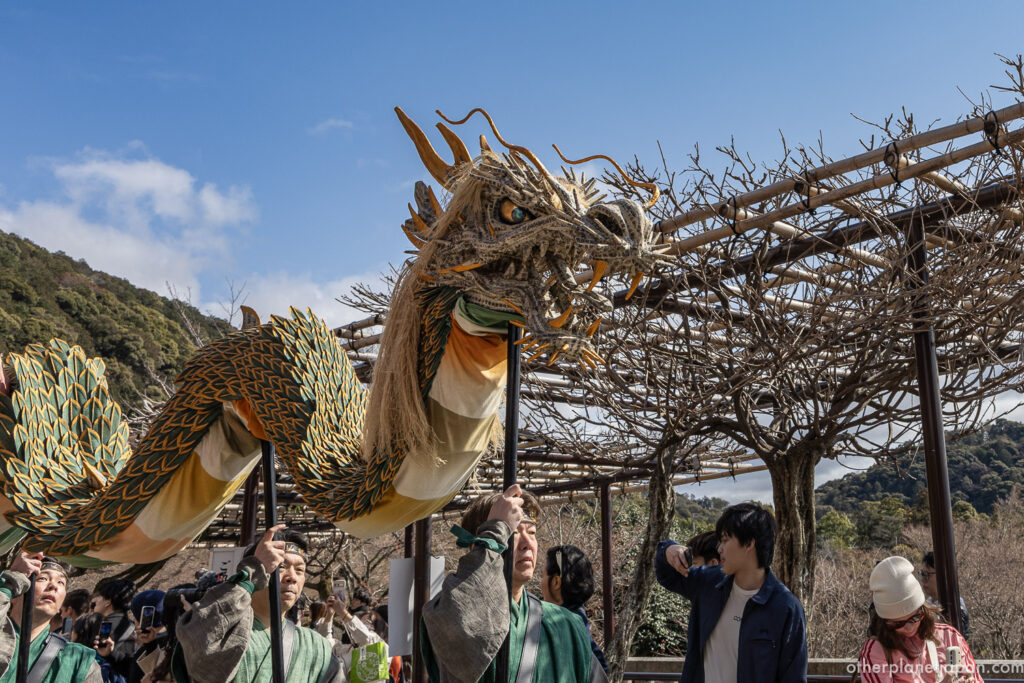
Held twice a year, in March and September. A procession representing the blue dragon — guardian deity of Kiyomizudera — winds through the temple grounds and out into the streets of Higashiyama. The dragon, measuring approximately 18 meters, is carried by white-robed attendants through incense smoke. It’s the kind of thing that doesn’t look real until you’re standing in front of it.
Practical Information: Visiting Kiyomizudera Temple
Hours
Generally 6:00 AM – 6:00 PM (last entry 5:30 PM)
Extended to 9:00 PM during special night illumination periods
Hours vary by season — confirm on the official website before visiting
Admission
Adults: ¥500
Elementary and junior high school students: ¥200
Zuigu-do (womb pilgrimage): additional ¥100
Access
By bus: From Kyoto Station, take City Bus No. 206 or No. 100 to Gojo-zaka or Kiyomizu-michi stop. From there, approximately 10–15 minutes on foot uphill.
By taxi: Approximately 15 minutes from Kyoto Station. Before 8:00 AM, taxis can drop you directly in front of Niomon Gate. After 8:00 AM, vehicles cannot proceed all the way to the entrance — another reason to arrive early.