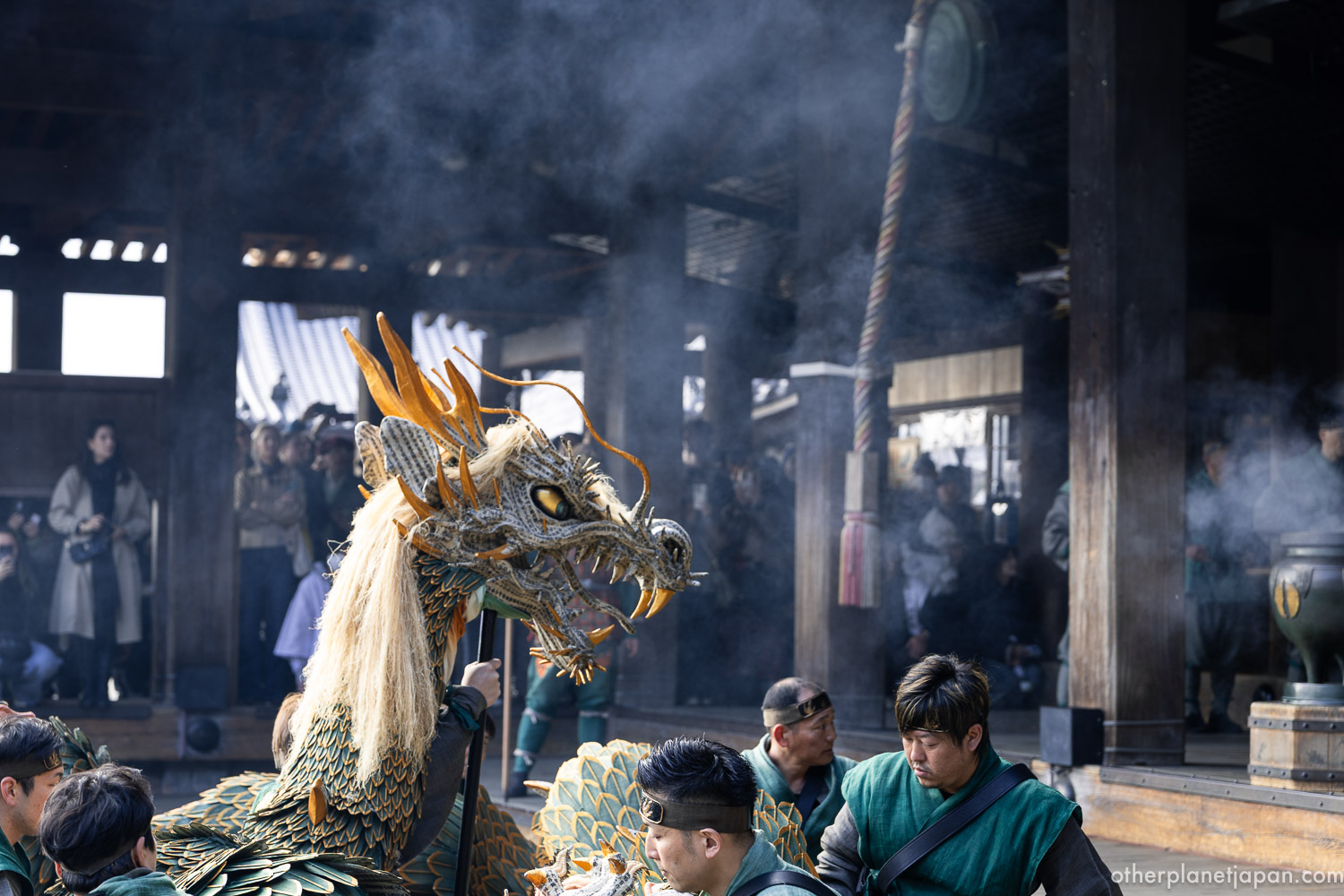
Three times a year, a dragon descends from Kiyomizudera Temple and walks through the streets of Kyoto. This is Seiryu-e — and almost nobody outside Japan knows it exists.
I had arrived a full hour early.
It wasn’t enough.
The stone steps in front of the Niomon Gate were already packed — a solid wall of people, cameras raised, positions claimed. Not a gap anywhere. Somewhere in the back rows, amateur photographers were doing the math on their zoom lenses and coming up short. I knew the feeling.
I gave up on the steps and moved to the wooden stage instead. The ¥500 admission keeps the crowds from fully colonizing it — a small mercy. I found a good position and settled in to wait.
Thirty minutes passed. Then a temple staff member began working through the crowd with an announcement I had never heard before in my life: “The dragon is coming through. Please make way.”
The crowd on the stage split in two, pressing to either side. In the gap that opened, a foreign woman appeared — alone, bewildered, clearly with no idea what Seiryu-e was. She had walked into the best position on the entire stage. Nowhere to go. She stayed. The expression on her face moved through embarrassment and arrived somewhere close to disbelief.
The dragon came through.
She watched it from two meters away.
Somewhere below the Niomon Gate, a photographer who had been standing for an hour was having a very bad afternoon. I thought about that. Then the dragon performed, and I stopped thinking about anything else.
What Is Seiryu-e — Kiyomizudera’s Blue Dragon Festival?
It begins with water.
According to temple legend, a dragon emerges from somewhere on the mountain each night, flies down to Otowa Falls at the base of the Main Hall, and drinks. The tradition of Seiryu-e was created to honor that legend — and to mark a specific moment. In 2000, Kiyomizudera opened its secret principal image of the Thousand-Armed Kannon for the first time in 33 years. A new ceremony was needed for a once-in-a-generation event. The dragon procession was born.
It has been held three times a year ever since.
The dragon, in the Japanese imagination, is nothing like its European counterpart. It does not hoard gold. It does not kidnap princesses. No hero is dispatched to kill it. In Japan, the dragon is a deity of water and rain — a protector. For a temple built entirely of wood, on a hillside, over a waterfall, a dragon that brings rain is not a threat. It is a guardian.
The Dragon Itself — What You’re Actually Looking At
The numbers matter here.
The dragon stretches approximately 18 meters in length — roughly the height of a six-story building, laid end to end. Its body is constructed from hemp cloth and washi paper. Its approximately 8,000 scales are inscribed individually with fragments of Buddhist scripture. It takes a team of bearers to carry it, and in motion — twisting, rising, dipping — it moves as if it has been alive from the beginning.
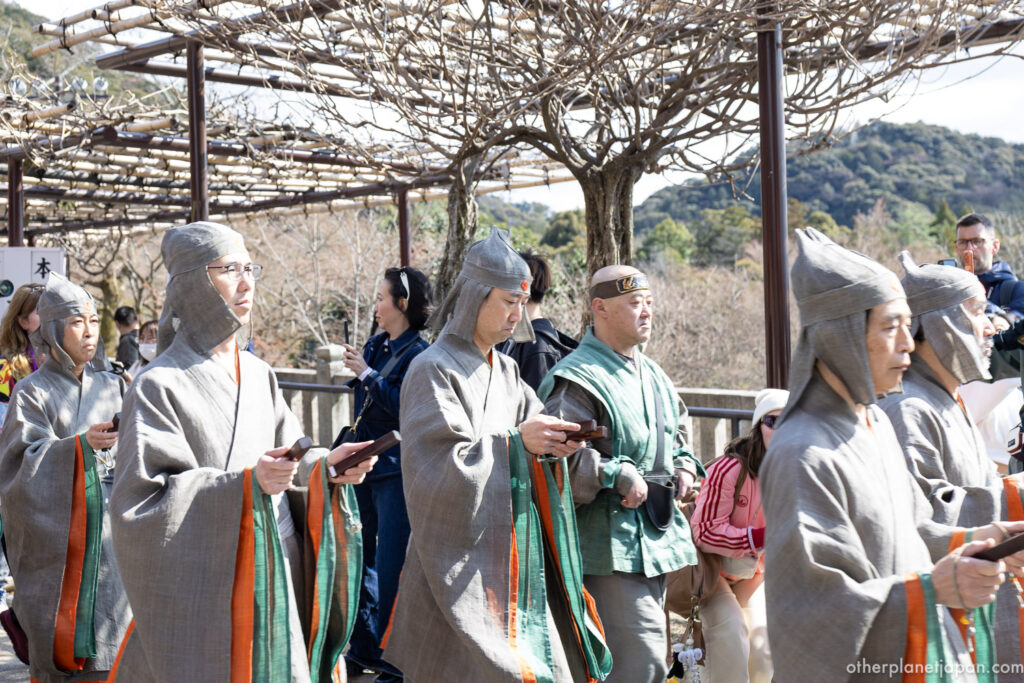
The costumes for the entire procession were designed by Wada Emi, the Japanese costume designer who won the Academy Award for Best Costume Design for Akira Kurosawa’s Ran in 1986. This is not a folk festival assembled from storage. Every element was designed.
The procession that precedes the dragon follows a fixed order: monks blowing horagai conch shells, ceremonial officials, guardian deities, and the Four Heavenly Kings — before the dragon itself appears, carried by its bearers, filling the stone path from side to side.
The Procession Route — Where the Dragon Walks
The dragon is always moving.
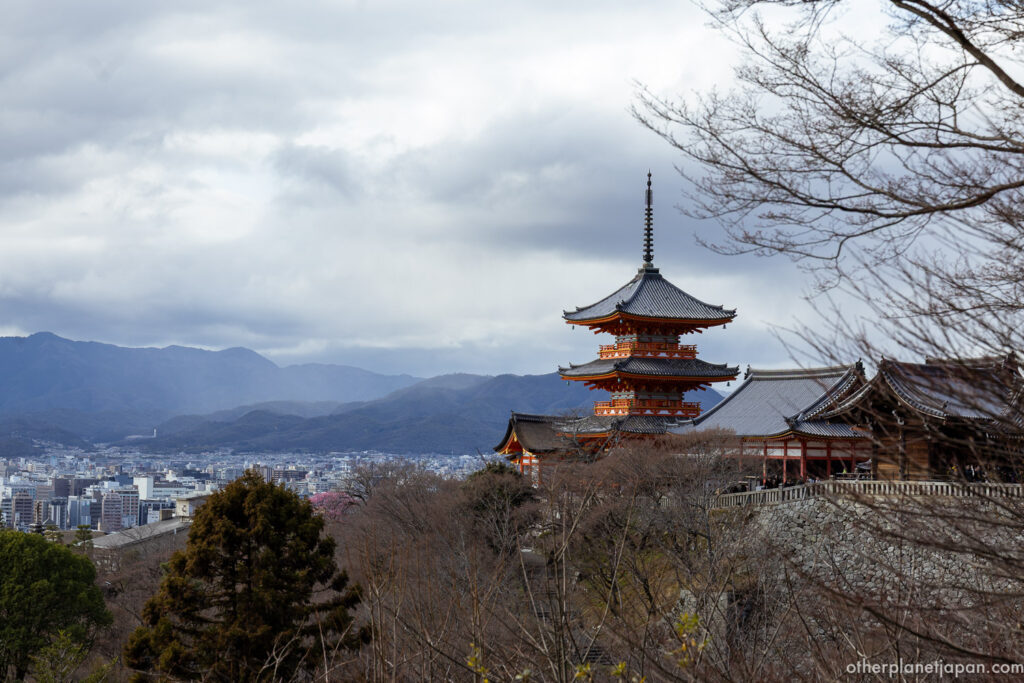
The procession begins at Okuno-in and moves through the heart of the complex — past the Main Hall, down to Otowa Falls, through the West Gate and along the Three-Story Pagoda — before arriving at the Niomon Gate and spilling out onto Kiyomizuzaka below.
At the base of the stone steps outside the Niomon Gate, the dragon performs in the open plaza before the procession concludes. This is the moment the crowd has been waiting for. This is where the dragon has room to move.
After the procession exits the gate and enters Kiyomizuzaka, the shopkeepers along the lane press back into their doorways as the dragon passes. Unsuspecting tourists reach for their phones. This, too, is worth watching.
Where to Watch — The Honest Guide
Two positions. Choose one.
Niomon Gate stone steps (best overall): Stand at the base of the stone steps directly in front of the gate. The procession descends toward you. The dragon performs in the plaza at the bottom. You are in the right place. Arrive at least two hours before the procession begins — not one hour. Two hours. The front rows go fast and they do not come back.
Entry here does not require temple admission. The gate is accessible from the street.
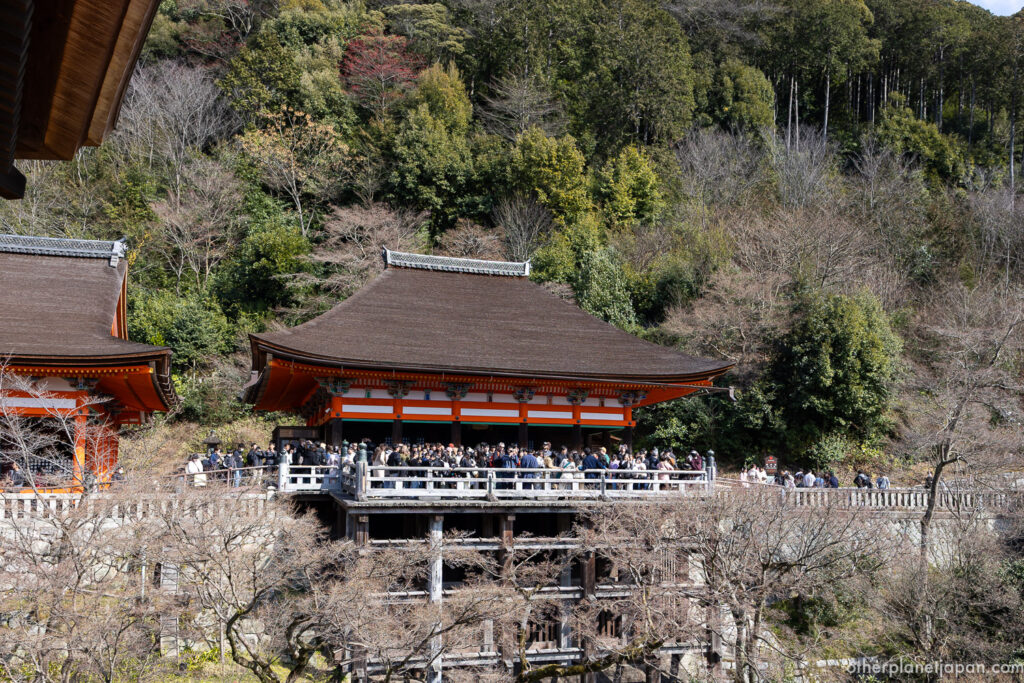
The wooden stage (best for photography): The stage offers an elevated view of the procession as it moves through the grounds below. Admission required (¥500). Fewer people than the steps, and the sight lines are unobstructed for much of the route. The trade-off: you will not see the plaza performance at the bottom.
One more note: after the procession exits the Niomon Gate onto Kiyomizuzaka, it keeps moving. Follow it down the lane. The dragon in the street, among the shops and the tourists who had no idea it was coming, is its own kind of spectacle. And it’s free.
Practical Information
| Dates | Typically around March 15, April 3, and October 15 |
| Time | Approximately 2:00 p.m. – 3:30 p.m. |
| Admission | Included in standard temple admission (Adults ¥500 / Children ¥200) |
| Niomon Gate viewing | Free — no admission required to watch from outside the gate |
| Reservations | Not required |
⚠ Dates change each year. Always confirm current information at the official Kiyomizudera website before your visit: https://www.kiyomizudera.or.jp/en/
Photography: Shooting is permitted throughout the grounds and on Kiyomizuzaka. Tripods, monopods, and drones are prohibited everywhere on the temple grounds.
Getting there: From Kyoto Station: City Bus Route 206, alight at “Gojozaka,” then approximately 10 minutes on foot (uphill). From Kiyomizu-Gojo Station (Keihan Line): Approximately 25 minutes on foot. By taxi: Approximately 15–20 minutes from Kyoto Station, around ¥1,500.
Insider Tips
Two hours early at the Niomon steps — one hour is not enough. The front positions are claimed well before the procession begins. Kyoto’s amateur photography scene has become genuinely competitive: the post-pandemic surge in outdoor activity, social media, and an older generation of photographers who show no signs of stepping aside have together produced a crowd that does not yield. This is not an exaggeration.
The stage is the sleeper option. Most visitors default to the Niomon steps. The stage has better sight lines for photography, fewer people, and a different angle on the procession entirely. The ¥500 admission thins the crowd noticeably.
Stay for Kiyomizuzaka. The procession doesn’t end at the gate. Follow the dragon down the lane. Shopkeepers flattening themselves into doorways, tourists spinning around in confusion — the dragon in the street is a different experience from the dragon in the temple, and it’s free.
Watch the bearers. The dragon moves because people are making it move — a coordinated team working in close quarters on stone steps, in robes, with a crowd pressing in from both sides. Watch the hands and feet, not just the head.
Frequently Asked Questions
Do I need to reserve tickets for Seiryu-e? No. Standard temple admission applies for viewing within the grounds. Watching from outside the Niomon Gate is free. No advance booking of any kind is required.
How many times a year is Seiryu-e held? Three times — typically around March 15, April 3, and October 15. Exact dates vary each year. Check the official Kiyomizudera website to confirm.
Can children watch Seiryu-e? Yes. The procession moves at walking pace and the dragon is designed to be seen, not feared. Children generally react well. Keep young children close in the crowd.
How long is the Seiryu-e dragon? Approximately 18 meters — the length of a six-story building laid horizontally. Its 8,000 individual scales are each inscribed with Buddhist scripture.
Who designed the Seiryu-e costumes? Wada Emi, the Japanese costume designer who won the Academy Award for Best Costume Design for Akira Kurosawa’s Ran (1986). The same designer responsible for the costumes in Dreams and Rhapsody in August. The connection between a Kyoto temple procession and a Hollywood award is not one most visitors expect.
More from Kiyomizudera
→ Kiyomizudera: Complete Insider’s Guide —Coming Soon
Sennichi-mairi: One Visit Worth a Thousand
While You’re Here — The Lanes Below
The stone-paved approach that the dragon walks through — Kiyomizuzaka, Ninenzaka, Sannenzaka — is among the most atmospheric walks in all of Japan. Meiji and Taisho-era shopfronts line both sides. The merchandise changes by season. The buildings do not.