What leads the evening news in Japan every spring?
Not politics. Not the economy. Cherry blossoms.
Morning news, evening news, the front page of the newspaper. When the first buds will open in each city, when they’ll hit full bloom, how long the peak will last. Meteorologists deliver the forecast with the same gravity they reserve for typhoons.
I start checking every day from mid-March. So does everyone I know.
What Is the Kiyomizudera Night Illumination?
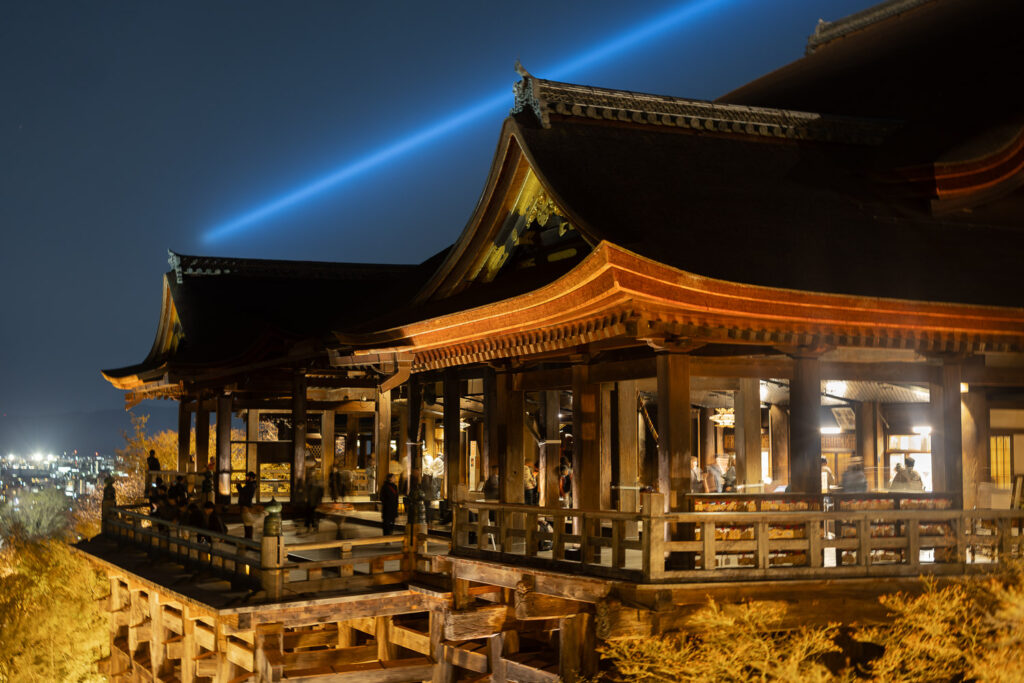
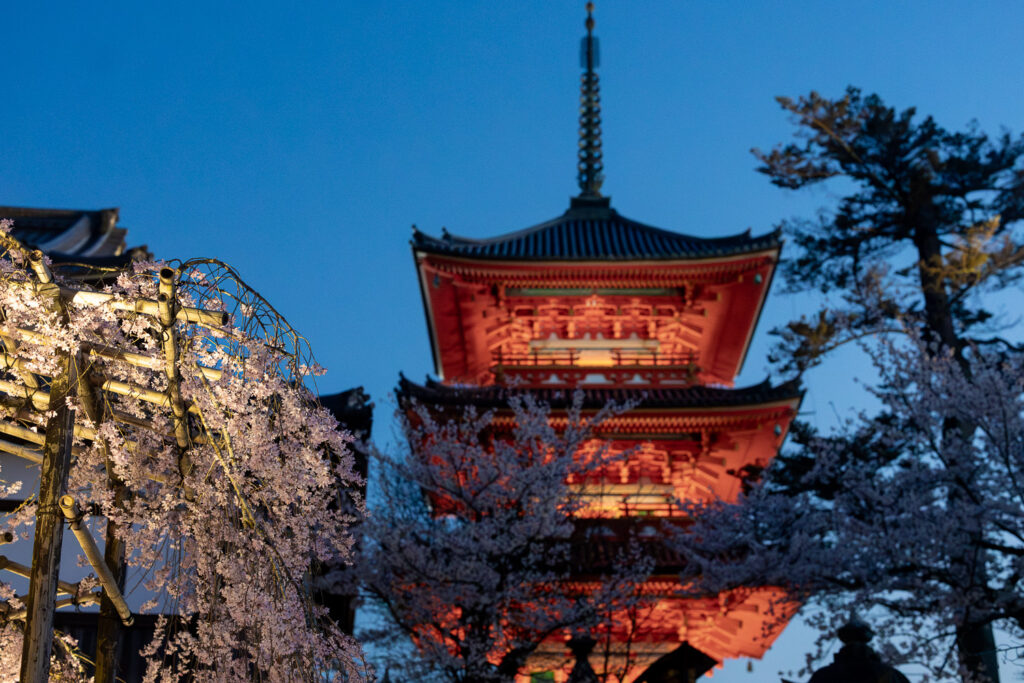
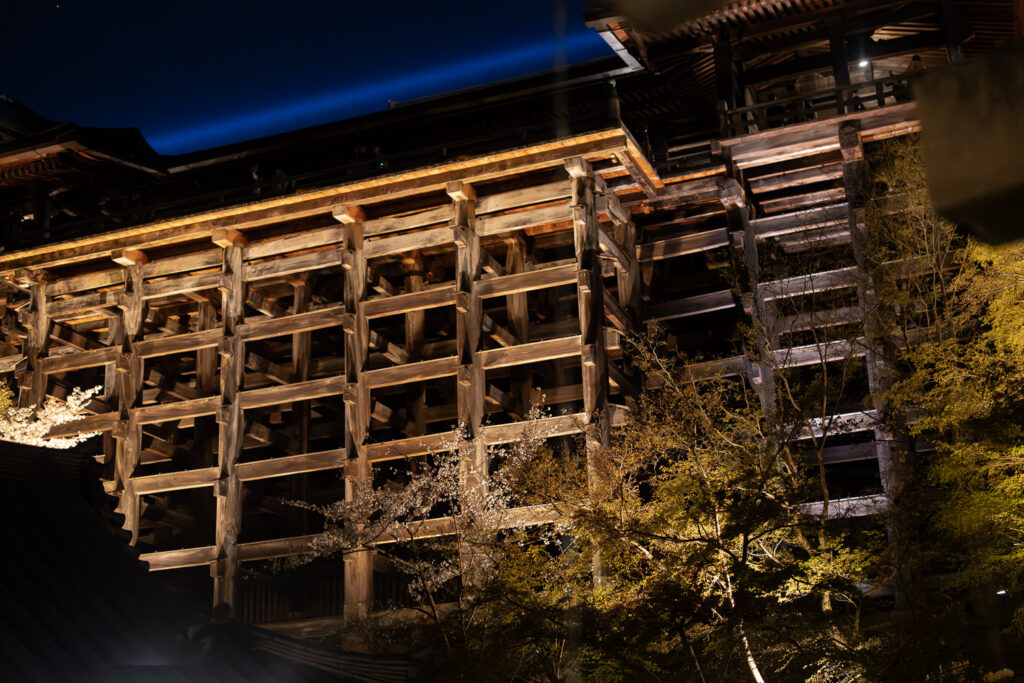
Three times a year, Kiyomizudera keeps its gates open after dark. The structures you know from ten thousand photographs — the main stage, the three-storied pagoda, Okuno-in — emerge from the night in ways daylight never allows.
Spring, summer, and autumn only.
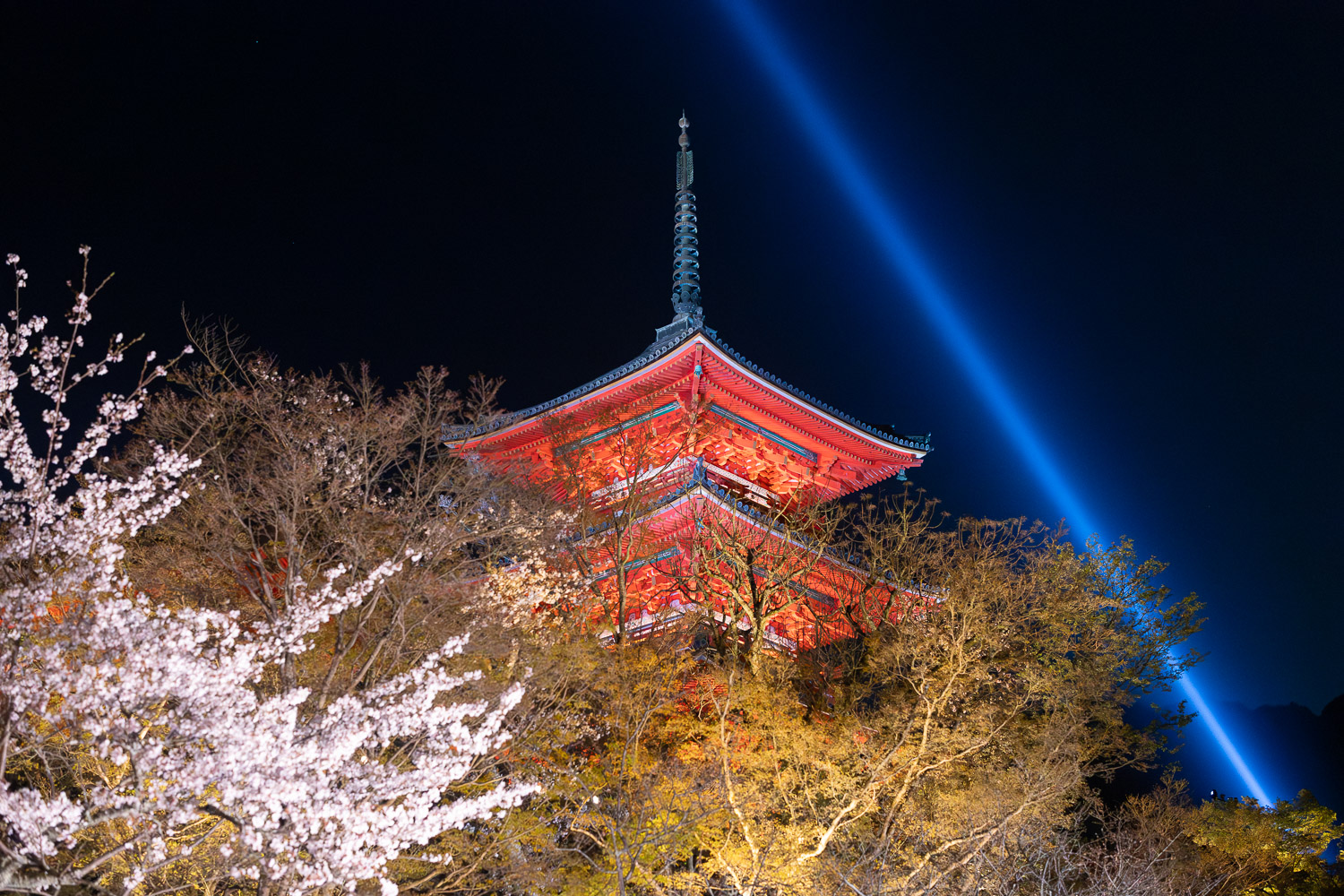
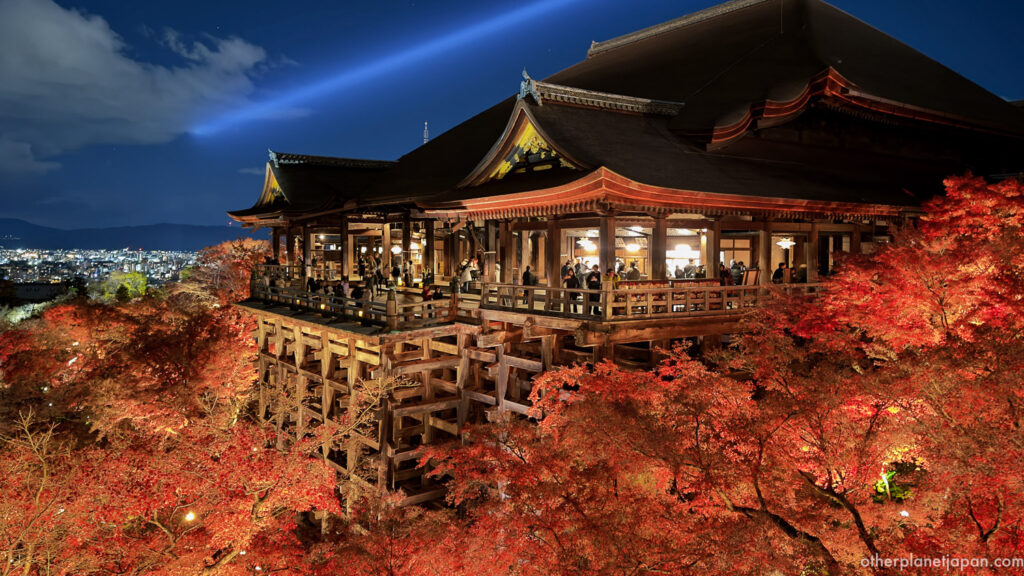
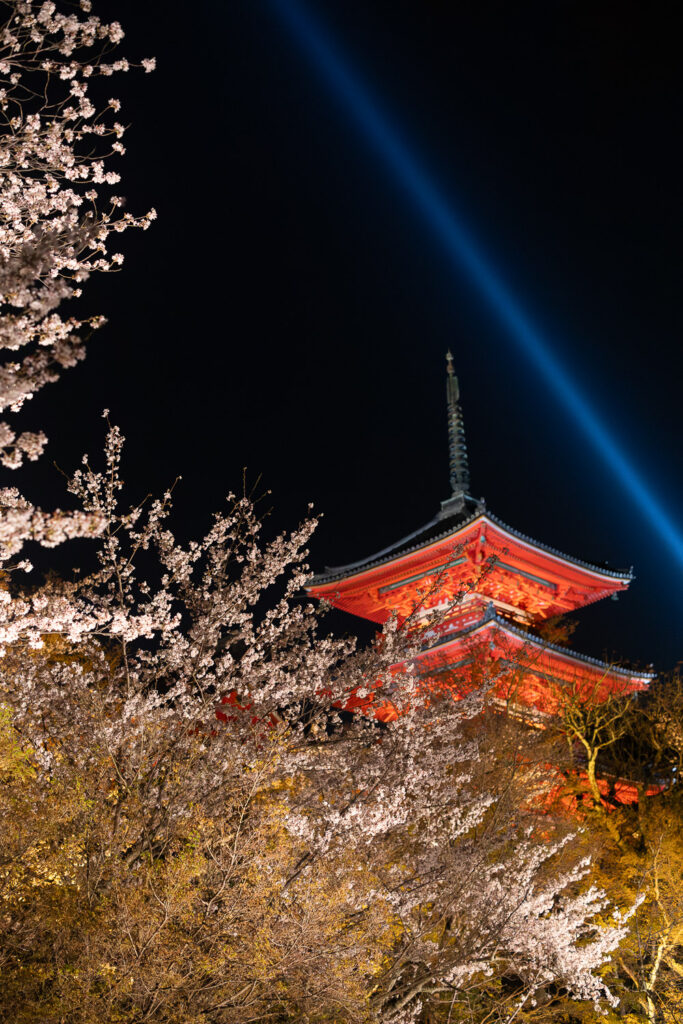
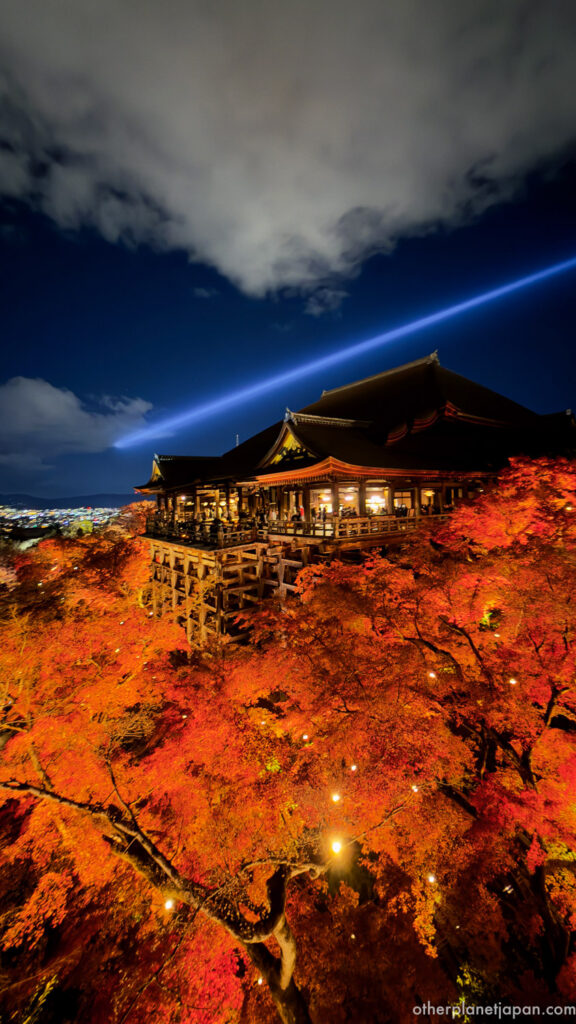
During the illumination, a single beam of blue light cuts across the Kyoto night sky. It’s called Kannon Jihi-ko — the Light of Kannon’s Compassion — a searchlight directed from the top of the three-storied pagoda toward the city below, representing the mercy of the temple’s principal deity, the Eleven-faced Thousand-armed Kannon. Visible from almost anywhere in the city. A quiet announcement to all of Kyoto that the gates are open.
Japanese people have two weaknesses: cherry blossoms and limited-time anything. The night illumination exploits both simultaneously. The crowds are inevitable. The line for the goshuin stamp winds through the courtyard. Japanese people love a queue as much as they love a deadline. These are the moments we recognize ourselves as creatures from another planet.
For photographers: the best unobstructed view is from the outer railing of Okuno-in, looking back toward the main stage. You’ll wait a few minutes for the people ahead of you to finish. Be patient. The shot is worth it.
Kiyomizudera Spring Illumination: After the Petals Fall
(March 27 – April 5)
Cherry blossom season in Japan is not a gentle affair. It arrives without warning, peaks on its own schedule, and ends before you’re ready.
It does not, in other words, read the room. This is remarkable, for something so deeply Japanese.
From thirty percent bloom to full flower in a single downpour of rain — and then gone.
Where did fifty percent bloom go?
By the time I arrived on the evening of April 2nd, peak bloom had passed. The petals were on the branches and on the ground. But standing at Okuno-in, I could still feel them — their pink lingering in the lit air, even as they fell. What remained was something the forecast apps don’t account for: the soft pink glow of scattered blossoms catching the light against the stone paths below. More melancholy than magnificence. More Japan than Japan.
The crowds were manageable. The one exception: the goshuin line. If collecting the temple’s red seal stamp is on your itinerary, join the queue early. It moves, but slowly.
Kiyomizudera Summer Illumination: The Thousand-Night Pilgrimage
(August 14 – 16)
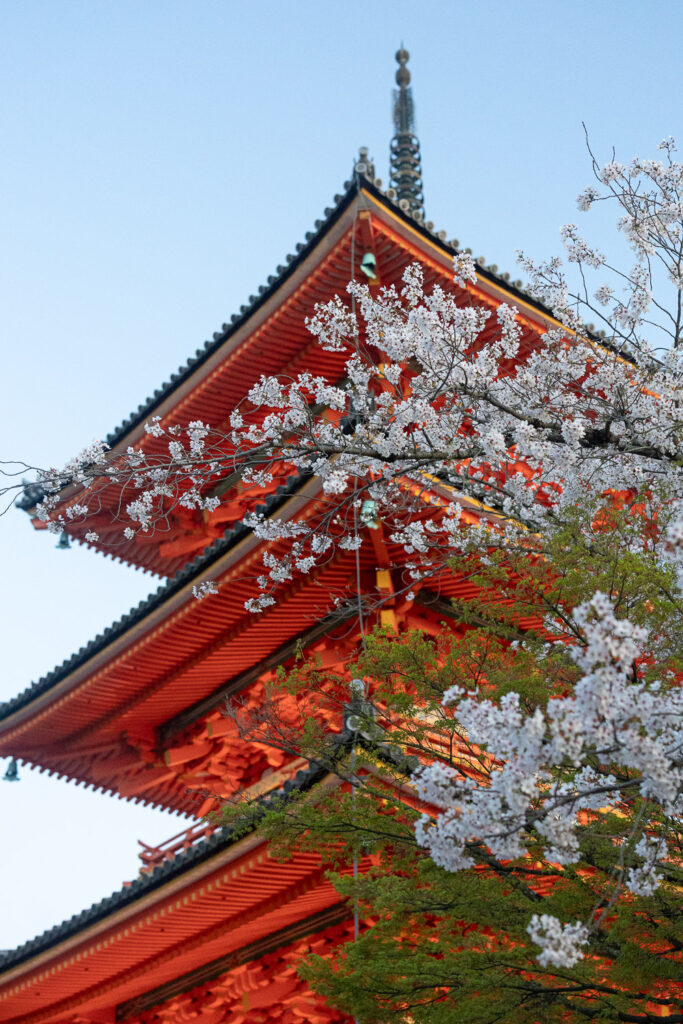
The summer illumination runs August 14–16, during Sennichi-mairi — an ancient pilgrimage tradition in which a single night’s worship is said to carry the merit of a thousand visits. The atmosphere is different from spring and autumn: quieter in spirit, heavier in intention.
I wrote about this in detail separately. If you’re planning an August visit, I’d start there.
→ Kiyomizudera Sennichi-mairi: Kyoto’s Midsummer Night Pilgrimage
Kiyomizudera Autumn Illumination: The One That Stops You Cold
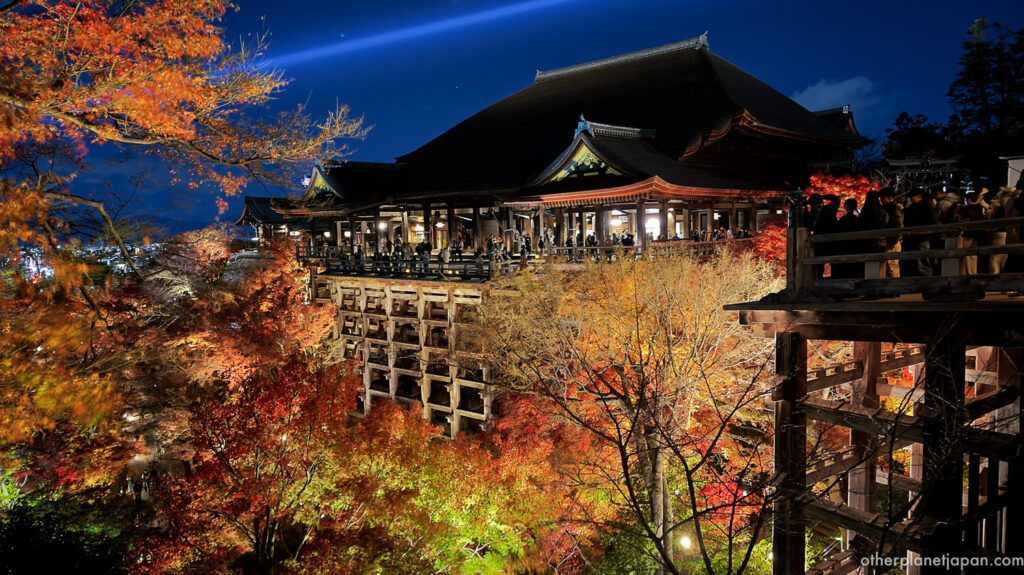
(November 21 – 30)
“Waaa, kirei!”
So beautiful — that was the woman behind me, the moment we stepped onto the main stage. She said it before I could. I kept my own reaction to myself.
Every Japanese person knows what this view looks like. But not like this.
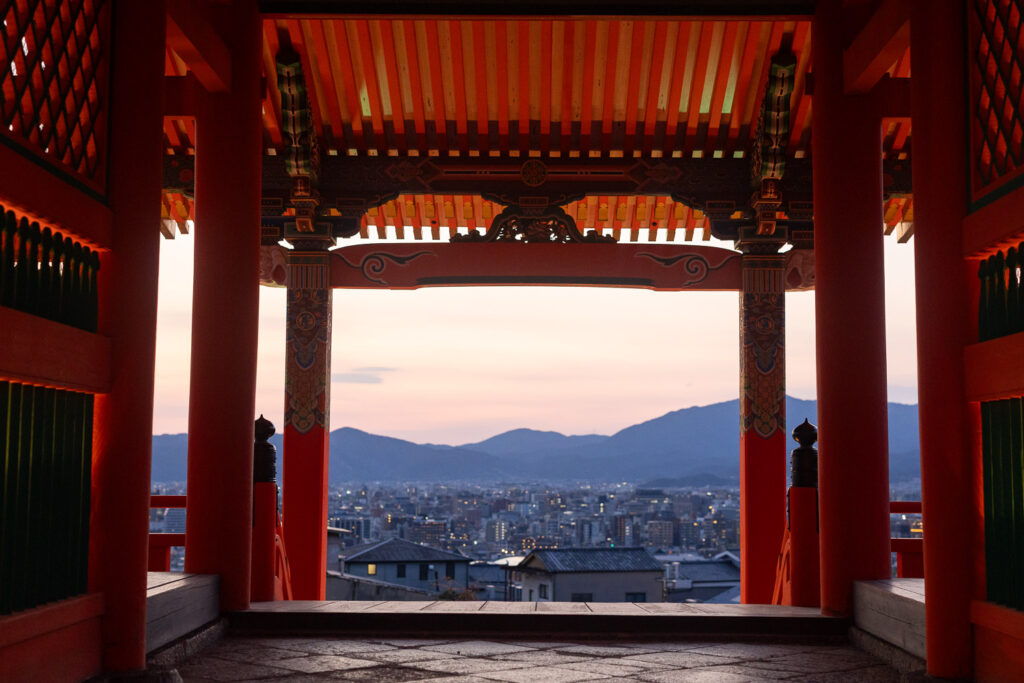
Below the stage, the maple trees were burning — deep oranges and reds lit from underneath, the kind of color that looks artificially saturated until you point a camera at it and realize the camera is simply telling the truth. Amida-do and Okuno-in floated in the warm light. Further back, the vermilion of Koyasu-no-to pagoda glowed against the dark.
No one could be blamed for making a sound.
The stage itself was loud with people. Someone leaned over the railing: “Isn’t this insanely high?” Someone else: “Take a photo of me.” Every register of excitement, all at once.
The wooden boards underfoot creaked with every step — hundreds of people, all at once, on a structure held together without a single nail.
At the kōro incense burner, the crowd had formed two deep layers, waiting their turn. The burner was so packed with incense sticks I wasn’t sure there was room for one more. I tried anyway.
“Hot!”
The flame from a neighboring stick caught my palm. That was the only word I spoke on the main stage of Kiyomizudera.
The incense around the kōro stung the eyes — but it was not, I realized, unpleasant. Between the crowd and the smoke, I suspected oxygen had become the minority. I kept that suspicion to myself.
Okuno-in was even more crowded. Of all my visits to Kiyomizudera — and there have been many — the autumn night illumination draws the heaviest crowds. I stayed until just before closing, but the flow of people never thinned. I left a few minutes before the final bell.
A note on timing: the official illumination runs November 21–30, but peak foliage at Kiyomizudera often extends into early December. If you visit in late November and the leaves aren’t quite there yet, it may be worth checking conditions before you give up on returning.
On tripods: don’t. They’re prohibited during the night illumination. You’ll see visitors attempting to set them up anyway — temple staff will ask them to remove the equipment. Shoot handheld, use a high ISO, and embrace the slight blur. Sometimes it’s more honest that way.
Planning Your Visit
2026 Schedule
| Season | Dates |
| Spring | March 27 – April 5 |
| Summer | August 14–16 (Sennichi-mairi / Inner Sanctum Special Access) |
| Autumn | November 21–30 |
Dates for 2027 and beyond are yet to be announced. Always confirm at the official Kiyomizudera website (https://www.kiyomizudera.or.jp/event/yakan.php) before your visit.
Admission & Hours
| Admission | 500 yen (purchased at the gate) |
| Open until | 9:30 PM (last entry 9:00 PM) |
| Reservations | Not required |
Getting There from Kyoto Station
The bus is the most reliable option.
Exit through the Central Gate of the JR lines and walk straight for about 100 meters to reach Bus Stop D2. Take the 206 or 86 bus and get off at Gojo-zaka. From there, it’s about a 10-minute walk uphill to the main gate.
On weekends and holidays, the line at D2 can exceed 100 people — but buses run frequently, so expect to wait around 15 minutes. The return journey is equally busy. Leave yourself time.
Frequently Asked Questions
Q1. Is the night illumination included in the regular admission fee?
Yes. The admission fee for the special night illumination is 500 yen — the same as the regular daytime admission. There are no separate tickets, no advance booking required, and no hidden charges. Purchase at the gate on the night of your visit.
Q2. How crowded is it, and when is the best time to arrive?
The autumn illumination is the busiest of the three seasons — on peak weekends, the crowds do not thin even close to closing time. For spring and autumn, arriving at opening time gives you the best chance of a relatively uncrowded experience. Alternatively, the final thirty minutes before closing tends to be slightly calmer. Avoid Saturday and Sunday evenings during peak foliage season if crowds are a concern.
Q3. I’m already inside during the day. Can I stay for the night illumination?
No. On illumination days, daytime admission ends around 5:30 PM, and the entire temple grounds are cleared — everyone has to leave. The gates then reopen for the night session, with the ticket window opening around 6:00 PM. If you want to see both, plan to exit, and budget for the wait to re-enter. A separate 500-yen admission applies to the evening session.
Q4. Is the night illumination visible from outside the temple?
Partially. The Kannon Jihi-ko — the blue searchlight beam representing Kannon’s compassion — is visible from across the city at no cost. The illuminated structures themselves, however, require paid admission to see properly. The approach path along Kiyomizuzaka and Sannenzaka is atmospheric after dark and worth walking regardless.
Q5. What’s the difference between the spring and autumn illuminations?
The subject matter is different, and so is the mood. Spring centers on cherry blossoms — fleeting, unpredictable, and gone before you’ve made peace with their leaving. Autumn centers on the maple foliage, which burns longer and photographs more dramatically. Spring feels bittersweet. Autumn feels like a statement. Both are worth experiencing at least once; they are not interchangeable.
More Kiyomizudera Guides
Kiyomizudera changes with every season — and every hour of the day.
These guides go deeper into two events most visitors never know exist.
Seiryu-e at Kiyomizudera: The Blue Dragon Festival Guide
Sennichi-mairi at Kiyomizudera: One Visit Worth a Thousand