Two Western tourists were talking at the foot of Togetsukyo Bridge.
“Does this way go to the Bamboo Grove?”
“No. It doesn’t.”
I was heading in exactly the opposite direction. My destination was a temple that had been bothering me for three years: Daihikaku Senkoji Temple, a small cliffside temple on the far side of the Hozu River in Arashiyama, Kyoto.
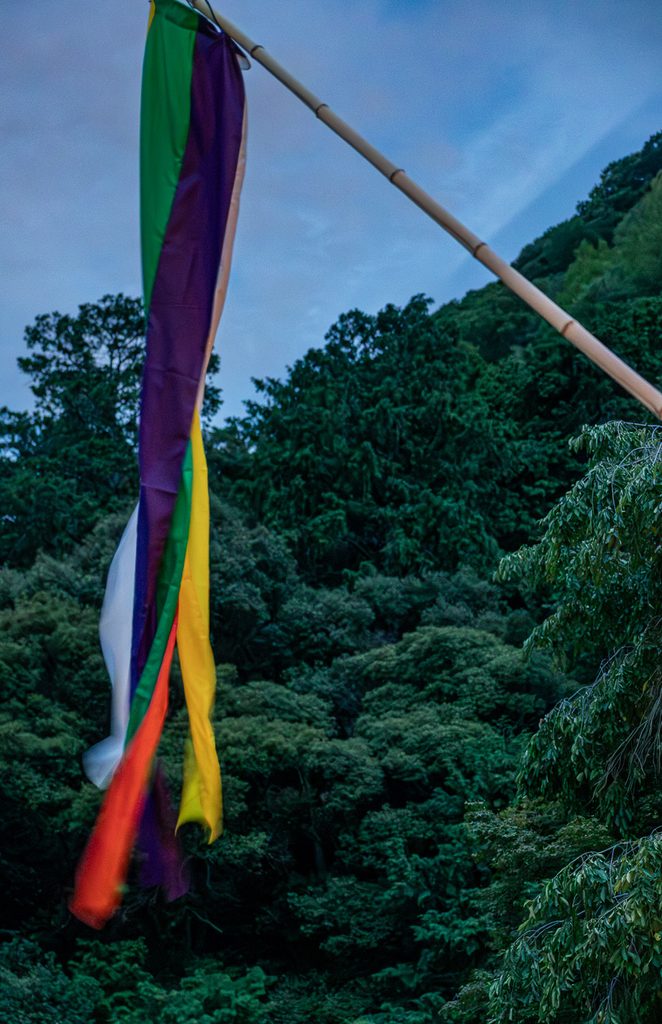
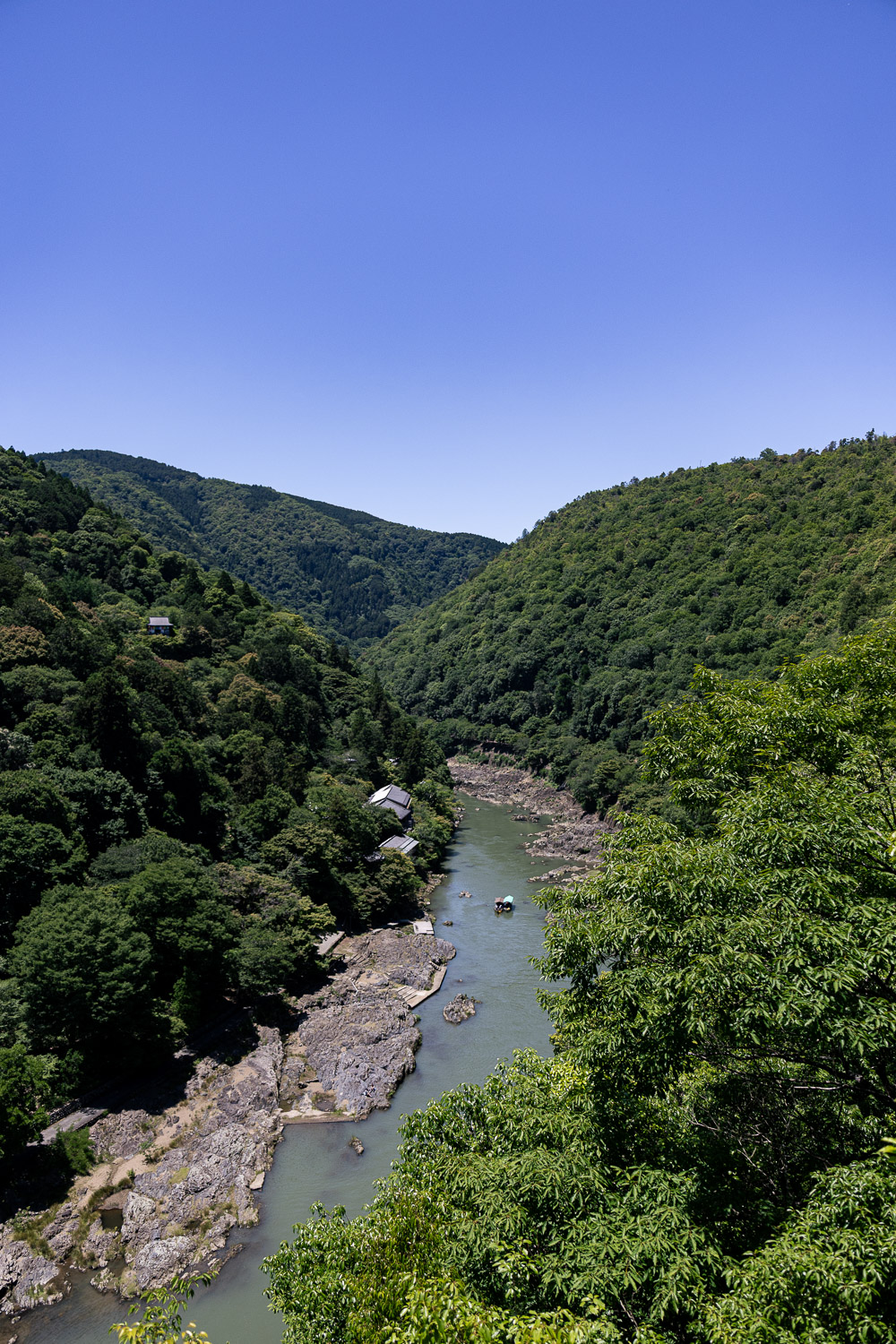
If you have ever seen a classic photograph of Arashiyama, with the river and the wooded mountainside and the pleasure boats, you have probably seen this temple without knowing it. There is a set of five-colored banners on the slope, visible from Okochi Sanso Garden and half the postcards in town. For three years I wondered what they were. For three years I told myself “next time.” Arashiyama has enough famous places and festivals to make that excuse work for a while. It stopped working. Even I was a little appalled at myself.
The name alone should have drawn me up there sooner. Senkoji means “temple of a thousand lights.”
Past the Boat Rental Shop, the Crowd Disappears
The walk starts loud.
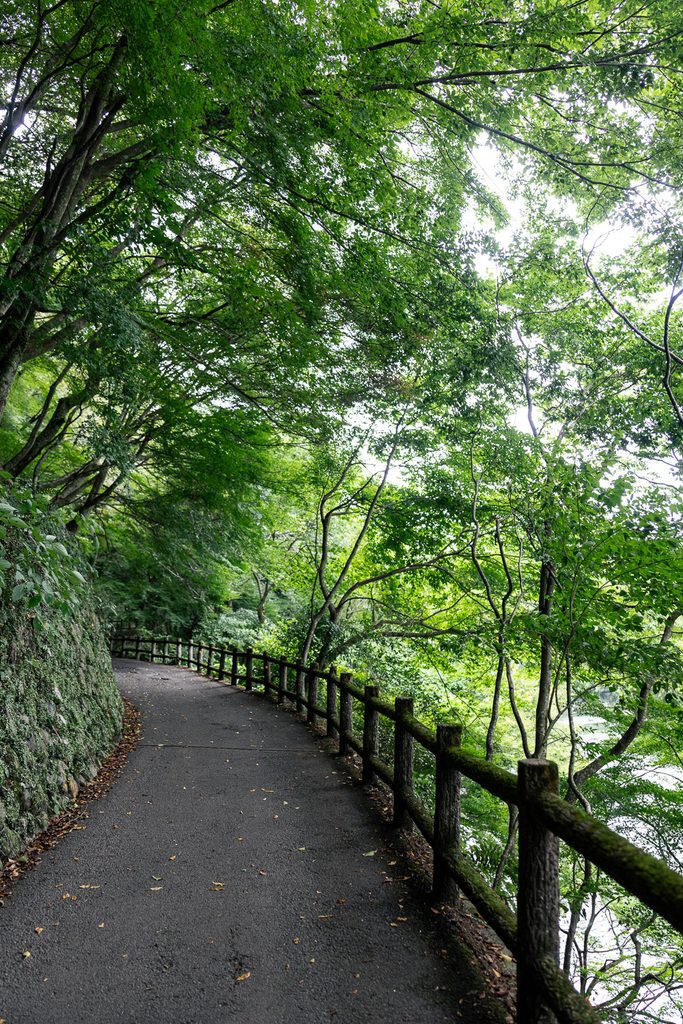
You leave the noise of central Arashiyama and follow the right bank of the Hozu River upstream. Past the boat rental shop, the people thin out, then mostly vanish. The air changes with them. It gets damp and green and river-smelling, cooler than the street you just left, and the loudest thing becomes the water. If you don’t know the area, this is the point where you start to suspect you took a wrong turn. I knew I hadn’t, and it still felt like a small adventure. With this few people on the path, I thought, the temple itself might be empty.
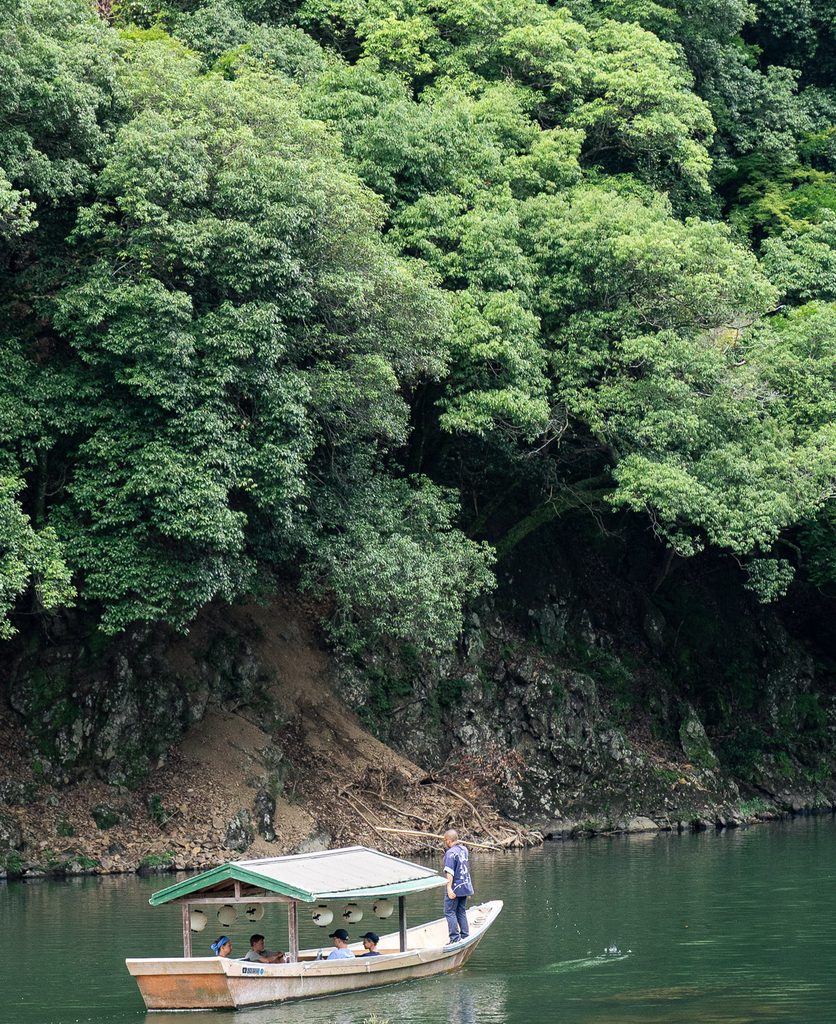
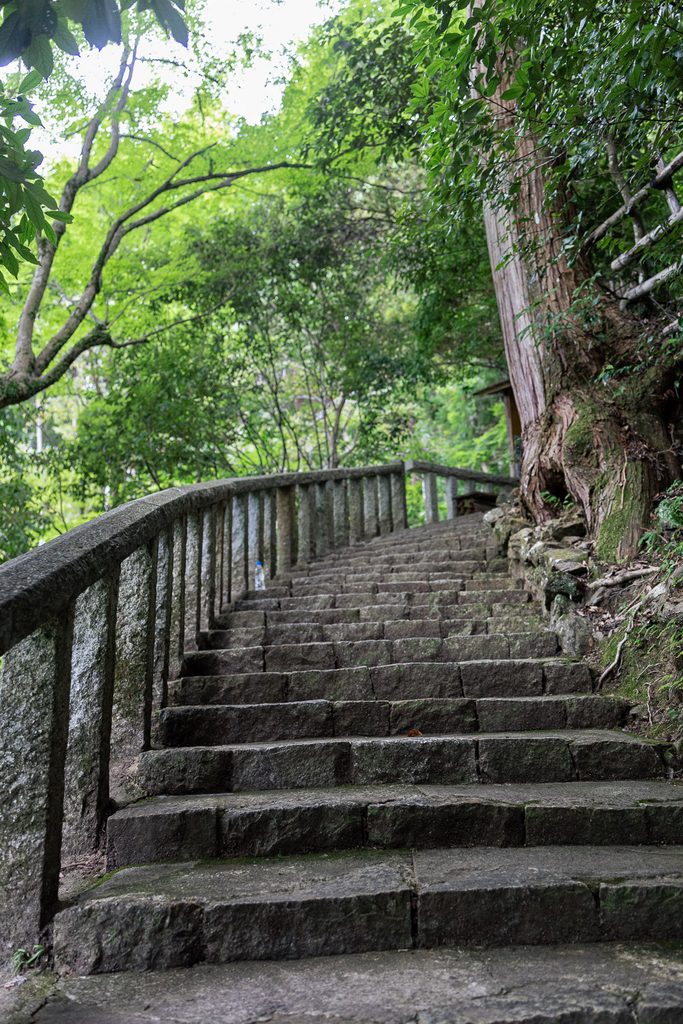
At the end of the riverside path, a flight of stone steps climbs the mountainside. Five minutes of climbing, and a wooden hall appeared, standing on the edge of the cliff.
I Expected No One. I Was Wrong.
A woman was meditating inside.
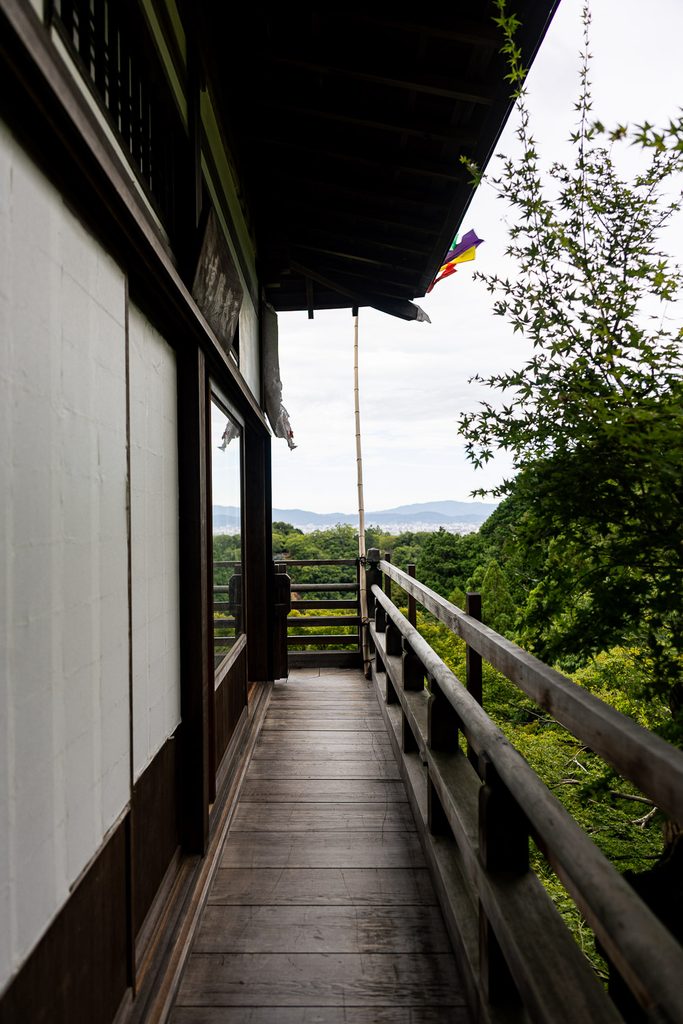
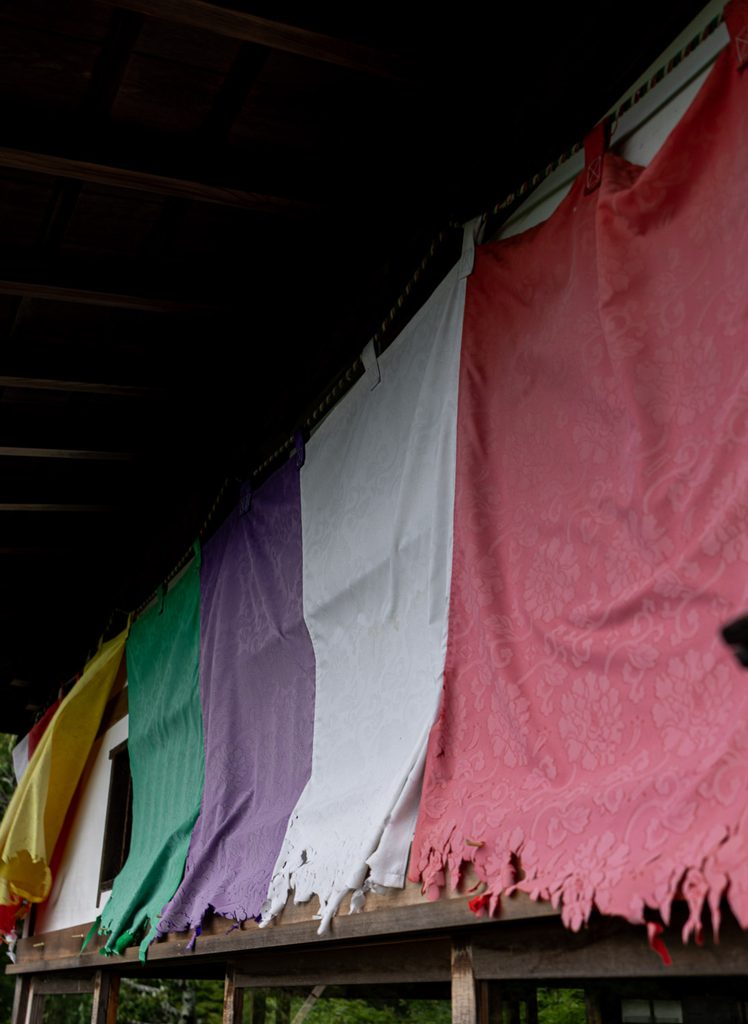
She sat so still, so completely absorbed, that I wondered how many hours she had been there. The moment I stepped into the room, wind swept through it, strong enough to lift paper off a table and cool enough that I stopped sweating for the first time that afternoon. The hall sits on a slope with a valley opening straight in front of it, and the wind funnels up and through it all day. Outside, the five-colored banners I had watched from across the river for three years snapped and cracked on their bamboo poles. Up close they were weathered to tatters, and three years of wind explained why.
In the adjoining building sat a wooden statue that looked ready to stand up and start giving orders. It was Suminokura Ryoi, the man who built this place, and who chose this particular cliff for reasons I would understand later.
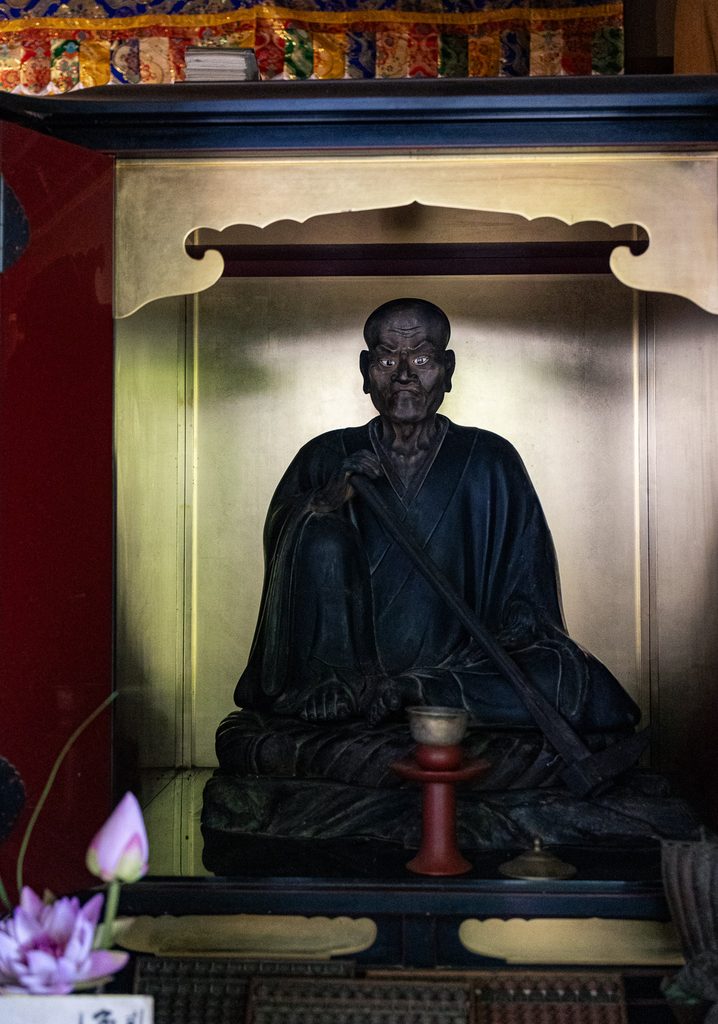
Same Name as Kiyomizu, Different Everything
I got to talk with a member of the temple staff, unhurried, the way you can’t when there’s a line behind you.
He told me “Daihikaku” means a hall enshrining Kannon, the bodhisattva of compassion. I had always wondered about that, because Kiyomizudera, Kyoto’s most famous temple, uses the same word for its own main hall. Same Daihikaku. Wildly different scale. Kiyomizu gets thousands of people a day and this place gets whoever bothers to walk 1.2 km upstream, which as far as I’m concerned is the correct arrangement.
Then he told me something that made me laugh: some tourists arrive here by accident, convinced they are on their way to the Bamboo Grove. A forty-minute wrong turn. I hope they stayed.
The monkeys, he said, live in three separate troops on this mountain, and only one of them belongs to the famous Iwatayama Monkey Park. I had assumed the park troop was the entire monkey population of Arashiyama. There are two more up here, unemployed by the tourism industry, along with deer, foxes, and tanuki.
He did give me one warning. Come back in mid-November, when the maples turn, and the place I had just described to myself as gloriously empty fills up like everywhere else in Kyoto. Not Kiyomizu-level. But the 1.2 km walk stops working as a filter once the leaves are worth the trip. If you want this temple the way I got it, come when nothing in particular is happening.
The temple also sits high enough to run two or three degrees cooler than the town below. He sleeps on the grounds, and even in August, he said, leaving the window open at night gets cold. He said this in the middle of a Kyoto summer, to a man who had just climbed a mountain, at a temple with no air conditioning. I have rarely wanted someone else’s job so badly.
The Abacus Temple
Inside the hall lay a very long abacus.
It honors Yoshida Mitsuyoshi, an Edo-period mathematician related to the temple’s founding family, whose book “Jinkoki” taught ordinary Japanese people how to calculate and stayed a bestseller until the Meiji era. Between his arithmetic and the founder’s engineering, this temple ended up with a reputation for mathematics and science. Kyoto really does have a temple for everything.
Nearby stands a model of a five-storied pagoda built entirely of abacuses, modeled on a full-size abacus hall at Ichijoji in Kasai, Hyogo Prefecture, which was donated by a student of Yoshida’s school. Look closely and the roof tiles resolve into rows of beads. Thousands of them, every one manufactured for counting, retired into architecture.
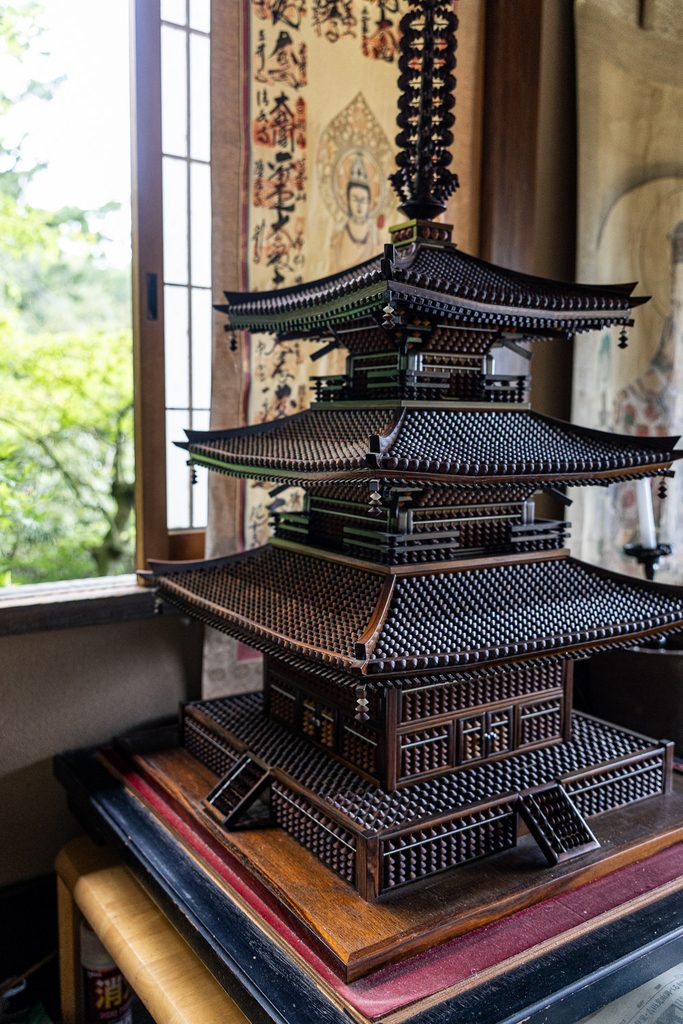
The Stick, the Shoulder, and the Street Performer
Then the staff member did something unexpected.
He began, quite casually, to teach zazen to the meditating woman. She folded into the seated posture. He picked up a keisaku, the flat wooden stick used in Zen training, and started walking slowly behind her. I got nervous on her behalf. In a cheap manga or an old TV drama, this scene ends one way: with a loud crack across the shoulders, about one minute from now.
He rested the stick gently on her shoulder. That was all. She had an experience she could not have had anywhere else, though I suppose a full-force strike would have been rarer still, and considerably harder to enjoy.
Talking with him afterward, his life turned out to be as unusual as his temple. He works here, and he is also a professional pantomime artist and street performer. He showed us a video of his act, and a traveler from Germany and I stood there equally stunned. Of course the cliffside temple with the abacus pagoda is staffed by a mime. At this point I would have accepted anything.
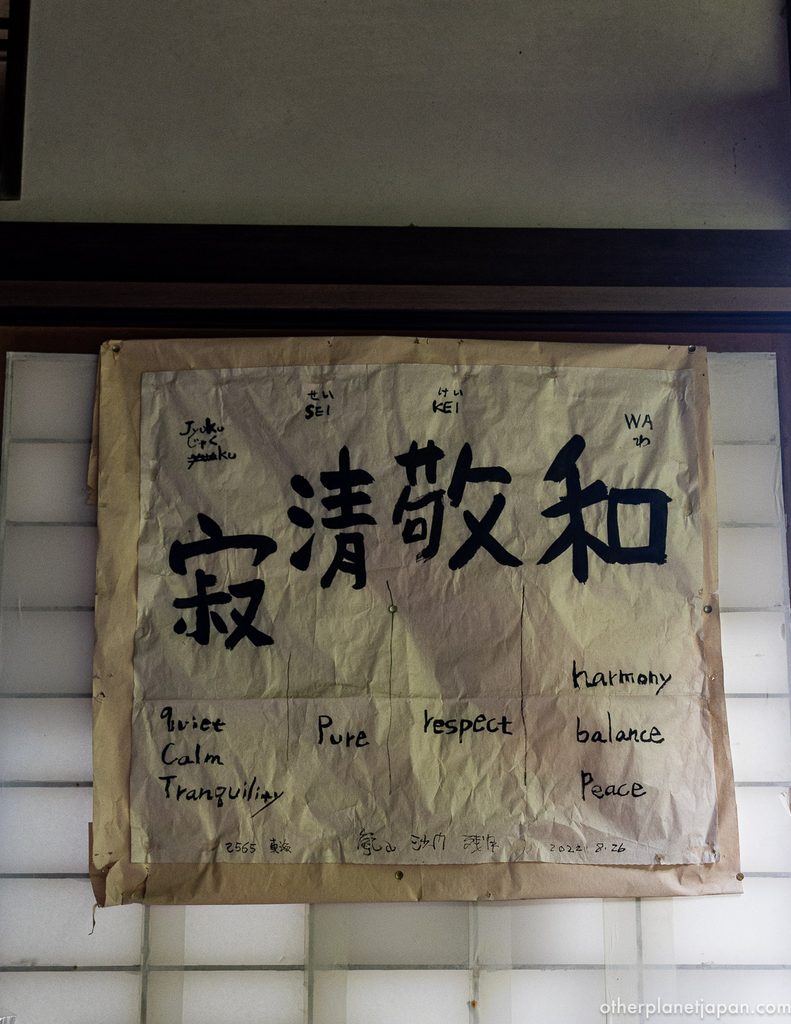
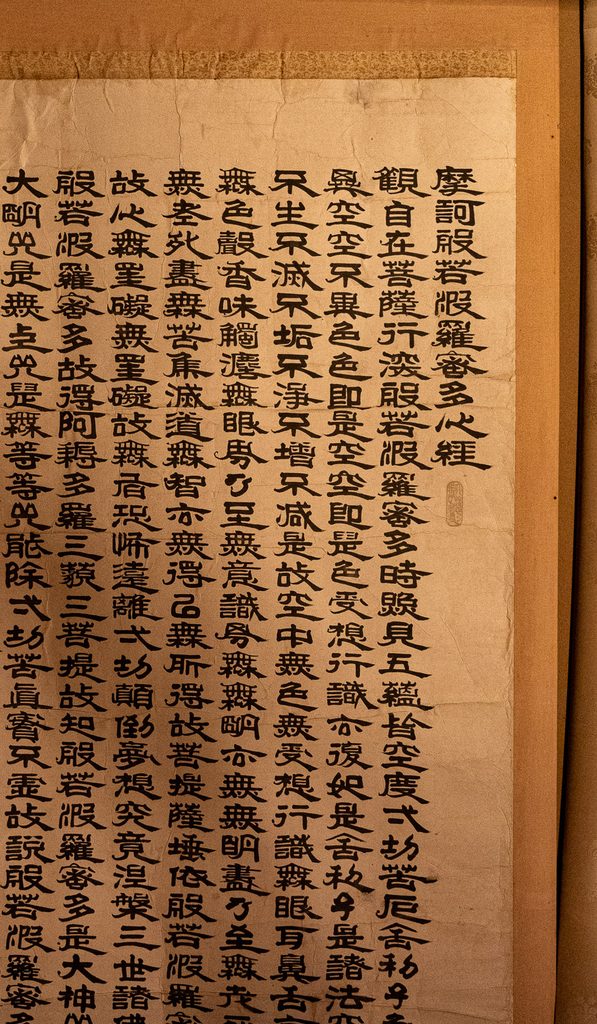
On my way out I noticed a sheet of paper pinned to the wall of the hall. Four characters brushed across it, WA KEI SEI JAKU, and underneath each one a translation in careful English handwriting: harmony, balance, peace. Respect. Pure. Quiet, calm, tranquility. The four are the guiding principles of the tea ceremony, a reminder that host and guest should soften toward each other, treat each other with respect, and keep the room and the occasion clean. Tea borrowed them from Zen, which is presumably how they ended up on the wall of a Zen temple on a cliff. No printed sign, no laminate, no QR code. Someone sat down and made that by hand, for visitors who would need it. As far as I could tell, it is the temple’s entire English-language program.
From the veranda: the rattle of the Sagano Scenic Railway crossing the gorge, the wind, a deer calling somewhere on the mountain. The view, the conversation, the whole atmosphere, a separate world from the crowds 1.2 km downstream.
This is not a five-star temple. It is, without question, one of my five-star destinations now.
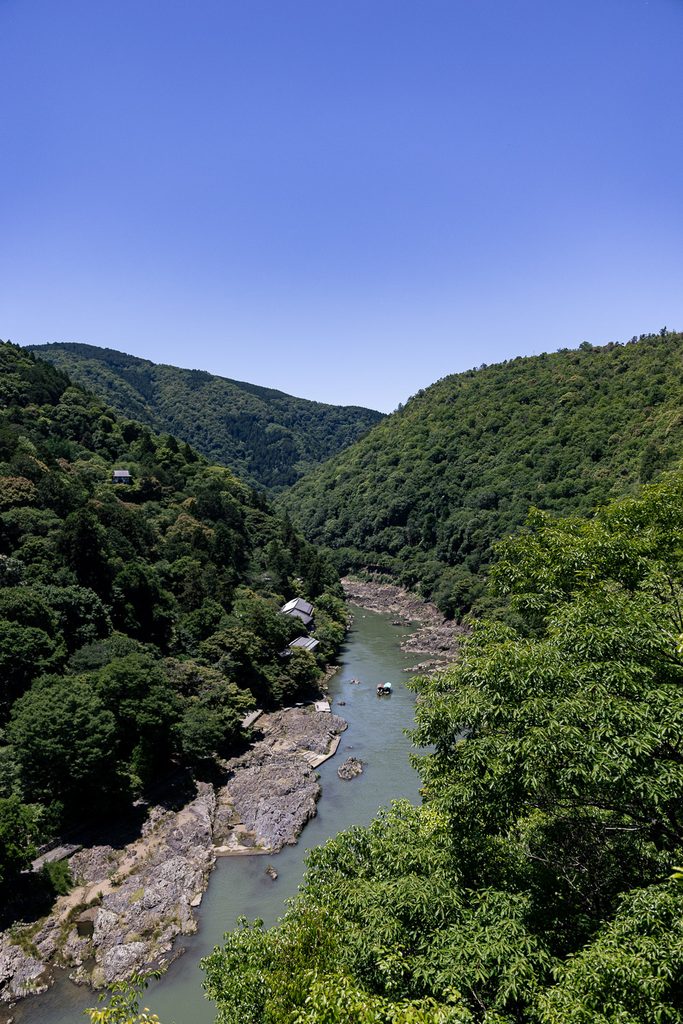
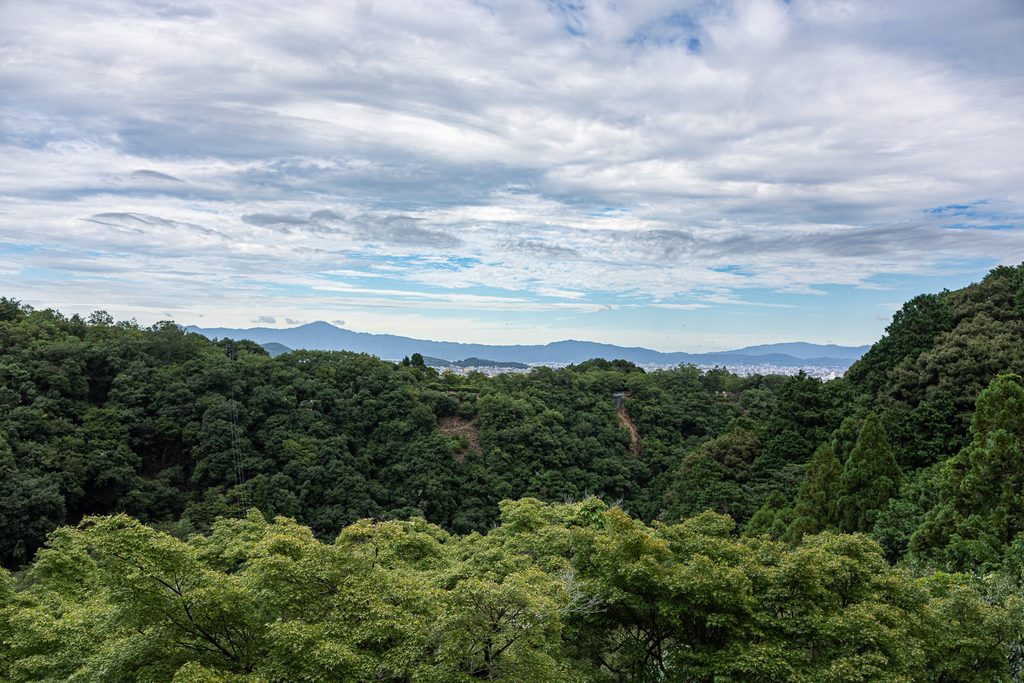
The Man Who Built It, and Why He Built It Here
Suminokura Ryoi (1554–1614) spent his life doing something almost no one else in Japan was doing: he opened rivers.
A Kyoto merchant who served under Toyotomi Hideyoshi and traded overseas, Ryoi cut navigable channels through rapids that had blocked boats for centuries. The Hozu River below this temple was one of them. The Takase River, which still runs through downtown Kyoto, was another. The work opened inland Japan to trade and made him one of the wealthiest men of his era. It also killed people. Breaking a gorge open in the early 1600s meant hand tools and men standing in fast water.
In 1614, to mourn those workers, Ryoi moved the lineage of an older Senkoji temple to this cliff and rebuilt it here. He could have put it anywhere in Kyoto. He put it directly above the water that had taken them, on the one spot where the river he had conquered is visible for its entire length. Then he died the same year, at 61, in this hall.
Today it operates as a Rinzai Zen temple, originally Obaku, and the Kannon statue at its heart is attributed to the Heian-period monk Genshin and said to be the one Ryoi kept beside him all his life. It faces the valley. So does he.
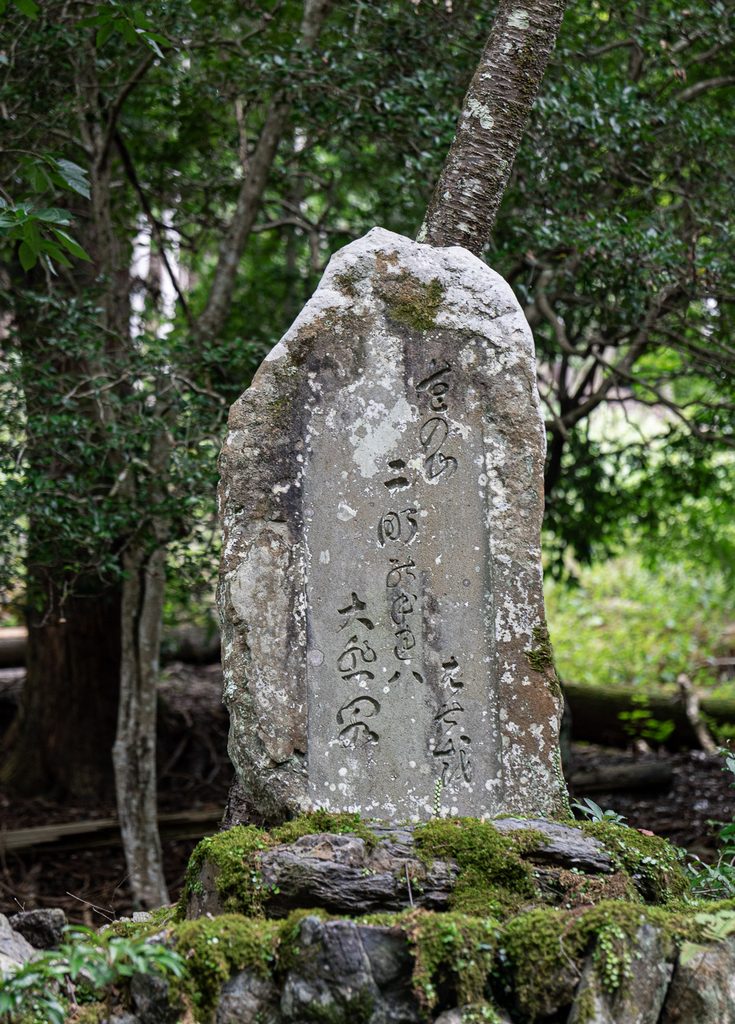
The view had a reputation long before I got around to it. Matsuo Basho climbed up here and left a haiku, which now stands carved on a stone among the trees:
Mountain of blossoms
climb two cho and there it is
Daihikaku
Two cho is roughly 220 meters. That is the climb, more or less, and it has not changed since the seventeenth century. Neither, apparently, has the reason to make it.
Getting There: This Is Not the Way to the Bamboo Grove
One thing first: this walk and the Arashiyama Bamboo Grove are in opposite directions. People do confuse them. If you want the bamboo, turn around.
From the Togetsukyo Bridge area, follow the right bank of the Hozu River upstream along a quiet paved path of about 1.2 km, then climb the stone steps for around 5 minutes at the end.
- From Hankyu Arashiyama Station: about 30 minutes on foot
- From JR Saga-Arashiyama Station: about 40 minutes on foot
- The riverside path is flat and paved; only the final staircase is not