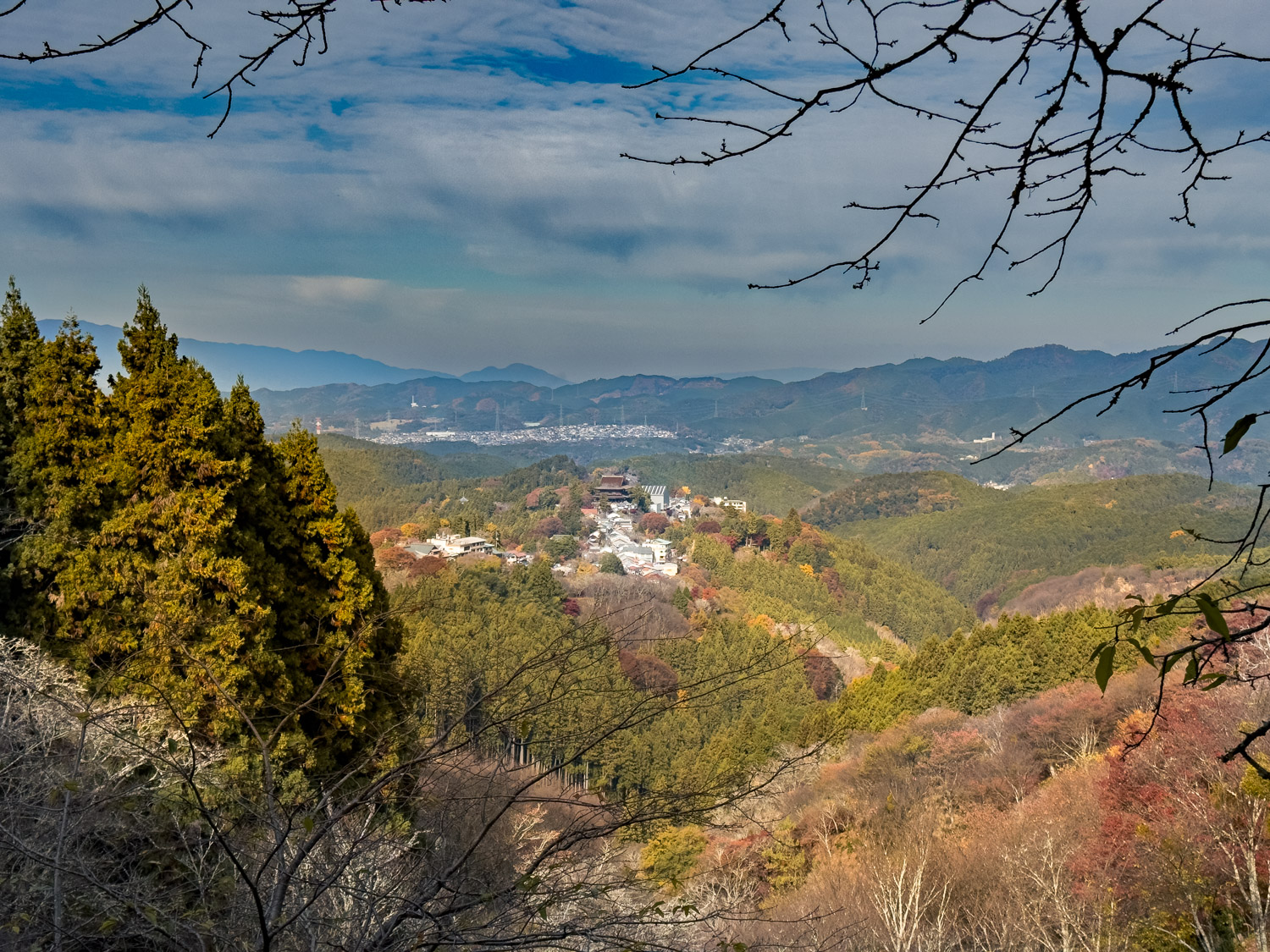
I made a promise to a maple tree in April.
It was cherry blossom season on Mount Yoshino, and like everyone else on the mountain, I had come for the pink. Then I looked up. The maples were putting out their first leaves, a green so thin and bright that the sun came straight through them, and the famous cherries behind them suddenly looked like a backdrop. I told myself I would come back when those leaves turned. So in late November, I went back to see Mount Yoshino in autumn.
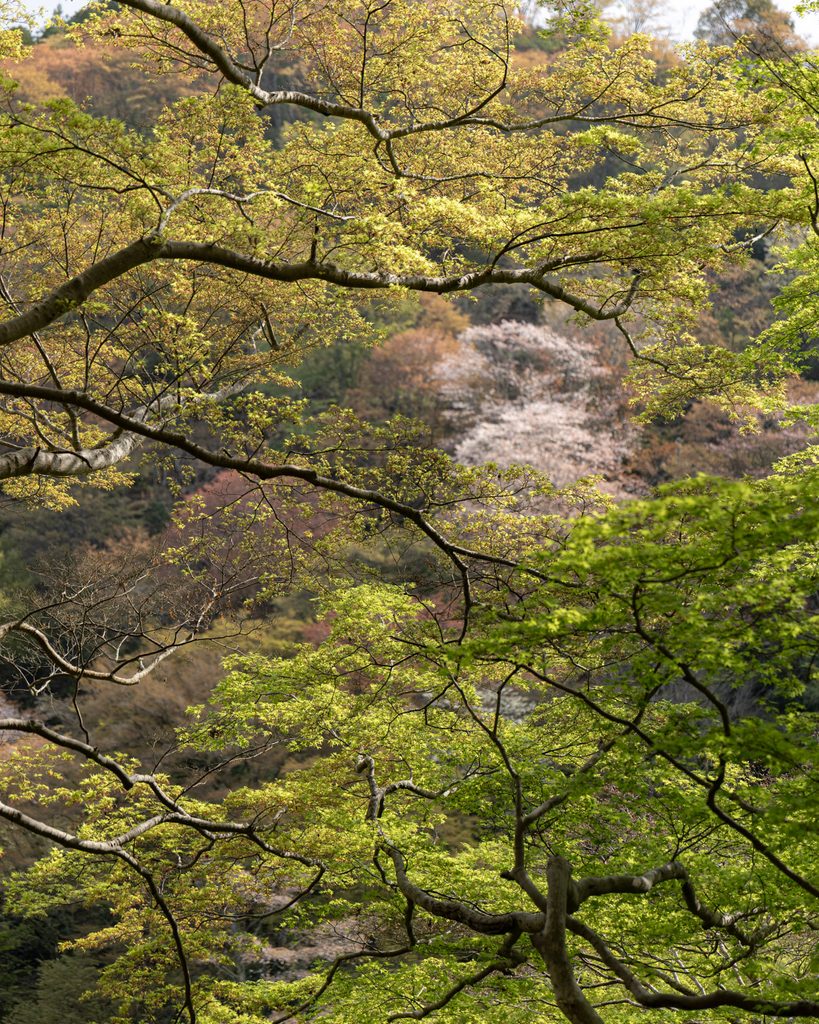
The morning felt off. The air was soft and warm in a way that belonged to April, and for a second I caught myself scanning the slopes for blossoms. There were none, of course. The cherry trees were doing exactly what cherry trees do in November. The only thing out of season that day was my sense of the calendar.
Walking Up With the Regulars
Autumn on Mount Yoshino is calmer than cherry season, though not empty. I started early, and the people walking up with me climbed without hesitating at a single fork, heading straight for the top. I had been to Yoshino before, yet among these regulars I was clearly the beginner.
Temples, shrines, inns, and tea shops line one long road that climbs from Yoshino Station toward the inner peaks, and the mountain is divided into four zones along the way: Shimo Senbon at the bottom, then Naka Senbon, Kami Senbon, and Oku Senbon at the top. In spring each zone takes its turn with the cherry blossoms. In autumn the maples and ginkgo take over, and each zone turns on its own schedule. I have been here more than once, and I still come down with something new every time.
Hitome Senbon, With a Blush of Pink
Hitome Senbon translates as “a thousand trees at a glance,” the name given to the view from Yoshimizu Shrine across the cherry slopes of Naka Senbon. Toyotomi Hideyoshi is said to have made the shrine his base for a famous cherry-viewing party in 1594.
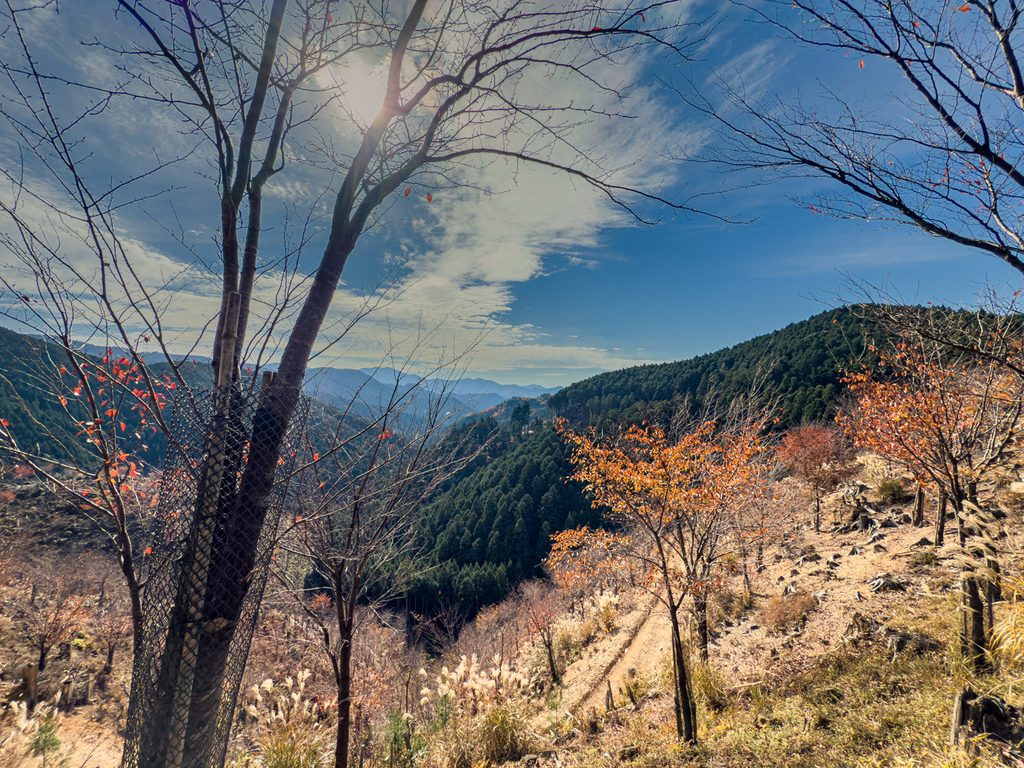
In November I expected bare branches. Instead, the slopes had a faint rosy cast, as if the mountain had not quite let go of spring. It was the cherry leaves, turning red and orange before they fall, and nobody had ever pointed them out to me.
Those trees are not here by accident. According to tradition, En no Gyoja, the founder of Shugendo mountain worship, carved the image of the deity Zao Gongen from a cherry tree. From then on, the cherries of Yoshino were protected as sacred trees, and believers kept donating more of them for centuries.
Seventeen Claps at Yoshimizu Shrine
Then I judged a stranger.
At the shrine, a visitor in front of me bowed and began to clap. And clap. And kept clapping. At most Shinto shrines the routine is two bows, two claps, and one final bow, and my first thought was that someone had skipped their homework.
A wooden sign beside the hall set me straight. The proper form at Yoshimizu Shrine is two bows, seventeen claps, and one bow, and the sign lists seventeen deities by name. The person who didn’t know the etiquette was me.
Yoshimizu began as a lodging for monks of Kinpusenji, the great temple of the mountain. Minamoto no Yoshitsune is said to have hidden here while fleeing his brother, and Emperor Go-Daigo later used it as a temporary palace.
The Road to Kinpu Shrine Is Full of Temptation
I walked.
A bus runs toward the upper mountain, but I wanted the slope under my own feet. The road above the shrine seems made for people like me, half pilgrim and half day hiker. Shops along the way sell bento boxes, rice balls, cold drinks, and, for reasons I fully support, pudding.
Buy everything that looks good and you carry all of it uphill. I bought one pudding.
Vending machines are scarce but not absent. Every so often one appears beside the road, and on a day that felt like spring, a cold drink halfway up a sacred mountain was worth far more than what I paid for it.
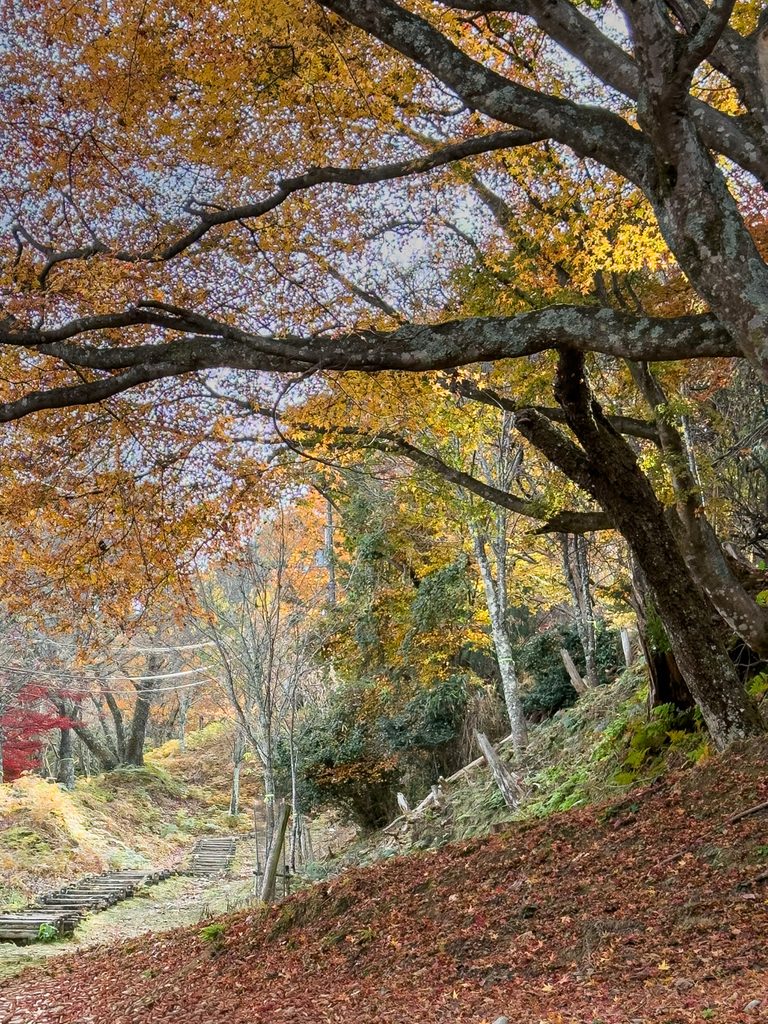
Higher up, the maples closed in overhead. The leaves overhead glowed yellow and orange where the sun hit them, and here and there a single tree had gone fully red, bright as a lantern against the dark cedars. Fallen leaves lay so thick on the slope that the ground looked rust-colored. Looking back from the upper trail, I could see the town of Naka Senbon and the great roof of the Zao-do far below. The valley around them was patched with red, orange, and the deep green of cedar, all in warm, almost spring-like light.
Past Kinpu Shrine, a Stone That Kept Women Out
Kinpu Shrine had always been my finish line.
On every earlier visit, I turned around at Kinpu Shrine, in Oku Senbon, the highest zone of the mountain. This time I kept going.
A little farther on, beside the path, stands a stone pillar carved with six characters: 従是女人結界. From here, the women’s boundary. For centuries the mountains beyond were closed to women as part of Shugendo, whose ascetic training grounds run south from Yoshino along the Omine range.
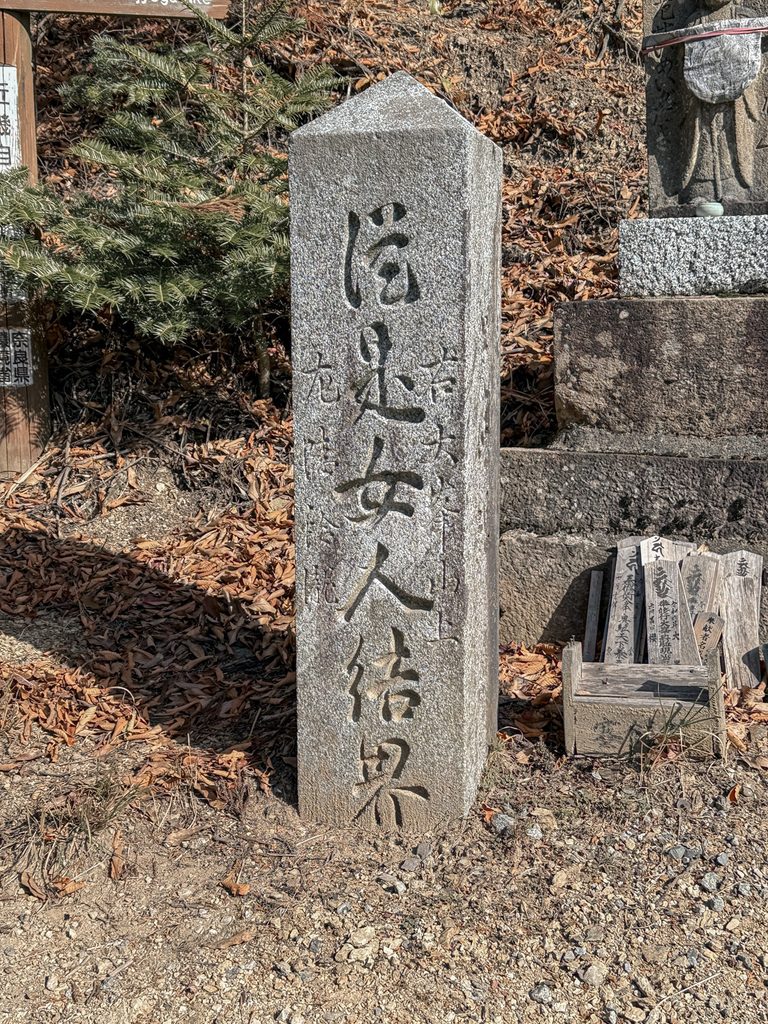
I knew Yoshino was holy ground, and I had read about the boundary. I had never stood in front of it. The stone marks where the line used to be; today the restricted area lies far deeper in the mountains. I took a photo and turned back toward the town.
Pudding at the Lookout
On the way down, at the Kami Senbon lookout, I finally opened the pudding. The sweet smell reached me before the spoon did, and after a morning of climbing, it tasted like something I had earned. It also ran down my fingers, as outdoor pudding tends to. I was looking around for somewhere to wash my hands when an older man walked up to me.
“Does this path go to Nyoirinji?”
I had been on the mountain since early morning, and apparently it showed. As it happened, I planned to visit Nyoirinji myself and had already looked up the route. I told him I thought it did.
I saw him again that afternoon at Yoshino Station. He had made it to Nyoirinji, he said, though the route had taken him past fallen trees lying across the path and along stretches that looked as if nobody had walked them in a long time.
Down Through Shimo Senbon
By afternoon, Yoshino was full.
On the lower slopes and around Yoshino Station, the crowds had arrived: families, couples, tour groups.
Walking down through Shimo Senbon, I passed under maples in full color, and I remembered the promise I made in April. I made another one on the spot: I would come back when the cherries bloom. I already know how that visit will go. I will stand under the blossoms, look up at the young maple leaves, and promise them November.
Planning a Visit to Mount Yoshino in Autumn
When the Autumn Leaves Turn
Nara Prefecture’s official tourism site puts the autumn foliage season on Mount Yoshino at early November through early December. Because the mountain rises from Shimo Senbon to Oku Senbon, the upper slopes usually turn first and the color works its way down. On my visit in late November, the maples along the upper trail were in full color and the lower slopes of Shimo Senbon were still bright, while many cherry trees near the top had already dropped their leaves.
How to Get to Yoshino From Osaka or Kyoto
Kintetsu Yoshino Station is the terminus of the Kintetsu Yoshino Line, which makes Yoshino an easy day trip from Osaka. From Osaka Abenobashi Station, limited express trains take roughly an hour and a quarter. From Kyoto, allow about two hours with a change at Kashiharajingu-mae. Kintetsu’s Blue Symphony sightseeing train also runs between Abenobashi and Yoshino. Check current timetables before you go.
Getting Up and Around the Mountain
The ropeway connects Senbonguchi Station, near Kintetsu Yoshino Station, with Yoshinoyama Station at the edge of the temple town. From there, a route bus climbs to Oku Senbon-guchi, the stop closest to Kinpu Shrine, in about 20 minutes. During the 2026 foliage season, both run every day.
| Service (2026) | Schedule |
|---|---|
| Ropeway | Daily from October 23 to November 30. Through October 22 and from December 1 to 30, it runs Friday through Monday, with a substitute bus Tuesday through Thursday. |
| Route bus (Yoshinoyama Station to Oku Senbon-guchi) | Daily from October 23 to November 30. Outside that period, weekends only. No service from the second Monday of December to the first Friday of March. |
| Traffic restriction | October 24 to November 30: one-way downhill traffic between Katte Shrine and the Shimo Senbon parking lot. Public transportation is strongly recommended. |
Note that the bus stop called Yoshino Jingu is on the mountain near Yoshino Shrine, not at Kintetsu’s Yoshino-Jingu Station.
In autumn, the slopes themselves are the main attraction, so if the timing and your legs allow, I recommend walking at least part of the way. You will still see autumn color from the ropeway.
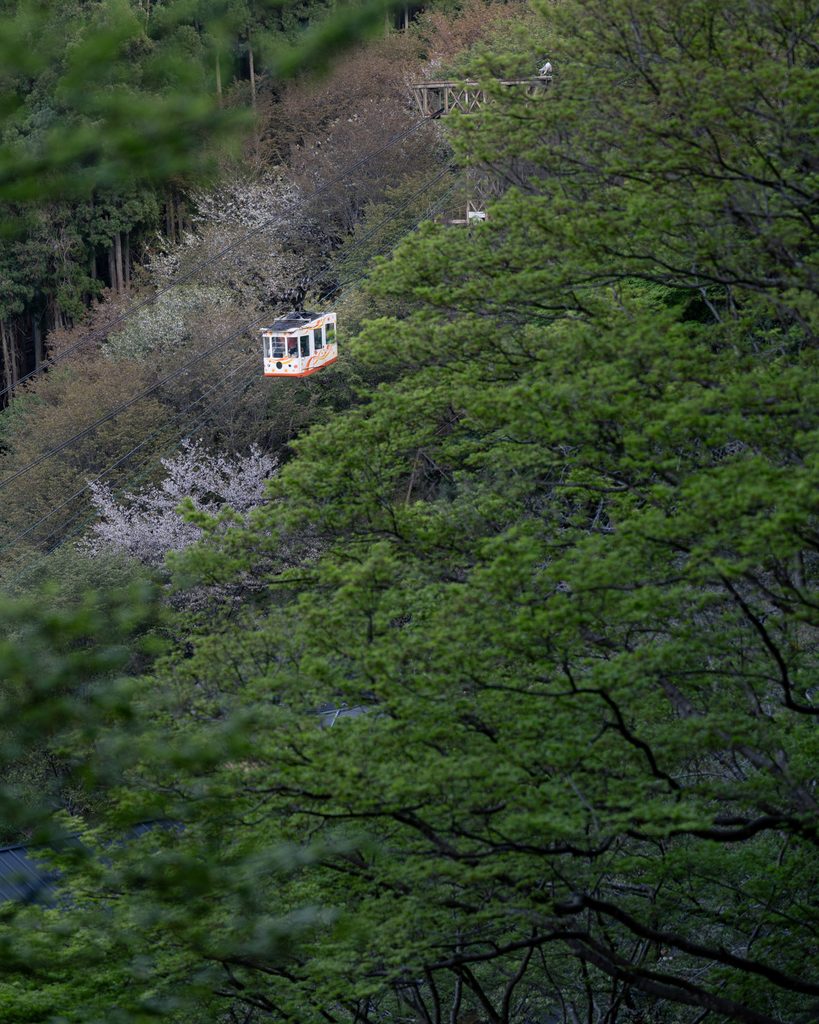
The Yoshino ropeway, photographed in spring.
Walking from Kintetsu Yoshino Station to Kinpu Shrine without the ropeway, with stops at Kinpusenji, Yoshimizu Shrine, and Yoshino Mikumari Shrine, took me a little under four hours one way. Guidebooks list shorter times, but with stops and the steady climb, I think four hours is a realistic plan.
If you would rather save your energy, ride the bus up to Oku Senbon-guchi and walk down. If you head for Nyoirinji, stick to the road and the Nyoirinji-guchi bus stop rather than the back trails, where a fellow walker found fallen trees across the path.
Kinpusenji’s Hidden Buddhas, Autumn 2026
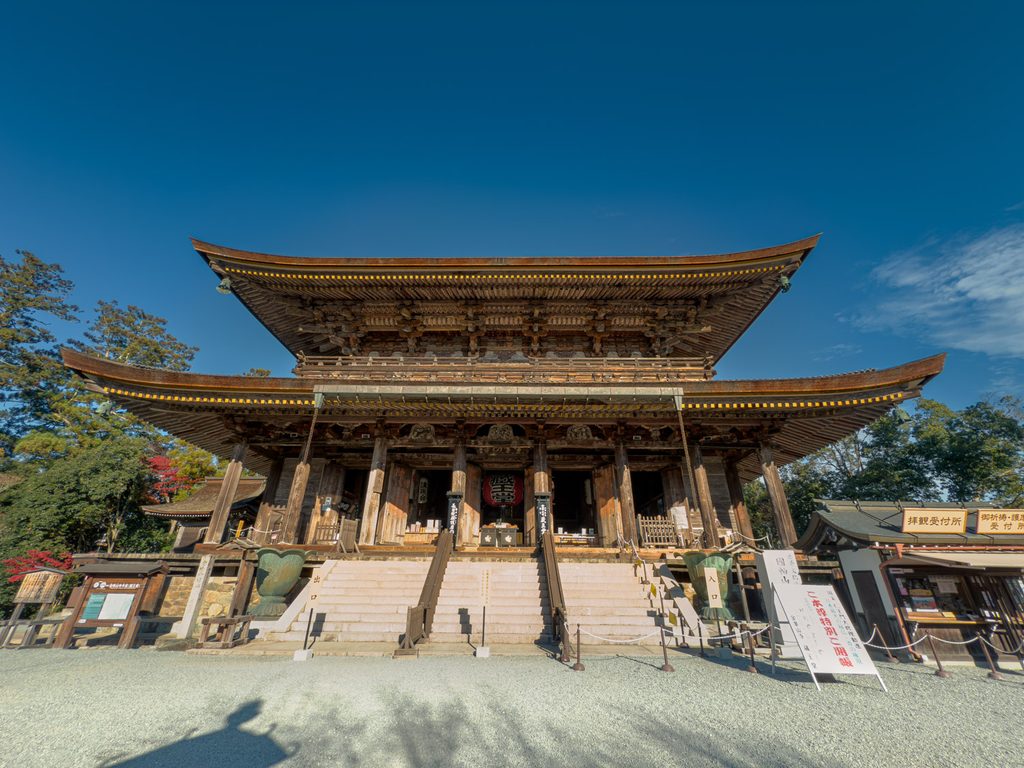
From October 24 to November 30, 2026, Kinpusenji (also spelled Kimpusenji) opens its Zao-do hall for a special viewing of its three principal statues of Zao Gongen, which are normally hidden from view. They are described as Japan’s largest hidden Buddhas and are designated Important Cultural Properties. The Zao-do itself is a National Treasure, and the viewing helps fund major repairs to the temple’s Niomon gate, another National Treasure.
| Special viewing (2026) | Details |
|---|---|
| Dates | October 24 to November 30 |
| Hours | 8:30 a.m. to 4 p.m. Entry may be briefly restricted during religious services. |
| Admission | Adults 1,600 yen; junior high and high school students 1,200 yen; elementary school students 800 yen. Group discounts are available. |
Details are on Kinpusenji’s official announcement (in Japanese).
Evening Light-Up and Guided Walks
Autumn light-up: From October 23 to November 30, 2026, gates, temple grounds, and approaches across the mountain are lit from 4:30 to 10 p.m., including Shimo Senbon Park, the grounds of Kinpusenji, the approach to Yoshimizu Shrine, and Katte Shrine.
Free walking guide: Every Sunday through November 29, 2026, local guides lead a walk covering Kinpusenji, Yoshimizu Shrine, and Katte Shrine. No reservation is needed. Meet on the grounds of Kinpusenji by 10:30 a.m.; the walk takes about two hours, and admission fees are extra. The language isn’t specified, so expect Japanese.
Monk-guided day tour: For something more in-depth, the Yoshino Visitors Bureau sells a day tour in which Kinpusenji monks lead you from the bronze torii gate to the Zao-do, with the special viewing, a VR presentation of the temple’s history, and a shojin vegetarian lunch at Tonan-in, for 9,900 yen. In 2026 it runs on November 20 (the November 29 date has sold out). The booking page is in Japanese.
For details on all three, see the Yoshino Visitors Bureau’s autumn foliage page (in Japanese).
Food, Water, and Breaks
Shops along the main road sell bento, rice balls, drinks, and sweets, and they thin out as you climb. Vending machines appear here and there above the town center, but not often enough to plan around, so bring water. The Kami Senbon lookout is a good place to stop for a snack on the way down.
Map of Mount Yoshino
FAQ
What makes Mount Yoshino special?
Its religious history. Tradition holds that En no Gyoja opened the mountain to Shugendo worship some 1,300 years ago, Kinpusenji is still the head temple of a Shugendo school, and the mountain is part of the UNESCO World Heritage Site “Sacred Sites and Pilgrimage Routes in the Kii Mountain Range.” I came for the leaves, but that history is what I kept running into on the trail.
Is Mount Yoshino crowded in autumn?
Less than in spring, but it isn’t empty. Early in the morning, the walkers I met were few and mostly regulars, while the area around Yoshino Station was busy by afternoon. If you want quiet, start early and climb before the tour groups arrive.
What should I wear or bring?
Comfortable running shoes rather than hiking boots, since the road is paved all the way to Kinpu Shrine. Bring a layer you can take off or put on, and water. My day felt like spring, but late November on a mountain can turn cold quickly. Vending machines exist, but they are scattered, so don’t count on one when you need it.
Are there public restrooms on Mount Yoshino?
Yes, but not many. Public restrooms are scattered along the route rather than plentiful, so use one when you see it instead of waiting for the next.
Can women walk past the old women’s boundary stone?
Yes. The stone beyond Kinpu Shrine marks where the boundary used to be. Today, the area still closed to women lies much farther into the Omine mountains, well beyond anything a typical Yoshino day trip covers. That said, very few visitors continue past Kinpu Shrine, so the path beyond it is very quiet.
More From Nara
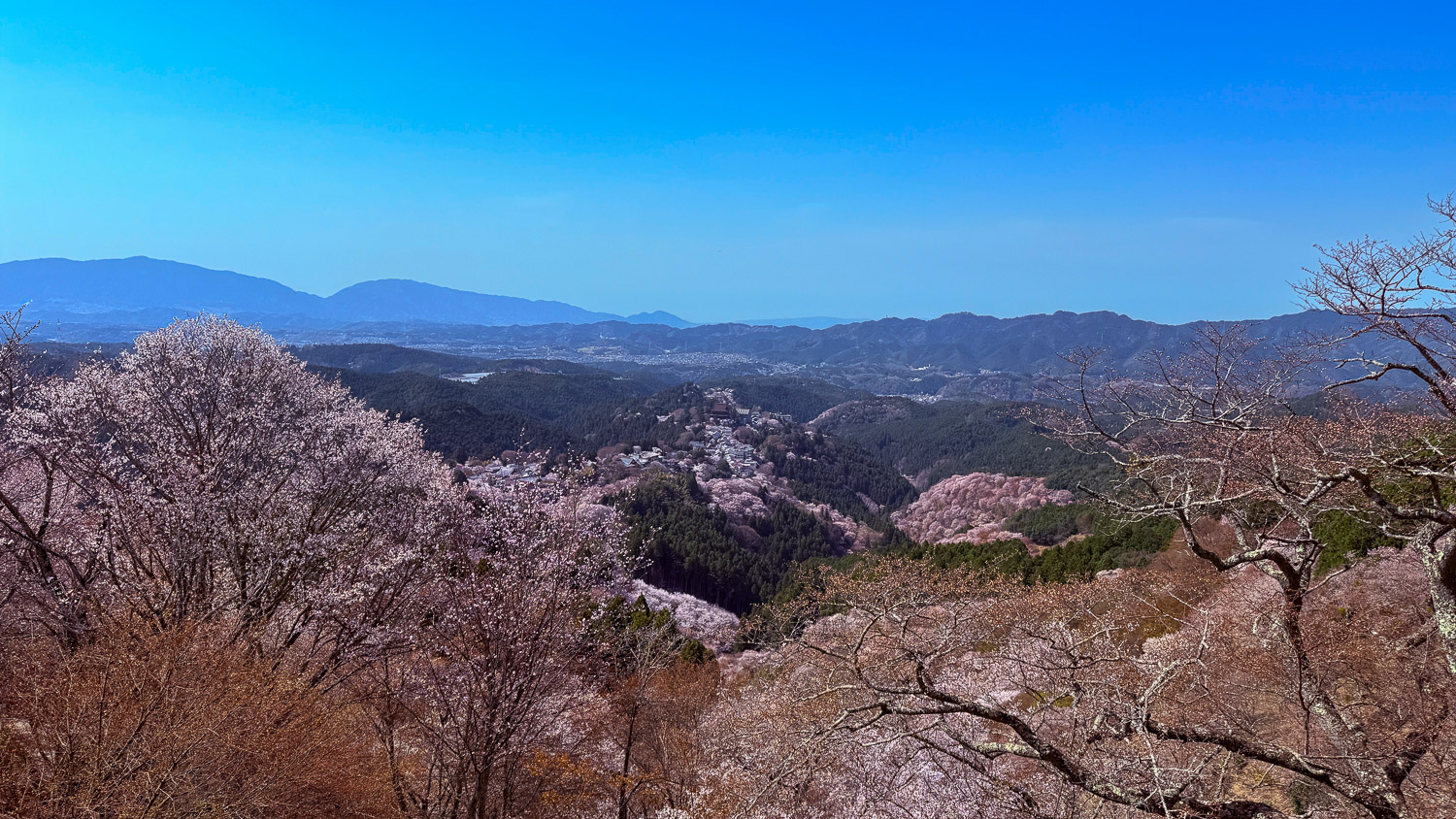
Nara Travel Guide: Japan’s Ancient Capital of Temples, Sacred Deer, and Living Tradition
Where Mount Yoshino fits among Nara Park, Naramachi, Ikaruga, and Asuka, plus food, seasonal events, and how to get there from Kyoto and Osaka.