The Line Before the Gates — Osaka Castle’s Nishinomaru Garden
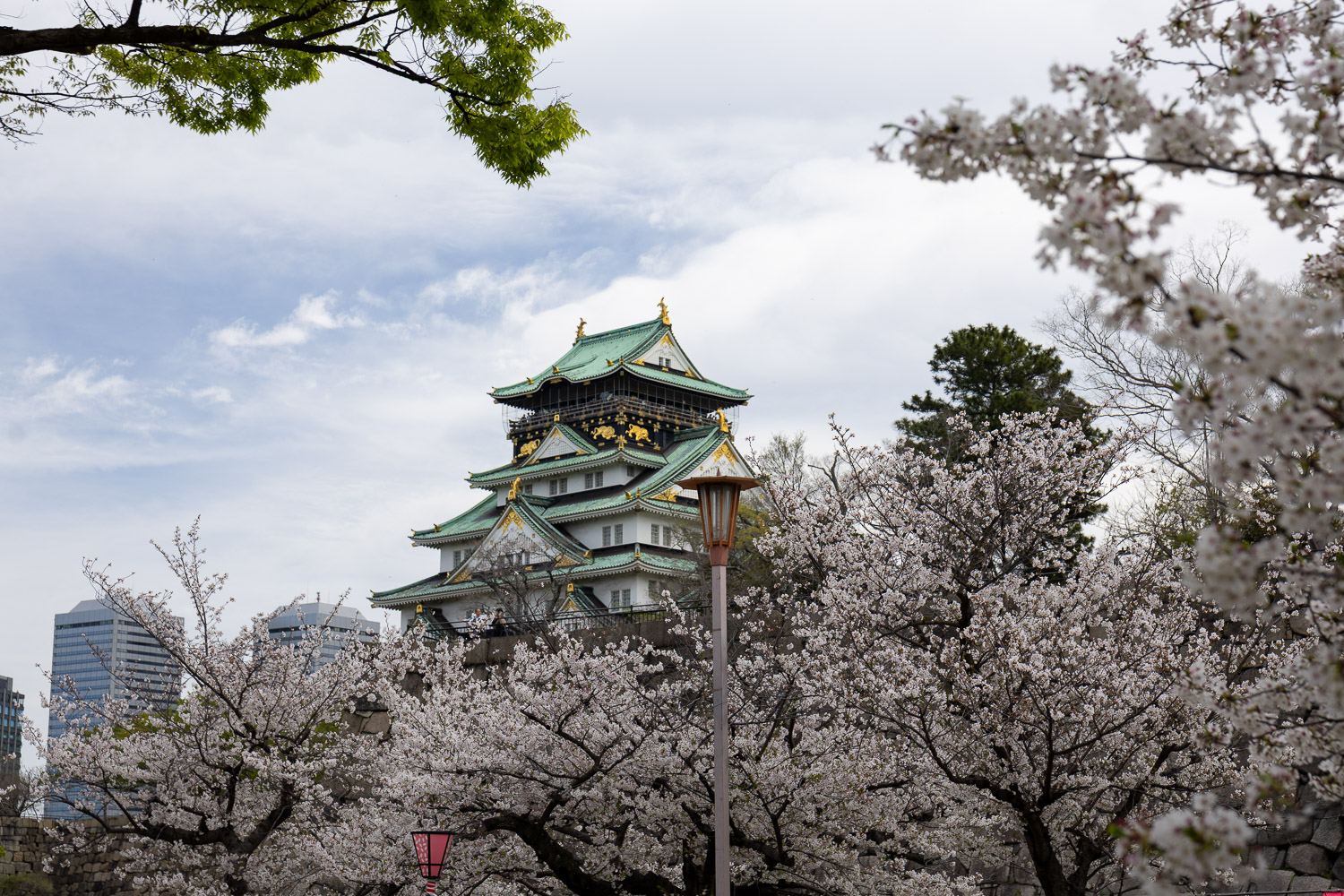
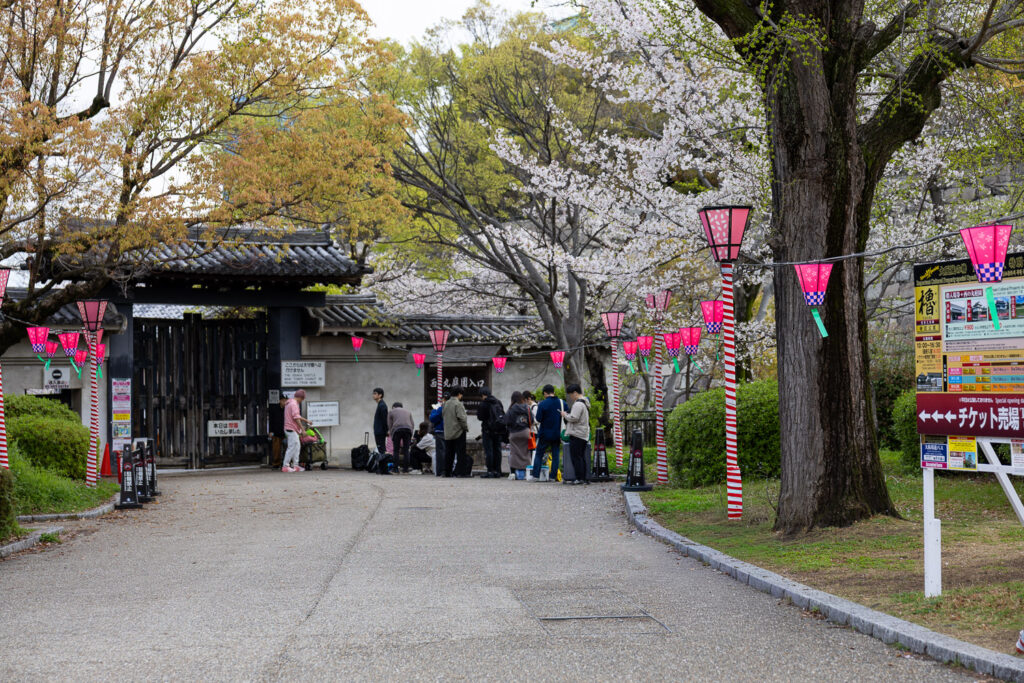
An hour before opening, there was already a line outside Nishinomaru Garden.
My first thought: the main keep must be chaos. I’d spent the last half hour photographing the moat and the cherry blossoms, and I regretted it. Those photos could have waited.
I walked to the main keep. No line at all.
The crowd outside Nishinomaru Garden was waiting for hanami. One person had unrolled a mat big enough to seat twenty — alone — staking out prime territory a full hour before the gates opened. In Japan, the ones sent to hold the spot are either the youngest in the group or whoever lost at rock-paper-scissors. The veterans show up later, with the sake and the bento boxes.
In the age of warring states, they called that role the advance scout. The main force arrives after noon. The division of labor hasn’t changed in four hundred years. Standing there watching office workers crouch over their tarps, I could almost see the armor.
Nishinomaru Garden — Osaka Castle’s Cherry Blossom Grounds
The lawn alone is worth the entrance fee.
Nishinomaru Garden covers roughly 6.5 hectares of open grass — the kind of green carpet that makes you want to sit down even if cherry blossoms are the last thing on your mind. The hanami crowd seems compelled to position itself directly beneath the branches, as close to the flowers as physically possible. The open lawn away from the trees stays surprisingly empty. Two Important Cultural Properties stand within the grounds: the Inui Yagura tower and the Enshōgura powder magazine. The garden rewards a visit in any season.
In the Toyotomi era, this was where Yone — Hideyoshi’s official wife — lived out her days. When Sekigahara came, Mōri Terumoto, supreme commander of the Western Army, occupied the castle. Then Tokugawa Ieyasu took over and conducted affairs of state from these same grounds. The grass looks ordinary. The history beneath it is not.
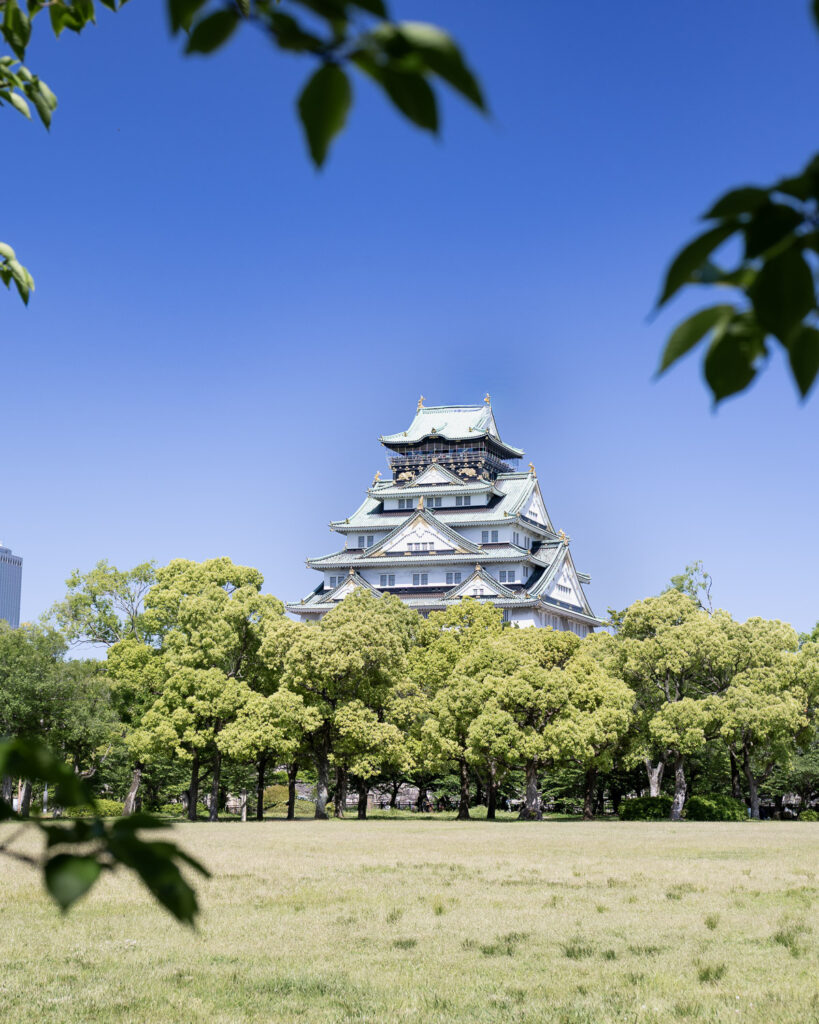
Families with young children will find this garden a more practical base than the main keep. Strollers are difficult inside the keep; here, the lawn is wide and forgiving. There are no playground structures. There doesn’t need to be.
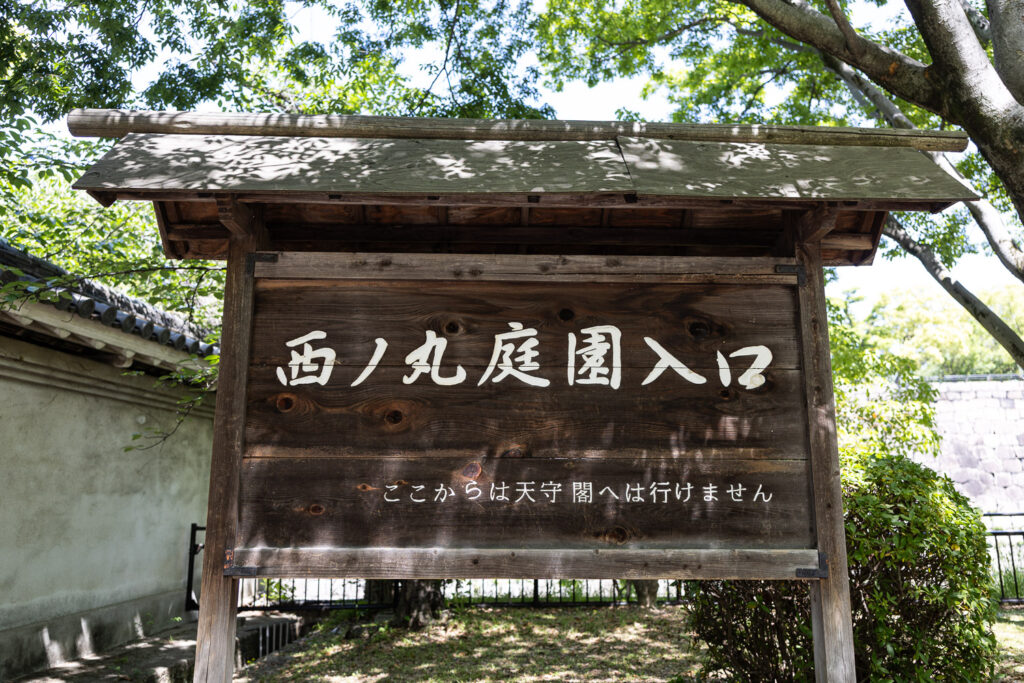
A note on logistics: Nishinomaru Garden and the main keep are separate paid areas with no connecting passage. Once you exit the garden, re-entry is not permitted on the same ticket. Decide your order before you go in.
The Cherry Blossom Reference Tree
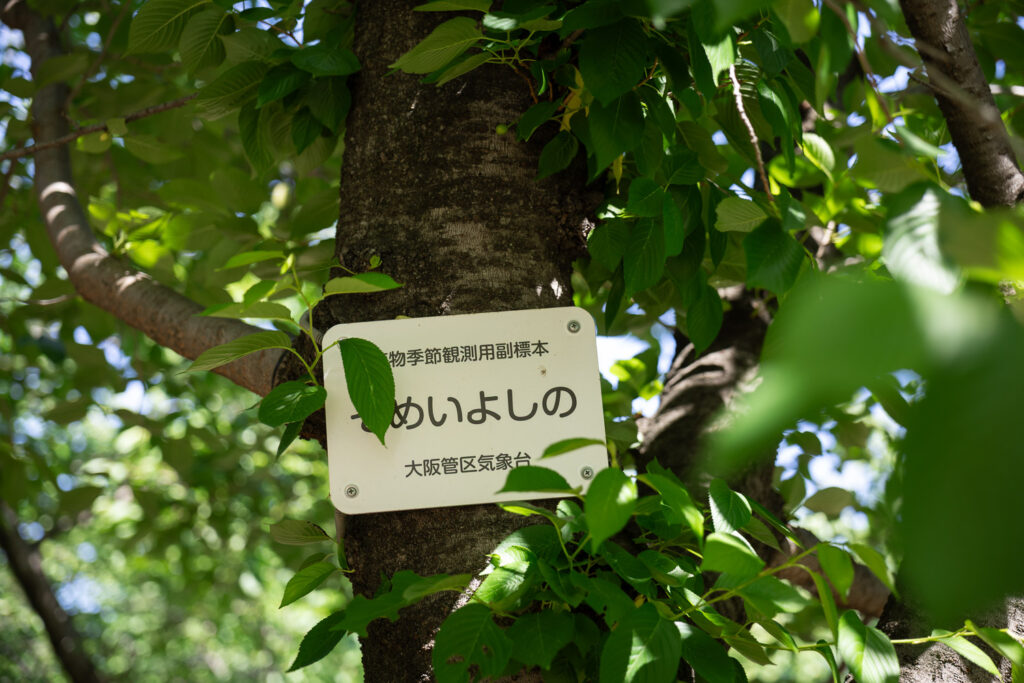
The official phenological reference tree for Osaka’s cherry blossom forecast stands inside Nishinomaru Garden, in the section closest to the main keep.
I’d seen it on television enough times to feel like I knew where it was. I did not. The garden has too many trees — finding the specific one that tells the Japan Meteorological Corporation when spring has arrived takes longer than you’d expect. I was about to ask someone nearby when I realized everyone around me was a foreign tourist. The sign on the reference tree is in Japanese. I found it before I had to ask. Small mercies.
→ For the complete guide to Osaka Castle Park,
see Osaka Castle: The Complete Insider’s Guide.
The Osaka Guesthouse Inside the Castle Grounds
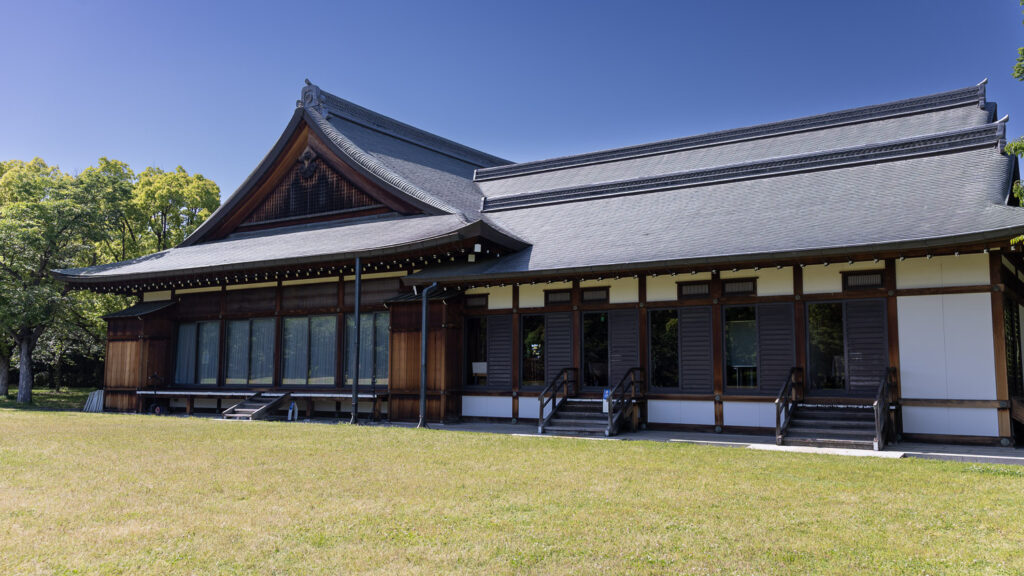
Deeper inside Nishinomaru Garden stands the Osaka Guesthouse.
The building hosted world leaders at the G20 Osaka Summit in 2019 and at APEC in 1995. It is not normally open to the public, but on select dates it operates as a restaurant: lunch from ¥10,000, dinner from ¥12,000. Guests with a reservation can inform the staff at the Nishinomaru Garden entrance and be admitted directly, with the garden fee waived.
On weekends, the guesthouse hosts weddings. Walk past at the right moment and you may find yourself beside a bride and groom, their families in formal dress, guests gathered at the entrance. The ceremony itself is not open to view. But the moment before — two people at the threshold of something — that you can witness, framed by castle walls that have seen rather more consequential gatherings.
The official website.
The Museum They Call a Castle Keep — Osaka Castle’s Main Tower
Everyone comes to Osaka Castle for the keep. I did too.
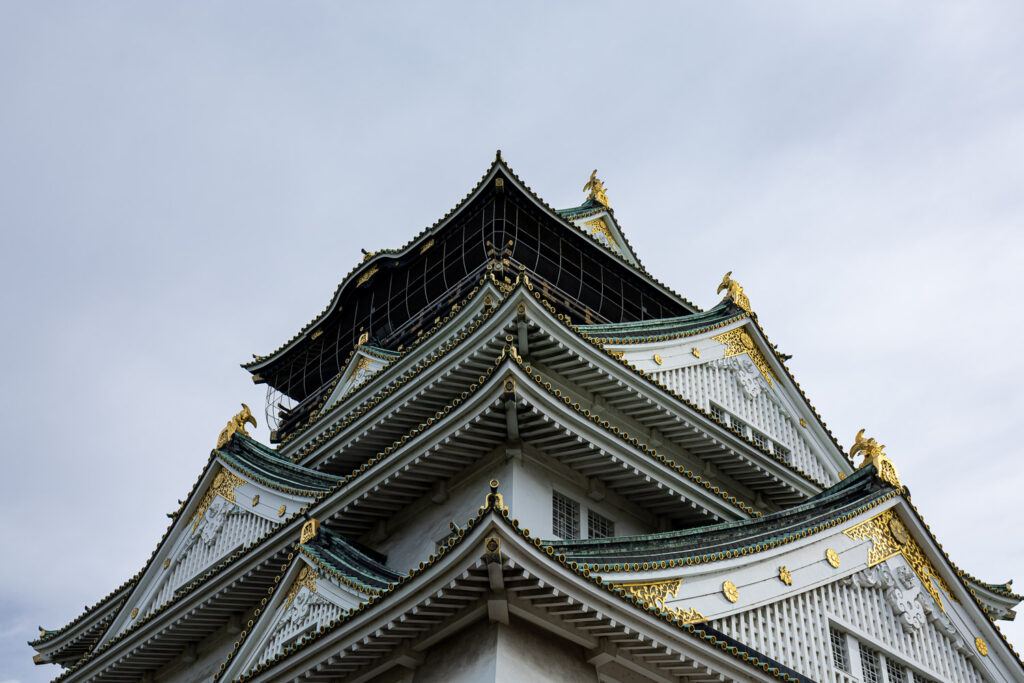
Here is what the keep actually is: a reinforced concrete building constructed in 1931, with an elevator visible from outside. The elevator. Visible from outside. They made no attempt to hide it.
This is not the keep Toyotomi Hideyoshi built. It is not the keep the Tokugawa shogunate reconstructed in the seventeenth century. The most famous castle in Japan’s second city is a 1930s observation museum that happens to look, from a distance, like a medieval fortress.
Japanese people are largely unbothered by this. The elevator has been mentally edited out of the experience, or perhaps it has genuinely merged with the four-hundred-year-old stone walls in the collective imagination. It is foreign visitors who look up from their cameras and say, quietly: there’s an elevator.
Comparing Osaka Castle to Himeji Castle is essentially taboo in this city. There is no version of that comparison that Osaka wins.
The Real Osaka Castle Was Around the Corner
So where is the real thing?
Right next to the keep. In a spot most visitors walk past without stopping.
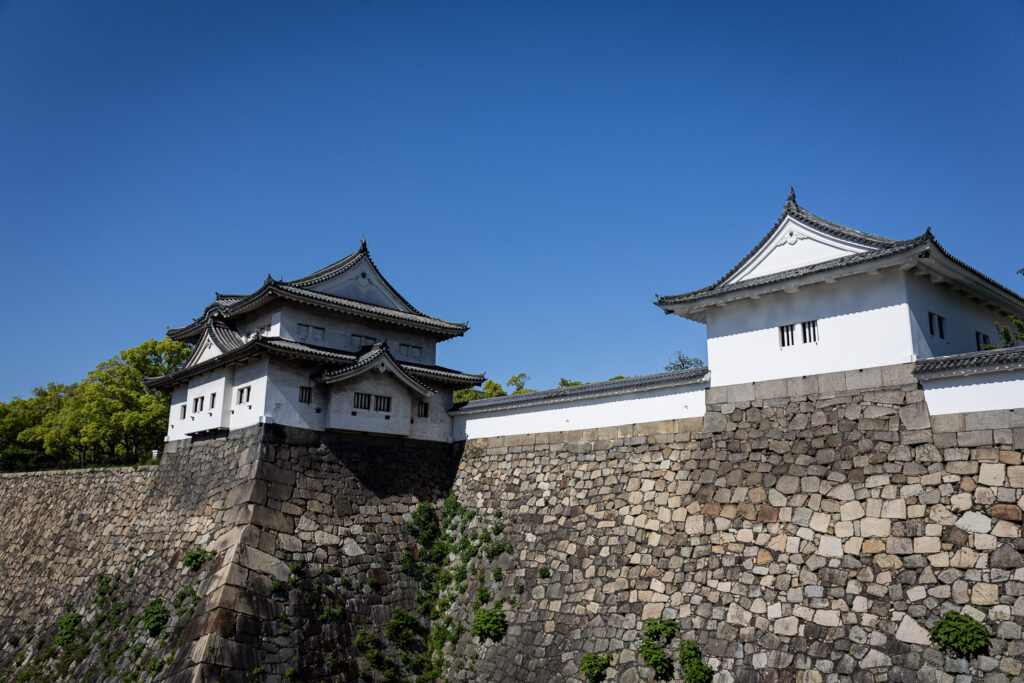
The Sengan Yagura. Built in 1620 during the Tokugawa reconstruction of Osaka Castle, it has never burned. Not once, in over four hundred years. It is the oldest surviving structure at Osaka Castle and is designated an Important Cultural Property.
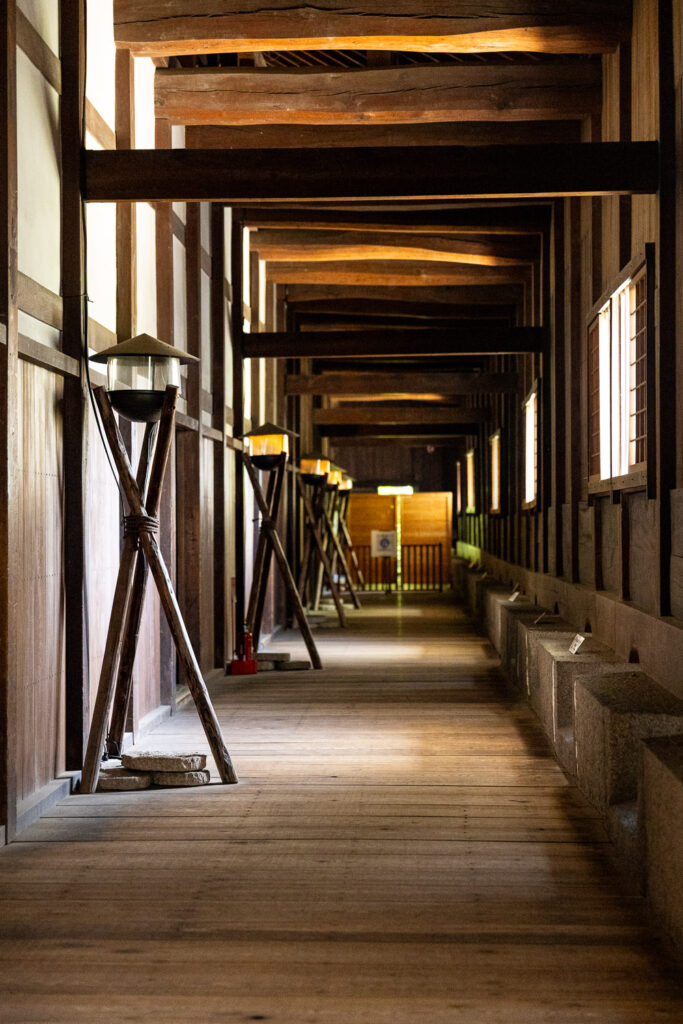
Stepping inside, cool air moved through the entire structure — natural, unhurried, as though the building itself were breathing. Location, construction, four hundred years of accumulated stillness — I cannot say which. Perhaps that’s why the smell of gunpowder never accumulated. Or perhaps it did, and the wind simply carried it away.
The name has a story. When Oda Nobunaga laid siege to the Ishiyama Honganji temple that once occupied this ground, his troops were repeatedly pinned down by flanking fire from a single tower. The soldiers reportedly said they would pay a thousand kan — a unit of currency — just to take it. That tower became the Sengan Yagura: the Tower Worth a Thousand Kan. The memory of the Ishiyama War is written into the name.
A thousand kan converts to roughly two or three hundred million yen in modern terms. I would have handed it over without a fight.
What Is a Yagura? — Osaka Castle’s Historic Towers
Osaka Castle now markets its towers as “YAGURA,” written in Roman letters. The signage explains that this is to communicate with international visitors.
That may be true.
I have a private theory that it is also because a number of Japanese people cannot read the kanji “櫓.” I cannot prove this. I will say only that I myself had never visited the yagura at Osaka Castle before this trip. Not because of the rebranding. And — you may not believe this — I was not among the Japanese who couldn’t read the kanji. I was not.
The word yagura originally meant a weapons storage structure built into a military fortification. Through the centuries of civil war and into the Edo peace, these towers evolved: watchtowers, shooting platforms, armories, symbols of dominance. If you’ve visited Himeji Castle, those narrow slits cut into the white plaster walls are not decorative. They are gun ports. The building was designed to kill from a distance.
At its Toyotomi-era peak, Osaka Castle had five yagura in the main enclosure alone. Under the Tokugawa reconstruction, that grew to nearly thirty — eleven in the main enclosure, two in the mountain enclosure, fourteen in the second. Five survive today. The Meiji-era fires took some. The 1945 air raids took the rest.
Those five towers are the only structures at Osaka Castle that could stand next to Himeji without apology.
When the Weapons Depot Became a Market
One of the lost towers was called the Ichitamon Yagura.
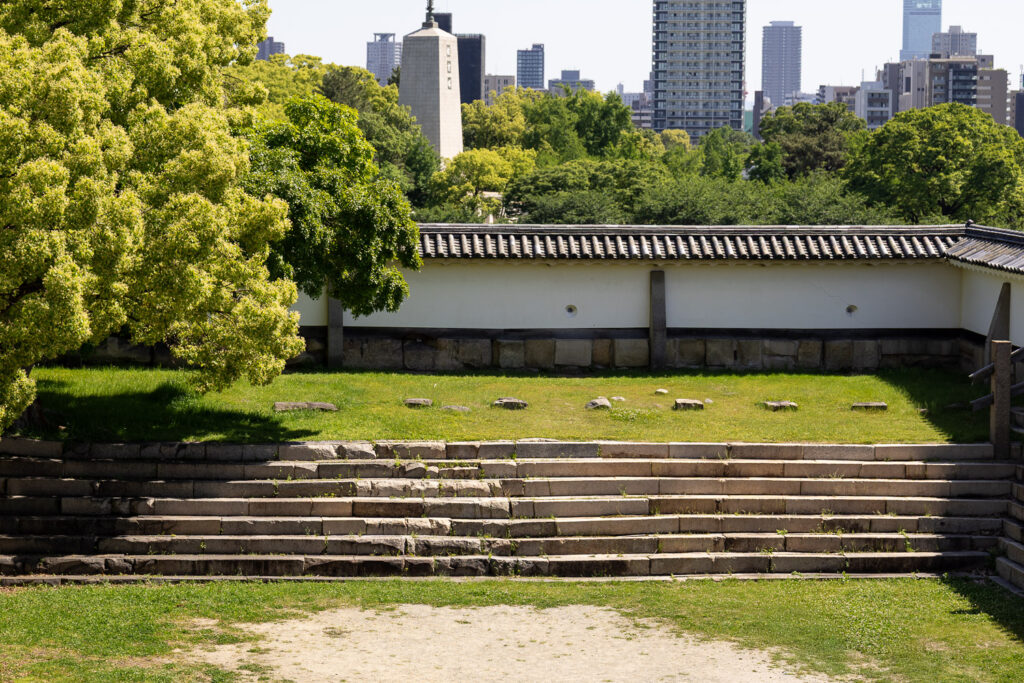
It stood at the main gate enclosure, and inside it, a regular market was held. Hatamoto — direct Tokugawa retainers stationed at the castle on rotating one-year assignments — came here to buy daily necessities. A small commercial street, inside a military fortification. “Ichi” means market. A market held in a tamon-style tower: the Ichitamon Yagura. It burned in the Meiji-era fires. Only the foundation stones remain.
A building born as a weapons depot had quietly become a shopping street somewhere along the way. That is what peacetime does to things.
Osaka Castle Nishinomaru Garden and Yagura — Visitor Guide
One thing to know before you buy a ticket: there are more options here than it first appears, and picking the wrong one is easy. The guide below breaks it down.
Special Opening Schedule
The yagura are accessible by exterior view year-round. Interior access is limited to several special opening periods annually.
Spring Opening — Tamon Yagura and Sengan Yagura
Saturdays and Sundays: March 14 – May 24, 2026
Daily: March 28 – April 12 and April 29 – May 6, 2026
Summer Opening — Inui Yagura
Saturdays, Sundays, and holidays: July 18 – August 16, 2026
Autumn Opening — Tamon Yagura and Sengan Yagura
Saturdays, Sundays, and holidays: September 5 – November 29, 2026
Daily: September 19 – September 27, 2026
Hours: 10:00 – 16:30 (last entry 16:00, ticket sales end 15:30)
Osaka Castle Admission — Nishinomaru, Yagura, and Main Keep Prices
| Ticket | Visitor | Price |
|---|---|---|
| Nishinomaru Garden only | Adults | ¥300 (¥350 during cherry blossom season) |
| Nishinomaru Garden only | Junior high school and under | Free |
| Main Keep only | General (adult) | ¥1,200 |
| Main Keep only | University / high school students | ¥600 (student ID required) |
| Main Keep only | Junior high school and under | Free (age verification required) |
| Yagura Combined Ticket (yagura + Nishinomaru Garden) | Adults (high school and above) | ¥900 |
| Yagura Combined Ticket (yagura + Nishinomaru Garden) | Children (junior high school and under) | ¥300 |
| Main Keep Set Ticket (yagura + Nishinomaru Garden + Main Keep) | Adults | ¥2,000 |
| Main Keep Set Ticket (yagura + Nishinomaru Garden + Main Keep) | High school / university students | ¥1,400 |
- Children under school age are admitted free to all areas
- No children’s price exists for the Main Keep Set Ticket
- High school and university students must present a student ID; international students must present an International Student Identity Card (ISIC)
- Children admitted free to the main keep must present age verification: student handbook, health insurance card, or passport
Where to buy:
Nishinomaru Garden Reception Desk — 2 Osakajo, Chuo-ku, Osaka
Main Keep Set Tickets also sold at the Main Keep Gate (9:00 – 14:30)
FAQ — Osaka Castle Nishinomaru Garden and Yagura
Q: Can I visit Nishinomaru Garden without entering the yagura?
A: Yes. The garden admission fee is ¥300 on standard days and ¥350 during cherry blossom season. A yagura ticket is not required.
Q: Is the Main Keep admission included in the Yagura Combined Ticket?
A: No. The yagura ticket covers the yagura and Nishinomaru Garden only. To include the Main Keep, purchase the Main Keep Set Ticket (adults ¥2,000, high school and university students ¥1,400).
Q: Can I walk directly from Nishinomaru Garden to the Main Keep?
A: No. They are separate paid areas with no direct connection. Once you exit Nishinomaru Garden, re-entry is not permitted on the same ticket. Decide your visit order before entering.
Q: When is cherry blossom season at Nishinomaru Garden?
A: Late March to early April is typical. With approximately 600 cherry trees, the garden is one of the better hanami sites in central Osaka. For a good spot, plan to arrive before the gates open.
Q: Is the Osaka Guesthouse restaurant open to the public?
A: On select dates, by reservation. Guests with a booking can inform the Nishinomaru Garden entrance staff and enter without paying the garden fee. The official website is currently in Japanese only.
Q: Can I visit with a stroller or wheelchair?
A: The exterior of all yagura can be viewed from ground level year-round. Interior access during special openings involves stairs. Contact Osaka Castle Park directly for accessibility details.