Most temples in Kyoto keep their gates open year-round. Hogonin does not.
This sub-temple of Tenryu-ji opens to the public only twice a year — once in spring, once in autumn. The rest of the year, you can walk past its gate without realizing what lies behind the wall.
This guide covers what you need to know before visiting: when Hogonin opens, what to see in its famous garden, how spring and autumn differ, admission, access, and practical tips.
What Is Hogonin Temple?
Daikizan Hogonin (大亀山宝厳院) is a sub-temple — a tatchu — of Tenryu-ji, one of Kyoto’s most important Zen monasteries. Tatchu are smaller temples affiliated with a main temple, and Tenryu-ji’s grounds and surroundings host several of them.
Hogonin was founded in 1461 during the Muromachi period by the priest Seichu Eiko. It was relocated to its current site in the Meiji era (late 19th century).
Why Hogonin Opens Only Twice a Year
Hogonin is normally closed to the public. It admits visitors only during its two annual special viewing periods:
- Spring opening: mid-March through late June
- Autumn opening: early October through early December (with evening illumination)
The exact dates change from year to year. Confirm the current schedule on the official Hogonin website before planning your visit.
The Shishiku-no-Niwa Garden
At Hogonin, the centerpiece isn’t the main hall — it’s the garden. The Shishiku-no-Niwa (獅子吼の庭), or “Lion’s Roar Garden,” is the reason most visitors come.
What “Shishiku” Means
Shishiku is a Buddhist term meaning “the lion’s roar of the Buddha’s teaching.” Just as a lion’s roar silences every other beast, the Buddha’s sermon is said to dispel every delusion. The garden is designed to be experienced as a silent sermon — listen to the birds, the wind moving through the maples, and the periodic crack of a shishi-odoshi (bamboo deer-scarer) breaking the quiet.
The Garden’s Composition
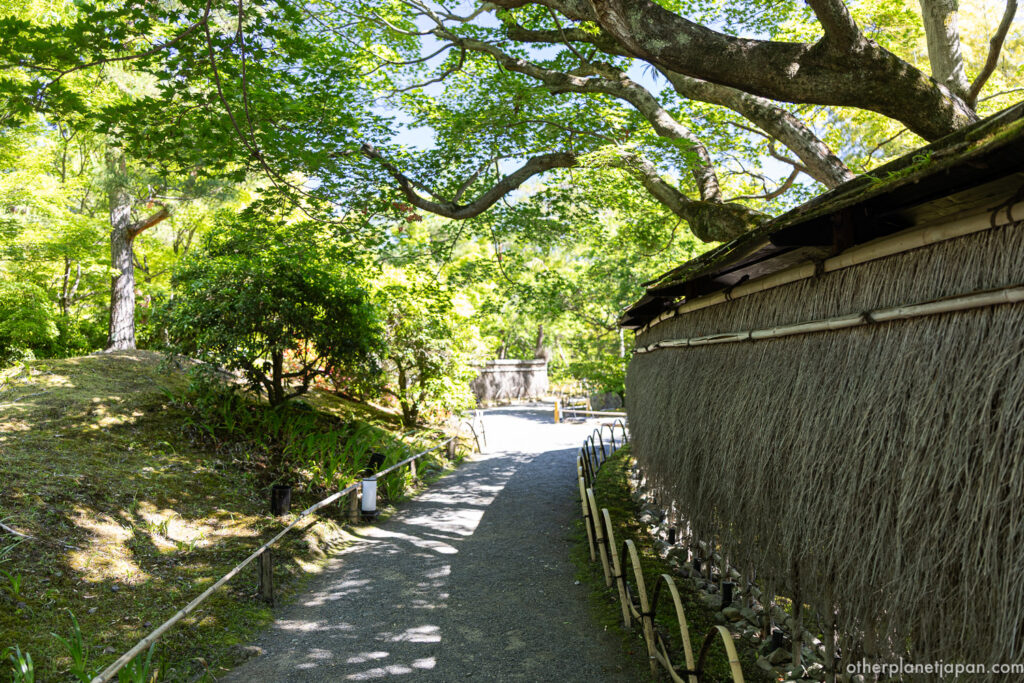
Shishiku-no-Niwa is a kaiyu-shiki stroll garden that uses the slopes of Arashiyama itself as borrowed scenery (shakkei). It covers roughly 12,000 square meters. The design is attributed to Sakugen Shuryo, a Muromachi-era Zen priest who traveled to China twice.
Along the path, you’ll encounter several named features:
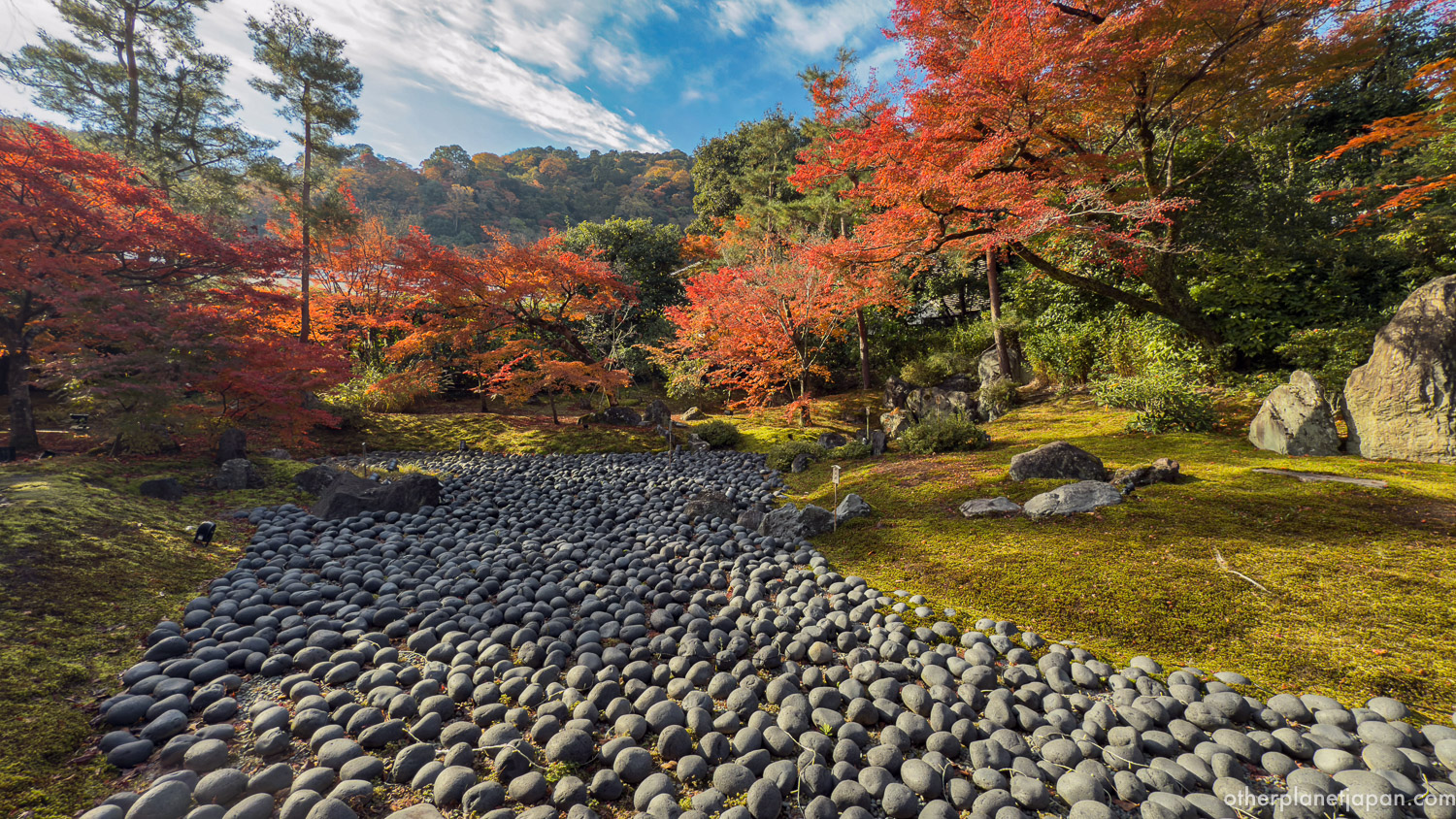
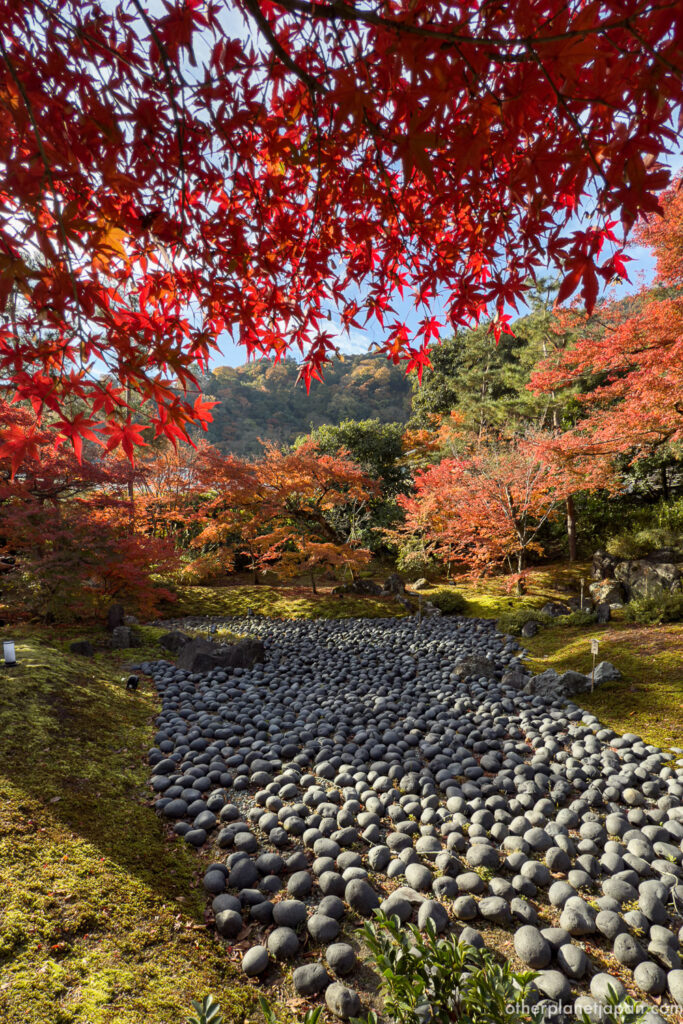
- Kukai (苦海), the “Sea of Suffering”: a dry landscape of rounded stones representing the trials of human life
- Funa-ishi, the “Boat Stone”: placed within the Sea of Suffering, symbolizing passage to the far shore
- Unjo Sanzon-seki: a three-stone arrangement representing Shakyamuni Buddha and his attendants on the opposite shore
- Shishi-iwa, the “Lion Rock”: the massive boulder that gives the garden its name
- Hekigan and Kyogan: two more named boulders, said to have been christened by Sakugen himself
- Hagan no Matsu, the “Rock-Splitting Pine”: a pine that grew straight up through a rock, a symbol of unyielding resolve
Route and Time Required
The garden is a one-way circuit. Walking through takes 30 to 45 minutes at an unhurried pace. Plan for an hour or more if you stop to photograph or join the tea ceremony.
Spring vs. Autumn: Which Season to Visit
Hogonin opens in both seasons, but they offer very different experiences.
Spring: Aomomiji and Moss
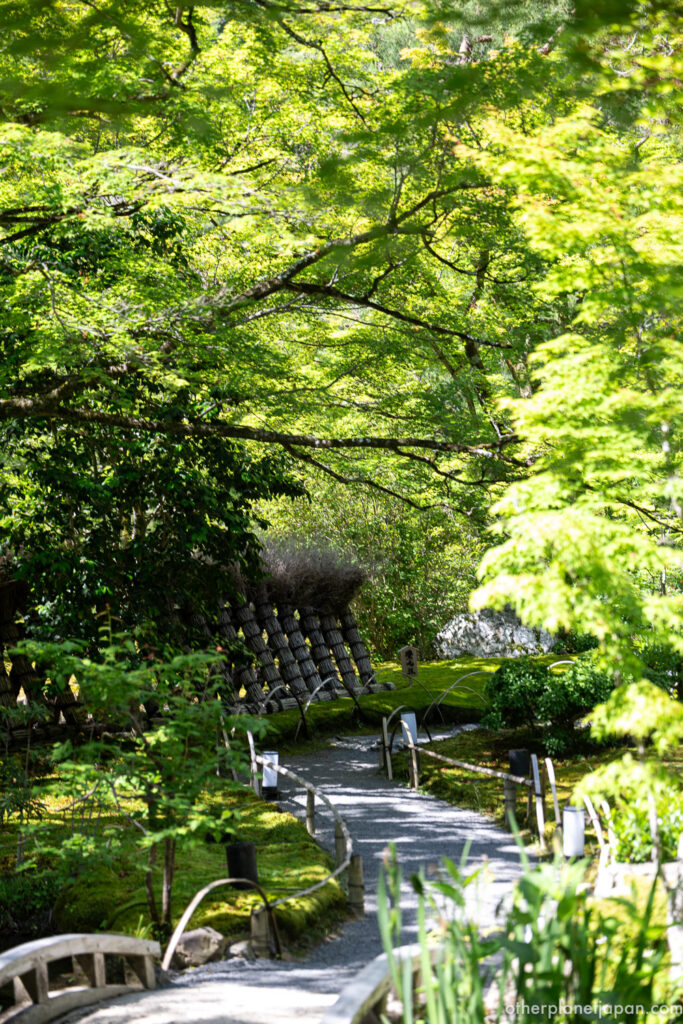
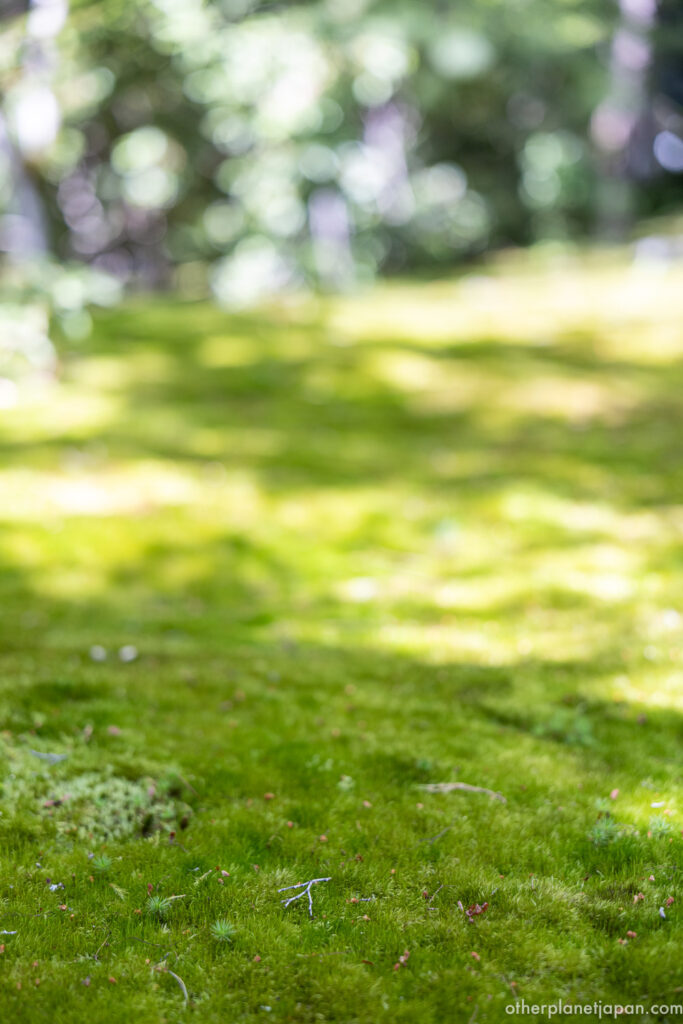
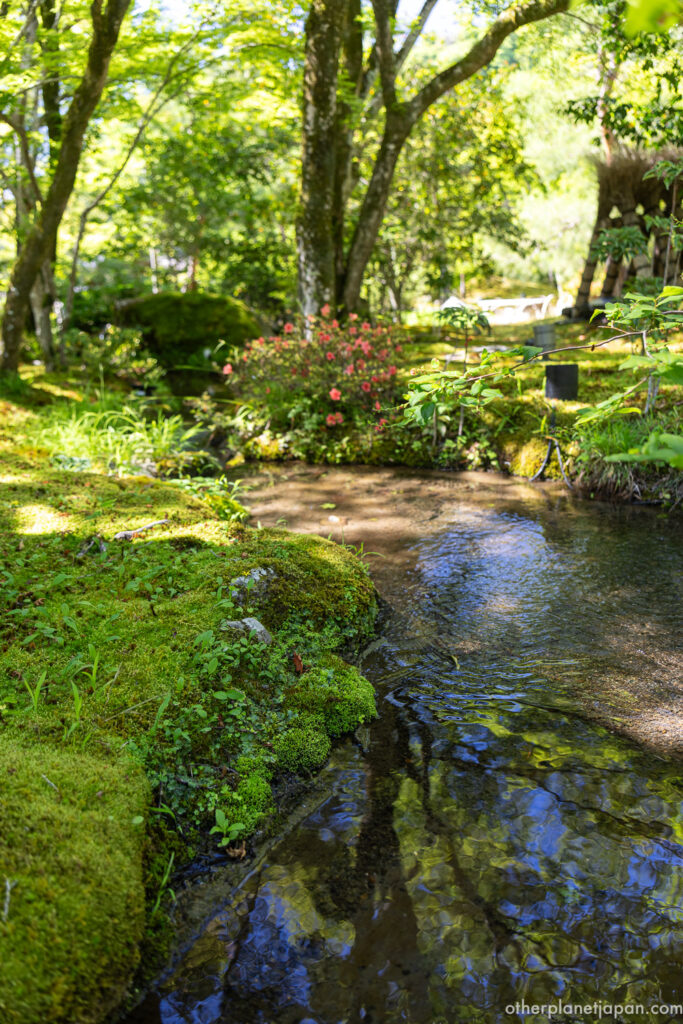
In spring, the fresh green of aomomiji (young maple leaves) and the deep green of moss share the stage. Sunlight filters through the new foliage, and the moss thickens with humidity into a saturated, almost luminous carpet.
Spring also brings far fewer visitors. Hogonin’s autumn fame draws large crowds, but in spring most travelers head elsewhere. Arrive at the 9:00 opening and you can sometimes have the garden almost entirely to yourself — quiet enough to hear nothing but birds and the periodic knock of the shishi-odoshi.
Autumn: Koyo and Illumination
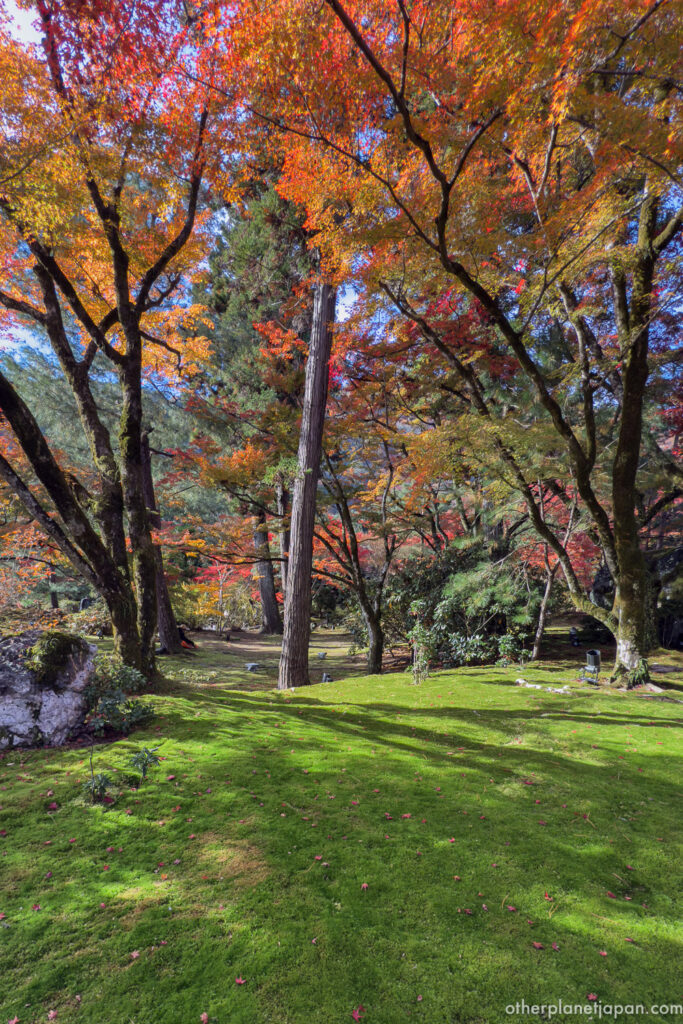
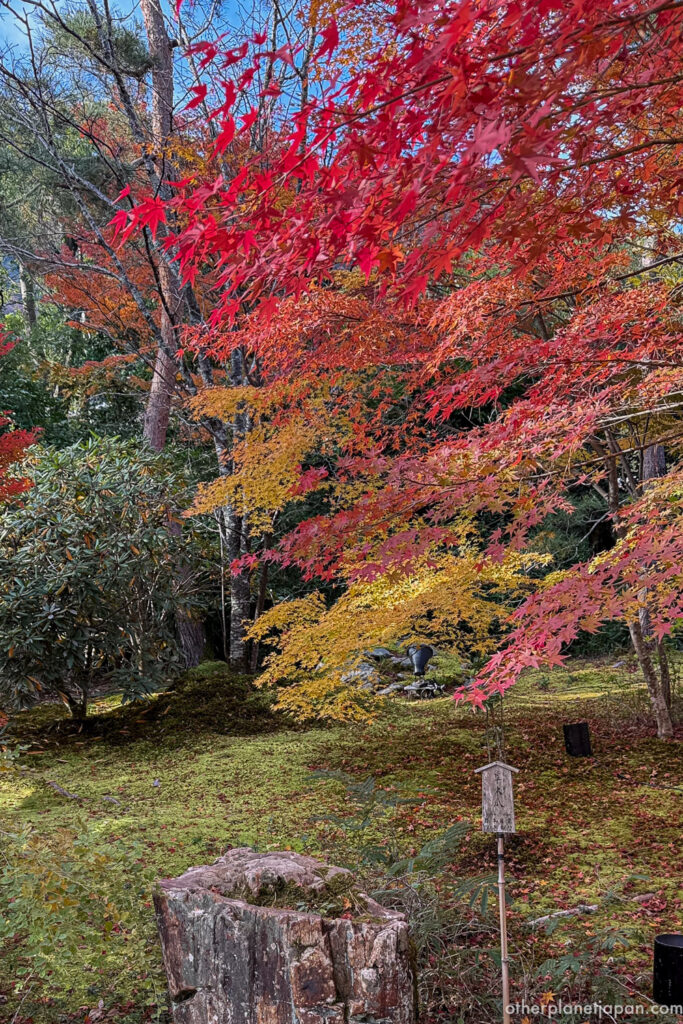
Autumn is when Hogonin appears in every Kyoto foliage guide. The density of maples here — layered against stone arrangements and moss — produces one of Arashiyama’s most striking koyo (autumn color) displays.
The temple also holds an evening illumination during the autumn opening. After dark, the garden becomes something else entirely. The trade-off is crowds: autumn at Hogonin can be very busy, both day and night.
Which to Choose
| Your Priority | Recommendation |
|---|---|
| Quiet, contemplative visit | Spring, right at the 9:00 opening |
| Peak autumn color | Autumn (arrive early or near closing) |
| Evening illumination | Autumn evening viewing |
The Rakan Statues
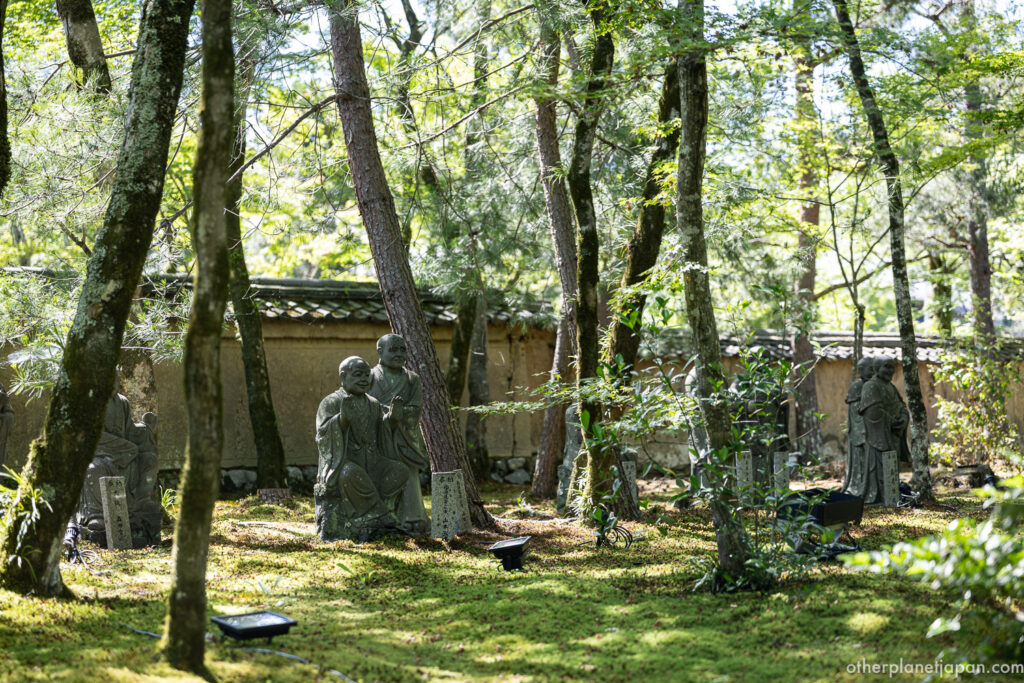
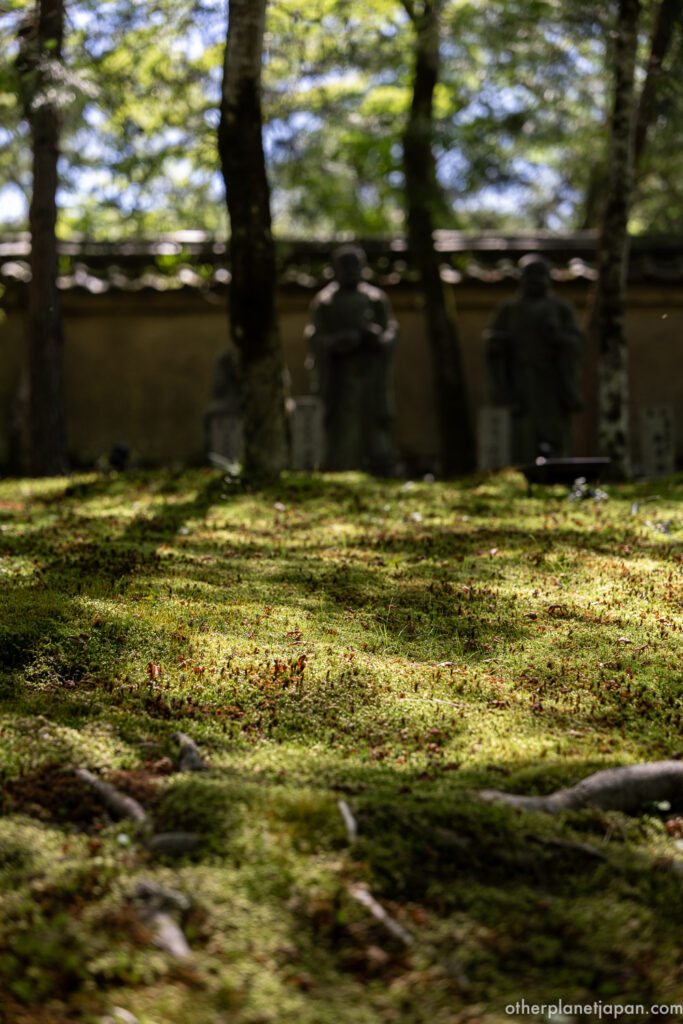
In one corner of the garden, stone statues of rakan sit half-buried in moss. Rakan (Sanskrit: arhat) are disciples of the Buddha who have attained enlightenment. Hogonin’s rakan have a quiet expressiveness — some appear to laugh, some meditate, some seem caught mid-conversation. No two faces are alike.
Tea Ceremony at Muige-an
During the special viewing periods, you can take matcha (powdered green tea) at the garden’s tea pavilion, Muige-an (無畏庵). The fee is ¥1,000.
You can sign up at the entrance reception when you buy your admission ticket, or decide partway through your walk. My preference is to circuit the garden once, then return to Muige-an and sit down with a bowl of matcha.
Practical Information
Admission and Hours
| Item | Detail |
|---|---|
| Admission | ¥700 (adult) |
| Tea ceremony (optional) | ¥1,000 |
| Hours | Spring and autumn special viewing only |
| Spring opening | Mid-March – late June |
| Autumn opening | Early October – early December |
Hours, fees, and dates can change. Always confirm the current schedule on the official site before your visit.
Goshuin (Temple Stamps)
Hogonin’s goshuin are issued as kakioki — pre-written sheets — rather than calligraphed directly into your goshuin-cho (stamp book). If you collect goshuin, keep this in mind.
In past special viewing periods, Hogonin has also offered limited-edition seasonal goshuin. Availability varies by year, so ask at the reception when you visit to see what’s on offer.
How to Get There
- Randen “Arashiyama” Station: 3-minute walk (closest)
- JR “Saga-Arashiyama” Station: 10-minute walk
- Hankyu “Arashiyama” Station: 10-minute walk
- From Keihan “Sanjo” Station: take the Tozai subway line to Uzumasa-Tenjingawa, then transfer to the Randen line and ride to “Arashiyama”
Tips Before You Go
- Spring mornings are the quietest time. Arrive at the 9:00 opening and you may have stretches of the garden to yourself, with only birds and the shishi-odoshi for company.
- Autumn afternoons are the busiest. Arrive early or near closing to avoid the worst of the crowds.
- The walk back after the evening illumination is dark. The lanes between Hogonin and Arashiyama Station have few streetlights, so watch your footing.
- The garden is one-way. You can’t double back, so don’t rush past anything you’d want to see twice.
- Tripods and strollers are not permitted. Confirm any restrictions with the temple before your visit.
What’s Nearby
Hogonin sits in the center of Arashiyama, with most of the area’s headline sights within walking distance.
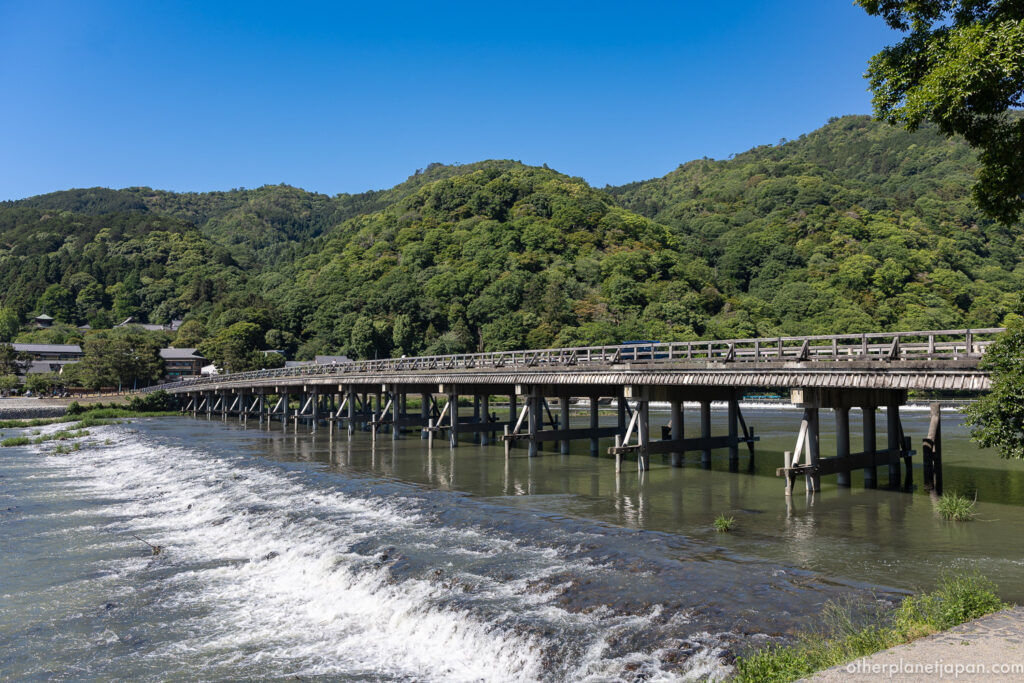
- Togetsukyo Bridge (5 min walk) — the iconic image of Arashiyama
- Tenryu-ji (3 min walk) — Hogonin’s parent temple, a UNESCO World Heritage Site
- Bamboo Grove (7 min walk) — the most photographed path in Kyoto
- Okochi Sanso Garden (10 min walk) — quieter, more contemplative, and rarely crowded
- Arashiyama Complete Guide — full overview of the area
- Yusai-tei (8 min walk) — Arashiyama’s famous round window view
Final Word
Hogonin shows itself for only a few months out of the year. If your trip to Arashiyama overlaps with a spring or autumn opening, add it to your itinerary. If you happen to arrive while the gate is closed, take that as a reason to come back in another season.