There is a god for smartphones.
Search “Horinji Temple Arashiyama” and you will mostly find photographs of thirteen-year-olds in formal kimono. That is fair. It is what the temple is known for. But on its hillside there is a small shrine to the deities of electricity and radio waves, and the amulet sold at the temple office is a microSD card. I read that two years ago and decided I had to see it.
Then I didn’t go. For two years. Horinji Temple, Kyoto’s shrine for electronics, sits at the south end of Togetsukyo Bridge, five minutes from Hankyu Arashiyama Station, and admission is free, which is the whole problem. I have walked past the bottom of those steps more times than I can count. A place you can reach any time is a place you reach later.
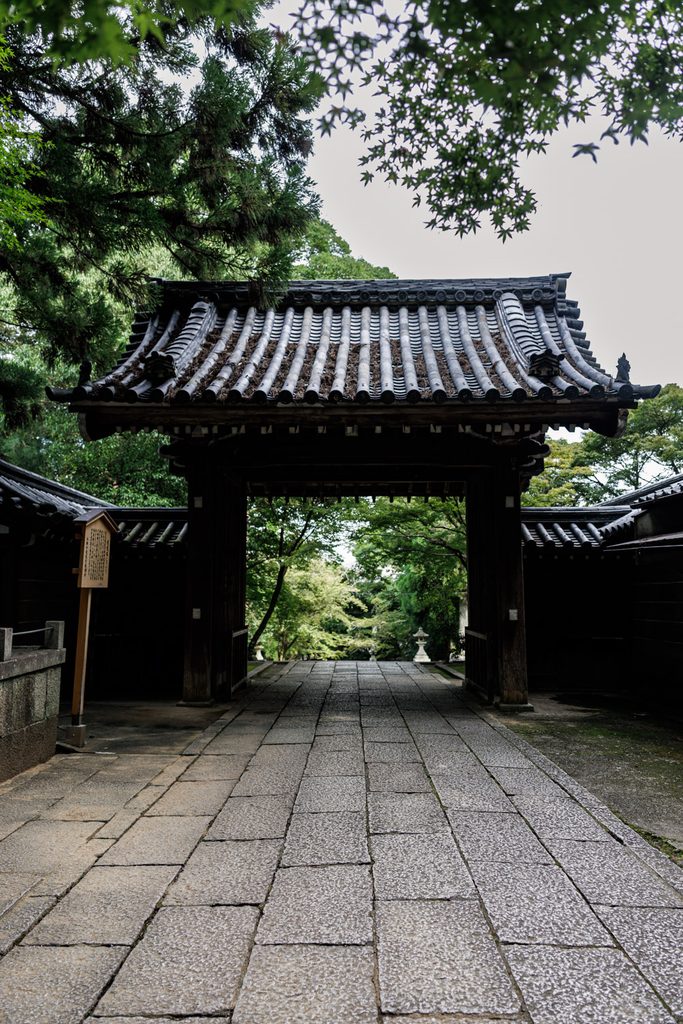
Edison and Hertz Are Waiting at the Gate
I went on a Saturday afternoon in September.
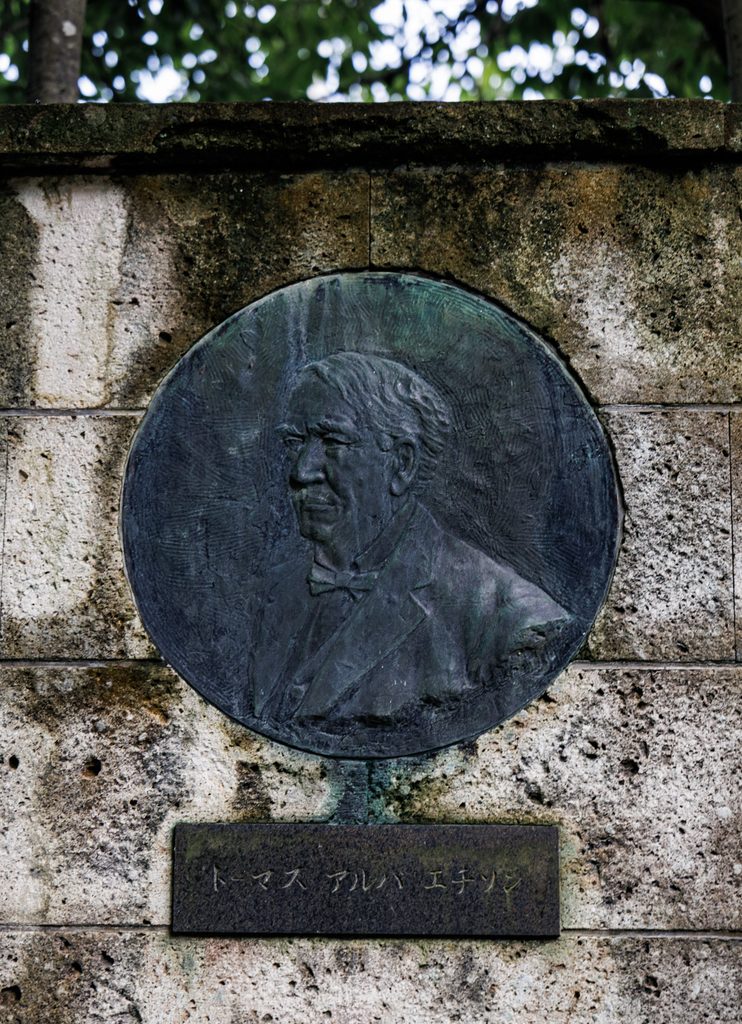
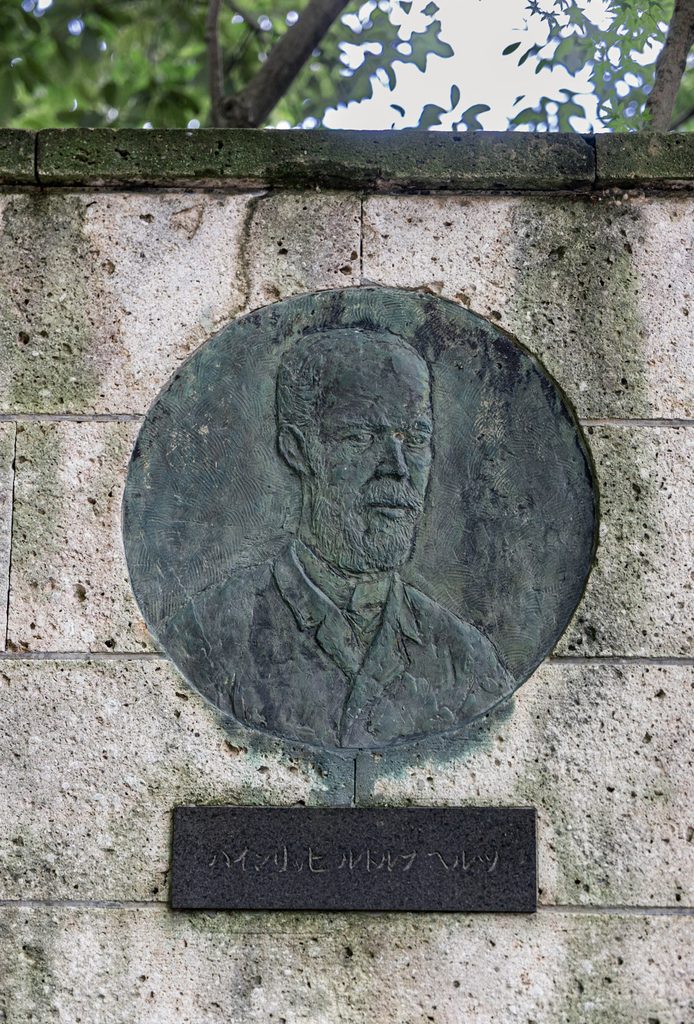
Down at the bridge, the crowd was doing what the crowd in Arashiyama always does, which is stand still in the middle of the road. Up here, past the gate, there was almost nobody. And set into a low stone wall near the entrance, before the climb even starts, are two bronze medallions. One is Thomas Alva Edison. The other is Heinrich Rudolf Hertz. Their names are spelled out underneath in katakana, the script Japanese uses for foreign words, and the bronze has gone green with age.
I had arrived expecting something with a screen on it. What I got were two nineteenth-century men with excellent facial hair, waiting at the foot of a Kyoto hillside, which on reflection is the more honest monument. Nobody worships the phone. They worship the current running through it.
The Steps Were Empty, Which Made No Sense
The climb begins just past them.
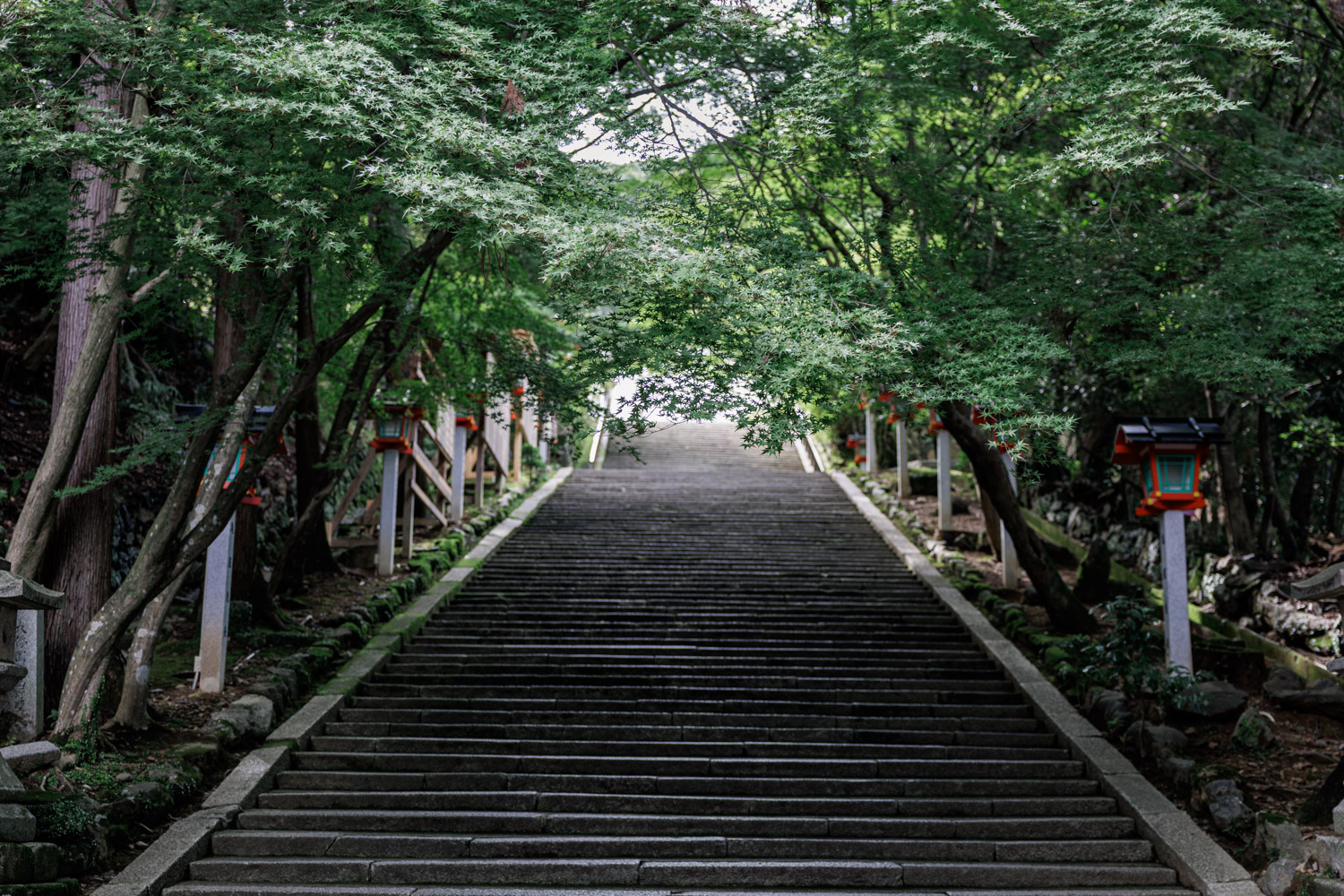
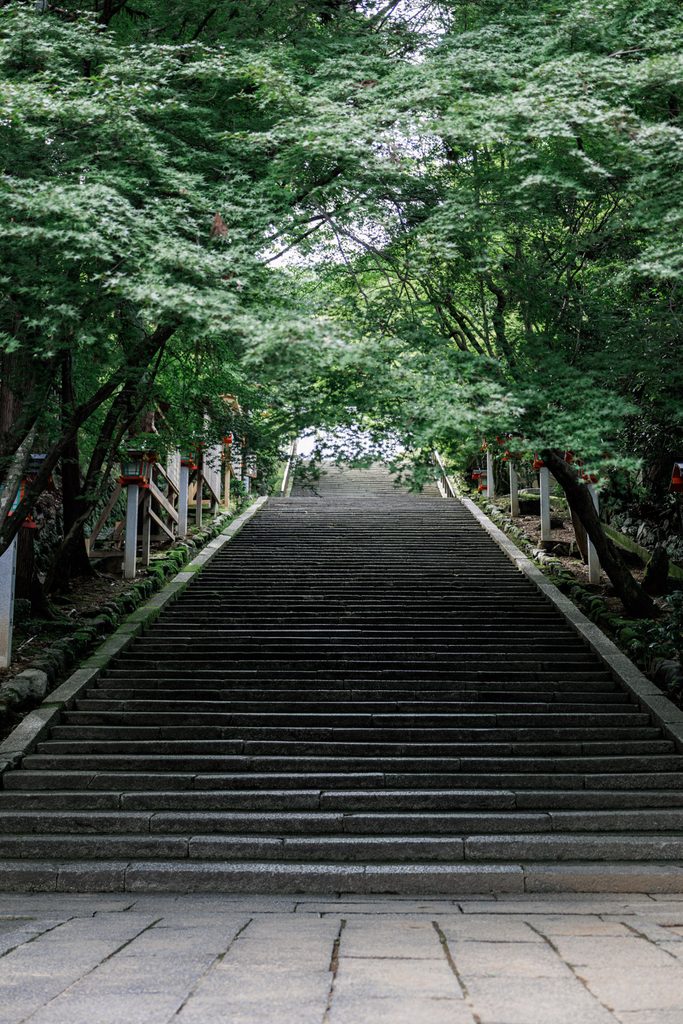
The steps go straight and wide between stone lanterns, and in September the maples above them were still green, a light green that photographs better than autumn and gets a fraction of the attention. September in Kyoto is still summer, whatever the calendar says, and by the top my shirt was stuck to my back.
I kept turning around to check whether I had missed a sign telling people to stay out. I hadn’t. It is simply a temple that most visitors walk past on their way to the bamboo.
Denden-gu, Halfway Up the Steps
The shrine itself is further on.
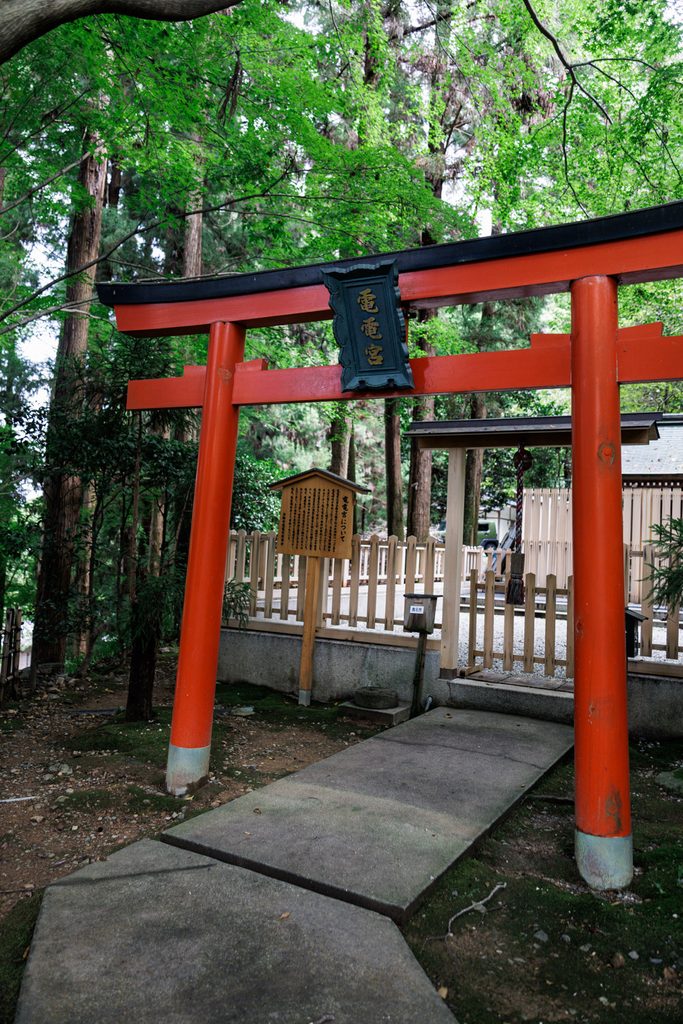
It stands about halfway up, on the left. The sign is in Japanese only, but there is a vermilion torii gate with a black plaque reading Denden-gu, sometimes written Dendengu, and you will not miss it. Denden-gu shrine enshrines the guardian deity of electricity and radio waves. Utility company employees come here. So do broadcasters, and engineers, and, these days, people who work in software. It is the only shrine in Japan I know of with that particular portfolio.
A Small Main Hall and a Buddha at a Distance
The top of the steps opens onto gravel.
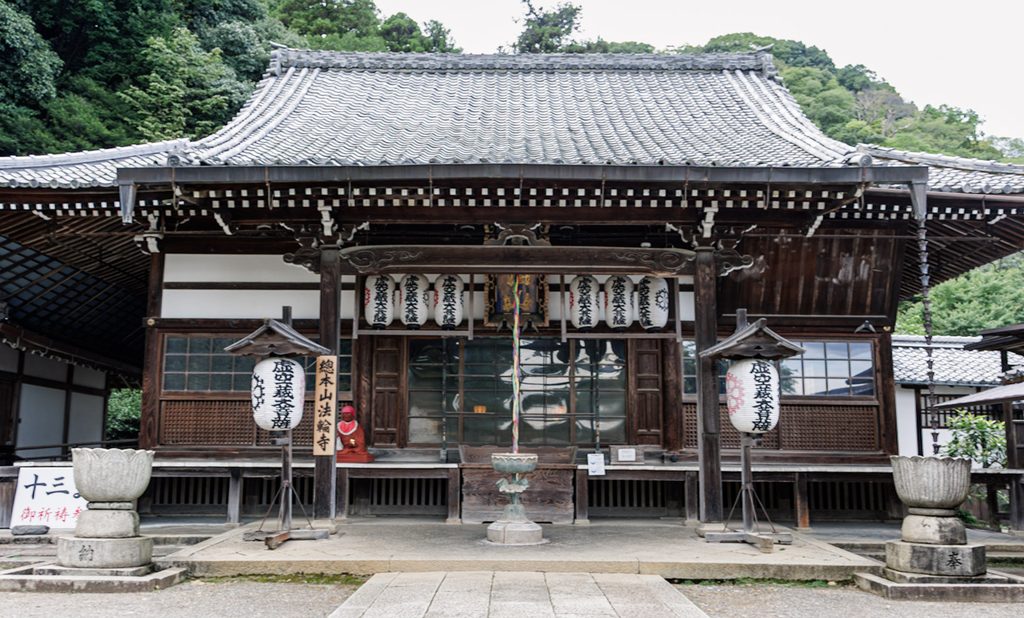
The main hall is smaller than the climb prepares you for, a single wooden building hung with white paper lanterns and a banner advertising the coming-of-age rite it is famous for. Its principal image is Kokuzo Bosatsu, and on the day I visited I could see him only from the far side of the offering box, which is to say barely at all.
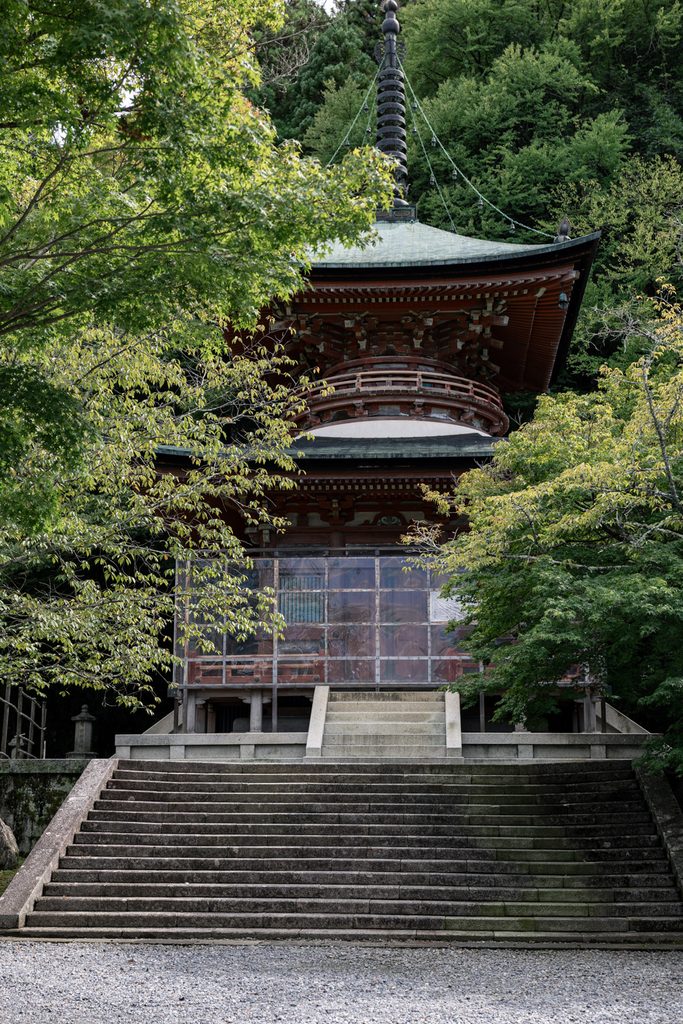
I would rather have seen him properly. But at a temple this size the grounds are what you came for anyway: the pagoda in the trees to the left, the gravel, the way the hillside closes in behind everything. Kyoto has plenty of temples that hand you one masterpiece and take your money. This one charges nothing and leaves you to wander.
The Stage, and the Fires I Missed by Years
To the right of the main hall is the Butai.
The word means stage, and the view from it is the best argument the temple has. Togetsukyo Bridge lies directly below, small enough to count the cars on it. Beyond that, the tiled roofs of Sagano, then the city, then the mountains stacked in rows to the north with nothing in the way. I had assumed a hillside temple this close to the station would give me a view of somebody’s roof. I stood there for a while.
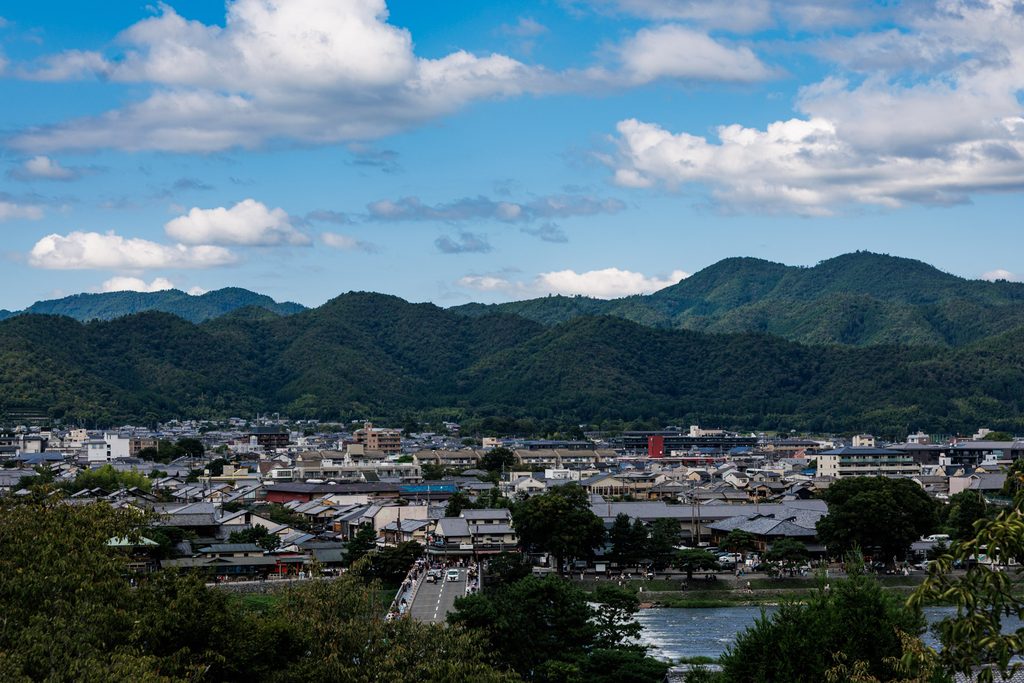
Standing there, it is obvious why this used to be one of the best seats in the city on the night of August 16. The Gozan no Okuribi, the five bonfires lit on the mountains to send the spirits of the dead back, includes a torii shape on the hills west of here and the great Daimonji character to the northeast. From this stage you could see both, the Daimonji at eight and the torii twenty minutes later.
You cannot now. As of 2026 the temple no longer opens its grounds to the public on the night of the fires, and if you are planning around August 16, plan around the riverbank instead. Older English pages still describe the stage as a viewing spot, which is how I learned about it in the first place, and how I found out that I had been late to this too. Two years of putting off a five-minute walk, and the thing I most wanted to see from up here had already stopped happening.
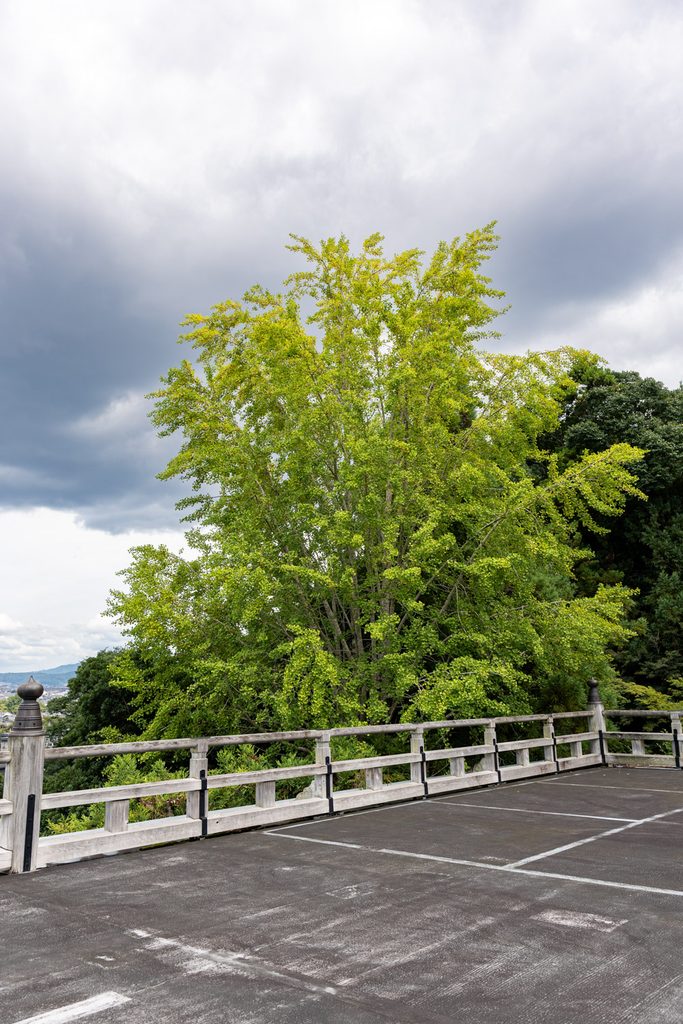
One more thing about the stage, and it changes how the view looks. It is paved in asphalt and painted with white lines, the kind that mark out parking spaces, which is a strange finish for something called a stage. There was no sign explaining them and I have no theory worth printing.
The microSD Amulet, and the 700 Yen I Kept
The temple office is to the right of the main hall.
This is where the thing I came for actually lives. The microSD amulet of Denden-gu is exactly that, a memory card, sixteen gigabytes according to the handwritten note beside the price, holding an image of the temple’s Kokuzo Bosatsu. You put it in your phone and set the image as your lock screen, and in return the card is said to guard the device against sudden failure. It costs 1,200 yen. Beside it sits a set of seven adhesive talismans, meant to be stuck onto a phone or a laptop against data loss, at 700 yen.
I should explain why I was standing there so long.
Two springs in a row, I lost every cherry blossom photograph I took. Not a few frames. The whole season, twice, after days of paid leave and a lot of train fare. Neither loss was my fault. One was a failing SD card. The other was a failing SSD. Some people would call that a curse. I prefer the version where I knew about the shrine for electronics and kept putting off the visit, because at least in that version there was something I could have done.
So there I was, in front of the exact object designed for my exact problem. And I bought the goshuin instead.
In my defense, it was a good one. Horinji issues a paper-cut goshuin, the design changing with the month, and the September sheet was chrysanthemum yellow with gold foil, cut through in a lattice of flowers. It cost 500 yen, where paper-cut goshuin elsewhere routinely run double that. Only later did I look properly at the figure in the middle of it. September’s design is Kikujido, the boy from the old story who copied sutra verses onto chrysanthemum leaves, drank the dew that ran off them, and did not age for several hundred years.
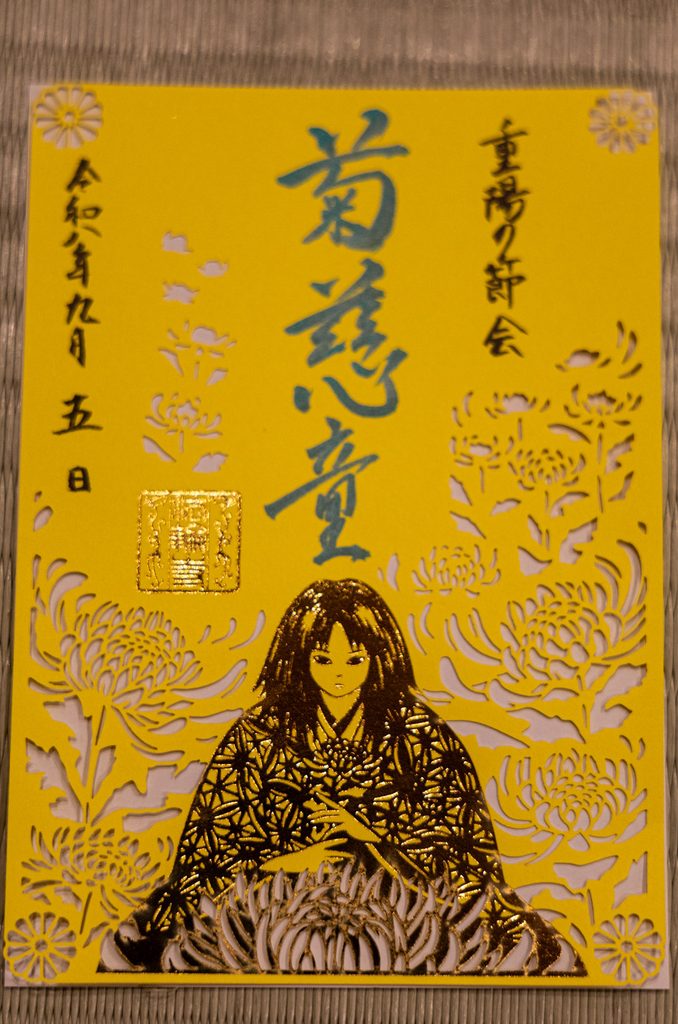
The gap between the amulet and the goshuin is 700 yen, which is precisely the price of the sticker set I also did not buy. I had come up the hill for insurance and I walked back down with the prettier thing, and with a picture of a boy who never lost any time at all. The next time a card fails on me I will know exactly which of my own qualities to blame, and it will not be the card.
What Horinji Temple Is, in Brief
The temple is older than most of Arashiyama’s famous names.
It begins in 713, founded by the monk Gyoki at the order of Empress Genmei, and the man who gave it the shape it still has was a priest called Dosho. Dosho, a disciple of Kobo Daishi, installed Kokuzo Bosatsu here as the principal image. He also, while working on the river below, is said to have built the first bridge across it. Emperor Seiwa granted the temple the name Horinji, or Horin-ji, in 874. Sei Shonagon named it in the Pillow Book. Fire took most of it twice, in the Onin War and again in 1864, and what stands on the hillside today is the rebuilding. The temple’s own English page lays out the rest of the chronology.
Two things from all that are worth carrying up the steps with you.
The first is the name of the Buddha. Ko means empty, ku means sky, zo means storehouse. Kokuzo Bosatsu keeps a treasury as limitless as the sky and grants wisdom and memory out of it. Locals have called him Sagano no Kokuzo-san for centuries, and he is the guardian of anyone born in the years of the ox and the tiger.
The second is Dosho’s bridge. Togetsukyo was called Horinji Bridge until the Edo period, after this temple. The bridge everyone photographs belongs, historically, to the temple nobody climbs.
Jusan Mairi in Kyoto: The Rite for Thirteen-Year-Olds
This is why most Japanese people know the temple.
Jusan mairi is a coming-of-age visit made at thirteen, counted the old way, where you are one at birth. Children come to Kokuzo Bosatsu to have the misfortunes of that age cleared away and to be granted wisdom. The custom is traced to the young Emperor Seiwa, who at thirteen had a prayer service held for him here, and by the middle of the Edo period families were making the journey from across the Kansai region. An old verse has them coming up from Osaka, thirteen leagues for the thirteenth year, and returning with wisdom of assorted kinds. That is a long way to walk for a quality you cannot check on arrival.
Those receiving the rite write a single Chinese character, which is offered to Kokuzo Bosatsu as a one-character sutra copy and stands in for the child. The temple then reads the child’s name in prayer for a set period, and the fee follows the period: 5,000 yen for a week, 7,000 yen for a month, 13,000 yen for a year.
Families come in two windows: spring, from March 13 to May 13, and autumn, through October and November. Applications are taken at the temple office between 9:00 a.m. and 4:00 p.m. Everything is conducted in Japanese, and the temple’s website is almost entirely in Japanese, so a visitor without the language would need someone to interpret.
There is one part of the rite that everybody, participant or not, should know about. After the prayer, the child must cross back over Togetsukyo Bridge without looking behind them. Look back before the far bank and the wisdom you were just given goes back to the bodhisattva. I like the rule. It is also the reason a certain kind of parent stands at the far end of that bridge with a camera, waiting.
What to Look For in the Grounds
- The stone wall near the entrance, where Edison and Hertz are easy to walk straight past if you have your eyes on the steps.
- The two-storied pagoda beside the main hall. Once you have seen it up close you can pick it out from Togetsukyo Bridge, halfway up the hillside, which is how the temple announces itself to a district that mostly ignores it.
- The stone steps, at their best in the green-maple months of May and June and again in late November.
- The stage, and the white lines on it, which I still cannot account for.
- The great ginkgo at the edge of the stage, which turns in late autumn and would be worth the climb by itself.
Two Dates Worth Planning Around
The temple keeps two ceremonies that almost no foreign visitor sees.
On December 8, Horinji holds a memorial service for worn-out sewing needles, a custom that goes back to the needle pagoda Emperor Seiwa had built in the grounds. On November 13, the day of lacquer, people from the lacquer trade gather here from across the country for a ceremony of their own. That second date falls inside Kyoto’s autumn foliage season, which makes it the easier of the two to build a day around.
The temple has also sheltered writers, poets and craftsmen for centuries, many of whom lived in seclusion in these grounds. It is still thought of as a lucky place for people who make things.
Goshuin and Amulets
Both are handled at the temple office beside the main hall.
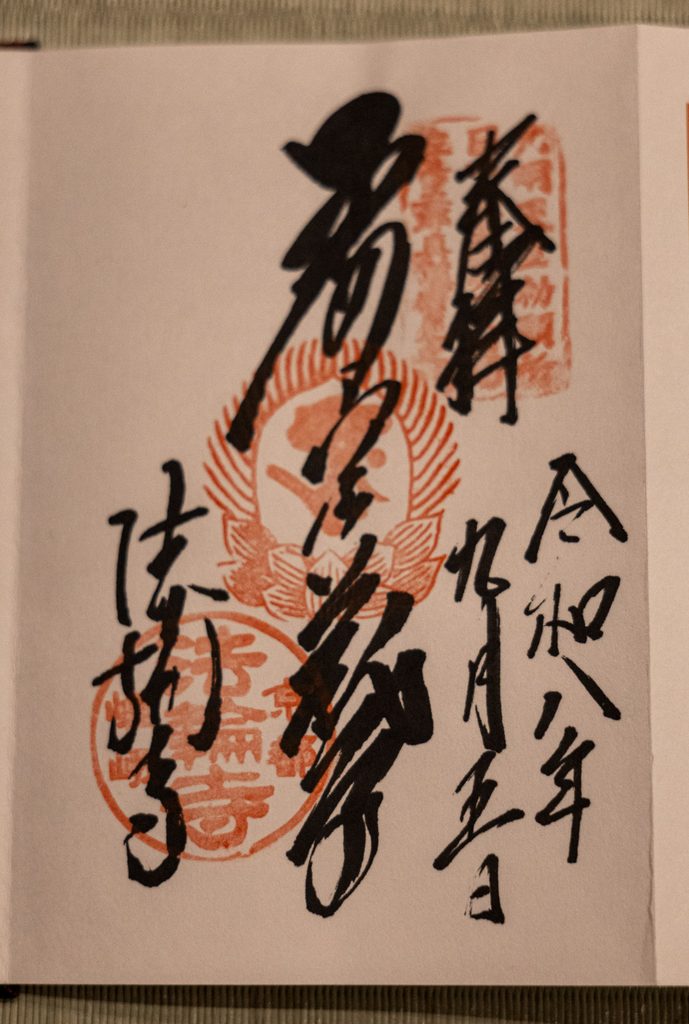
The standard goshuin is brushed by hand directly into your book for 500 yen. The paper-cut version, issued as a loose sheet with a design that changes each month, is also 500 yen, which is unusually low for the format and the reason I ended up with one. One Hankyu stop away at Matsuo Taisha, an identical 500 yen once made a decision easy for me in the opposite direction.
The Denden-gu amulets are sold at the same window: the microSD card at 1,200 yen, the set of seven protective stickers for phones and computers at 700 yen, and a conventional cloth amulet at the usual sort of price.
Visiting Horinji Temple Arashiyama: Hours and Fees
| Admission | Free |
| Hours | 9:00 a.m. to 4:30 p.m. |
| Time needed | About 30 minutes, plus however long you sit on the stage |
| Goshuin | 500 yen, hand-brushed or paper-cut |
| Denden-gu amulets | microSD card 1,200 yen, protective stickers 700 yen |
| Jusan mairi | March 13 to May 13, and October to November. Applications 9:00 a.m. to 4:00 p.m. |
| Nearest station | Hankyu Arashiyama, about a 5-minute walk |
| Access | On the hillside at the south end of Togetsukyo Bridge, up a flight of stone steps |
Free admission matters more here than it sounds. Arashiyama is a district where the good things cost between 500 and 1,000 yen each and the bill adds up over an afternoon. This is a hillside temple with the best open view in the neighborhood and no gate fee at all.
The closing time matters too, and for a specific reason. Arashiyama now holds a short autumn fireworks display, five minutes of it, launched at 8:30 p.m., free to watch, and best seen from Nakanoshima Park. In 2026 it falls on October 11 and 12. People sometimes assume the temple stage would be the place to watch from. The gate is shut four hours earlier.
Who Should Climb the Steps, and Who Should Skip Them
I would not send everyone up there.
If this is your first day in Arashiyama and you have one hour, spend it on the bridge and the bamboo. Horinji will still be on the hillside next time, which I can say with some authority. The same goes if stairs are a problem. There is a single flight of stone steps and no way around them, and the reward at the top is a view and a small wooden hall rather than anything grand.
Come if you have done Arashiyama once already and want the part of it that nobody queues for. Come if you photograph, and want a high, open vantage over the river without paying for it. Come if the odd corners of Japanese religious practice interest you more than the famous ones, because a shrine that guards radio waves is about as odd a corner as Kyoto offers. And come knowing that the English signage here is close to nonexistent, which is part of why the steps are empty.
Getting There
Cross to the south side of Togetsukyo Bridge and look up.
Hankyu Arashiyama Station is the closest, about five minutes on foot. From the Randen or JR side of the river you cross the bridge first, which is the better approach anyway, because you arrive at the temple from the direction the thirteen-year-olds leave it. The gate is set back from the road and quiet enough that people miss it.
If you are combining it with the rest of the district, the Arashiyama Bamboo Grove is on the opposite bank, and the walk upriver from the same bridge leads to Daihikaku Senkoji, another hillside temple almost nobody climbs.