Last updated: November 2, 2026
On November 30, 2025, I had tours booked at two of Kyoto’s imperial gardens. At the Sento Imperial Palace, in the flat middle of the city, the maples were close to their best. At Shugakuin Imperial Villa, a few miles northeast against the foot of Mount Hiei, they were already past it, the leaves at the branch tips gone brown and dry. Same city, same day, and the Kyoto autumn leaves were on two different schedules.
I had booked both in August, three months ahead, because that’s how the Imperial Household Agency works. No foliage forecast exists that early. I picked a date off a calendar, and it was the right date for one garden and the wrong one for the other.
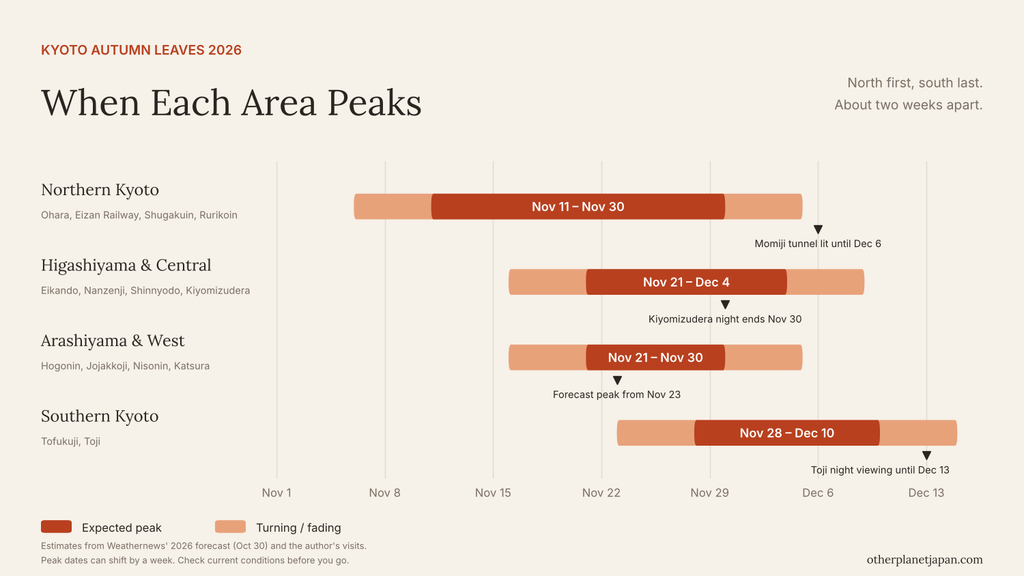
That day taught me how fall in Kyoto actually moves. The color starts in the hills to the north, reaches the city center, and finishes at the temples in the south, roughly two weeks later. So the date of your trip matters less than where you spend each day of it. Below are the temples and gardens I’ve walked, in order from the earliest peak to the latest, along with the 2026 forecast, the night illuminations, and the reservations worth making now.
Kyoto Fall Foliage Forecast 2026
Expect a slightly late autumn this year. In Weathernews’ third foliage forecast for 2026, released on October 30, Arashiyama was expected to reach its peak from around November 23, and spots that usually peak from mid-November on were forecast to run a little later than normal.
The table below combines that forecast with what I’ve seen on the ground. I’m out photographing Kyoto’s maples from mid-November into early December, and I’ll update this page each week with what I find.
| Area | Expected peak in 2026 | Where to go |
|---|---|---|
| Northern Kyoto (Ohara, Eizan Railway, Shugakuin) | Mid to late November | Sanzenin, the momiji tunnel, Shugakuin Imperial Villa, Rurikoin |
| Higashiyama and central Kyoto | Late November to early December | Eikando, Nanzenji, Shinnyodo, Konkai Komyoji, Kiyomizudera, Sento Imperial Palace |
| Arashiyama and western Kyoto | Late November (Arashiyama from around Nov. 23) | Hogonin, Jojakkoji, Nisonin, Katsura Imperial Villa |
| Southern Kyoto | Late November to early December | Tofukuji, Toji |
Peak timing can shift by about a week with the weather. Check current conditions a few days before you go.
Northern Kyoto: Where the Fall Colors Start
The hills north of the city cool first, so the color arrives here first.
Sanzenin Temple, Ohara
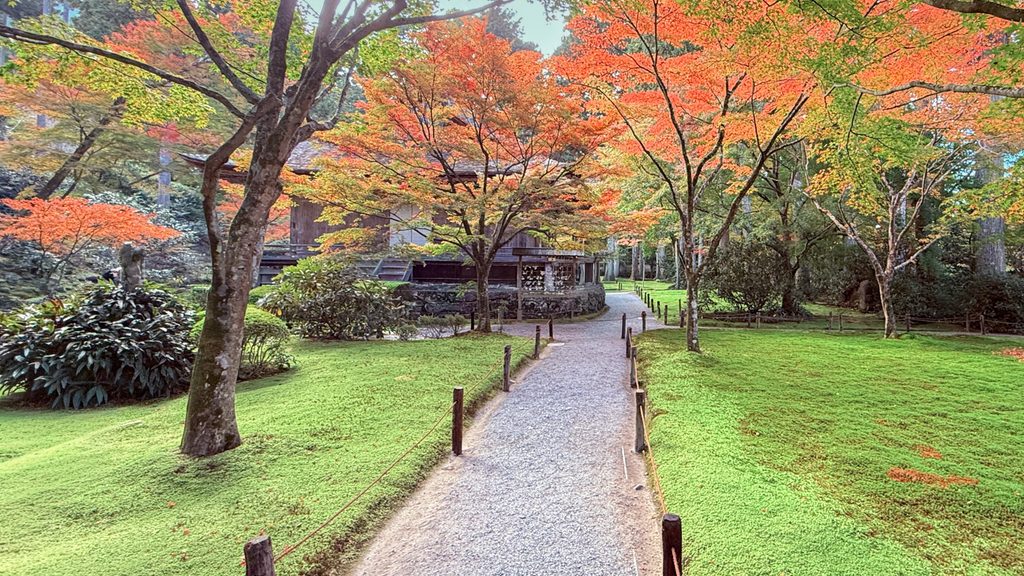
Ohara turns a little ahead of central Kyoto, and Sanzenin usually peaks in mid-November, when fallen maple leaves settle onto its moss garden. The bus from Kyoto Station takes over an hour. The bus from Kokusaikaikan subway station takes about 25 minutes and tends to be less crowded. I put this temple off for years because I could go anytime, and I wrote about finally going in my Sanzenin Temple autumn guide.
The Eizan Railway Momiji Tunnel
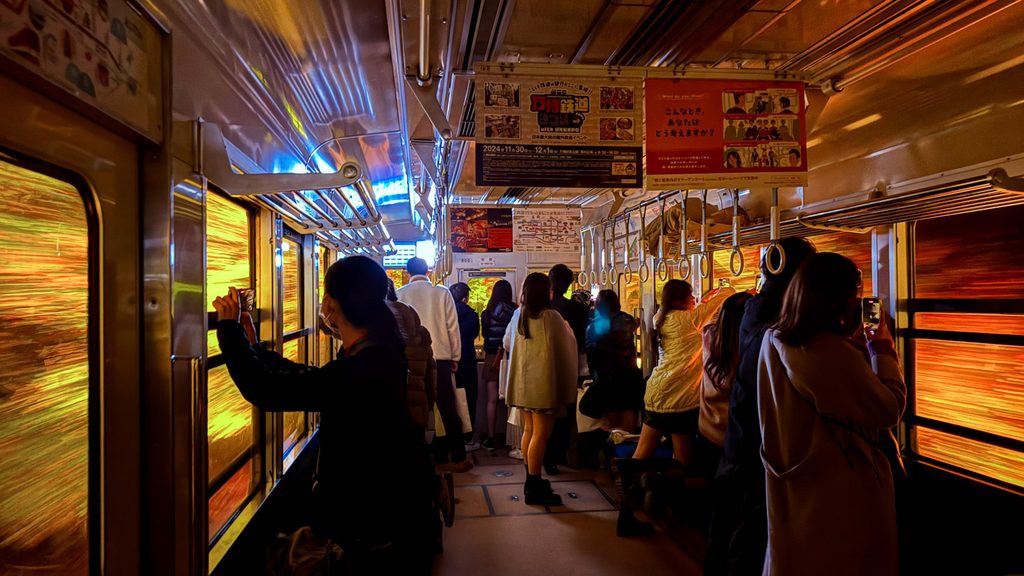
Between Ichihara and Ninose stations on the Eizan Railway’s Kurama Line, about 280 maples arch over 250 meters of track. No road or path runs alongside it, so the train is the only way in. Ordinary trains slow down through the tunnel at no extra charge, and their windows open. In 2026, the slow running and evening illumination run from November 7 to December 6, from sunset until about 9 p.m. Details are in my momiji tunnel guide.
Shugakuin Imperial Villa
This hillside villa sits at the foot of Mount Hiei, and its maples turn ahead of the city’s. When I visited on November 30, 2025, the peak had passed. Tours open for booking three months ahead, so if you’re booking for the leaves, pick a date a little earlier than you would for a garden downtown. More in my guide to Shugakuin Imperial Villa.
Rurikoin Temple, Yase
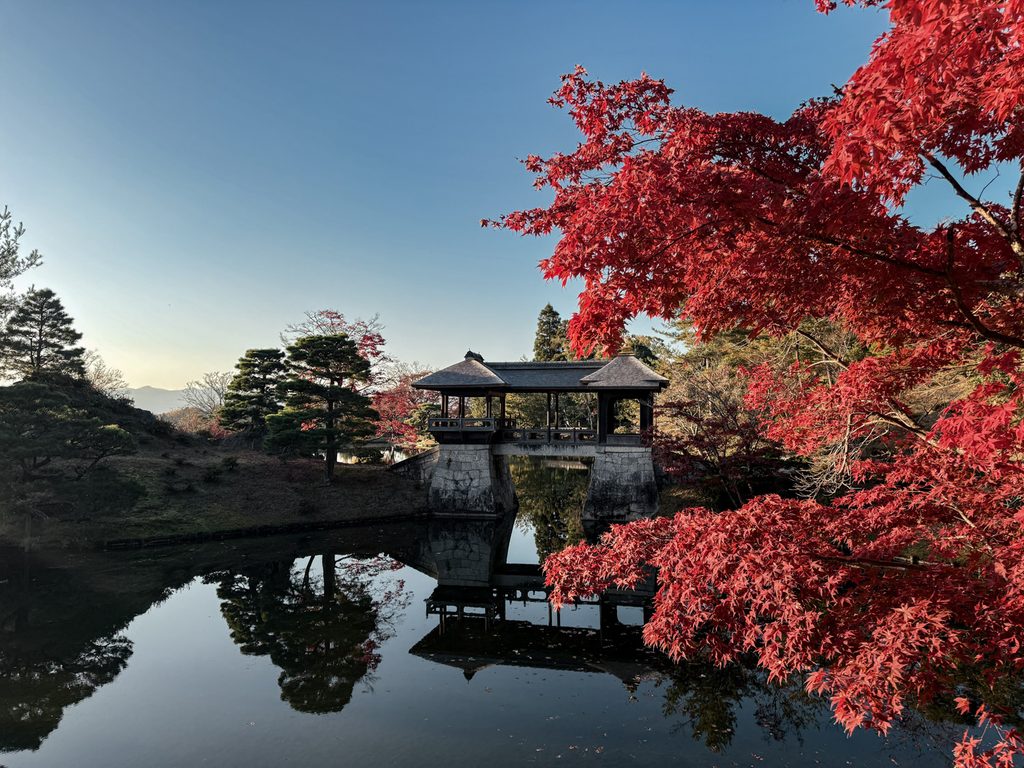
Rurikoin is known for yuka-momiji, maples reflected on a lacquered tabletop. The color was full when I visited on November 27, 2025. From November 13 to December 6, 2026, visits require an online reservation. See my guide to Rurikoin Temple.
Higashiyama and Central Kyoto: The Main Event
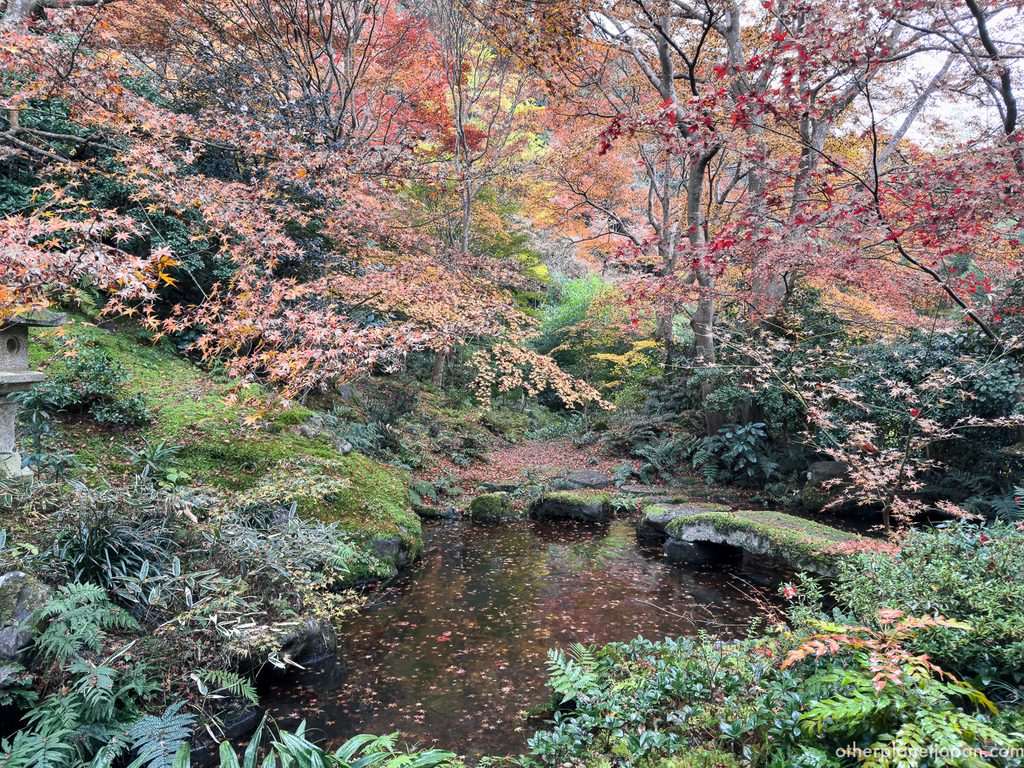
The eastern hills and the city center usually peak together in late November, and this is where the crowds are.
Eikando Temple
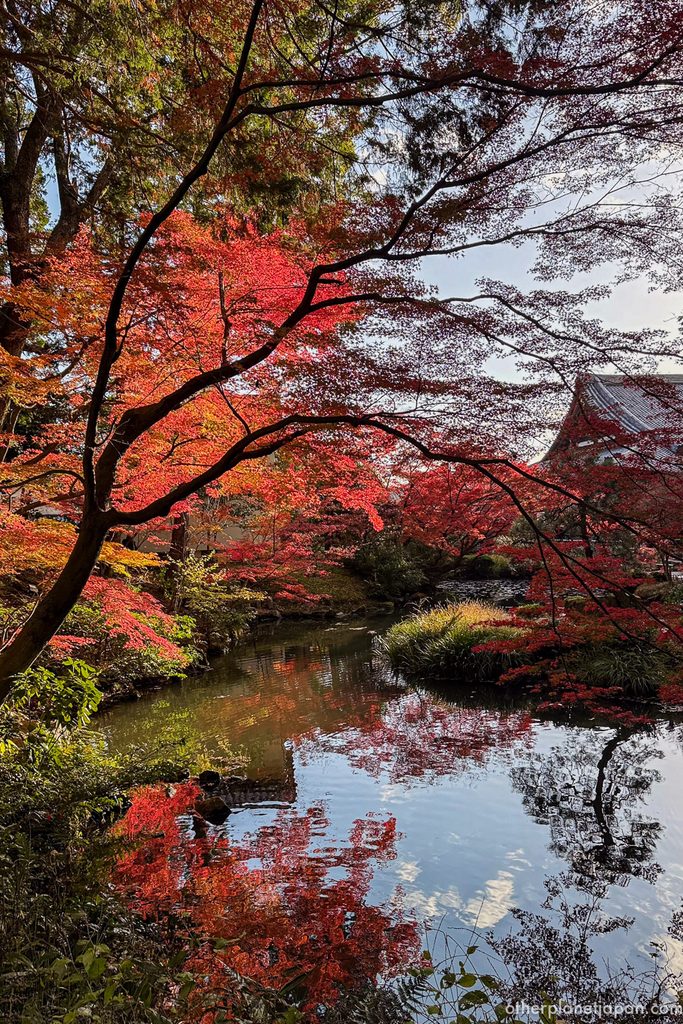
Eikando has around 3,000 maples, and in my experience no hour of the day without a crowd. Local TV news in Kansai has broadcast the moment its evening lights switch on live. In 2026, the night illumination runs from November 20 to December 6. See my Eikando Temple autumn guide.
Nanzenji Temple
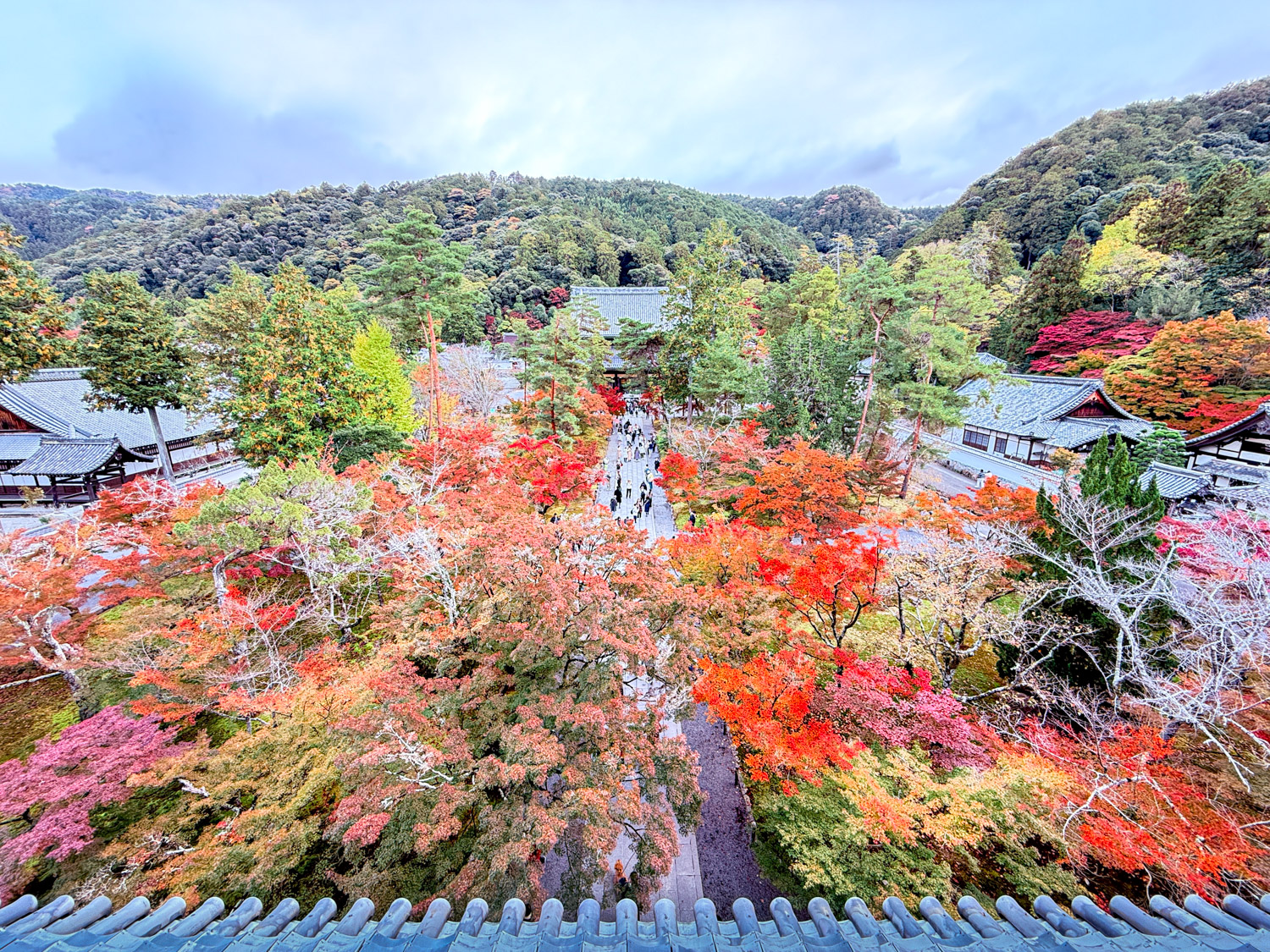
Nanzenji is one of the few places in Kyoto where you can look down on the maples. From the top of the Sanmon Gate, you can see which trees are at their peak and which are still turning. The color was at its best on November 27, 2025. The upper floor of the gate opens at 8:40 a.m., and the subtemple Nanzenin has a special opening from November 1 to 30, 2026. See my Nanzenji Temple autumn guide.
Shinnyodo and Konkai Komyoji
These two temples are about five minutes apart on foot, so see them together. Shinnyodo was once known as an autumn hideaway, and I’ve managed to arrive there both too early and too late. At Konkai Komyoji, the reds were deepest on November 28, 2025, and its 2026 autumn special viewing, with evening hours, runs from November 13 to December 6. Read more about Shinnyodo Temple in autumn and Konkai Komyoji in autumn.
Kiyomizudera Temple
For the evening view of the famous stage, walk past Okuno-in and look back. Of all my visits in every season, the autumn night illumination was the most crowded. In 2026 it ends early, on November 30. See my Kiyomizudera autumn illumination guide.
Sento Imperial Palace
A flat garden in the center of the city. On the same day Shugakuin had faded, the maples here were nearly at their peak. Tours are by reservation. Read about Sento Imperial Palace in autumn.
Arashiyama and Western Kyoto
Weathernews expects Arashiyama to peak from around November 23.
Hogonin Temple
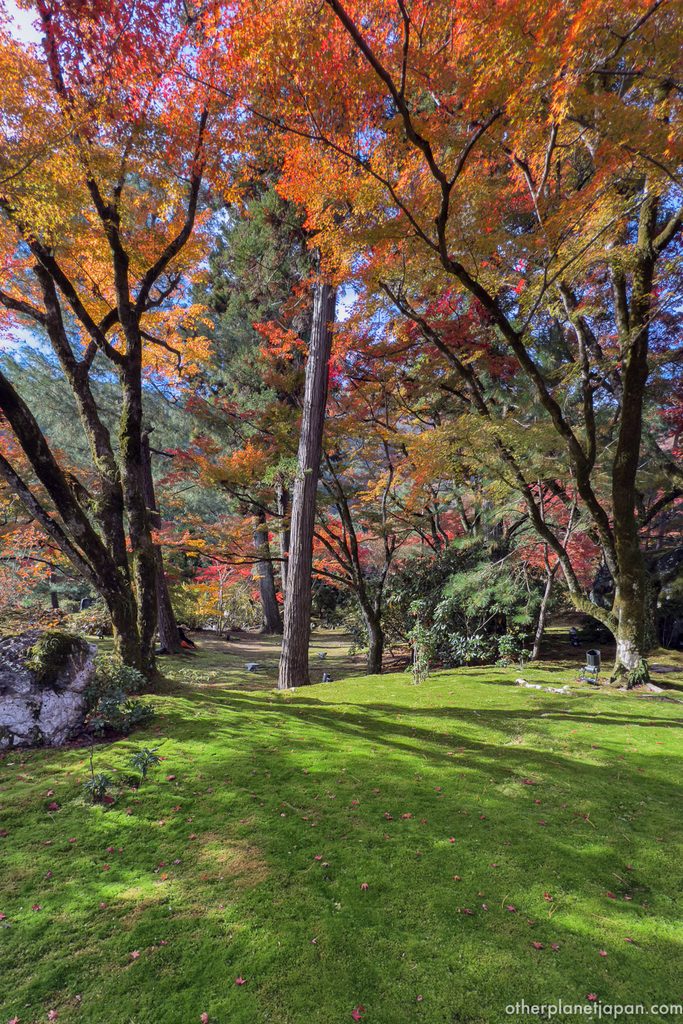
Hogonin is a subtemple of Tenryuji that opens only in spring and autumn. Its Lion’s Roar Garden borrows the slopes of Arashiyama as scenery. The 2026 autumn opening runs from October 3 to December 6, with night viewing from November 13. See my Hogonin Temple guide.
Jojakkoji and Nisonin
Both temples sit at the foot of Mount Ogura, north of the Bamboo Grove. At Jojakkoji, green, yellow, orange, and red show up all at once, and the 9 a.m. opening is the quietest time. At Nisonin, the wide approach called Momiji no Baba becomes a tunnel of color in late November.
Katsura Imperial Villa
Katsura isn’t especially known for fall color. In late November, though, its maples were red, orange, and still partly green, with fallen leaves floating on the pond. Tours are by reservation and open to ages 12 and up. See my guide to Katsura Imperial Villa.
Southern Kyoto: The Last to Peak
The southern temples turn last, and their seasons run the longest.
Tofukuji Temple
About 2,000 maples, seen from Tsutenkyo Bridge. There’s no quiet hour, but the crowd keeps moving. The 2026 autumn special viewing runs from November 14 to December 6. See my Tofukuji Temple autumn guide.
Toji Temple
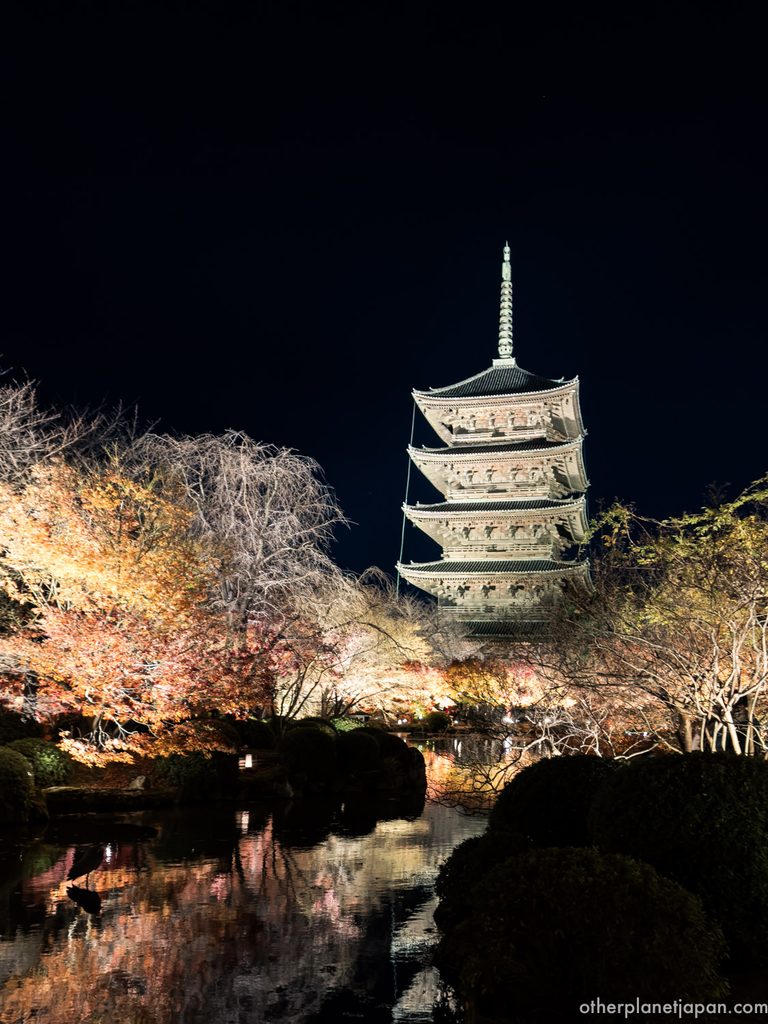
For years, Toji was just the pagoda I saw from the Shinkansen window. At night, about 200 maples are lit, the five-story pagoda appears upside down in Hyotan Pond, and the Main Hall and Lecture Hall stay open after dark. The color usually peaks from late November into early December, and the 2026 night viewing runs until December 13, longer than most. See my Toji Temple autumn illumination guide.
Kyoto in November: What to Expect
Days in November are mild, but evenings turn cold, and many foliage spots sit against the hills, where it’s cooler than downtown.
The coldest I’ve been at a Kyoto foliage spot was the night of December 3 at Kiyomizudera. The stage was packed, and all those people did nothing for the temperature. On the Kurama Line after dark, opening a train window lets in air like a walk-in refrigerator. At Sanzenin and Eikando, the wooden corridors you walk in socks are cold underfoot.
- For night viewings, bring a hat, gloves, and a scarf.
- You’ll take your shoes off at many temples. Thick socks help.
- Late-November weekends are the busiest days of the season everywhere.
Kyoto in December: Is It Too Late for Autumn Leaves?
Early December still works, especially in a late year like this one.
- Toji’s night viewing runs until December 13.
- The autumn openings and night viewings at Tofukuji, Eikando, Konkai Komyoji, and Hogonin run until December 6.
- The momiji tunnel’s slow running and illumination also run until December 6.
- Kiyomizudera’s night illumination ends November 30, but the maples there often hold their color into early December. At the 6 a.m. opening, the grounds are nearly empty.
The northern spots are usually past their peak by December, so head to the city center and the south.
Kyoto Autumn Night Illuminations 2026
| Place | 2026 dates | Hours | Admission |
|---|---|---|---|
| Eikando | Nov. 20 – Dec. 6 | Entry 5:30 – 8:30 p.m. (gates close 9 p.m.) | ¥1,000 (junior high and older) |
| Kiyomizudera | Nov. 21 – 30 | 5:30 – 9:30 p.m. (last entry 9 p.m.) | ¥500 |
| Konkai Komyoji | Nov. 13 – Dec. 6 | 5:30 – 8:30 p.m. (last entry 8 p.m.) | ¥1,000 main halls and garden, ¥800 Eishoin, ¥1,600 for both |
| Hogonin | Nov. 13 – Dec. 6 | 5:30 – 8:30 p.m. (last entry 8 p.m.) | ¥1,000 |
| Toji | Oct. 31 – Dec. 13 | 6:00 – 9:30 p.m. (last entry 9 p.m.) | ¥1,000 adults and high school students, ¥500 junior high and younger |
| Momiji tunnel (Eizan Railway) | Nov. 7 – Dec. 6 | Sunset to about 9 p.m. | Regular train fare |
| Tofukuji | Nov. 18 – Dec. 6 | 5:30 – 7:30 p.m. | Private evening viewing, advance booking required |
Dates and fees change from year to year, so confirm with each temple before you go.
Reservations to Make Now
- Shugakuin Imperial Villa, Katsura Imperial Villa, and Sento Imperial Palace: Online applications open at 5 a.m. Japan time on the first day of the month, three months before your visit, and close three days before your date. Katsura and Shugakuin also hand out a limited number of same-day tickets at the entrance. Katsura admits ages 12 and up, Shugakuin ages 18 and up. Apply through the Imperial Household Agency’s Kyoto website.
- Rurikoin: An online reservation is required from November 13 to December 6, 2026.
- Eizan Railway Autumn Illumination Special Train: Runs November 13 to 30, 2026, on the KIRARA panorama train with reserved seats only. Check the Eizan Railway’s English website for booking.
- Tofukuji evening viewing: A private viewing with advance booking only.
How to Beat the Crowds
No foliage spot in Kyoto is quiet in late November. Some hours are.
- Arrive at opening time. In 2025, Nanzenji’s open grounds were walkable from a little after 6 a.m., with the ticketed areas opening at 8:40. Kiyomizudera opens at 6 a.m. At Jojakkoji, the 9 a.m. opening is the quietest time.
- Go on a weekday. At places like Eikando, where shifting the hour doesn’t help, the day of the week does.
- Take the train when you can. City buses get stuck in foliage-season traffic. For Ohara, the bus from Kokusaikaikan Station is the less crowded option.
Kyoto Autumn Leaves FAQ
What do koyo and momiji mean?
Koyo is the Japanese word for leaves changing color in autumn, and momiji is the Japanese maple, the tree most people come to see. Both show up on signs, maps, and foliage reports, so they’re worth knowing before you go.
Day or night: which is better for Kyoto fall foliage?
If you can choose only one, choose daytime. Nothing shows the color itself like daylight. I think of the night illuminations as a different view to add once you’ve seen the leaves by day. Tofukuji by day and Toji after dark make an easy pair, about 20 minutes apart by bus.
I only have one day for autumn leaves in Kyoto. Where should I go?
Walk Higashiyama. Nanzenji, Eikando, Konkai Komyoji, and Shinnyodo are all within walking distance of one another, so in a single day you get the view from the Sanmon Gate, a famous temple at full crowd, and two quieter ones.