The Rope Was Too Thick
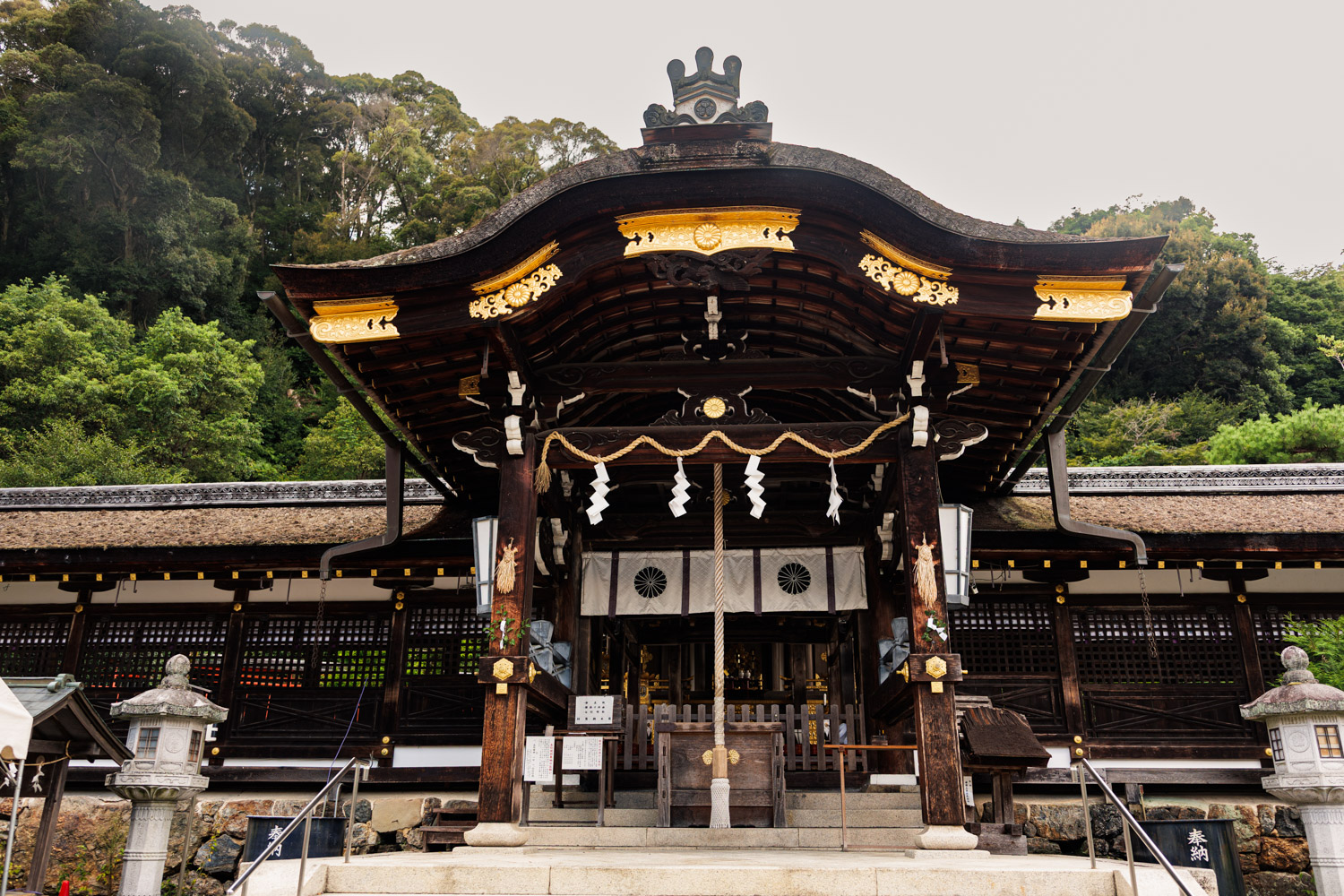
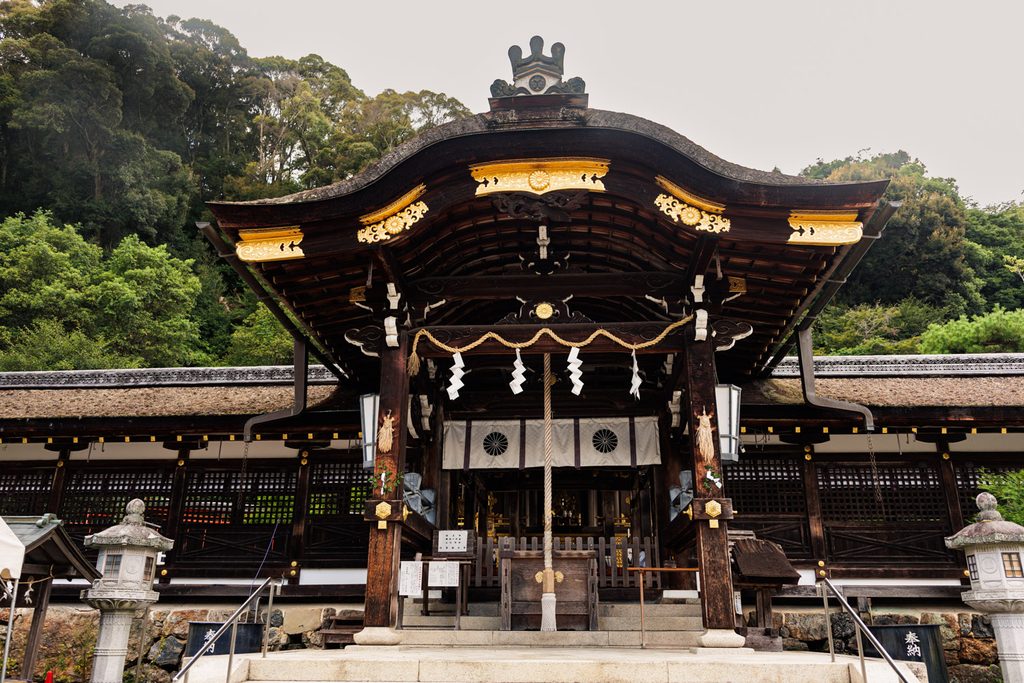
The rope surprised me first. At Matsuo Taisha, a shrine at the western foot of Kyoto, you announce your presence to the deity by shaking a braided rope to ring a bell, and when I closed my hand around this one my fingers didn’t quite meet. It was thick as a fire hose and heavier than it had any need to be. I stood there wondering, in all seriousness, whether a small child could ring this bell at all.
I have visited more Kyoto shrines than I can count. This is the first one I remember by the weight of its rope.
Two Torii and a Row of Dead Branches
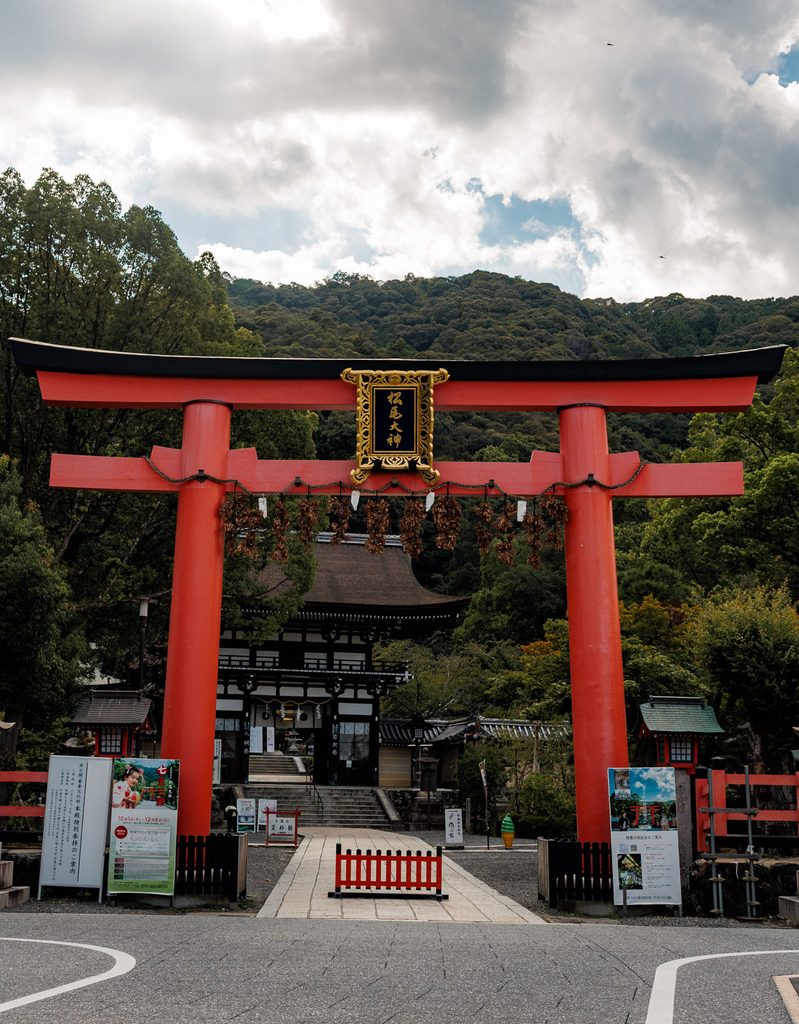
I knew this shrine long before I visited it. More honestly, I knew its gate. Ride the Hankyu line toward Arashiyama and a huge vermilion torii rises over the road outside Matsuo-taisha Station, filling the train window for two or three seconds before the town swallows it again. For years I told myself I would get off here someday. One August afternoon I finally did, and the great torii up close was everything the train window had promised.
The second gate is stranger. Walk up the approach and a smaller red torii stands before the shrine, and this one appears to be decorated with dead plants. Withered brown bundles dangle in a row from the crossbeam. My first thought was that someone should really tidy that up.
They are called wakikanjo: branches of the sacred sakaki tree, hung twelve to an ordinary year and thirteen to a leap year. They preserve what is said to be the original form of the torii itself. Before anyone built gates, villagers planted two trees, strung a rope between them, and hung one cord for each month of the year to divine the harvest. The most neglected-looking thing in front of me was the oldest.
An Announcement for an Audience of One
Here is my confession. I had been reading this shrine’s name wrong for most of my life. So, most likely, have you.
Written in kanji, 松尾大社 looks like “Matsuo Taisha,” and nine out of ten Japanese people will read it that way. Every English guidebook I can find calls it that. I did too. The correct reading adds a syllable in the middle: Matsunoo, roughly mah-tsu-NO-oh. It has been read that way since the days of The Pillow Book, a thousand years ago.
I learned this from a loudspeaker. Standing completely alone in the shrine’s paid garden late that afternoon, I heard a recorded announcement crackle to life for an audience of exactly one, and the voice pronounced the name slowly and patiently. I stood among the stones and let a machine correct me.
In fairness to everyone who gets it wrong, the nearest train station is officially called Matsuo-taisha. The shrine says Matsunoo; the railway says Matsuo. When the local train line and the shrine cannot agree, foreign visitors may consider themselves forgiven in advance.
It gets better. “Matsunoo Taisha” has only been the official name since 1950. For the thousand-plus years before that it was a jinja, a plain shrine rather than a grand one. My one consolation is that in all those years of misreading, I had never once said the name aloud to another person. Procrastination, for once, paid off.
I will use the correct name from here on. It seemed like the least I could do.
The 500-Yen Garden: Mirei Shigemori’s Last Work
The garden almost lost me at the window. Shrines in Japan are normally free, and a shrine that charges admission for a garden is rare enough that I stood at the reception counter doing arithmetic. Five hundred yen. Pocket change. I hesitated anyway.
I am not proud of this paragraph.
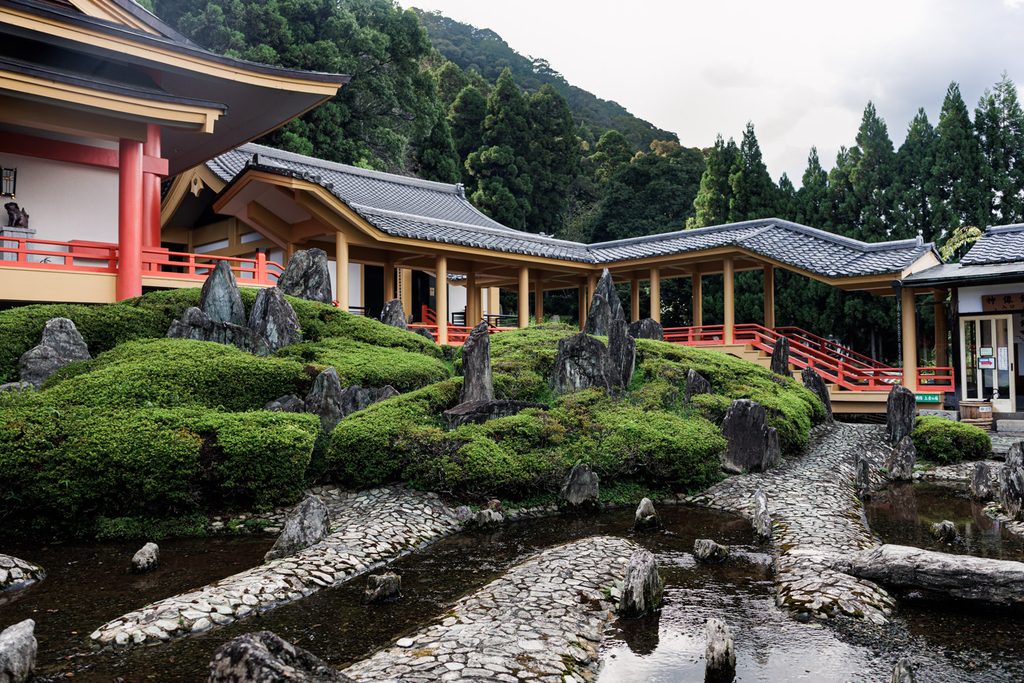
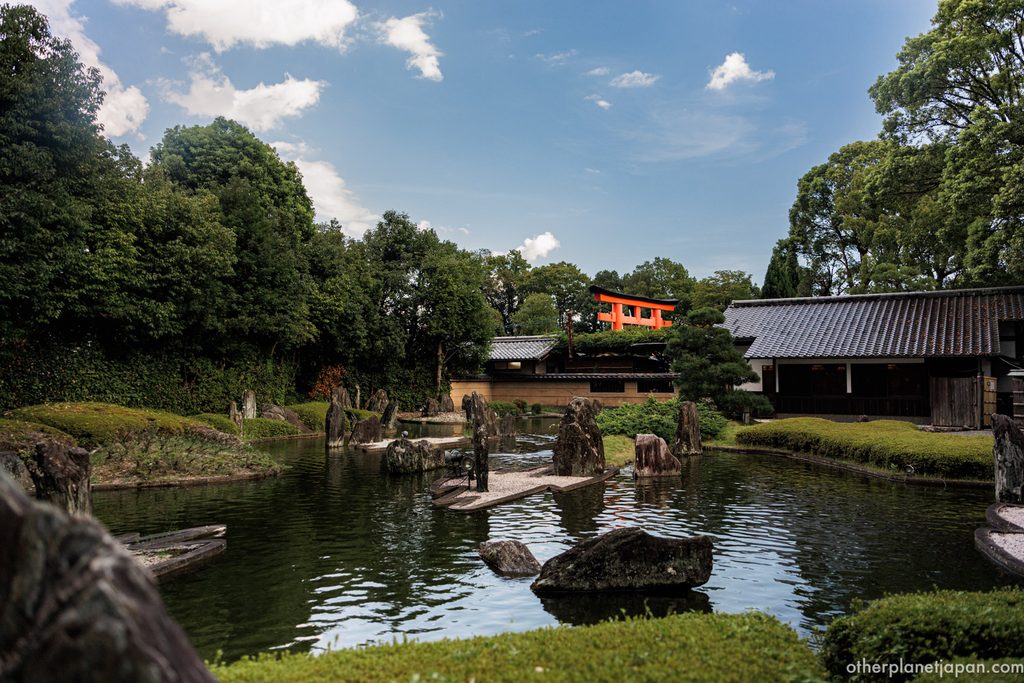
The garden is called Shofu-en, and it is actually three gardens. They were designed by Mirei Shigemori, the man behind the checkerboard moss garden at Tofukuji and much of what the world now pictures when it pictures a modern Japanese garden. Shofu-en was his final work. It cost 100 million yen, used more than 200 blue-green stones hauled from the Yoshino River in Shikoku, and took a full year to build. It was completed in 1975, the year Shigemori died. He spent the last of his life on this garden, and I spent thirty seconds deciding whether it was worth pocket change.
I want to write that the garden was unexpectedly beautiful, but “unexpectedly” is the insult in that sentence. It was not azalea season, and it did not matter. The clipped mounds were groomed to a standard that made me plan a return trip for late May before I had finished walking the first path.
The Rock No One Can Visit
One of the three gardens upended my understanding of the whole shrine. The Joko no Niwa, the “garden of ancient times,” is not a landscape. It is a replica. It recreates the iwakura, a sacred rock formation near the summit of Mount Matsuo behind the shrine, where the deity was worshipped for centuries before anyone thought to build a building. Two great stones at the center stand for the shrine’s male and female deities, and the low bamboo grass around them stands for a high mountain that people may not enter.
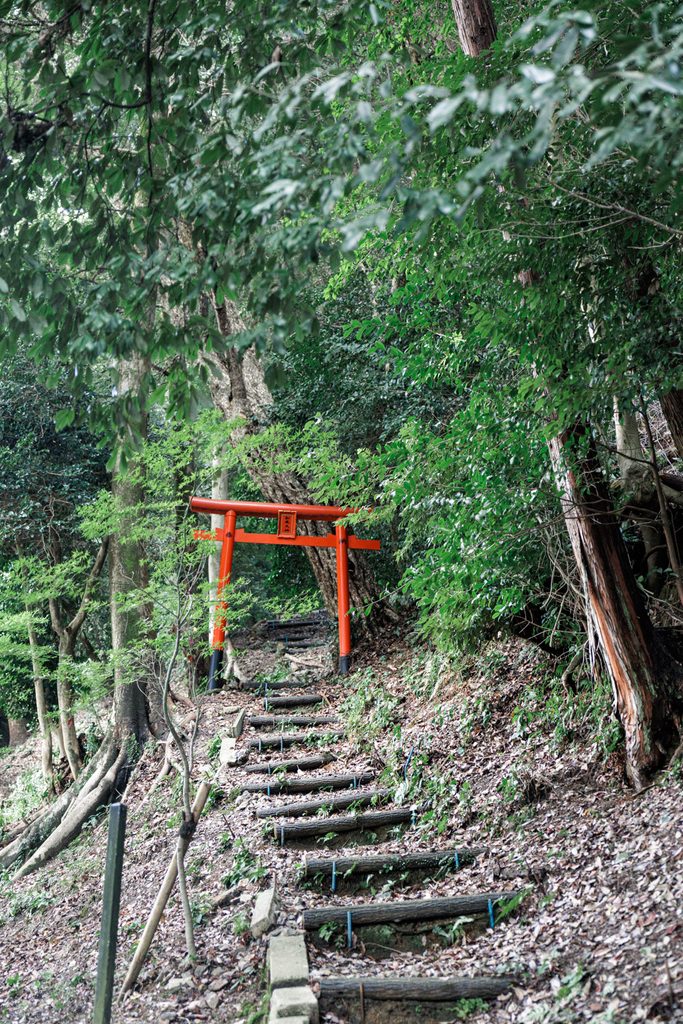
That last part is now literally true. In 2018, Typhoon Jebi brought down trees and triggered landslides on Mount Matsuo, the pilgrimage path was destroyed beyond repair, and the shrine closed the climb for good. On the mountain side of the grounds I found a small red torii and a staircase of half-buried logs leading up into the forest, closed to entry. The trail still goes up. Nobody is allowed to follow it.
So here is the arithmetic I got wrong at the reception window. The origin of this shrine, the rock the entire thing grew from, is permanently out of reach. The 500-yen garden is now the closest anyone can get to it. I had been standing at a ticket counter, haggling with myself over the price of admission to a thirteen-hundred-year-old idea.
The First Time I Saw a God’s Face
The same ticket admits you to the Shinzokan. Inside, I ran into something I had never experienced at a shrine in my life.
In my experience, Shinto rarely shows you its gods. A temple gives you a Buddha to look at, gilded and lit and unmistakable. A shrine gives you a closed door and asks your imagination to do the rest. I had always assumed that this invisibility was the entire point, and I had made my peace with it.
Then I walked into a room where the gods have faces.
Three seated wooden figures, carved in the early Heian period, roughly twelve hundred years ago. Each is life-size. Each was cut from a single block of wood. They are designated Important Cultural Properties and considered the oldest and finest deity statues in Japan. The older male figure represents Oyamakui no Kami, the shrine’s principal deity; the female figure beside him is Ichikishimahime no Mikoto, and the younger man is said to be their child. Someone gave the invisible a face, and that face now sits at your eye level, close enough to read its expression.
The hall holds twenty-one statues in all. Eighteen were identified in a 2010 survey as late Heian to Kamakura works, among them one inscribed with the year 1143 and one whose faint smile is said to be an ancestor of the Okina mask in Noh theater. Photography is prohibited inside, which is probably why I remember every single one of them.
Turtles, Carp, and a Man with Plastic Jugs
The turtles get everywhere here. A stone “stroking turtle” waits near the main hall beside a pair of stone carp, polished by decades of hopeful hands. The waterfall behind the shrine is named Reiki no Taki, the Falls of the Sacred Turtle. In the pond of the Horai garden, living carp changed course to escort me along the bank, in case I had brought anything.
There is a story under all of this. When the deity of Matsunoo traveled up the Hozu River in the age of the gods to open the lands beyond, he is said to have ridden a carp through the rapids and a turtle through the calm stretches. The two have been his messengers ever since, which makes this the most practical commuting arrangement in Japanese mythology.
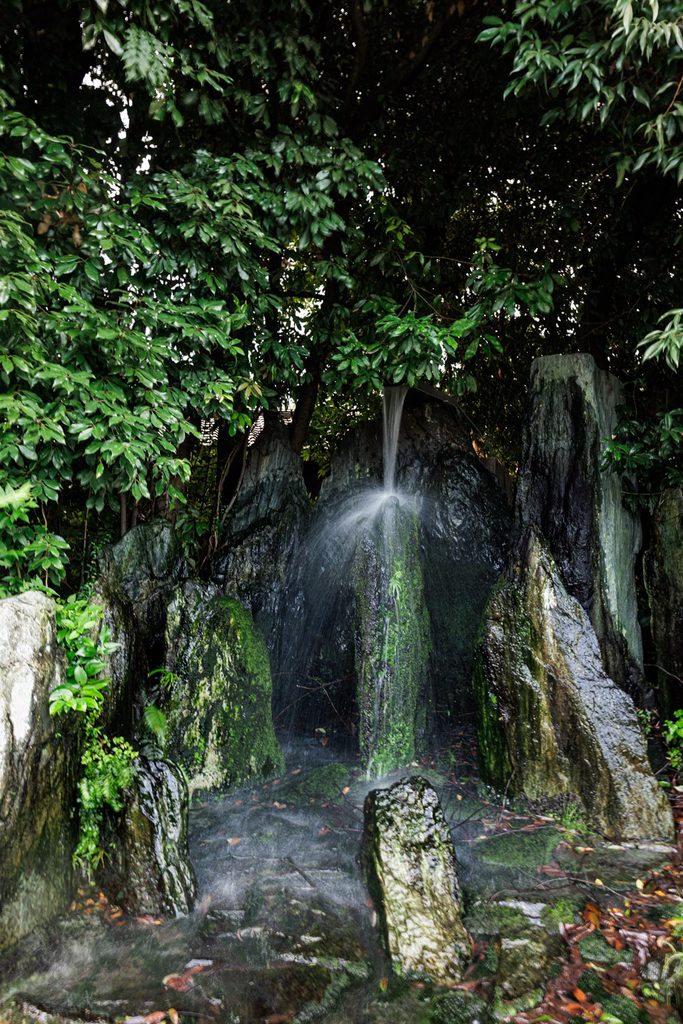
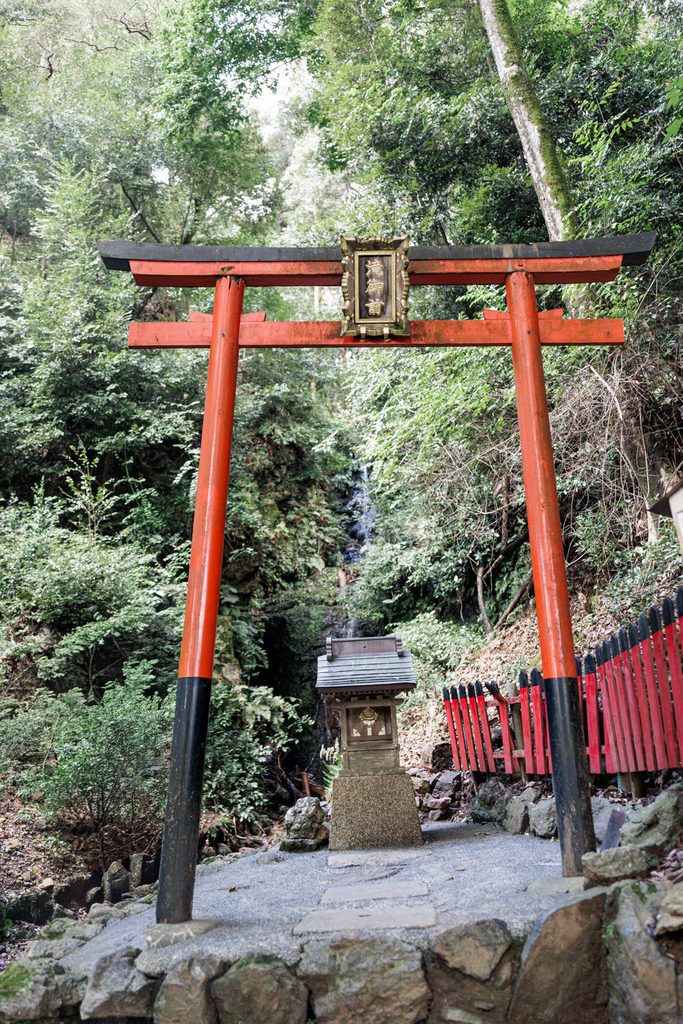
Near the falls, spring water pours from the mouth of a stone turtle at Kame no I, the Turtle’s Well. The water is credited with long life and revival, and sake brewers have long mixed it into their brewing water, trusting it to keep their sake from spoiling.
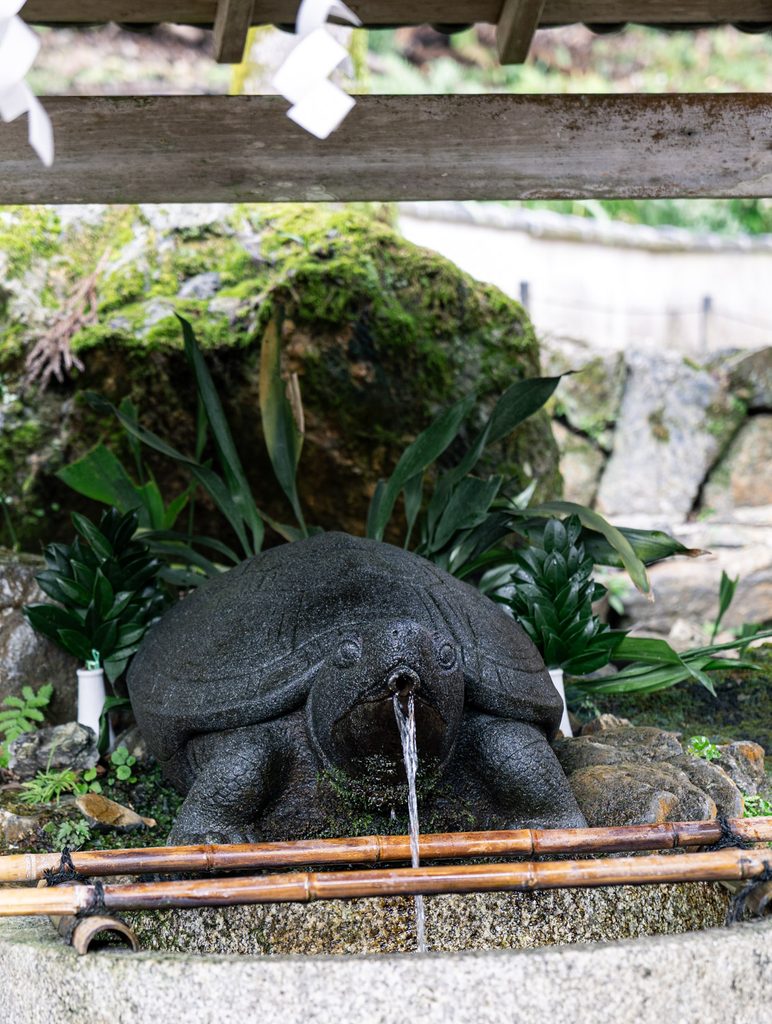
An old man was there when I arrived, filling plastic jugs from the turtle’s mouth. Many plastic jugs, lined up in formation. My first reaction was not generous. This is a sacred spring, I thought, not a municipal tap. Then I watched him carry them out, jug after full jug, without any visible strain, an old man hauling more water than I would care to carry across a parking lot. And it occurred to me that he might be the advertisement. The water of long life is keeping at least one Kyoto resident in formidable shape.
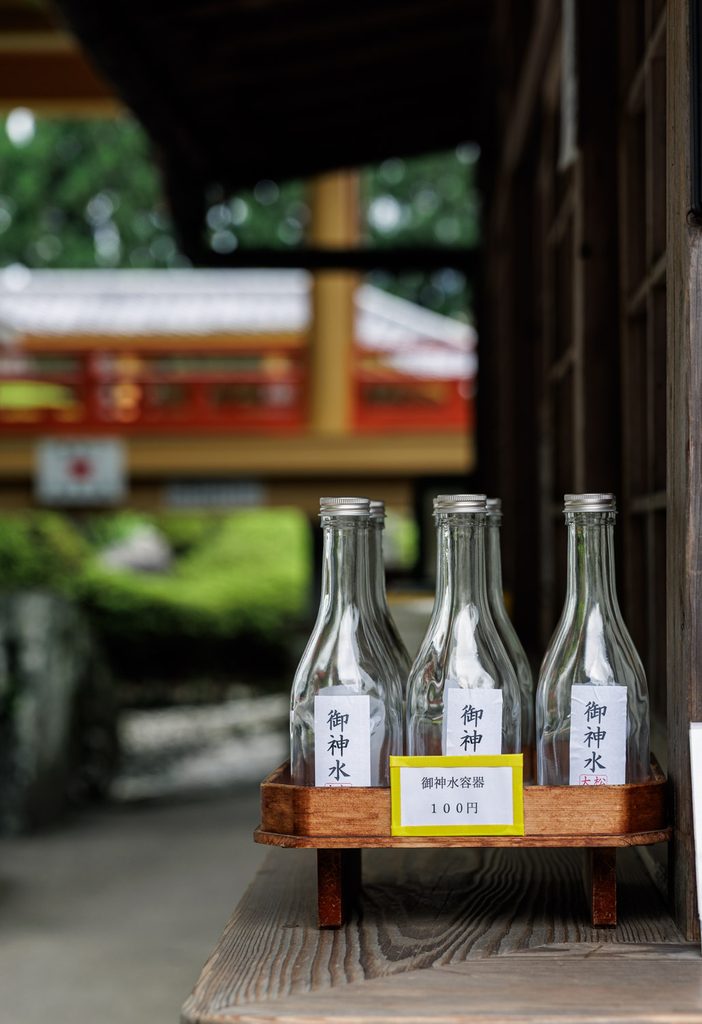
The shrine office sells small empty bottles for 100 yen. It does not sell jugs. The jug, like the faith, you bring yourself.
Japan’s Sake Shrine and Its Wall of Barrels
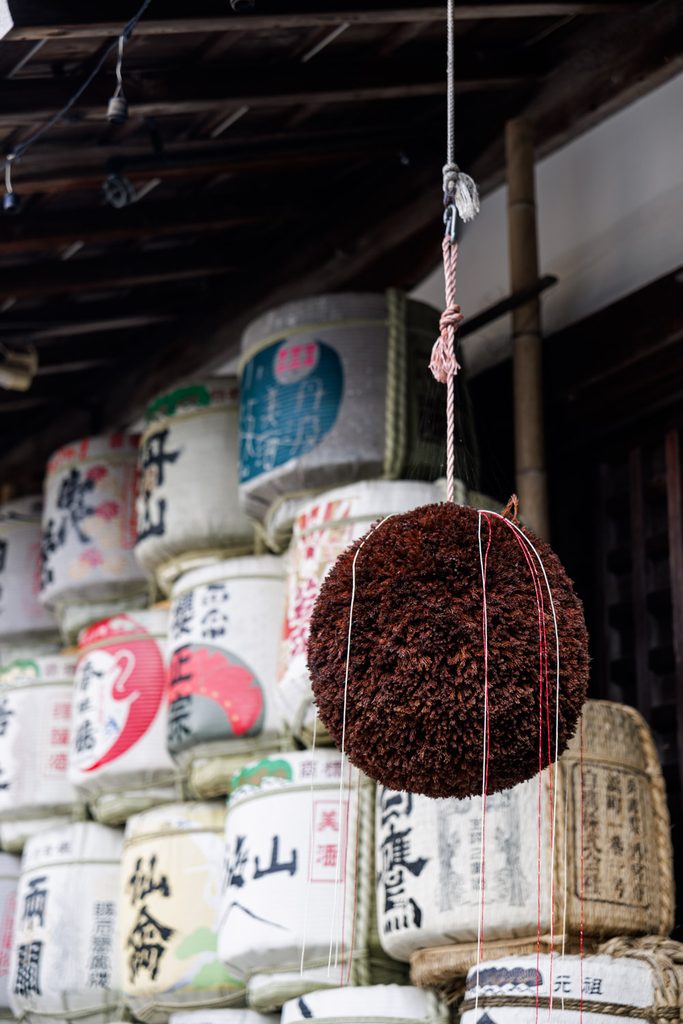
The barrels explain the crowds this shrine does draw. Matsunoo Taisha enshrines Japan’s foremost deity of brewing, and sake makers from across the country donate their barrels here, stacked into a wall of hand-painted labels. In front of them hangs a sugidama, the ball of cedar needles that breweries hang out to announce the year’s new sake. Here it announces something considerably older.
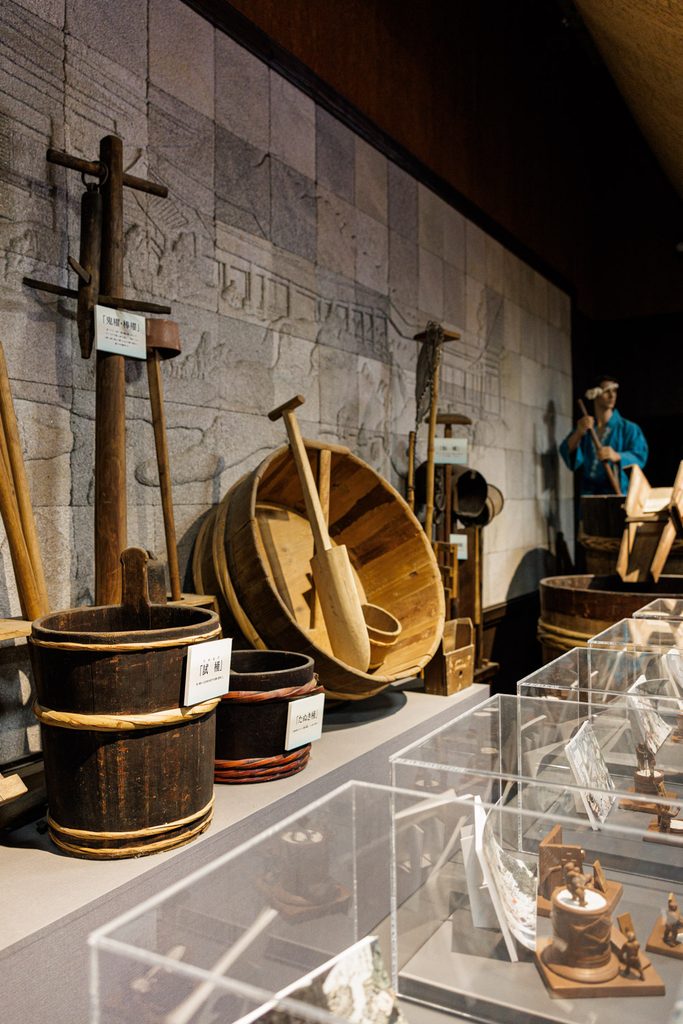
If the barrels raise your interest, there is a free sake museum on the grounds, on the south side near the parking area, its entrance marked by more barrels. It walks you through the brewing process with the old wooden tools of the trade, alongside a collection of sake vessels by contemporary potters and a short video. It is small and it is not a distillery tour, but it costs nothing, it has restrooms, and it will teach you more about why brewers still come here than the barrel wall alone can.
800 Wind Chimes and a Storm at 4:30 p.m.
Then the shrine emptied out around me. Past four thirty the garden closed, the shrine office followed, the last visitors drifted off, and I realized I had the grounds, in effect, to myself.
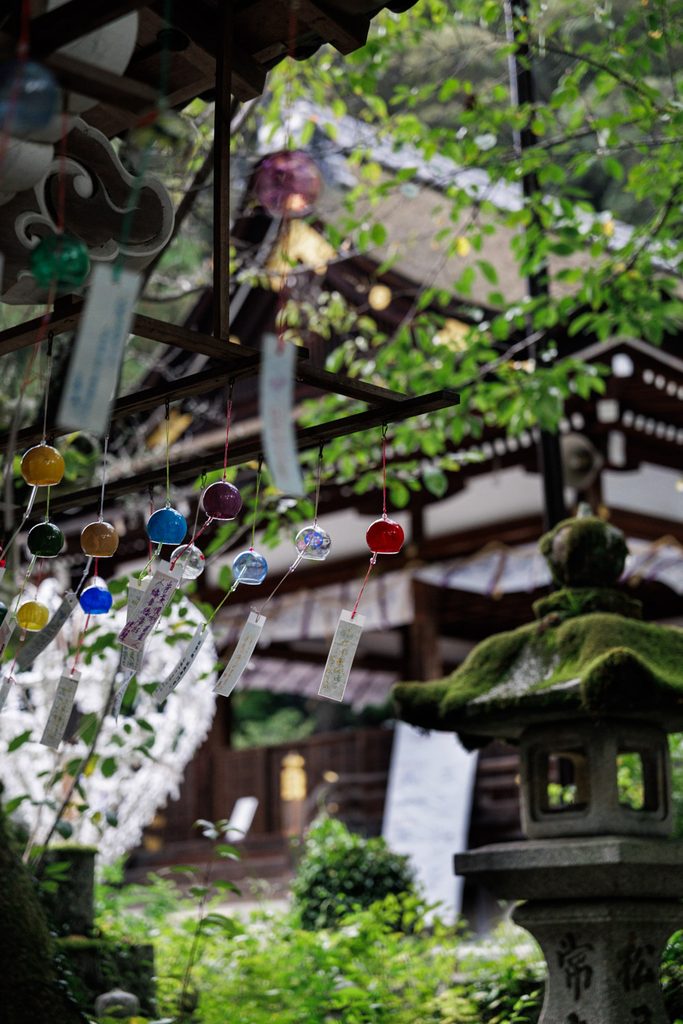
Not in silence, though. Through the summer, the shrine hangs about 800 glass wind chimes across the grounds for furin kigan, a prayer offering in which the sound of the chimes is believed to comfort the gods and clear away impurity. That evening the wind rose ahead of a storm, eight hundred chimes rang harder and harder, and somewhere beyond the mountain, thunder began to roll.
The anger, perhaps, of a god whose name I had mispronounced for decades.
But standing in all that ringing, what I actually felt was not fear. It was the guilty luxury of having this much of Kyoto to myself. Shijo Street dead-ends into Yasaka Shrine at its eastern tip, in the middle of Gion’s year-round crowds. The same street runs west, crosses the whole city and the Katsura River, and ends here, at Matsunoo Taisha, with almost none of the people. If Kyoto’s crowds have worn you down, the quiet end of the street is waiting.
The thunder was still rolling when I left. Not anger, I decided on the way to the station. A reminder. Ma. Tsu. No. O.
What follows is everything I wish I had known before I stood at that ticket window: the hours and prices that will decide when you go, and the one question the shrine’s own history finally answered for me.
Matsuo Taisha Practical Information
| Shrine grounds | Free |
| Gardens and Shinzokan (combined ticket) | Adults 500 yen / students 400 yen / children 300 yen |
| Garden and Shinzokan hours | Weekdays and Saturdays 9:00 a.m.–4:00 p.m.; Sundays and holidays 9:00 a.m.–4:30 p.m. |
| Sake museum | Free, 9:00 a.m.–4:00 p.m., south side of the grounds |
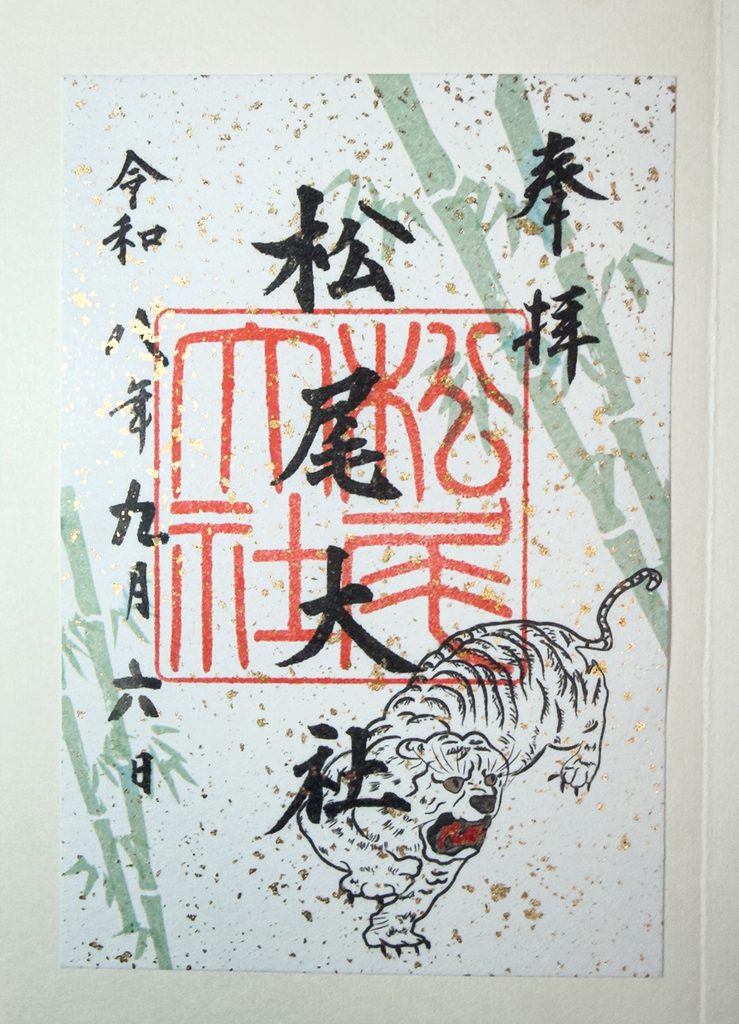
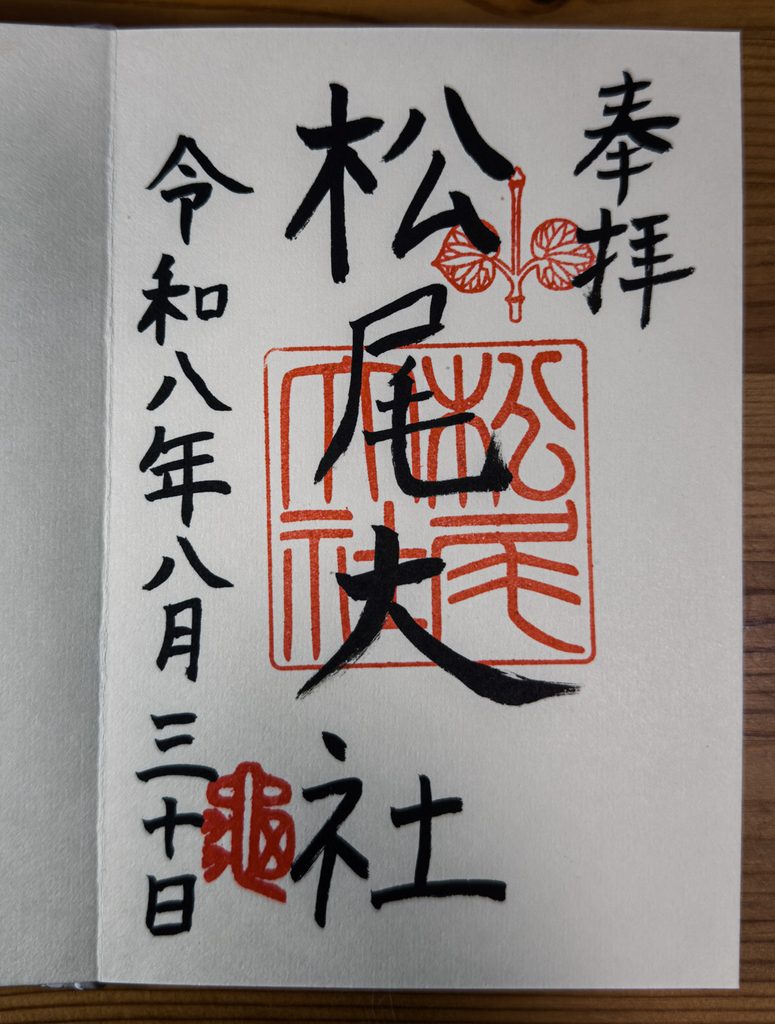
| Goshuin | Hand-written 500 yen; white tiger version 500 yen; other pre-written versions 500–1,000 yen |
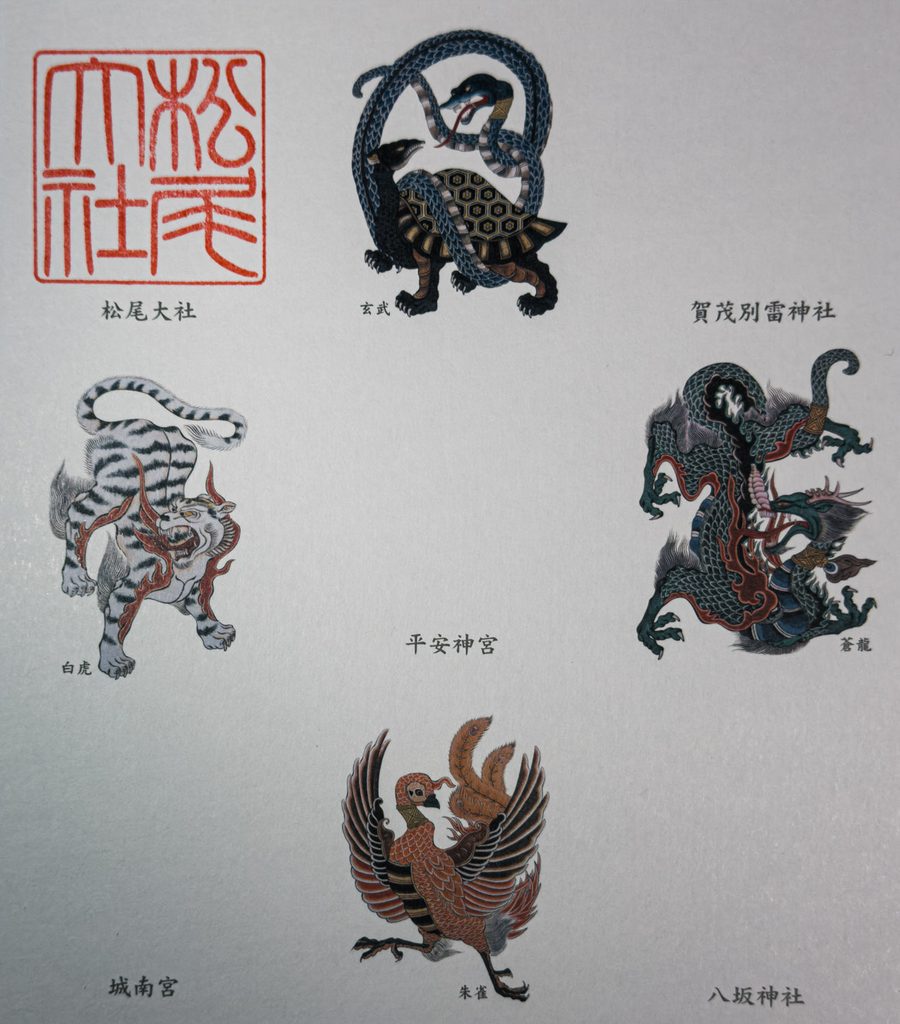
| Five Shrines shikishi board | 1,000 yen including this shrine’s stamp. Not on display — ask at the shrine office |
| Time needed | About 30 minutes for the grounds; about 1 hour including the gardens and Shinzokan |
| Access | 3-minute walk from Matsuo-taisha Station on the Hankyu Arashiyama Line (one stop from Arashiyama, 170 yen); Kyoto City Bus or Kyoto Bus to Matsuo-taisha-mae |
| Address | 3 Arashiyama Miyamachi, Nishikyo Ward, Kyoto |
The hand-written goshuin comes stamped in red with the shrine’s crest, a two-leafed aoi. It is the same aoi carried by the Kamo shrines on the far side of the city, which is a quiet reminder of how these two guardians were once paired.
For opening days and seasonal notices, check the shrine’s official English page before you go.