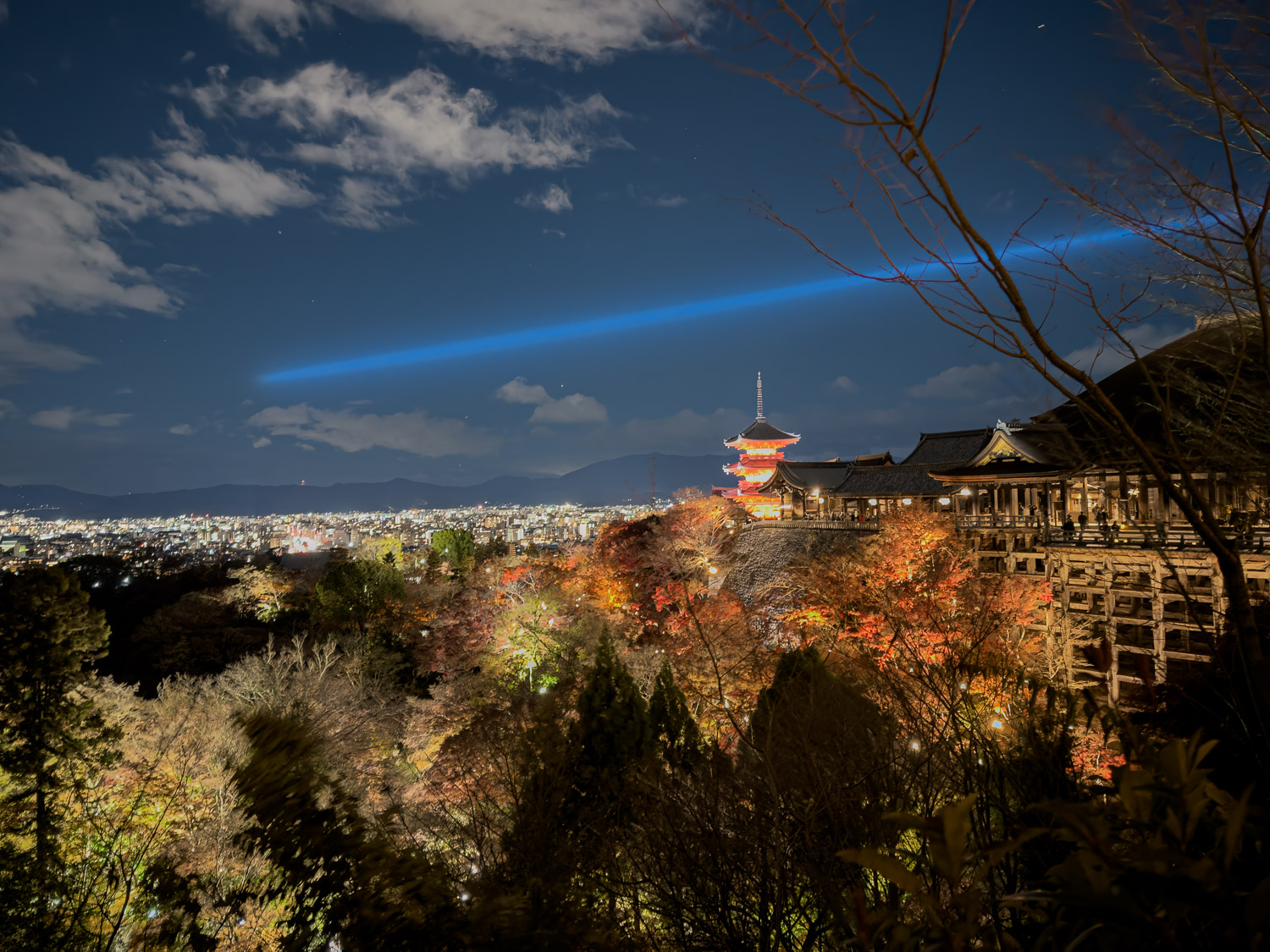
“Samuuui.”
A woman’s voice carried across the stage. Long and plaintive, the vowel stretched the way Japanese people stretch it when the weather has offended them personally. It means “so cold.” I guessed it was her first time at the Kiyomizudera autumn illumination.
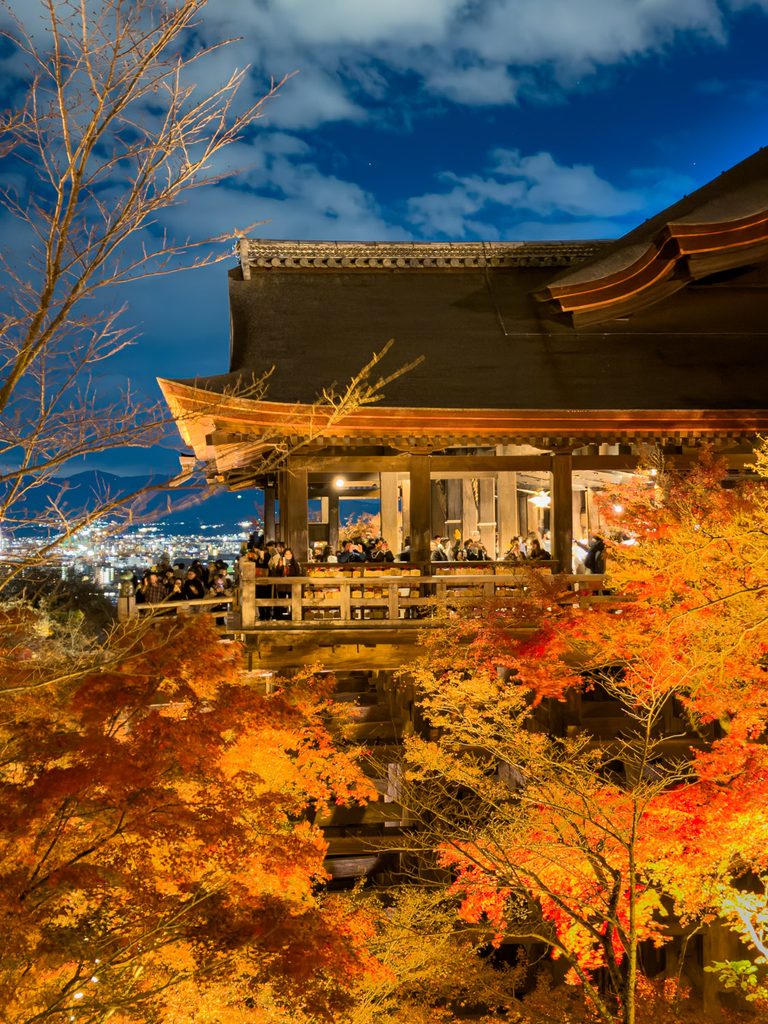
In maple season the stage is packed, and all that body heat does nothing for the temperature.
She had a decision ahead of her. She could endure the cold and take in the view, or give up and head home early. However compassionate Kannon may be, I hoped she wouldn’t take her complaint about the weather to the Eleven-Headed, Thousand-Armed Kannon enshrined in the hall behind her.
The Coldest Night
I knew exactly how she felt.
What I remember first about my last autumn visit is not the maples. It is the cold. I came on the night of December 3, and the air on the hillside had a bite. Kiyomizudera sits on the slopes of the Higashiyama hills, and I spent much of the evening wondering whether that explained it, or whether I had simply dressed like an optimist.
My previous night visit fell during Obon, in the full, wet heat of a Kyoto August. Without ever planning it, I have made a habit of coming here in the temple’s most punishing seasons. Why would anyone do that?
The night illumination. That’s the whole reason.
Spring aside, Kiyomizudera after dark asks something of you: sweat in August, a numb face and stiff fingers in late autumn. In return you get maples, light, and prayer in one place. Admission is still ¥500, the same as on any ordinary day.
A Week Too Late, and a Calendar That Moves
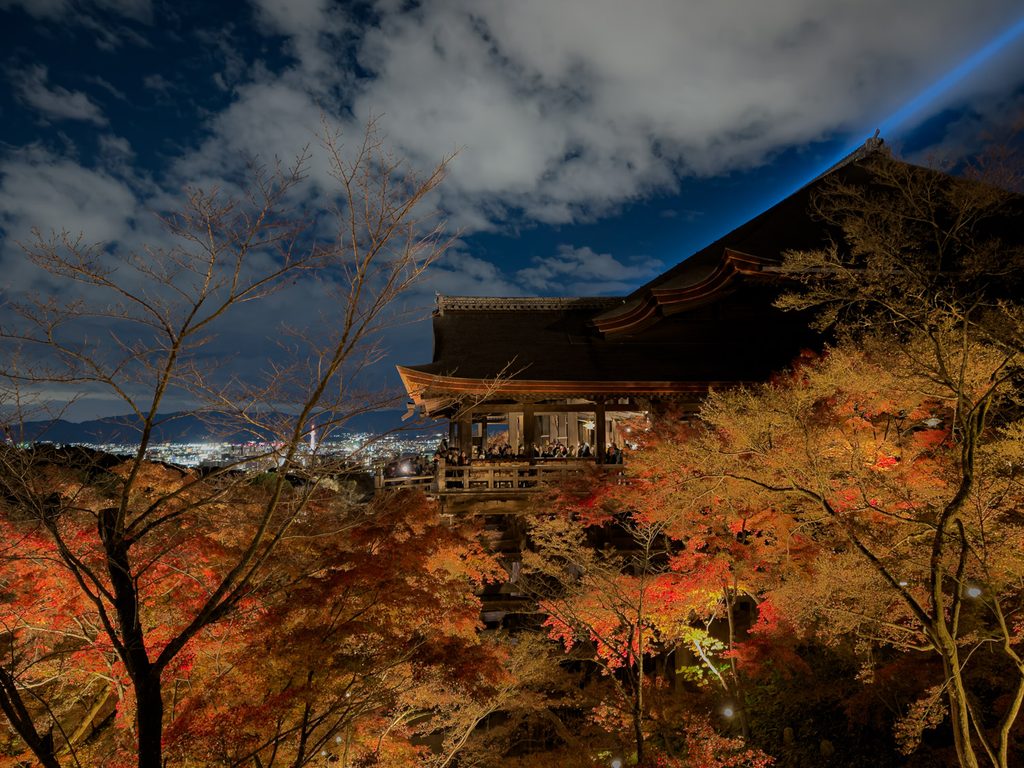
Standing on the stage that night, I had the sense of arriving just past the moment. The color was still there, and still extraordinary, but some of the trees had begun to let go. A week earlier would have been better.
I could visit on December 3 only because the illumination was still running then. In 2026, the autumn illumination ends on November 30. The dates shift from year to year, and so does the moment the maples turn, so check the schedule the temple publishes each year rather than relying on past dates.
The Busiest Night I’ve Seen
I have been to Kiyomizudera on spring nights and Obon nights, on autumn afternoons, in cherry-blossom daylight, and at New Year. The autumn night illumination is the most crowded of them all. I have never come on an ordinary weekday afternoon, so I can’t speak to that. Early mornings, on the other hand, are close to empty. I wrote about Kiyomizudera at six-thirty in the morning separately.
Goshuin at Night
For as long as I can remember, a long goshuin queue has been part of the evening at Kiyomizudera. A goshuin is a temple’s red seal stamp with calligraphy brushed in black ink, collected in a small folding book. A new goshuin office now stands between the Main Hall and Amida-do, right on the visitor route, so you won’t miss it. When I came for the Sennichi-mairi nights in August, three staff members were writing goshuin side by side. I’d expect the autumn illumination to be run the same way as the other evening viewings. With that many hands in a new building, the queue should move far faster than it used to.
The Front Row at Okuno-in
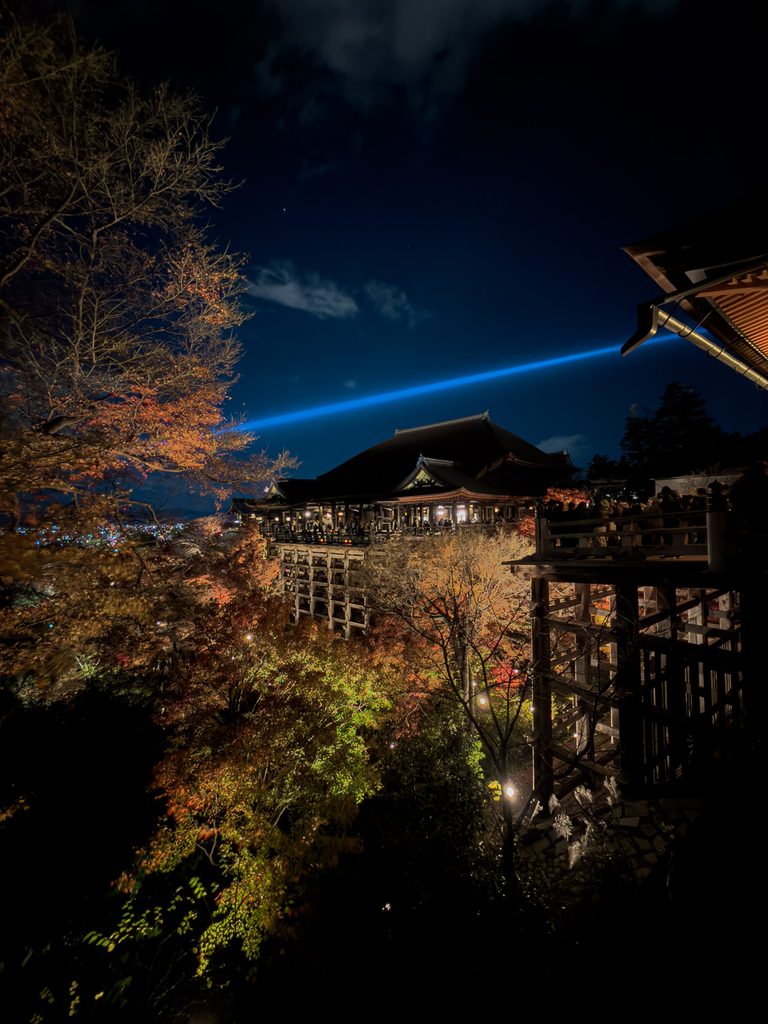
Stand on the stage of the Main Hall and look across the ravine, and you’ll see the smaller stage of Okuno-in on the other side, packed with people.
That crowd is the clue. The famous stage of Kiyomizudera isn’t really the place to take in the view. It is the view, and you see it best from Okuno-in, just across the way.
From the railing at Okuno-in, the inner hall, you look back across the ravine at the main stage. It is built in a style called kakezukuri: the hall reaches out over the steep slope, carried on a frame of tall timber pillars. By day you might walk past it without a second glance. At night the pillars are lit, and there is no missing them.
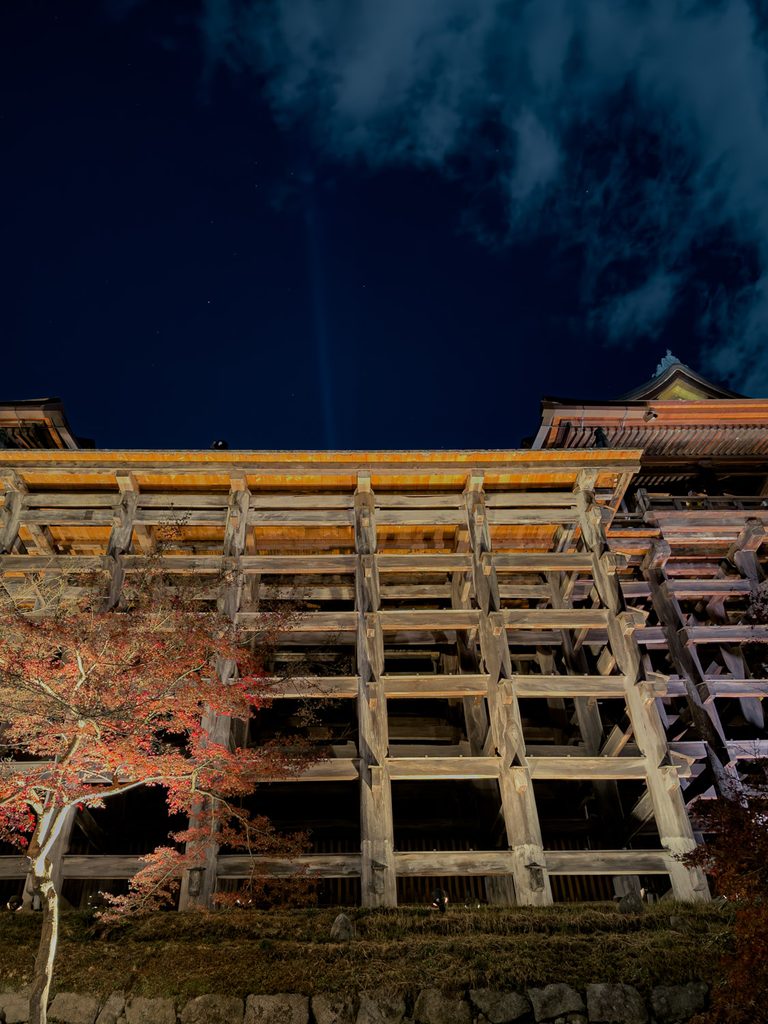
The front row belongs to whoever gets there first, and it rarely stays empty for long. I was lucky. I reached the railing, raised my camera, and filmed the stage.
After I posted the clip, someone asked in the comments how long it had taken me to reach the front. The honest answer is just under twenty minutes. That is still a real wait in the cold, pressed in with everyone hoping for the same view. Other commenters seemed to be wondering about the crowds, too.
Kannon’s Light
It was past Okuno-in that I finally saw all of it.
From the Main Hall, the blue beam is hard to see in full. Walk on beyond Okuno-in, though, and the view opens up. The stage sits below you, wrapped in lit maples, with the vermilion three-story pagoda beyond it and the lights of Kyoto running out to the mountains. Across the sky runs a single blue beam. It is known as Kannon Jihi-ko, a light representing the compassion of Kannon, the same bodhisattva enshrined in the Main Hall.
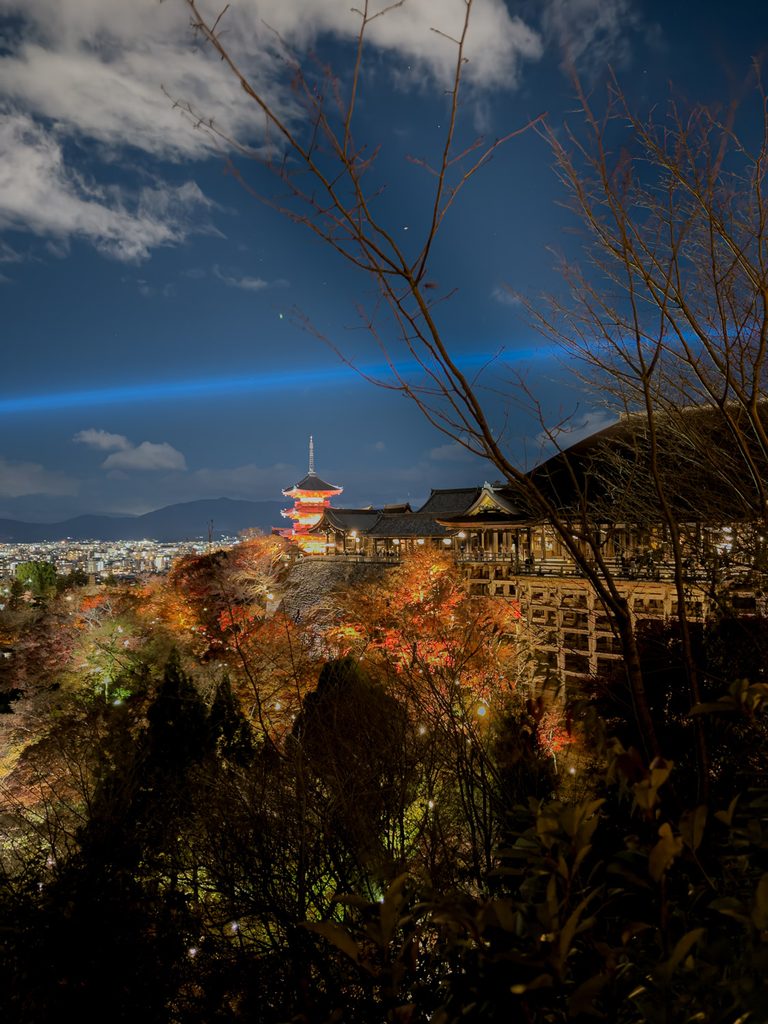
I thought of the woman on the stage. Had she stayed, and made it this far? And if she had, did she look up at Kannon’s compassion stretched across the night and find it beautiful enough to forget the cold?
If you want to see that blue beam for yourself, these are the details for 2026.
Kiyomizudera Autumn Illumination 2026: Dates, Hours, and Admission
| Dates (2026) | November 21 to November 30, 2026 |
| Evening hours | 5:30 p.m. to 9:30 p.m. (last entry 9:00 p.m.) |
| Reservations | Not required |
| Admission | ¥500 for adults |
| Daytime opening | 6:00 a.m. |
| Peak foliage | Usually late November to early December |
| Goshuin | New office between the Main Hall and Amida-do |
Confirm the current schedule on the official Kiyomizudera website before you go.
Before You Go
Dress for winter, not autumn. It can be bitterly cold on the hillside at night, and the crowds on the stage won’t keep you warm. A hat, gloves, and a scarf are worth the space in your bag.
Budget time for the front row. At the Okuno-in railing, expect a wait of up to twenty minutes on a busy night.
See the overlook beyond Okuno-in. The full view of the stage and the blue beam opens up once you go beyond Okuno-in.
If you miss the illumination. In 2026 the evening viewing ends on November 30, but the maples often keep their color into early December. Come at 6:00 a.m., when the gates open and the grounds are nearly empty. Or head across town to the Toji Temple autumn illumination, which runs until December 13 in 2026.
Getting There
From Kiyomizu-Gojo Station on the Keihan Line, the walk takes about 25 minutes. By city bus, take Route 206 to Kiyomizu-michi, about a 10-minute walk from the temple.