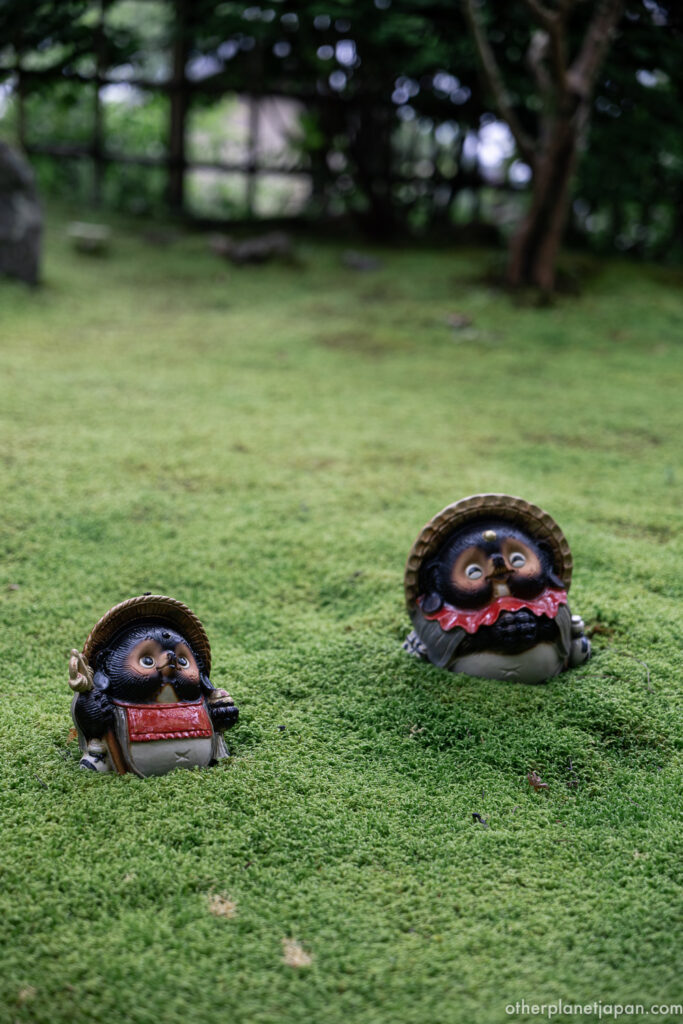
Temple fatigue is real. Ask anyone on day four of a Kyoto itinerary.
The gold of Kinkakuji, the raked gravel of Ryoanji, the wooden stage of Kiyomizu. All beautiful, and after a while the beauty starts sliding off you like rain off a good raincoat. Then you walk half an hour past the end of the famous bamboo grove, into the quiet folds of Okusaga, and arrive at a temple that stops you mid-step.
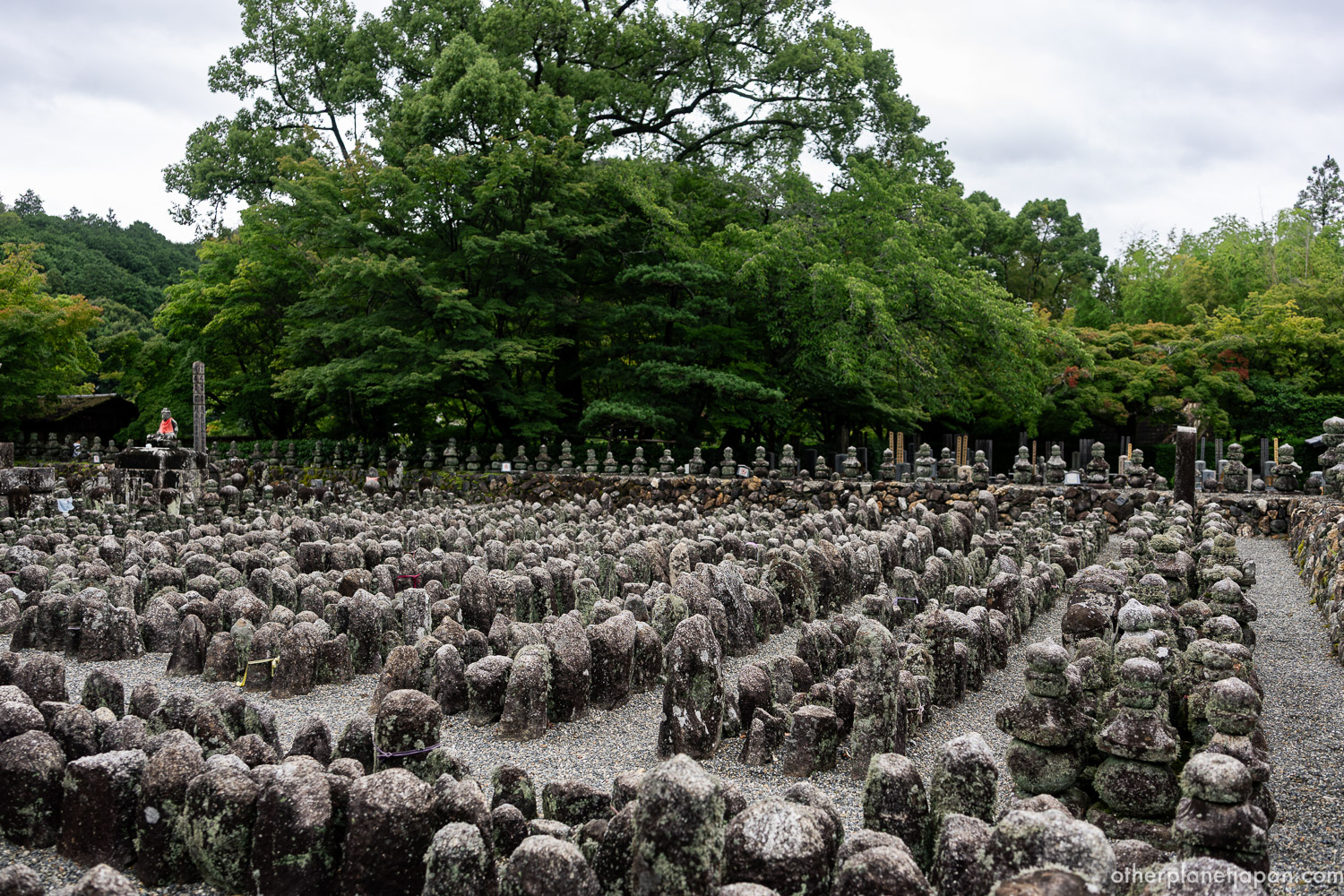
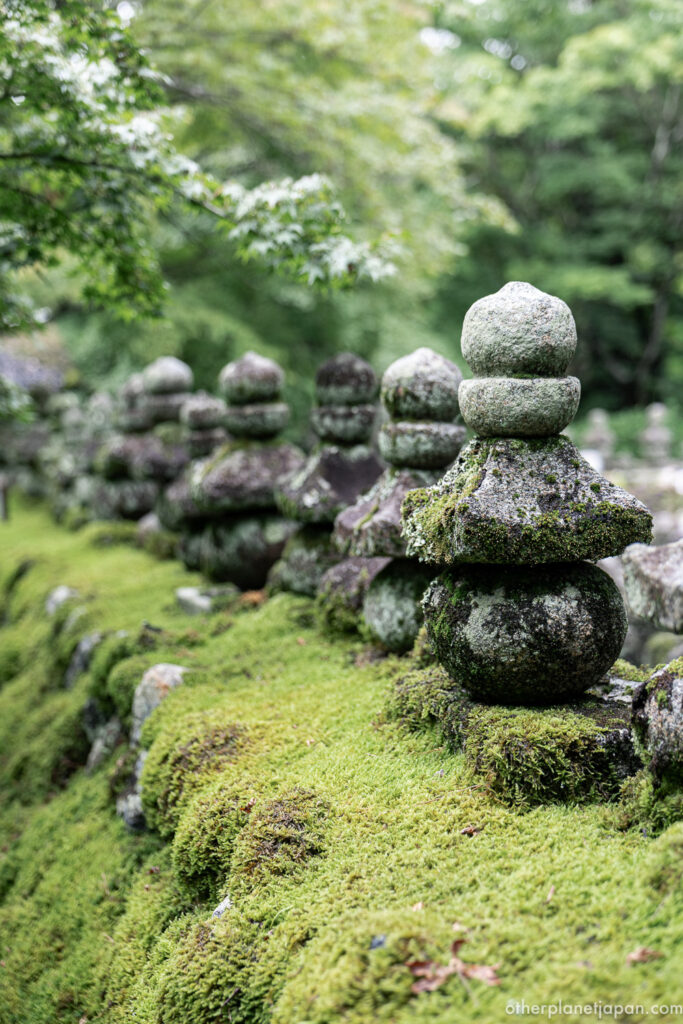
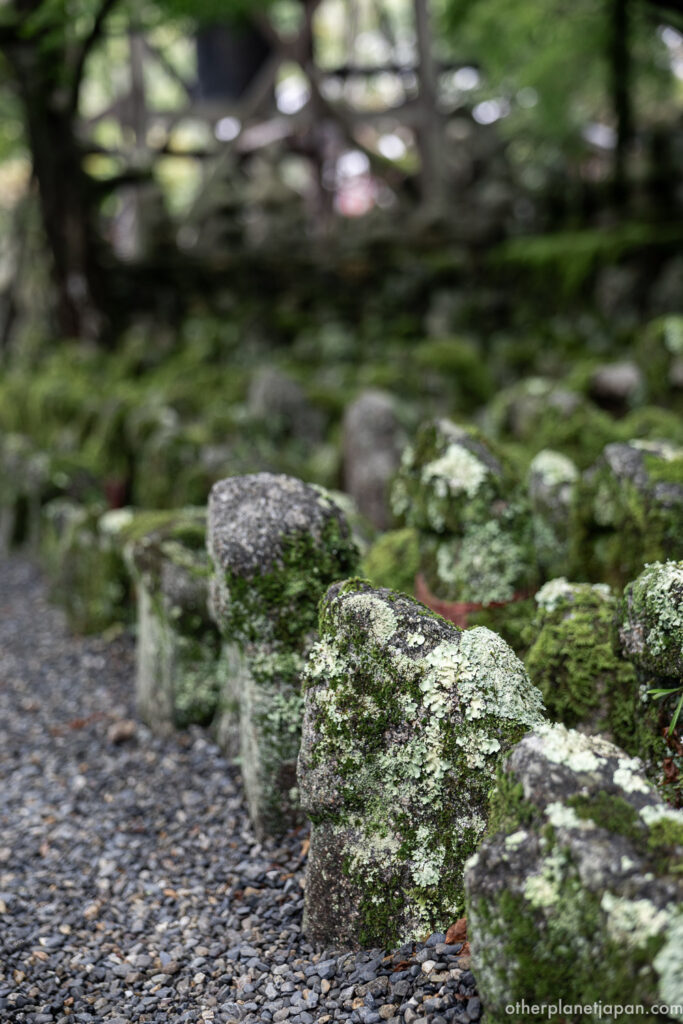
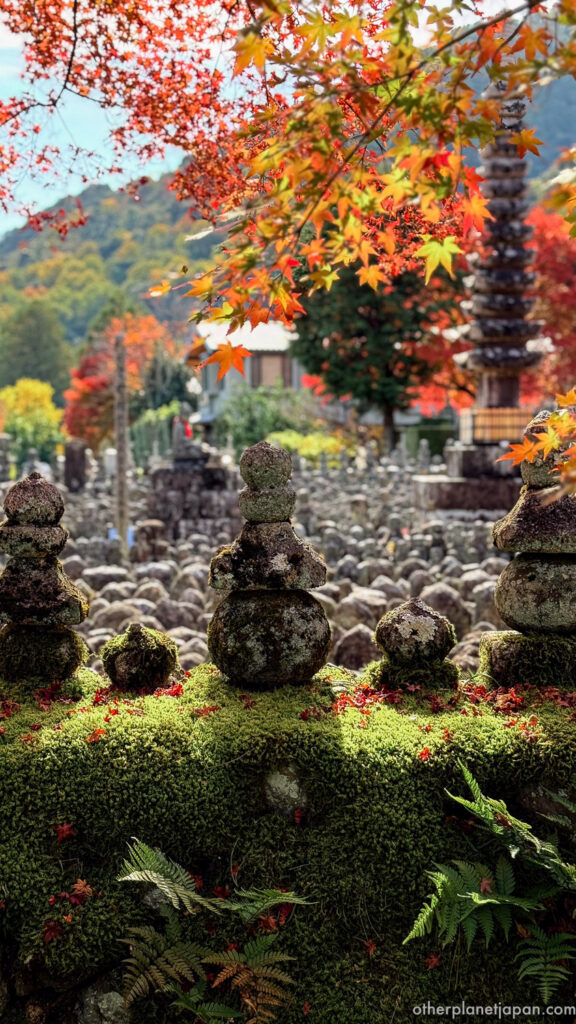
Adashino Nenbutsuji. Roughly 8,000 stone Buddhas and stupas stand packed together in its grounds like a silent crowd. This place was never built to be a sight. For a thousand years, this hillside has been where Kyoto laid its nameless dead to rest, and the air here still knows it.
A Couple, Two Claps, and the Wrong Deity
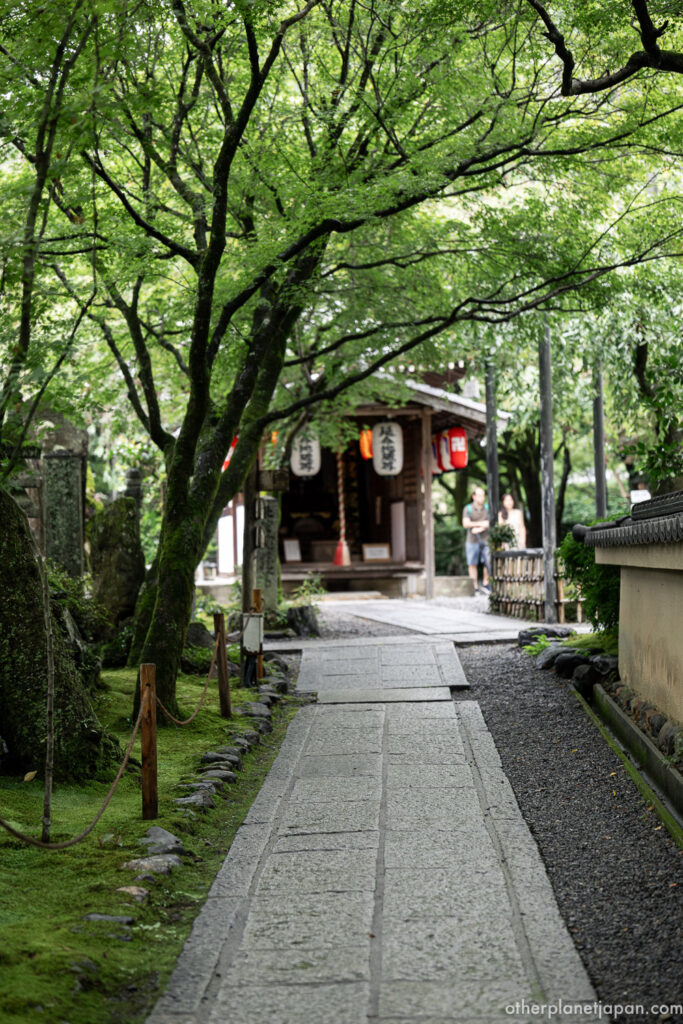
In front of the main hall, I watched a Western couple pray.
Two deep bows. Two crisp claps. One final bow. A flawless performance of Japanese shrine etiquette, the exact sequence every guidebook teaches.
There was just one problem. This is not a shrine. The main hall enshrines Amida Buddha, and you don’t clap for a Buddha. Clapping is how you get the attention of Shinto gods, who live in a different building entirely.
I thought about telling them. I decided against it. They had clearly done their homework, just for the wrong building. Watching them bow so earnestly, I had to fight the urge to whisper “kawaii.”
For the record, there is a small Shinto shrine inside the temple grounds, tucked modestly beside the restrooms.
Two Kinds of Moss
Past the gate, the moss takes over.
A green carpet spreads under the maples, even and dense and clearly tended by hand. You can read the temple’s daily labor in it: every stray leaf removed, every bald patch coaxed back to life.
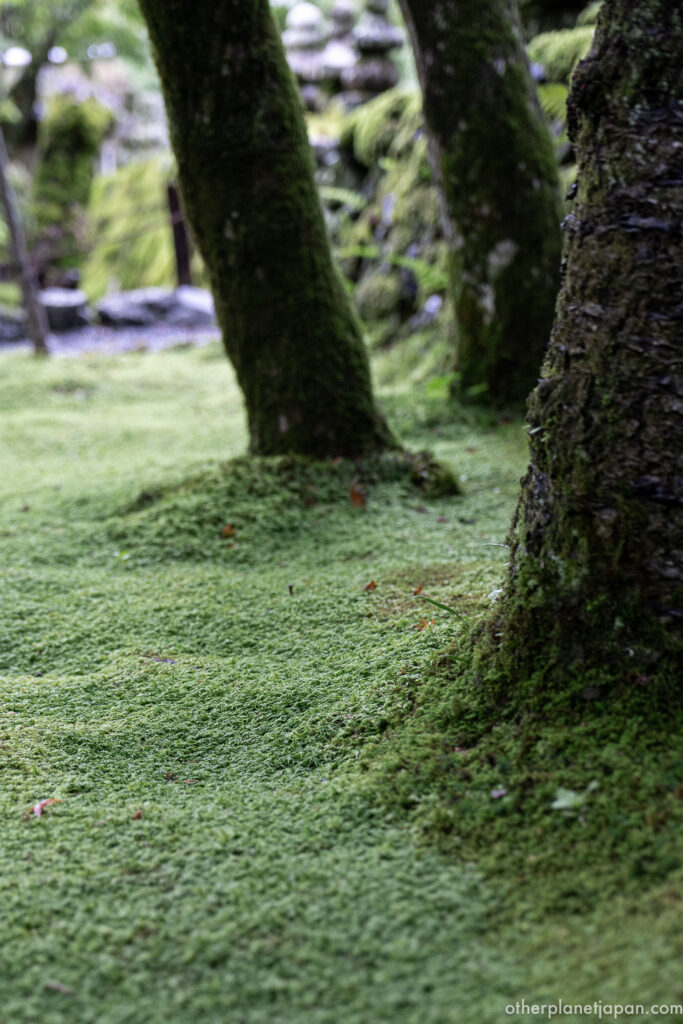
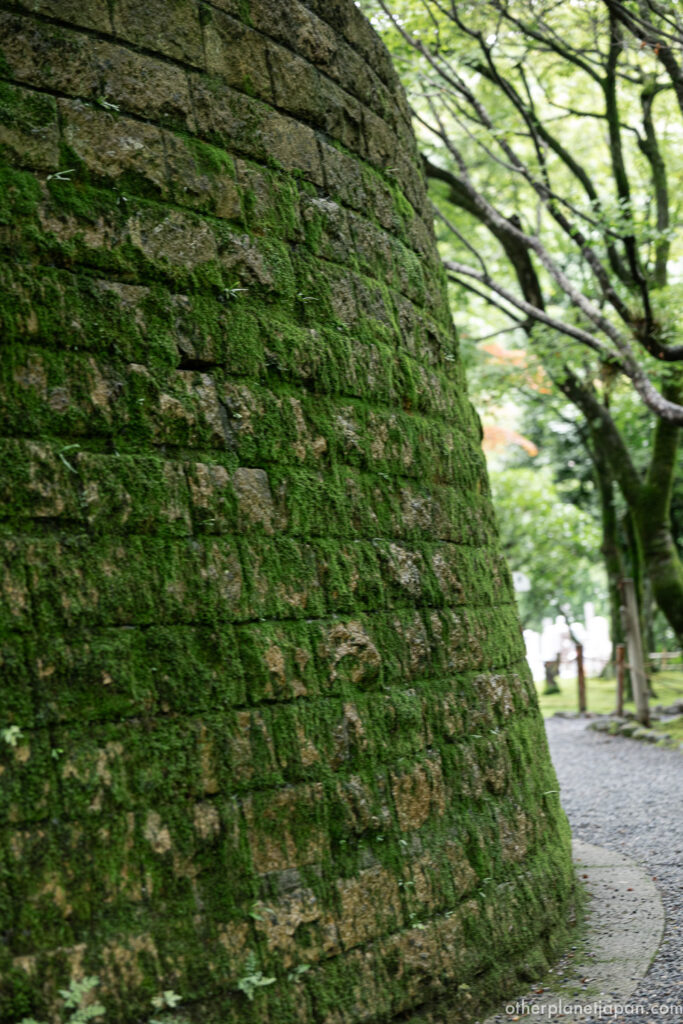
A little further in stands a domed stone stupa. The moss climbing its curved flank was planted by nobody. It is the work of decades — the kind you cannot buy or hurry.
Tended moss and wild moss, side by side. Early summer is when both are at their deepest green, and a visit right after rain is worth rearranging a schedule for.
The Mizuko Jizo
In one corner of the grounds stands a Jizo statue for mizuko — children lost before or shortly after birth.
Stuffed animals and small toys sit at its feet. A sign asks visitors not to take photographs here, so I lowered my camera and simply stood for a while.
Adashino Nenbutsuji has become known as a photogenic temple. This one corner reminds you what it actually is: a working place of prayer, still in use, still needed.
The Other Bamboo Path
Deeper in, a narrow stairway climbs between two walls of bamboo.
It is nowhere near the scale of the Arashiyama Bamboo Grove down the road. Even so, a small line had formed, everyone waiting their turn for a photo. I was in no hurry, so I joined it.
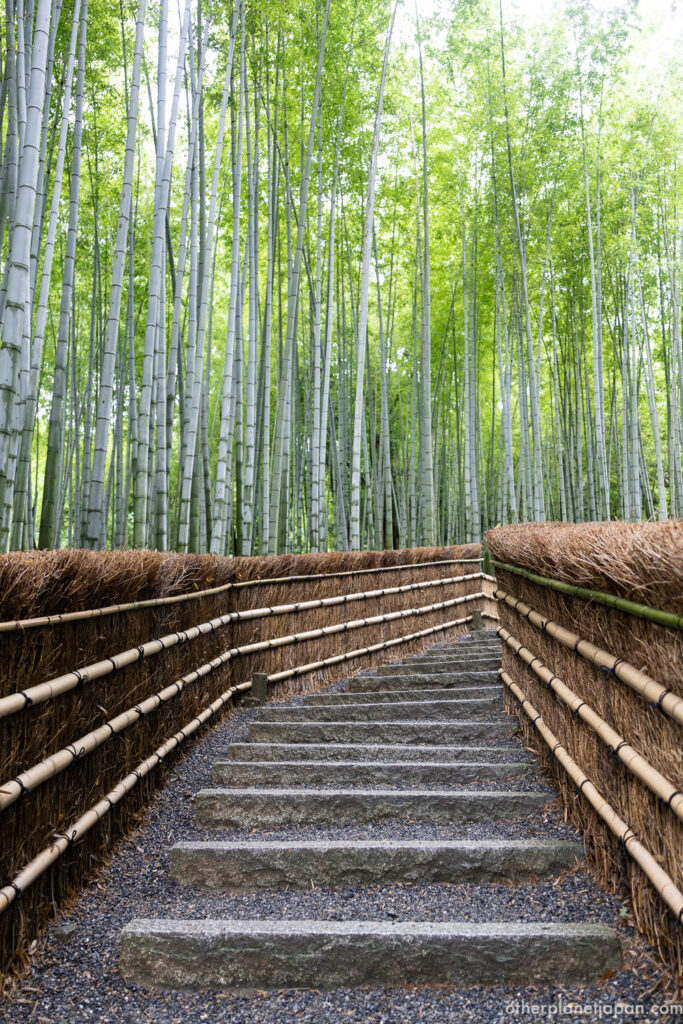
Then it dawned on me: wait a few minutes here and you get bamboo with no people in it. At the famous grove, that photo is nearly impossible even at dawn. Adashino loses on scale and wins on silence. So does all of Okusaga.
The Jizo with Six Faces
Beyond the bamboo stands a stone pillar carved with six Jizo figures, one on each face.
A Western woman was studying it intently, circling it slowly, as if it might explain itself.
I had an answer ready in case she asked. In Buddhist cosmology, the dead cycle through six realms: hell, hungry ghosts, beasts, warring spirits, humans, and heavenly beings. Jizo walks into every one of them to pull suffering souls out. One face for each realm. I learned this not in Kyoto but from a guide in Bhutan, which tells you how closely I was paying attention in my own country.
Rehearsing the speech in my head, I discovered its flaw: I could not actually deliver it in English on the spot. Neither my knowledge nor my vocabulary was up to the job.
She never asked. Let’s agree it was for the best.
What “Adashino” Means: Kyoto’s Ancient Burial Ground
Adashino was a place name long before it was a temple name. And it was a heavy one.
For centuries, this hillside was one of Kyoto’s three great open burial grounds, along with Toribeno and Rendaino, places where the dead were returned to nature rather than buried. The old word adashi meant fleeting, empty, in vain. It has vanished so completely that modern Japanese speakers no longer recognize it. A word can die out in less time than this ground has held its dead.
The temple’s founding is credited to Kobo Daishi, the ninth-century monk better known as Kukai, who established Shingon Buddhism in Japan. He is said to have gathered the exposed remains scattered across this hillside, buried them, and raised stone stupas over them. Centuries later Honen, the father of Pure Land Buddhism, made this a place of nenbutsu prayer, and the temple continues in that tradition today.
So where did 8,000 stone Buddhas come from?
By the middle of the Meiji era, in the late 1800s, thousands of small stone figures and grave markers lay scattered and half-buried across these hills. Monuments to nobody knows who, with nobody left to remember them. Local people gathered them up, one by one, and arranged them inside the temple grounds as the Sai-no-Kawara, named for the mythical riverbed where souls of the dead gather. Candles were lit to console them. The practice paused during the war and was revived in 1950. Every August, during the Sento Kuyo ceremony, a candle still burns for every single stone.
I respect those Meiji villagers more than I respect Kobo Daishi. I know how that sounds.
A famous monk founding a temple is the kind of thing history books expect. Nameless farmers hauling thousands of anonymous stones off a hillside, standing them upright in rows, and pressing their hands together for strangers a thousand years dead? No scripture required that of them. They decided, as a village, that the forgotten dead would not stay forgotten. Call it faith if you like. To me it looks more like stubbornness — the good kind.
That stubbornness is what you are looking at when the stone crowd first comes into view.
The Most Beautiful Goshuin in My Book
At the reception desk, I asked for a goshuin, the temple’s seal and calligraphy brushed directly into my stamp book.
The woman writing it allowed me to photograph her at work, on one condition: hands only. At most temples and shrines, photographing the goshuin desk is forbidden outright, so this almost never happens.
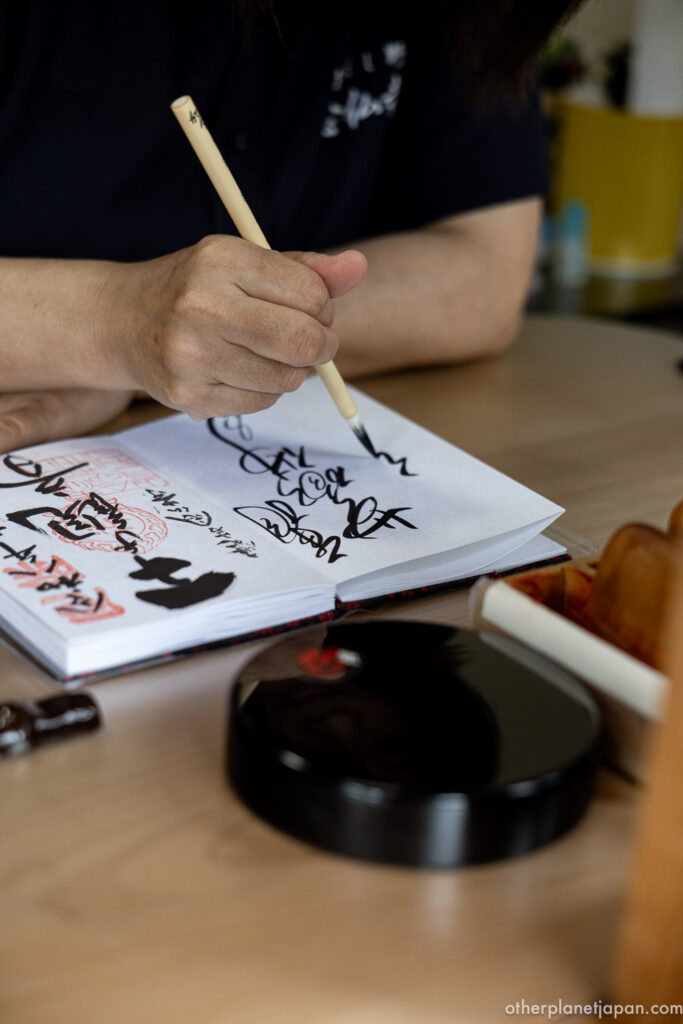
I am not saying this because she let me take the picture: it is the most beautiful calligraphy in my entire goshuin book. The weight of the ink, the speed of the strokes, the breathing room between characters. A finished artwork, produced in about thirty seconds.
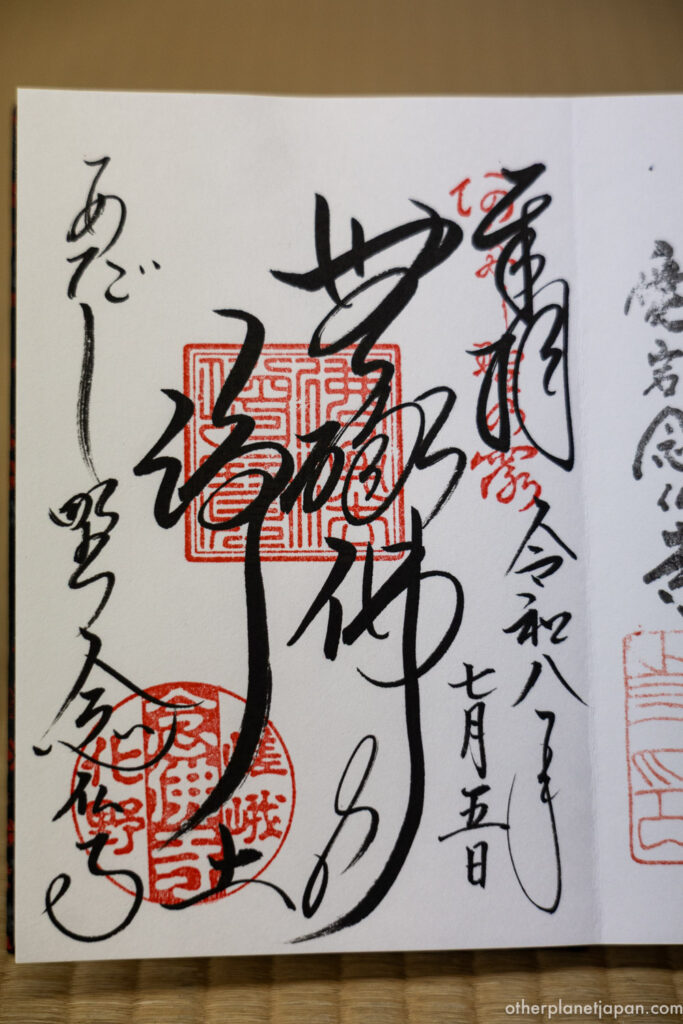
When I told her so, she turned red. I asked how many years she had studied calligraphy. She wouldn’t say. I had complimented her straight into silence.
Adashino Nenbutsuji: Practical Information
Hours and Admission
| Item | Details |
|---|---|
| Hours | 9:00 a.m. – 4:30 p.m. (last entry); gates close up to 30 minutes after last entry |
| Winter (Dec, Jan, Feb) | Last entry at 3:30 p.m. |
| Closures | Occasional religious ceremonies; the temple also closes when a storm warning is issued for Kyoto City or when snow or ice covers the ground |
| Admission | Adults ¥500 / Junior high & high school students ¥400 / Elementary school age and under free (accompanied by an adult) |
| Official site | Adashino Nenbutsuji official website |
Best Season to Visit
Fresh green season (late April to June) is when the moss is at its finest, and the reason this article exists. Visit after rain if your schedule allows.
For cherry blossoms, the temple has about 60 trees, a mix of Somei Yoshino, wild mountain cherries, and weeping cherries. They bloom in mid-April, roughly a week later than central Kyoto.
Autumn colors peak from mid to late November.
How Long to Stay
A quick walk-through takes 15 minutes. But there are very few places on earth where this many nameless memorials stand gathered in one spot. If you want it to stay with you, give it 45.
Getting There
The direct route: take Kyoto Bus 62, 90, or 92 to the Toriimoto stop, then walk about five minutes. One warning, though. Even counting all routes combined, buses in this area run only about once an hour, so check the return timetable the moment you step off, not when you are ready to leave.
My recommended plan avoids that problem entirely by walking downhill from north to south. From Hankyu Arashiyama Station, take Kyoto Bus 62, 90, 92, or 94 to the Otagidera-mae stop and start at Otagi Nenbutsuji. From there, it is an easy walk south: Otagi Nenbutsuji → Adashino Nenbutsuji → Gioji → Nison-in → Jojakkoji → Arashiyama Bamboo Grove.
Walking north from the bamboo grove in the reverse order works too. Just remember that once-an-hour bus if you plan to ride back from the far end.
Strollers
Strollers are allowed, but the grounds include gravel paths and stone steps. A baby carrier as backup is the realistic plan.
Map