“Excuse me. Where is the light-up?”
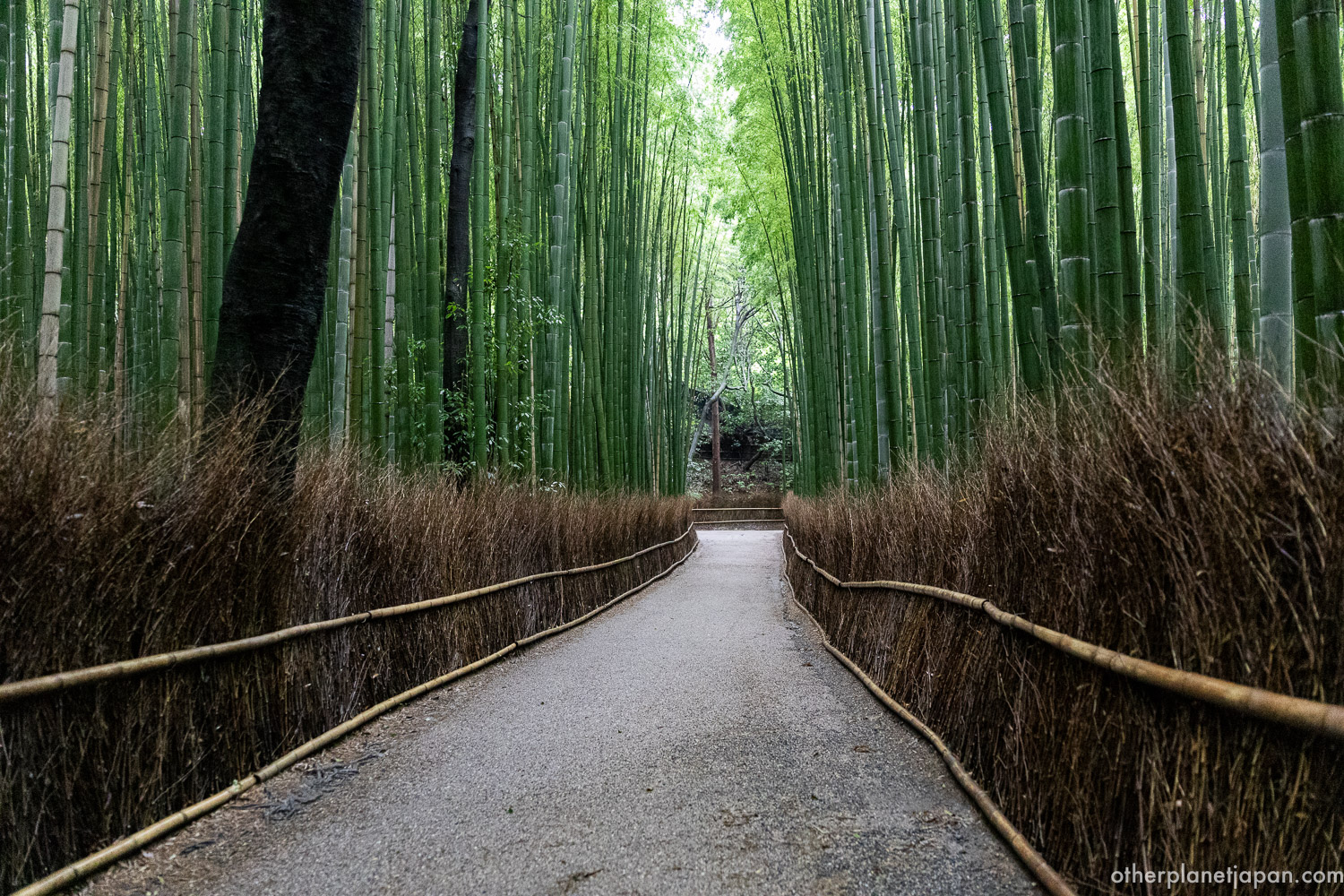
Tenryuji closes its gates at 5:00 p.m., which left me in the bamboo grove with an hour to kill and nowhere to kill it. Arashiyama is not generous with benches. There is no real rest area, and walking back down to the Togetsukyo Bridge felt like too much effort for a round trip. So I sat on a large rock in front of Okochi Sanso and waited for the Arashiyama bamboo light-up to open at six.
Two or three groups of Japanese visitors stopped to ask me where the light-up was. A security guard a few steps away was getting the same question in English, from far more people, and English was clearly not his strongest subject. Every answer was a small struggle.
The fix was obvious. The Japanese visitors should have been asking him, and the English speakers should have been asking me. Everyone would have gotten their answer faster. But I am not staff, and I was not about to start directing traffic from a rock.
What Is Arashiyama Tsukitouro?
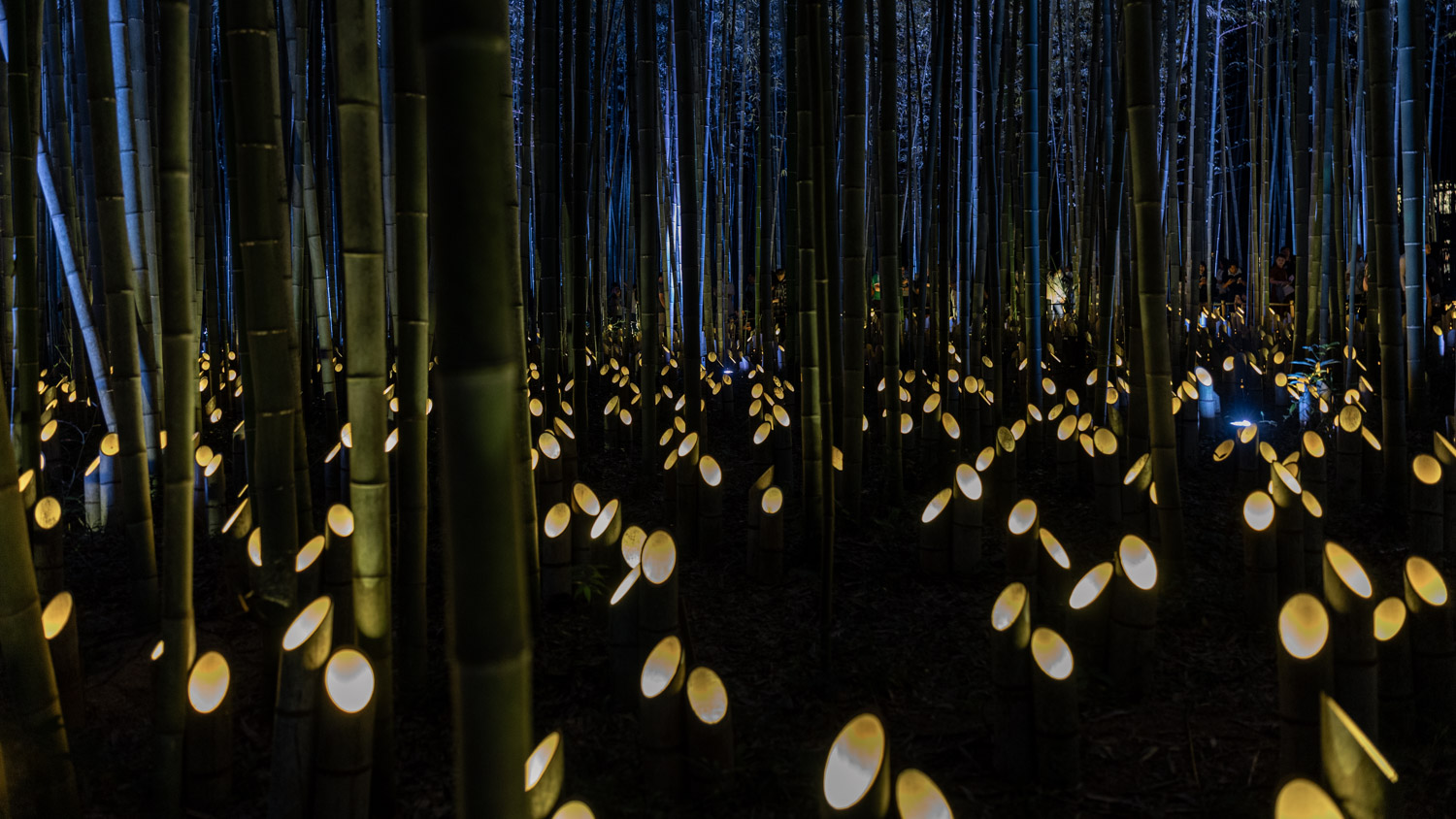
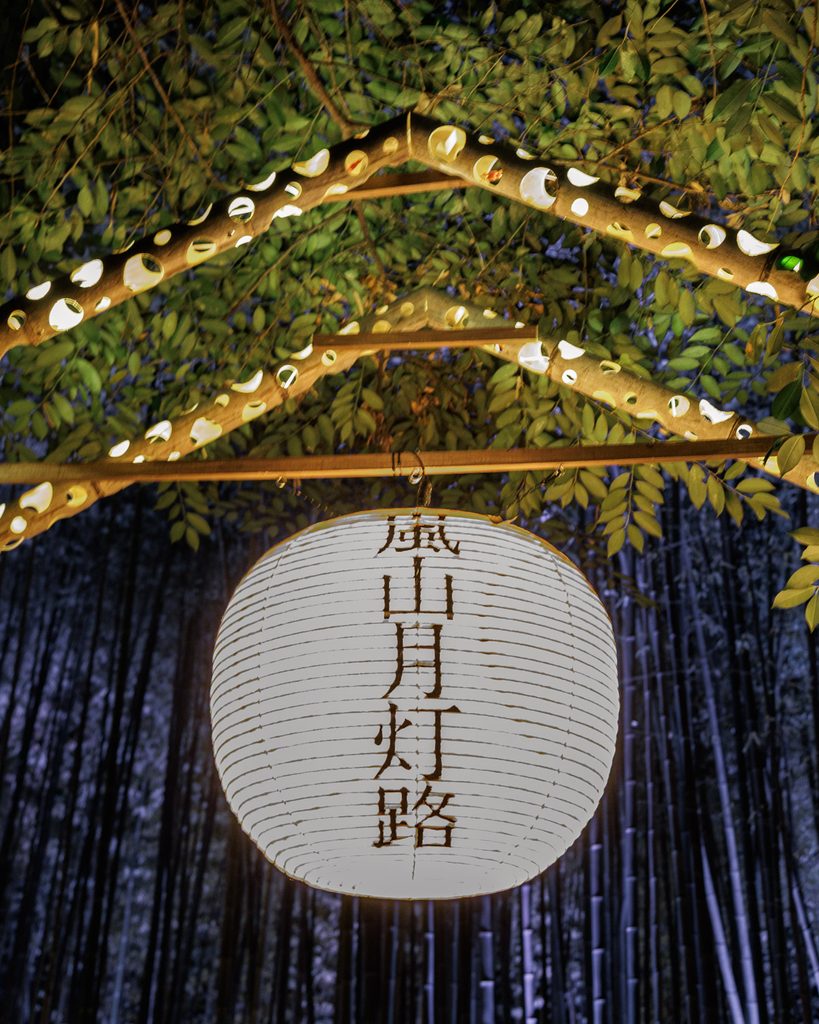
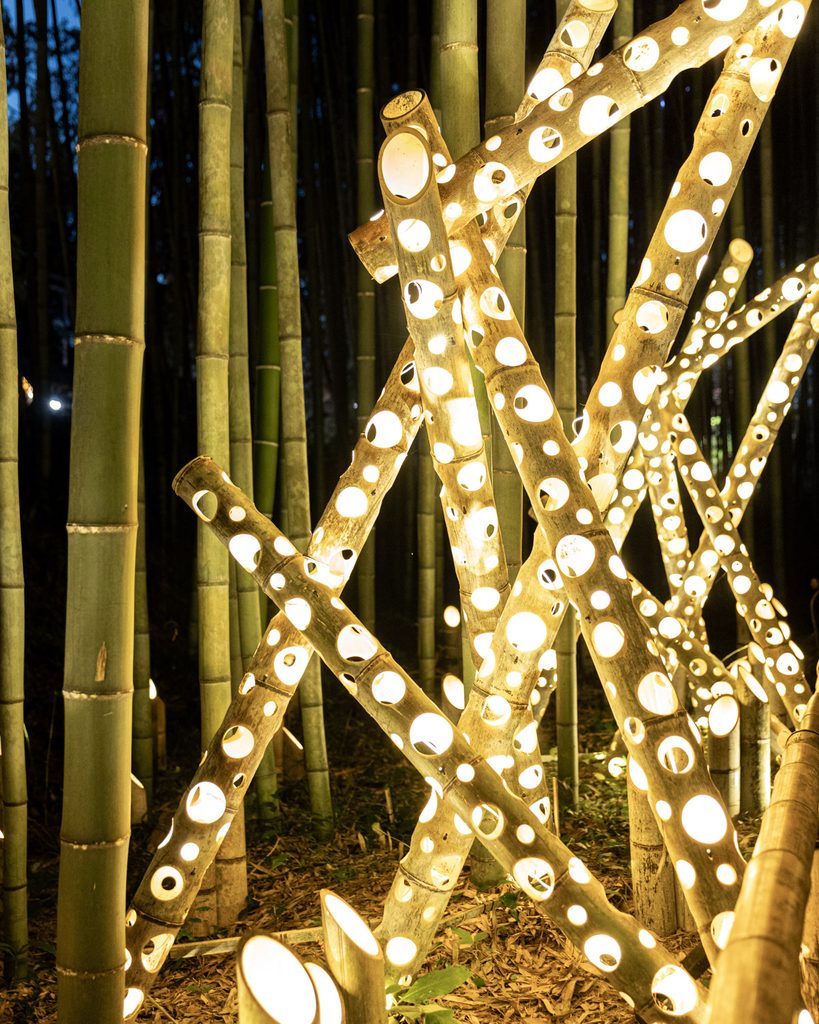
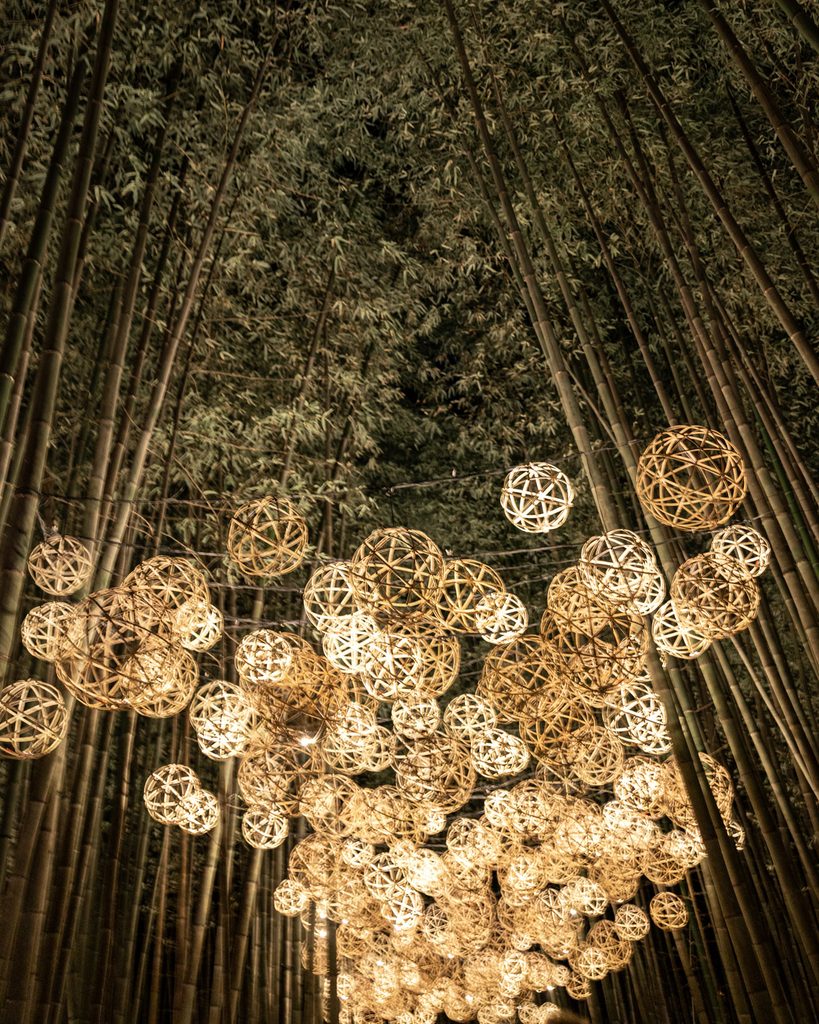
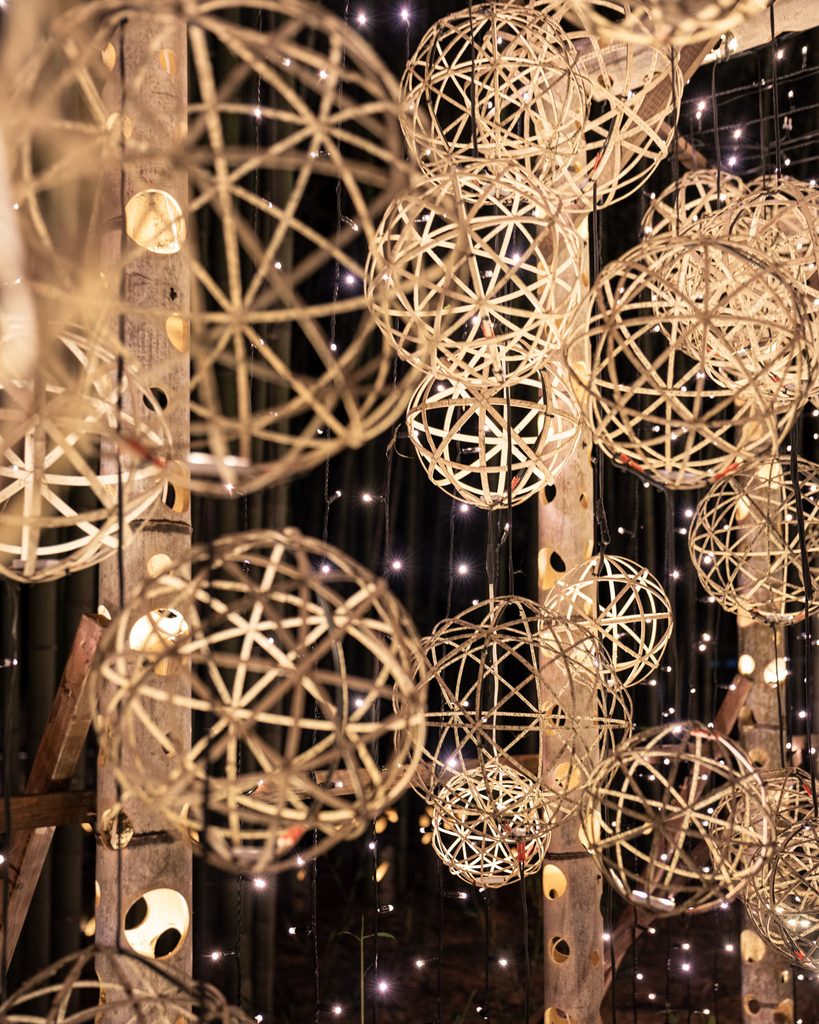
Tsukitouro (月灯路) means something like “moon-lantern path,” and its official English name is the Arashiyama Bamboo Light-up. For a few weeks each autumn, it fills part of the Arashiyama Bamboo Grove with lanterns made from bamboo in every form, from drilled poles to woven spheres lit from within.
The bamboo comes with a story. According to the organizers, the lanterns are made from neglected groves, stands that were left untended until they choked themselves into thickets, a long-standing problem in this region. One of the groups behind the event is a local nonprofit that works on bamboo and watershed conservation. I know the problem personally. Back home in Shizuoka, my family’s bamboo has grown into exactly that kind of thicket, and nobody has ever thought to light it.
The 2026 edition runs from September 30 to November 8, every evening from 6:00 to 9:00 p.m. I went last year, too. The layout has changed since then, and the spot once set up for souvenir photos is gone. This year, everything is arranged to keep you moving.
So Where Is the Light-Up?
Your map won’t help much.
Tsukitouro is not a permanent venue, so map apps may not mark it at all. That probably explains the confused faces I saw before six.
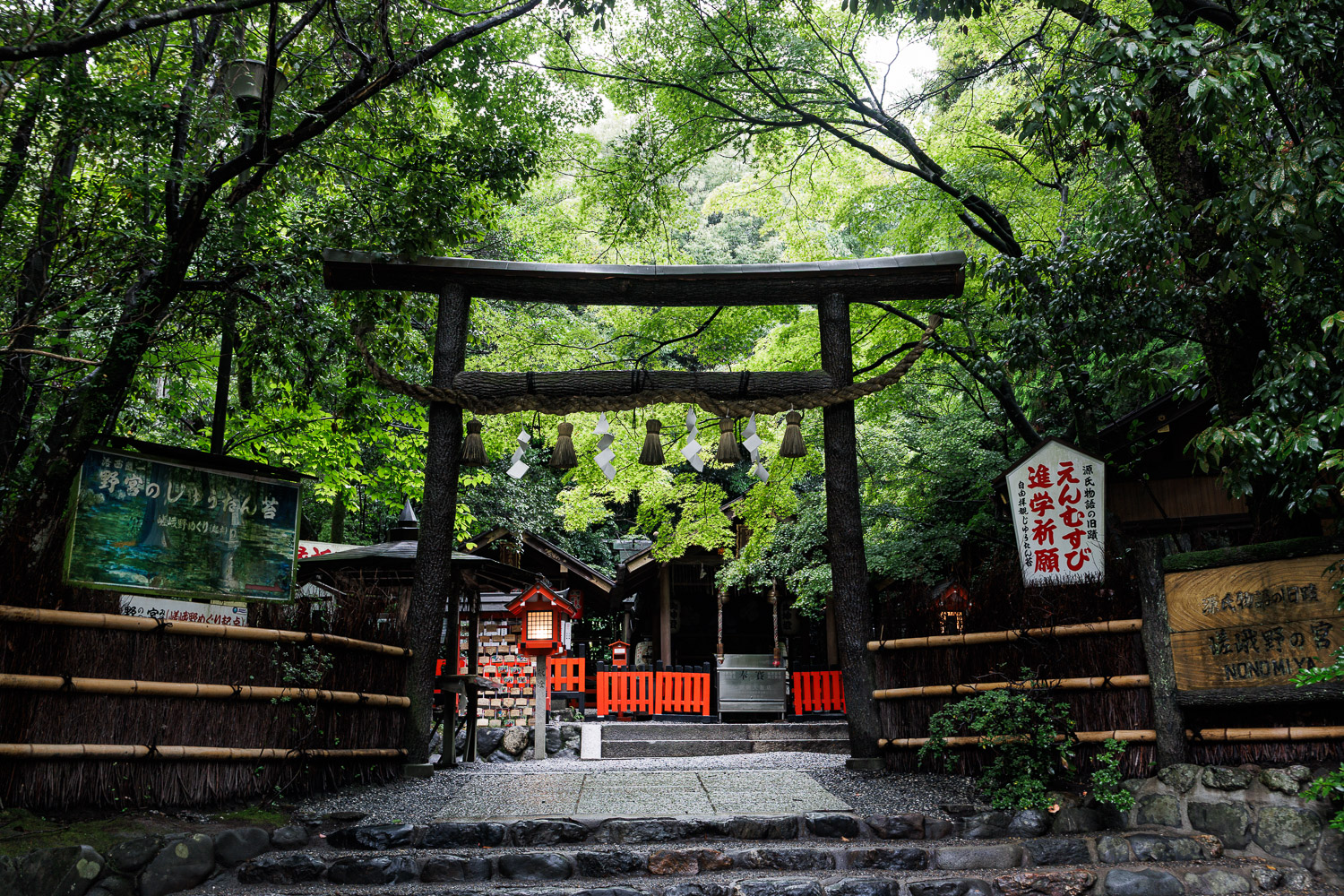
The easiest way in is to head for Nonomiya Shrine. The crowd thickens there, and the booth selling same-day tickets is close by. If you already have a ticket, walk past the shrine and cross the JR railroad tracks. The entrance is on the other side, and it is lit. Once you reach the shrine, you will not get lost.
That crossing sets the soundtrack for the evening. The warning bell clangs, a train rumbles through, and the sound carries across the grove. It is one of the sounds this neighborhood is known for.
Your route in matters, too. Walk in from JR Saga-Arashiyama Station or Randen Arashiyama Station and you will find lanterns set along the roadside, something Arashiyama does not normally have. Come from the Tenryuji side and the road stays dark.
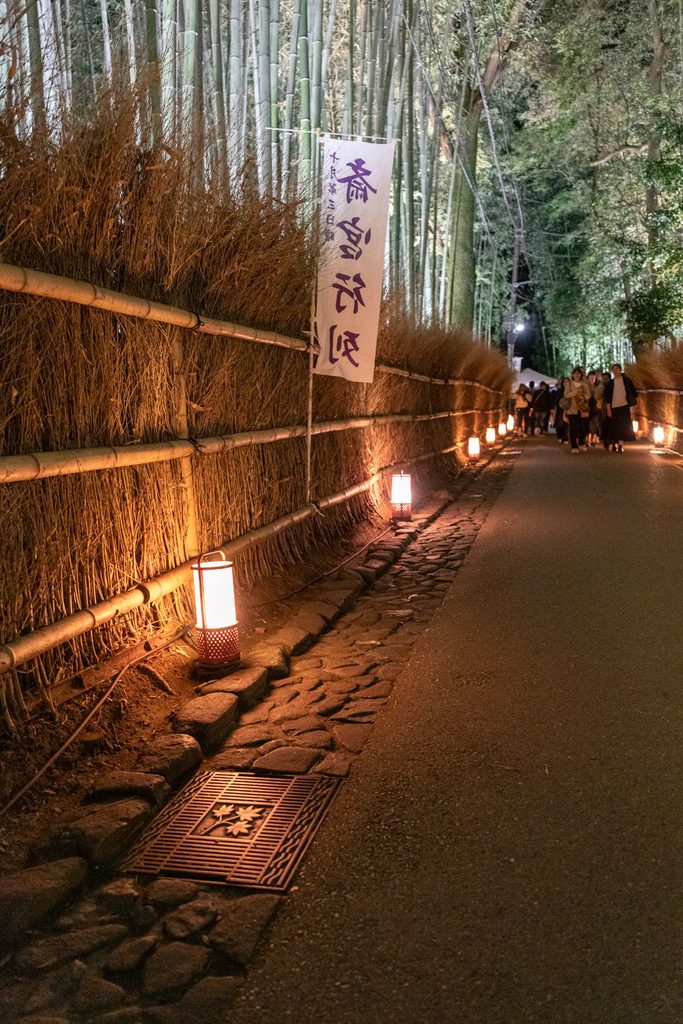
Area 1: A Night Sky Made of Bamboo
I reached Area 1 at 5:55 p.m., five minutes before the official opening, and the gates were already open. With a prepaid ticket, I was through in moments. The same-day ticket line was another matter, long enough that I would guess a wait of thirty minutes or more.
Near the entrance, staff kept the crowd flowing. Don’t stop here. Don’t stop to take pictures. Shoot while you walk. The route is one-way, with no turning back. The bamboo grove, it turns out, has traffic control.
Photos near the entrance were not really possible. The first stretch, though, I could take in slowly: a canopy of tiny lights overhead that made it feel like standing under a starry sky. On an ordinary evening, the bamboo forest at night has no lighting at all. Further on, dry ice spilled across one stretch of the grove floor, and a low white mist slid between the stalks. It looked refreshing, but on what was an unusually warm night for October, it did nothing to cool the air.
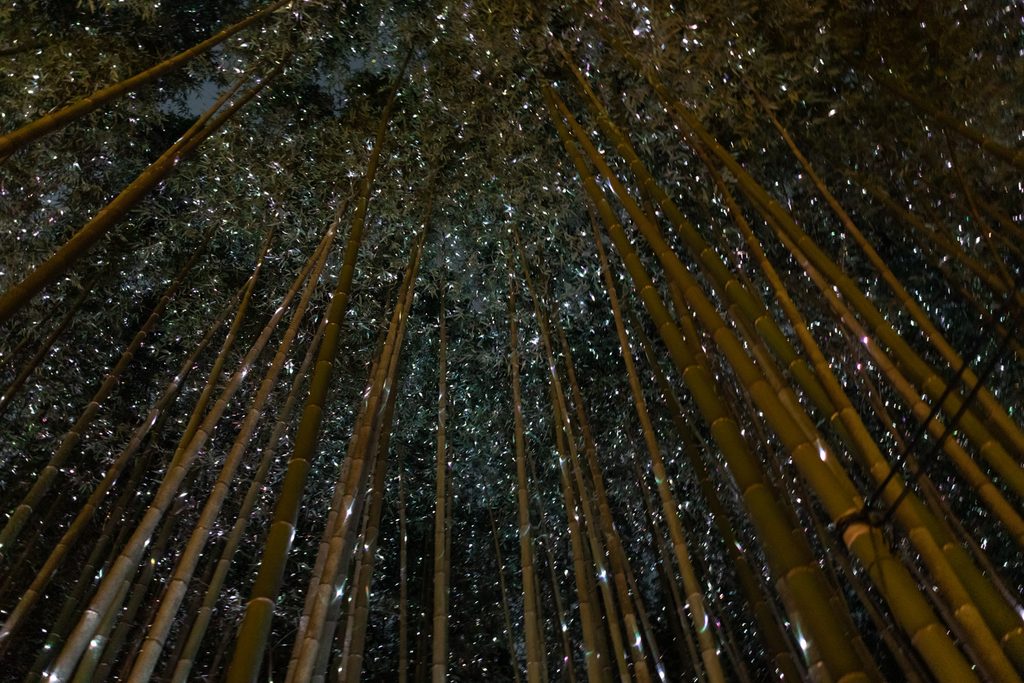
I stayed about thirty minutes. Someone in a hurry could do it in five. I had been told not to stop, and I chose to interpret the word “stop” very narrowly.
Area 2: The Corridor of Light
Leaving Area 1 means joining a second line, and I was in it by 6:33. It looked long. It took about five minutes.
Around me in the line, I heard English and French, and I was surprised by how busy the whole event was. Several of the staff were giving directions in English.
From outside, the corridor is a wall of hanging light strands, and the people walking through it pass behind them as dark silhouettes. Inside, woven bamboo spheres hang overhead and along both sides, and the light glows through their open weave.
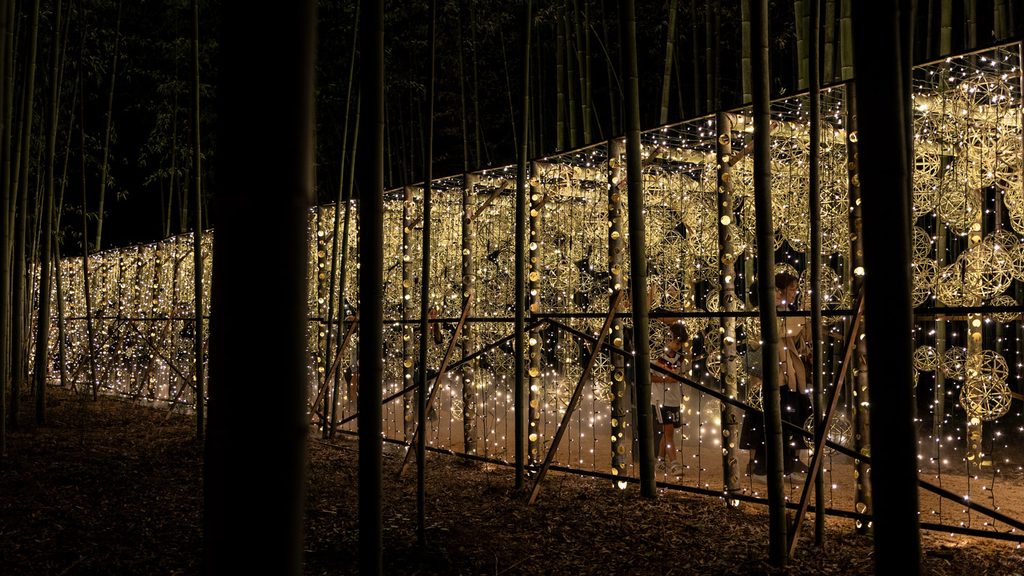
The staff here had one instruction, and they meant it: keep moving. In Area 1, “don’t stop” had sounded like a polite request. In Area 2 it was a rule, enforced far more strictly than anything in Area 1, and that is exactly why the line outside moves so fast.
Is It Worth ¥2,000?
For me, no.
By Japanese standards, ¥2,000 for two walks that take 30 to 45 minutes in total is steep, and I did not come away ¥2,000 satisfied. I would rather tell you that here than have you find out at the exit.
What the ticket really buys is access to something that otherwise does not exist. On any other night, the bamboo grove after dark is a black path with nothing to see. The light-up suits travelers who want to see the grove in a completely different mood, or who want a short evening outing before dinner in Arashiyama. If you are hoping to linger and frame the perfect photograph, Area 2 in particular will frustrate you.
Arashiyama Bamboo Light Up Tickets: Advance vs. Same-Day
The prices look backward.
| Ticket | Price | Where to buy | Notes |
|---|---|---|---|
| Advance (online) | ¥2,000 | Official website | Guaranteed entry; no ticket line |
| Same-day | ¥1,500 | Ticket booth near Nonomiya Shrine | Cash only; expect a wait |
| Children 12 and under | Free | — | — |
When I first saw the prices, I assumed the website had them reversed. It didn’t. The extra ¥500 buys guaranteed entry and lets you skip the ticket line entirely.
Weekends and holidays can sell out. During the three-day weekend I visited, online tickets for the first two days showed as sold out two days ahead. The final day was still available, and that is when I bought mine. On weekdays, I did not see tickets sell out like that.
When I left, the same-day line was still long. Later in the evening, though, the crowds ease, so arriving late without a ticket can work, as long as you make the 8:40 p.m. last entry.
My advice: if your budget allows, book ahead, especially for a Saturday, Sunday, or Japanese public holiday. Many of the visitors around me that evening were travelers from overseas, and I suspect plenty of them had done exactly that.
Dates, Hours, and Getting There
The light-up runs every evening through November 8.
| Dates (2026) | September 30 (Wed) to November 8 (Sun) |
| Hours | 6:00 to 9:00 p.m. (last entry 8:40 p.m.) |
| JR Saga-Arashiyama Station | About 10 minutes on foot |
| Randen Arashiyama Station | About 10 minutes on foot |
| Hankyu Arashiyama Station | About 15 minutes on foot |
| Landmark | Nonomiya Shrine (ticket holders continue past the shrine and across the railroad tracks) |
For booking and the latest updates, check the official Arashiyama Tsukitouro website, which has an English language option.